
Historical assessment of the role of the Red Army during World War II in Poland is one of the main flash points of the contemporary historical dispute between Poland and Russia. It is hard to expect that it will be overcome quickly due to the position of the "Great Patriotic War of 1941-1945" in the current narrative of the Russian authorities. It is treated in fact as the most important historical event uniting contemporary Russians. An inseparable element of this narrative is emphasizing the "liberation" of European nations from the German yoke and expecting gratitude for this on the part of contemporary European states. At the same time, the Russian authorities do not show any sensitivity to the experiences of Central European and Baltic states for which the entry of the Red Army was associated with a new period of enslavement combined with universal terror.
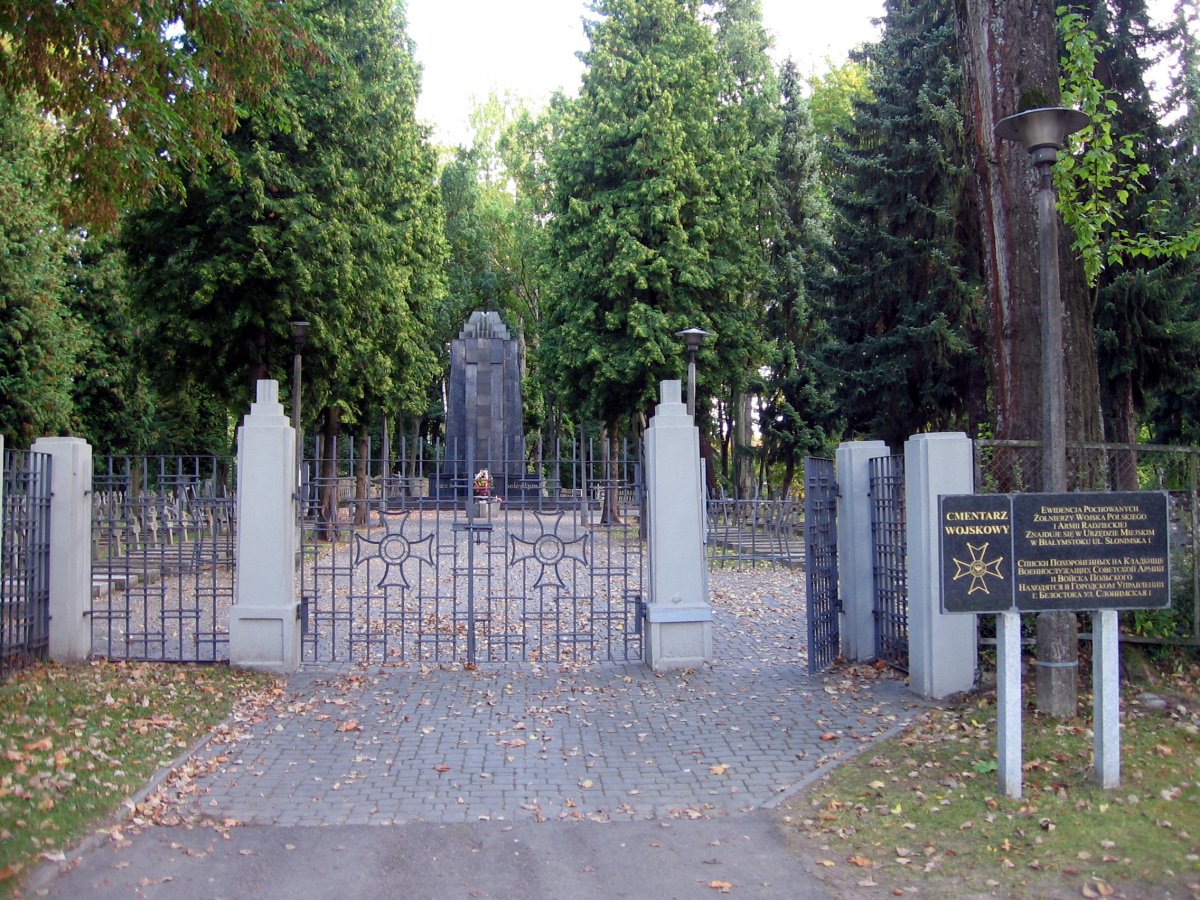
The existing dichotomy in the assessment of the role of the Soviet Union during World War II and after its end between Poland and Russia finds its resonance, among others, in the subject of Russian memorial sites in Poland. Our country is consistently attacked for removing monuments to the Red Army or the so-called "Polish-Soviet brotherhood" as part of the implementation of the Act of April 1, 2016 on the prohibition of the promotion of communism or another totalitarian system by the names of organizational units, commune auxiliary units, buildings, facilities and public utilities and monuments (Journal of Laws of 2018, item 1103). On the other hand, the Russians do not want to notice that Poland systematically takes care of the graves and cemeteries of Russian and Soviet soldiers who died on the Polish territory in various historical periods.
The issue of caring for the graves of Russian/Soviet soldiers is regulated in the Polish legal system both by national law and by bilateral obligations with Russia. The basic legal act in this matter is the Act of March 28, 1933 on war graves and cemeteries (Journal of Laws of 2018, item 2337) which explicitly states that the maintenance of war graves and cemeteries is the task of the State and that these places should be treated with respect and dignity regardless of the nationality and religion of the people buried there and regardless of the formations to which these persons belonged. The proper state of war necropolises is supervised by the locally competent province governor who keeps their records.
The international acts are as follows:
- The Treaty between the Republic of Poland and the Russian Federation on friendly and good-neighbourly cooperation of 1992 (Journal of Laws 1993, No. 61, item 291), which in Article 17 proclaims that cemeteries, burial sites, monuments and other memorials that are the object of veneration and memory of citizens of one of the Parties, both military and civil ones, currently located or arranged on the basis of mutual agreements, in the future on the territory of the other Party will be preserved, maintained and protected by law, in accordance with international norms and standards as well as national and religious customs.
- The Agreement between the Government of the Republic of Poland and the Government of the Russian Federation on the graves and memorials of victims of wars and repression of 1994 (Journal of Laws of 1994, No. 112, item 543), which clarifies the provisions of the said Treaty. The Ministry of Culture and National Heritage is responsible for the performance of the said Agreement by Poland.
On the basis of these legal obligations, not only does Poland keep records of Russian burial sites but it annually allocates significant sums for their maintenance. It should be noted that the heritage of Russian war cemeteries is not limited only to the graves of Red Army soldiers who were killed or died from wounds during World War II or Soviet prisoners of war in German captivity, but it also covers previous conflicts. In total, there are 1,864 Russian/Soviet burial sites on the territory of Poland (in all 16 provinces) related to the following armed conflicts:
- Napoleonic wars - 11 sites;
- November Uprising - 1 site;
- January Uprising - 1 site;
- World War I - 1129 sites;
- Polish-Bolshevik war - 17 sites;
- World War II - 705 sites.
This number of sites, ranging from single graves to large war cemeteries (Cybinka, the Lubuskie Province or at Żwirki and Wigury Street in Warsaw) generates enormous costs of maintenance. Moreover, we cannot forget the fact that Russian/Soviet war graves are one of the many categories of war graves and cemeteries that are under the protection of Poland. The fate of Poland, especially in the 20th century, is marked by the tragedy of World War I, struggles for independence and borders in the years of 1918-1921, World War II and communist enslavement in the years of 1944-1989, of which the cemeteries and graves of our countrymen who died in defence of Poland or were murdered just for being Poles are a well-known sign of memory. The Republic of Poland is also the final resting place for many people of other nationalities who were thrown by the storms of war over the Vistula River. All these places are taken care of by Poland under the Act on war graves and cemeteries, which is often reinforced with the entry of a war cemetery into the register of monuments kept by the competent provincial monument conservator.
As mentioned, the main entity responsible for the maintenance of war graves, and hence the financing of renovation works, is the locally competent province governor. Every year, provincial offices allocate funds from the general pool of their resources to the maintenance of Russian/Soviet graves and war cemeteries. Also, in the case of sporadic acts of vandalism in cemeteries, provincial offices immediately take steps to remove them. During the existence of the Council for the Protection of Struggle and Martyrdom Memory (liquidated at the end of July 2016; its duties were partially taken over by the newly created Office for Commemorating Struggle and Martyrdom of the Institute of National Remembrance), this government institution also co-financed works carried out at the sites of Russian/Soviet war graves and cemeteries. In the years of 2001-2016, the Council for the Protection of Struggle and Martyrdom Memory carried out renovations at 339 sites for the amount of PLN 13,539,069.
On the basis of the above information, it should be stated that war graves and cemeteries, including the Russian/Soviet burial sites, are a component of the cultural heritage that testifies to the complex history of our Homeland, and thus they are cared for, allowing for their preservation for future generations.
Artur Zawadka
References:
A.Siwek, A. Wicka, A. Koszowy, Groby i cmentarze żołnierzy rosyjskich i radzieckich z XIX i XX wieku w Polsce Wybrane przykłady, Warsaw 2016;
A.Siwek, A. Wicka, Groby i cmentarze żołnierzy Armii Czerwonej w Polsce, Warszawa (planned publication of the Institute of National Remembrance);
B. Affek-Bujalska, Groby żołnierzy Armii Radzieckiej poległych w Polsce w II wojnie światowej, [in:] Przeszłość i Pamięć - Bulletin of the Council for the Protection of Struggle and Martyrdom Memory No. 1(10) 1999;
K. Kostka, Cmentarz wojenny Armii Radzieckiej w Nowogrodźcu w powiecie bolesławieckim, [in:] Studia Zachodnie of University of Zielona Góra No. 16 ;
ed. Artur Zawadka, the Polish National Agency for Academic Exchange