
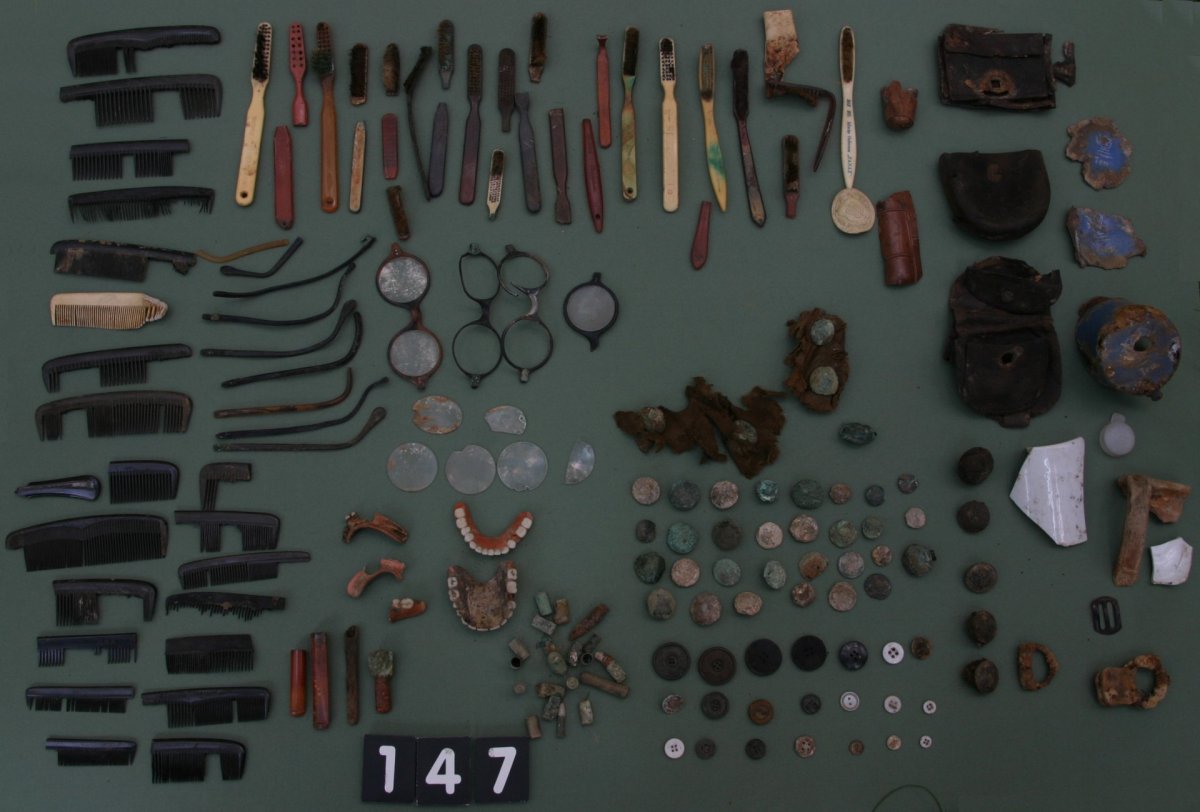
As a result of the decision of the Politburo of the Communist Party and the Soviet government from March 5th 1940 Polish soldiers, policemen and public servants were murdered and their families deported to the east. The Soviet authorities, without the second of doubt and with total indifference, with one decision removed the undesirable elements to stop the rebirth of the Polish state. In the argumentation of the motion to shoot more than 25 thousand Poles, Lavrientiy Beria wrote that they were “hardened and implacable enemies of the Soviet authorities”. They were human, they had families, relatives; their lives were destroyed, they were deprived of everything they held dear. We were not allowed to even think about them or mention them for the next 50 years. They took everything from us.
After more than half a century…
The Katyń Massacre took place in 1940. Only after more than half a century, in the 90s of the XX century, were we allowed to talk about it. Unfortunately, today we are not permitted to know the entire truth. It has been 30 years, and we still do not know where our relatives are buried.
It became possible to start investigating the circumstances of the Katyń Massacre and determine the identities of the murdered Polish citizens when president Mikhail Gorbachev, in the year 1990, gave the Polish side two folders of documents regarding the crime, including the lists of names of Polish prisoners taken away from the camps in Kozielsk and Ostaszków and the records of prisoners “missing” from the camp in Starobielsk prepared in May 1940. The efforts of the Polish state after 1989 to find the truth regarding the massacre but also to bring back the memory of the victims, bury them properly and honour them, have been and still are taken in the cooperation and on the initiative of the Katyń Families. The Families which survived and live with the hope of finding the traces of their relatives. One of the parts of the process of revealing the truth about the Katyń Massacre were the exhumations participated by Polish experts. Today, we know for sure that such works were conducted at the NKVD cemeteries in Katyń, Kharkiv-Piatykhatky, Mednoye and Bykownia. When the works were starting in the 90s, it was not as certain. The results of the exhumations explicitly showed that the murdered Polish POWs from the camps in Kozielsk, Starobielsk and Ostaszków were buried there. Works in Katyń, Kharkiv-Piatykhatky, Mednoye and Bykownia ended with the opening of Polish War Cemeteries in these places in the year 2000.
The search in Bykownia
In 1994, the Ukrainian Security Services handed the Polish side a record, found in archives, of 3435 personal files of Polish prisoners murdered in Ukraine on the basis of the decision from March 5th 1940. The record was called the Ukrainian Katyń list. On this list, there are names of administrative workers, prosecutors, judges, attorneys, landlords and officers of the Polish State Police and Polish Army. Among them are names of 54 women. The list includes all those who, if allowed to remain free, could actively engage in anti-Soviet activities and that is why they were sentenced to die.