
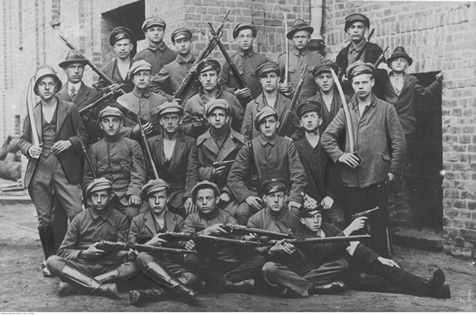
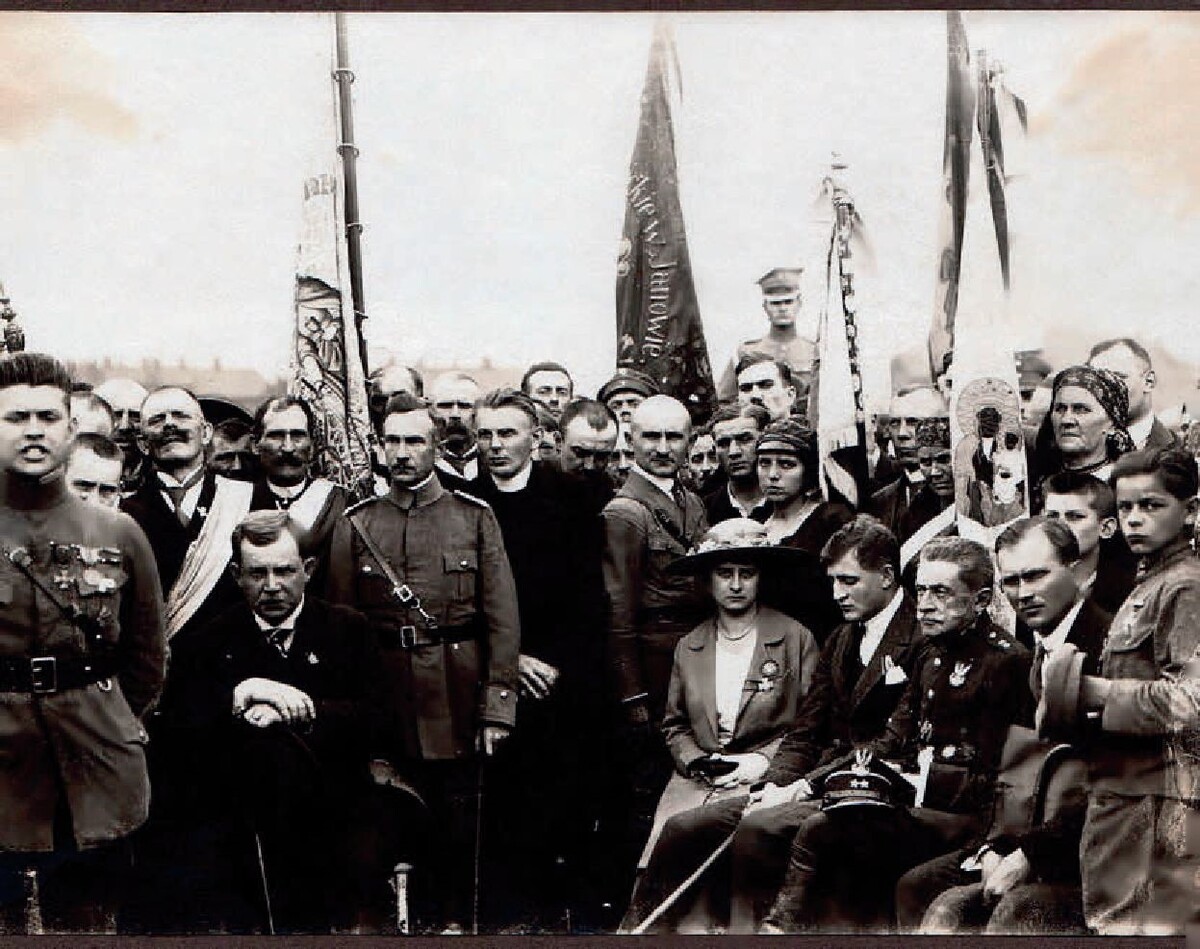
As the date of the plebiscite approached, people realised the great importance of the decisions to be taken, so talks between Silesian activists and the Polish Ministry of Military Affairs had been ongoing for months. As early as January 1921, a plan was drawn up for an uprising that was to break out if the situation called for it. In April, when it became known that the Inter-Allied Plebiscite Commission planned to divide Upper Silesia along the Percival–de Marinis Line, which was unfavourable for Poland, an extraordinary meeting was held. It was attended by the Polish Army plenipotentiary, Maj. Roman Abraham, other military officers from the Plebiscite Defence Command, as well as politicians associated with Wojciech Korfanty. It was agreed then that the decision about the outbreak of fighting would be up to Korfanty, who was soon to become the dictator and hold political power over the uprising.
Korfanty’s goal was simple: an armed demonstration to convince international opinion of a different division of Upper Silesia and consequently, the incorporation of a part of it, including the industrial district, into Poland. Korfanty intended to achieve political victory through a policy of fait accompli: to occupy the areas in which the majority of the plebiscite participants voted for Poland. This line was approximately delineated by the Oder-based Korfanty Line. Reaching and holding this line was the basic task. It was assumed that the insurgent forces would be able to handle the German self-defence on their own, while the key to success would be preventing the sending of reinforcements from deeper in Germany.
A special sabotage group under Capt. Tadeusz Puszczyński (codename Wawelberg) special sabotage was tasked with blowing up railway viaducts on routes connecting the Upper Silesian plebiscite area with the Weimar Republic. This operation was carried out on the night of 2 May under the codename “Mosty” [Bridges]. Insurgent troops soon attacked a number of towns. The Germans allowed themselves to be taken by surprise, even though lively movement on the eastern border of the plebiscite area could be observed for some time already. Weapons and military equipment were supplied from the Polish side, officers of the Polish Army slipped over the border, Polish Red Cross trucks appeared (many commanders, including Maciej Mielżyński, Jan Ludyga-Laskowski and Jan Wyglenda, would later praise the organisation and work of the medical services in the uprising).
The previous two Silesian uprisings were preceded by a general strike. When it began on 2 May 1921, it was a clear signal that armed action would come any day now.
Fighting broke out in a vast area from Kreuzburg (Kluczbork) and Rosenberg (Olesno) regions in the north, to Loslau (Wodzisław) in the south. It was immediately apparent that it was not a spontaneous uprising, but a well-prepared military operation supported by the Polish state.
In his “Manifesto to the People of Upper Silesia”, published on 3 May, Korfanty explained the objectives of the uprising. The existing Plebiscite Defence Command was transformed into the Supreme Command of the Insurgent Army, and Lt. Col. Maciej Mielżyński (codename “Nowina-Doliwa”) was appointed the commander-in-chief.
The Germans did not expect the momentum with which the insurgent troops took action. They made many official complaints to the Inter-Allied Commission, especially about the passivity of the French troops, while the members of the German underground Fighting Organisation of Upper Silesia (Kampforganisation Oberschlesien) mostly retreated behind the Oder River. The fierce resistance put up at some points did not prevent the insurgents from capturing almost the entire area delineated by the Korfanty Line in the first week of May.
The Polish plans for Upper Silesia were supported by the French army, while the British and the Italians were hostile. After the outbreak of fighting, efforts were made to avoid the Allied garrisons so as not to provoke additional conflicts. As the Germans were better organised in the cities – there were more members of the self-defence, German Plebiscite Police and city guards, as well as Allied troops stationed there – the insurgents gave up on capturing them, and instead began the process of encirclement, or creating blockades. In this way, in the first days of May, the blockades covered Gleiwitz (Gliwice), Katowice, Königshütte (Królewska Huta), Hindenburg (Zabrze), Beuthen (Bytom), Tarnowitz (Tarnowskie Góry) and Rybnik.
The beginning of the uprising was marked by the successful implementation of the plan: the interruption of transport routes leading to Germany, the occupation of the plebiscite area and the encirclement of cities. The area up to the Oder was under control, so Korfanty considered an armed demonstration sufficient and called off the general strike on 6 May. Everything was supposed to return to normal, but German resistance began to grow and the fighting intensified, especially in the area of the railway station in Kandrzin (Kędzierzyn), where armoured trains had already been used. When the insurgents captured that town on 9 May, with its strategic railway junction, the dictator once again decided to extinguish the conflict and consummate the political benefits offered by the successes of the Silesian insurrection. This was the end of the first stage of the Third Uprising, decisively victorious for the Polish side. Once formed, the front line was about 150 km long.