
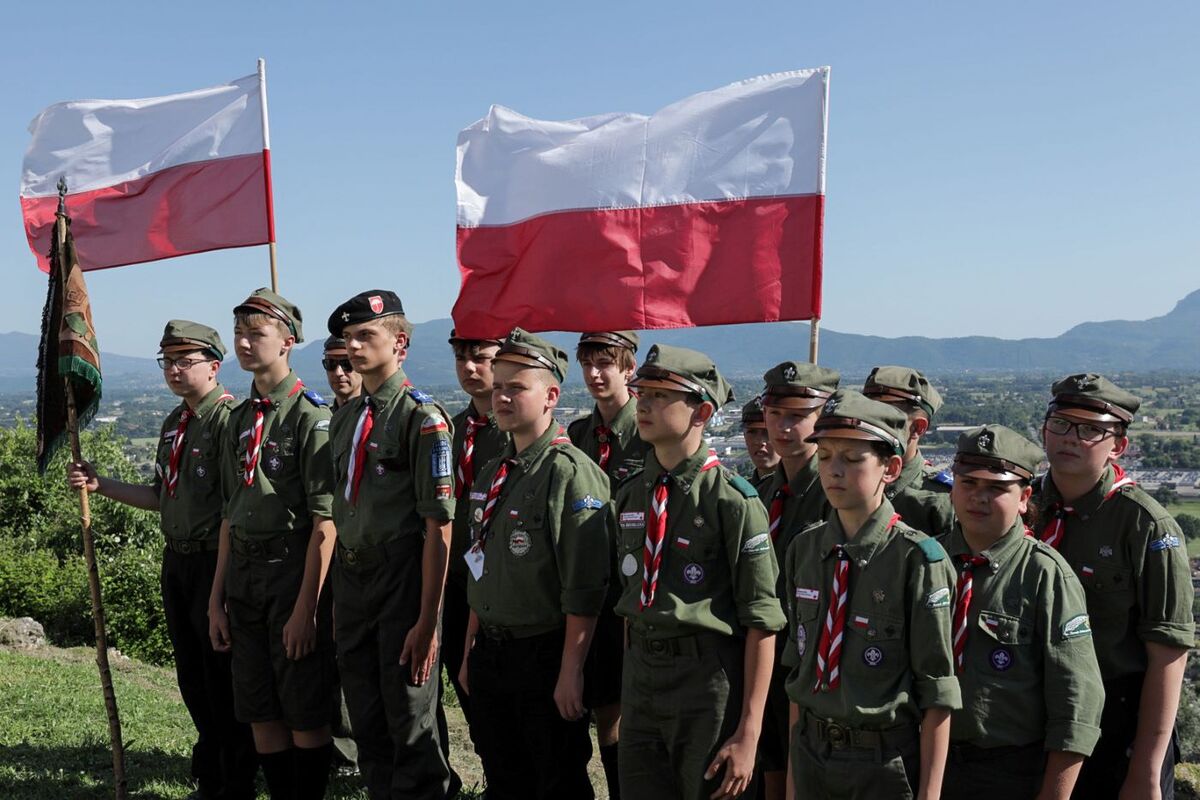

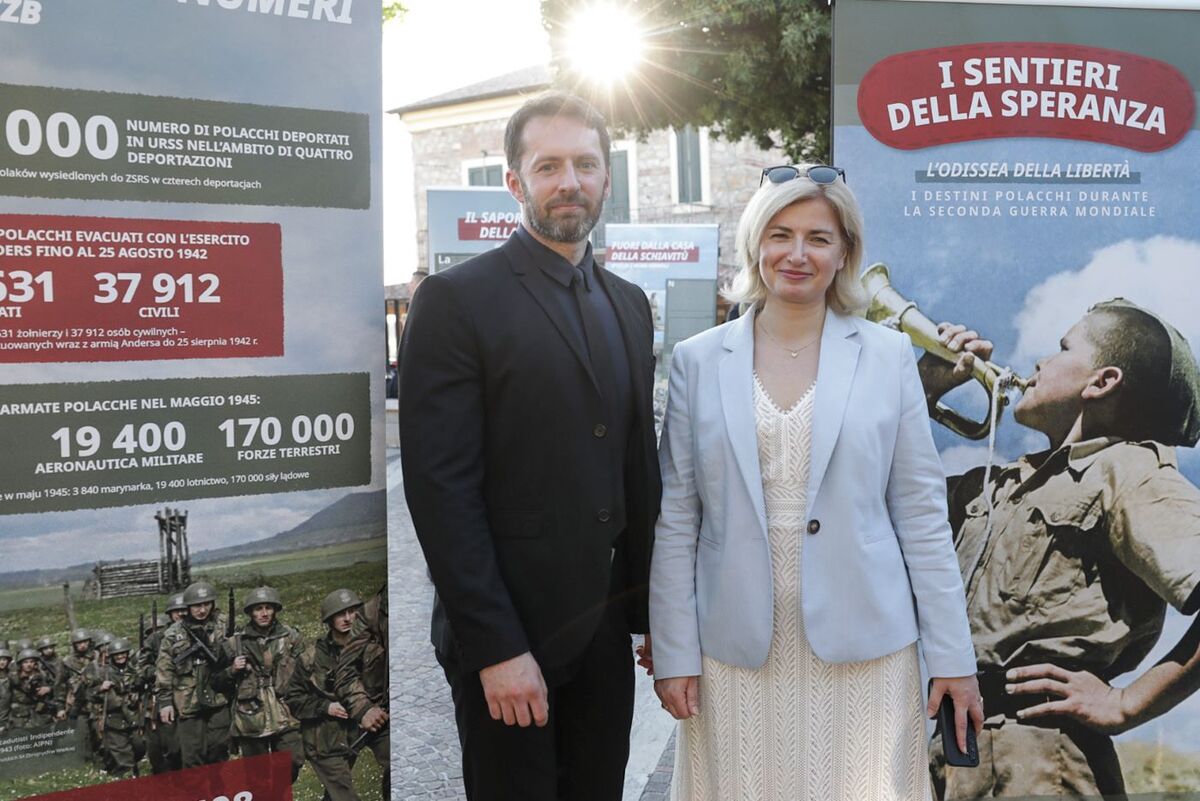
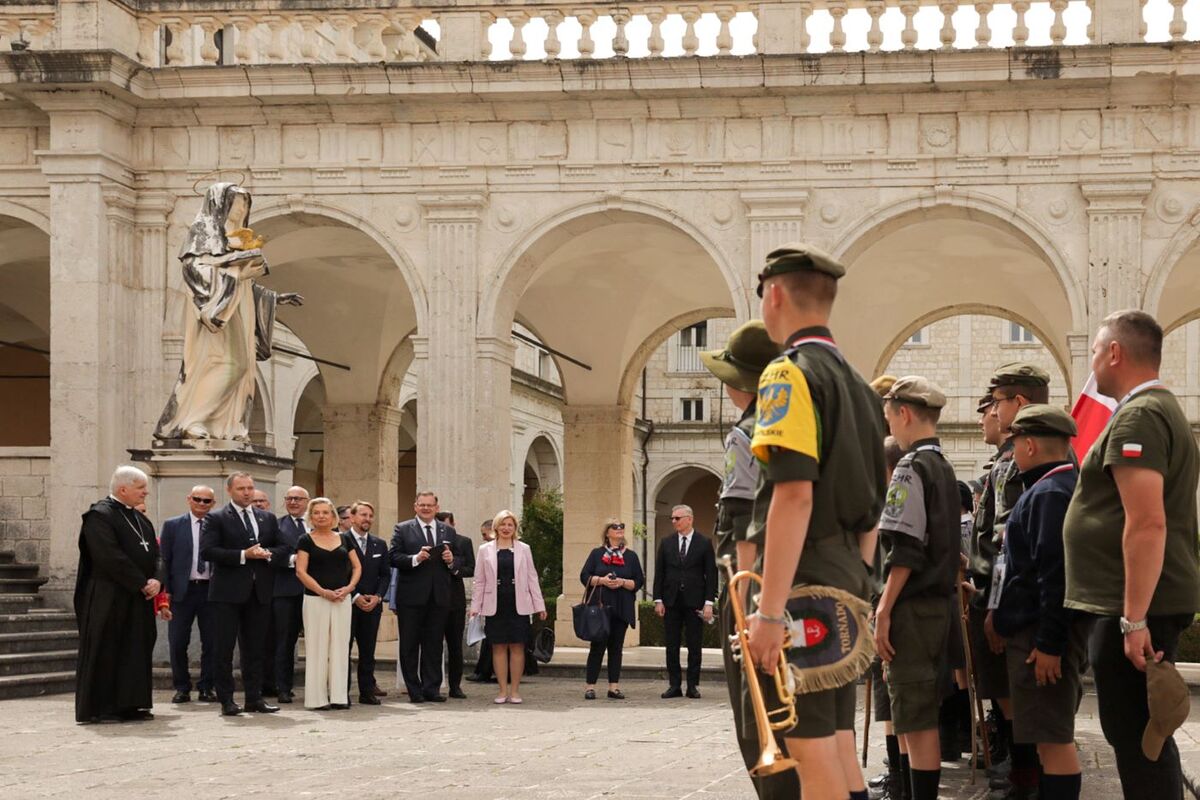


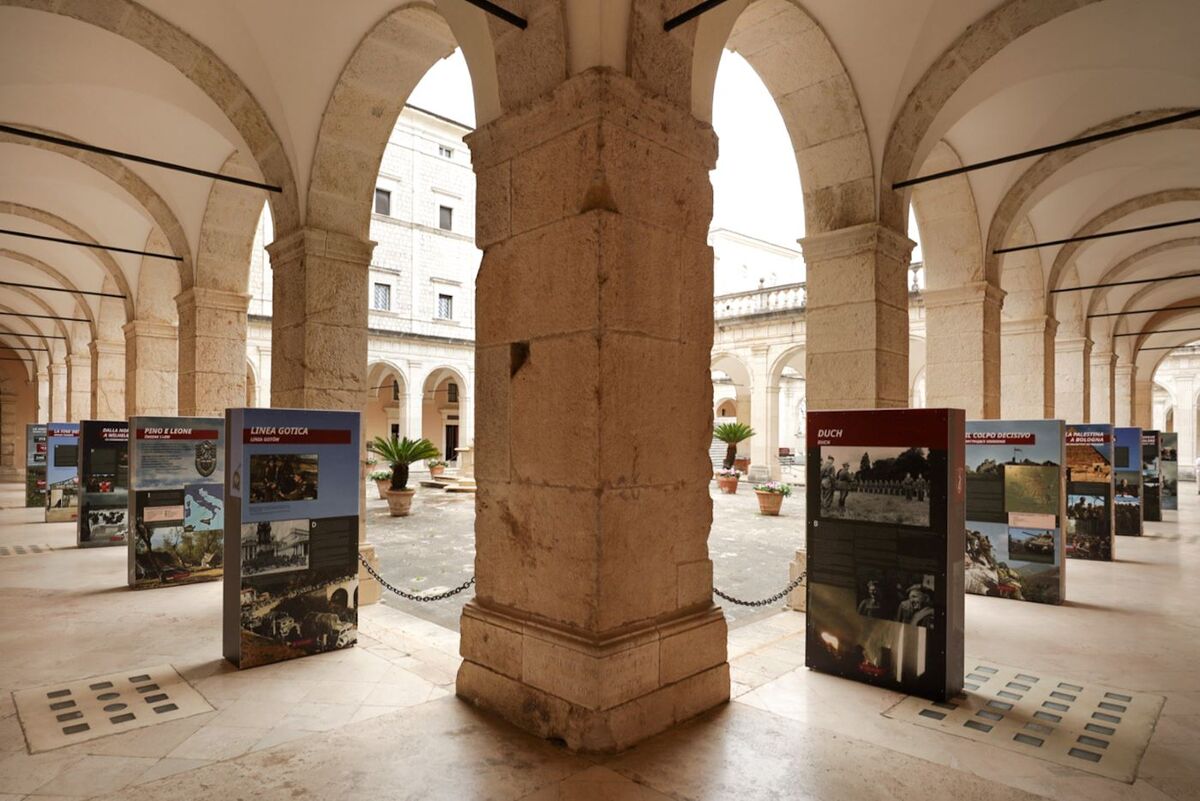
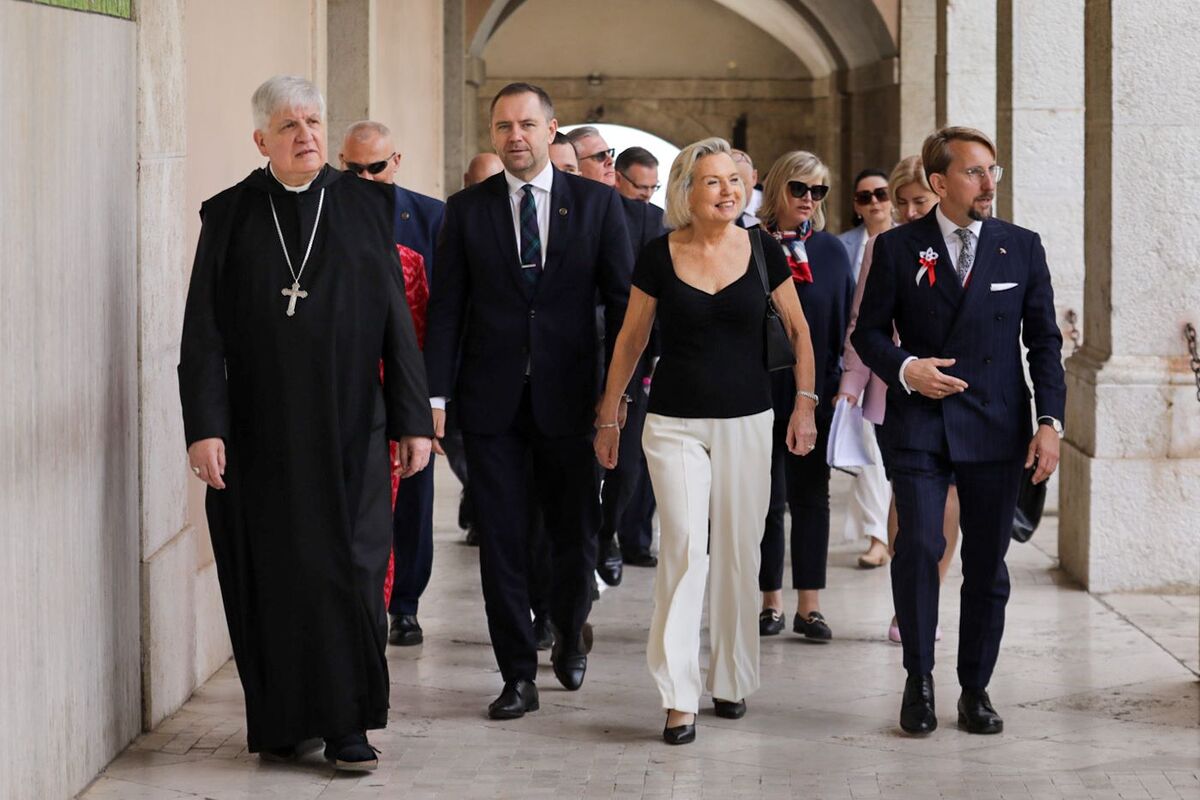
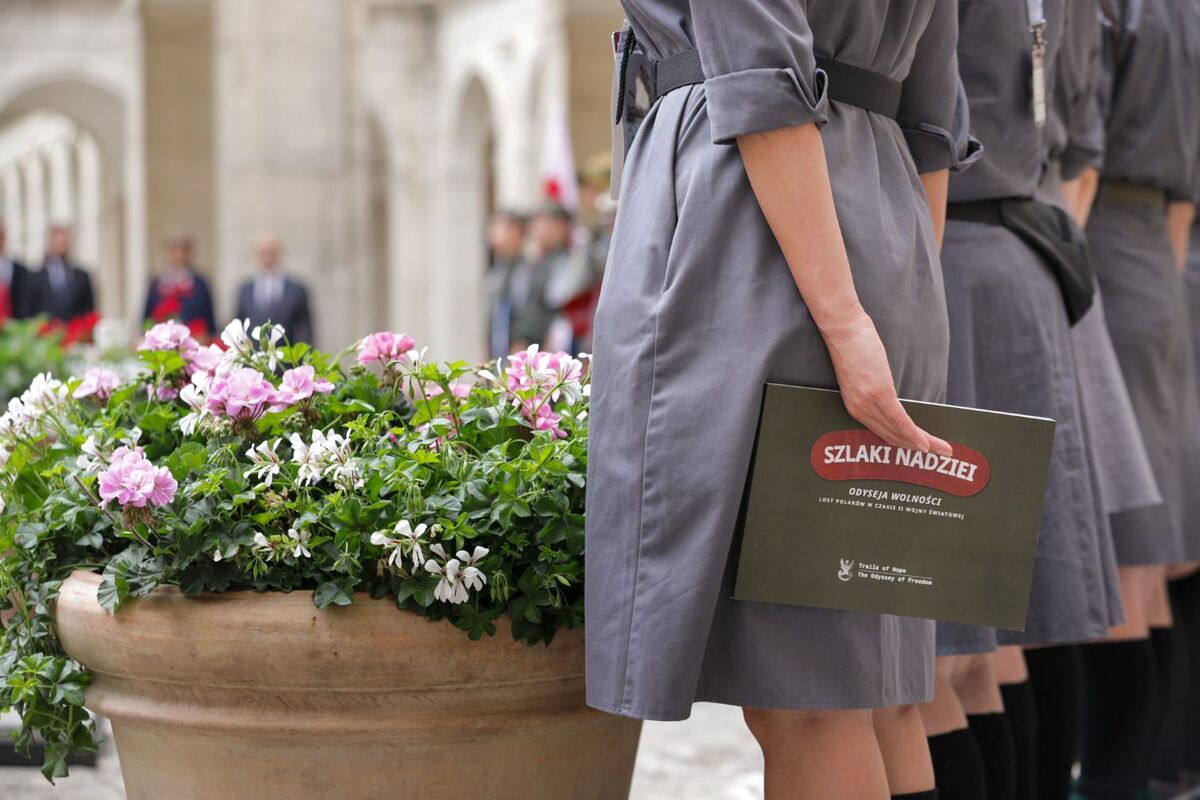
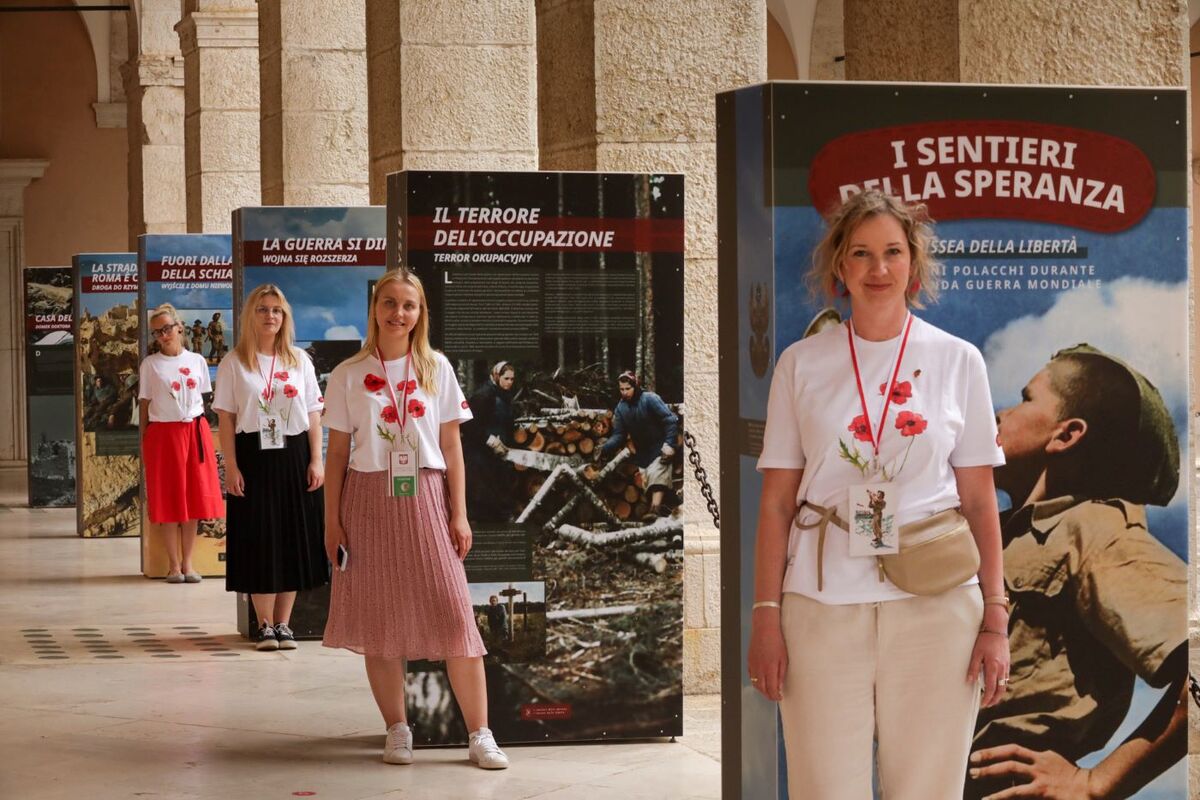


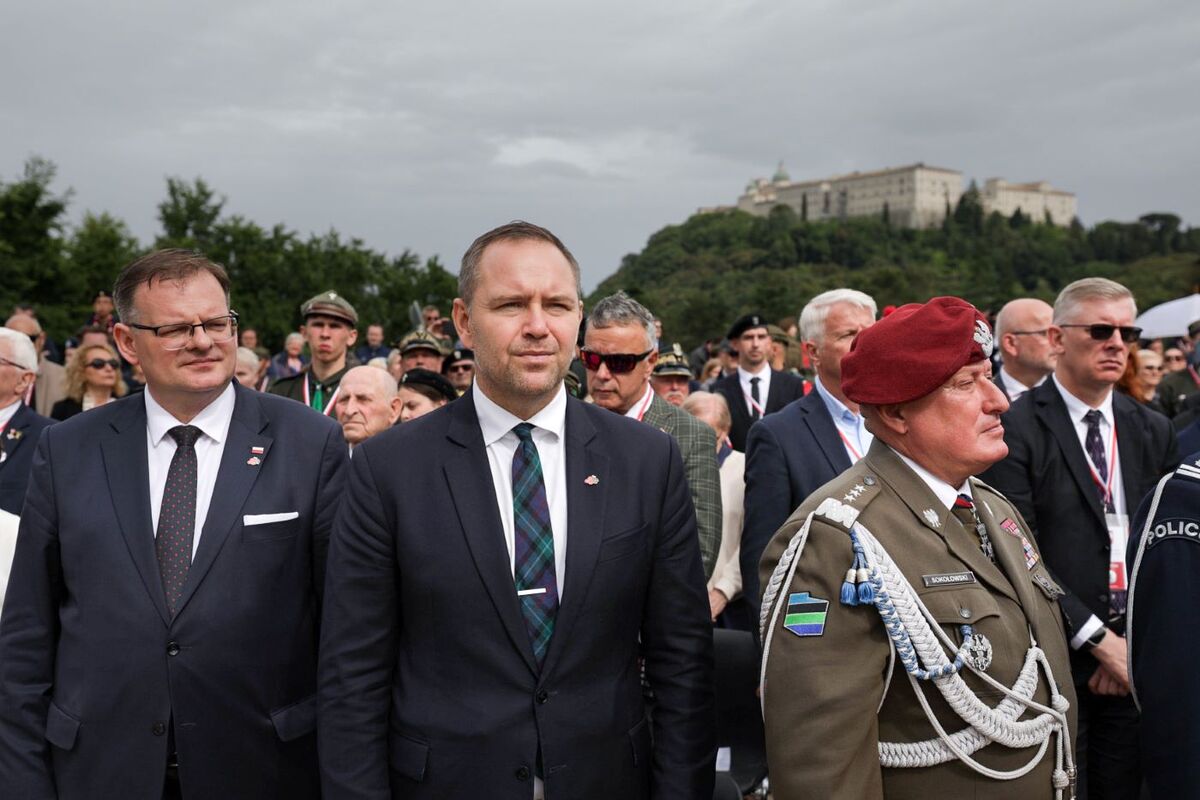

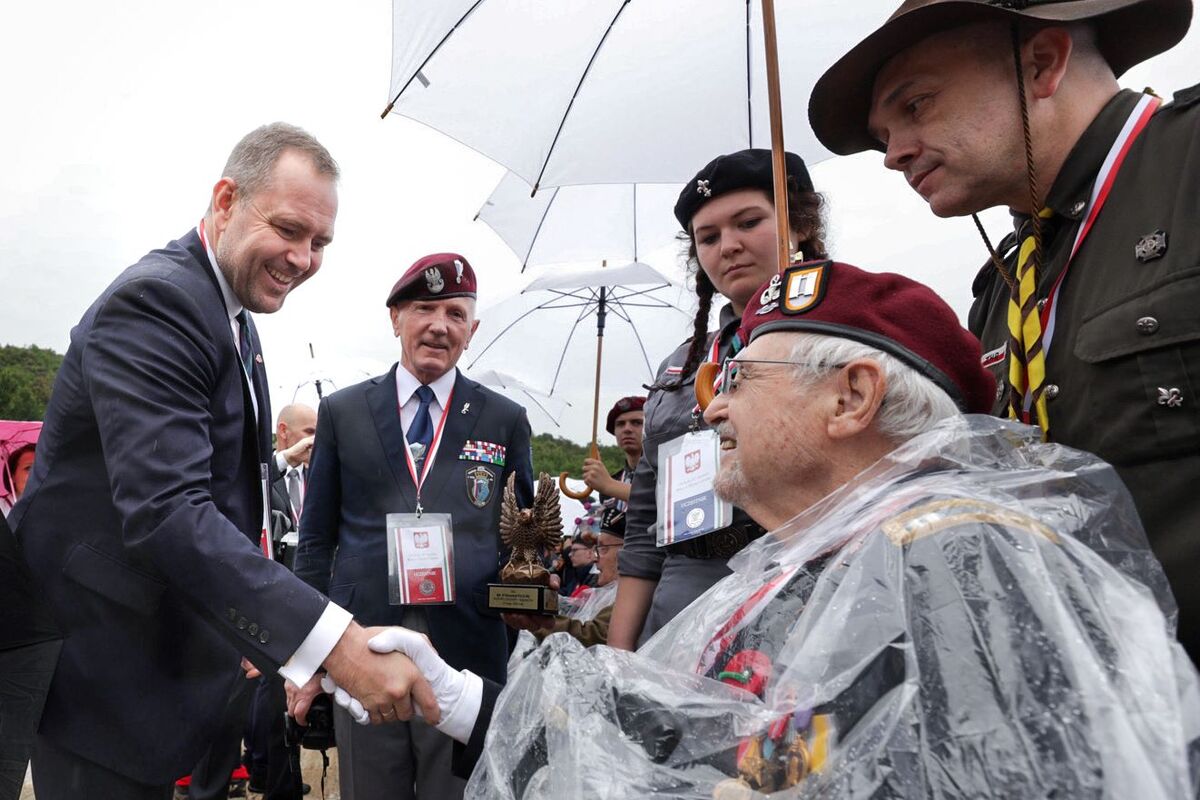
A delegation representing the Institute of National Remembrance headed by the IPN President Karol Nawrocki Ph.D., will pay tribute to the fallen in the Battle of Monte Cassino. The IPN "Trails of Hope. The Odyssey of Freedom" exhibition presented at the Monte Cassino Abbey will accompany the commemorative events. The initiative, is a form of commemoration of the fate of hundreds of thousands of Poles who fought for the independence of Poland and other countries occupied by the German Reich. By making a significant contribution to defeating Germany, they also proved to the whole world that they were ready to defend their right to sovereignty amid extremely tough military and political conditions.
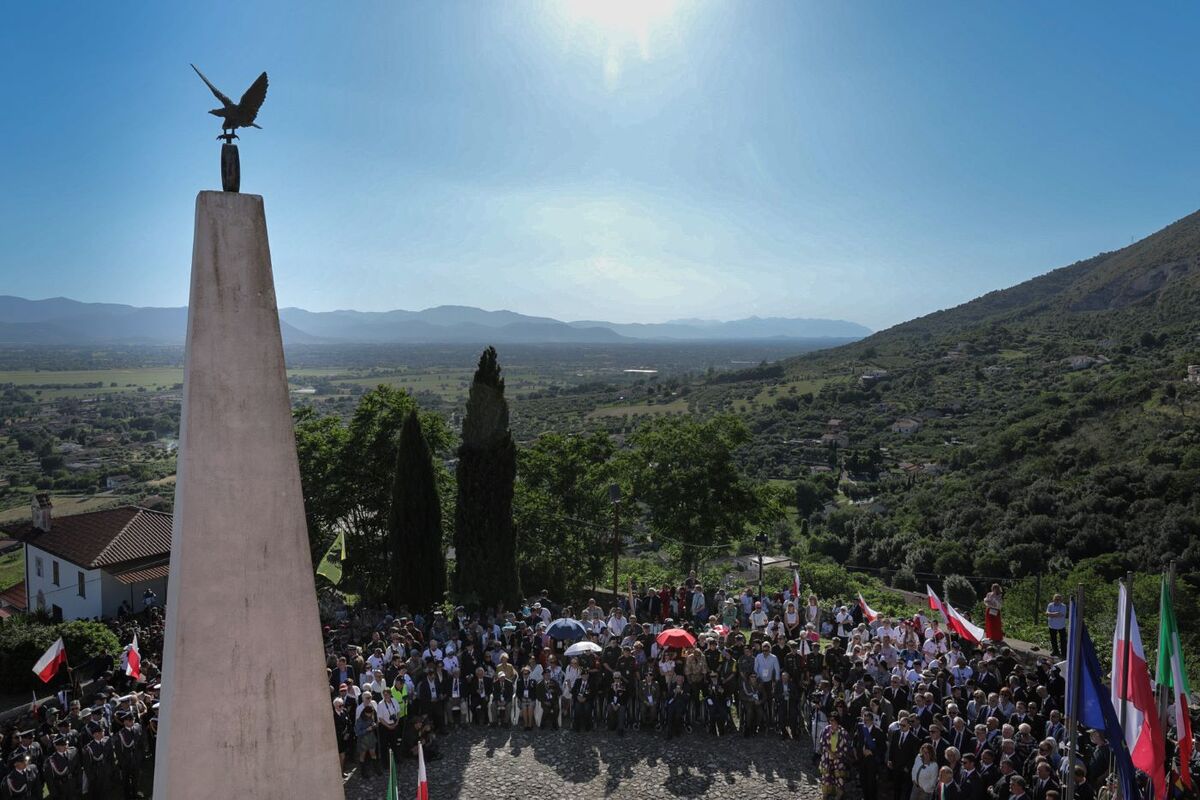
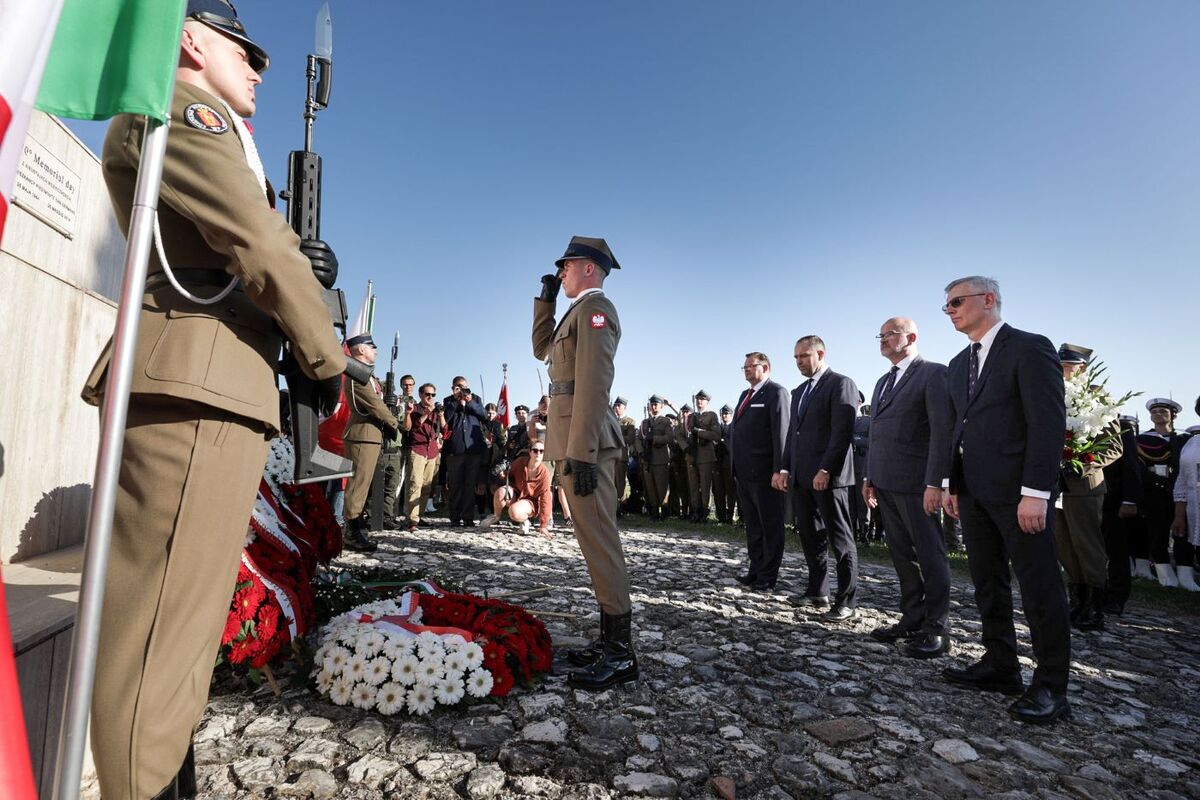
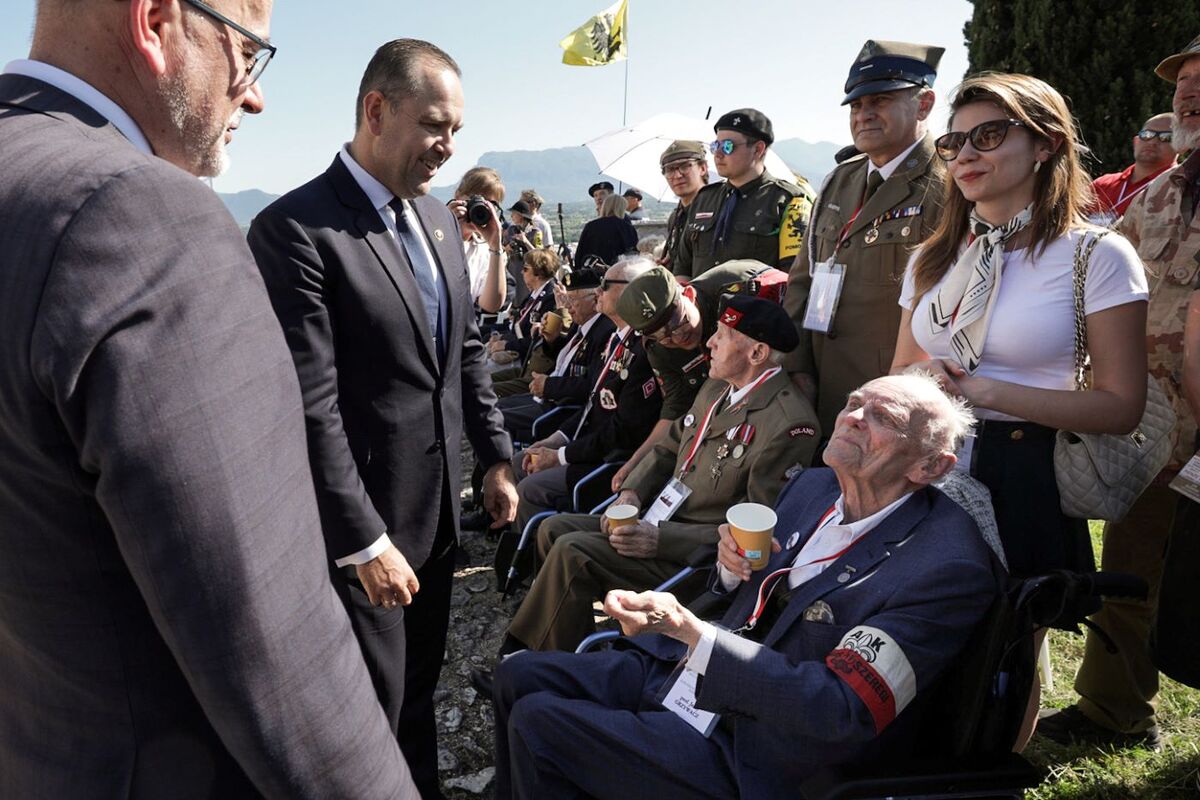
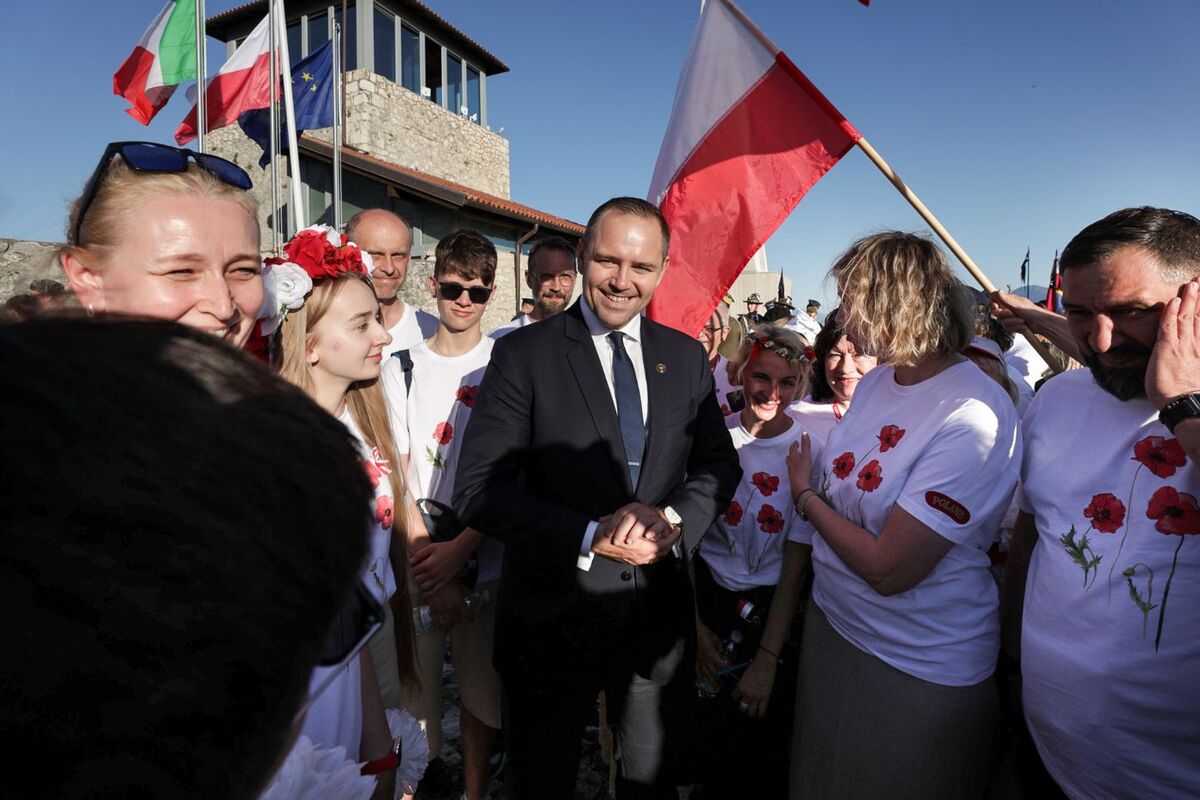
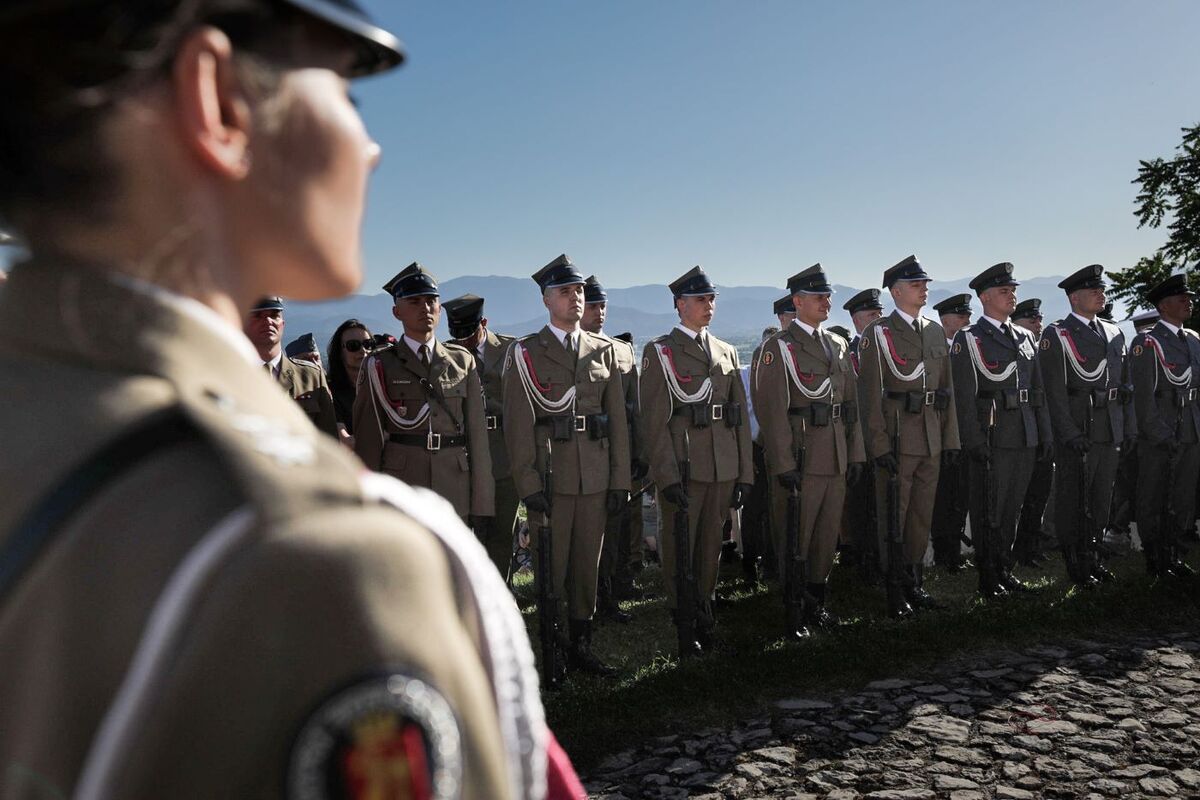
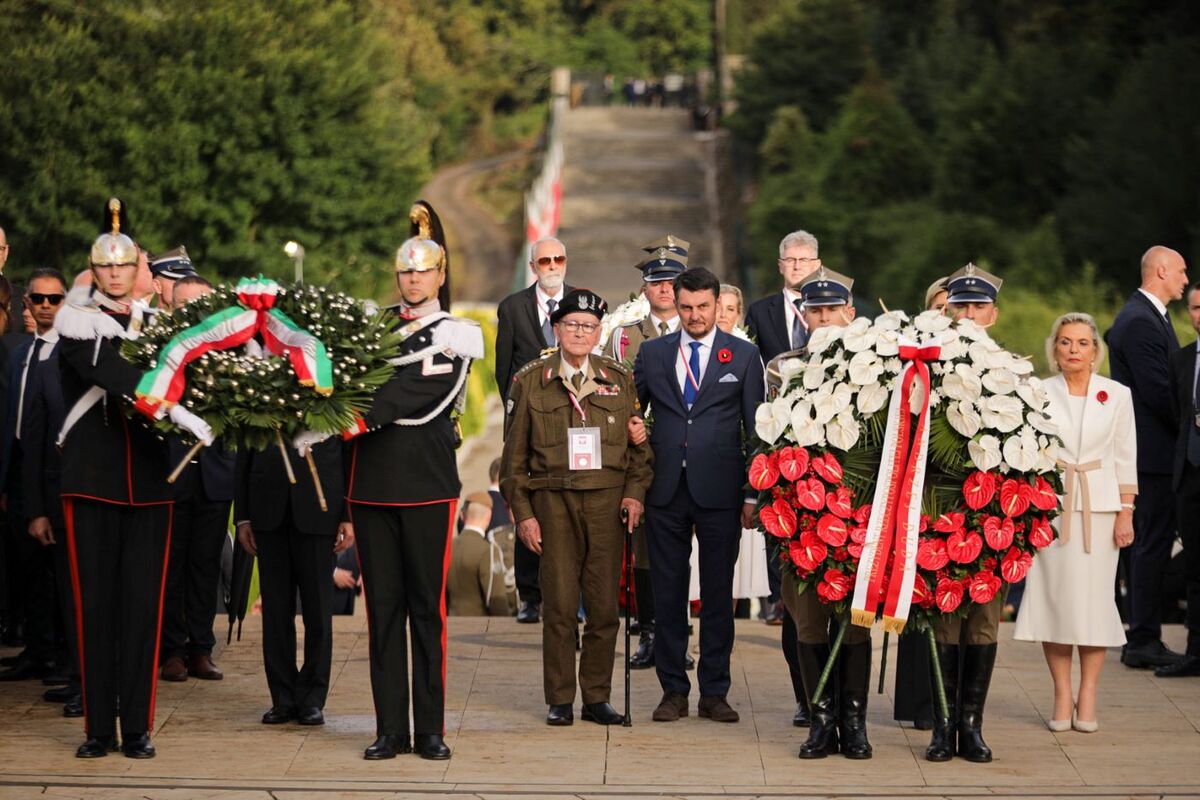
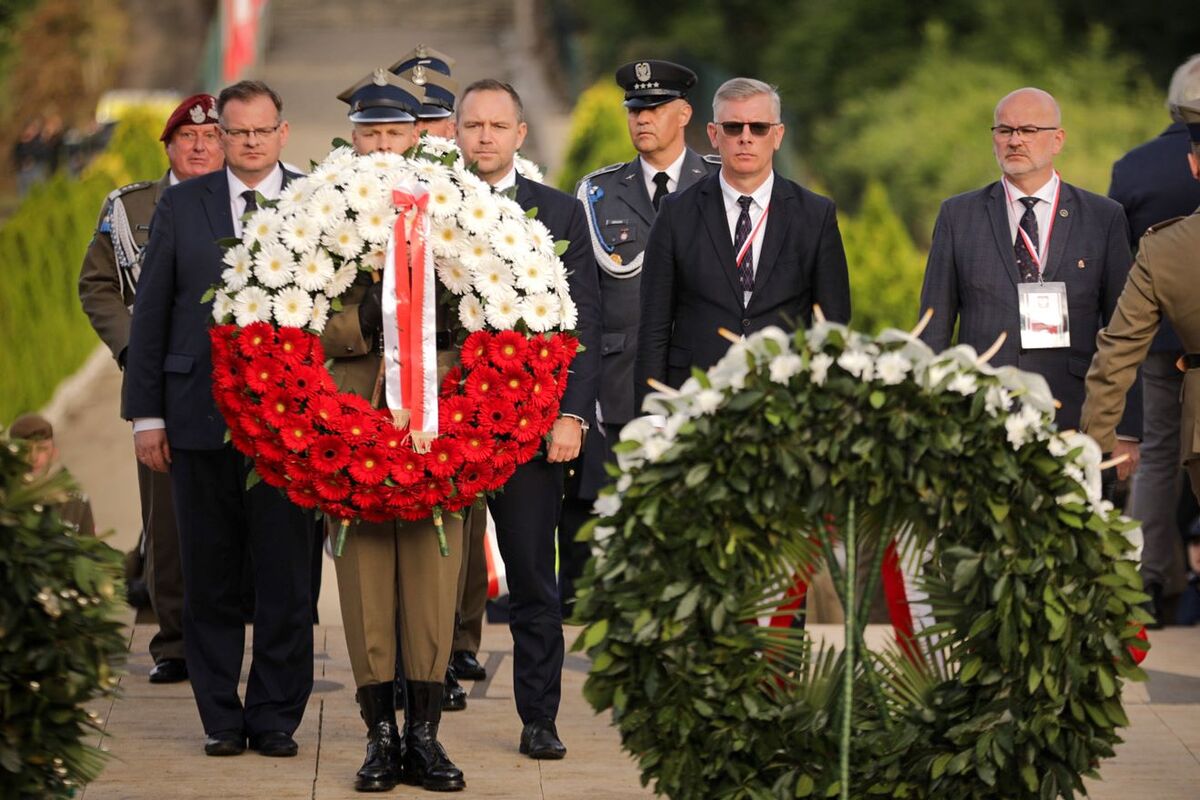
The celebrations, organized by the Office for War Veterans and Victims of Oppression , began on 17 May 2024 in Piedimonte San Germano, at the monuments "In tribute to the fallen soldiers" and the "6. Armored Regiment named after the Children of Lviv". The IPN President and his advisors Prof. Sławomir Cenckiewicz, Prof. Grzegorz Berendt and Jan Józef Kasprzyk laid wreaths and paid tribute to the fallen. At the end of the ceremony, the orchestra and choir performed the song "Red Poppies."
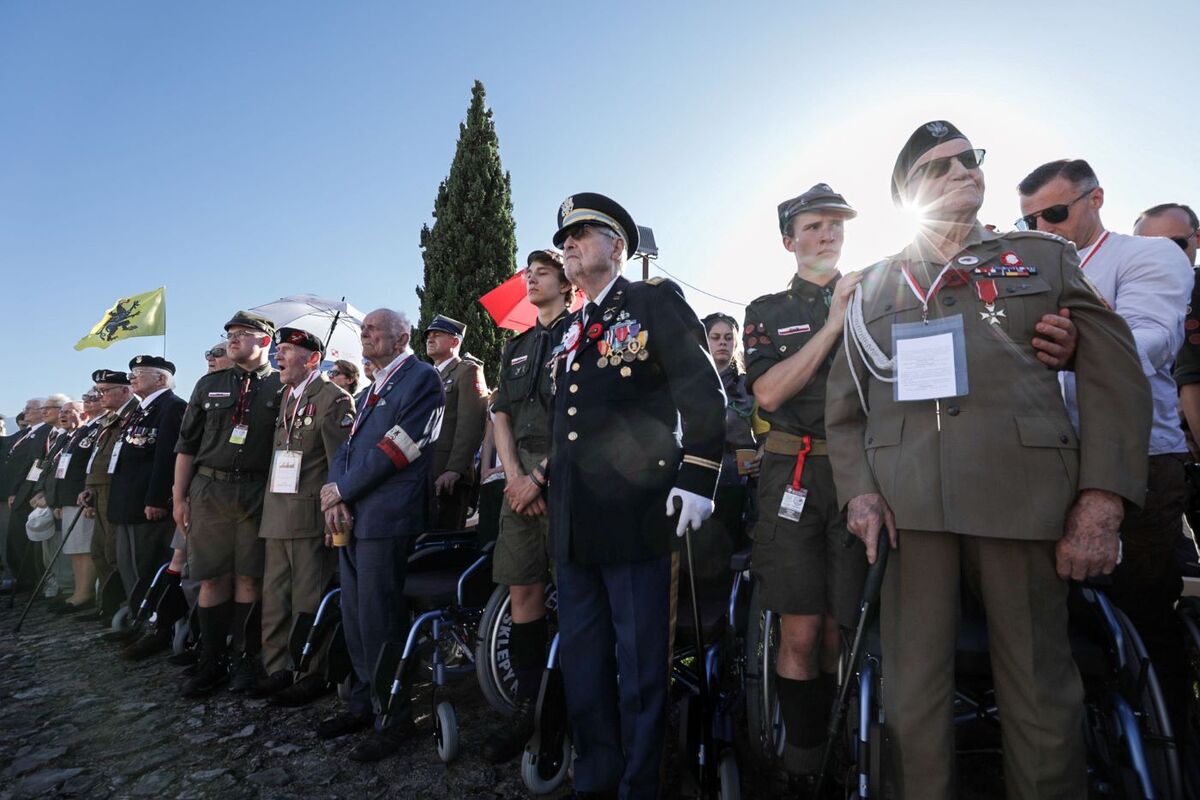
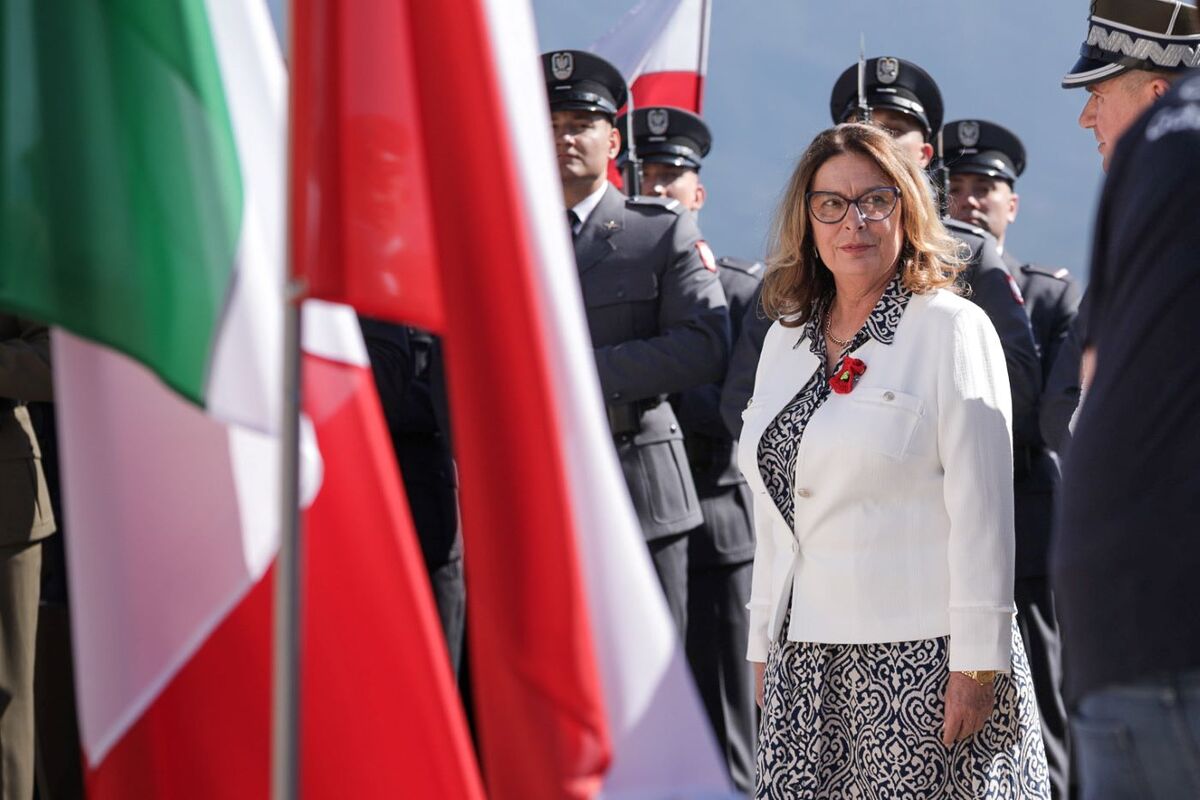
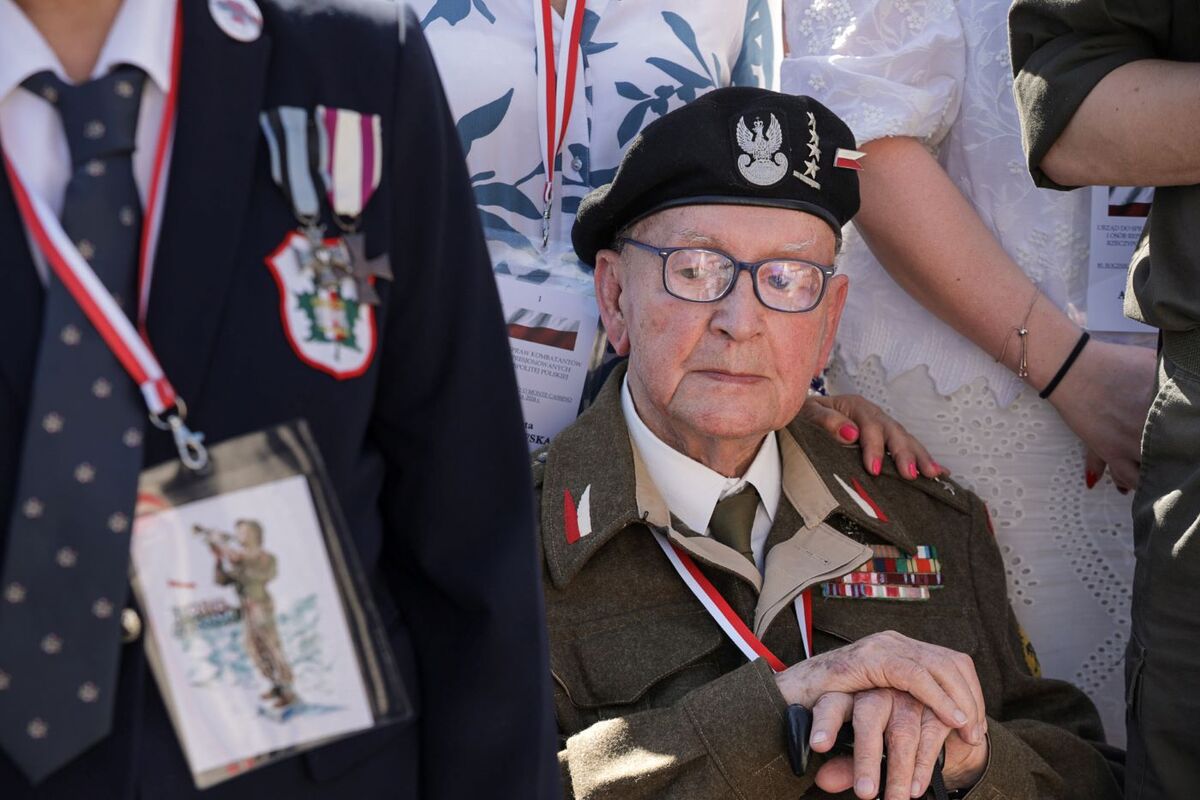
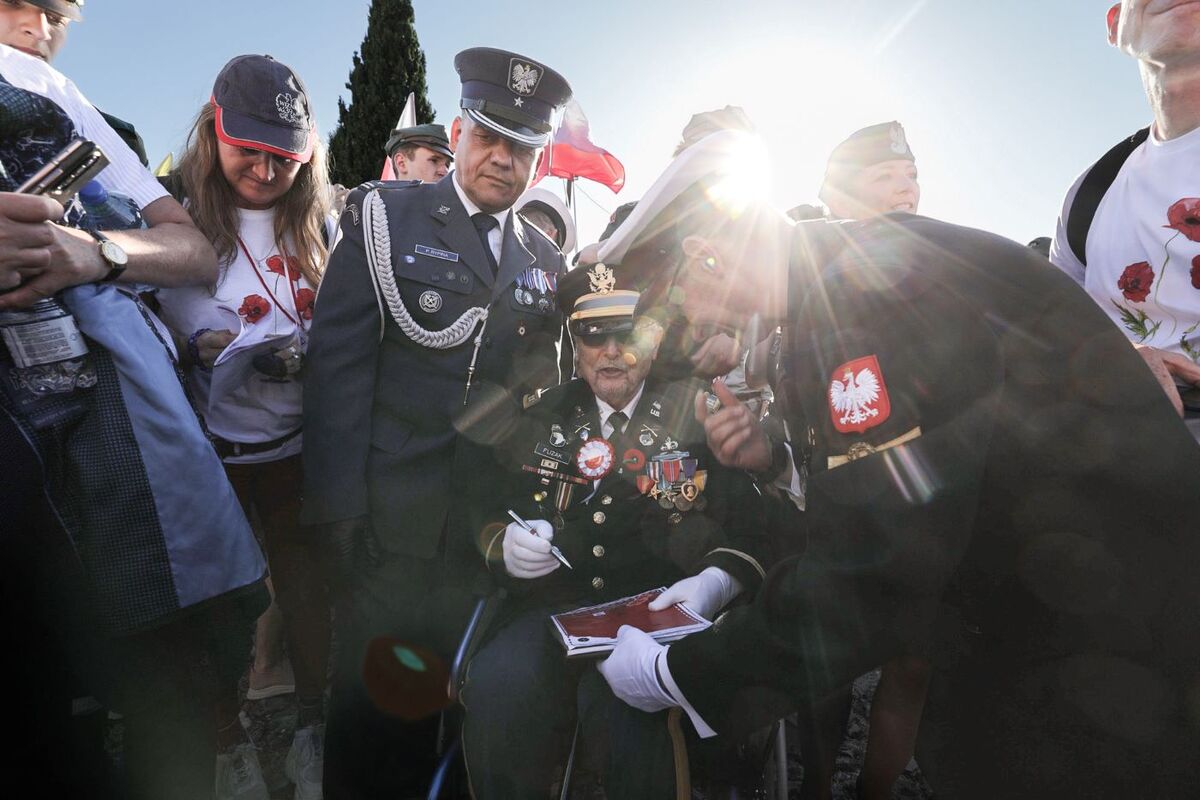
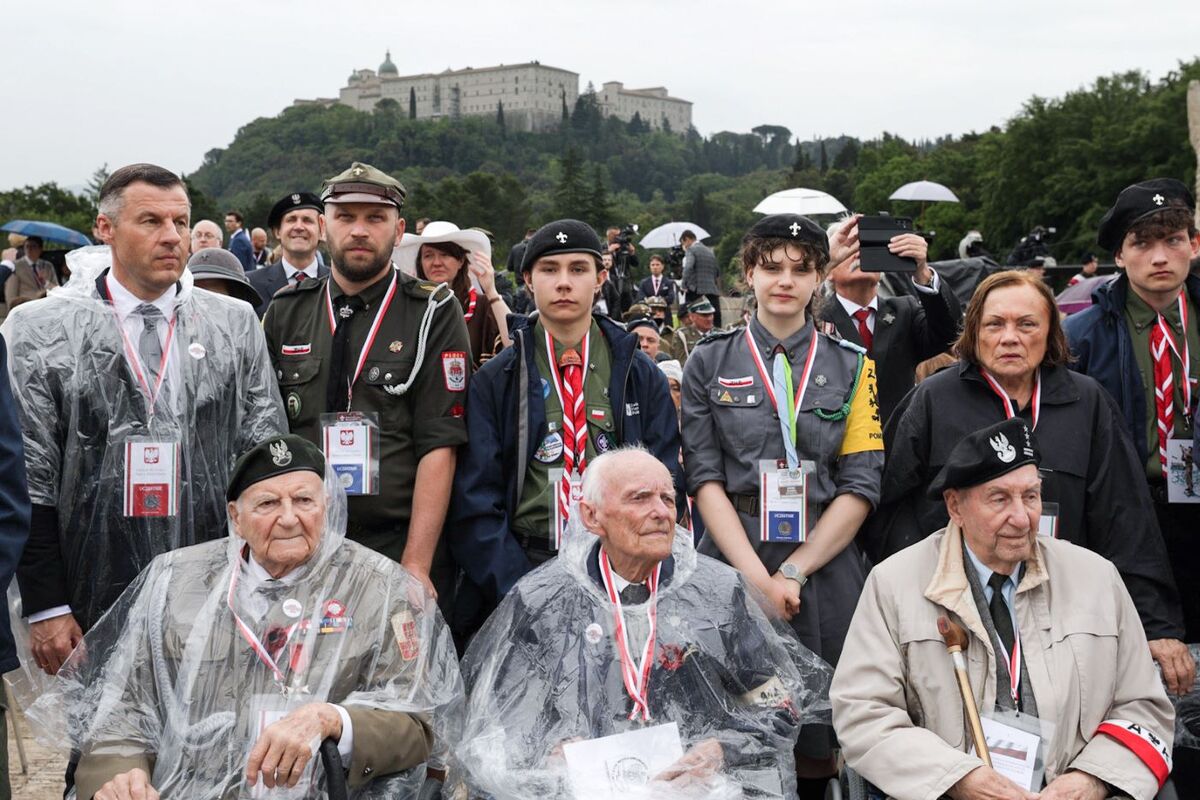
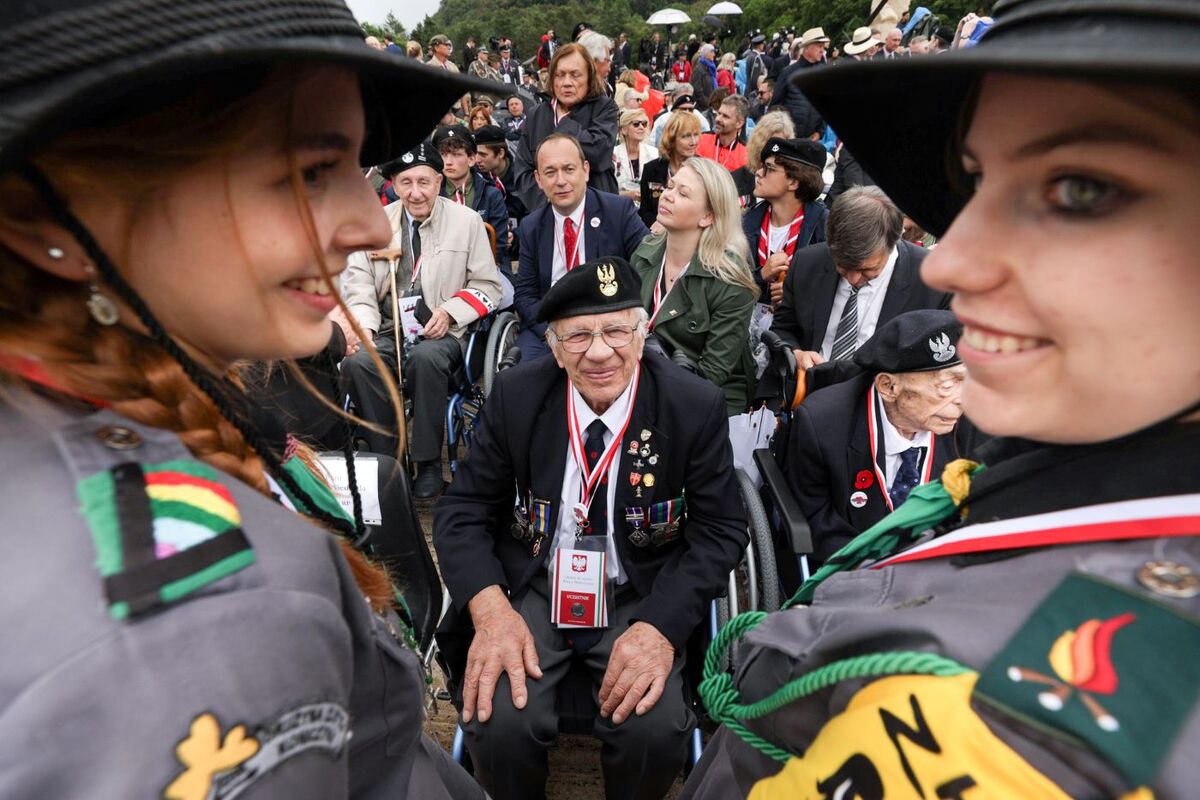
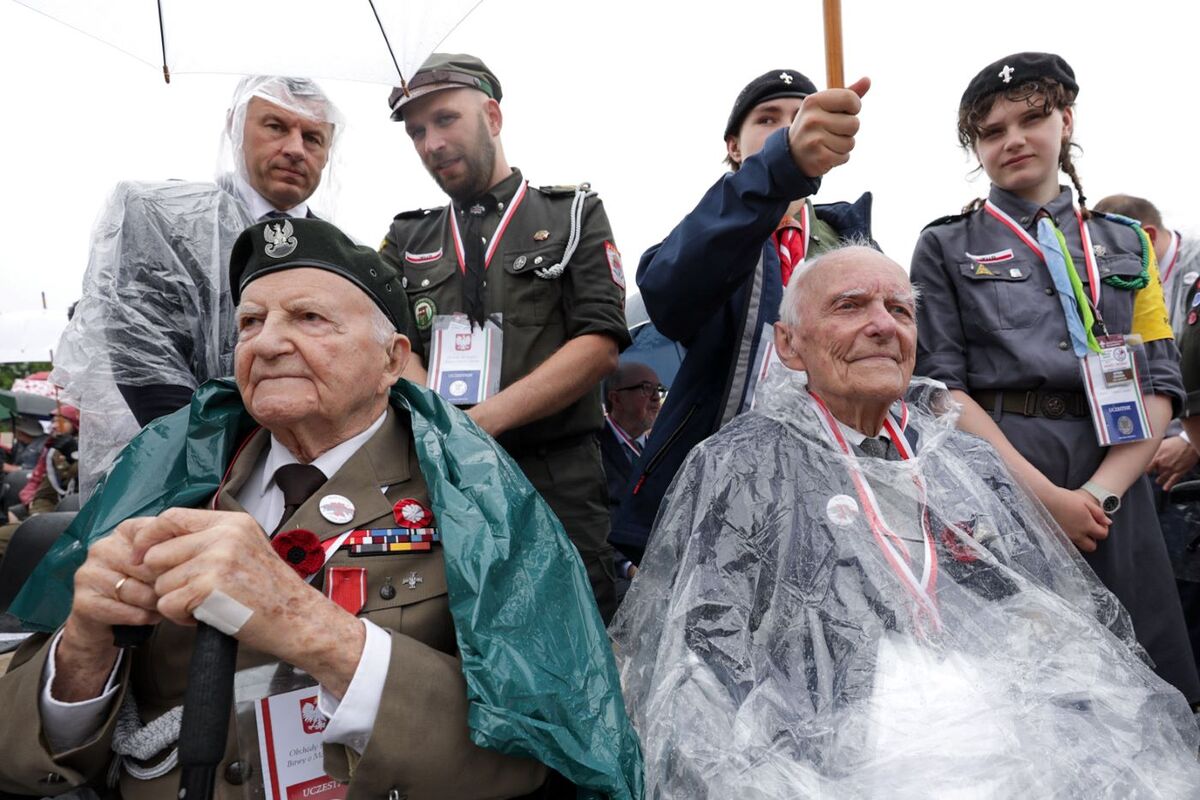
The event as also attended by the Polish Speaker of the Senate Małgorzata Kidawa-Błońska, the Head of the Office for War Veterans and Victims of Oppression Lech Parell, the Mayor of Piedimonte San Germano Gioacchino Ferdinandi, the veterans of the struggle for Polish independence, including the last veterans of the 2nd Polish Corps and their families.
After the ceremony, its participants could familiarize themselves with the IPN "Trails of Hope. The Odyssey of Freedom" exhibition in Piedimonte San Germano. Located in the Monte Cassino area, the town of Piedimonte was one of the most important points of German defense, as it blocked the Allied road to Rome. The task of capturing the bastion, which was heavily fortified and defended by the elite 1st Parachute Division, was given to soldiers of the 2nd Polish Corps on 18 May 1944.
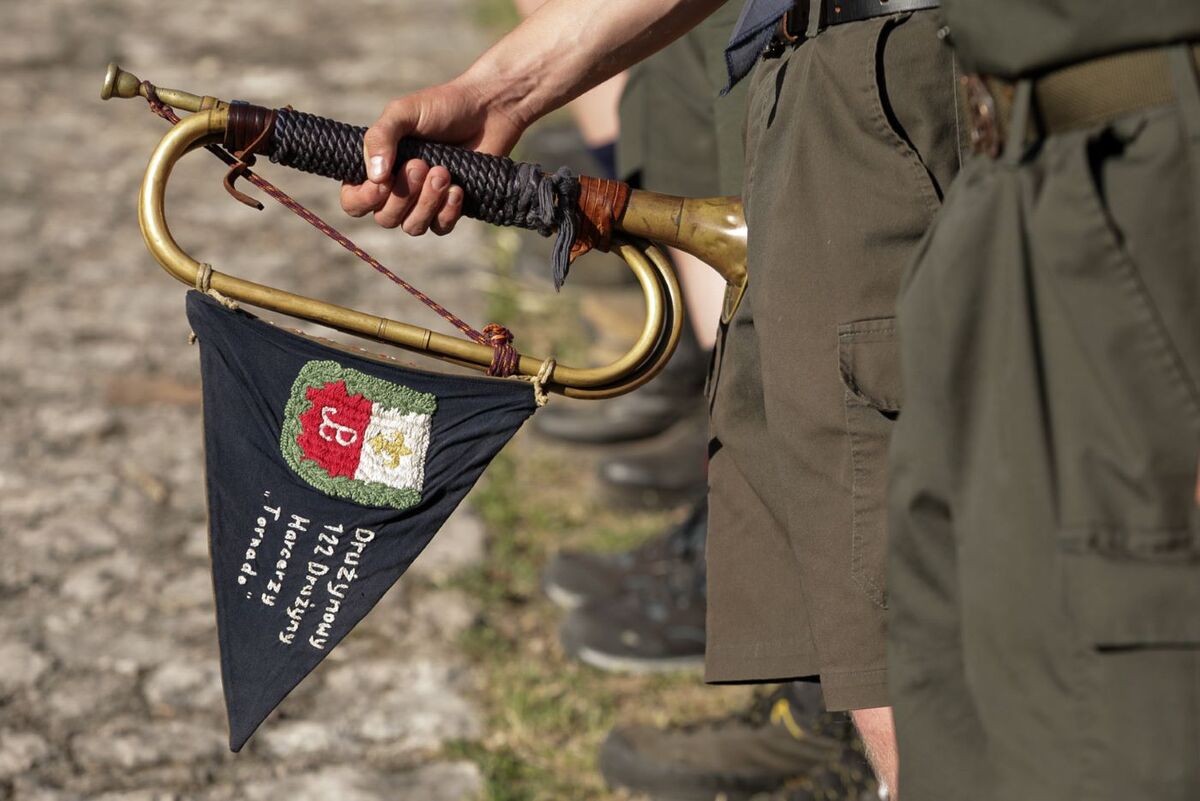
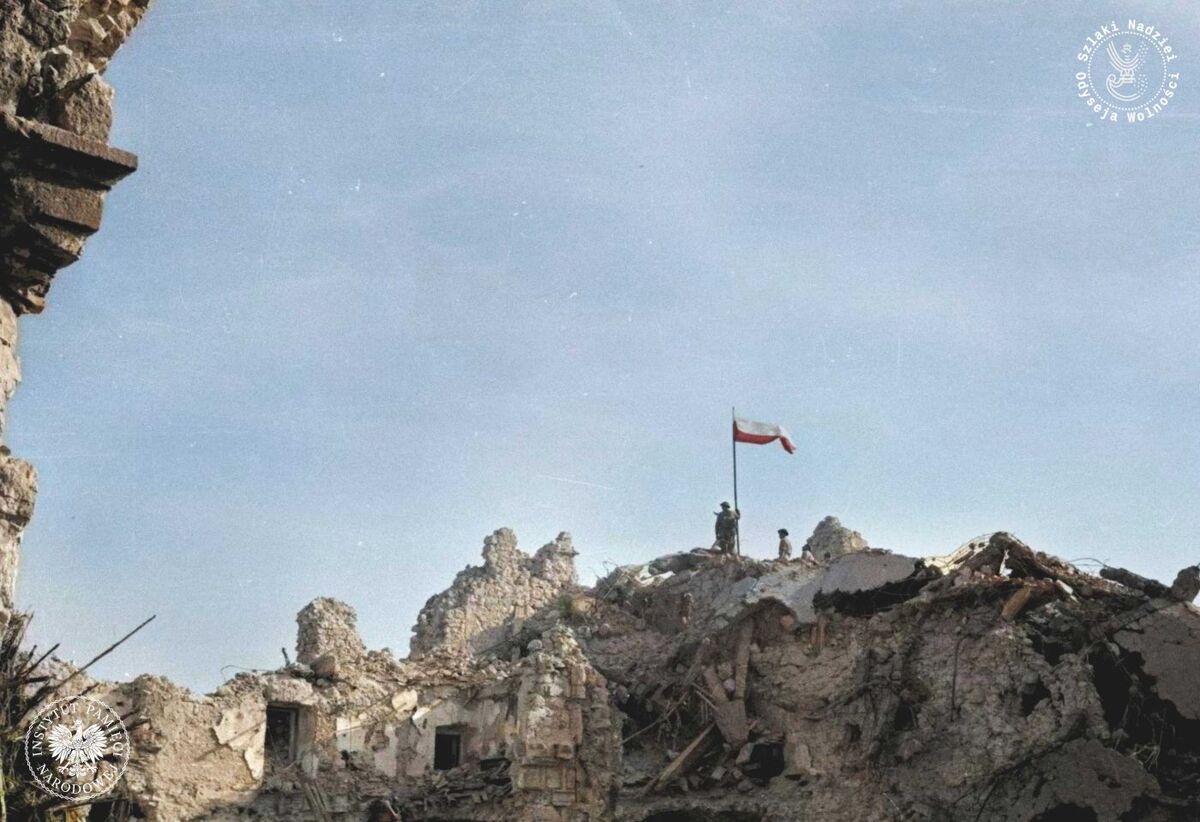
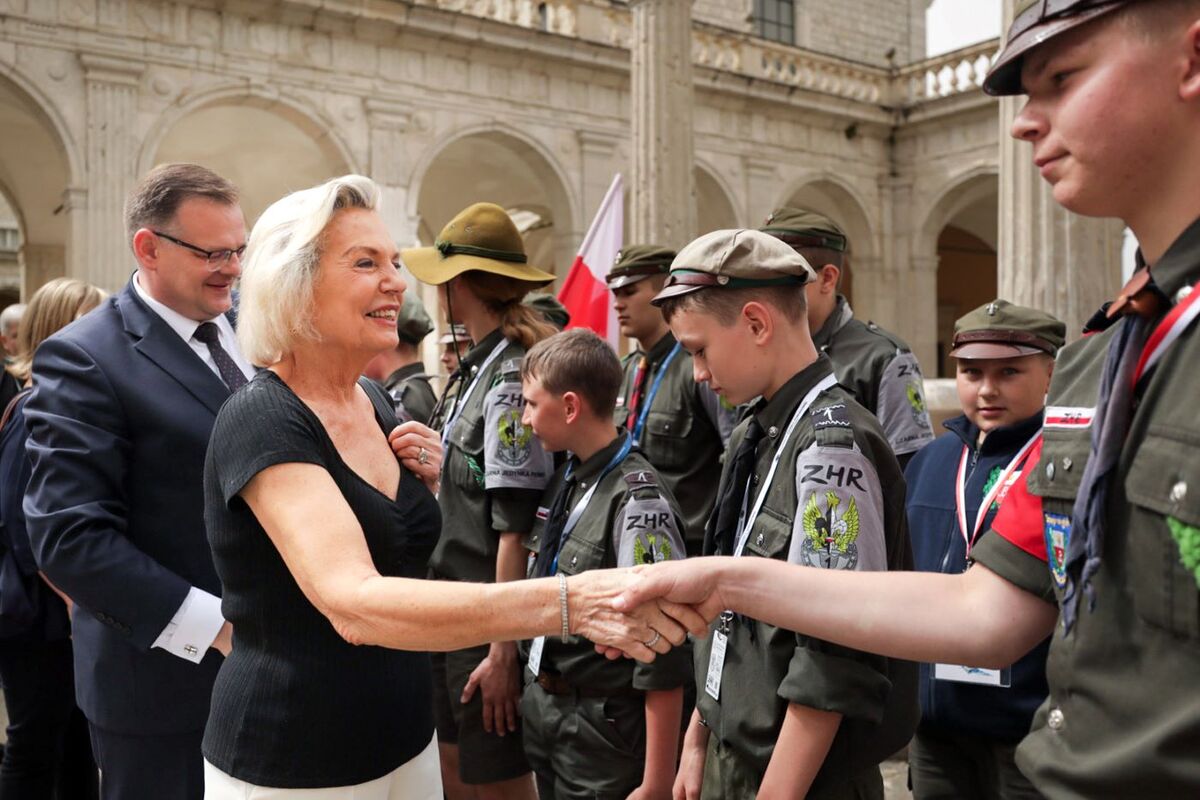
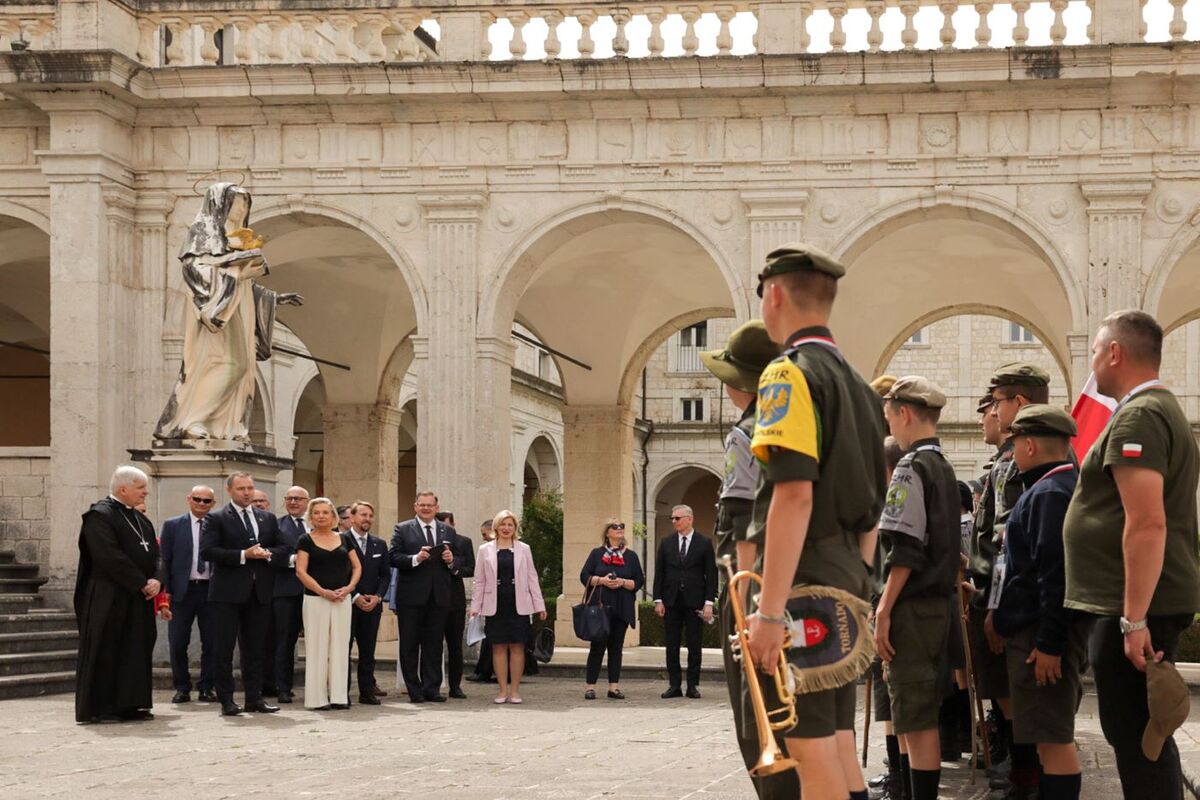
On 18 May, the IPN "Trails of Hope. The Odyssey of Freedom" exhibition was presented on the grounds of the Benedictine Abbey. The took place with the participation of the honorary patron of the project and at the same time General Anders’ daughter, Her Excellency Ambassador Anna Maria Anders, as well as the Abbot of the Benedictine Monastery, Luca Fallica.An important moment of the event was the playing of the "St. Mary's Trumpet Call" by scout Kacper Durka, which referred directly to the historic performance of the song 80 years ago by platoon sergeant Emil Czech after the capture of Monte Cassino.
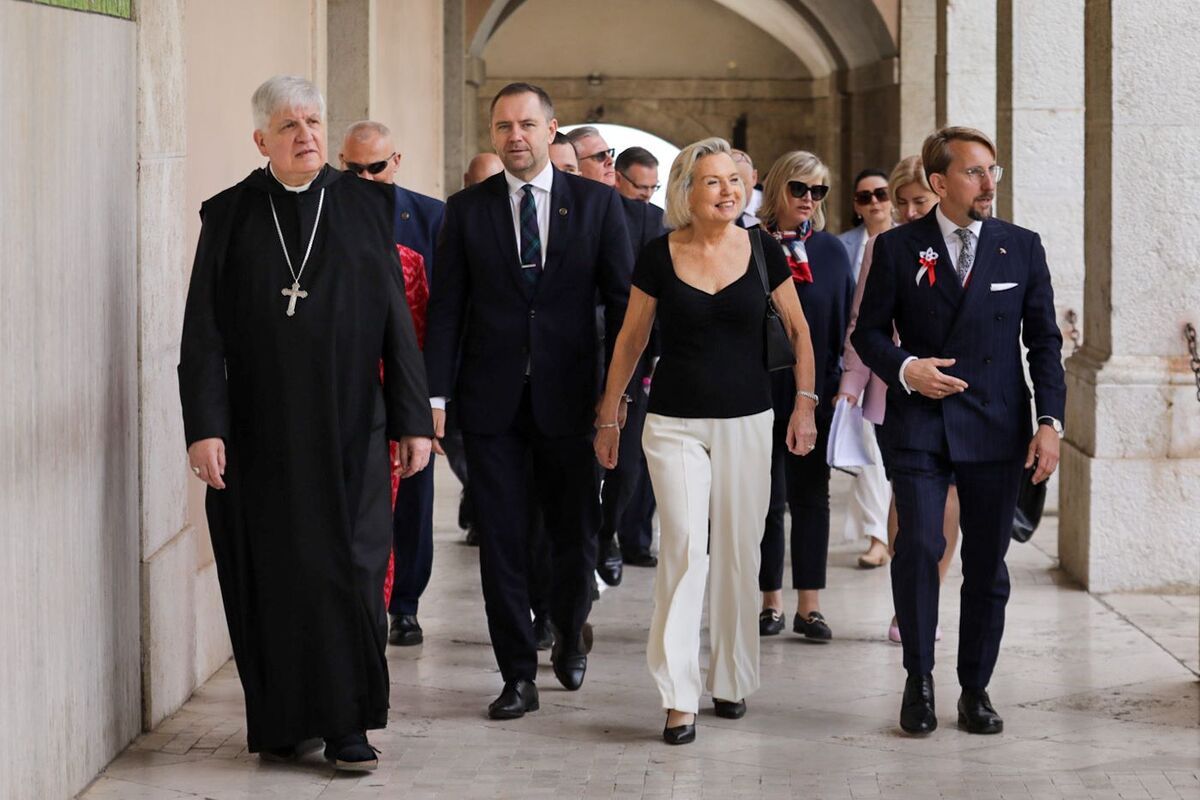
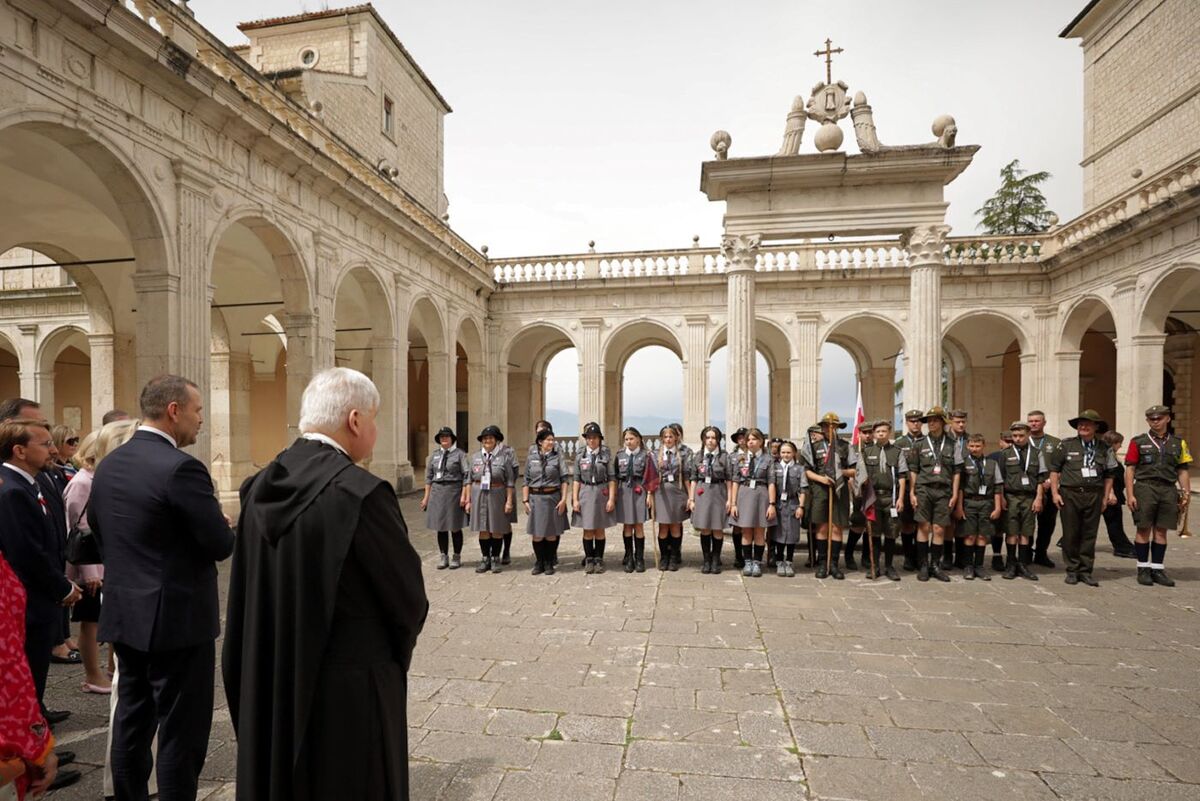


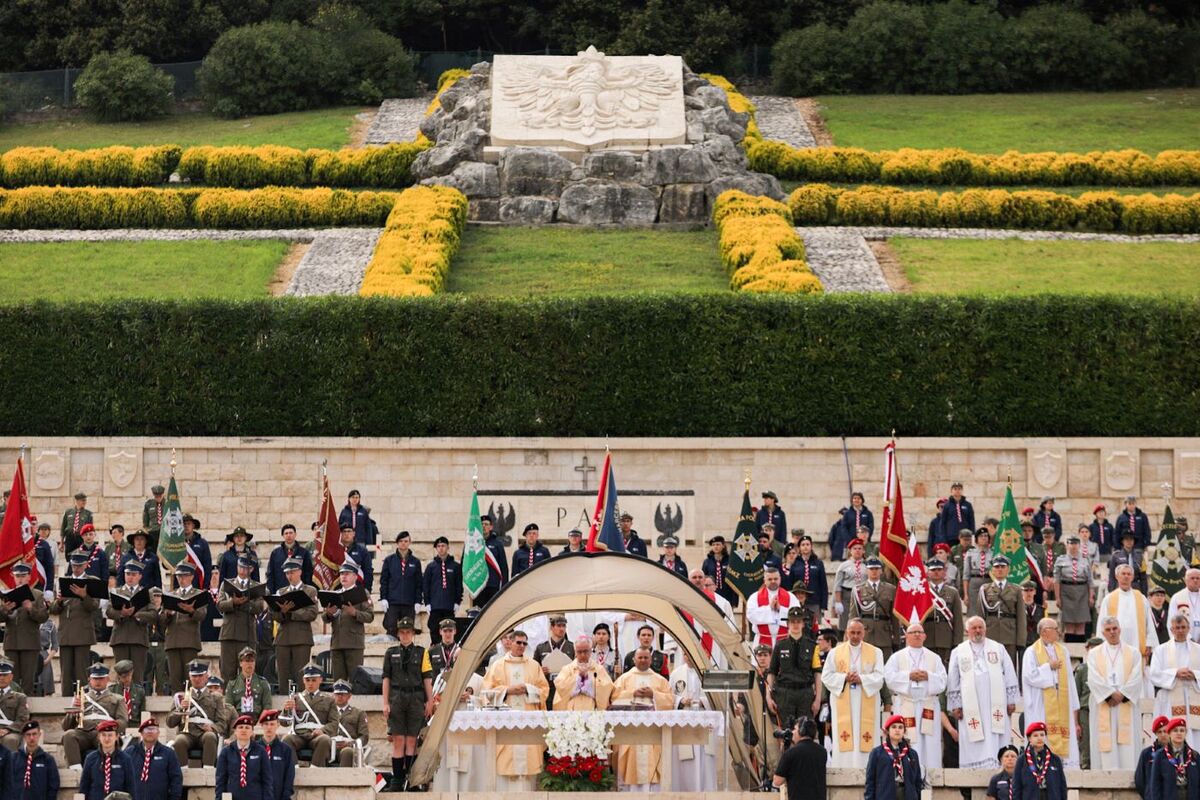
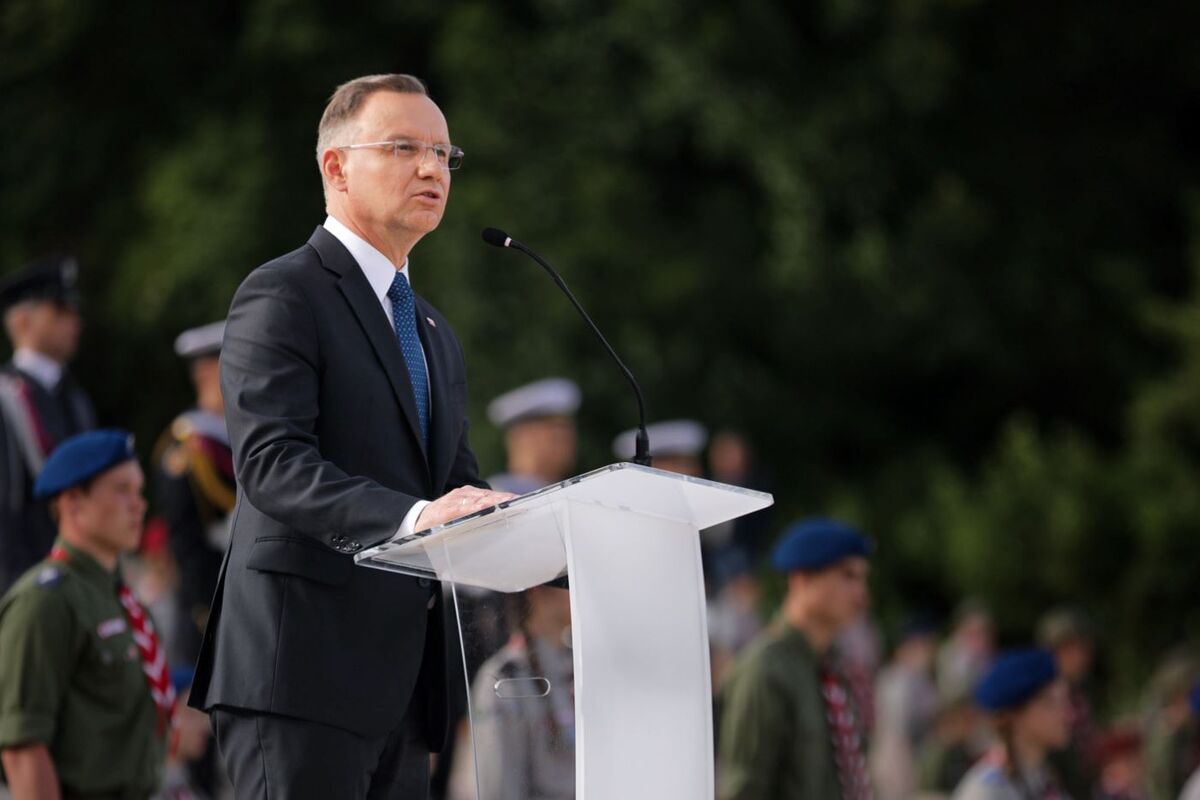
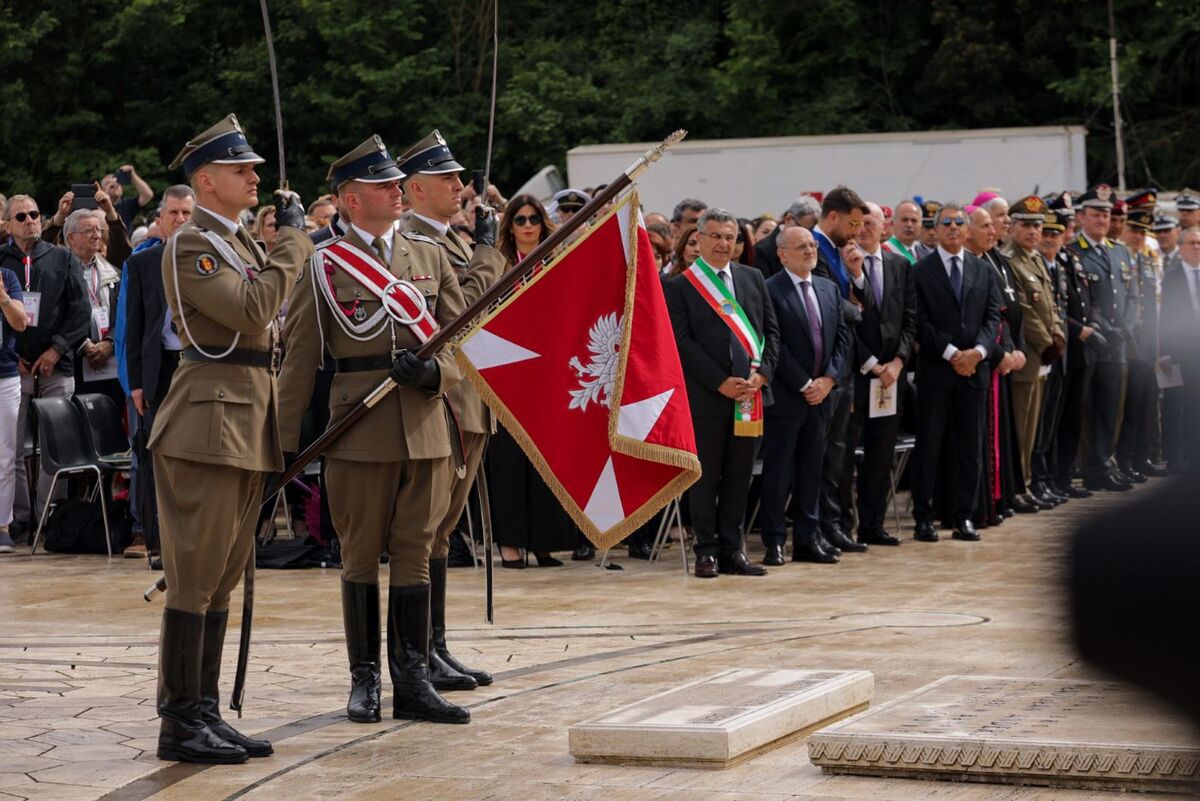
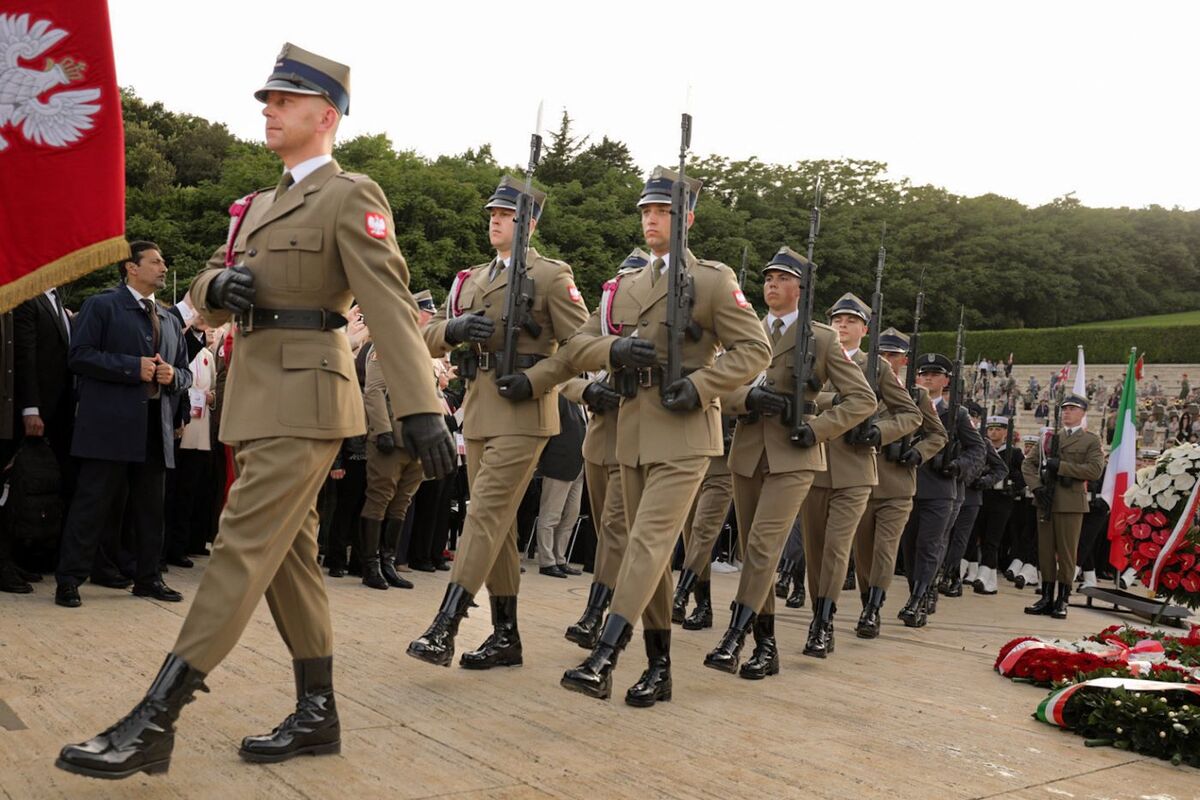
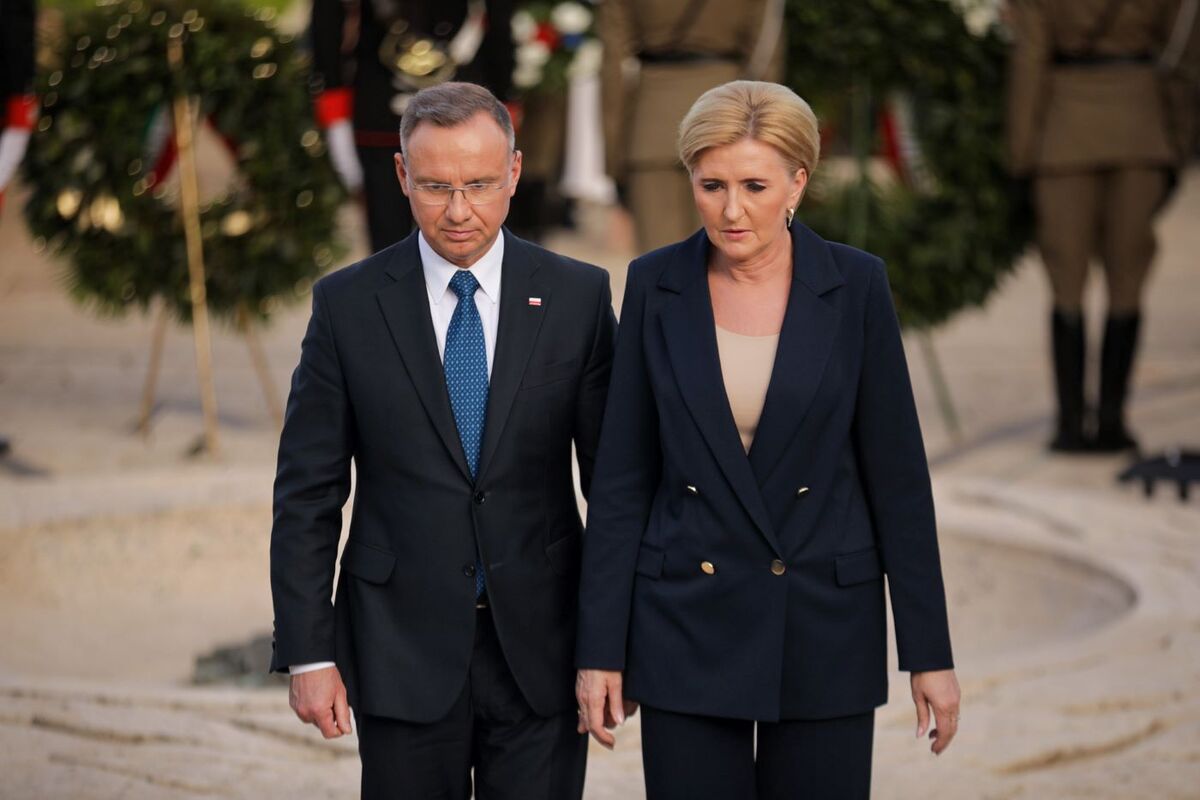
The official celebrations, with the participation of Polish President Andrzej Duda, began in the afternoon on 18 May at the Polish Military Cemetery on Monte Cassino. The ceremony included a field mass and a roll call of the fallen as well as the ceremonial laying of wreaths.
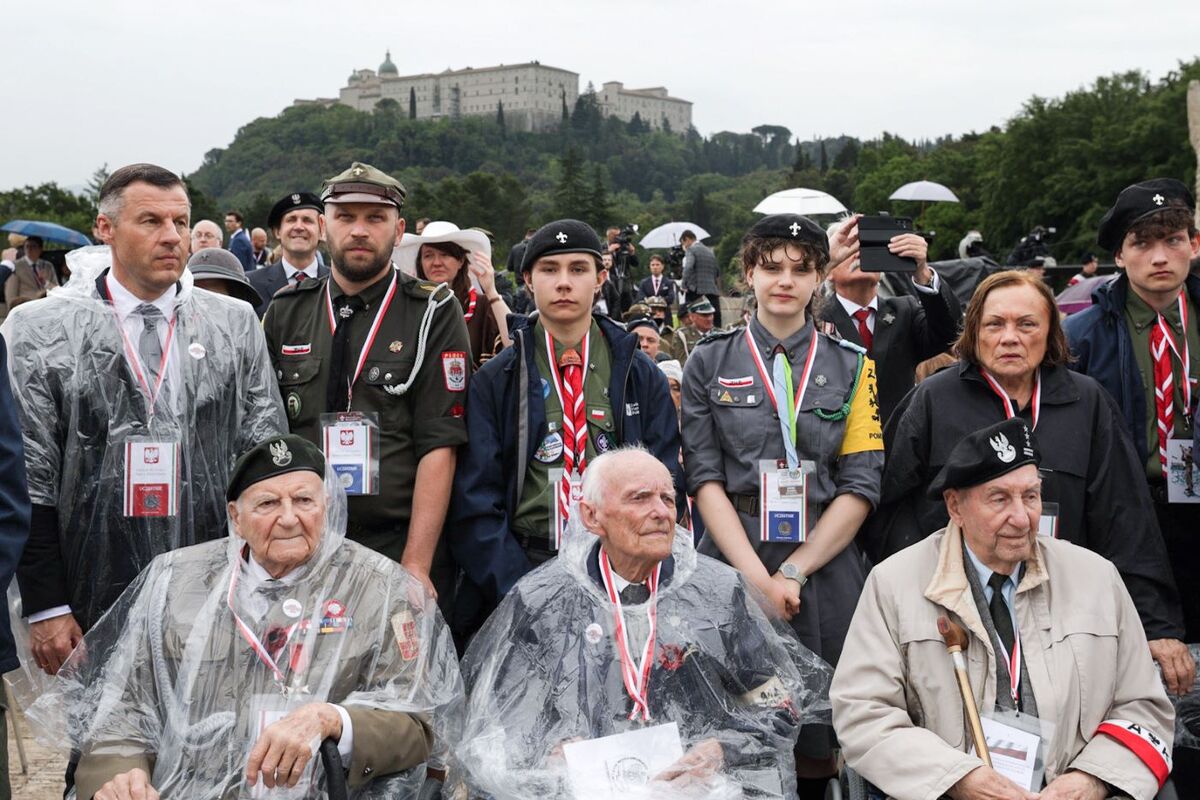
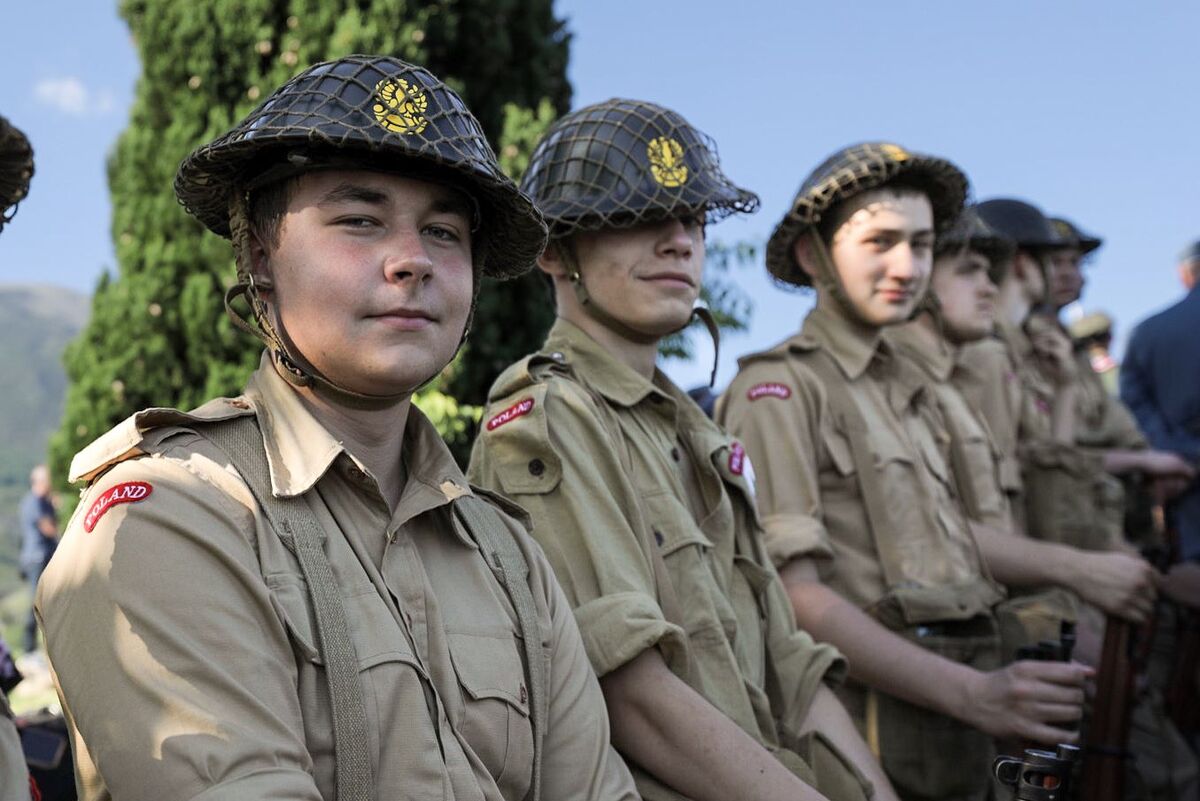
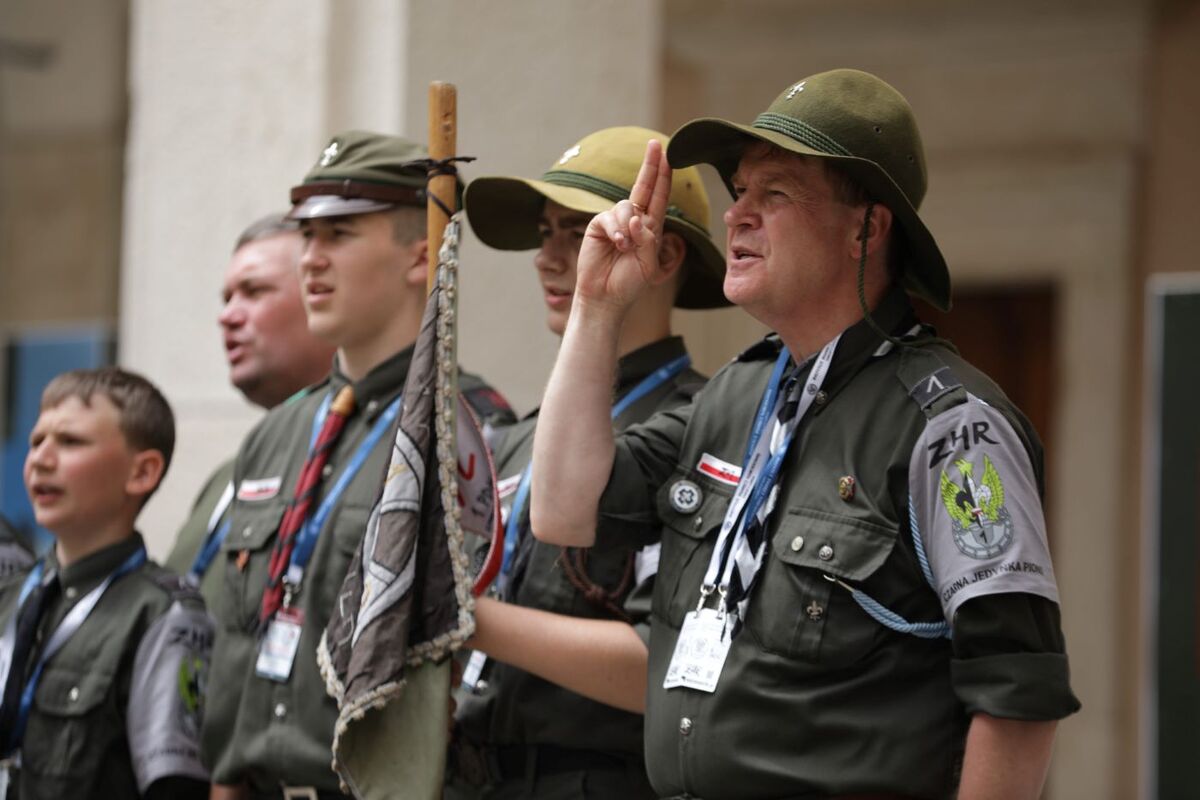
The event was also attended by the President of Italy, Sergio Mattarella, the Ambassador of Poland to Italy, Anna Maria Anders, the President of the IPN, Karol Nawrocki and many others, including veterans of Polish Armed Forces and Polish Scouts.
Italy at War
From 1922 Italy was ruled by the fascist government of Benito Mussolini, who gained power through a coup d'état. By the mid-1930s, Mussolini was clearly aiming for dominance in North Africa and the Mediterranean, signing numerous cooperation and alliance agreements with the Third Reich. In 1940, despite considerably outnumbering their opponents, the Italian attack on southern France or Greece was not successful. The defeat in North Africa and the Allied invasion of Sicily led to the collapse of Mussolini's dictatorship. Most of the country's territory was occupied by German troops. On 13 October 1943, the new government of the Kingdom of Italy declared war on the Third Reich and Japan, thus becoming a member of the anti-fascist coalition.
Avalanche
The Allied invasion of Italy began on 10 July 1943 with the landing in Sicily.
The allied countries' landing on the Apennine Peninsula took place in September of the same year at three locations: near the city of Salerno (south of Naples), from the sea near the city of Taranto, and in Calabria in the Reggio di Calabria area.
Directly involved in the operation code-named “Avalanche” were the Polish ships ORP “Piorun”, ORP “Ślązak”, ORP “Krakowiak” and the submarine ORP “Dzik”, as well as the ships MS “Batory”, MS “Sobieski”, SS “Kościuszko” and SS “Narvik” transporting soldiers, armaments and equipment.
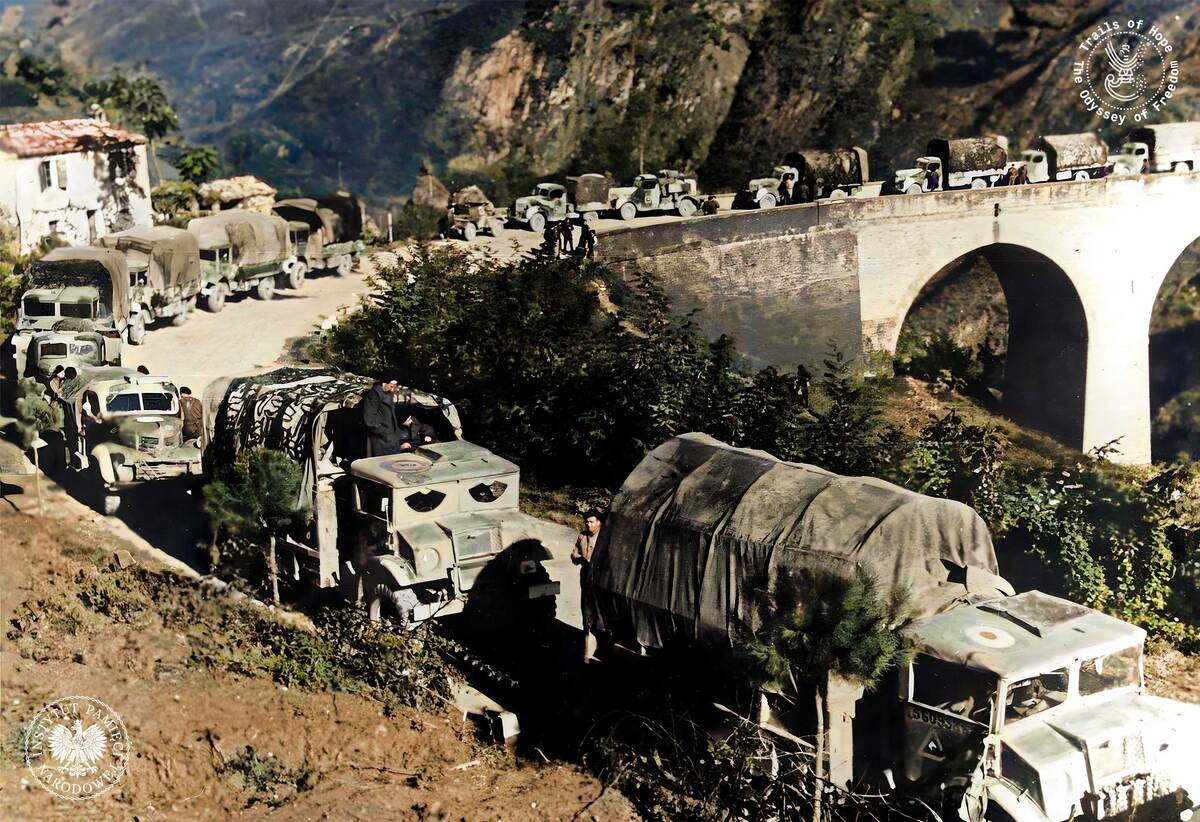
Transports of the Polish II Corps together with British troops arrived in Italy from Egypt from late December 1943 to early May 1944 and landed in Taranto and Naples.
The Road to Rome is closed
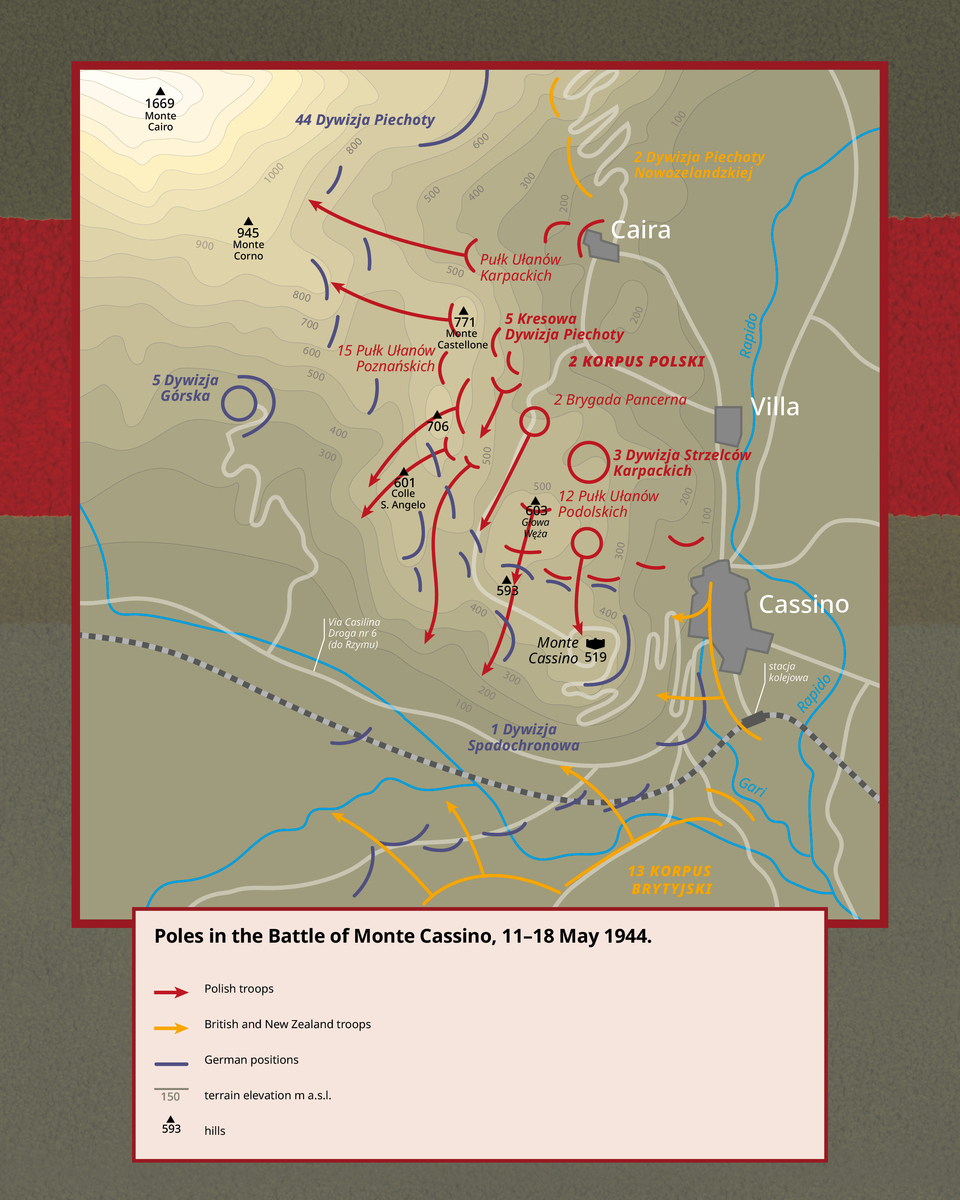
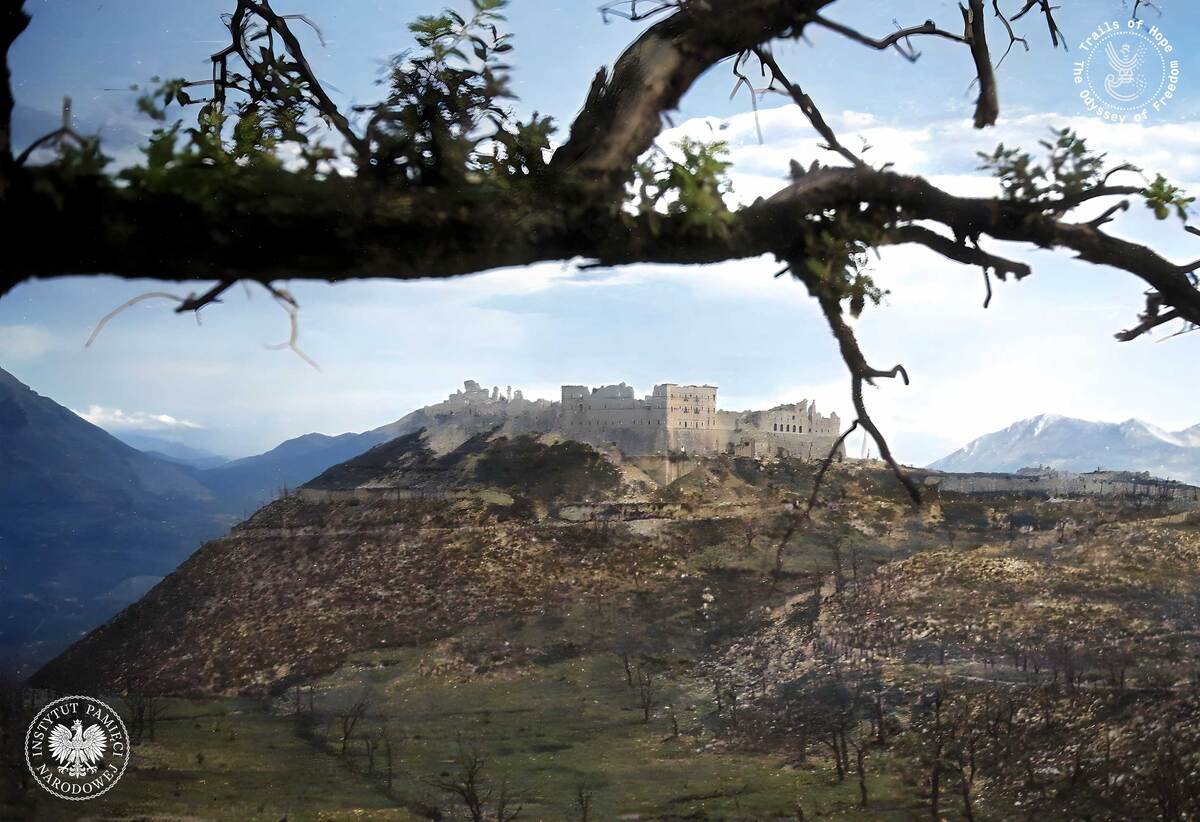
Along the Garigliano, Rapido, Sangro rivers, a German defence line called the Gustav Line stretched for 130 km. Mount Cassino rises above the Liri river valley, between Rome and Naples. Its strategic location on an important road meant that the Benedictine monastery built on it was included by the Germans in their defence system. The Allies had been attempting to capture the hill since January 1944, each successive assault ending in failure. The landing at Anzio (behind the German defence line) also failed to produce the expected results.
On 15 February 1944, the monastery on Monte Cassino was bombed and the Germans used the ruins for further defence. In early May 1944, the fourth assault on the hill began. The main force was the Polish II Corps.
The Decisive Strike
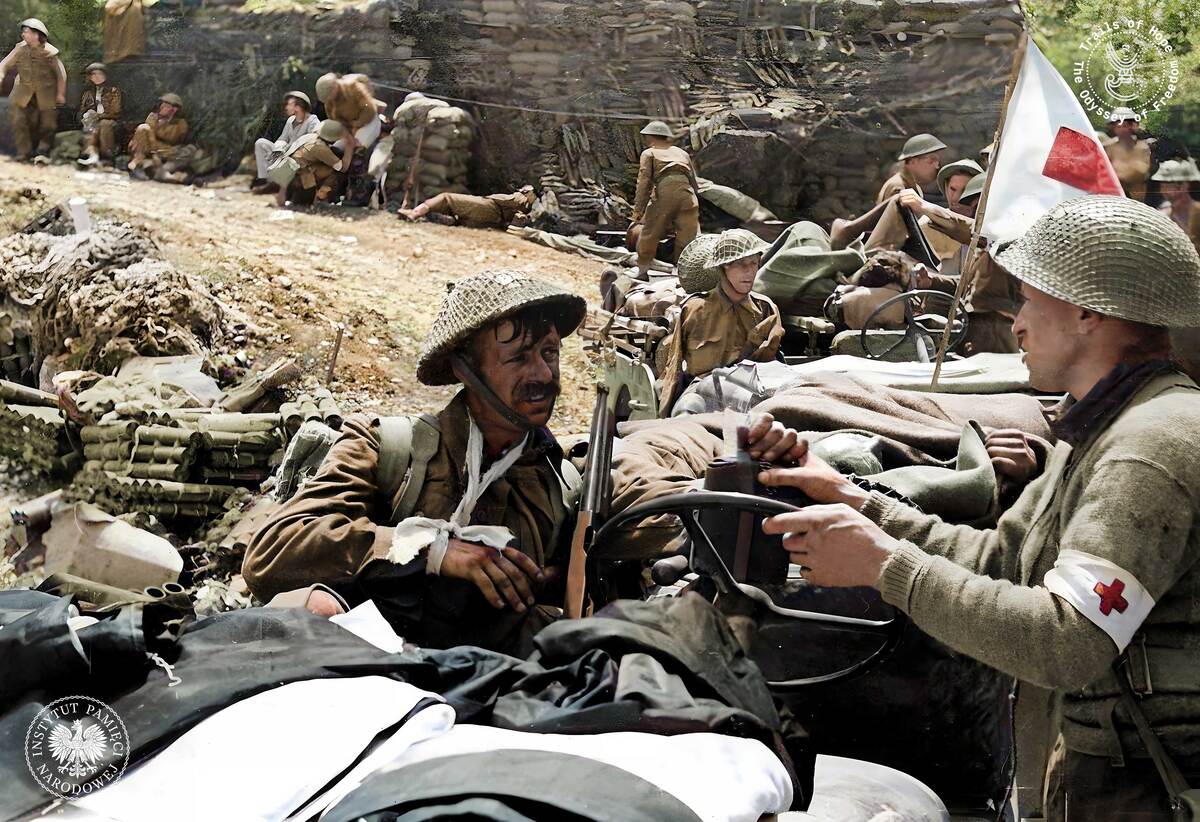
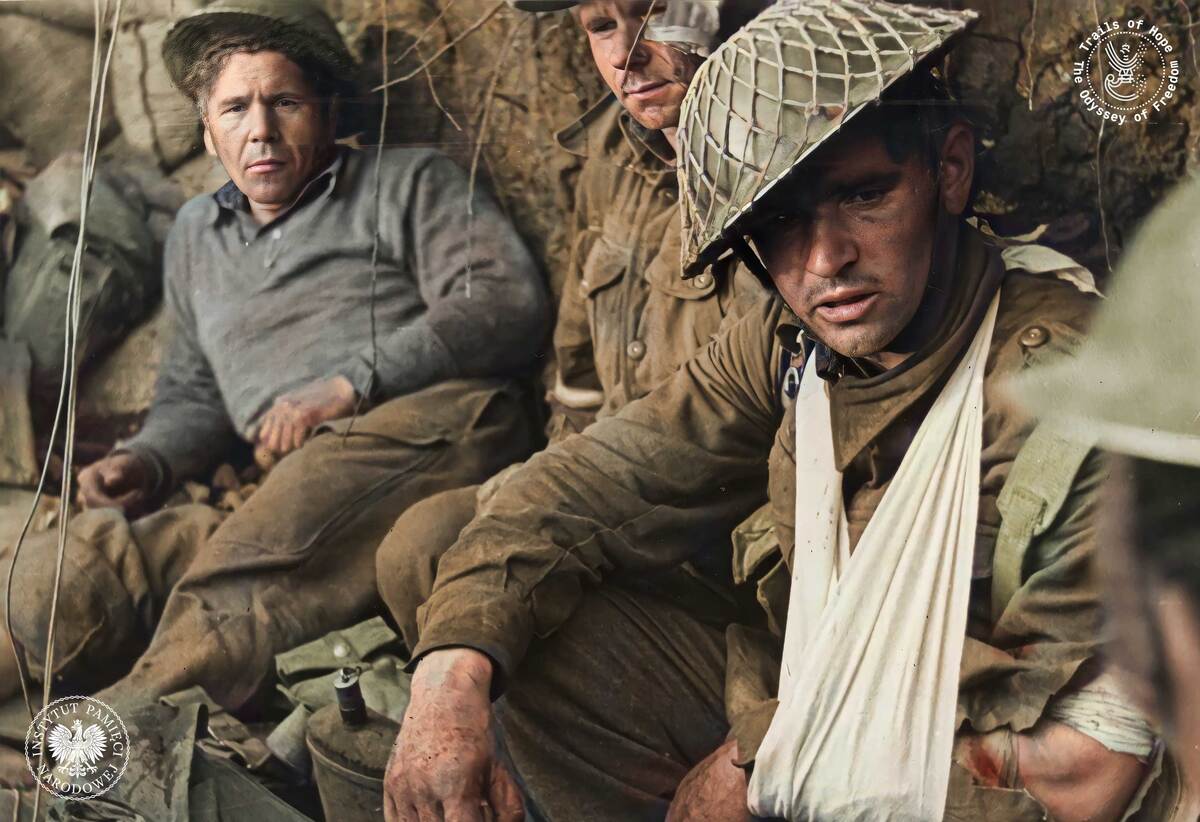
The German positions at Monte Cassino consisted of two defensive rings connected in the shape of the number eight. The attack by Allied forces began on 12 May 1944. The soldiers launched a night attack in a mined, almost unprotected area, full of barbed wire and obstacles, under German fire from bunkers, artillery positions and mortars, which could not be destroyed by the hourly fire of more than 1,000 Allied guns. It was only the second attack that brought a breakthrough and “Phantom Ridge”, Sant’Angelo (593), “Monte Castellone” and “Massa Albaneta” were captured and held. On 17 May, at the end of the day, the Poles broke through the northern edge of the defensive ring. Bunker after bunker were captured and German counterattacks were repelled.
Thanks to the coordinated actions of all Allied forces at Cassino, the Germans, fearing encirclement in the monastery, began to retreat. On the morning of 18 May, a patrol of the 12th Podolian Lancers Regiment under the command of Second Lieutenant Kazimierz Gurbiel entered the ruins of the monastery.
Piedimonte San Germano
After breaking through the German defences on the Gustav Line in the Monte Cassino area, the Polish troops launched an attack near the village of Piedimonte San Germano, located to the north-west of the monastery hill. The village was part of the additional German defence known as the Hitler line - from Monte Cairo via Piedimonte, Pontecorvo, San Olivia to Terracina.
The Gothic Line
After the Battle of Monte Cassino and the Allied invasion of Rome, the Allied forces headed to northern Italy, where the Germans built a fortification line covering the Po River valley. Artillery and machine gun bunkers, minefields and abatis were deployed over a length of 320 km and a depth of 30 km (from Pesaro on the Adriatic Sea to Massa on the Ligurian Sea).
The task of the Polish II Corps was to capture Ancona. The port would allow the Allies to shorten supply lines for troops fighting in northern Italy.
The Polish II Corps began operations over the Adriatic Sea from 15 June 1944. German divisions resisted in successive positions, taking advantage of the flowing rivers. In early July 1944 the Poles captured Loreto, Recanati, Osimo, Castelfidardo and San Pietro Hill and approached Ancona.
The Poles made three strikes against German positions on 20-22 May 1944. However, it was not possible to break the enemy lines, only local successes were achieved. During the night of 24-25 May, the Germans, threatened with being outflanked, began to retreat. The abandoned Piedimonte san Germano was taken by Polish troops on the morning of 25 May.
More information about the "Trails of Hope. The Odyssey of Freedom" project