
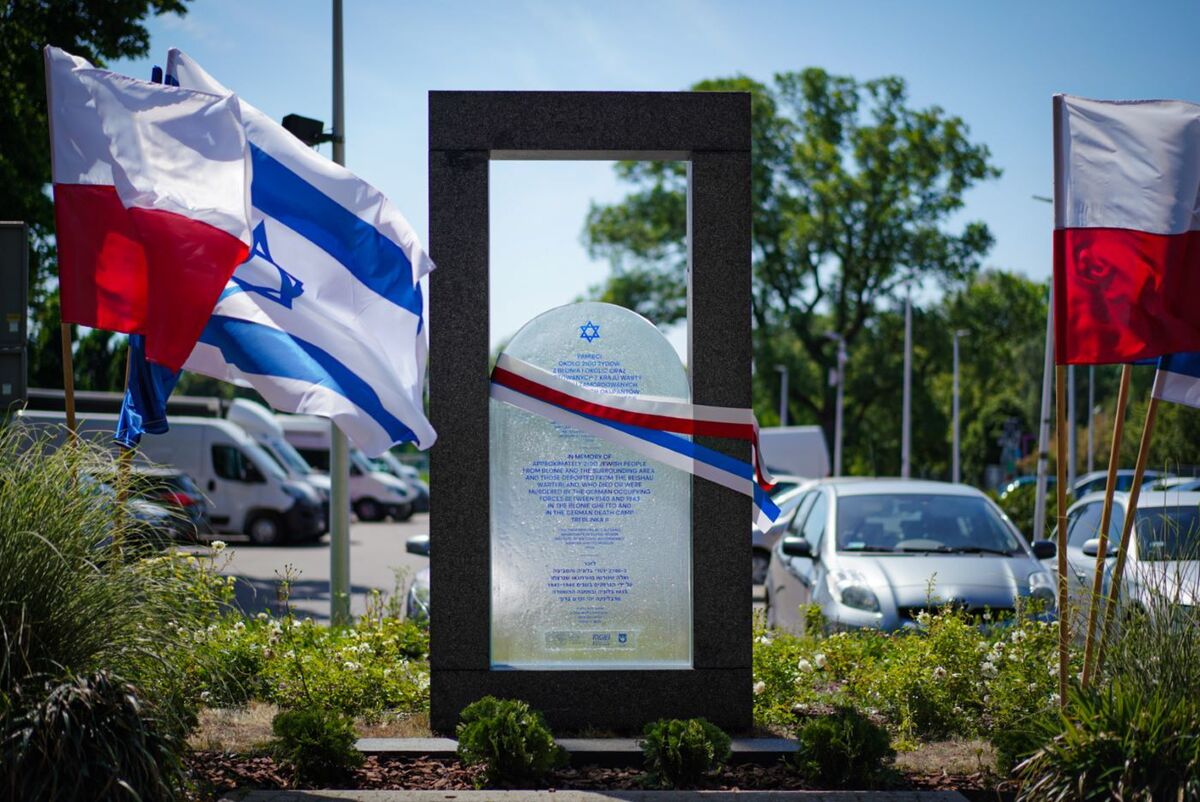
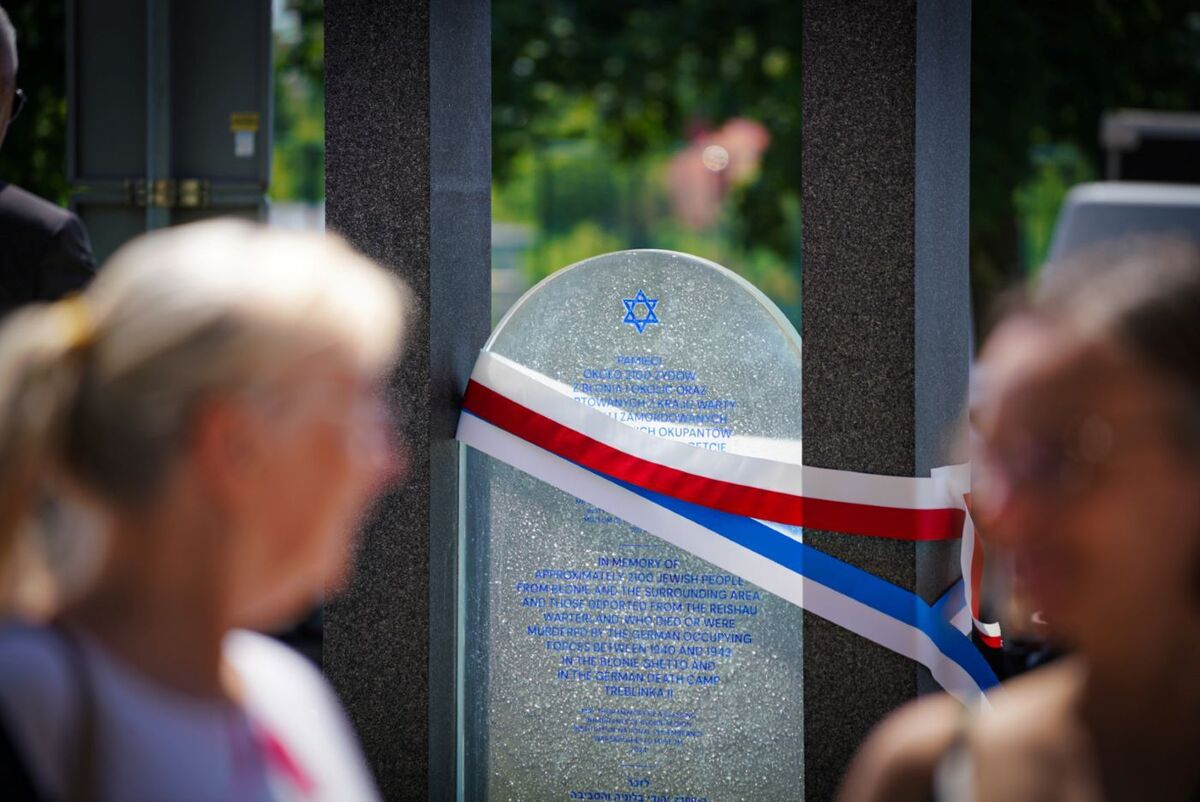
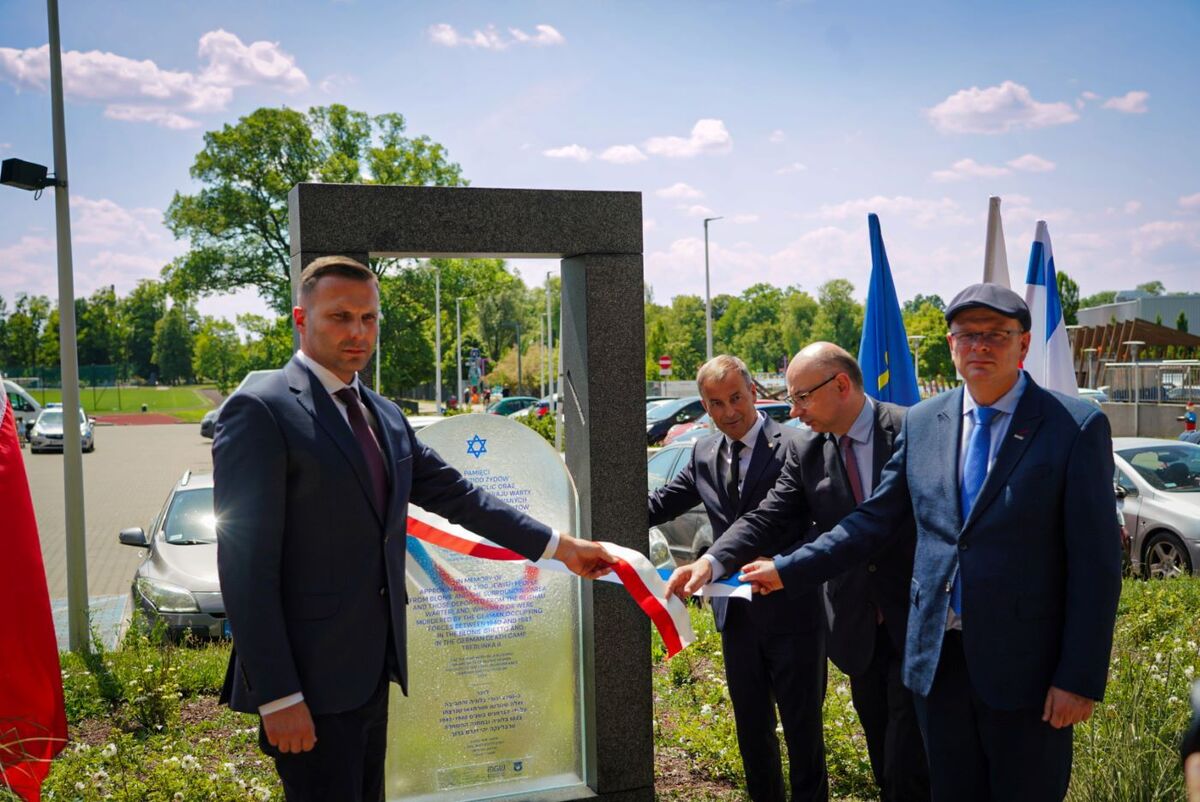
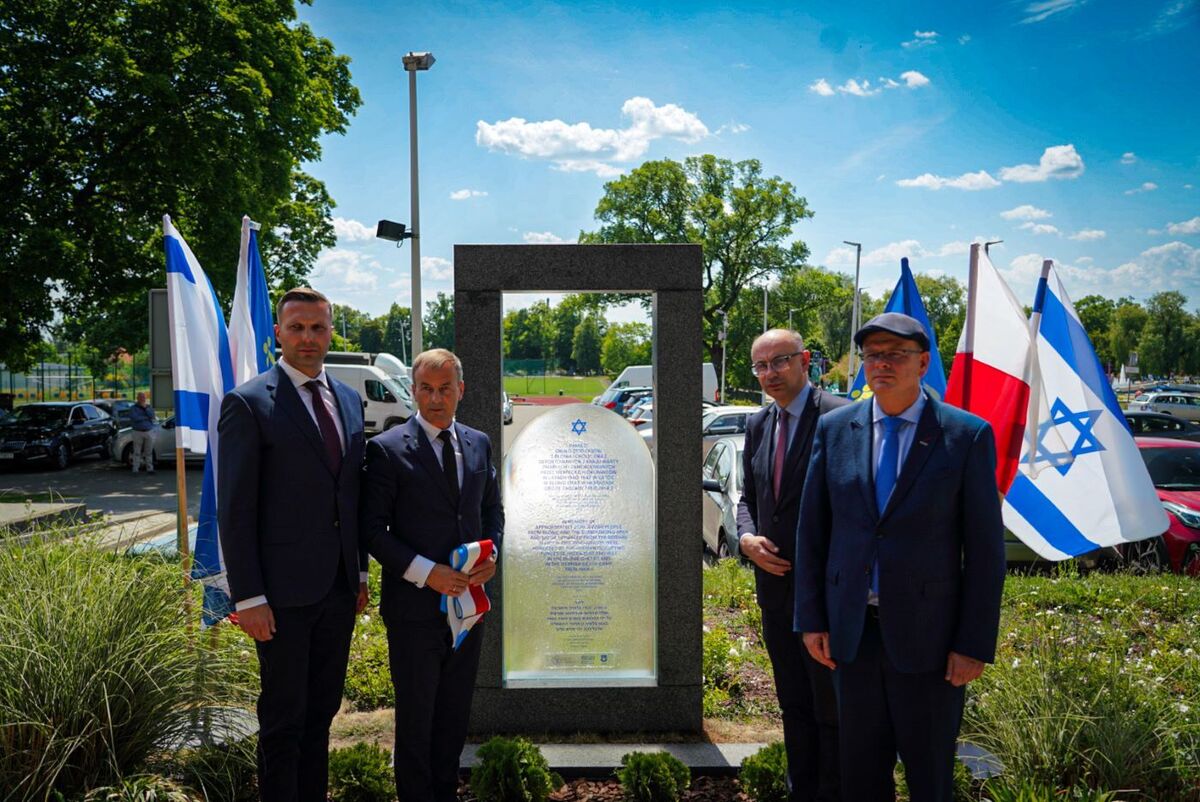
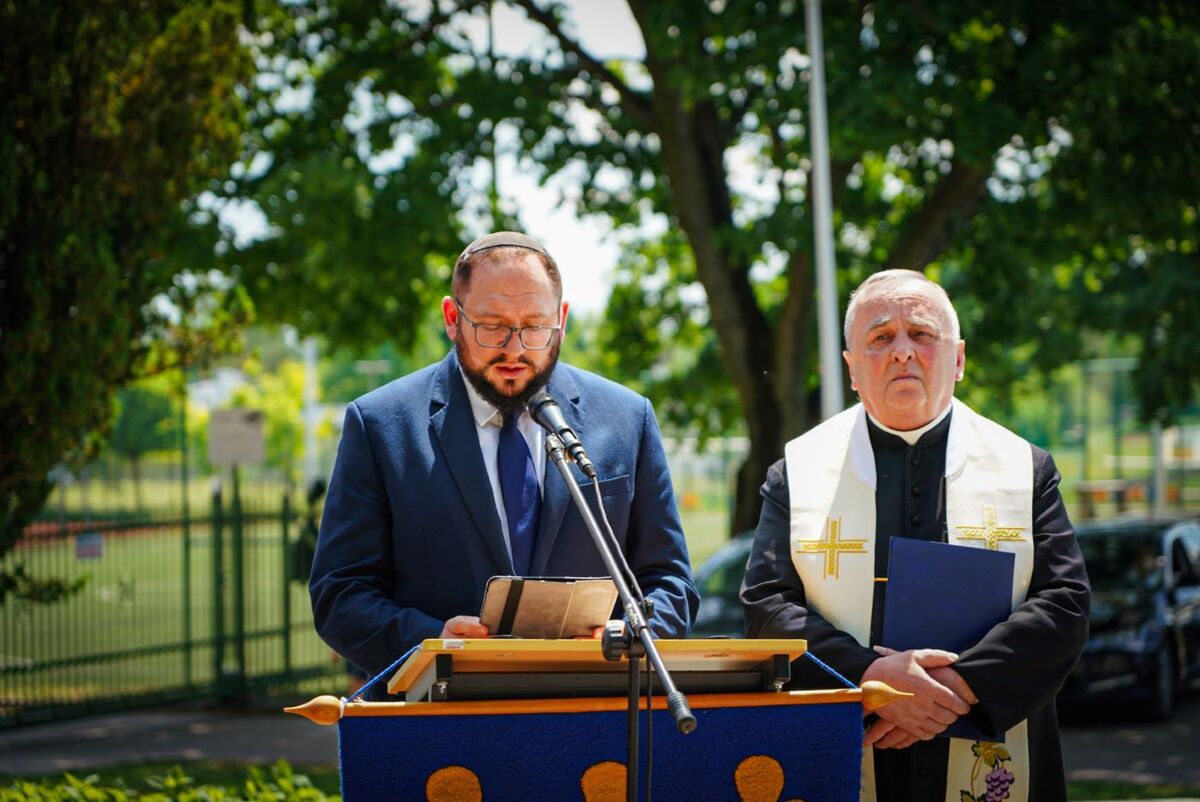
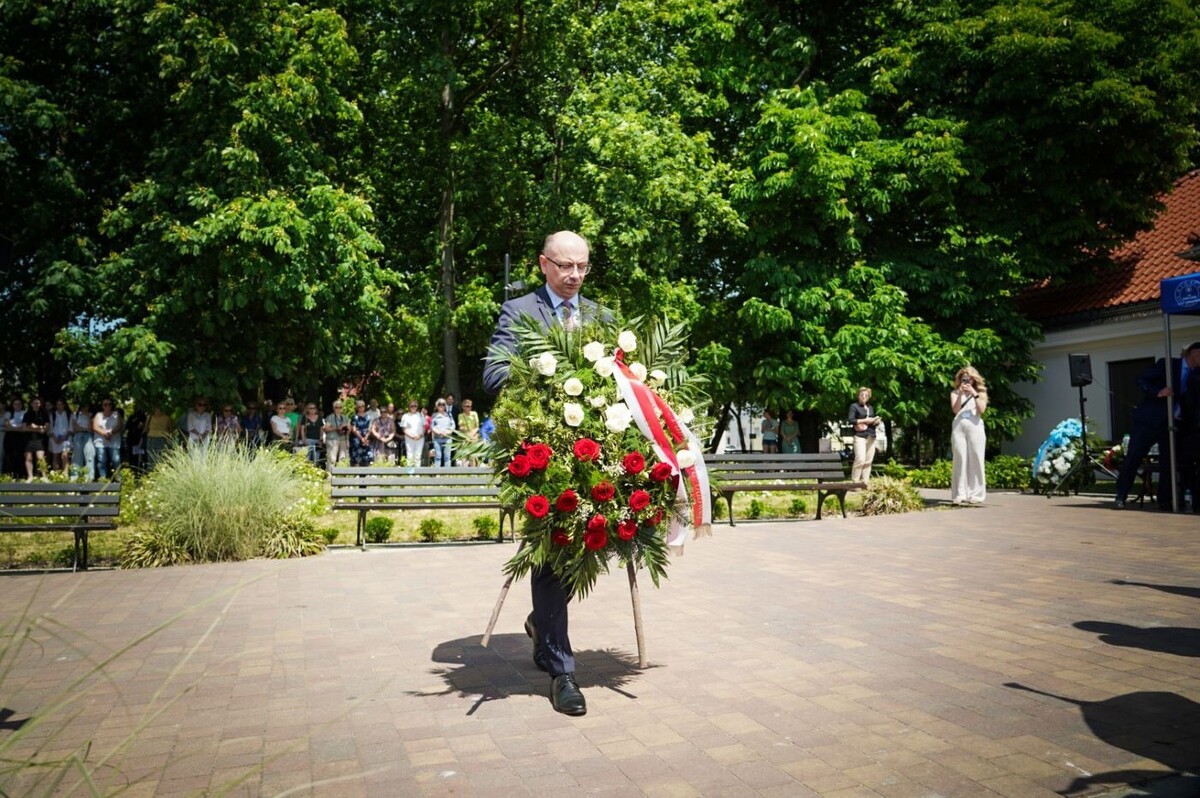
The commemoration is dedicated to the memory of some 2,100 Jews from Błonie and the surrounding area, as well as deportees from the Reichsgau Wartheland, who died or were murdered by the German occupiers in the years 1940–1943 in the Błonie ghetto and in the German Treblinka Extermination Camp (Treblinka II).
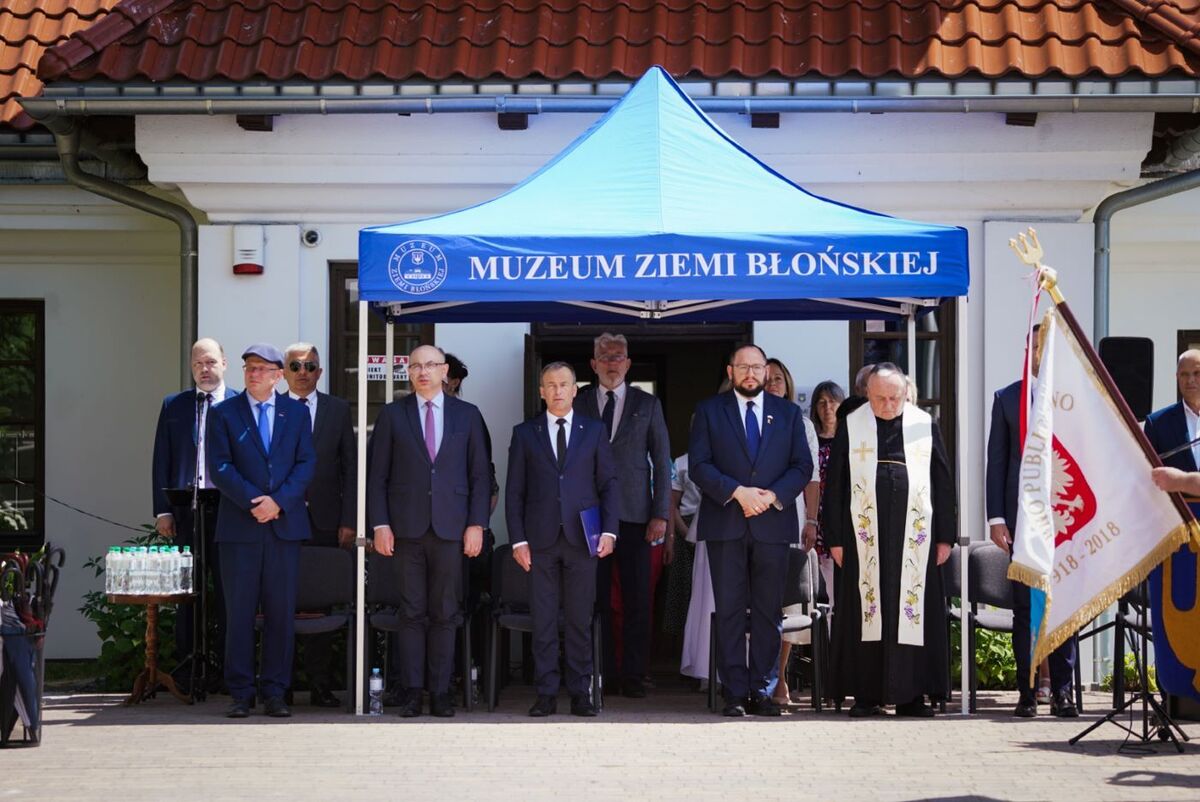
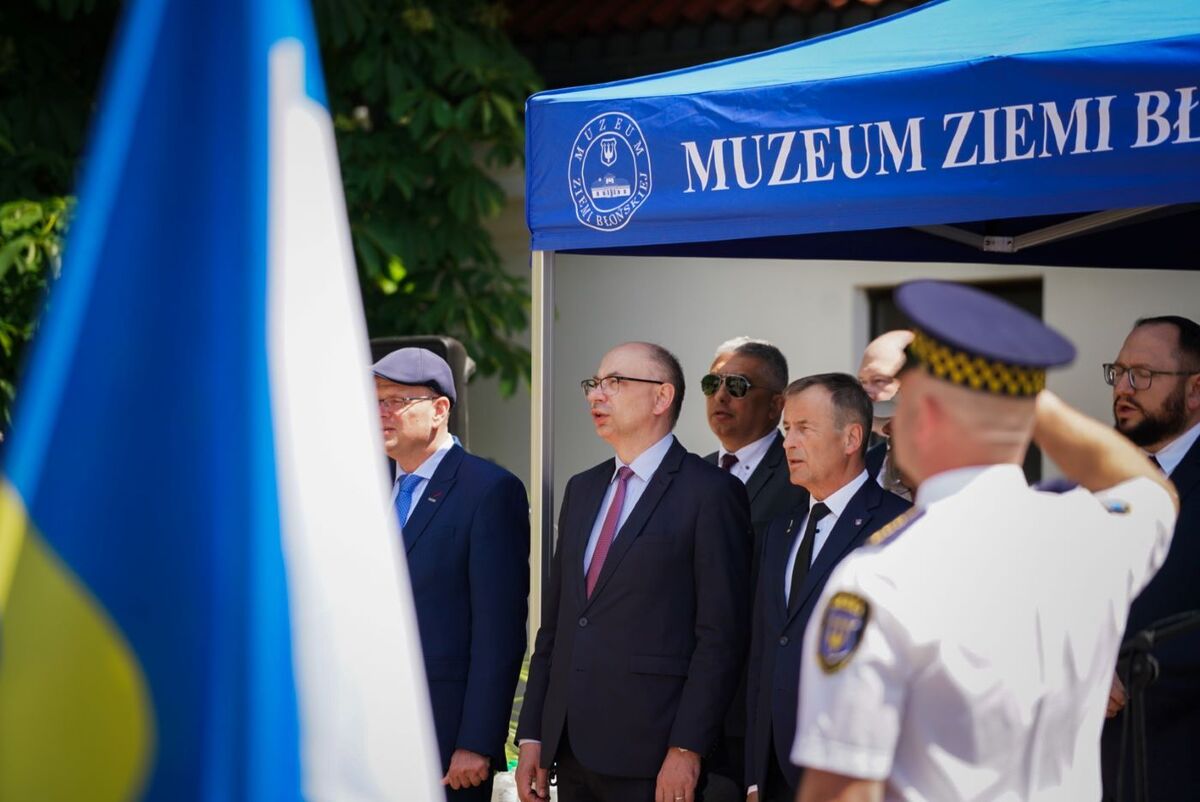
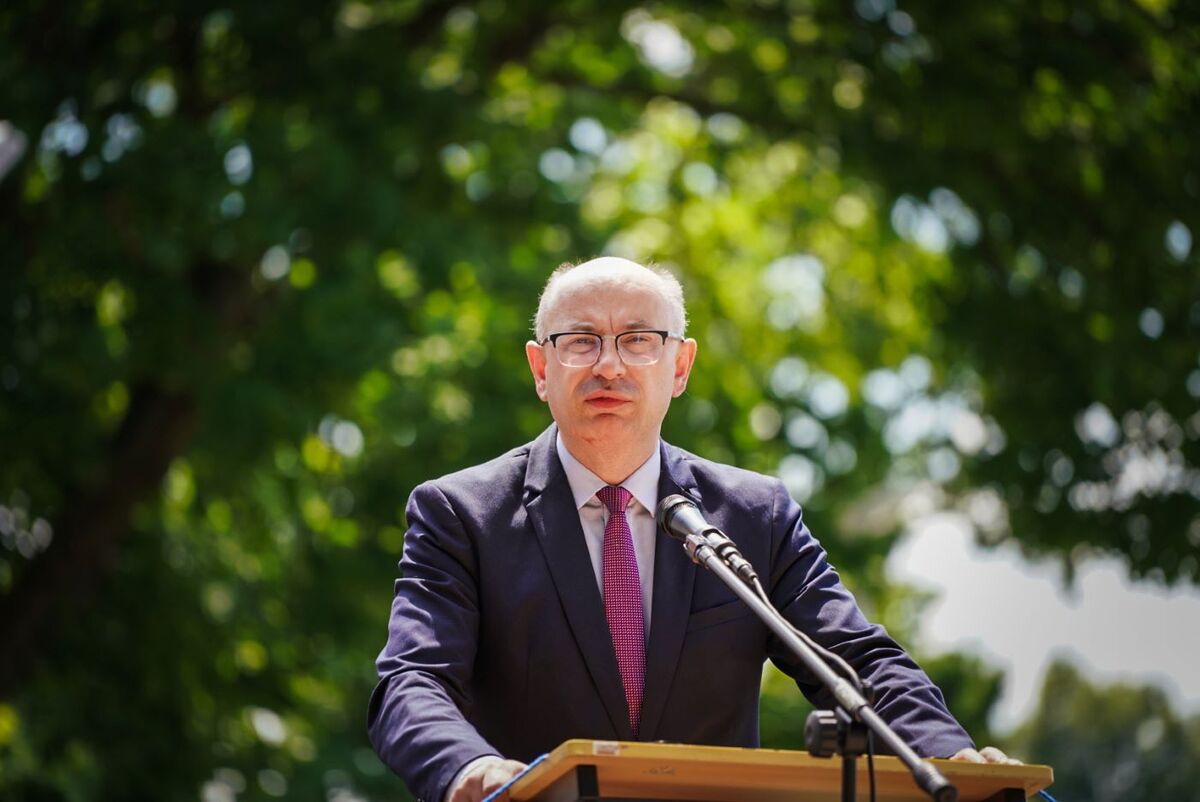
The IPN was represented by its Deputy President Mateusz Szpytma, Ph.D. The unveiling of the monument was also attended by the Błonie Mayor Zenon Reszka, the Rabbi Itzhak Rapoport and Warsaw Ghetto Museum Director Albert Stankowski.
The Institute of National Remembrance, together with the Warsaw Ghetto Museum, has launched a project aimed at the dissemination of knowledge about the life, struggle and extermination of Polish Jews in the ghettos of German-occupied Poland. These educational initiative involves commemorating the Holocaust victims in the towns and cities of the Mazovia province where the ghettos were once located.
The memorial matzeva unveiled in Błonie was co-financed by the IPN's Office for Commemorating the Struggle and Martyrdom.
It is shocking that this is another place where thousands of people were murdered just because they were of a Jewish descent and of a different faith. They perished at the hands of the Germans, but it is our duty, as Polish citizens living in this place, to remember their martyrdom, said the IPN Deputy President.
***
The first Jewish settlers arrived in Błonie in the second half of the 15th century. At the turn of the 15th and 16th centuries, the Jewish population of Błonie gradually increased. In the middle of the 16th century, after the incorporation of Mazovia into the Kingdom of Poland, a ban on Jewish settlement in Błonie was introduced. In 1810, during the Partition of Poland period, the ban on Jewry settlement was lifted, and from 1862 they were even allowed to purchase property. In the 1880s a Jewish religious community and rabbinate were established in Błonie. The Jewish cemetery was set up at the end of 19th century.
The German troops entered the town of Błonie in September 1939. Immediately after the occupation of the town started, the first mass murders began on its territory. In December 1940, a ghetto was established in Błonie, where Jews displaced by the Germans to the town and those living here before the war were put together. In total, it housed more than two thousand people. In February 1941, the Błonie ghetto was liquidated and its residents were transferred to the Warsaw ghetto. Some of them died as a result of starvation and disease. Others joined Jews from the Warsaw ghetto and were taken to the German Treblinka Extermination Camp and were killed there.
The Błonie synagogue had survived until the postwar era. However, it was demolished in 1952, and a high-rise was built in its place.
See also: The unveiling of a memorial Matzeva in Łowicz; 21 March 2024