
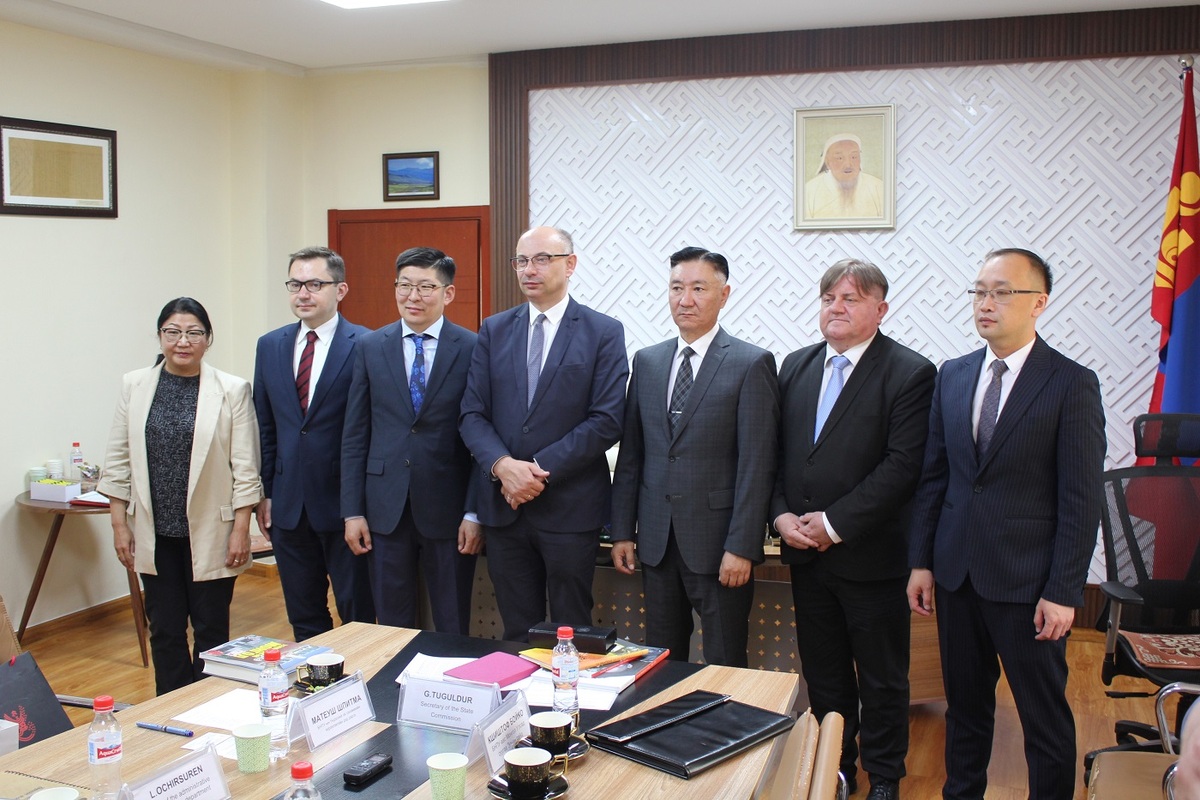
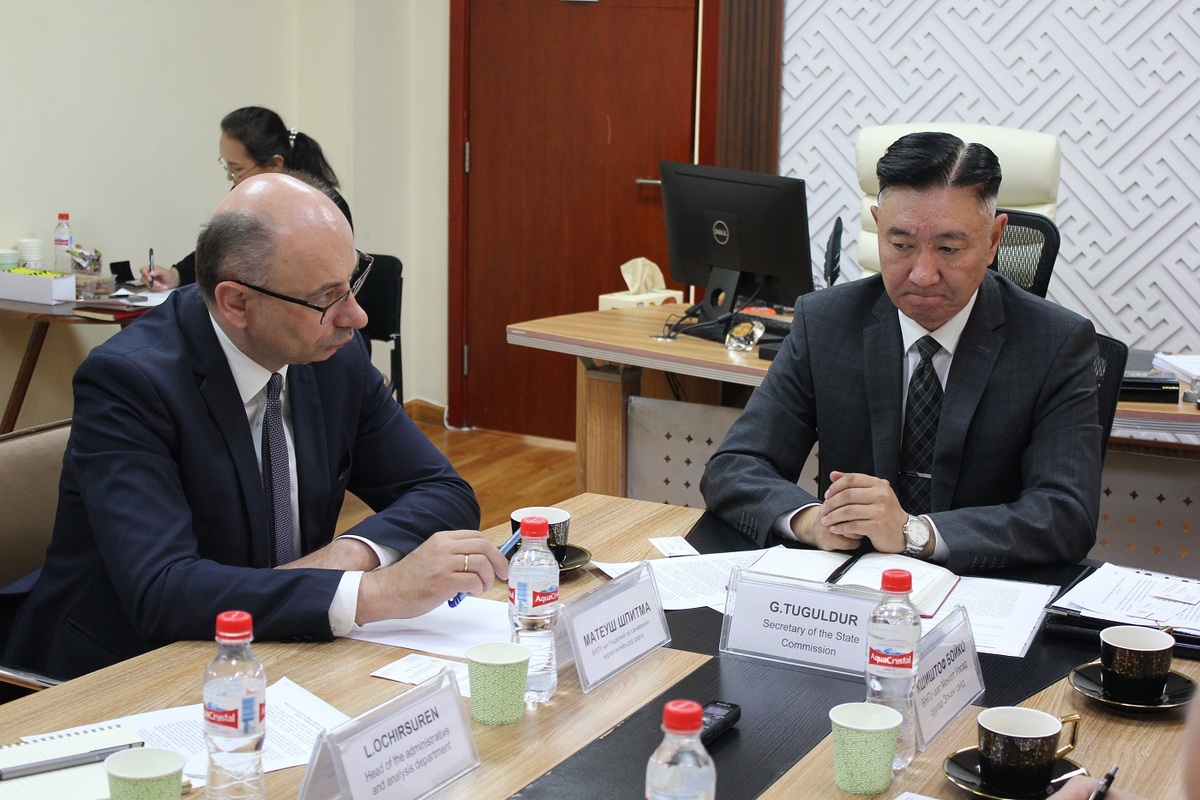
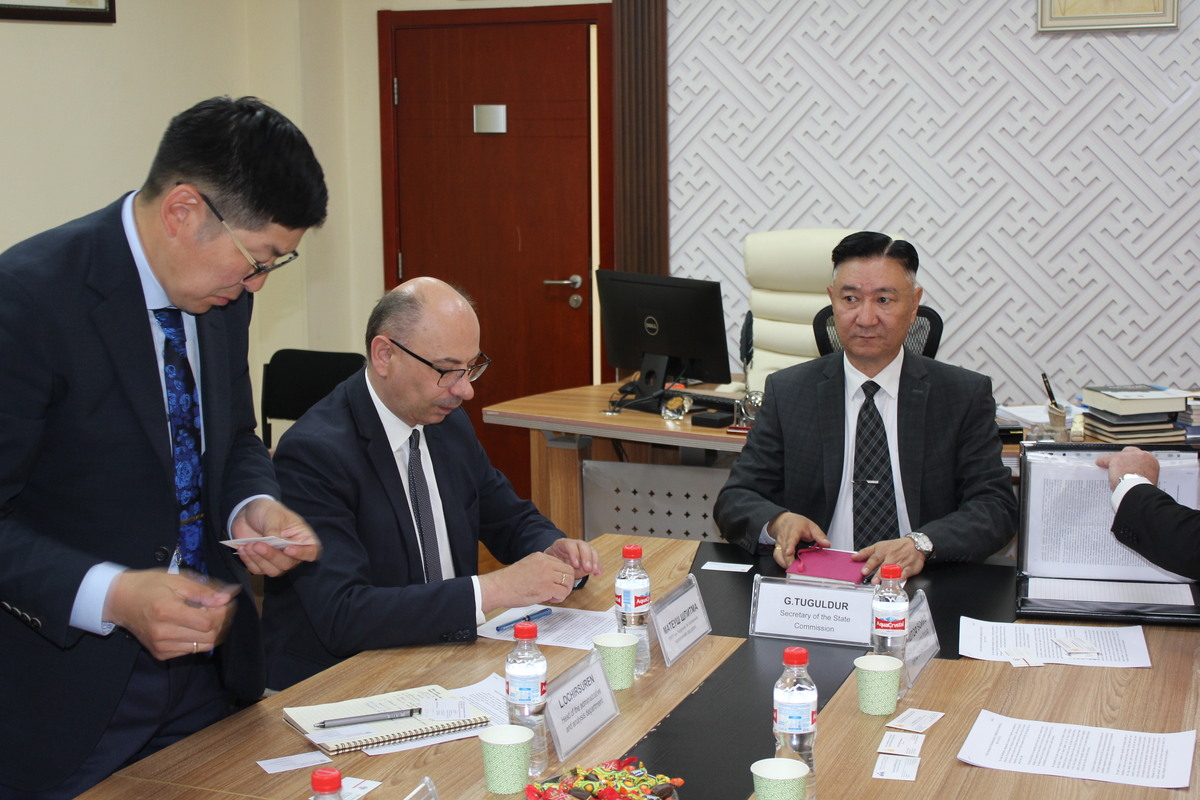
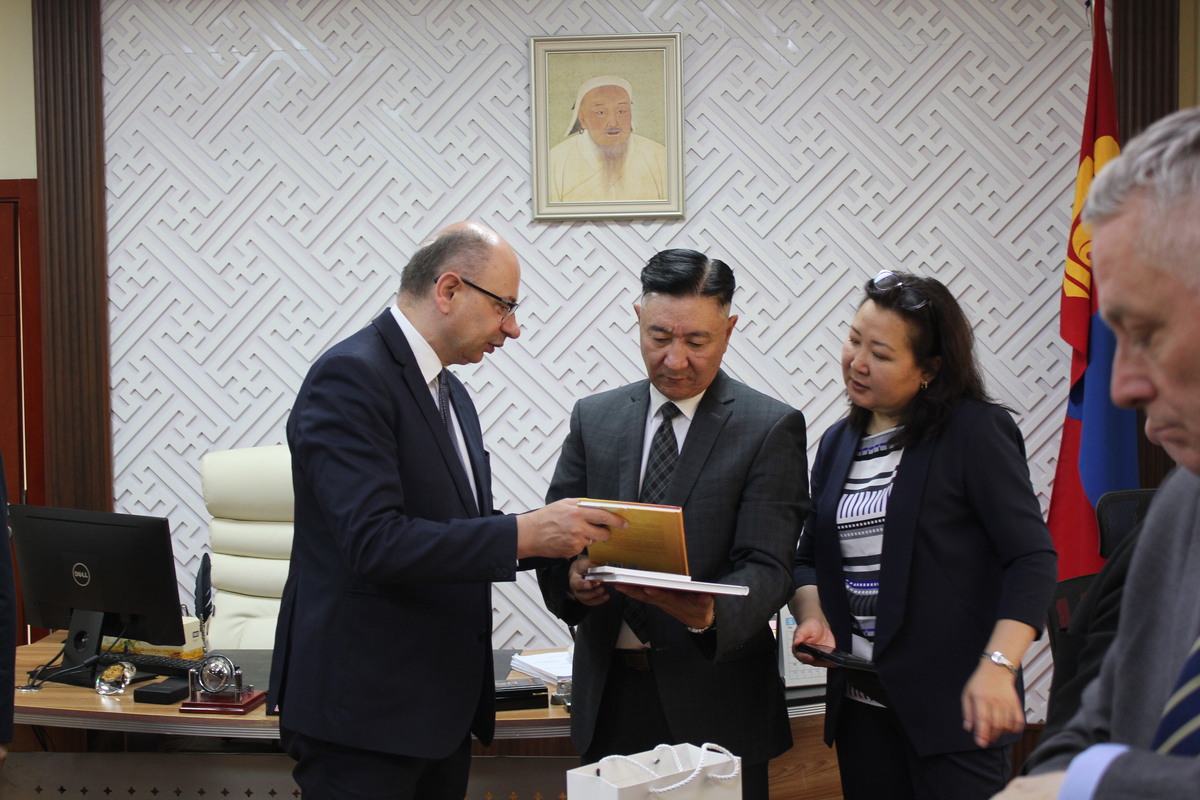
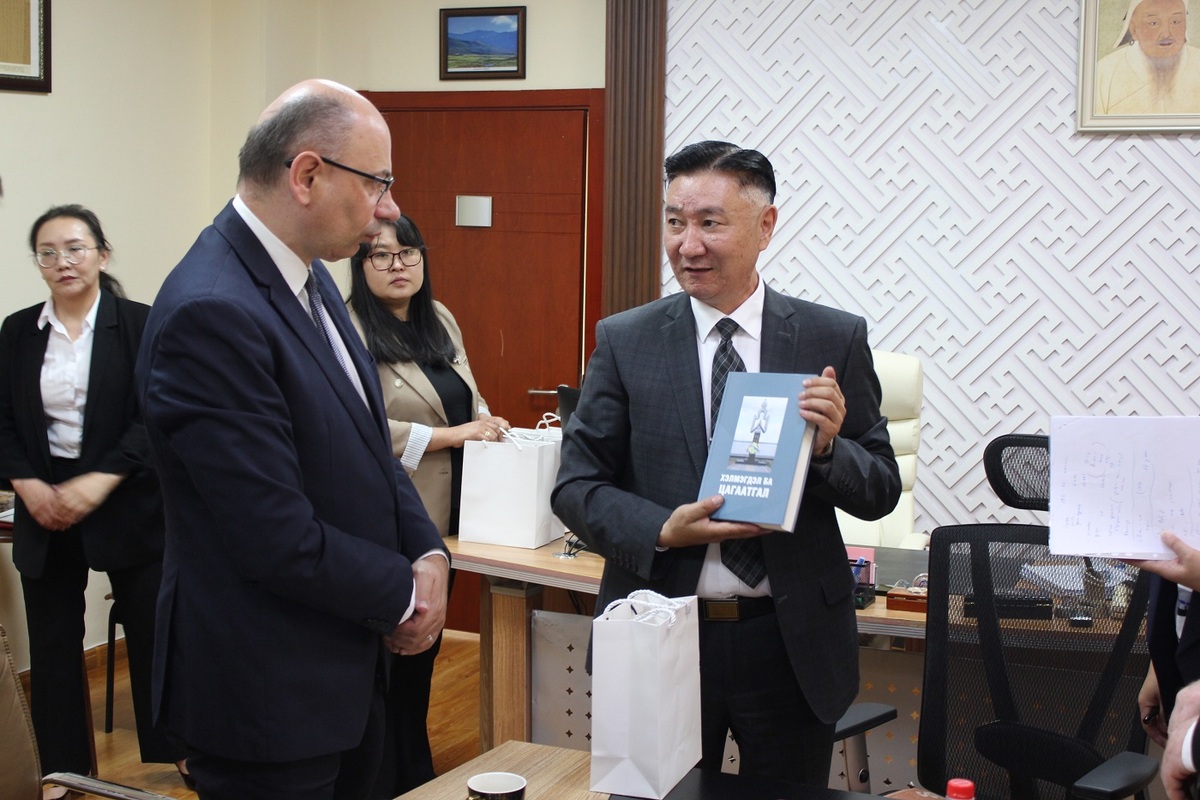
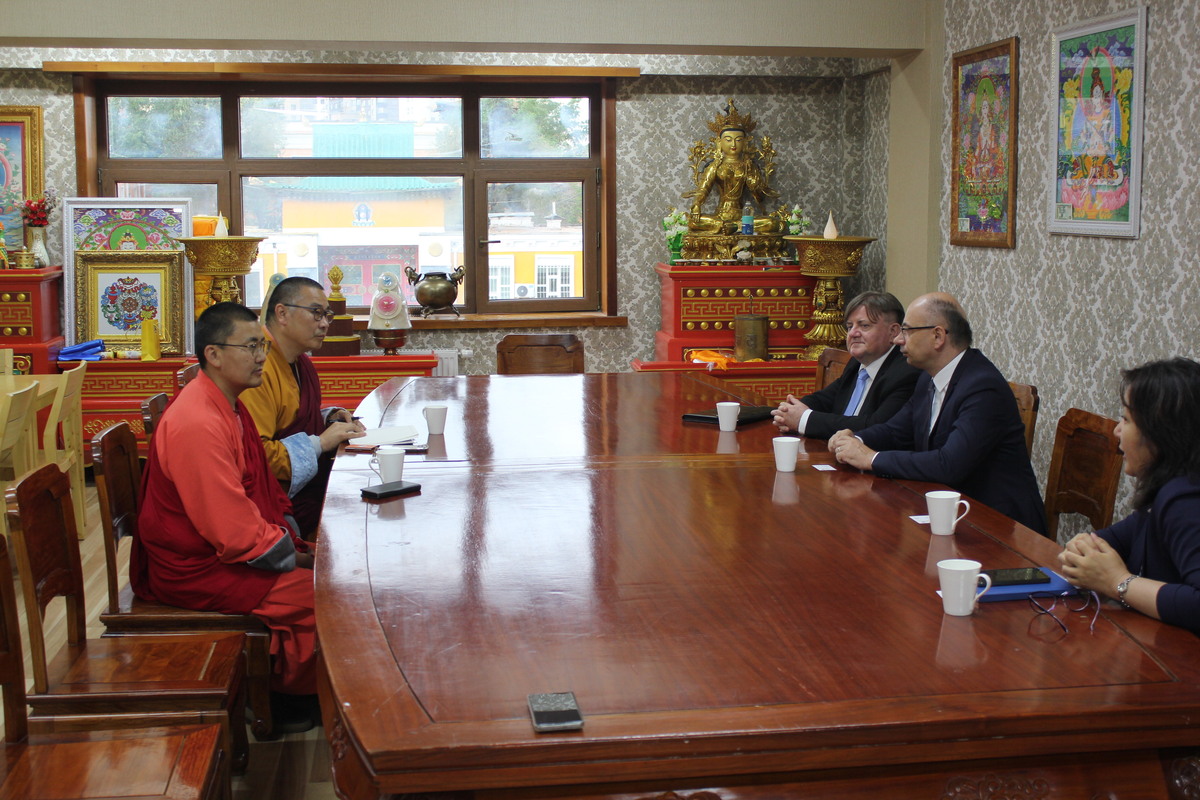
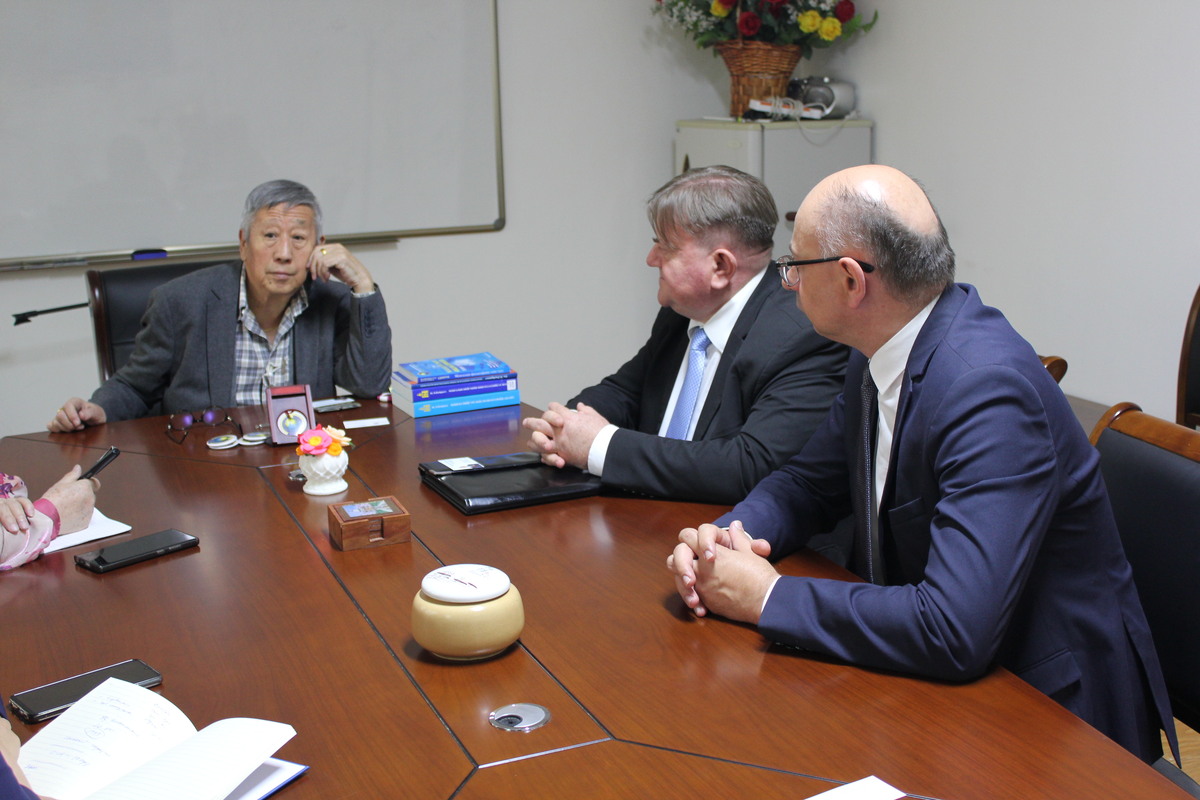
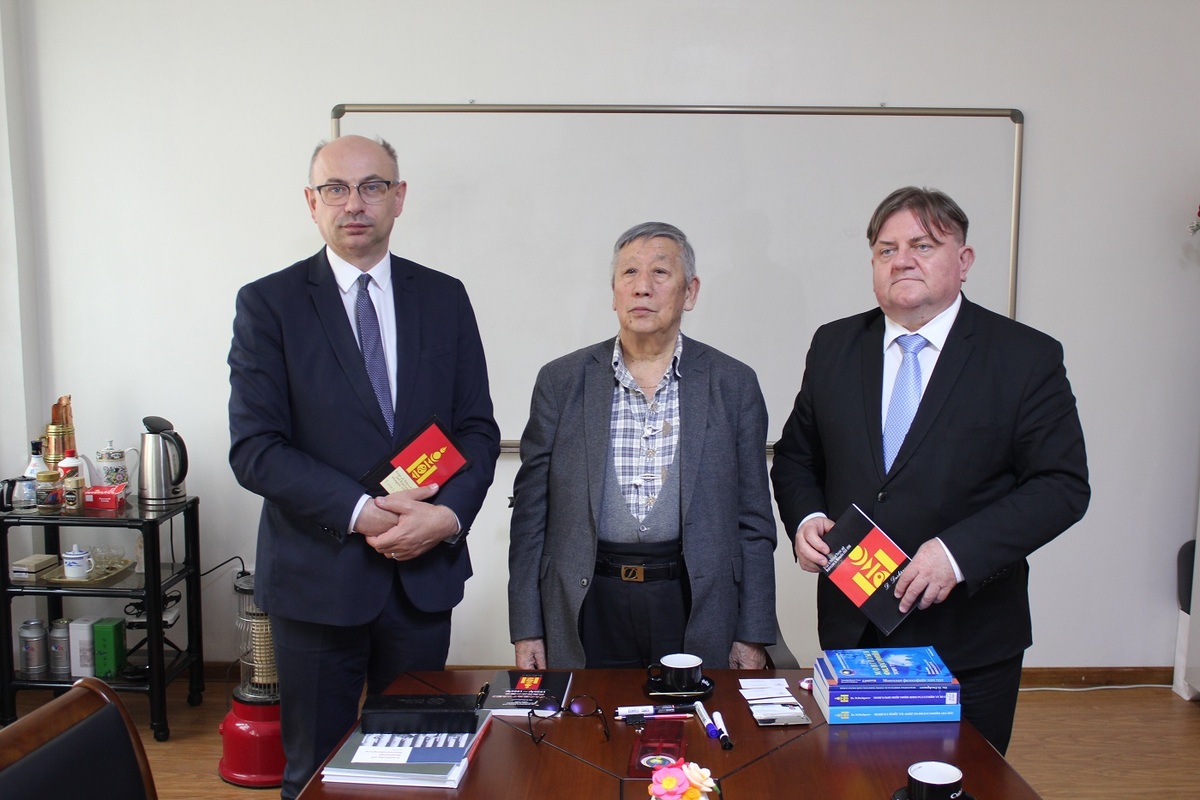
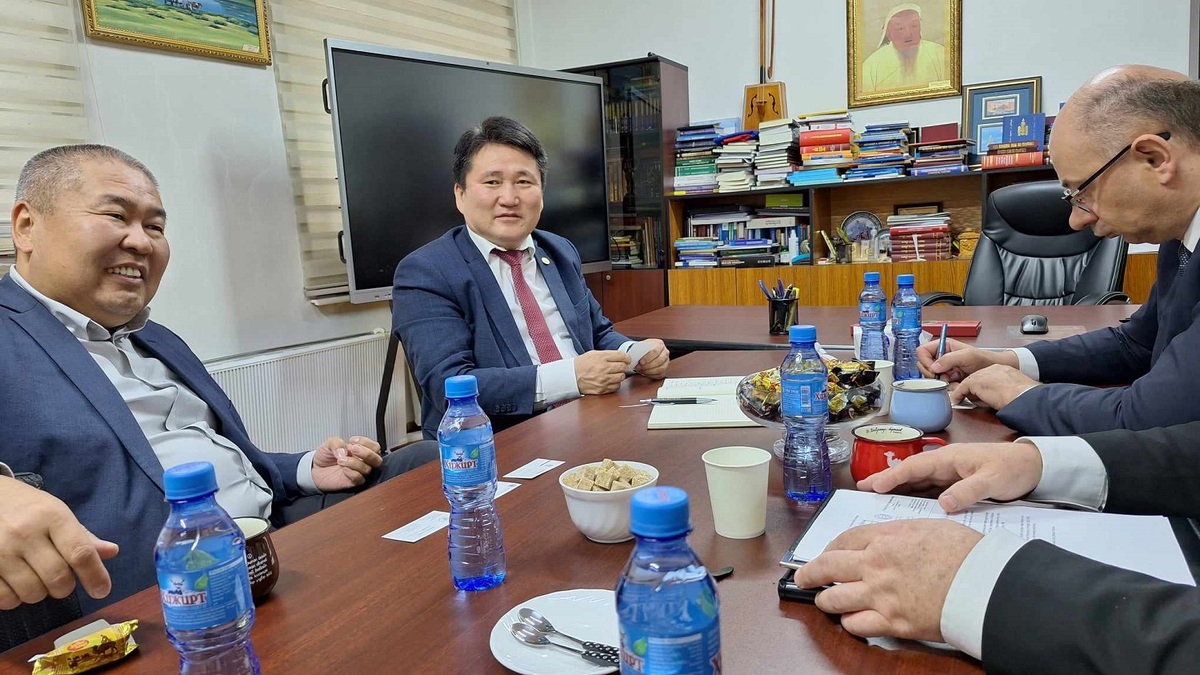
The Deputy President of the Institute of National Remembrance Mateusz Szpytma, Ph.D. held a series of meetings in Mongolia, focusing on cooperation as regards historical education and investigating communist crimes. The visit was organized by the Polish Ministry of Foreign Affairs and included talks with representatives of Mongolian governmental and academic institutions.
Mateusz Szpytma, Ph.D. met with Polish Ambassador to Mongolia Krzysztof Bojko, Ph.D. Mongolia's recent history in the context of the collapse of the communist system in 1990 was discussed. The IPN delegation also visited the Choijin Lama Museum that was originally a Buddhist temple complex downtown Ulaanbaatar, and the monument to Frederic Chopin on Chopin Street.
Mateusz Szpytma, Ph.D., also met with the State Secretary Nyamdorj Ankhbayar, who expressed support for the IPN's initiatives, particularly in the framework of the planned signing of a Memorandum of Understanding between the Institute and the the State Commission on Rehabilitation of Mongolia.
Poland and Mongolia have similar experiences when it comes to struggling against the communist regime. In Mongolia, the totalitarian system and direct dependence on the Soviet Union began much earlier – with the Bolshevik Revolution. We are eager to share the Polish expertise in the field of decommunization and transitional justice, said Mateusz Szpytma, Ph.D.
On the second day of the IPN’s delegation visit, a meeting with the Secretary of State Commission on Rehabilitation of Mongolia, G. Tuguldur was held. Both sides declared their willingness to cooperate. The Mongolian partners were particularly interested in the IPN's expertise in the field compensating and commemorating the victims of communist crimes, as well as in modern ways of teaching history, tailored to the needs of children and youths. The IPN’s Deputy President presented the IPN's scope of activities including popularization of history using new technologies.
The IPN delegation also met with the Director of the Institute of Philosophy of the Mongolian Academy of Sciences, Prof. Purevsuren Byambakhishig, who specializes in philosophy of culture and religious studies. It was proposed to organize an international conference on religious persecution, taking into account the persecution of the clergy under communism in Poland and other post-Soviet countries.
The IPN delegation's agenda also included meetings with Buddhist monk Gankhuyag Magsarjav, who is in charge of international cooperation at Gandan – the Mongolia's largest active monastery, and with Prof. D. Dashpurev, founder and director of the Institute of International Studies, author of the monograph on communist crimes in Mongolia. Cooperation in further research was proposed.
The IPN delegation also visited the Catholic Cathedral of St. Peter and Paul and the Chinggis Khaan National Museum.
The meetings on the IPN’s cooperation with Mongolian institutions were preceded the talks held by Mongolian Ambassador to Poland His Excellency Barkhas Dorj with IPN President Karol Nawrocki, Ph.D. The future cooperation may include joint conferences, study visits, education and exchange of experience on search, identification and commemoration of the victims of communism in Mongolia.
The IPN remains a pioneer and mentor institution as regards disseminating knowledge on transitional justice. The Institute's Office of International Cooperation, in cooperation with other divisions of the IPN, organizes study visits for delegations from around the world. In addition to meetings with IPN experts, the guests have the opportunity to visit the IPN Archive, learn about the IPN archival collection, the way it is elaborated on, and follow a variety of other IPN activities. They also visit museums and memorials related to recent history of Poland. In 2023, there were 13 study visits, attended by over 100 people from more than a dozen countries.