

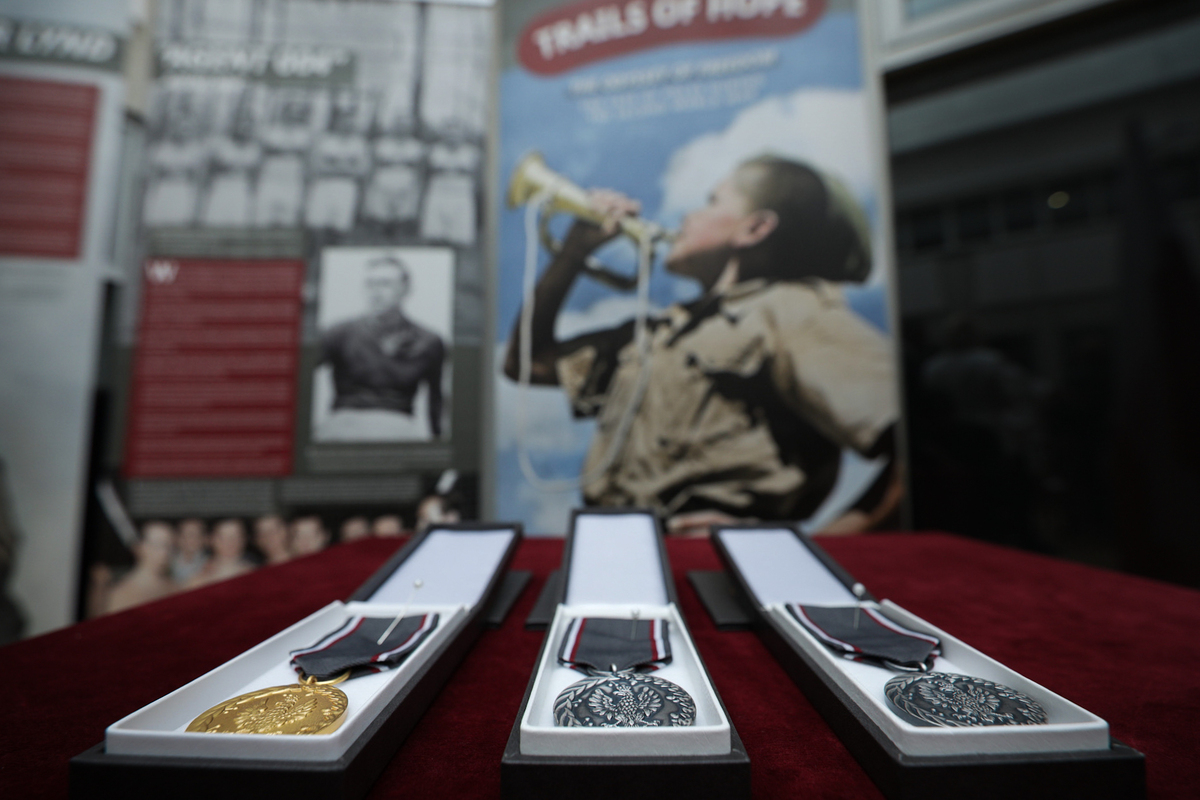




The IPN Reipublicae Memoriae Meritum medals were created to recognize efforts to commemorate events and people from the history of the Polish Nation between the years 1917 and 1990, as well as the support offered to the IPN in its educational, research and publishing mission. For tireless work towards preserving Polish history and promoting it in the UK, Chairman Marek Laskiewicz was presented with a golden medal, while Małgorzata Bugaj-Martynowska and Sylwia Kosiec with silver ones.
For those who are aware of our common past and want to relive it is the medal Reipublicae Mamoriae Meritum. For those who build a common Polish Republic, a Polish Republic within and beyond Poland's borders, a Polish Republic conscious and aware of its past. Without the truth about history, we are unable to build our national identity and answer the question of who we actually are as a Polish nation, said the IPN President Karol Nawrocki, Ph.D. before the award ceremony.
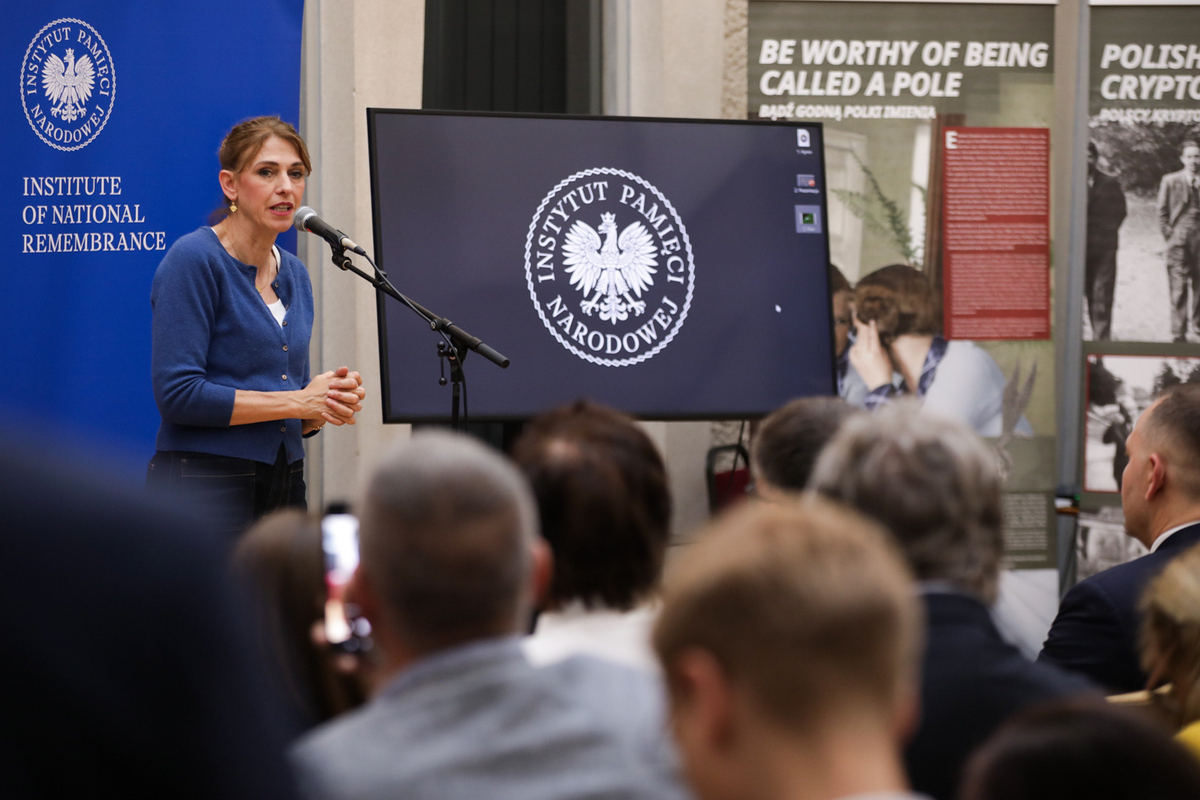
The IPN researcher Mateusz Marek profiled the Polish WW2 intelligence, award-winning biographer Clare Mulley spoke about her books on Krystyna Skarbek and Elżbieta Zawacka, and our dedicated exhibit was opened on the premises.
During WW2 48% of intel from Third Reich-occupied Europe in 80,000 reports, the Enigma codes, actual V2 systems, Holocaust details, data necessary to mount several Allied operations and torpedo many German plans were supplied by Polish Intelligence. The task of British Special Operations Executive (SOE) was to conduct sabotage, special operations, coordinating political and propaganda missions, and support the resistance movements in European countries occupied by the Axis powers.
One of the first foreign sections within SOE was the Polish Section and among the Polish agents was Krystyna Skarbek, a pre-war Polish beauty pageant contestant and a sophisticated socialite proved herself to be an excellent agent smuggling intelligence out of occupied Poland across the mountainous Slovakian border and then worked with French Résistance, blowing up bridges and ammo depots. It is said that she was Winston Churchill's "favourite spy”. “The Spy who Loved” is the name of the book about Krystyna Skarbek authored by Clare Mulley. This is a fascinating portrait of a very brave and daring woman. She was Britain’s first – and longest-serving – female special agent of WW2.
Another excellent book by Clare Mulley is “Agent Zo”. It tells the incredible story of courageous resistance fighter Elżbieta Zawacka, also known as ‘Elizabeth Watson’ but more often as “Zo”. She was the only female “Silent Unseen” elite soldier. Having been dropped in German occupied Poland she got back to undercover work, and then fought in the Warsaw Uprising. After the war she was persecuted by the communists in Poland. She eventually rose to the rank of Brigadier General of the Polish Army – one of only two women to hold this rank.
The event was also accompanied by the opening of the IPN exhibition “Trails of Hope. The Odyssey of Freedom”. This time it focused on the role of the Polish intelligence during WW2, SOE agents, the "Silent Unseen" paratroopers and Polish cryptologists.
Find out more about the “Trails of Hope. The Odyssey of Freedom” project and exhibitions.