
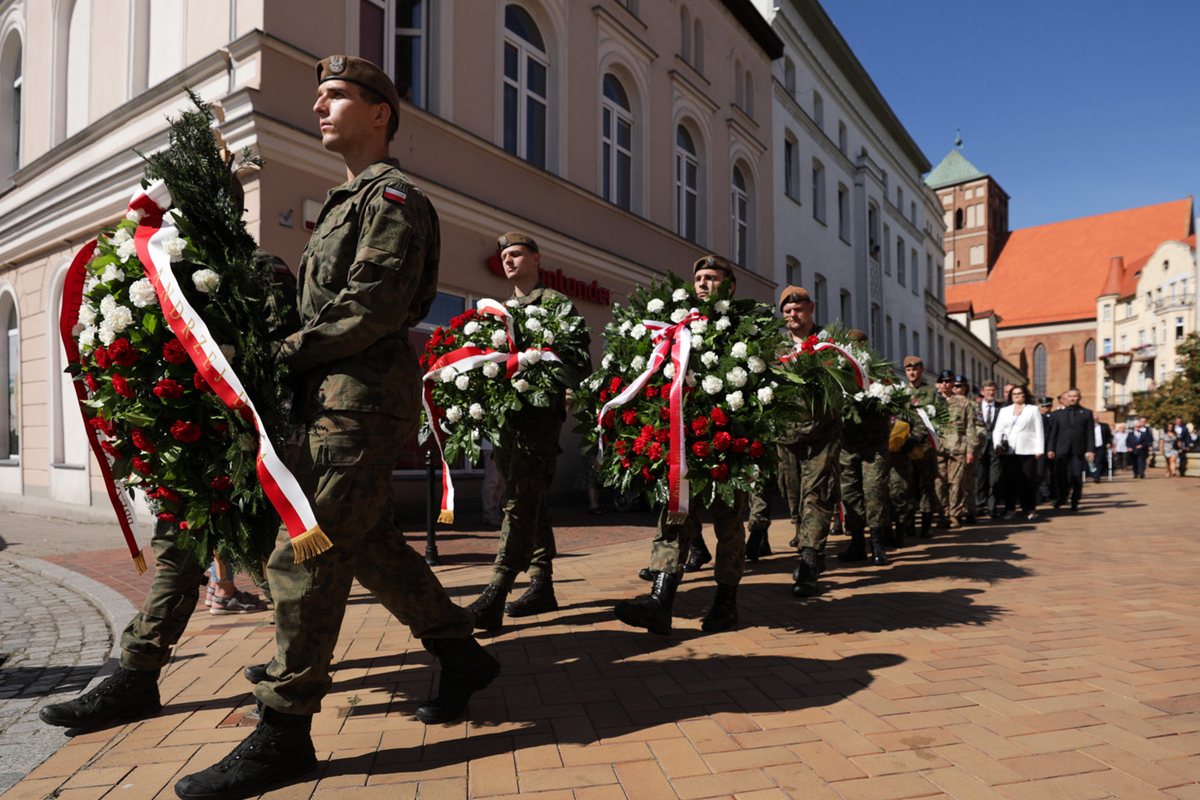
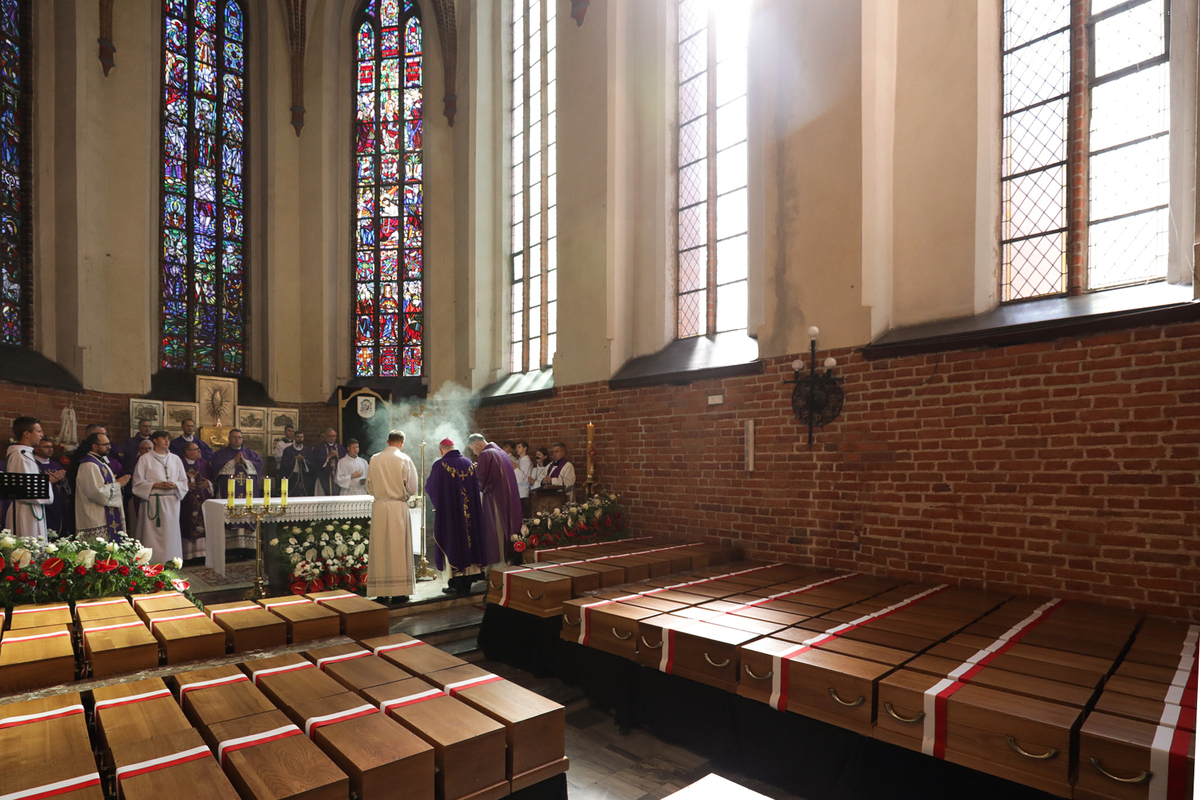
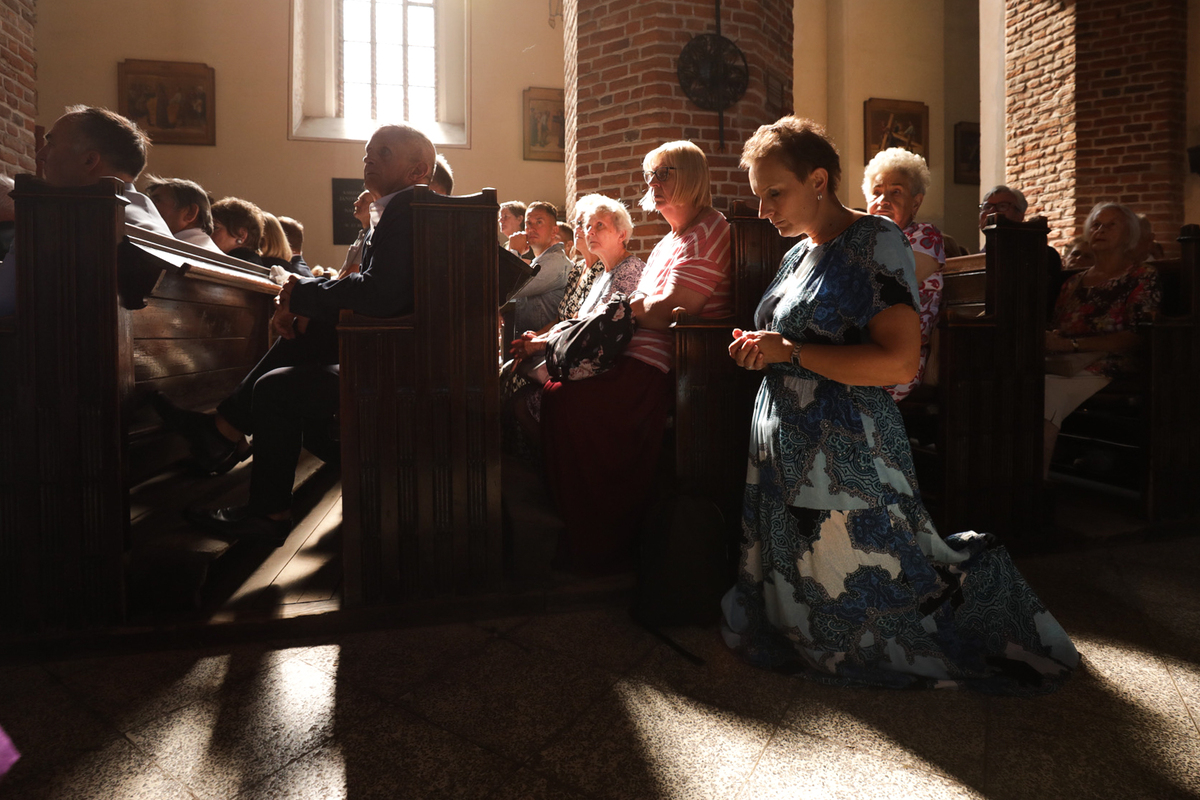
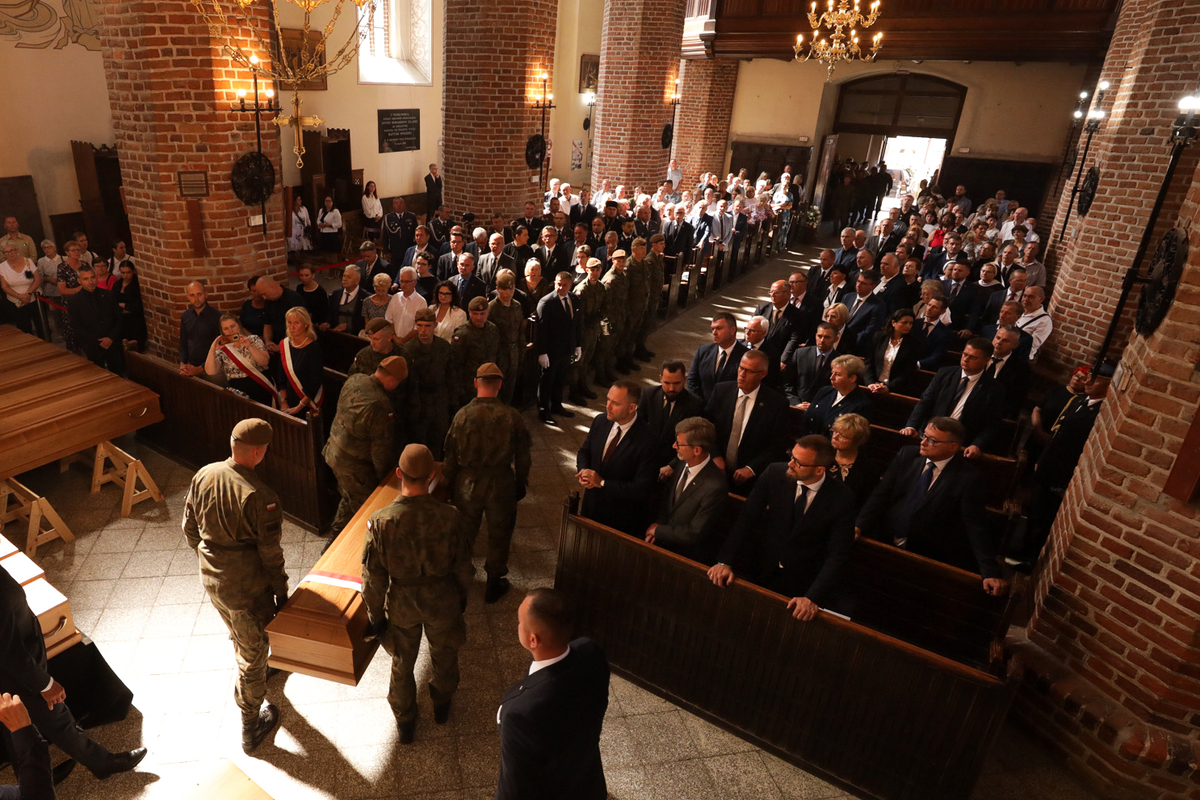
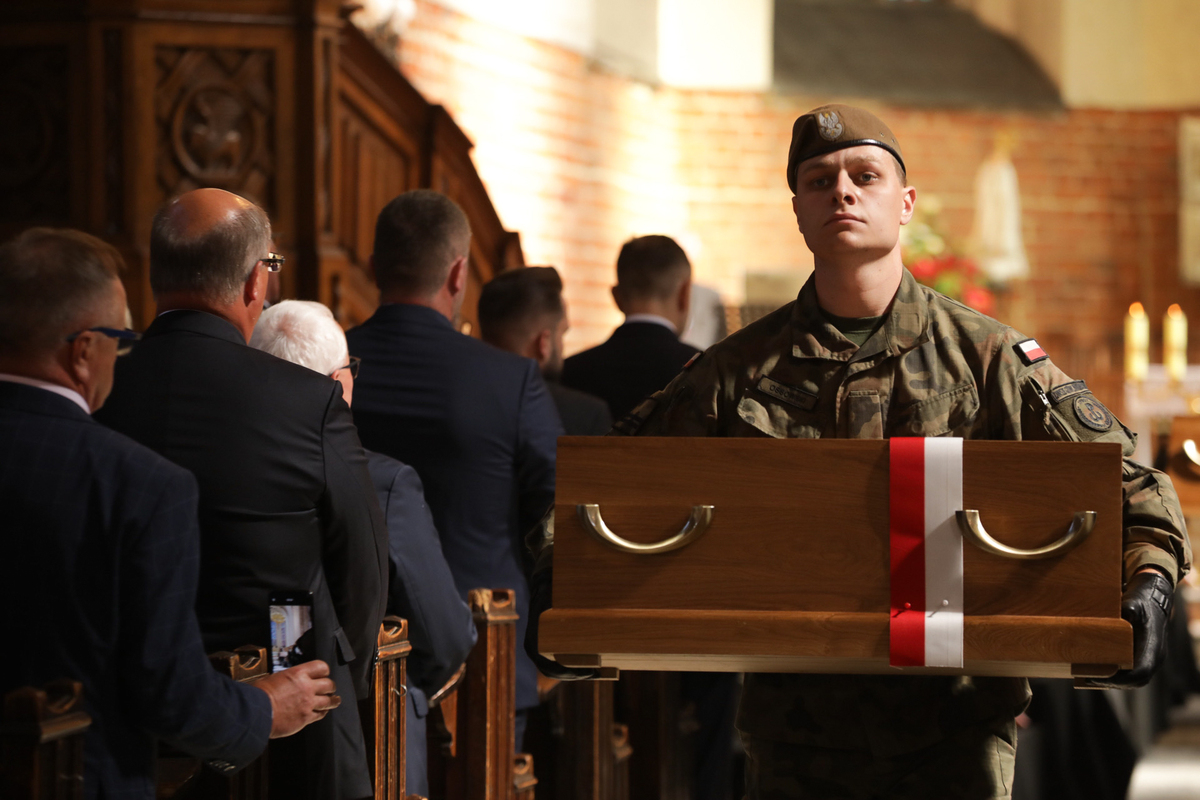
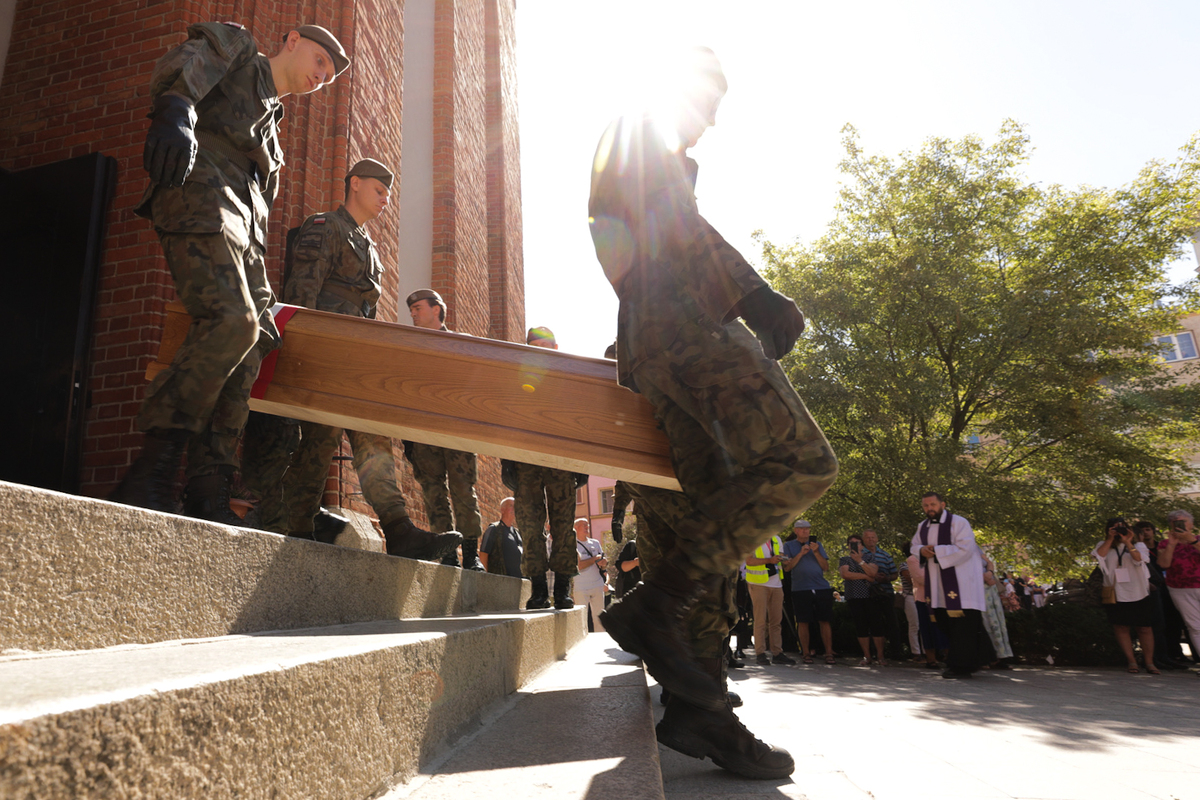
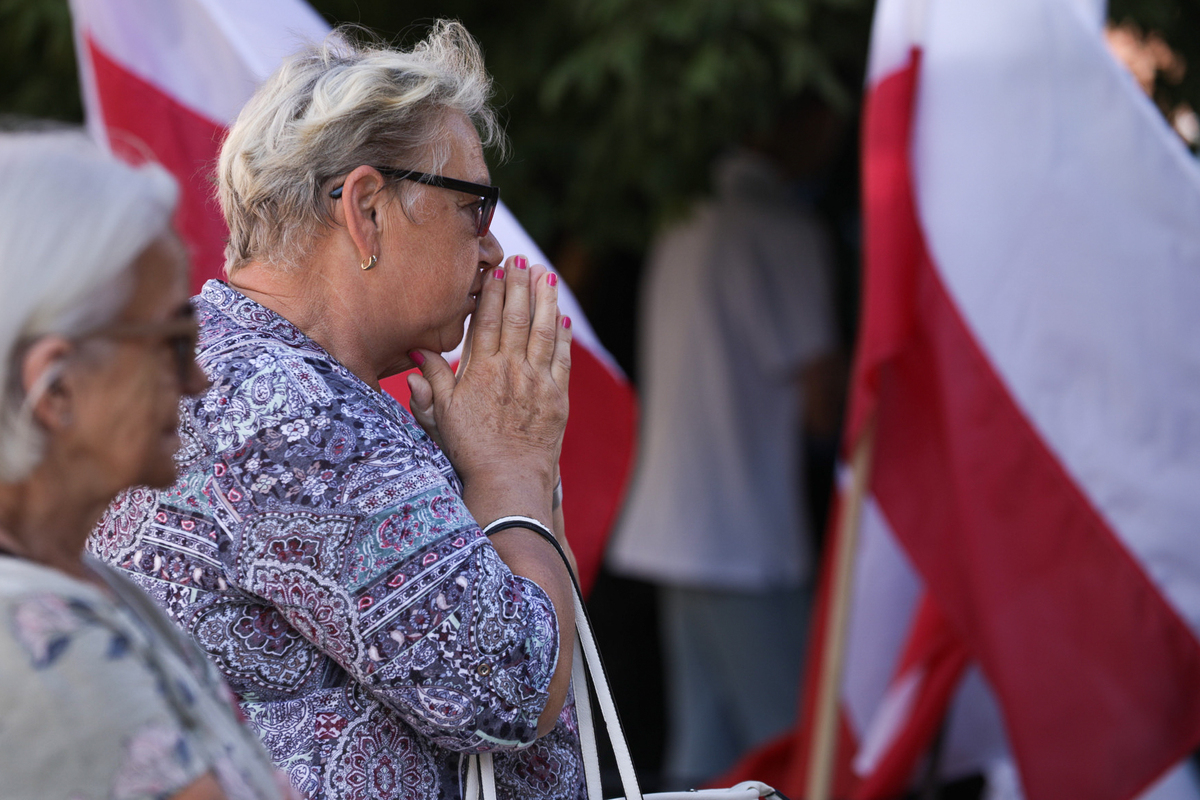
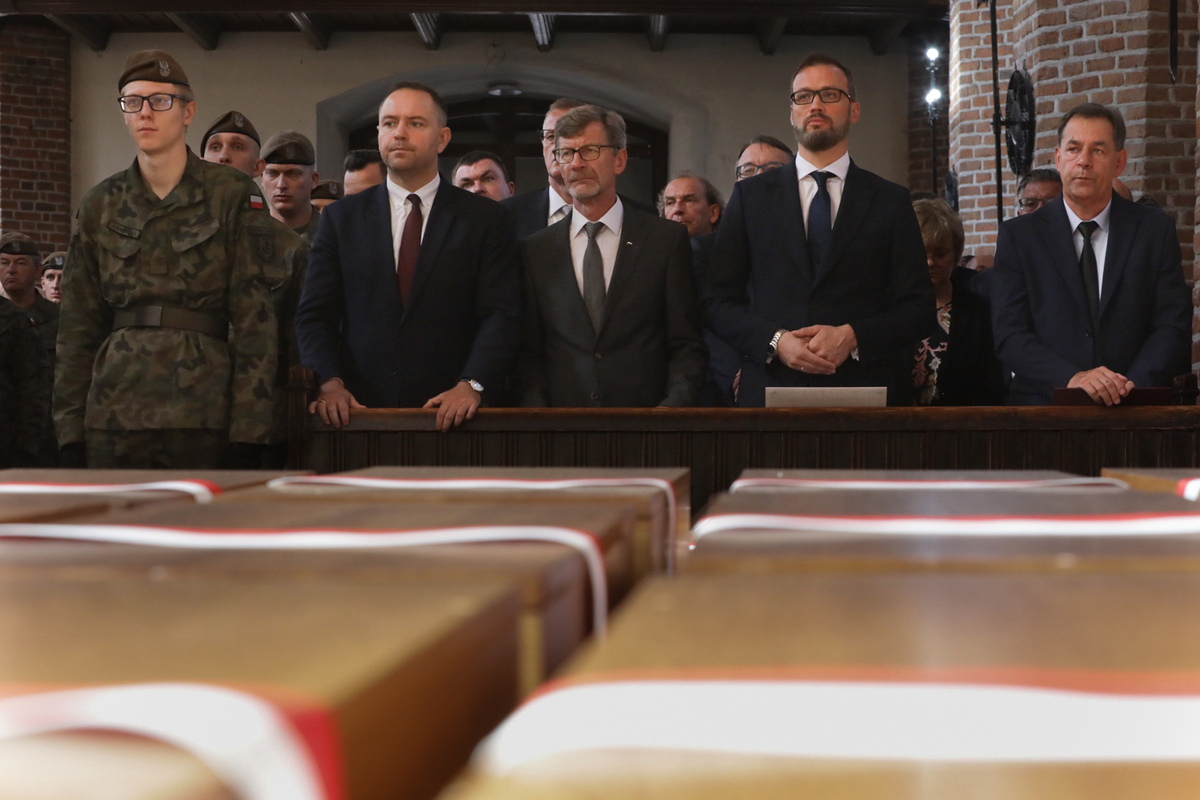
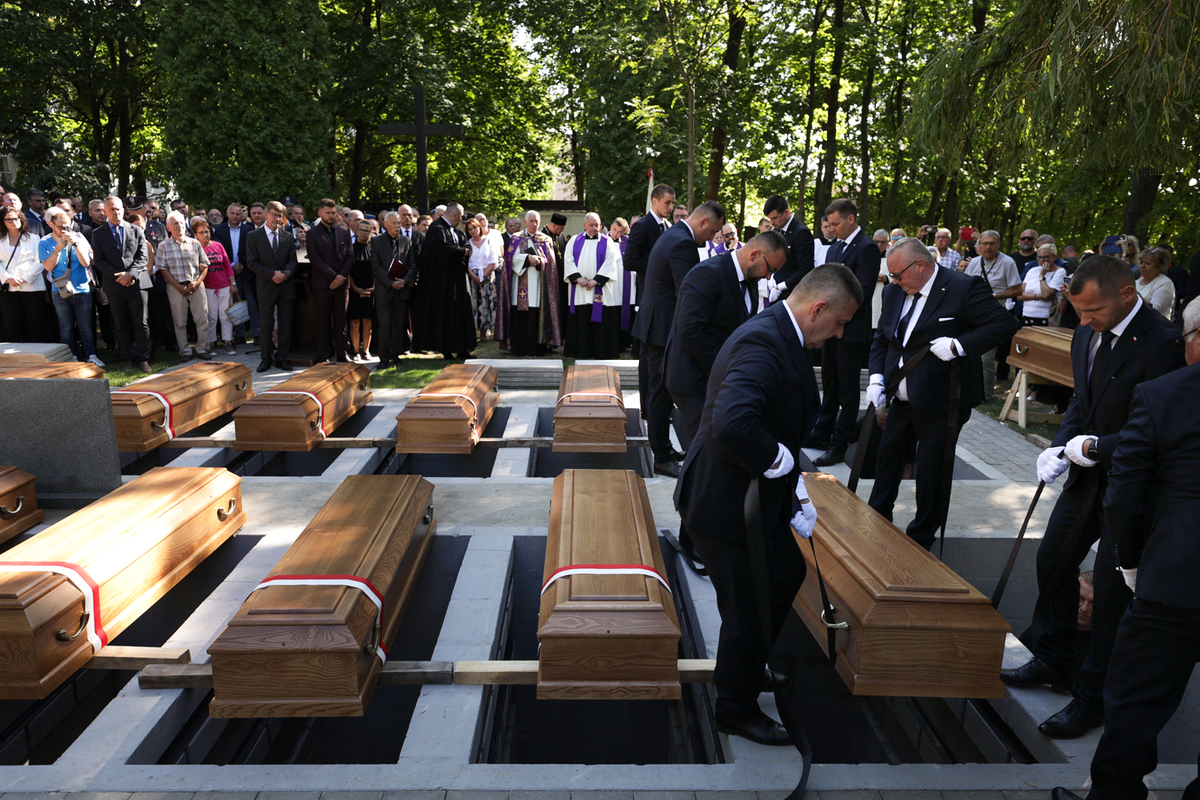
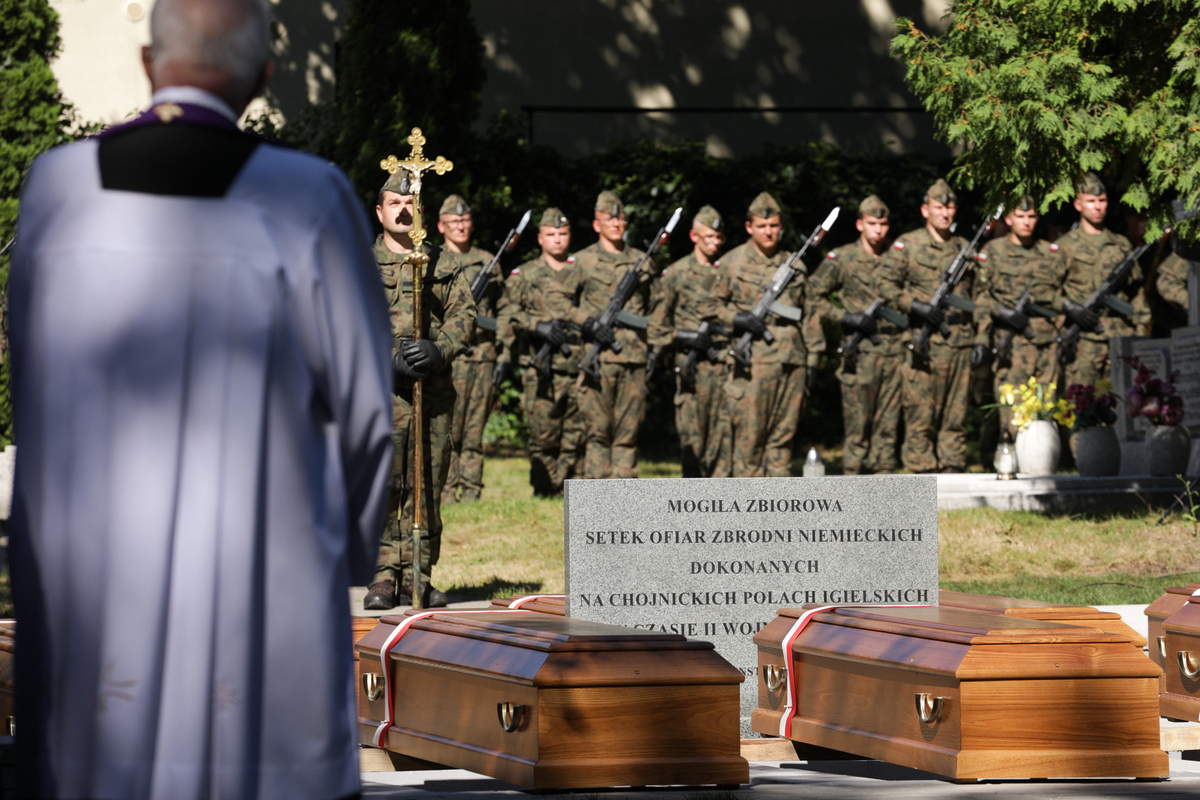
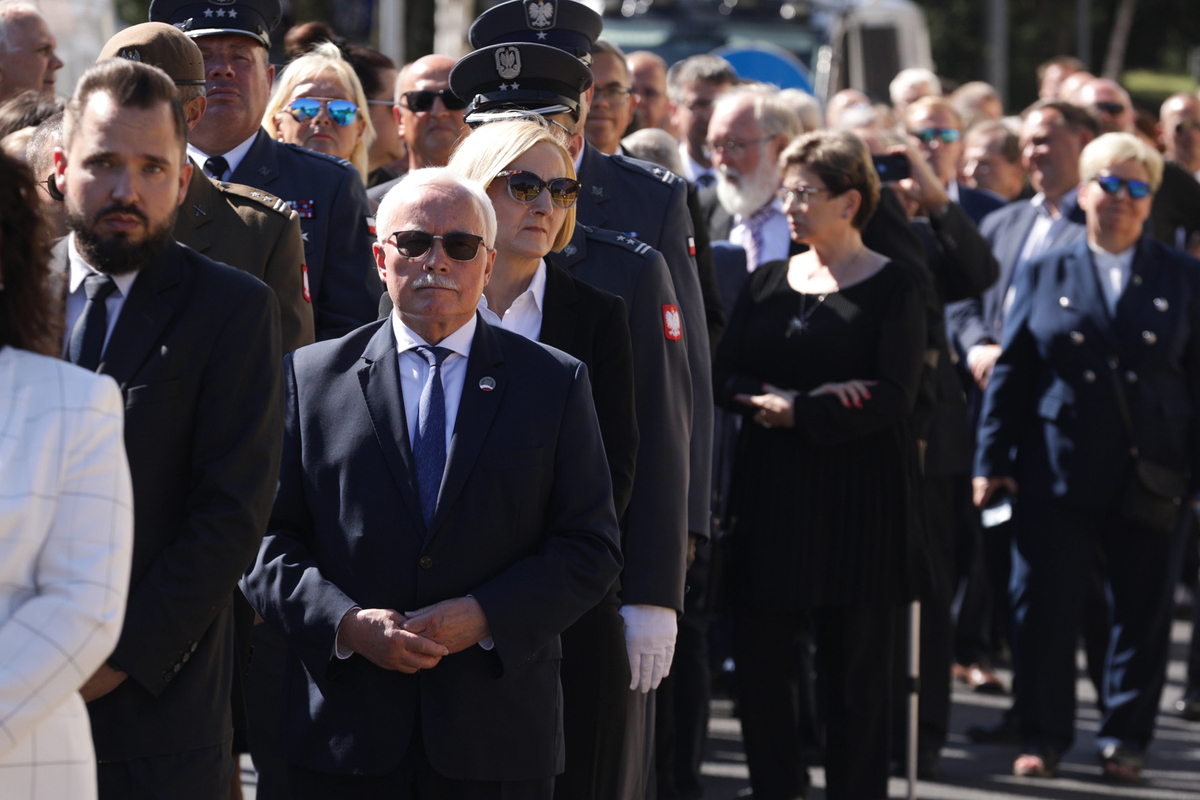
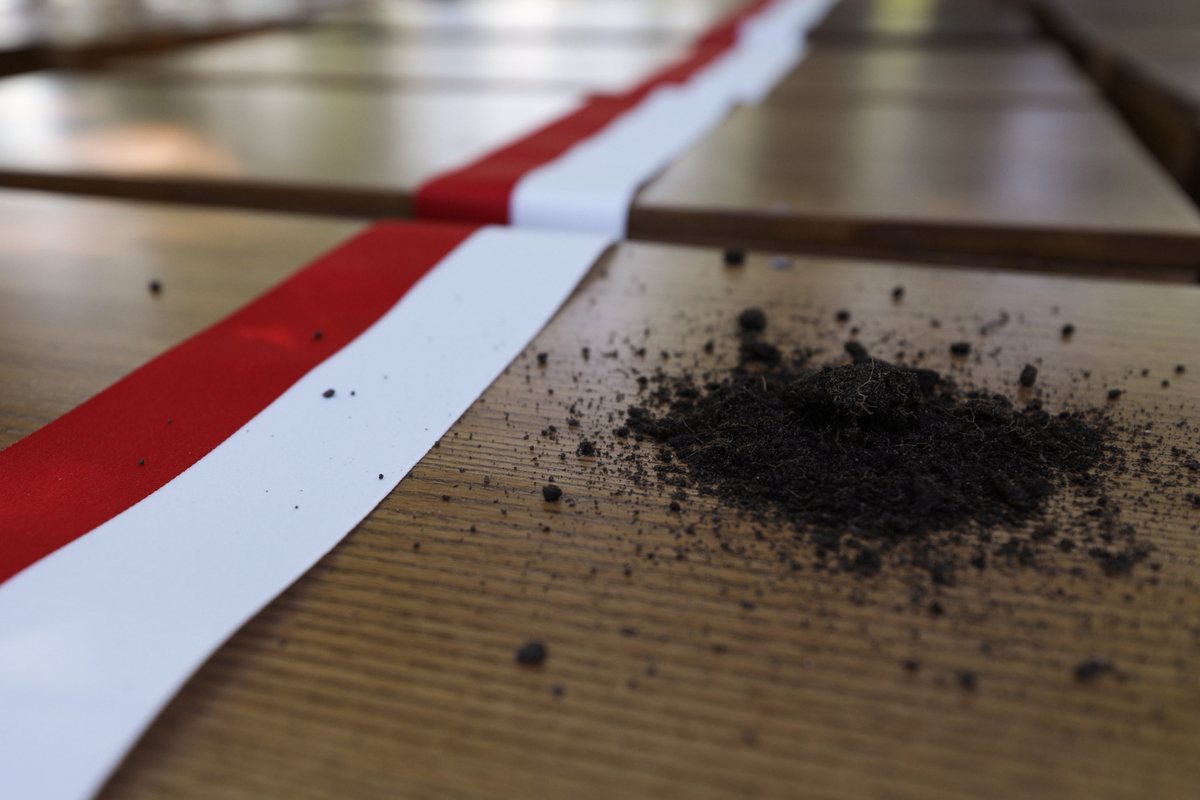
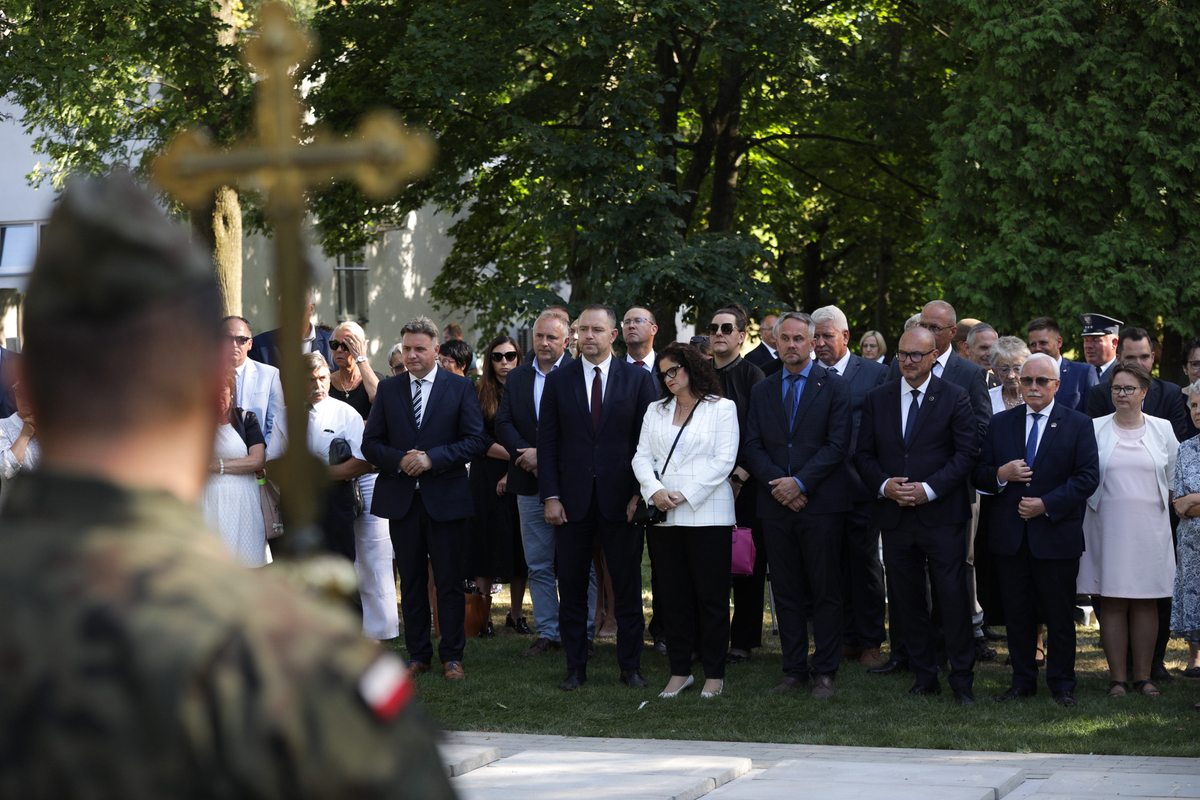
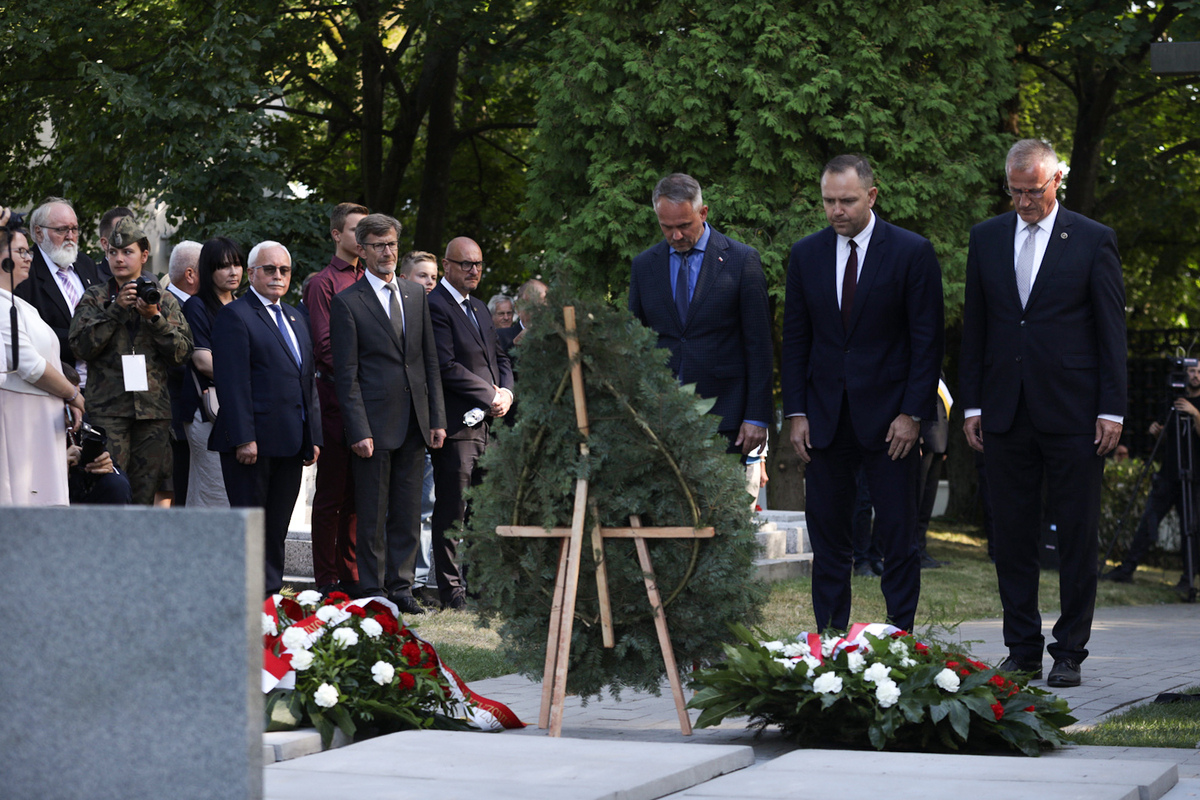

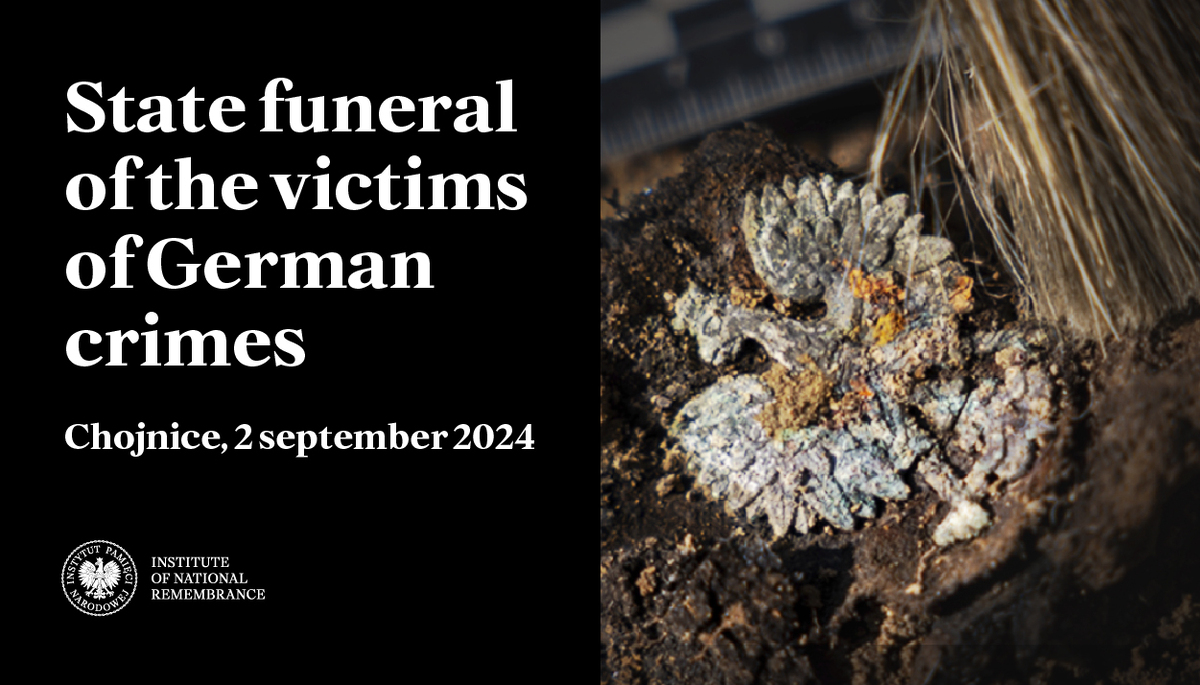
In connection with the burial of the skeletal remains of over 700 victims of German crimes discovered in the Valley of Death in Chojnice a funeral mass was held at the Minor Basilica of the Holy Trinity of St. John the Baptist (Church Square in Chojnice) on 2 September 2024. The remains had been discovered during the exhumation works conducted as part of the investigation conducted by the Branch Commission for the Prosecution of Crimes against the Polish Nation in Gdańsk in the years 2021-2024. The mass was followed by the burial of the remains in a grave prepared by the IPN Office for Commemorating the Struggle and Martyrdom, at the cemetery for Victims of Nazi Crimes (Gdańska Street, Chojnice). The funeral ceremony and mass was attended by IPN President Karol Nawrocki Ph.D., and was presided over by Bishop Ryszard Kasyna.The ceremony was organized by the Institute of National Remembrance in cooperation with the Chojnice City Hall.
In the years 2021 to 2024, the Prosecutor of the Branch Commission for the Prosecution of Crimes against the Polish Nation in Gdańsk, and an interdisciplinary team of experts in archaeology, anthropology, firearms and ammunition from the University of Łódz and the University of Rzeszów, undertook comprehensive procedural activities on the northern outskirts of Chojnice, known as the Valley of Death. They were aimed at finding mass graves of Poles - victims of mass executions carried out in the autumn of 1939 and in January of 1945 by functionaries of German formations.
The investigation in this case was initiated as a result of field work carried out in the area in 2020 by a team of researchers led by Dawid Kobiałka Ph.D., during which the site of mass executions of Poles carried out in January 1945 by the Germans was located.
The examination of the revealed human remains gave grounds for assuming that they came from nearly 500 people. Both the significant number of shell casings and bullets found at the exhumation site, as well as the number of personal effects found by the victims, correspond with these findings.
The investigation has so far led to establishing the personal details of 120 people who had been killed in Chojnice, as a result of the mass executions carried out by the Germans in late January 1945. In the autumn of 2022 and summer of 2023, further stages of fieldwork aimed at uncovering other mass execution sites of Polish citizens near Chojnice were carried out.
The investigation was preceded by a series of archival searches, the examination of aerial photographs of the area, the analysis of airborne laser scanning visualizations, as well as geophysical and surface surveys. These activities were aimed at establishing the layout of the Polish Army's field fortifications (trenches), prepared in the summer of 1939 in case of the outbreak of war because, as the investigation revealed, after the German army occupied Pomerania in the fall of 1939, these fortifications had been used by the occupying forces to carry out a criminal plan to exterminate the Polish civilian population.
The findings of the investigation indicate that in the autumn of 1939, on the northern outskirts of Chojnice, in the trenches, the Selbstschutz and SS units carried out mass killings of Polish citizens – representatives of the local intelligentsia, including teachers, clergymen, landowners, government officials, policemen, border guards, foresters, customs officers, letter carriers, merchants, craftsmen, farmers, members of the Polish Western Union (Polski Związek Zachodni), as well as 218 residents of the National Social Welfare Institution in Chojnice.
The activities of the Prosecutor and expert archaeologists, carried out in September 2023, led to the location of a fragment of the military fortifications. In a 5.5m x 4m excavation made at the time, the human remains of at least a dozen people were found, along with items belonging to the victims, including decorative cufflinks, a toothbrush, buttons, a razor, and fragments of clothing.
In May 2024, comprehensive works were undertaken in order to find all the victims of the mass killings carried out in the area by German units in the autumn of 1939.
The search work covered an area of several hectares on which a total of several dozen excavations were carried out. These activities led to the discovery of four mass graves.
In the first, the IPN Prosecutors discovered the skeletal remains of at least 20 people (the bones not being arranged in accordance with their anatomical position) - men and women between the ages of 20 and 40. Moreover, personal effects discovered next to the remains, including cufflinks, a metal eagle most likely from a forester's cap, a rosary, a medallion with the image of the Virgin Mary, crosses with the image of Jesus Christ, keys, buttons, and fragments of clothing, confirm that the victims were civilians.
In the second grave, the skeletal remains of at least 150 victims - men aged about 22 to 30 years old laid on their backs, bellies or on one side - were discovered. The remains were mostly buried in layers, one on top of the other. The findings of the investigation and the results of the inspection of the place where the second mass grave was uncovered allow us to assume that it is the site of the secret burial of the residents of the National Social Welfare Institution in Chojnice, who were killed by German officers at the end of October 1939, their bodies being hidden by the perpetrators in the former military fortifications. Currently, work is being carried out in order to identify these victims.
Human skeletal remains were also discovered in another two graves located in an over 50-meter-long trench. After their exhumation and examination by experts in anthropology and genetics, activities aimed at determining the possible number of victims are being undertaken.
A large collection of shell casings and bullets from German short-calibre 7.65x17 mm Browning and 9 mm Parabellum firearms, commonly used by operational groups of the German police, security services and Selbstschutz paramilitary units, has also been secured.
As part of their investigation, Prosecutors of the Branch Commission for the Prosecution of Crimes against the Polish Nation in Gdańsk, also plan to carry out similar activities in several other selected locations in the vicinity of Gdańsk, where mass graves of the victims of the Pomeranian crime of 1939 may be revealed.
***
The Pomeranian Crime was a planned extermination campaign carried out against the Polish civilian population by the Germans in the pre-war Pomeranian Voivodeship in more than 400 towns and cities. Poles and Jews living in Pomerania, representatives of various social strata - intelligentsia, clergy, workers, landowners - as well as the mentally ill, were murdered by units of the Volksdeutscher Selbstschutz in the first months of World War II. Based on exhumation documentation and a list of names, some 16,000 victims have been determined. This is not a complete number, but merely the ‘smallest possible’. According to various estimates between 20 and even 40 thousand people were murdered. The largest place of extermination is the so-called Piaśnica Forest, where at least 10,000 people lost their lives. As a result of the destruction of documentation and the burning of corpses by the perpetrators, it is impossible to determine the exact number of victims.
More:
https://przystanekhistoria.pl/pa2/tematy/english-content/85927,The-Pomeranian-crime-of-1939.html