
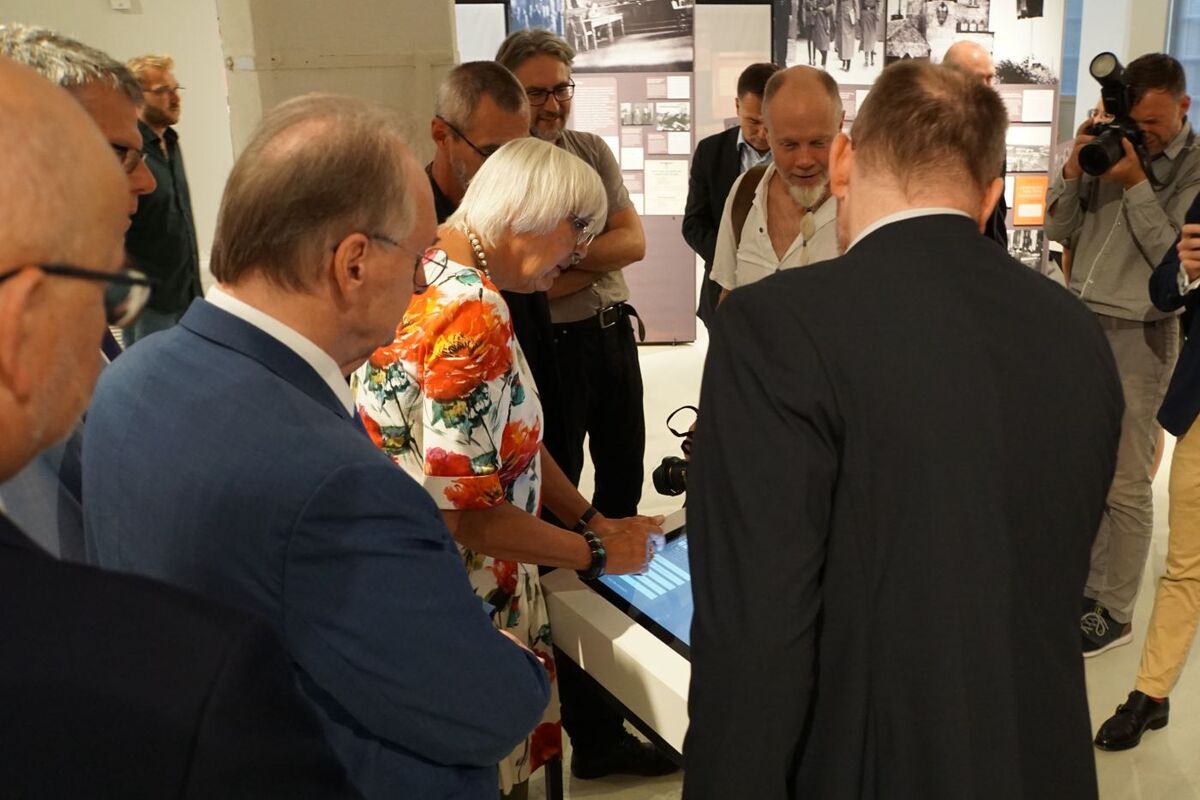
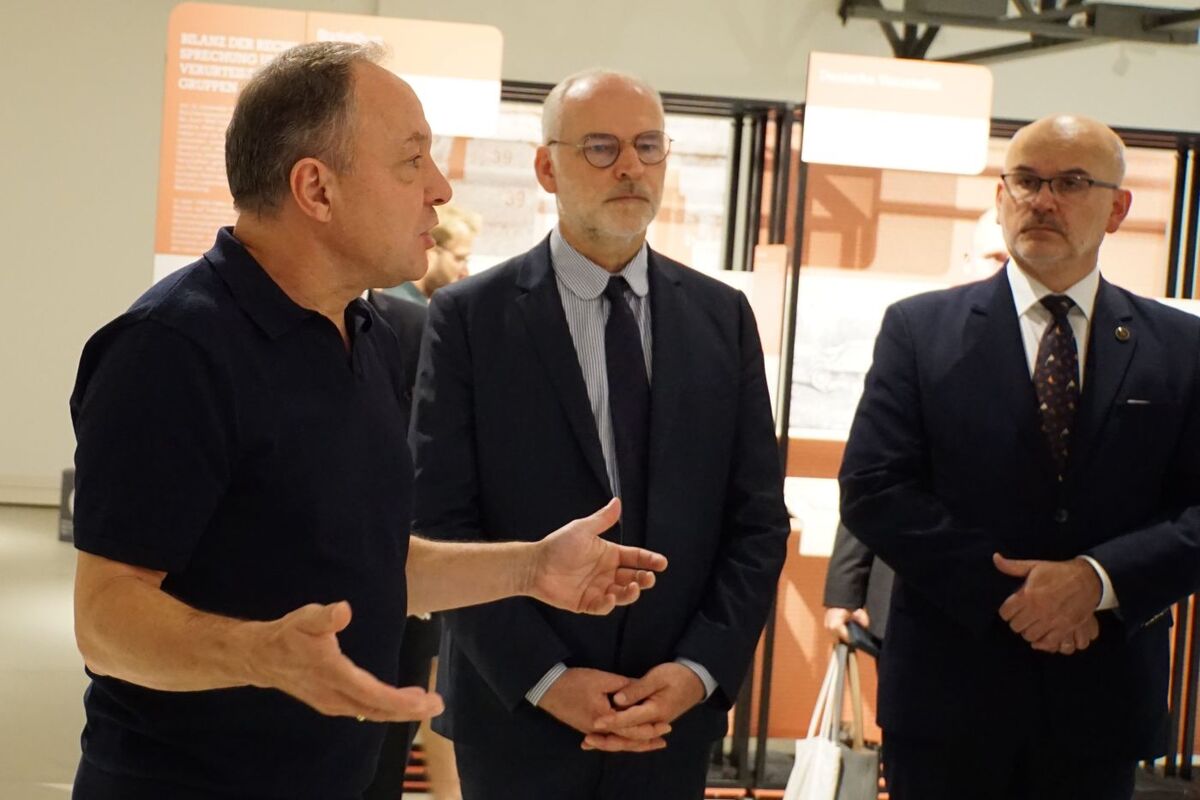
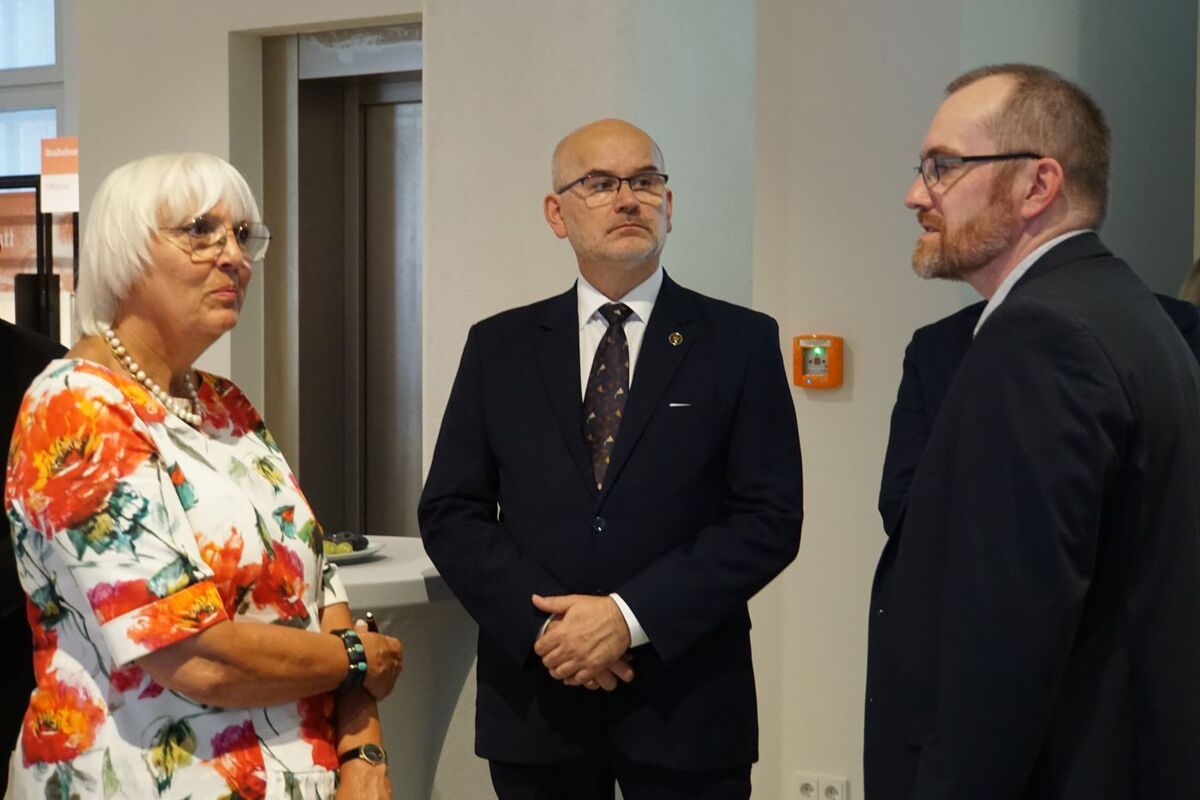
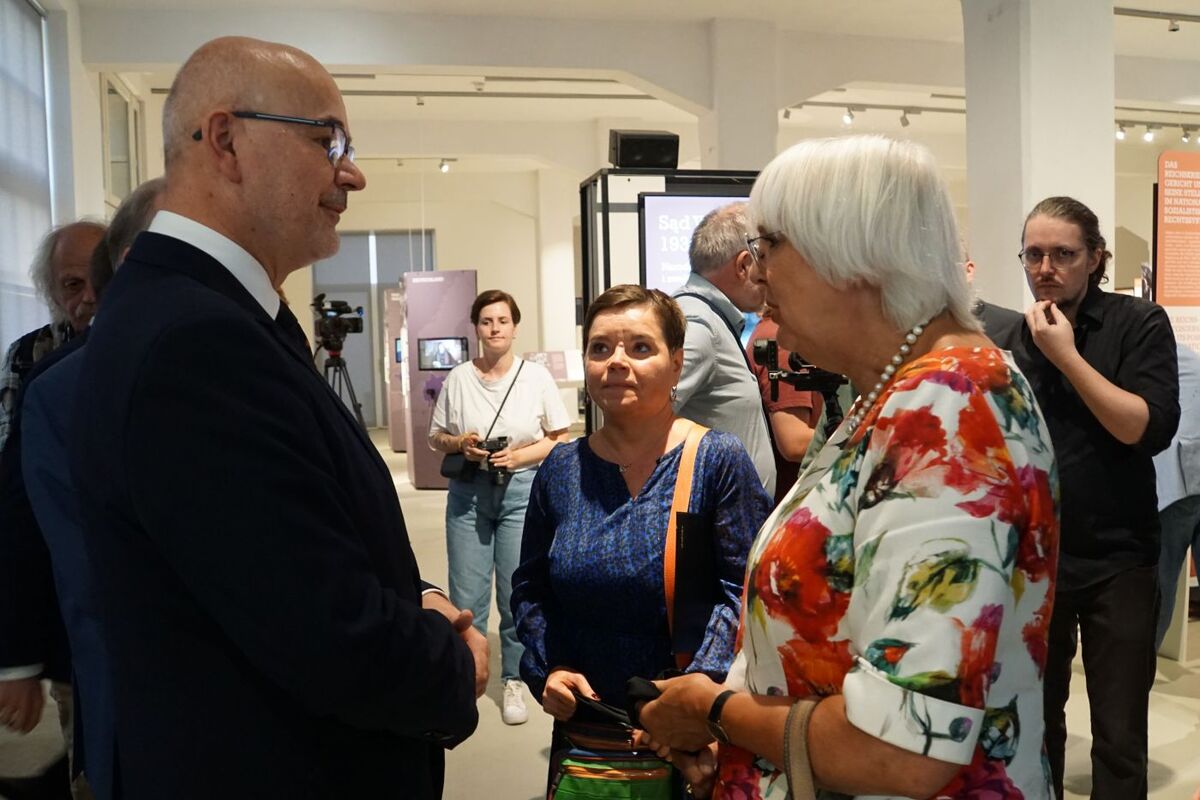
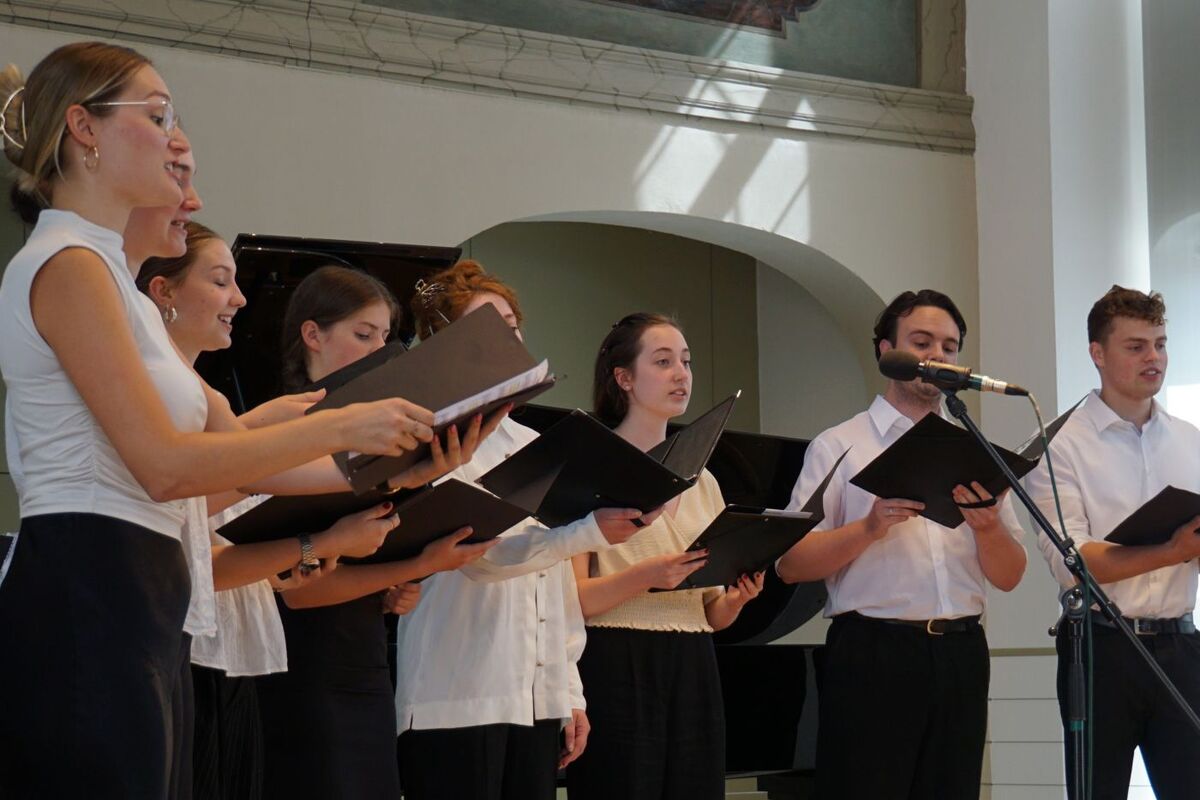
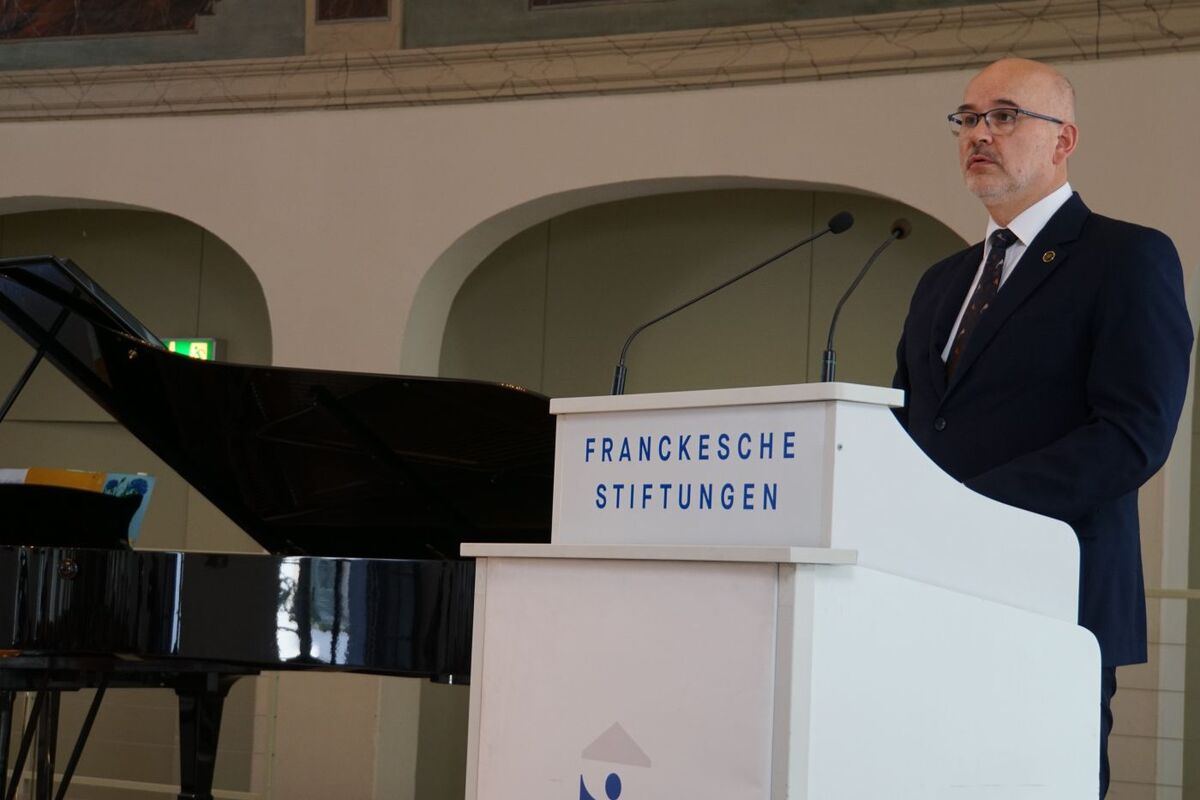
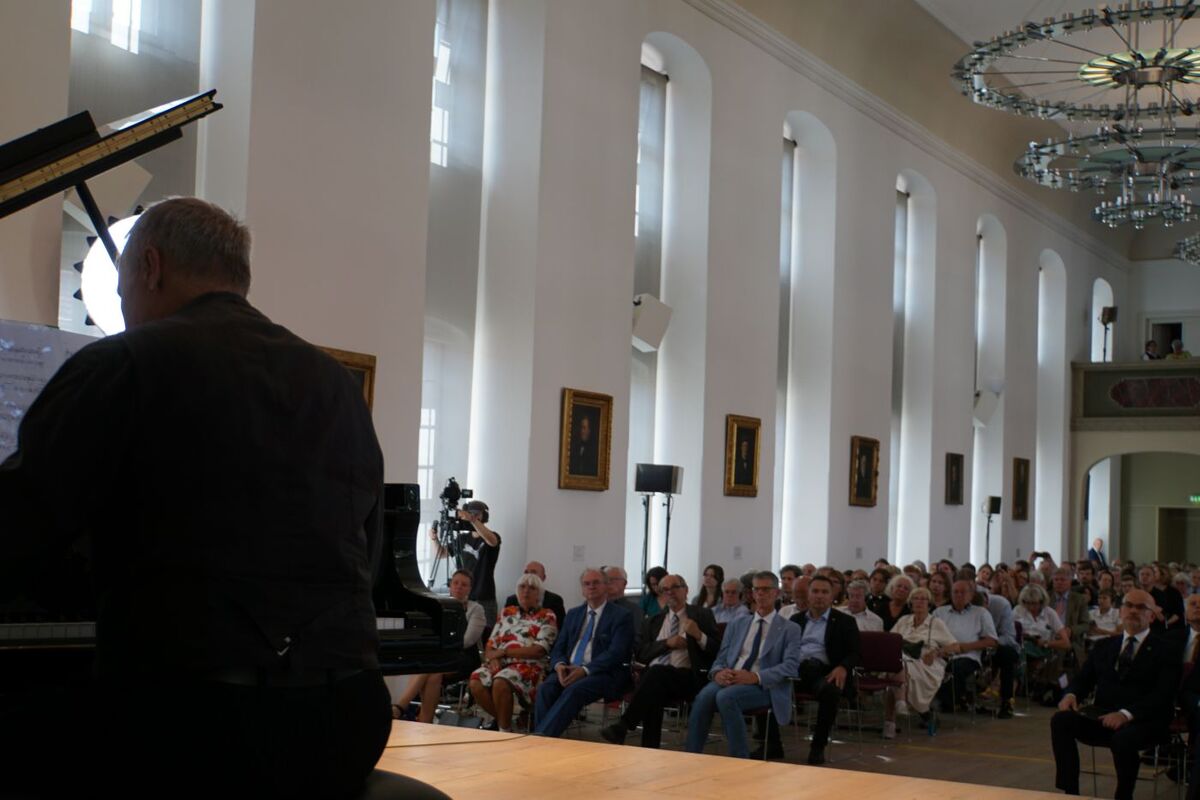
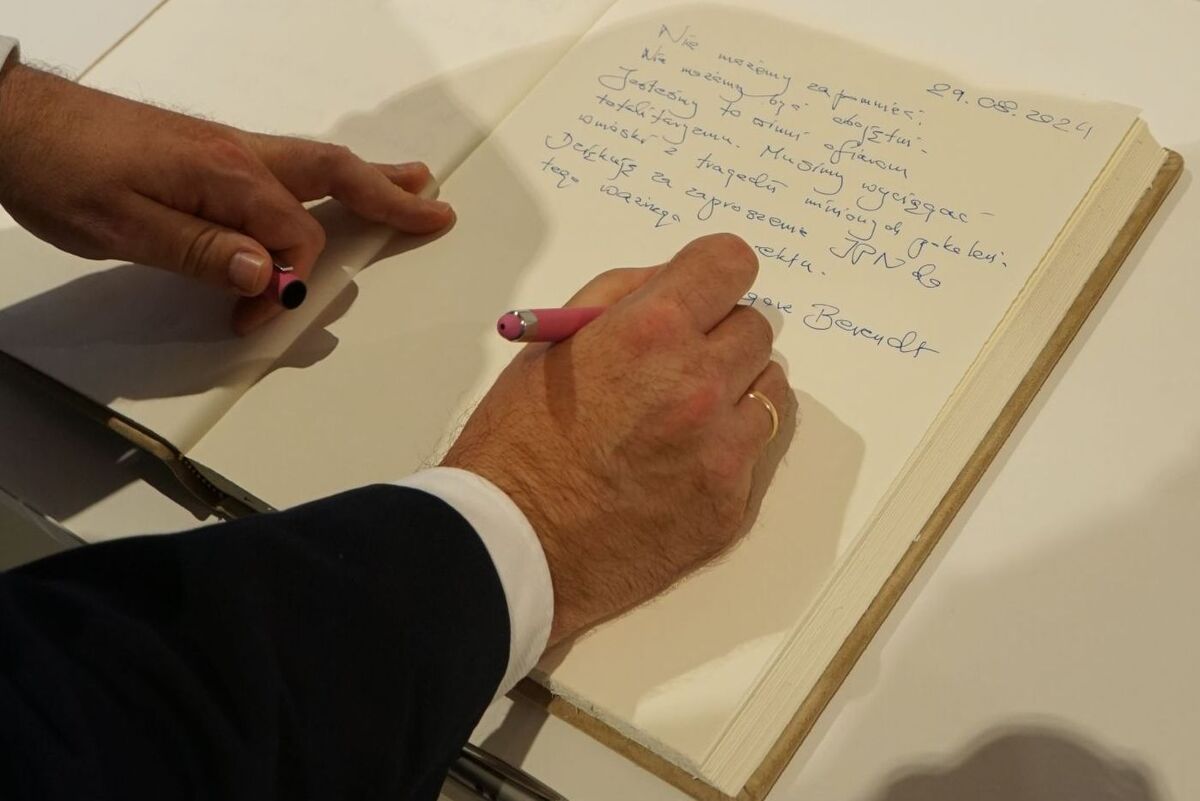
In Halle, Germany, a travelling exhibit on the Reichskriegsgericht, Reich Court-Martial in World War II was unveiled on 29 August 2024. At the "Reichskriegsgericht 1936 to 1945. National Socialist Military Justice and the Suppression of Resistance in Europe" opening, the IPN was represented by Professor Grzegorz Berendt.
It was compiled by the Saxony-Anhalt Memorials Foundation/ROTER OCHSE Memorial Halle and its international partners, one of which is the IPN, and the venue until late October is going to be the Stadtmuseum Halle. After that, it is scheduled to make a tour of European cities, which will include Warsaw, Berlin and Paris.
- A very important part of the Institute's educational and scientific activies focuses on the the years 1939-1945, because during this period more than 17% of Polish citizens lost their lives. (...) Among these 6 million Polish citizens, half lost their lives because they were born as Jews. (...) More than 2.5 million of the remaining victims lost their lives because they were Poles (...) and 90% were civilians. (...) said prof. Grzegorz Berendt during the opening ceremony.
The museum historic building is a place where several death sentences, passed by the Reichskriegsgericht, were carried out towards the end of World War II. This court, established in 1936, was not only responsible for criminal proceedings against members of the German Wehrmacht. As the military counterpart to the People's Court (Volksgerichtshof), the supreme Wehrmacht court also tried several thousand resistance members from the European countries invaded and occupied by Germany, and had them executed. Thus, it was an essential instrument for enforcing the policy of occupation and repression.
Until 1943, the Reichskriegsgerichtmainly met in Berlin-Charlottenburg. Afterwards, Torgau (Saxony) became its main seat. However, the court verdicts were also passed in other German cities as well as in Poland, France and Norway. The proceedings against those involved in the resistance network labelled the “Red Orchestra” are particularly well known. The court was also responsible for judging a number of special offences committed by members of the German Wehrmacht as well as for proceedings against conscientious objectors, generals and several women.
The court record includes more than 1,200 death sentences, as well as committals to prisons, Wehrmachtpenal units and concentration camps. Nevertheless, to this day there is no adequate public perception of the Reichskriegsgericht as an enormously important part of the National Socialist system of repression. The exhibit is an important milestone in closing this gap in the culture of remembrance in Germany and the countries concerned, and in promoting the knowledge about various forms, degrees of organisation of the resistance movements in the occupied countries, but most of all about their members.
***
The travelling exhibition of the Saxony-Anhalt Memorials Foundation | ROTER OCHSE Memorial Halle (Saale), created with international cooperation partners and funded by the federal and state governments, is being presented in Halle for the first time.
Date and time: 27 August 2024, 10:00 a.m.
Location: Christian-Wolff-Haus|Stadtmuseum Halle (Saale), Große Märkerstraße 10, 06108 Halle (Saale)
Since 2019, the ROTER OCHSE Memorial Halle (Saale) has been working with cooperation partners in Belgium, France, Norway, Poland and the Czech Republic as well as institutions in Germany to develop a travelling exhibition on the Reichskriegsgericht.
The memorial is part of the Saxony-Anhalt Memorials Foundation. It is located in a historic building where numerous death sentences passed by the Reichskriegsgericht were carried out in the final years of the Second World War. This court, founded in 1936, was not only responsible for criminal proceedings against members of the German Wehrmacht. As the military counterpart to the People's Court (Volksgerichtshof), the supreme Wehrmacht court also tried several thousand members of resistance groups from the European countries invaded and occupied by Germany during the Second World War, based on a division of labour and in coordination with the People's Court. Thus, it was an essential instrument for enforcing the policy of occupation and repression.
Until 1943, the Reichskriegsgericht mainly met in Berlin-Charlottenburg. Afterwards, Torgau (Saxony) became its main seat. However, the court’s verdicts were also passed in other German cities as well as in Poland, France and Norway. The proceedings against those involved in the resistance network labelled the “Red Orchestra” are particularly well known. The court was also responsible for judging a number of special offences committed by members of the German Wehrmacht as well as for proceedings against conscientious objectors, generals and numerous women.
The court's record includes more than 1,200 death sentences, as well as committals to prisons, Wehrmacht penal units and concentration camps. Nevertheless, to this day there is no adequate public perception of the Reichskriegsgericht as an enormously important part of the National Socialist system of repression. The exhibition is an important milestone in closing this gap in the culture of remembrance in Germany and the countries concerned. The significance of the exhibition also lies in the enormous increase in knowledge about the various forms, degrees of organisation and structures of the resistance movements in the occupied countries. It also expands the level of knowledge about their actions in detail and the circle of participants for the historiography of the partner countries.
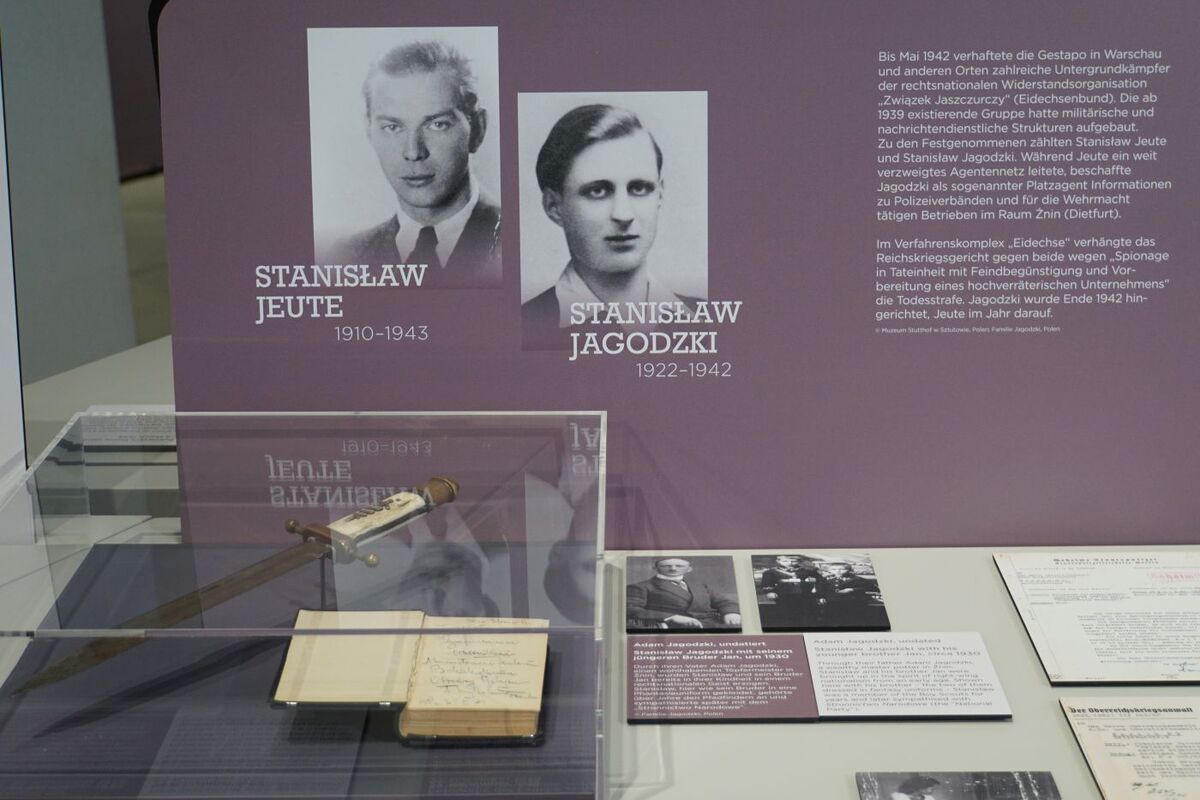
The exhibition not only documents the court's judgements, its key players and the foundations of its jurisdiction. Other topics include conclusions for the administration of justice in Germany and the treatment of victims of military justice here and in neighbouring European countries. However, the focus is on the lives of people who were affected by this jurisdiction. Their biographies are presented using, among other things, objects that once belonged to them. Supplemented by interviews with relatives of the victims, photos and important documents, these fates show the results that a policy of violence, of the rejection of the rule of law and the primacy of human dignity can lead to, both for individuals and societies.
The travelling exhibition is therefore highly topical and has numerous links to current events.
The exhibition will be presented to the public for the first time in the City Museum in Halle (Saale) on 29 August 2024. Afterwards, stops are planned in Warsaw, Berlin and Paris, among others. The exhibition will then be shown in other cities and at memorial and educational sites in Germany and the partner countries. The presentations are linked to educational programmes tailored to the countries, which the exhibition organisers will prepare and implement with colleagues on site.
There will be an opportunity to view the exhibition in advance and talk to the foundation director Dr. Kai Langer, the exhibition curator Lars Skowronski and the exhibition designer Jochen Gringmuth.
Read more about the exhibition in the attachment below.