
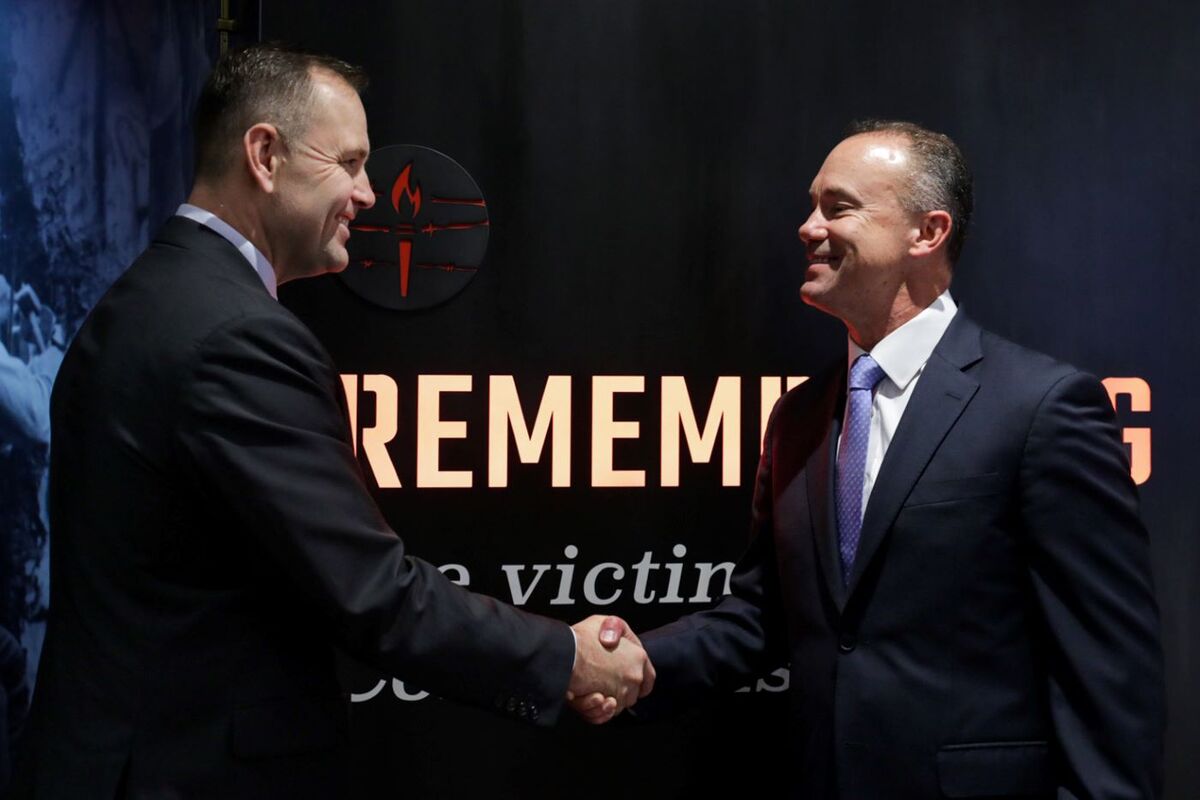
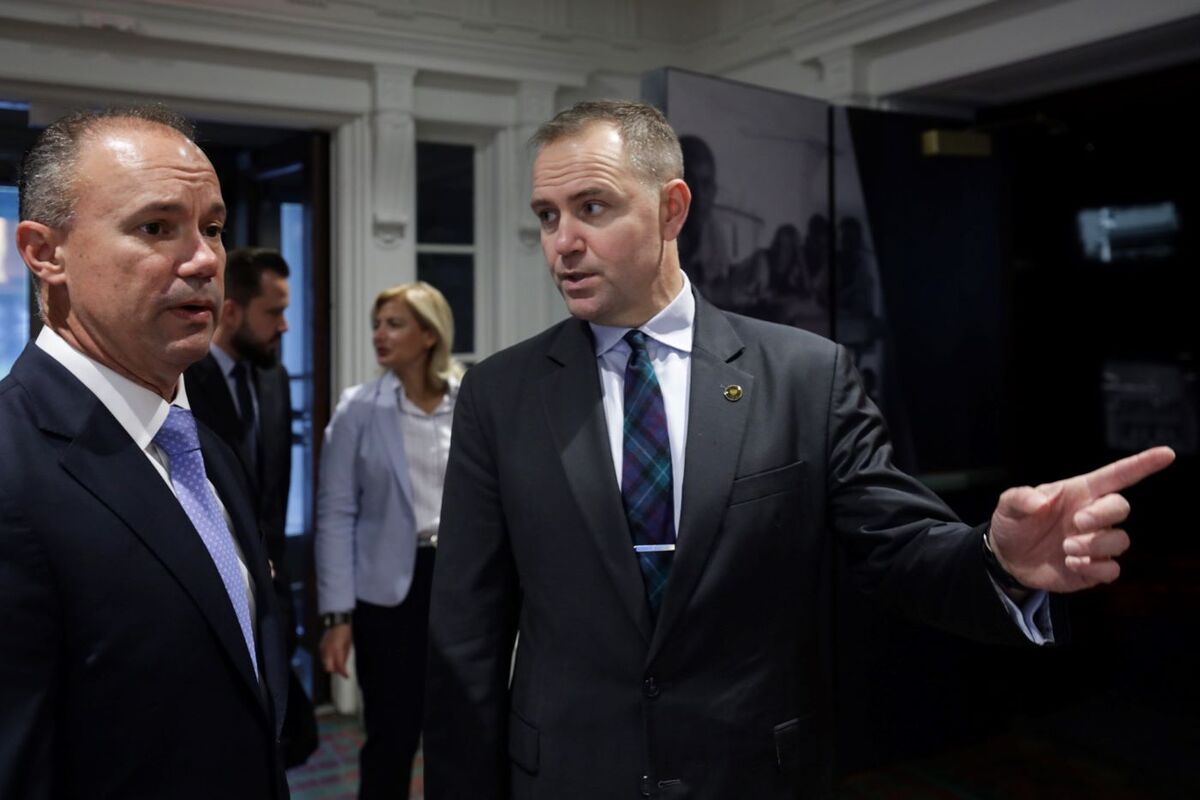
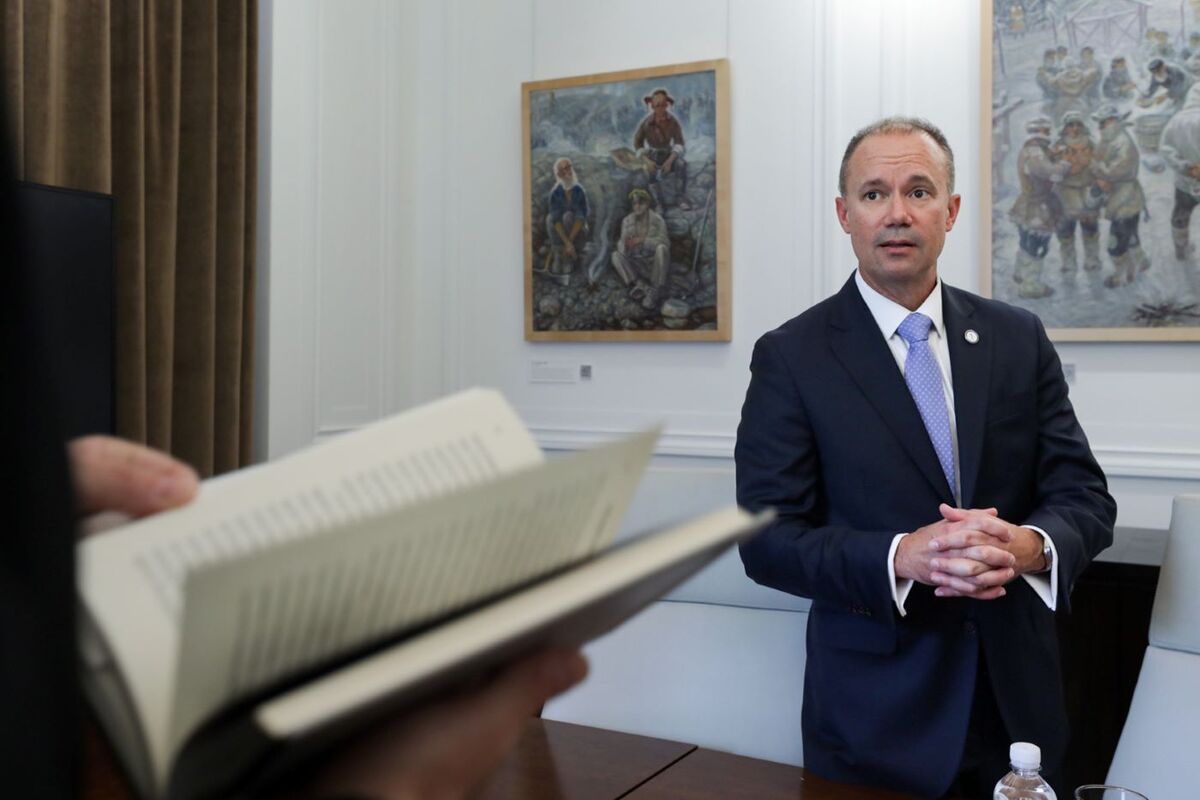
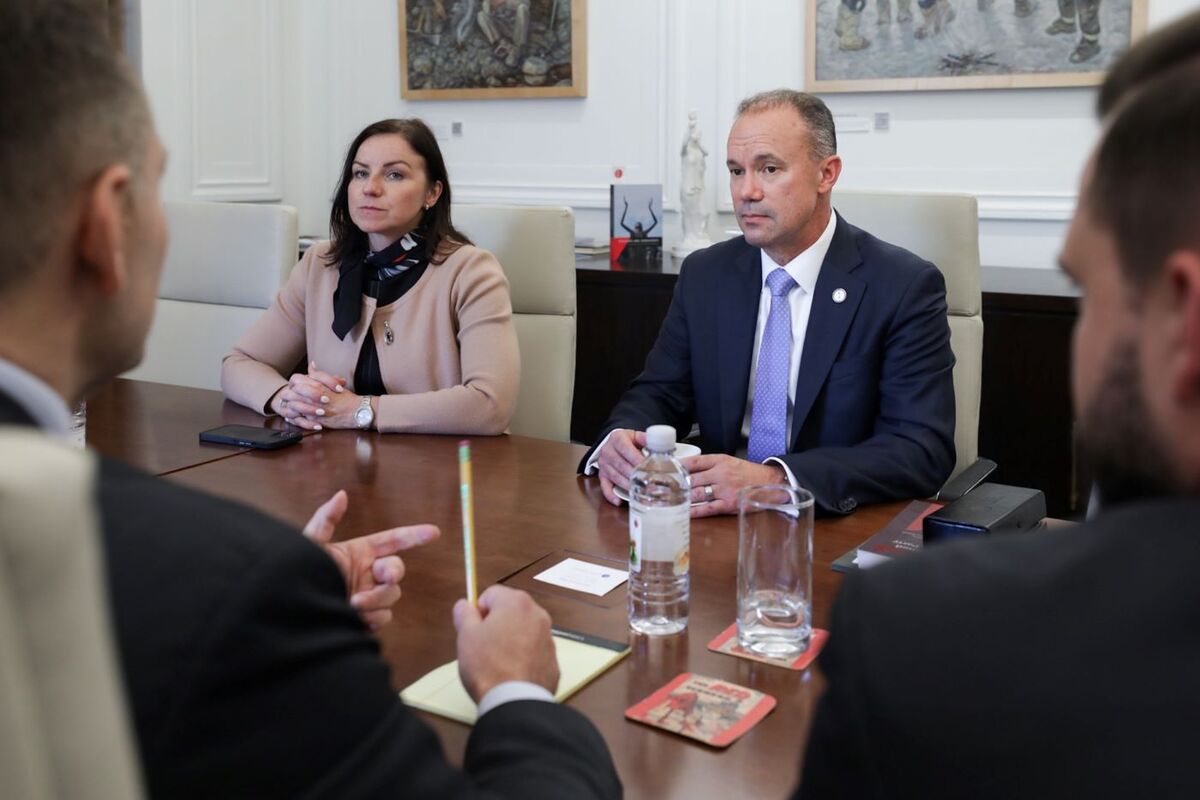
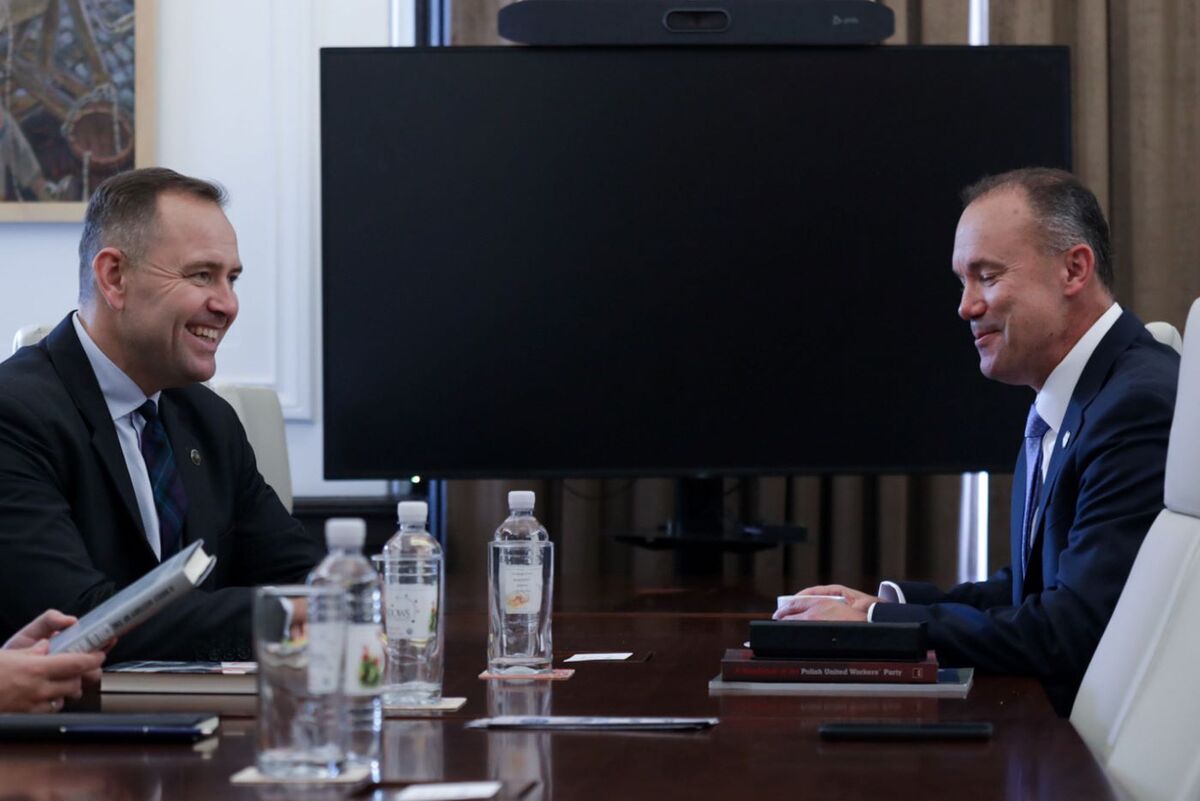
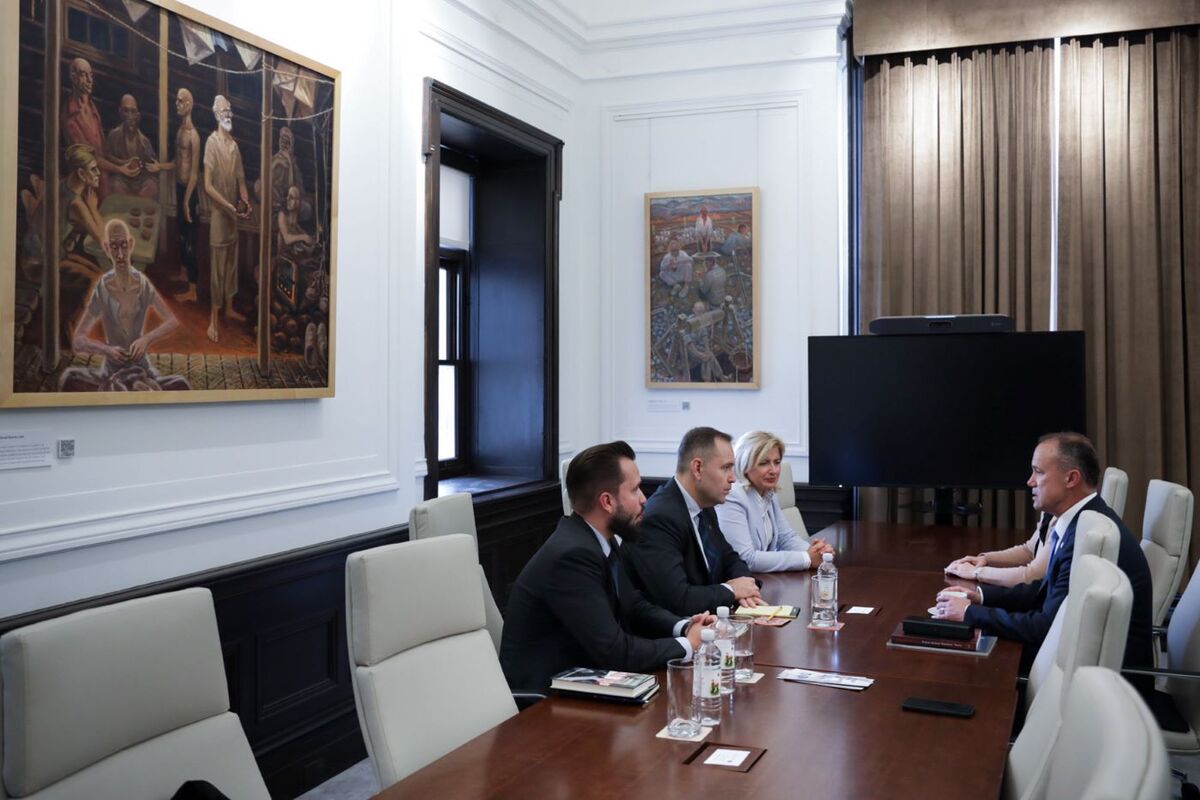
A delegation of the Institute of National Remembrance with President Karol Nawrocki Ph.D. visited Washington, DC, where they met with the President and CEO of the Victims of Communism Memorial Foundation Eric Patterson.
The meeting agenda included the cooperation between both institutions, i.e. joint exhibits and educational projects, as well as decommunization and settlement of communist crimes, the fields the IPN has gained considerable experience in. Alongside tried-and-tested educational resources, we’ve been increasingly employing modern technologies, such as VR, and developing new tools to teach history to young people, and our decommunization campaign has removed over 40 memorials to the regime the Soviets installed in Poland after WW2.
The Museum is run by the Victims of Communism Memorial Foundation, an educational, research, and human rights non-profit organisation, devoted to commemorating over 100 million victims of communism around the world, teaching the public about the communist ideology and history, and to advocating for the rights of millions of people still living under totalitarian regimes. In mid-2022, the Foundation launched its modern museum in Washington, with President Karol Nawrocki present at the opening.
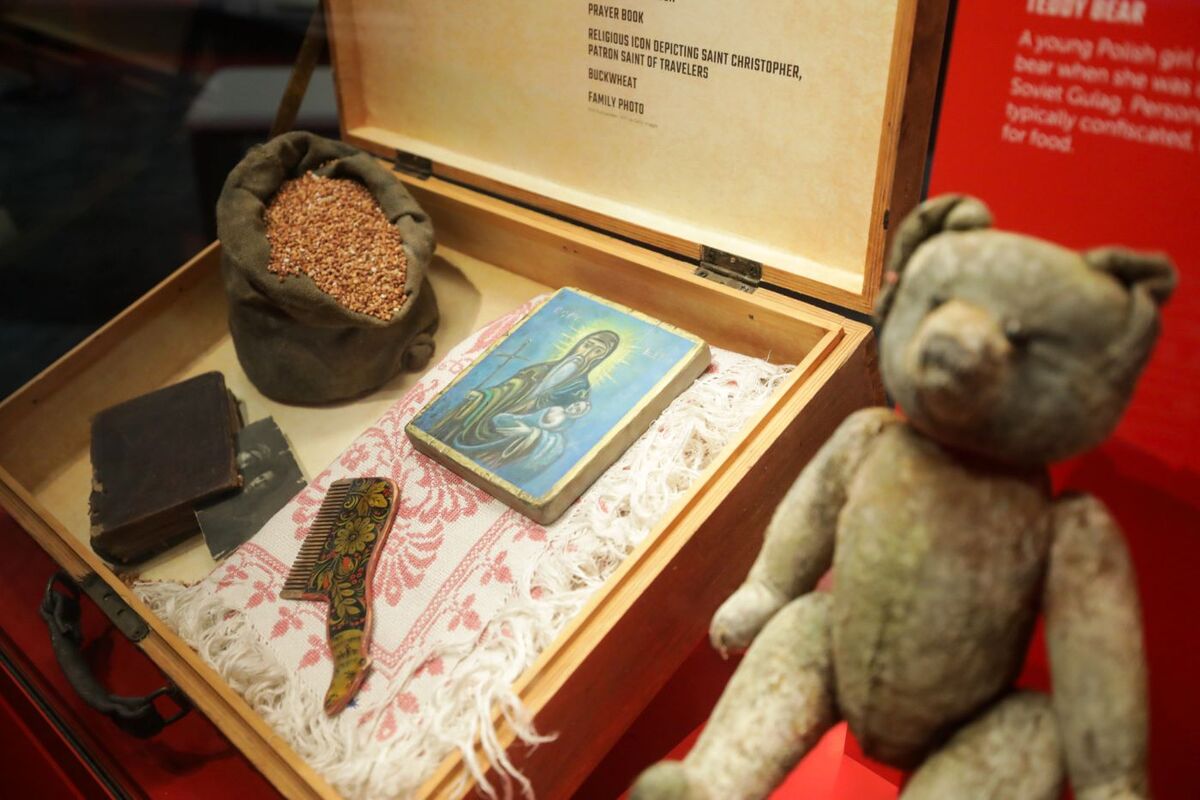
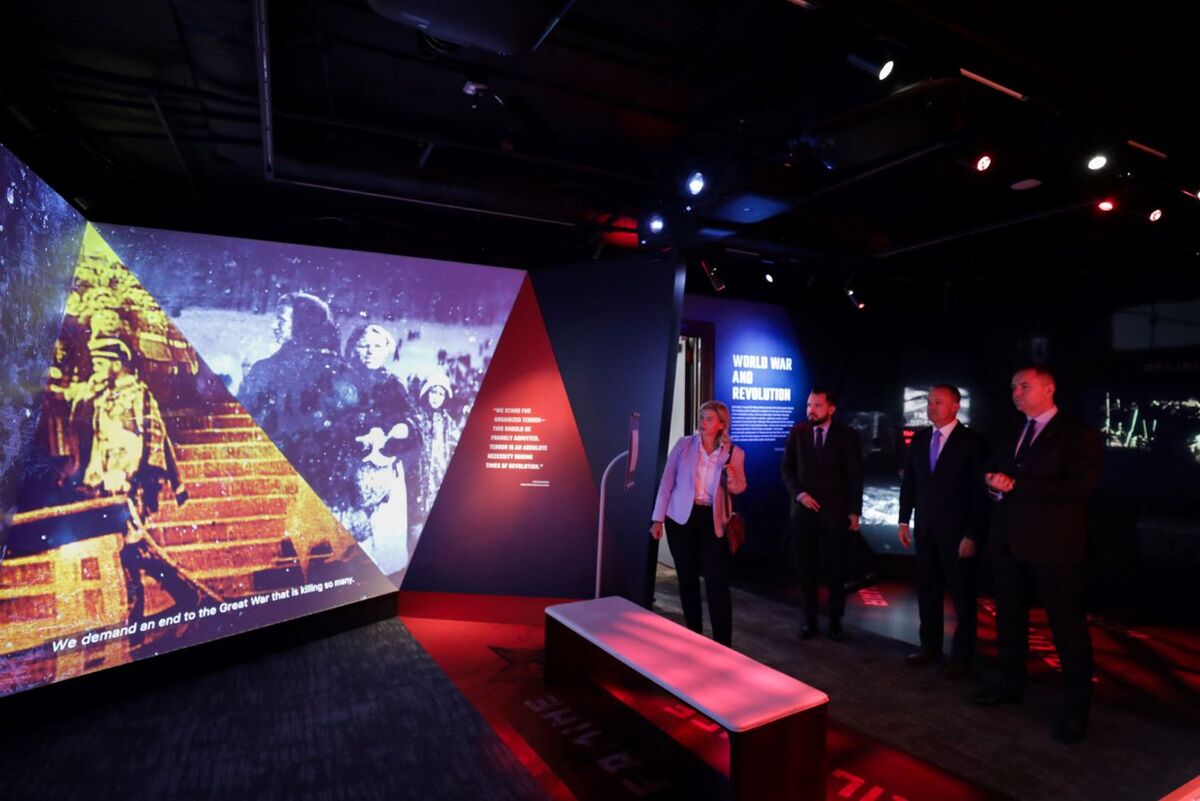
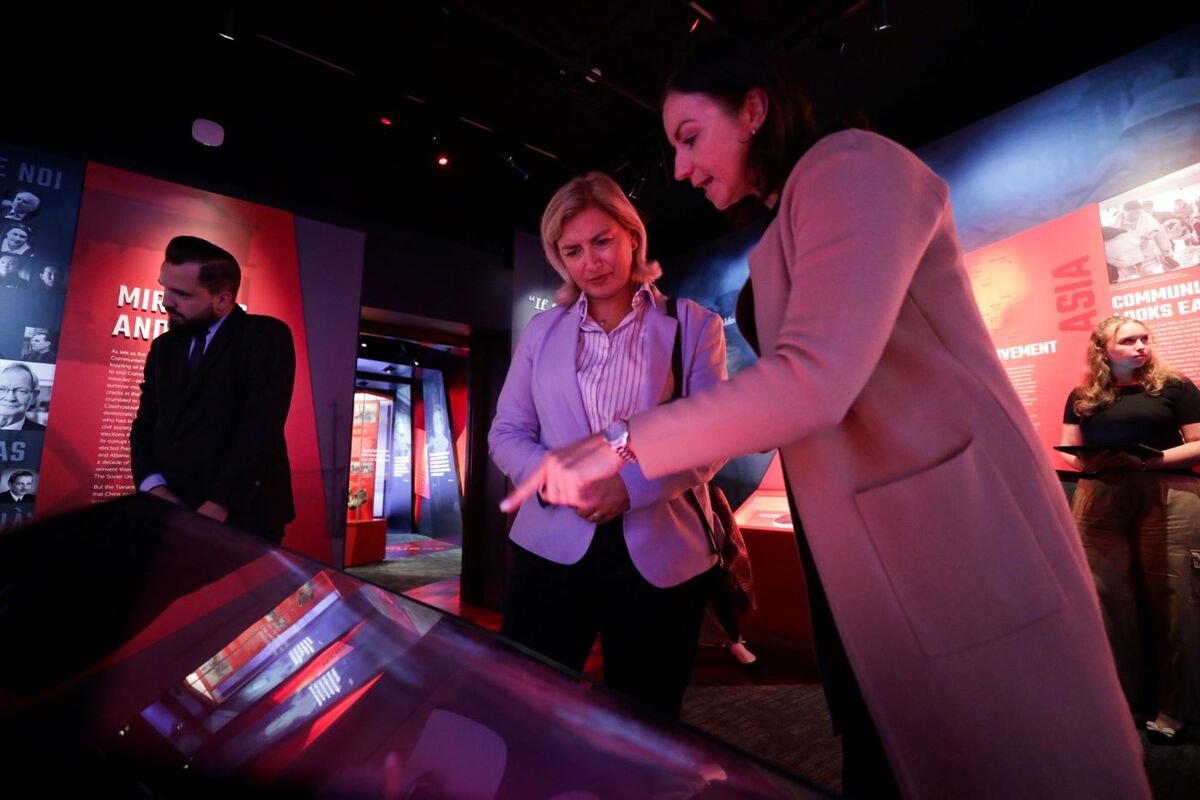
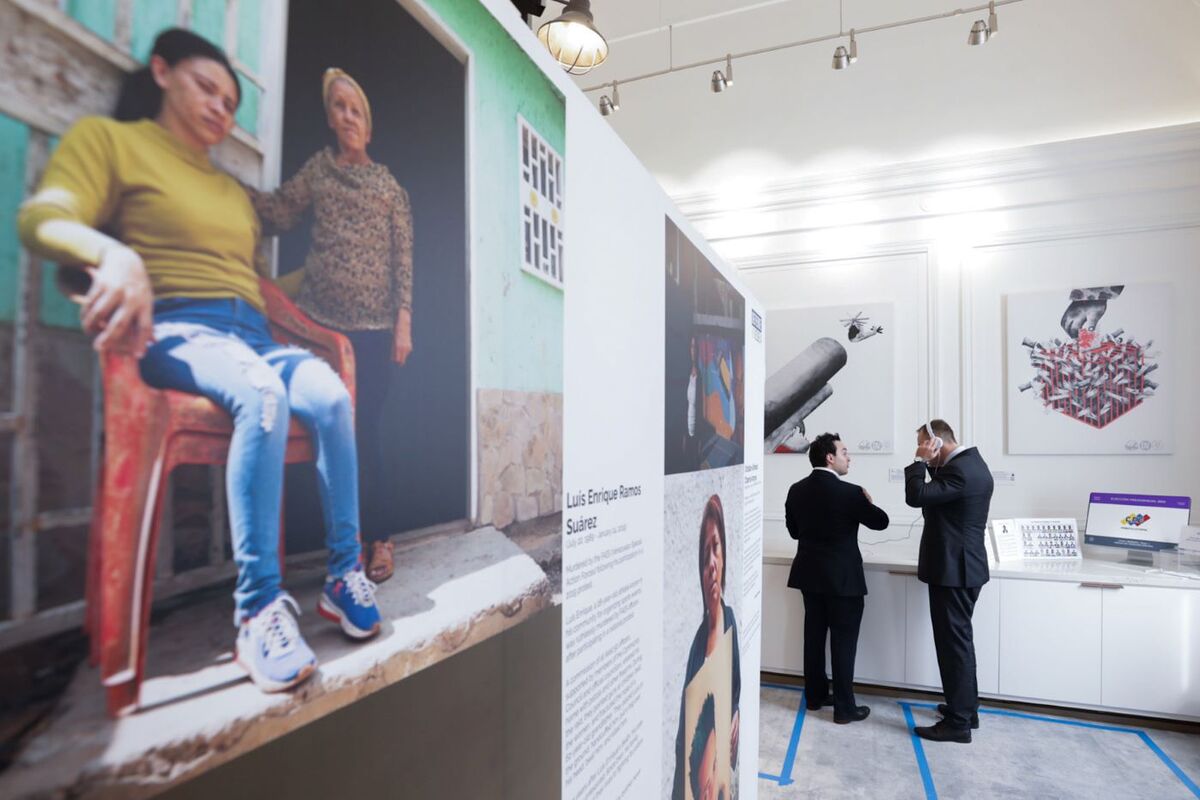
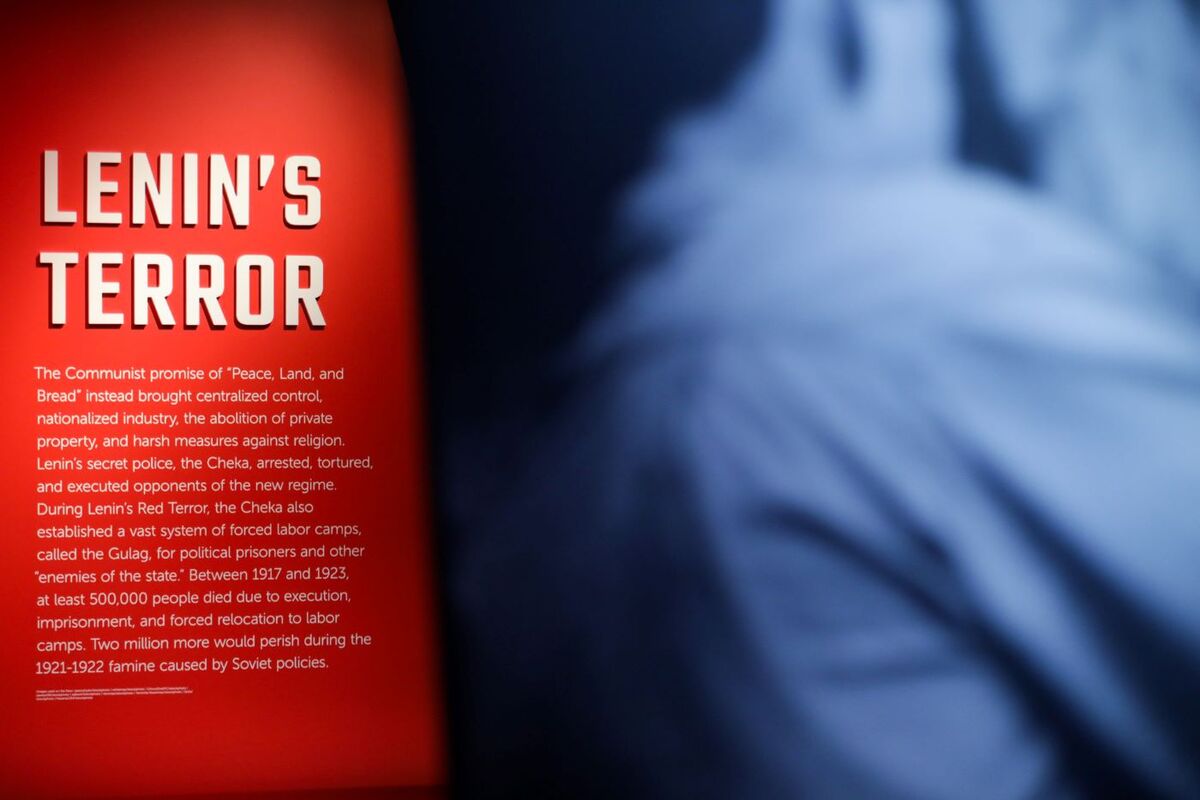
The first floor hosts three main galleries that take the visitor through communist history, explaining how and where the system originated, how it operated, and how it was and is resisted. Captivating documentaries – among them the story of the 1920 Battle of Warsaw – and state-of-the-art interactive exhibitions bring to life the stories of both victims and survivors. Yesterday, our representatives were shown around an excellent exhibit on communist repressions.
The Victims of Communism Museum is managed by the Victims of Communism Memorial Foundation, founded in 1993.
The VoC Memorial Foundation’s mission is to educate future generations about the ideology, history, and legacy of communism and to advocate for the freedom of those still held captive by communist regimes. Similarly to the Institute of National Remembrance, the Victims of Communism Memorial Foundation is a member of the Platform of European Memory and Conscience.
The VoC Museum is headquartered near the White House, next to the Goddess of Democracy statue erected in 2007, which is a replica of the sculpture set up in Tiananmen Square in Beijing during the 1989 protests. Funds for the Museum's construction were donated among others by the Polish National Foundation.
Poland has for years cooperated with the VoC Memorial Foundation, which is responsible for shaping the Museum. The IPN President Karol Nawrocki, Ph.D. has joined the Council of this facility.
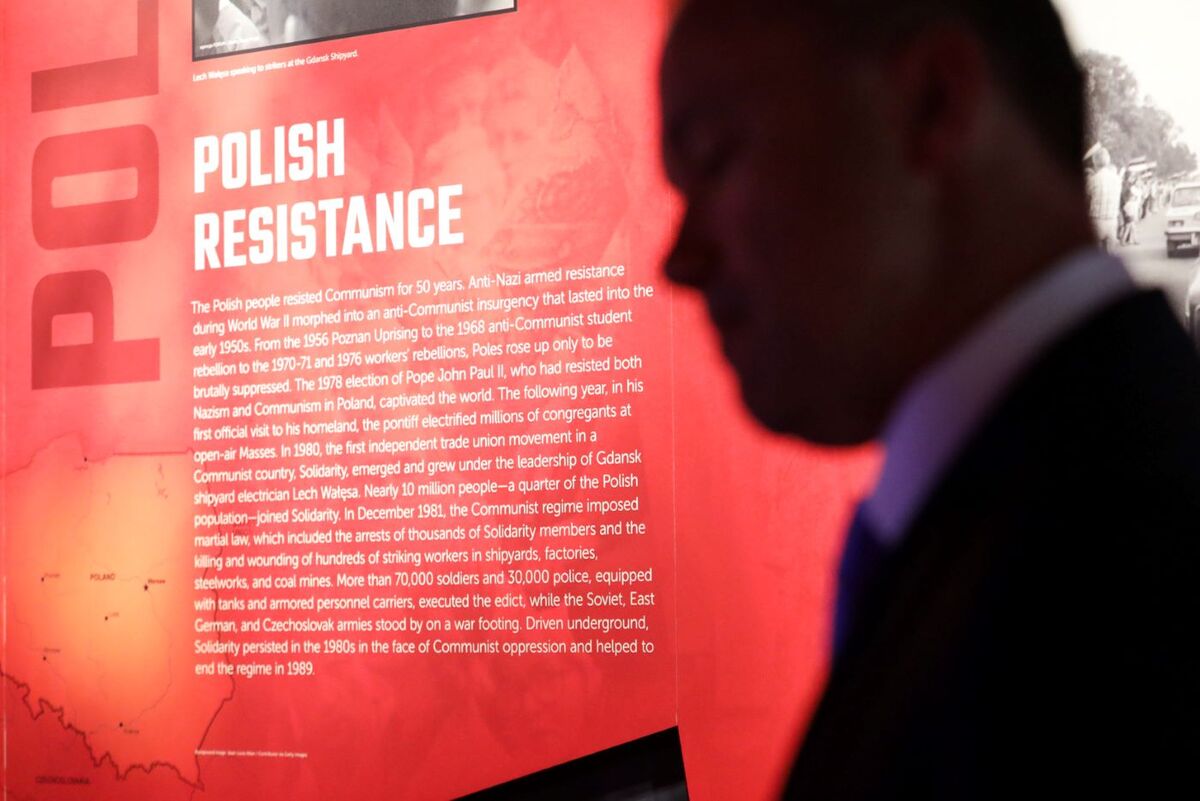
The Museum consists of several permanent exhibitions. They tell about the origins of communism, Stalin's terror, and those who opposed the communist system (or, in some parts of the world, are still fighting it today). The contribution of Solidarity and Pope John Paul II to the collapse of communism in Central and Eastern Europe is presented here as well. Story of Witold Pilecki – a voluntary Auschwitz prisoner who was murdered by the Communists after the war, was also included .
One of the tasks of the Museum in Washington is to show the history of communism and its victims as widely as possible. That's why visitors will find information about the fight of Poles against Bolshevik Russia in 1920, the anti-communist underground or the creation of the Solidarity Trade Union.
***
Eric Patterson, Ph.D., the President and CEO of the Victims of Communism Memorial Foundation, is foreign policy expert and long-time fighter of totalitarianism, He previously served as President of the Religious Freedom Institute (RFI), where he led the organization’s efforts to advocate for religious liberty around the world through training and educational programs for students, teachers, public officials, and other audiences. His government experience includes service as a White House Fellow, at the U.S. Department of State, and, for over 20 years, as an Air National Guard commander. He is an active scholar on the moral dimensions of national security and international affairs, as well as author of over 20 books, including Just American Wars: Ethical Dilemmas in U.S. Military History and the co-edited volume The Reagan Manifesto: ‘A Time for Choosing’ and Its Influence.