
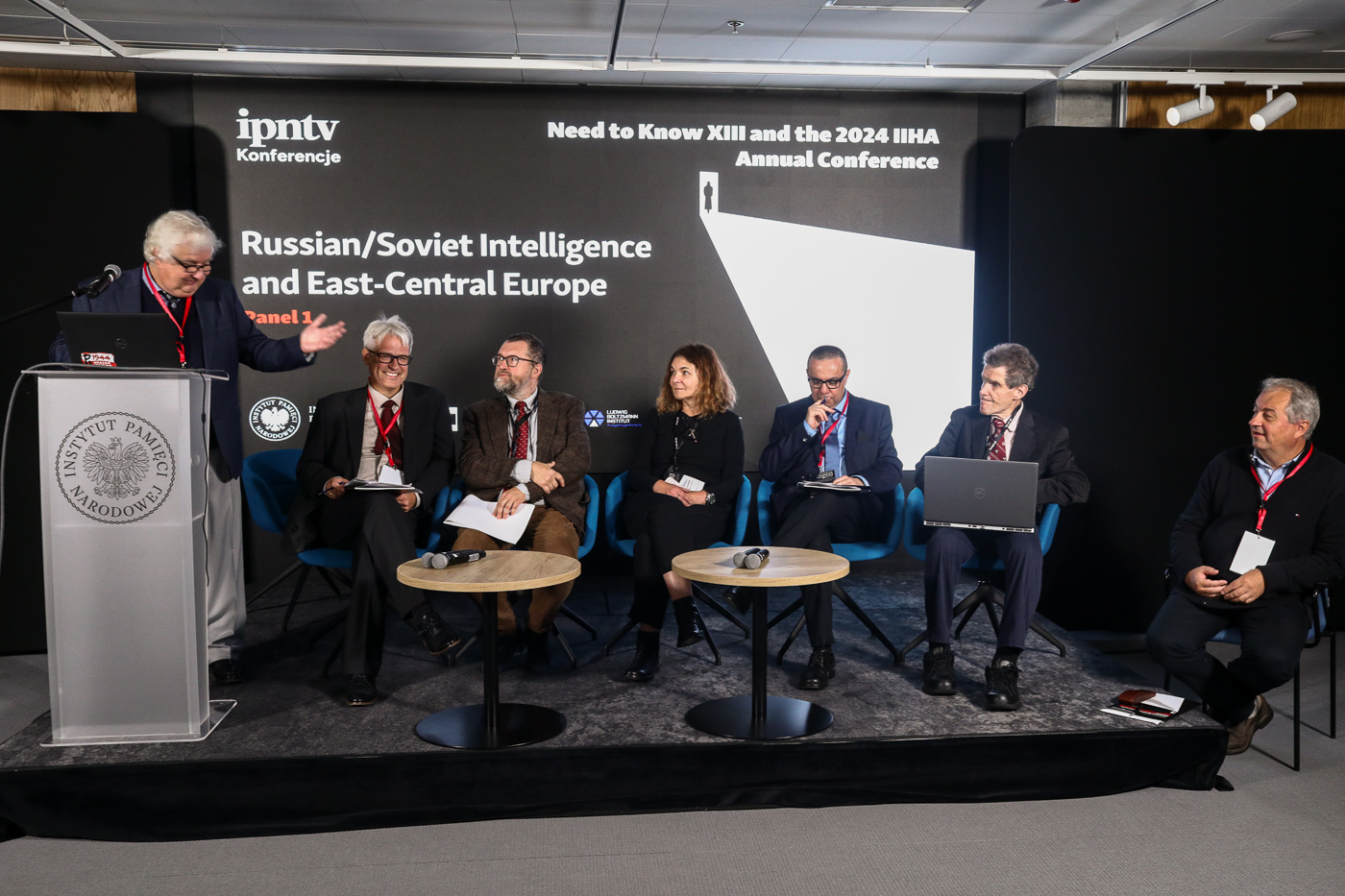
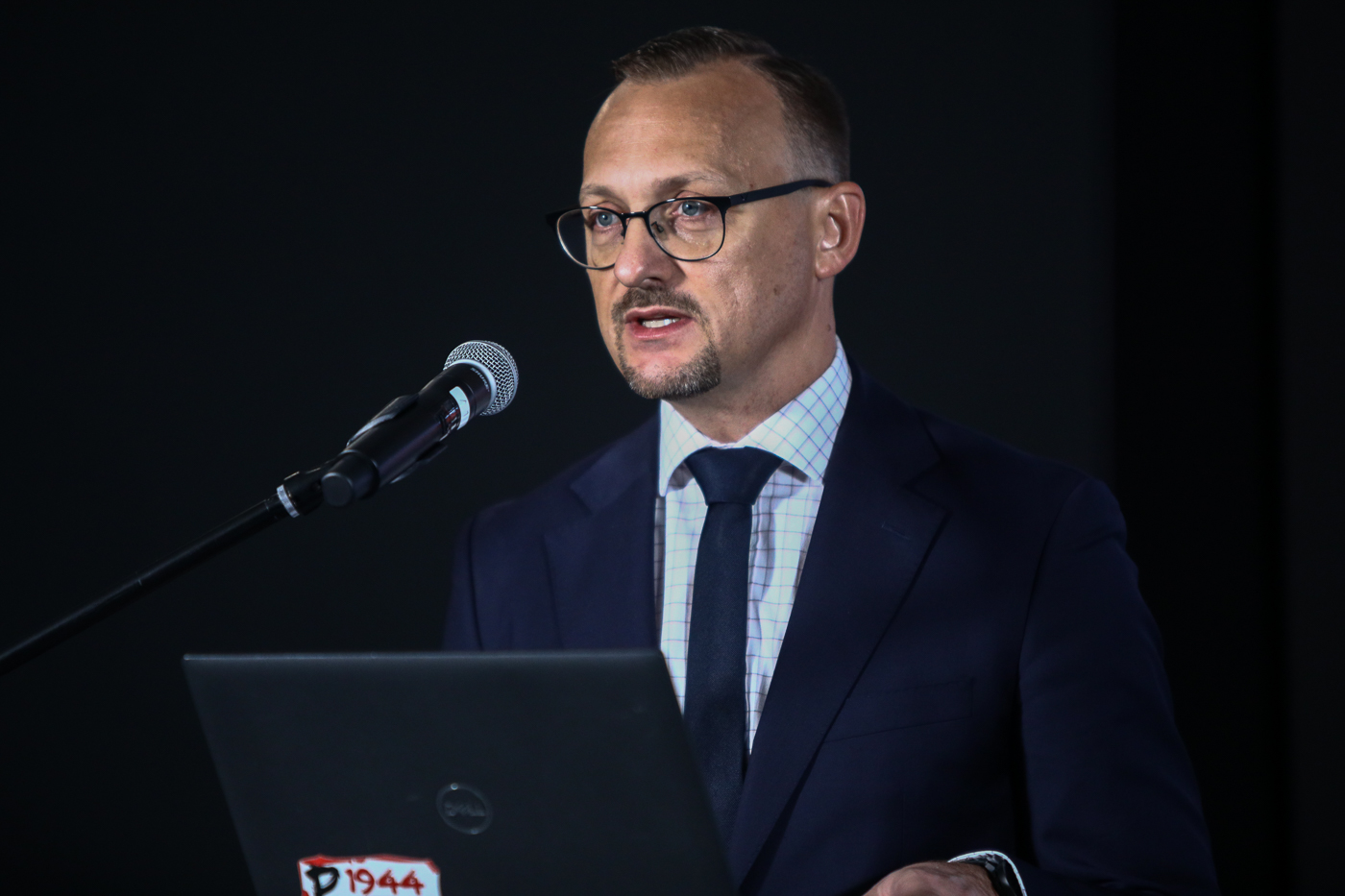
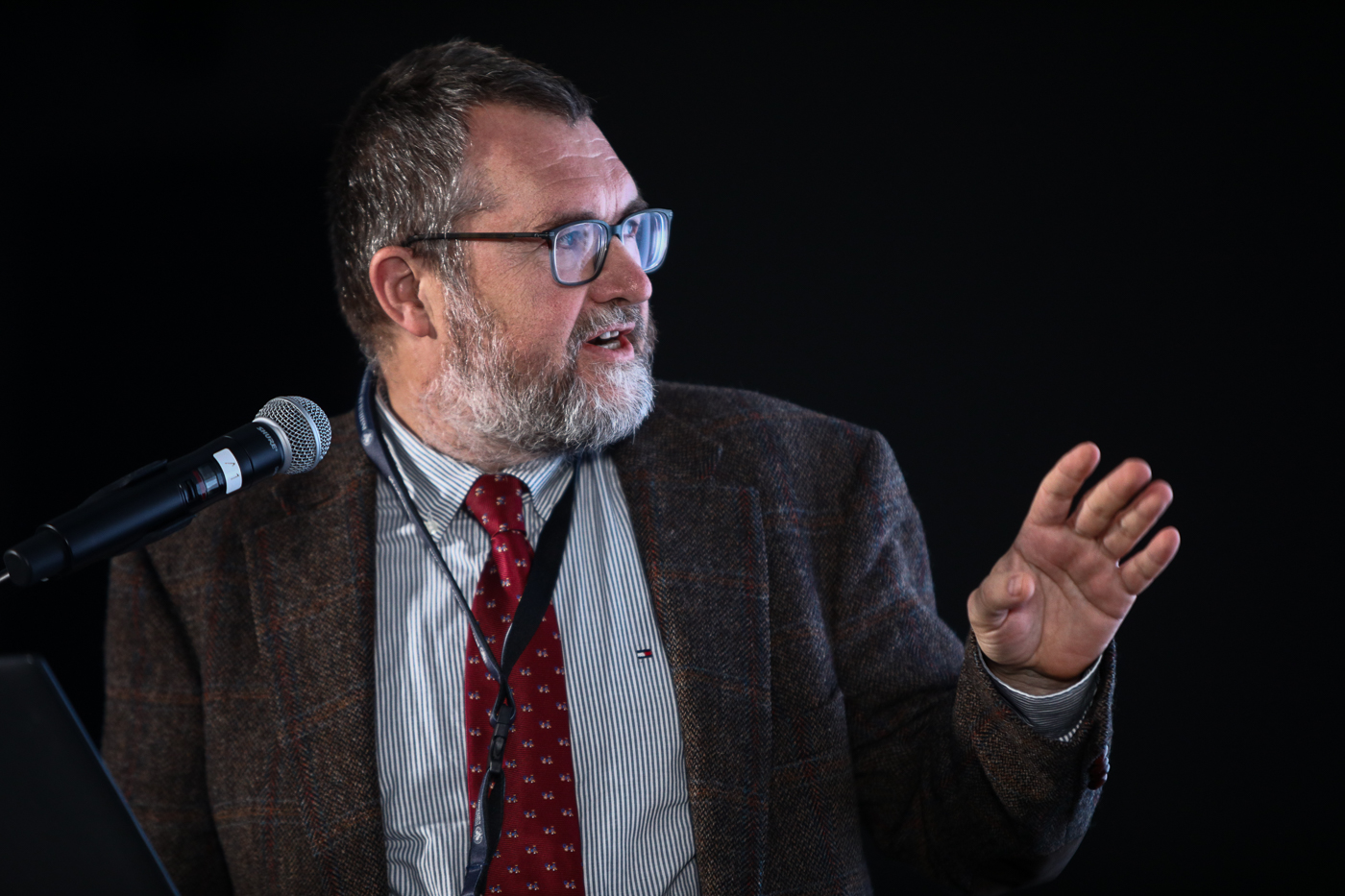
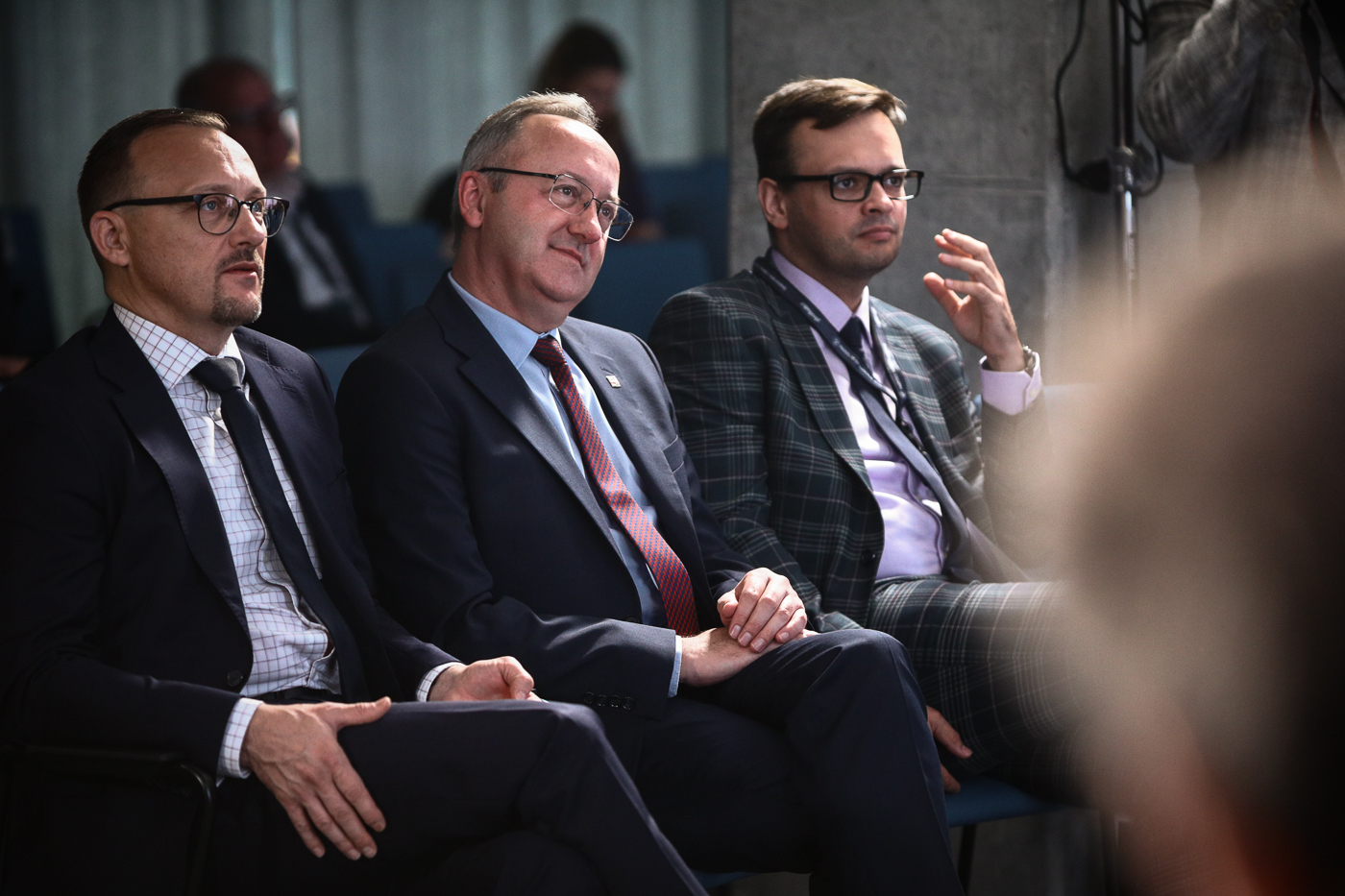
The Office of Historical Research of the National Institute of National Remembrance (IPN) organised an international conference, part of the "Need to Know" series, dedicated to the history of intelligence and counterintelligence in the 20th century. This year's conference theme is "Intelligence in Central and Eastern Europe (Intermarium) and the Soviet (Russian) Factor." The event is taking place on 14–16 October at the IPN's President Lech Kaczynski Central History Station at 107 Marszalkowska Street in Warsaw.
The idea of an Intermarium (in Between-Seas), i.e., a community of smaller countries and nations between the Baltic, Black, and Adriatic Seas, has been in local geopolitical tradition since the early 20th century. The area was the object of rivalry between the great powers, then, as a result of the Second World War, found itself mostly in Moscow's sphere of influence, and, after its deconstruction and a period of relative stability, became today the arena of war between Putin's state and Ukraine. In these periods, intelligence and counterintelligence services have been a significant factor in the policies pursued by great powers, smaller countries, and their societies. Therefore, this year's conference aims to look at intelligence in Central and Eastern Europe – the Intermarium – during the interwar period, WWII, the Cold War, and the transition period afterward, including the current Russian aggression against Ukraine, as well as broader global intelligence issues relating to that region.
The idea behind the organization of the cyclical international conference under the slogan "Need to Know" was to create a meeting place for researchers in the field of intelligence, counterintelligence, and, more broadly, secret services from Poland and other post-communist countries with their colleagues from other parts of Europe and North America, and, above all, to demonstrate to the latter the cognitive significance of opening to researchers and journalists the archives of the former Soviet bloc special services, with the IPN archives at the forefront.
The conference has been organized since 2011 by the Institute of National Remembrance. According to the organizers' intention, the event is held annually in another significant European academic center with the participation of an additional local partner or partners.
The International Intelligence History Association (IIHA) is the oldest and largest scholarly association for the study of intelligence. This year, it is celebrating its 30th anniversary.
Young Researcher Forum:
As part of the conference, the IIHA also invited participants to discuss practices of intelligence research with a round table of junior researchers. The aims of the discussion are not finished projects or results, but rather the ways and challenges of intelligence research. Presenting work in progress, the issues discussed will be differences of intelligence history to other historical topics, the challenge of finding adequate research questions and sources, and the question if or how scholars are influenced by the special conditions of intelligence research.
Organizers:
The conference is jointly organised by the Institute of National Remembrance – Commission for the Prosecution of Crimes against the Polish Nation (Warsaw, Poland) and the International Intelligence History Association (IIHA) together with the Center for Cold War Studies of the University of Southern Denmark; King's Centre for the Study of Intelligence, King's College London (UK); International Center for Defence and Security (Tallin, Estonia), Ludwig Boltzmann Institute for the Research on Consequences of War (Graz, Austria), and in partnership with the International Journal of Intelligence and Counterintelligence.
Program:
International Conference Need to Know XIII and the 2024 IIHA Annual Conference: Intelligence in Central and Eastern Europe (Intermarium) and the Soviet (Russian) Factor, Warsaw, October 14–16, 2024
Place: Lech Kaczyński Central History Point of the Institute of National Remembrance, Marszałkowska 107 (entrance from Świętokrzyska Street)
14 October 2024
16.00 – 17.30 Young Researchers Forum
Chair: Jacek Tebinka (University of Gdańsk)
Suzanne Freemann (Massachusetts Institute of Technology): Soviet KGB during the Contemporary War in Ukraine: Insights Gained from a Broader Archival Approach
Jesper Jørgensen (University of Southern Denmark): Intelligence and Activism in the Short 20th Century
Mary Barton (University of Washington): Intelligence and proliferation of small arms in the 1920s
Matteo Giurco (University of Florence): No One, and One Hundred Thous The arduous pursuit of sources for the history of Italian intelligence services
18.00-19.00 Annual meeting IIHA (members only, there is a possibility to join IIHA during the conference)
15 October 2024:
8.00-9.00 Registration
9.00-9.30 Introduction:
Karol Polejowski (Deputy President of the Institute of National Remembrance, IPN)
Shlomo Shpiro (Chairman of the International Intelligence History Association, IIHA)
9.30 – 11:15 Panel I: Intelligence in Central and Eastern Europe (Intermarium) and the Soviet (Russian) Factor
Chair: Bernd Schaefer (Woodrow Wilson International Center for Scholars)
9.30-9.45 Władysław Bułhak (Institute of National Remembrance), Thomas Wegener Friis (University of Southern Denmark): Russian/Soviet Espionage in Intermarium. Past and Present.
9.45-10.00 Tomas Sniegon (Lund University): The Ideology of Chekism' in the Soviet Union (and Post-Soviet Russia)
10.00-10.15 Mark Kramer (Harvard University): The Soviet KGB and Moscow’s Concerns about Western Attempts to Undermine the USSR
10.15-10.30 Elena Grossfeld (King’s College London): Bio-geese and combat mosquitoes - the revival of KGB's strategic narratives
10.30-10.45 Barak Bouks/Shlomo Shpiro (Bar-Illan University): Russian and Iranian Intelligence Influence Operations in the Ukraine and Gaza Wars
11.15-11.30 Coffee break
11.30- 13:00 Panel II: Soviet/Russian Intelligence and Counterintelligence Operations in the Region
Chair: Sylwia Szyc (Institute of National Remembrance)
11.30-11.45 Magdolna Baráth (Historical Archives of the Hungarian State Security): A failed attempt to build a Hungarian-Soviet intelligence network in South-Eastern Europe in the late 1940s
11.45-12.00 Kevin Riehle (Brunel University London): The KGB’s Use of Austria as a Facilitation Venue for Illegals Operations
12.00-12:15 Tomasz Kozłowski (Institute of National Remembrance): From reshuffle to coup d'état. KGB plan to overthrow the First Secretary of the Polish Communist Party in 1981
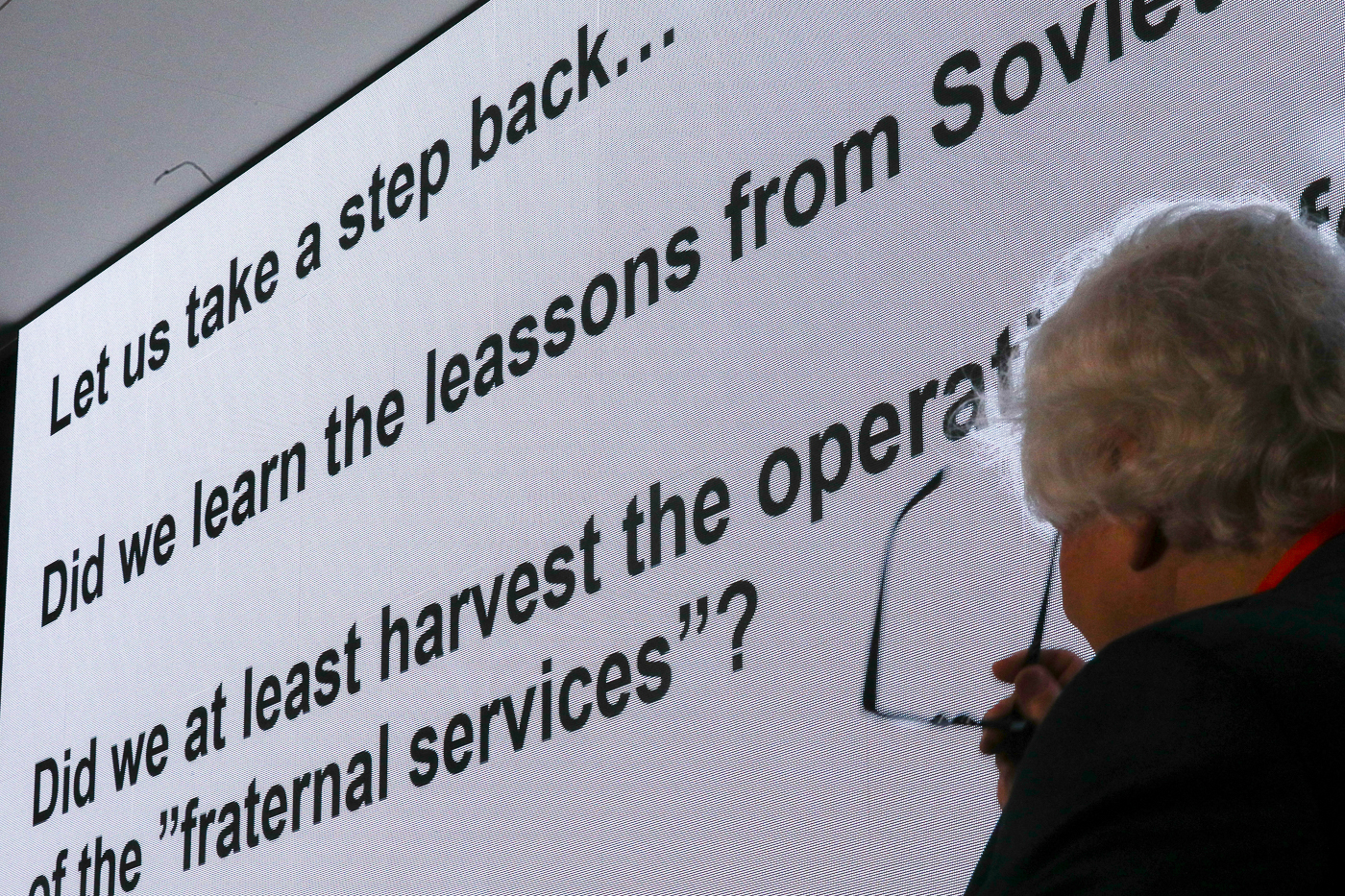
12.15-12.30 Douglas Selvage (German Federal Archive): Active Measures in Service of Empire: the KGB, its fraternal Organs, and the Intermarium, 1966-1989
13.00- 14.15 Lunch break
14.15-15.45 Panel III: The Communist intelligence community
Chair: Anna Abelmann (Ruhr University of Bochum)
14.15-14.30 János Kemény (National University of Public Service in Budapest): “The Soviet Files”. The Hungarian (communist) intelligence Looking Eastwards through the West
14.30-14.45 Przemysław Gasztold (Institute of National Remembrance): No Longer Friends, Not Yet Enemies? The Relationship Between Polish and Soviet Military Intelligence, 1989-1990
14.45-15.00 Paul Maddrell (Loughborough University): Big brother, little brother: the Stasi and the MGB/KGB, 1950-1989
15.00-15.15 Nadia Boyadiyeva (Bulgarian Academy of Sciences): Bulgaria’s Intelligence Connections with the Soviet KGB and GRU
15.45-16.00 Coffee break
16.00-17:15 Panel IV: Lessons in Counterintelligence
Chair: Shlomo Shpiro (Bar-Illan University)
16.00-16:15 Dieter Bacher (Ludwig Boltzmann Institute for Research on the Consequences of War): CIC activities against Soviet Intelligence is Cold War Austria 1953 to 1957
16.15-16.30 Benjamin B. Fischer (former CIA chief historian): Master of the Spy Game: Rem Krasilnikov and the Destruction of CIA Moscow Station
16.30-16.45 Ines Reich, Enrico Heitzer (Brandenburg Memorials Foundation): All spies? On persecution practices of the Soviet Secret Services in the years after WWII using the example Soviet Military CounterIntelligence in Potsdam and the Soviet Special Camp No 7/No 1 in Weesow and Sachsenhausen (1945-1950)
16 October 2024
9.00-10.40 Panel V: Intelligence in Intermarium in Interwar period
Chair: Wolfgang Krieger (University of Marburg)
9.00-9.15 Andrejs Gusachenko (University of Latvia): Interaction Between Secret Services and Russian Anti-Bolsheviks in Latvia in the First Half 1920s
9.15-9.30 Igor Kopõtin (Estonian Military Academy): Bureau Cellarius: the Abwehr in the Eastern Baltic on the eve of the Second World War
9.30-9.45 Juho Kotakallio (University of Helsinki):Observing Soviet Russia on the Shores of the Baltic Sea. The Anglo-Finnish Intelligence Cooperation 1918-1939
9.45-10.00 Tilman Lüdke (Arnold Bergstraesser Institut) Near and Middle East Arnold-Bergstraesser-Institut, Soviet Muslim Nationalists in Poland and Beyond: Coveted by Hostile Parties
10.40-11.00 Coffee break
11.00 – 12.15 Panel VI: Intelligence and Counterintelligence Operations against Soviet/Russian Intelligence and Russian state and community
Chair: Charlotte Backerra (University of Göttingen)
11.00-11.15 Aiga Bērziņa-Kite (University of Latvia): Political police of the Republic of Latvia 1919-1924: introduction of civilian counterintelligence
11.15-11.30 Mika Sounpää (University of Turku): State Police Counterintelligence Practices and Surveillance of the Russian Émigré community in Finland, 1939-1944
11.30-11.45 Richard Skaife (Lieutenant Colonel (Retired) British Army): German Planning and Intelligence Limitations – Operation Barbarossa
12.15-13.30 Lunch break
13.00-15.00 Panel VII: Soviet/Russian Intelligence Operations in Border Regions (cases)
Chair: Peer Henrik Hansen (Museum Langeland)
13.30-13.45 Zi Yang (Nanyang Technological University): Stalin’s Spies Versus Stalin’s Pawn: The Rise and Recoil of Soviet Influence in Interwar Xinjiang
13.45-14.00 Aleksandar Životić (Belgrade University): Soviet military intelligence and the Kingdom of Yugoslavia (1934-1941)
14.00-14.15 Marek Hańderek (Institute of National Remembrance): The role of Polish intelligence in Soviet intelligence assessment of the situation in People's China during the Cultural Revolution.
14.15-14.30 Catalin Costea (University of Bucharest): The Soviet Union military intelligence (GRU) activities and its role in the Romanian Revolution
15.00-16.00 End of the conference and the presentation of the next conference venue and idea