
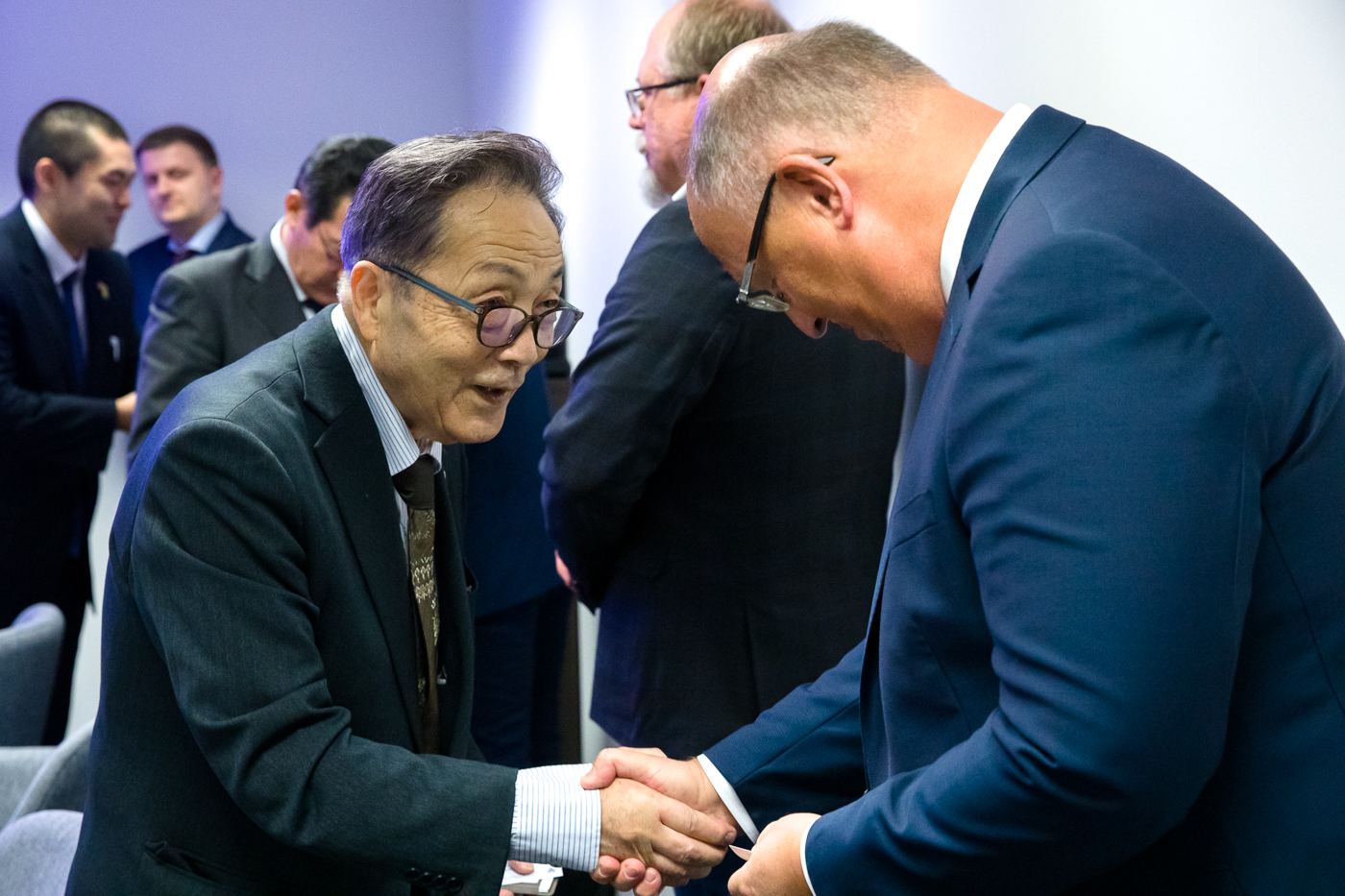
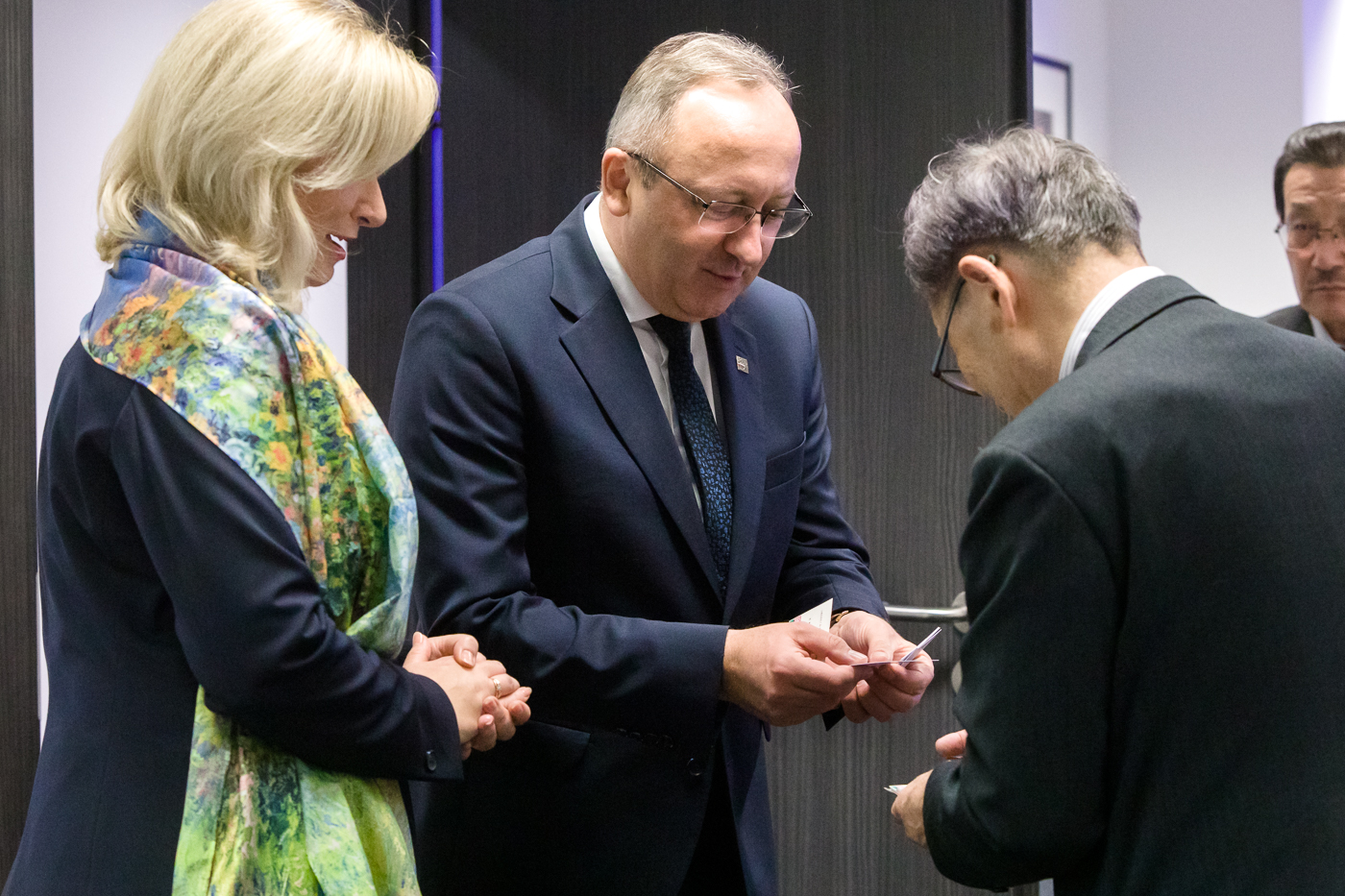

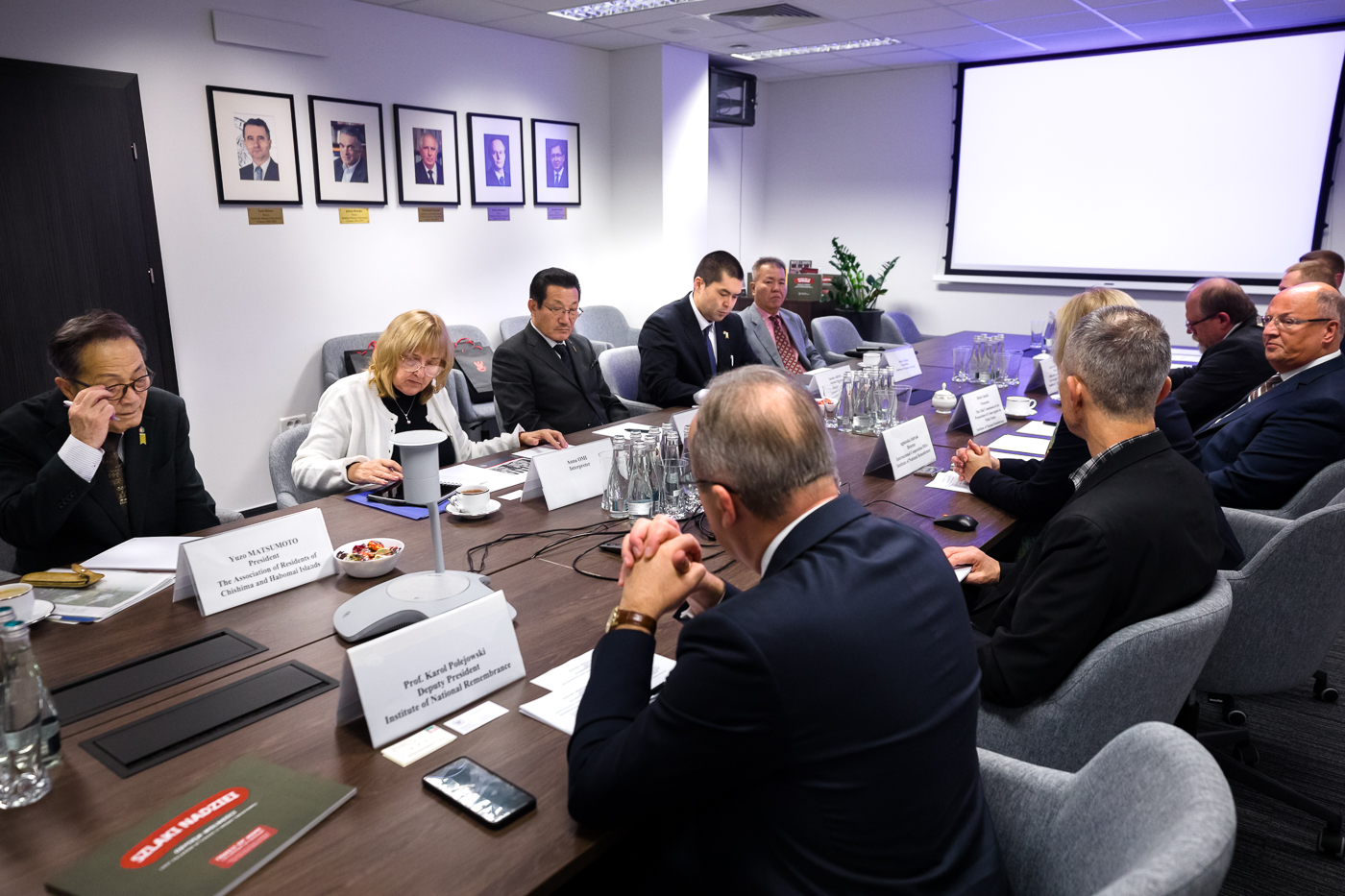
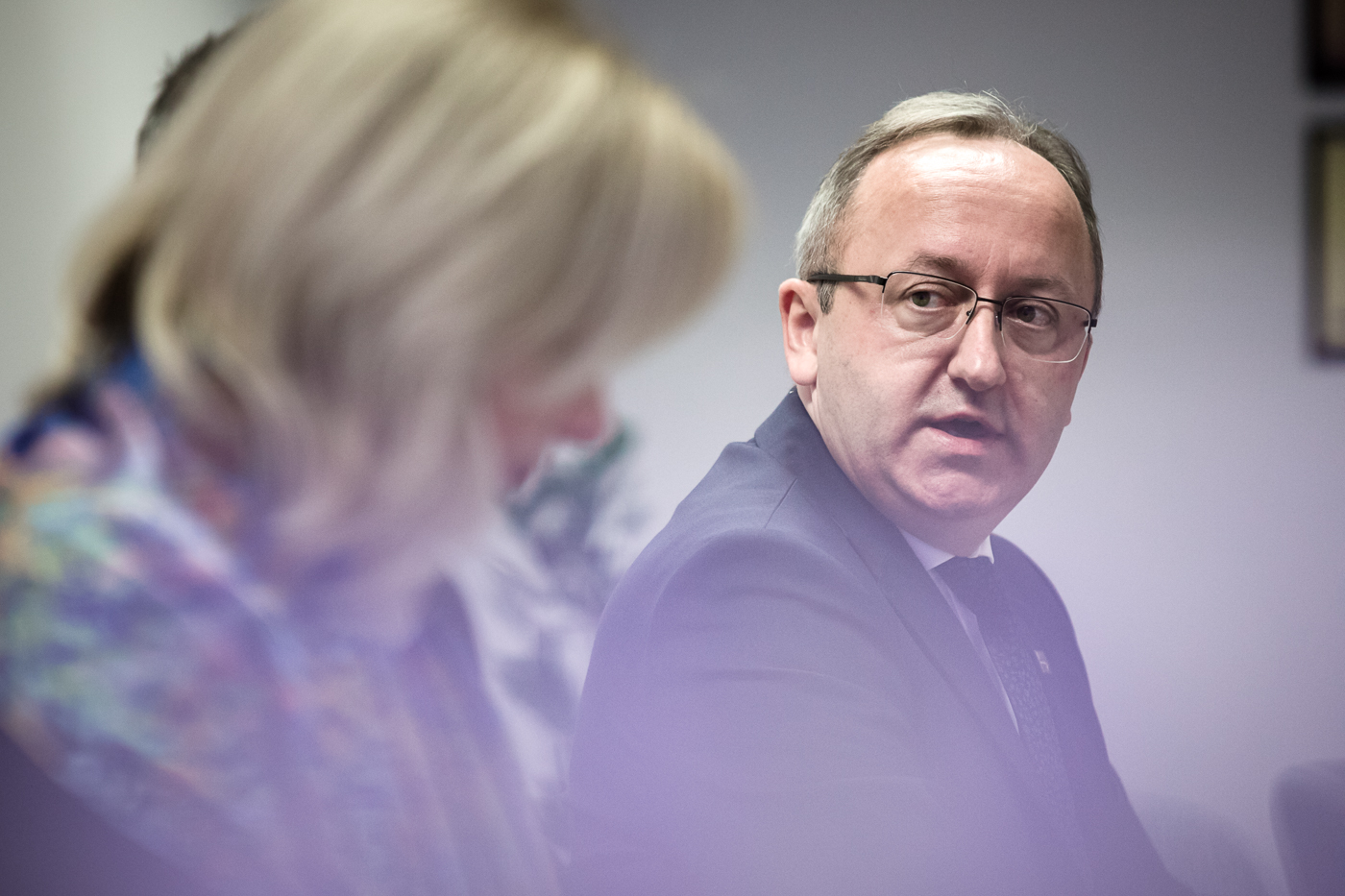
On 14 November 2024, the Institute of National Remembrance hosted Japanese diplomats (Chancellor of the Japanese Embassy in Warsaw Akira Tajima and representative of the Japanese Foreign Ministry Junichi Arima) as well as representatives of the Kuril Islands Residents Association (Association Chairman Yuzo Matsumoto and Vice Chairman Tatsuhiko Nogata).
At the beginning of the visit, organized by the IPN International Cooperation Office, our guests were officially welcomed by IPN Deputy President Prof. Karol Polejowski. He then presented the structure of the IPN, its vast archival resources and the role of the Institute’s divisions: investigative, scientific educational, vetting, as well as the Publishing House and the Office of Search and Identification and Office of Commemorating the Struggle and Martyrdom, created in 2016.Prof. Polejowski added that the structure of the IPN expanded two years ago with the addition of the Office of New Technologies, the Office of Cultural Events, which disseminates history through art; and the History Points Office.
The Director of the Office of International Cooperation, Agnieszka Jędrzak talked about the Institute's mission in an international context , including the role of the IPN as a mentor institution in the field of transitional justice and mentioned an important aspect of the Institute's work, which is responding to distortions of historical truth. Moreover, Director Jędrzak discussed pursuing justice and restoring the dignity of the victims of communist and German crimes. In addition, she told our guests about the IPN President's efforts to decommunize public space in Poland and demolish monuments of gratitude to the Red Army. Short films prepared by the International Cooperation Office served as an illustration to the presented topics and fields of activity. The IPN's flagship project “Trails of Hope. The Odyssey of Freedom” was also presented during the meeting.
Prosecutor Robert Janicki of the Chief Commission for the Prosecution of Crimes against the Polish Nation mentioned the IPN's investigations into the deportation by the USSR of Polish citizens from the former Polish territories, which fell under Soviet rule after World War II. He noted that the pattern of these events is very similar to the tragic fate of the indigenous inhabitants of the Kuril Islands. He stressed that documenting such events in the history of nations is very important for preserving memory. Even though the perpetrators cannot be brought to justice, the collected documents and witness accounts will survive, documenting the suffering and showing heroic attitudes that can serve as a model for future generations.
The Director of the Office of Commemorating the Struggle and Martyrdom, Adam Siwek talked about the activities of the IPN in commemorating Polish heroes at home and around the world, making it possible to disseminate Polish history as part of a unifying policy of remembrance. He mentioned that although Poles and the Japanese live on opposite ends of the Russian empire, our experiences when it comes to communist crimes remain similar. In the context of the deportations, he recalled the Japanese government's adoption of Polish orphans from Siberia, for which poles remain very grateful.
The functioning of the Institute's scientific division, research into the history of the USSR and potential fields of cooperation with Japanese partners were outlined by Dr. Marek Hańderk of the IPN Historical Research Office . In turn, questions on historical education were answered by Michal Miwa-Mlot from the IPN's branch office of National Education in Katowice.
Association Chairman Yuzo Matsumoto presented the latest report and brochure on the basic facts and Japan's position on the Northern Territories (Kuril Islands). In a moving speech, he described the fate of the deportees. He mentioned that former residents were allowed to visit the islands - cemeteries and memorials - under three programs. However, after the Russian Federation invaded Ukraine, the opportunity to pay tribute to loved ones and say prayers at their graves was taken away from them. Led by Yuzo Matsumoto, the Association is making efforts to inform the public at home and abroad as widely as possible about the history of the islands and the current inability to visit them. The Japanese side has expressed its willingness to participate in scientific and educational events on Soviet crimes within the framework of international platforms.