
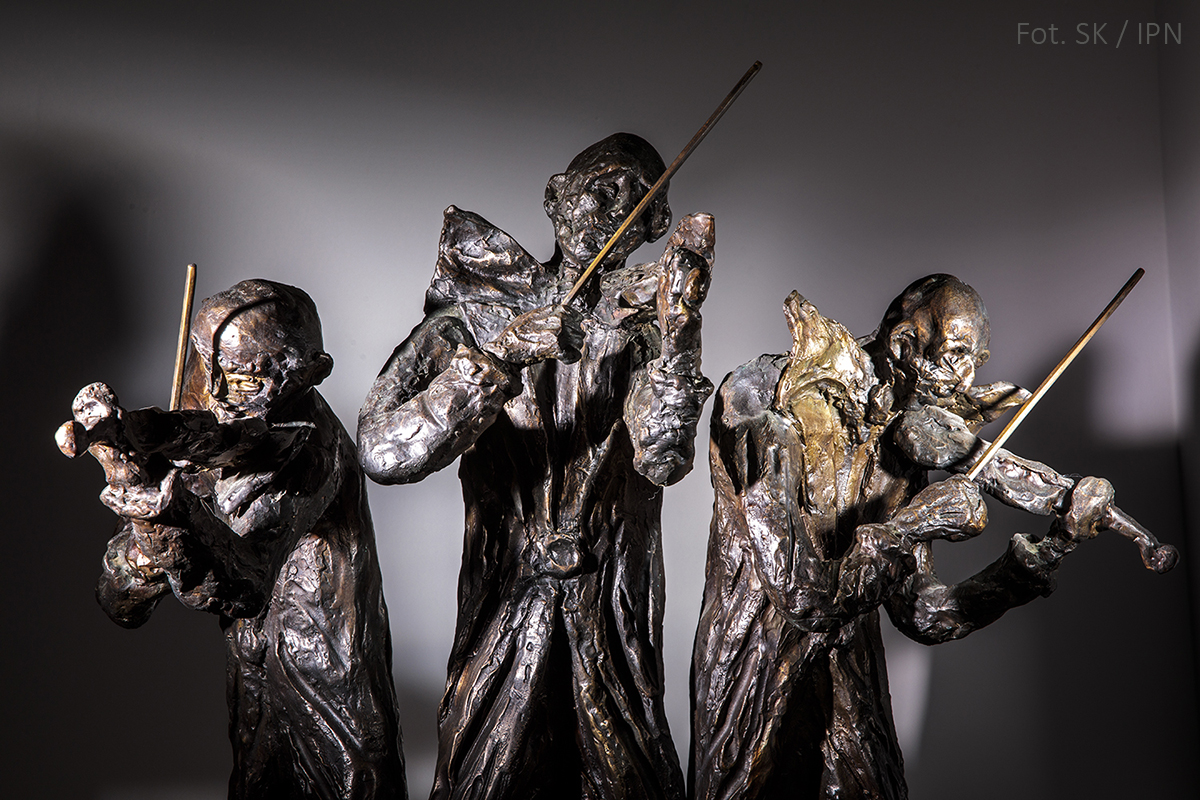
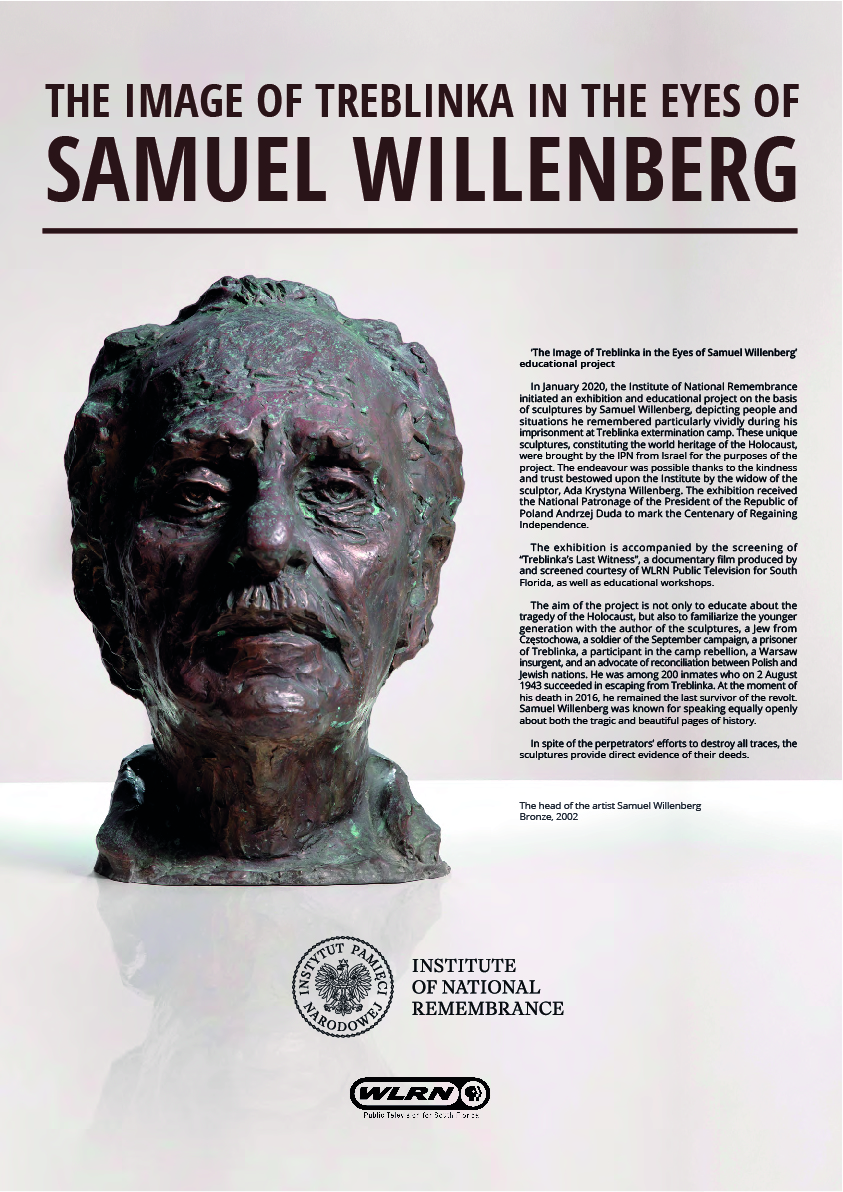
In connection with International Holocaust Remembrance Day, the Institute of National Remembrance would like to send out its invitation to an exhibition of unique bronze sculptures by Holocaust survivor Samuel Willenberg, a prisoner and escapee from the Treblinka II German extermination camp.
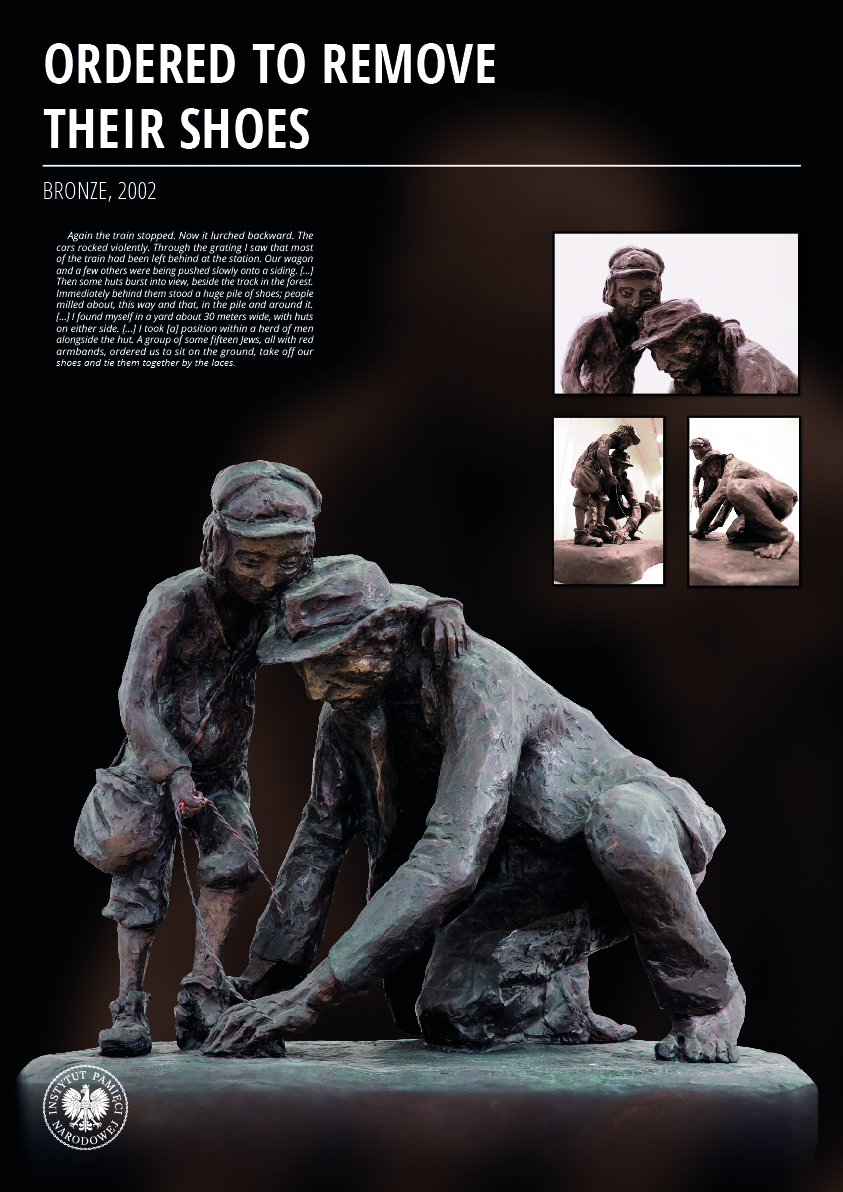
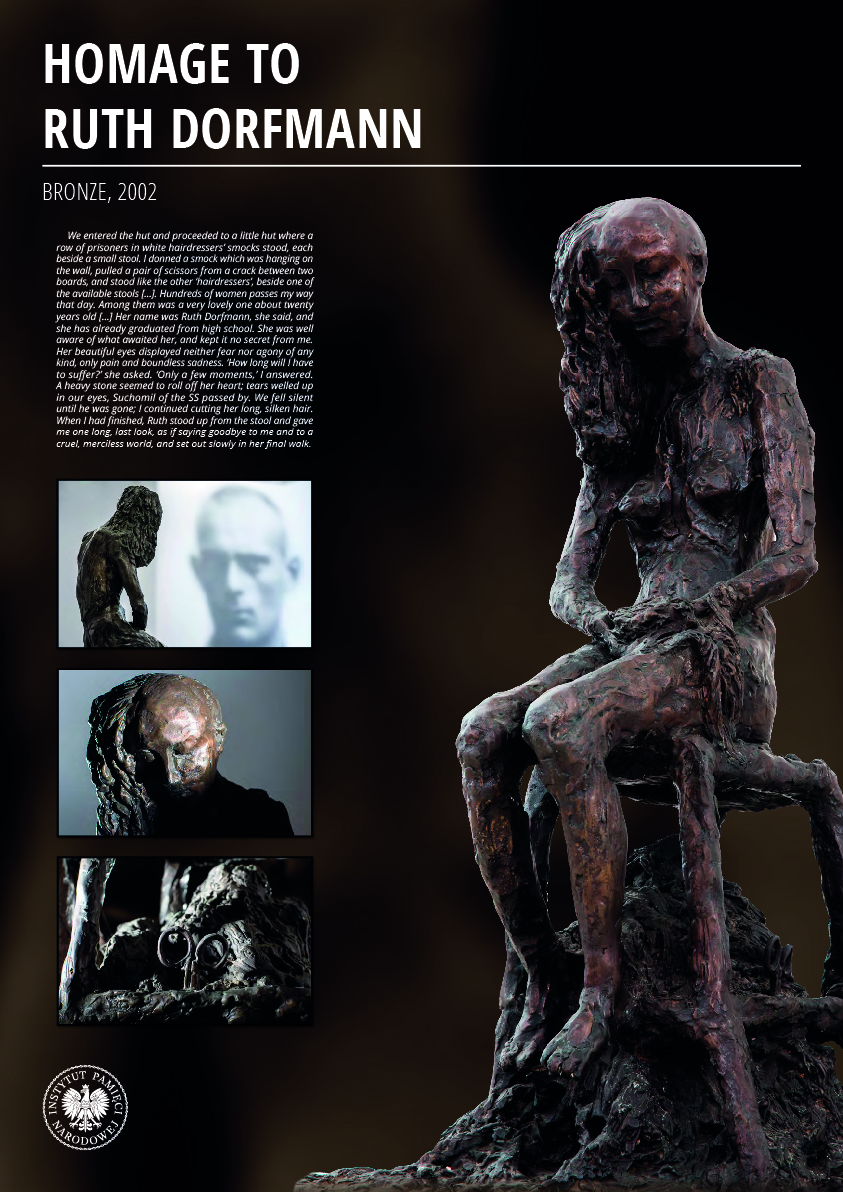
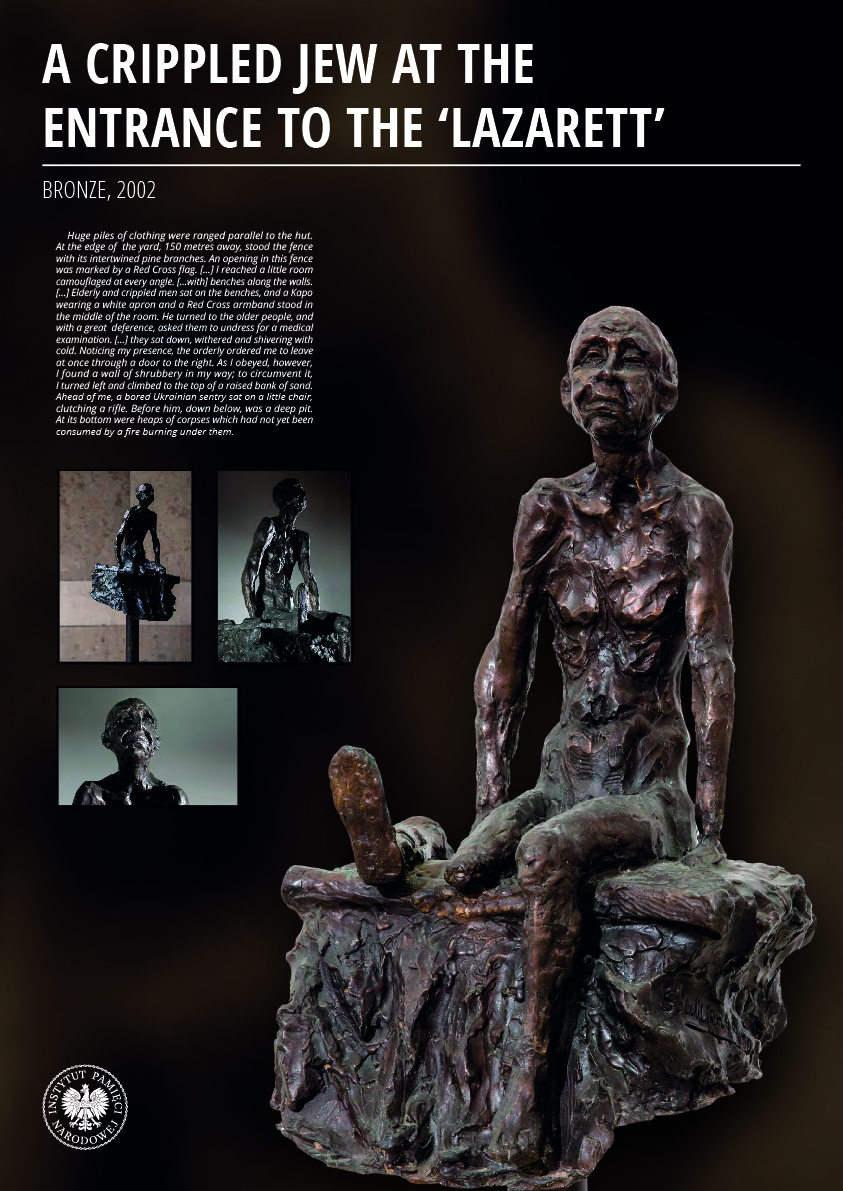
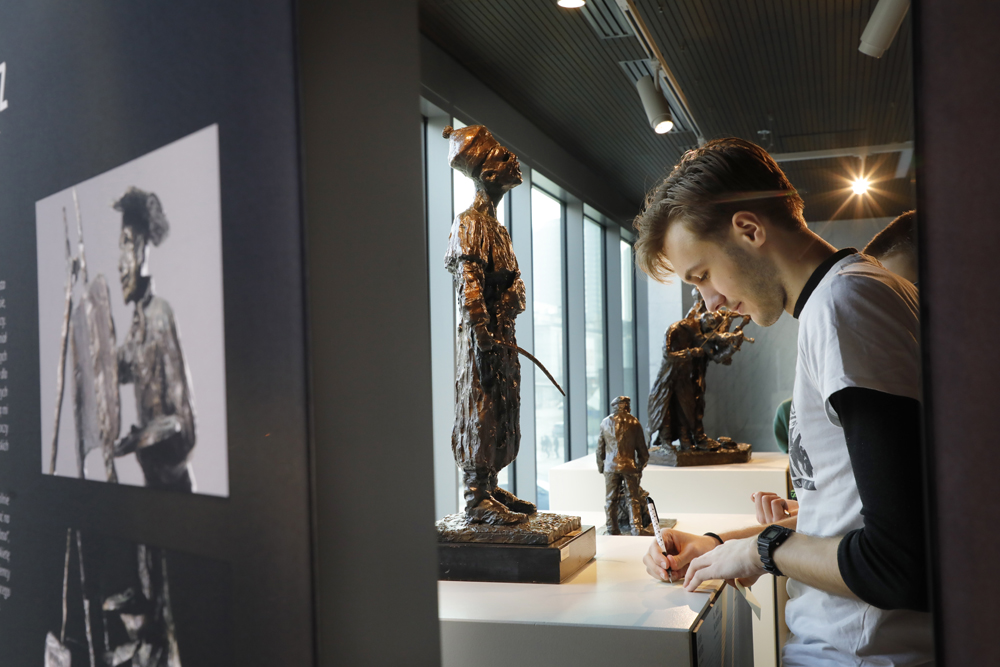
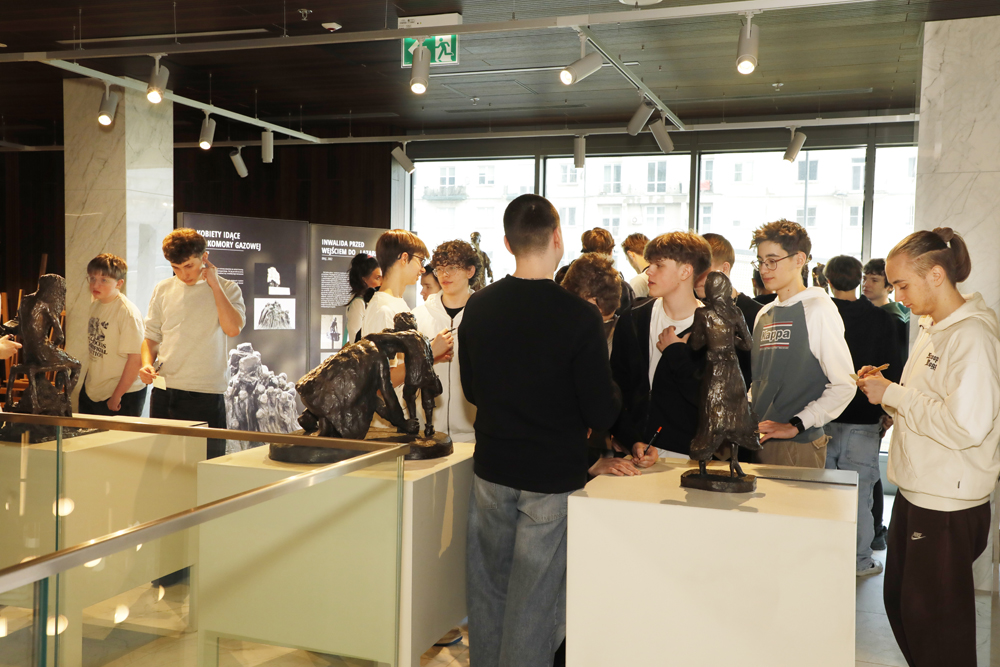
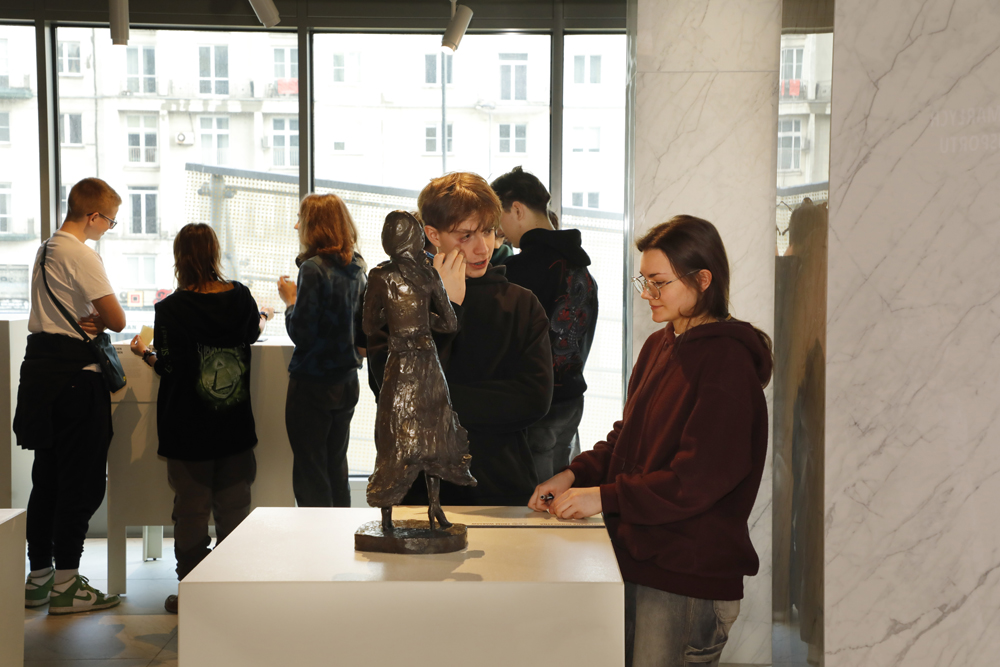
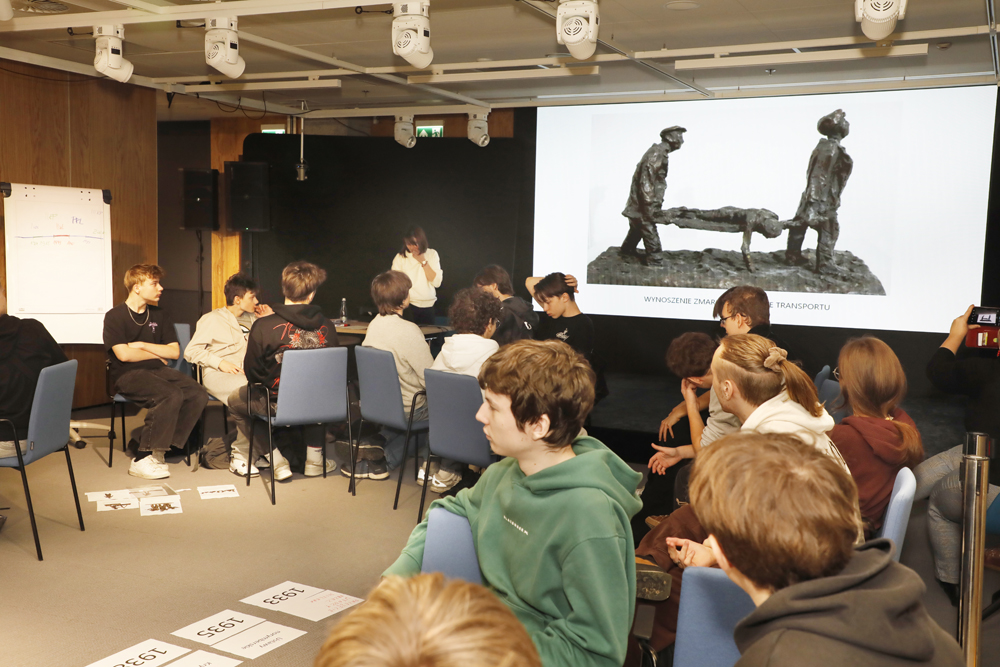
The presented exhibition is a combination of selected sculptures and a modern panel exhibition based on artistic photographs of the collection taken by Sławomir Kasper. The exhibition, in its new form, can be seen at the IPN's President Lech Kaczynski Central History Point in Warsaw (107 Marszałkowska Street, 1st floor) until the end of February 2025.
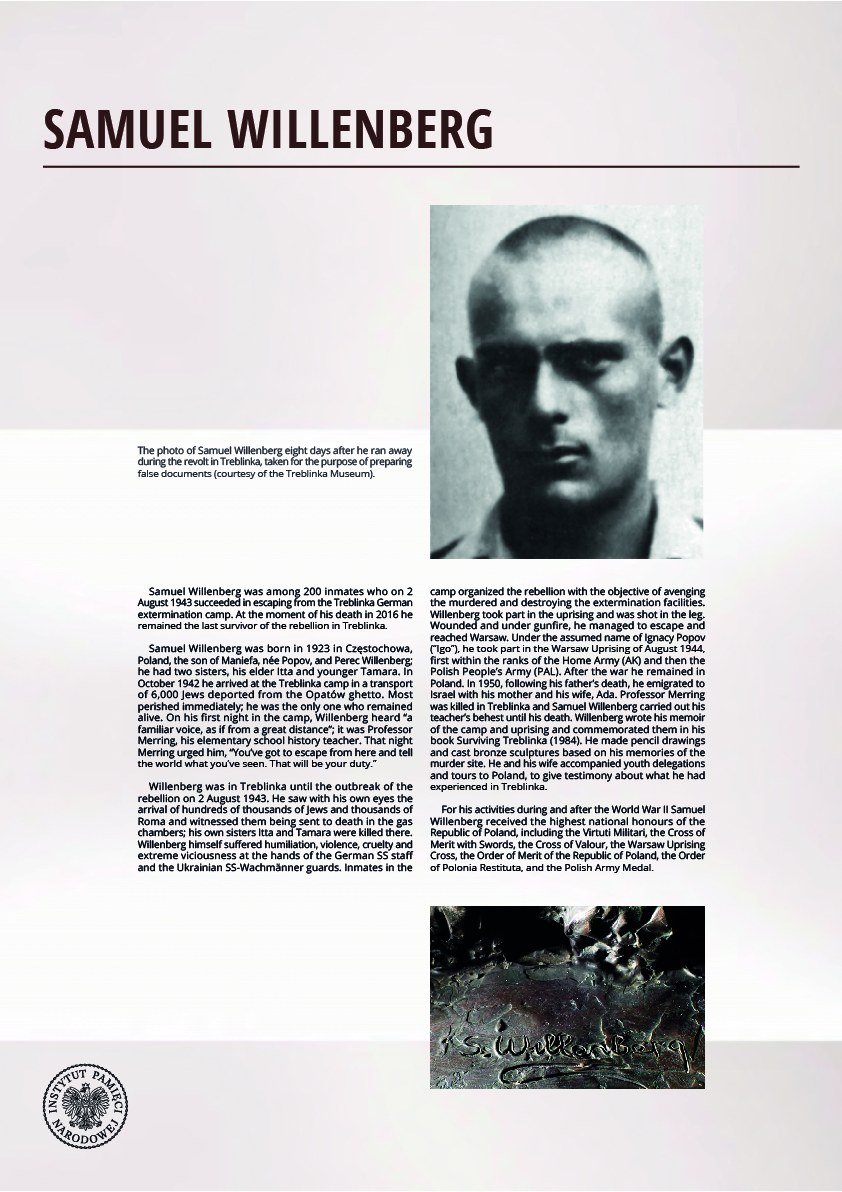
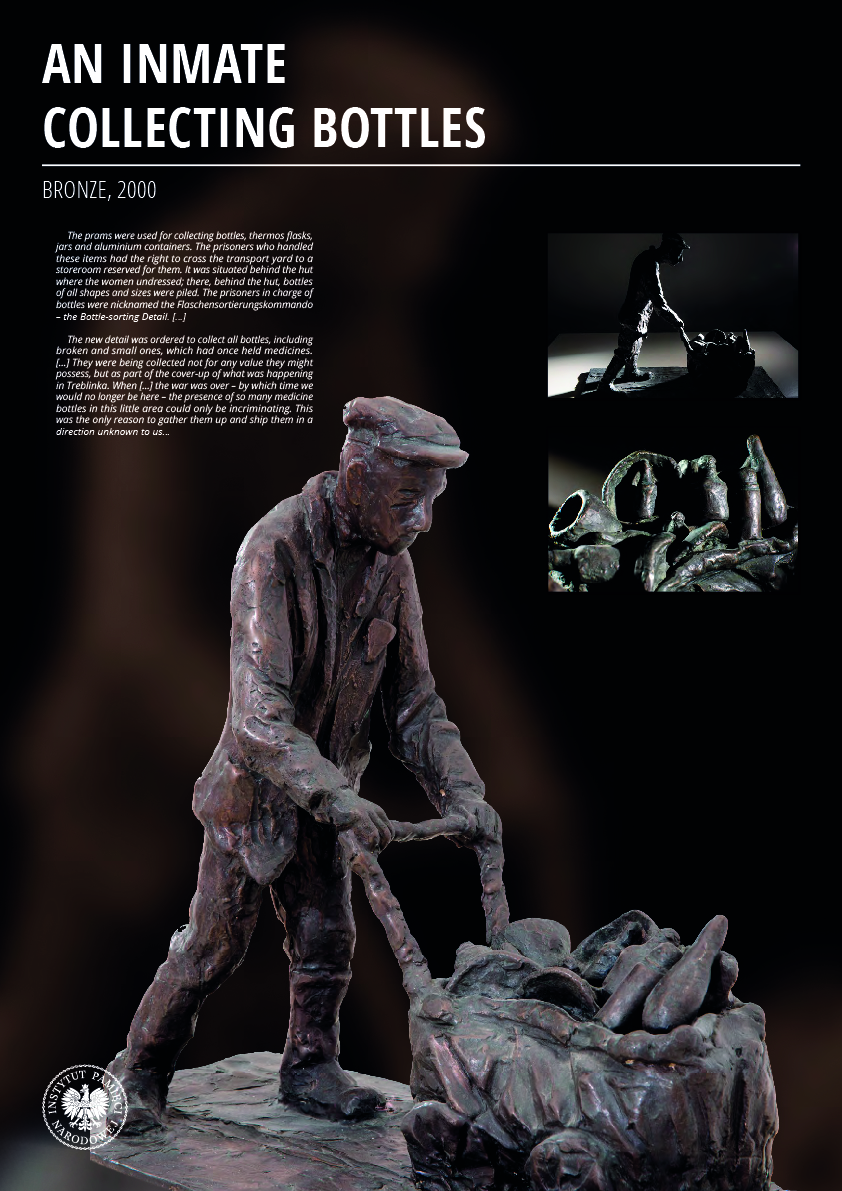
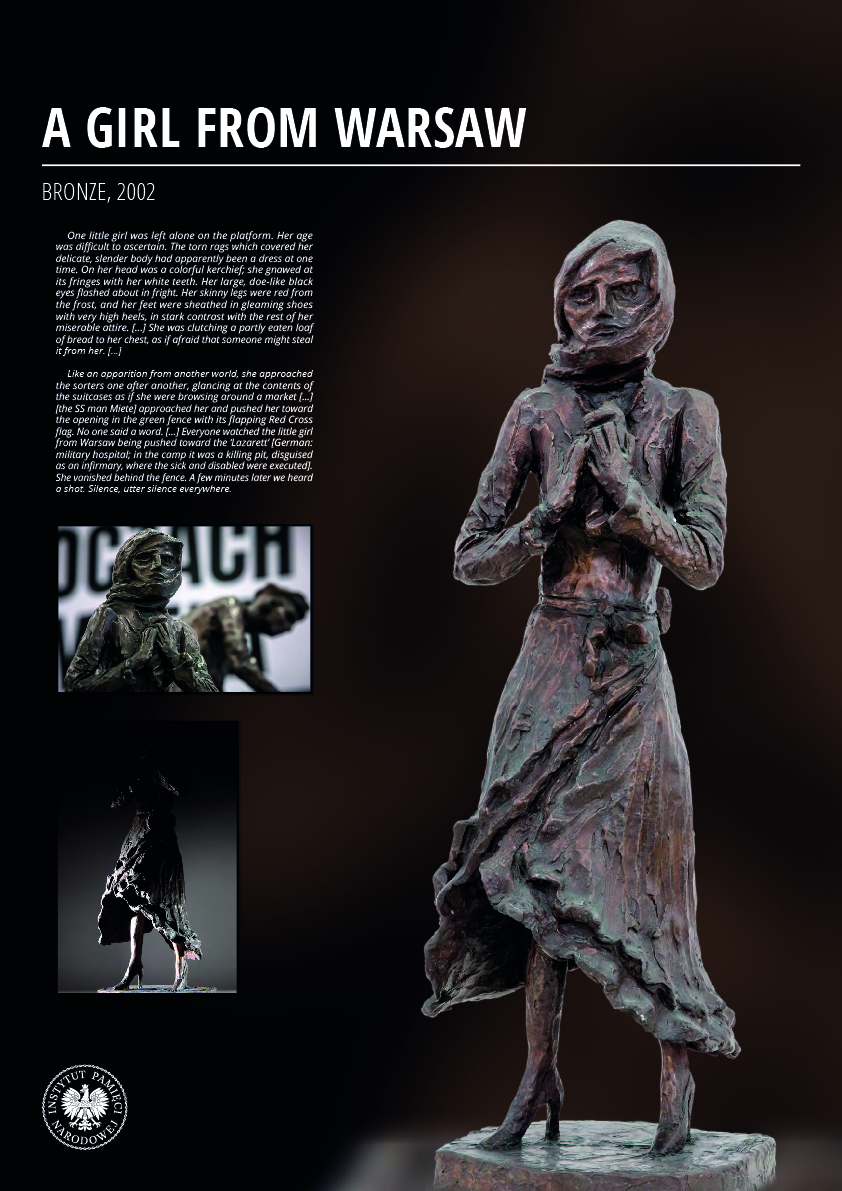
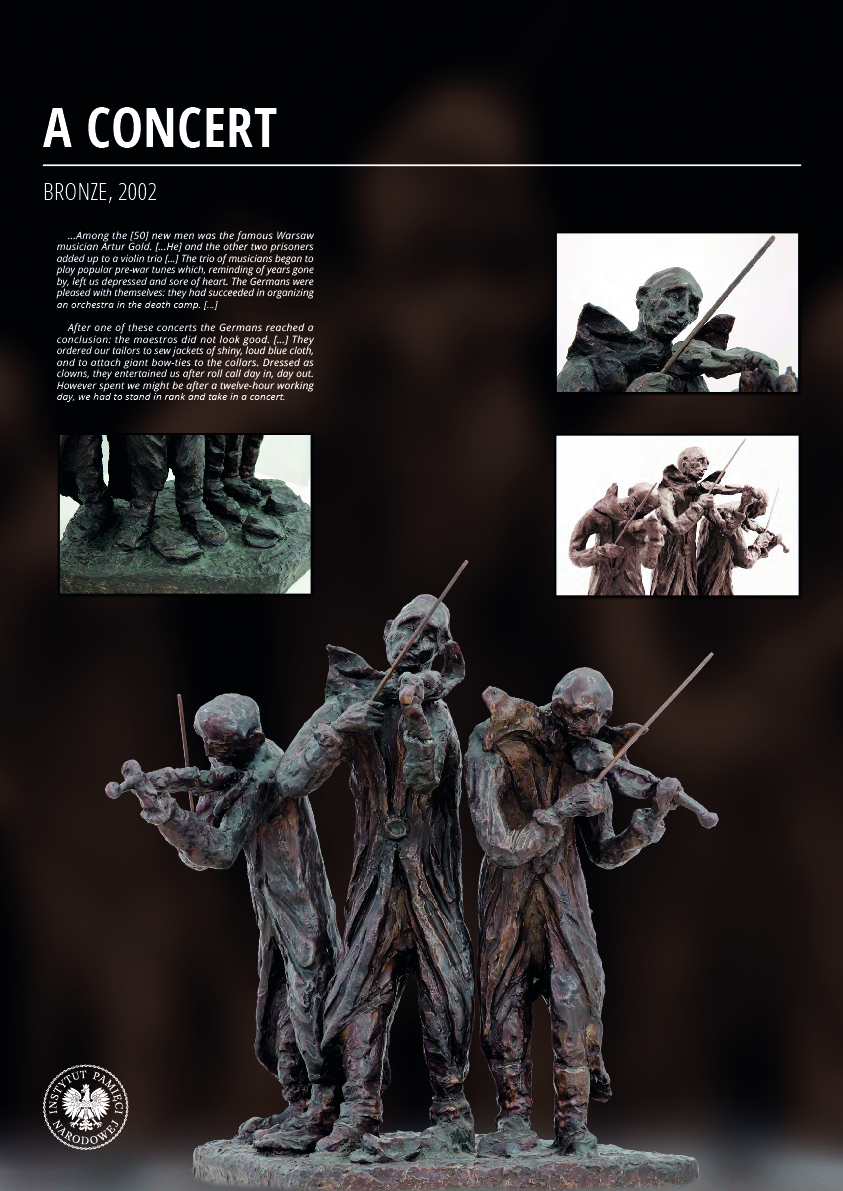
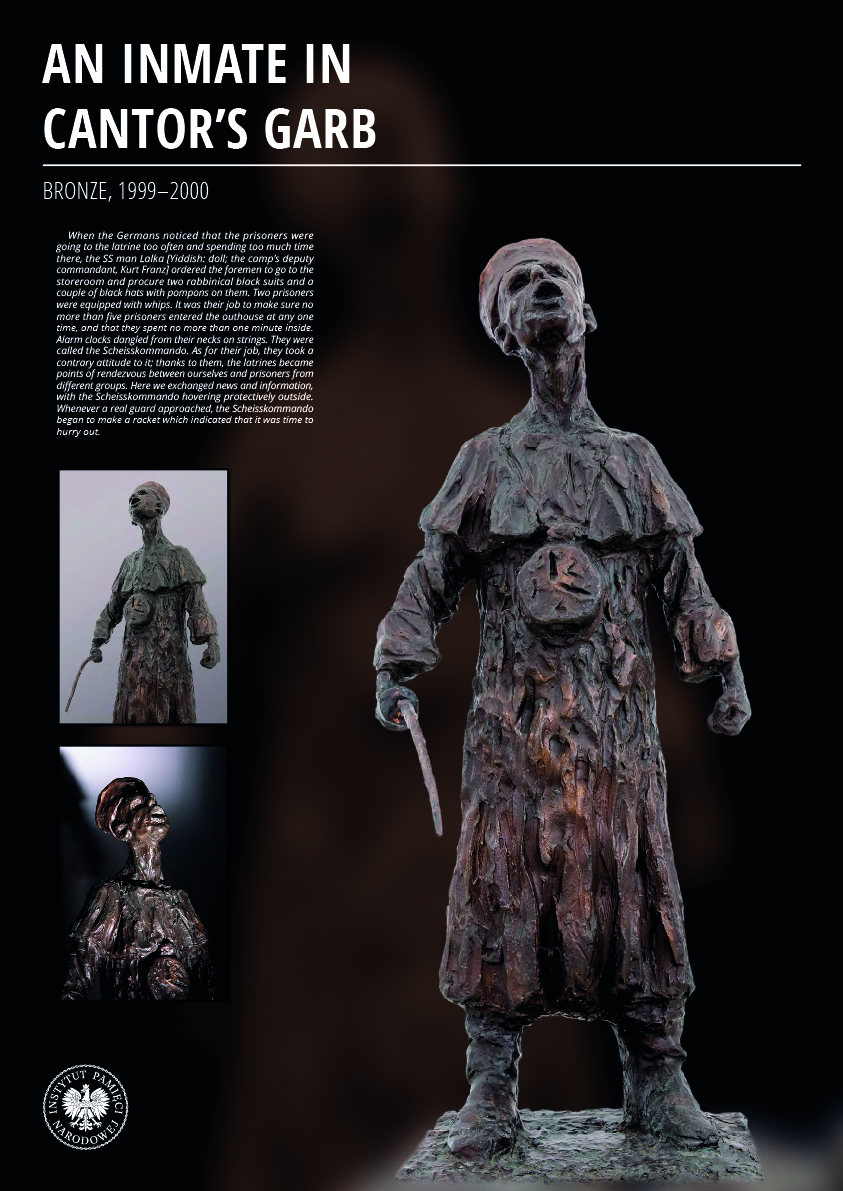
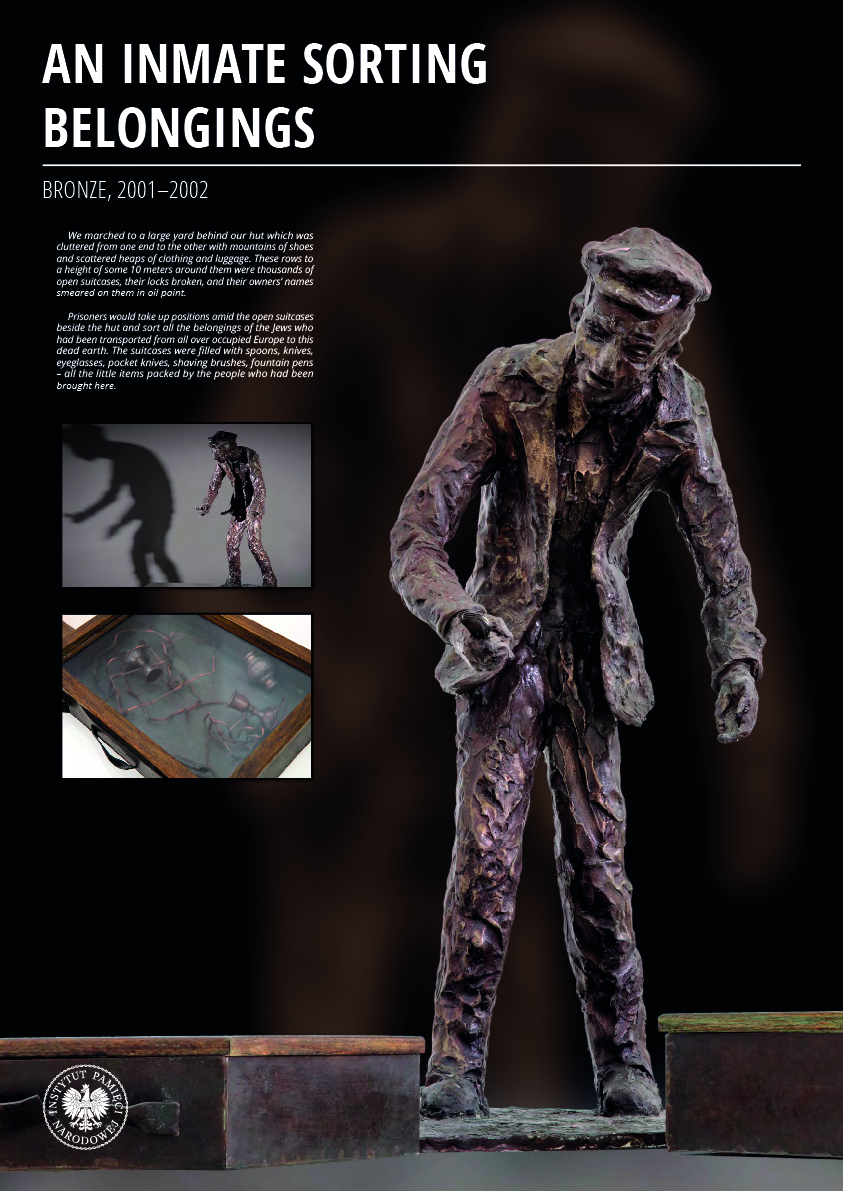
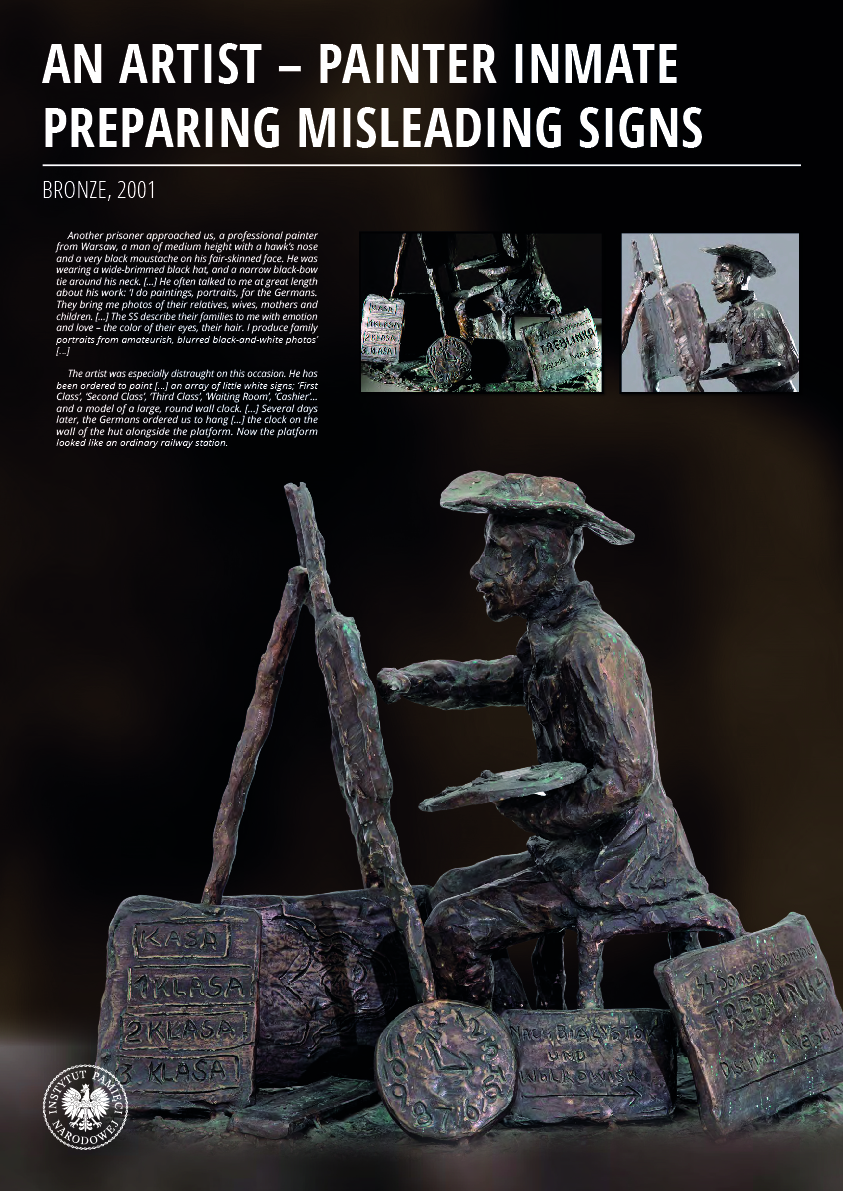
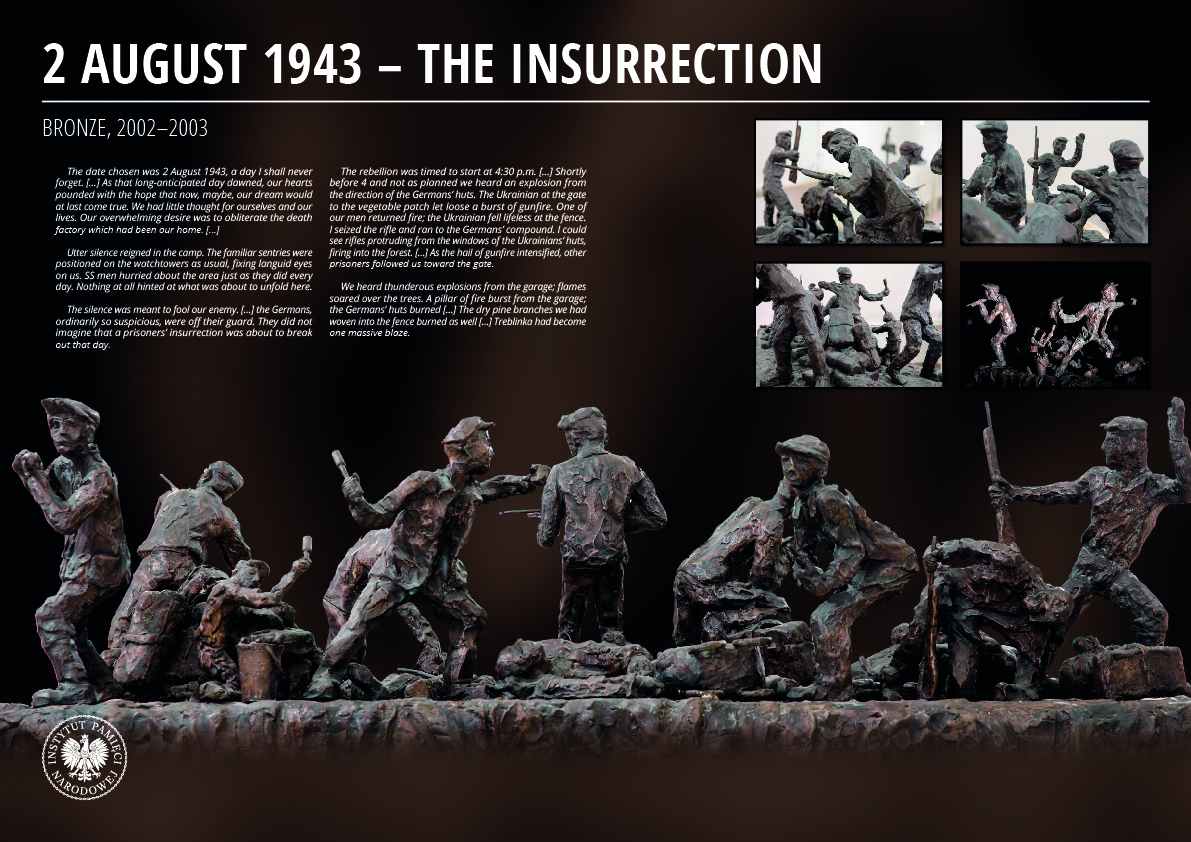
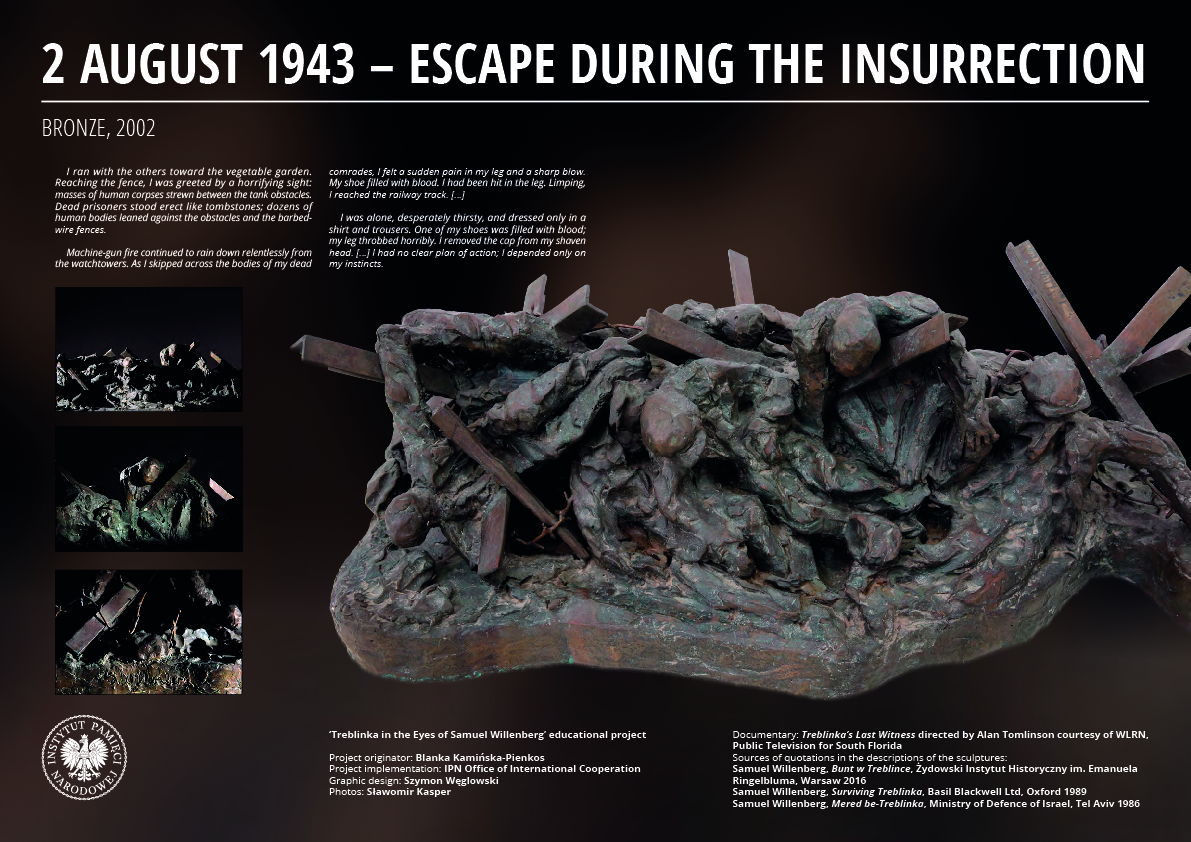
Samuel Willenberg was among 200 inmates who, on 2 August 1943, succeeded in escaping from the Treblinka German extermination camp. At the moment of his death in 2016, he remained the last survivor of the camp rebellion. The sculptures by Samuel Willenberg depict people and situations he remembered particularly vividly from the time of his imprisonment in Treblinka.
Samuel Willenberg was a soldier of the Polish Army and the Home Army, as well as a participant of the Warsaw Uprising. After their leaving for Israel in 1950, he and his wife visited Poland on numerous occasions – often as guides for Israeli youth. They became spokespersons for good Polish-Jewish relations, hiding neither the tragic nor the beautiful events linking the two groups of Polish citizens during the German occupation of Poland.
The project also includes "Treblinka’s Last Witness", a documentary film produced by WLRN Public Television for South Florida, which is a first-hand account of Samuel Willenberg’s life as a Jewish prisoner of the death camp.
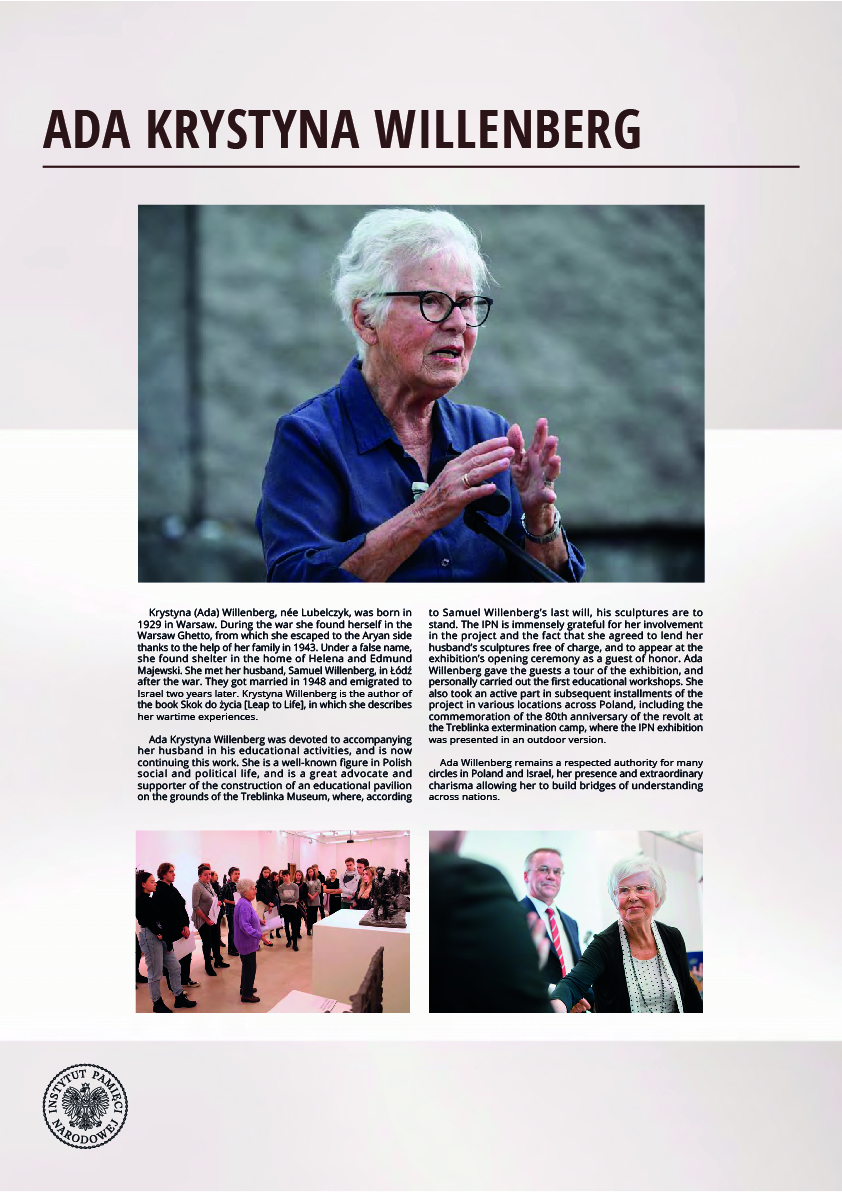
The exhibition along with the educational project based on Willenberg's works has been possible thanks to the kindness and trust bestowed on the Institute by Ada Krystyna Willenberg, who tirelessly continues her husband's work in the name of preserving the memory of the Holocaust and its victims.
The Institute has been taking care of and popularizing Willenberg’s legacy until the completion of the construction work at the Treblinka Museum, where the collection will be exhibited permanently according to the Artist's last will.
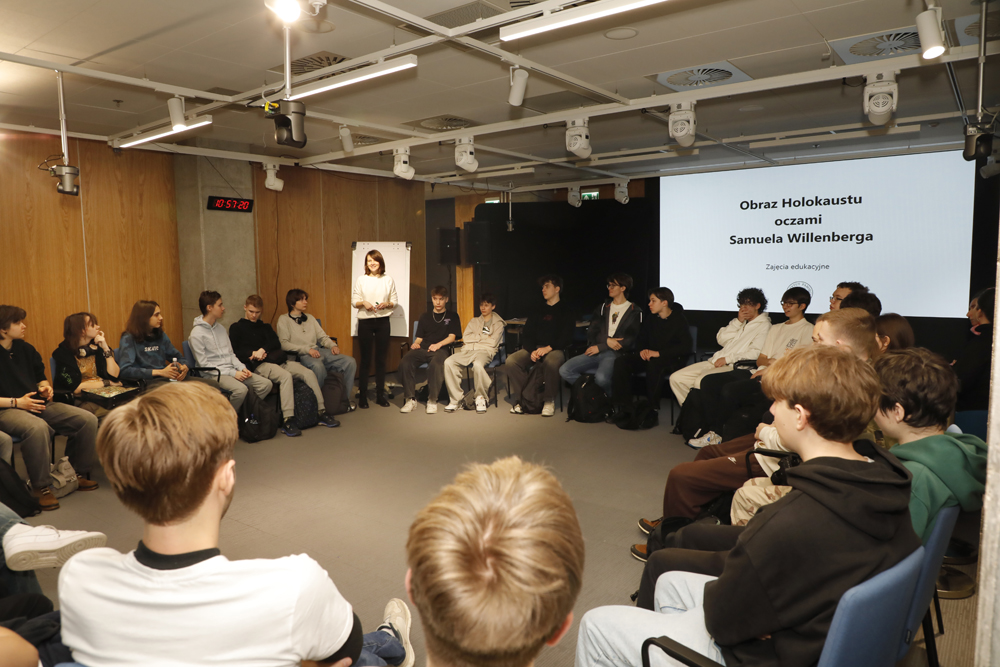
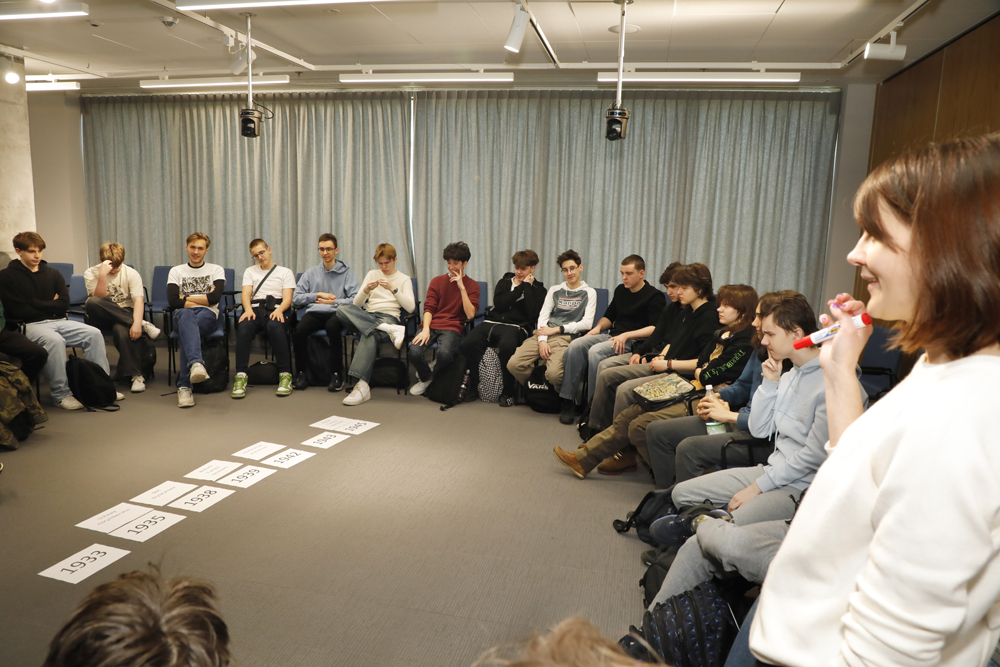
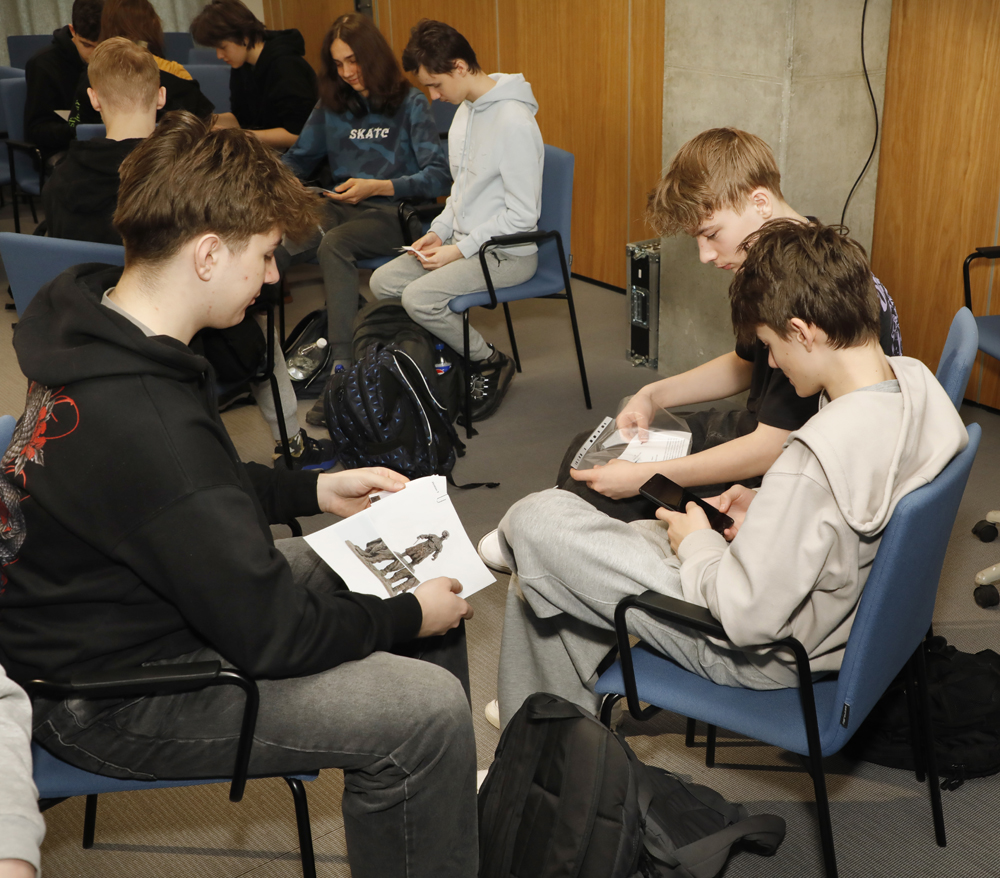
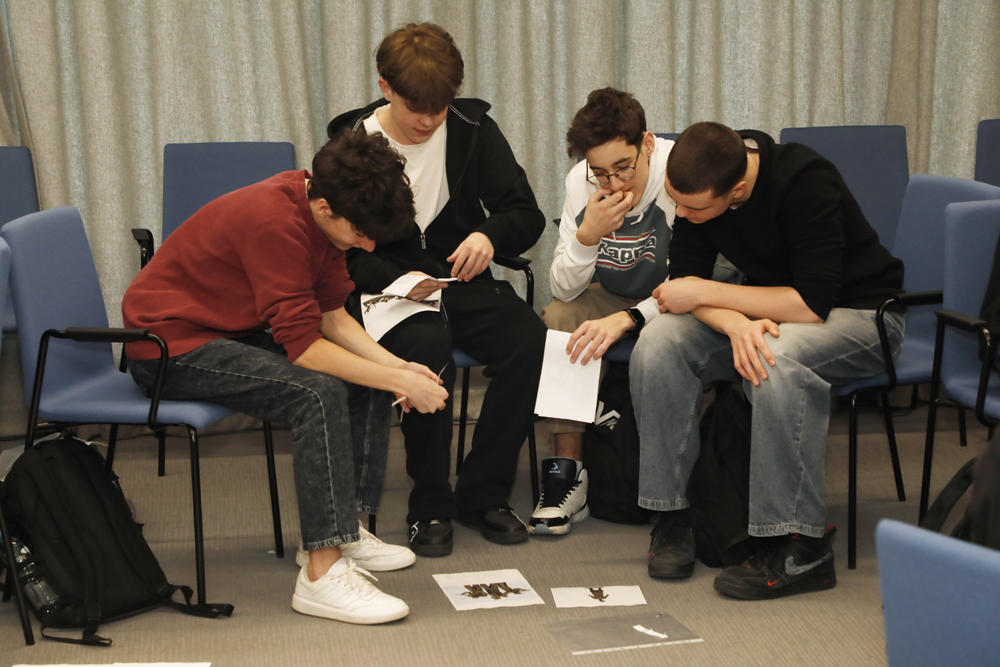
More about the "The Image of Treblinka in the Eyes of Samuel Willenberg" educational project
A Fighter in Hell and His Unusual Sculptures
Ada Krystyna Willenberg and her story
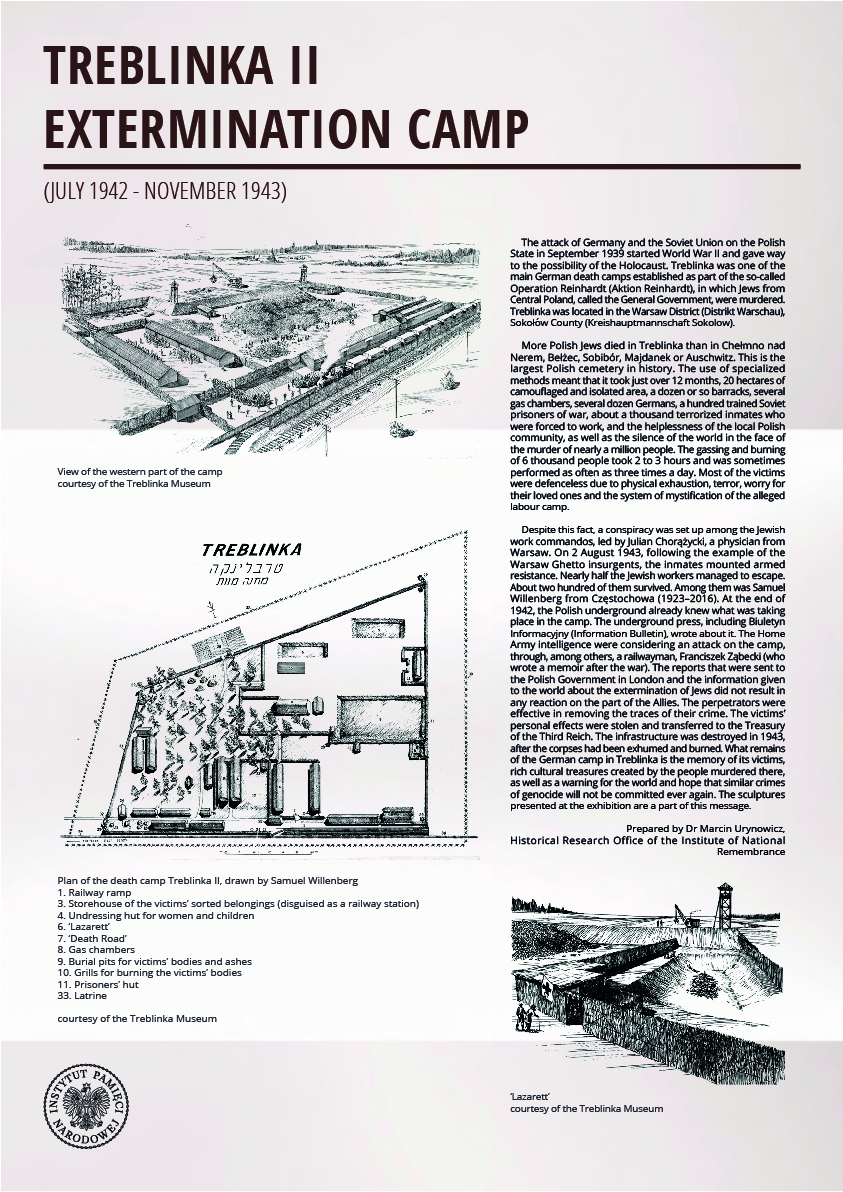







Treblinka II Extermination Camp (July 1942 - November 1943)
The attack of Germany and the Soviet Union on the Polish State in September 1939 started World War II and gave way to the possibility of the Holocaust. Treblinka was one of the main German death camps established as part of the so-called Operation Reinhardt (Aktion Reinhardt), in which Jews from Central Poland, called the General Government (General Gouvernement), were murdered.
Treblinka was located in the Warsaw District (Distrikt Warschau), Sokołów County (Kreishauptmannschaft Sokolow). More Polish Jews died in Treblinka than in Chełmno nad Nerem, Bełżec, Sobibór, Majdanek or Auschwitz. This is the largest Polish cemetery in history.
The use of specialized methods meant that it took just over 12 months, 20 hectares of camouflaged and isolated area, a dozen or so barracks, several gas chambers, several dozen Germans, a hundred trained Soviet prisoners of war, about a thousand terrorized inmates who were forced to work, and the helplessness of the local Polish community, as well as the silence of the world in the face of the murder of nearly a million people. The gassing and burning of 6 thousand people took 2 to 3 hours and was sometimes performed as often as three times a day.
Most of the victims were defenceless due to physical exhaustion, terror, worry for their loved ones and the system of mystification of the alleged labour camp. Despite this fact, a conspiracy was set up among the Jewish work commandos, led by Julian Chorążycki, a physician from Warsaw. On 2 August 1943, following the example of the Warsaw Ghetto insurgents, the inmates mounted armed resistance . Nearly half the Jewish workers managed to escape. About two hundred of them survived. Among them was Samuel Willenberg from Częstochowa (1923-2016).
At the end of 1942, the Polish underground already knew what was taking place in the camp. The underground press, including Biuletyn Informacyjny (Information Bulletin), wrote about it. The Home Army intelligence were considering an attack on the camp, through, among others, a railwayman, Franciszek Ząbecki (who wrote a memoir after the war). The reports that were sent to the Polish Government in London and the information given to the world about the extermination of Jews did not result in any reaction on the part of the Allies.
The perpetrators were effective in removing the traces of their crime. The victims' personal effects were stolen and transferred to the Treasury of the Third Reich. The infrastructure was destroyed in 1943, after the corpses had been exhumed and burned. What remains of the German camp in Treblinka is the memory of its victims, rich cultural treasures created by the people murdered there, as well as a warning for the world and hope that similar crimes of genocide will not be committed ever again.
The sculptures presented at the exhibition are a part of this message.
Prepared by Dr Marcin Urynowicz [PhD], IPN Historical Research Office