
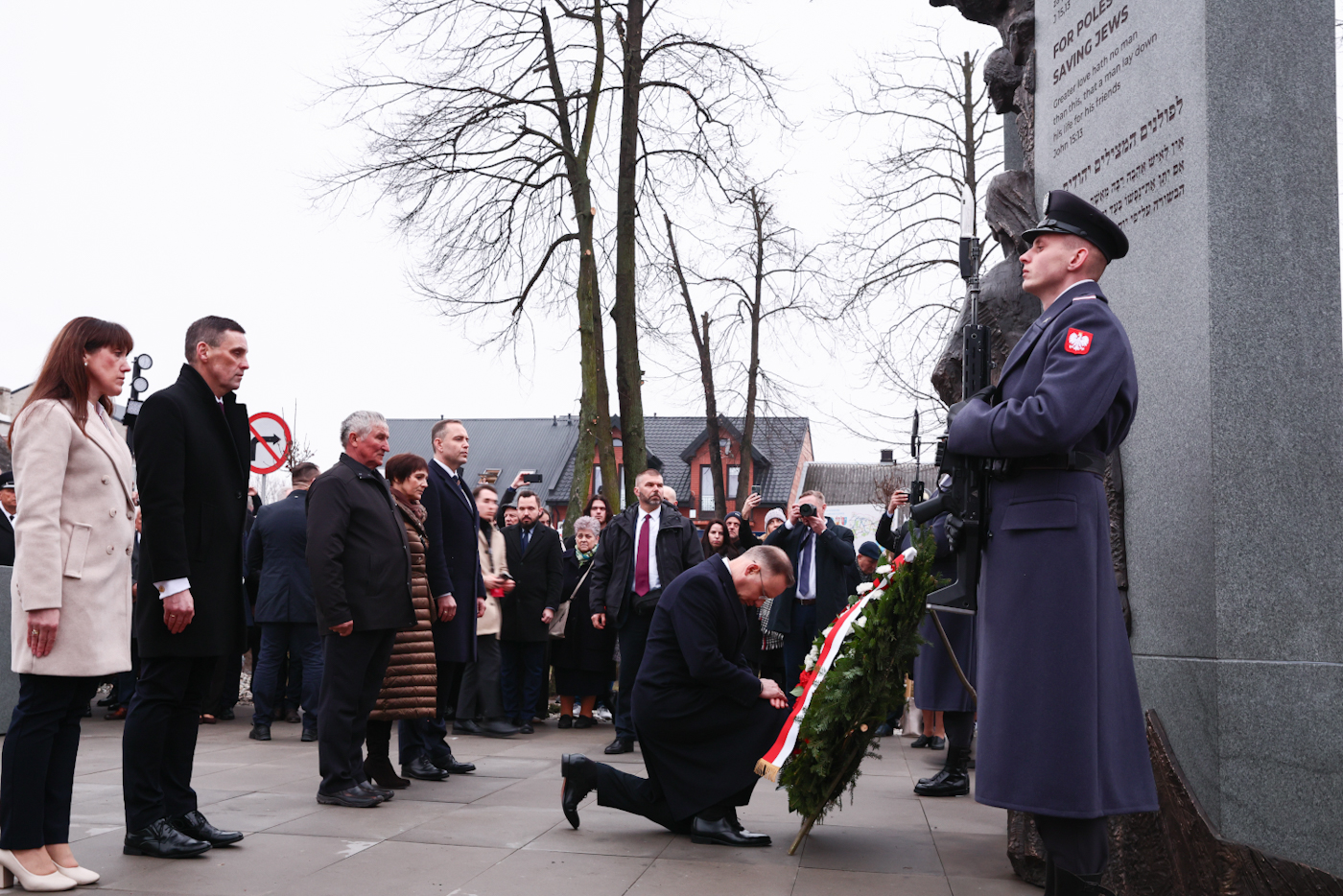
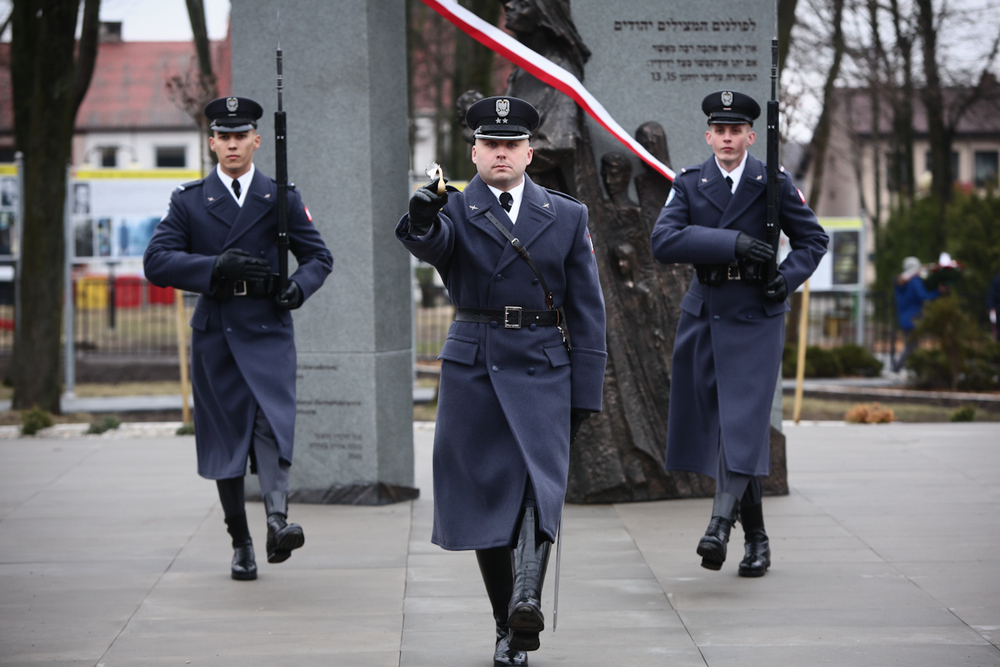
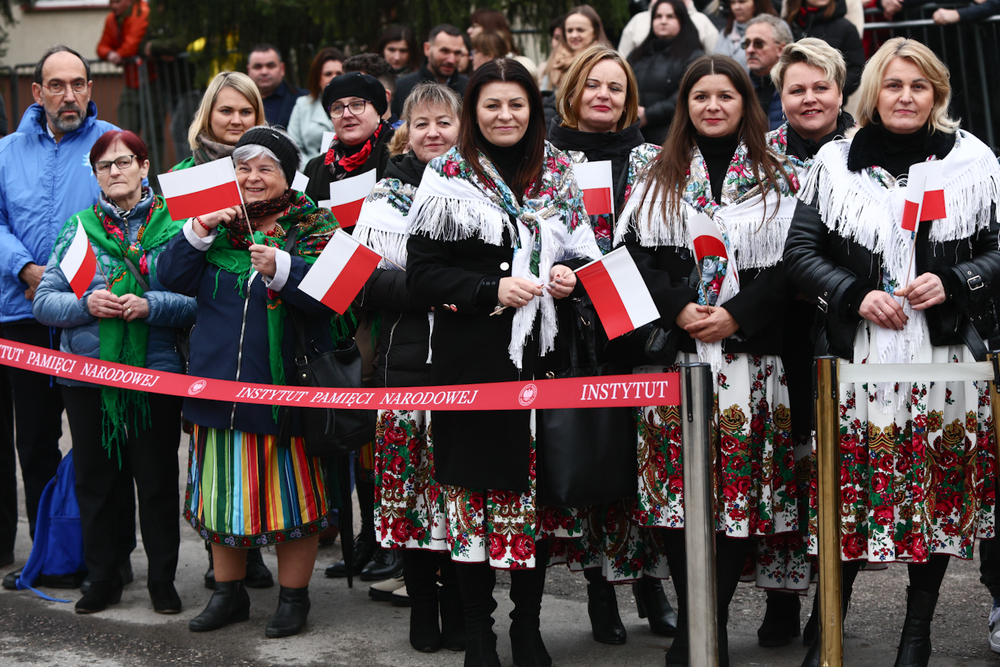
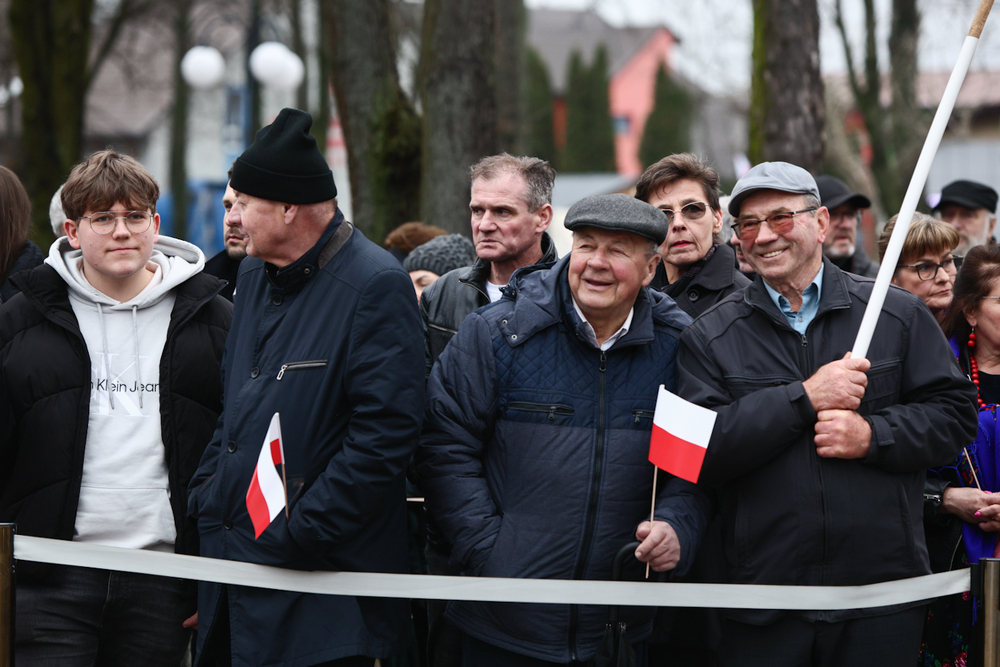
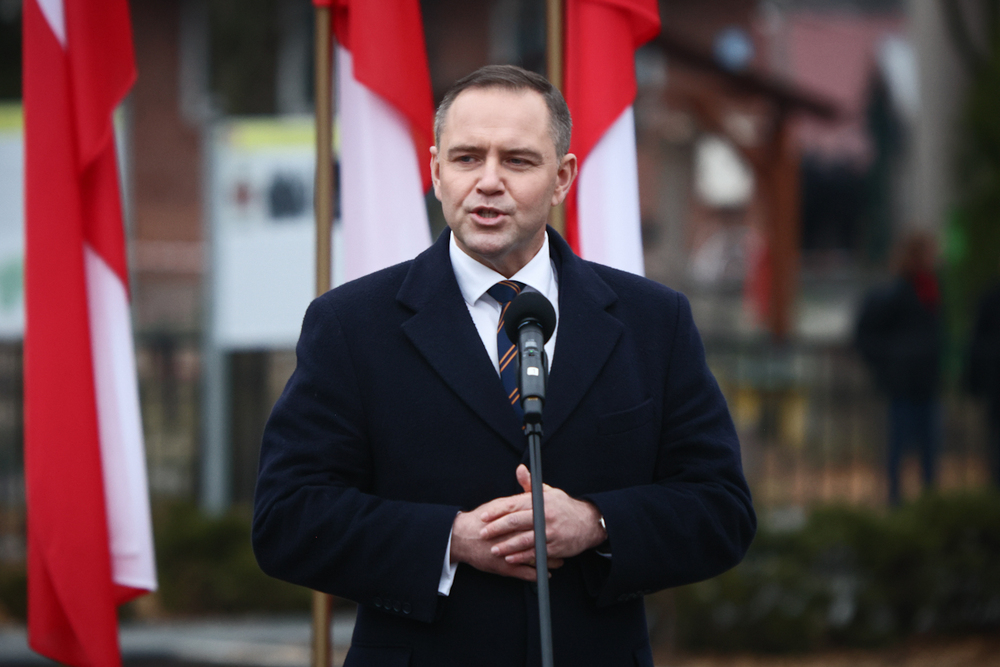
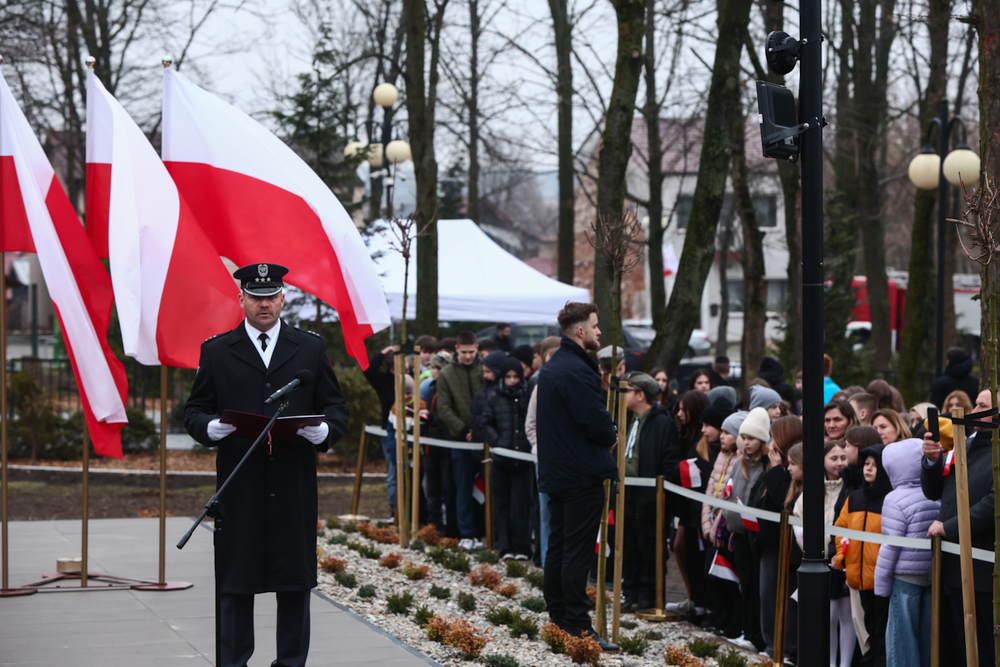
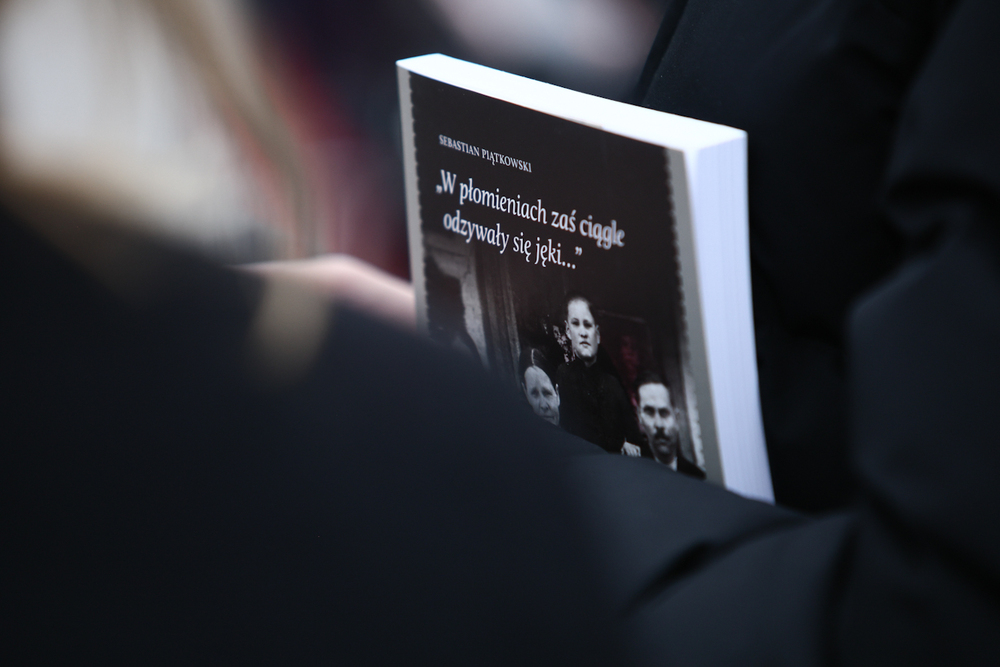
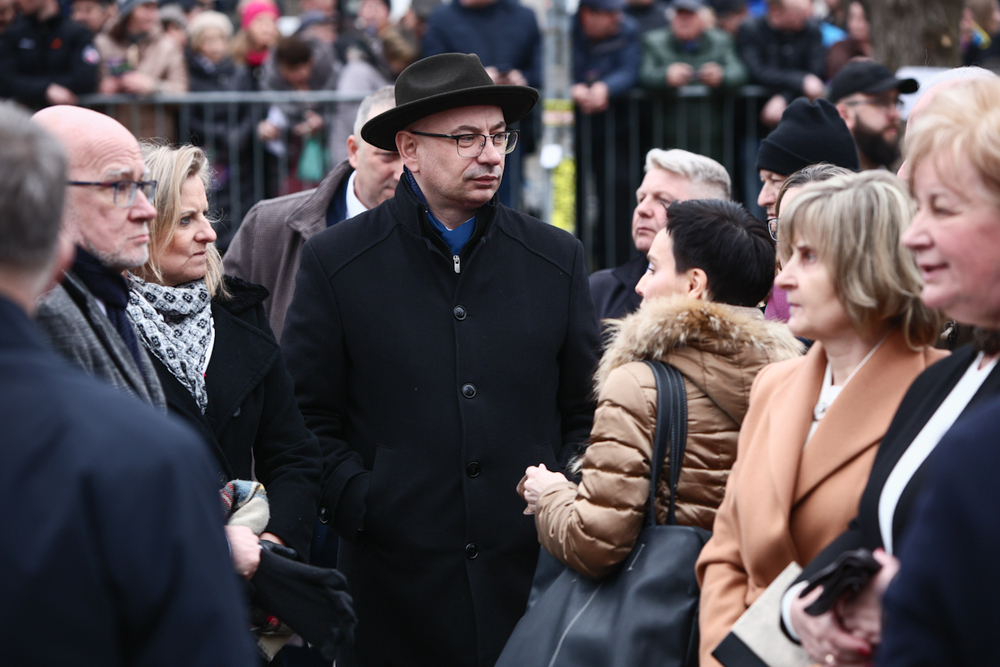
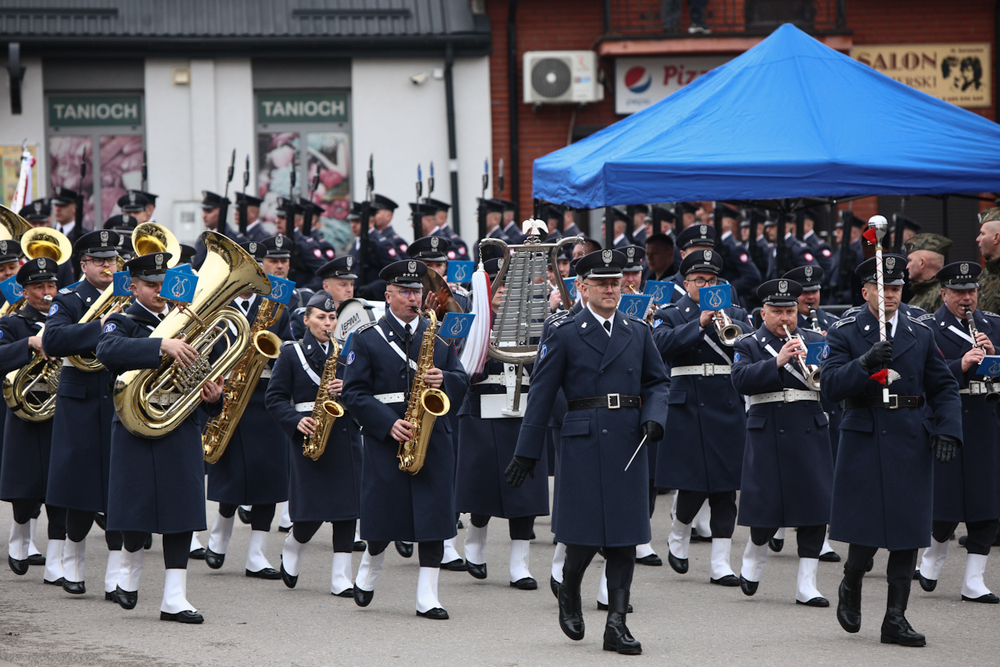
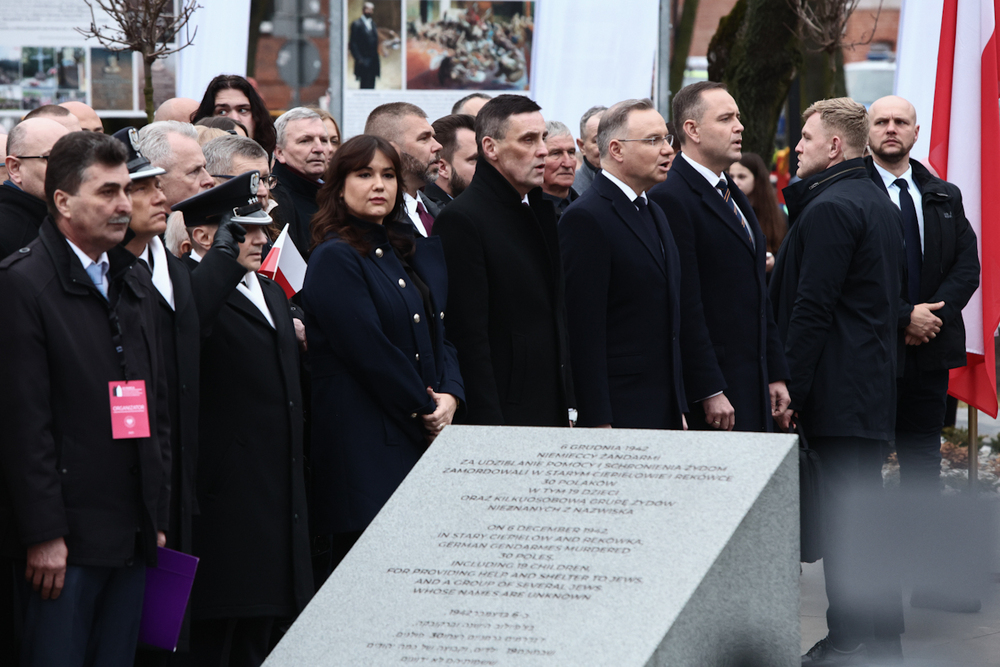
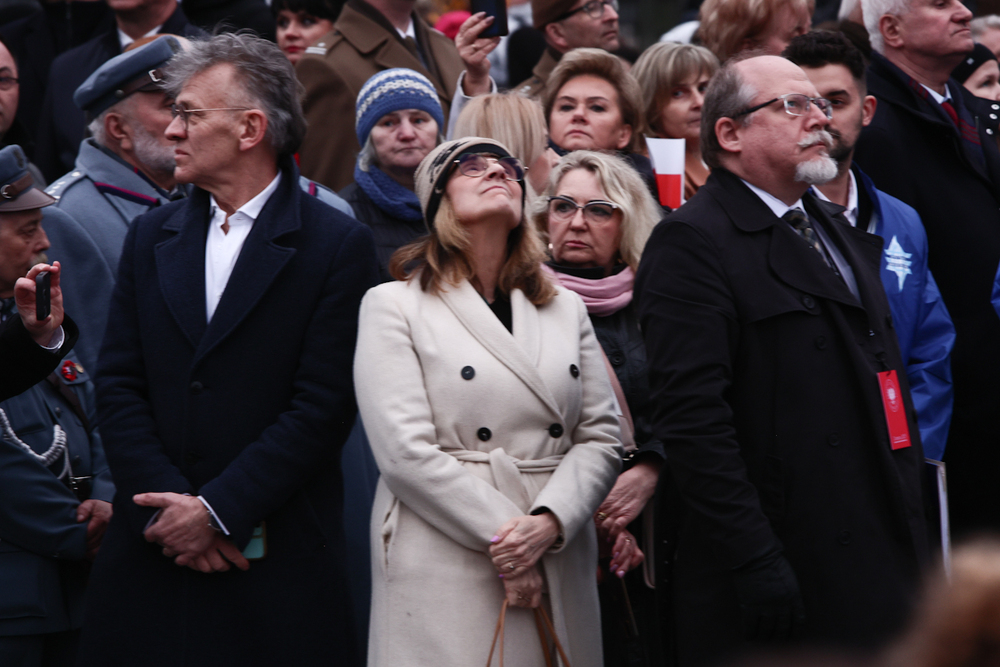
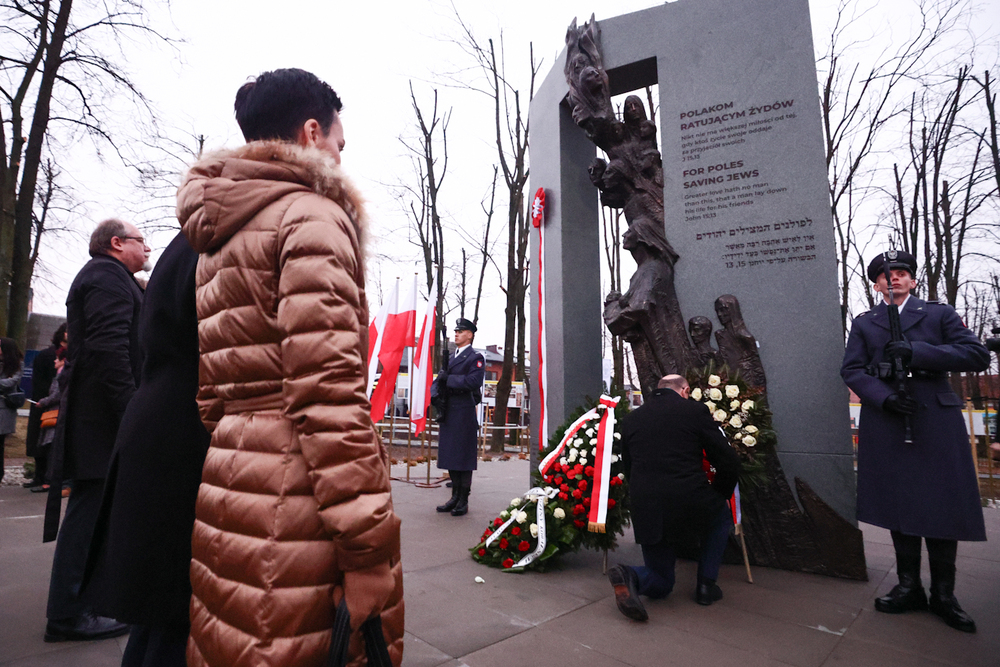
Poland’s President Andrzej Duda, the IPN President Karol Nawrocki, Deputy President Mateusz Szpytma and Ciepielów Mayor Artur Szewczyk unveiled a design by sculptor Marek Dryniak, honoring the local residents murdered by the German Gendarmerie in December 1942 for aiding persecuted Jews, which was a capital crime in the German book.
The sacrifice called for a memorial, and the idea was born in early 1990s. In 2023, the IPN Office for Commemorating the Struggle and Martyrdom and the town of Ciepielów joined forces to set aside a location, secure funding, hold a competition for the most appropriate design, and erect the structure.
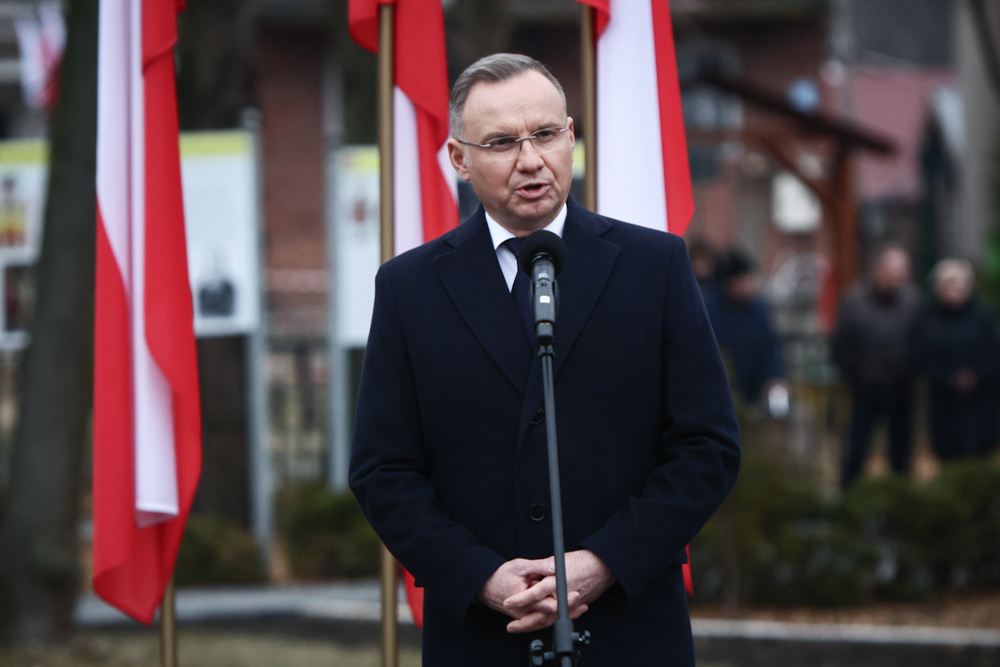
President Andrzej Duda and Karol Nawrocki Ph.D. unveiled the memorial and laid flowers there on the National Day of Remembrance of Poles Rescuing Jews under German Occupation. In Ciepielów, Karol Nawrocki explained the significance of the new monument:
"This is a story of the heroes and murderers alike . . . This memorial is a tribute of respect to heroes and victims, but also a sign of contempt for German perpetrators."
Earlier that day, the Polish Head of State and President of the Institute of National Remembrance were in the Temple of Our Lady the Star of New Evangelization and St. John Paul II in Toruń to unveil in the Remembrance Chapel the names of three more Poles killed for aiding Jews. At that ceremony, Karol Nawrocki said,
"Love and pity from the Polish nation were behind the aid offered to Jews during WW2. Such an attitude is ingrained in our identity, and without understanding our national identity and history, we’ll never be ready to step on the path of national strength and growth."
***
In late 1942, the Germans were closing Jewish ghettos in occupied Poland and deporting the residents to killing centers or concentration camps. They’d introduced harsh anti-Jewish legislation, in particular a total ban on aiding Jews on pain of death, in the occupied territories, so that the local Polish population understood their policy and toed the line.
But many Poles didn’t, despite the risk. Apart from institutionalized rescue efforts by the Polish Underground State, the murder campaign met with a strong grassroots response, and German police agencies implementing the Final Solution resolved to break that resistance. They needed examples, lest there be any doubts they were serious.
In the wee hours of 6 December 1942, twenty-odd German gendarmes arrived in the Polish village of Stary Ciepielów southeast of Radom. Another squad raided a nearby settlement of Rekówka. They’d been shaking the tree for a while, had information about Jews being sheltered by a few local families, and came to take care of that.
They surrounded the houses of Jan Kowalski, Piotr Obuchiewicz and Władysław Kosior, and kicked in the doors. In the Kosior household, they found two Jews, and in the others, cleverly-disguised hideouts, obviously inhabited until recently. The evidence was clear, crime intentional, guilt beyond doubt, mitigating circumstances nonexistent.
The punishment was meted out a few hours later. The gendarmes took the Kosior family – parents and six kids aged 6 to 18, as well as both Jews caught in their household – to the barn, and shot them. The building was set on fire. One of the teenage boys, only wounded, sprang out of the flames, but they caught him and threw back in. Alive.
The other families were collected in one of the houses and executed too, including five Kowalski children, aged 1 to 16, and four Obuchiewicz kids, 7 months to 6 years old. Gasoline was poured over the bodies (some of them not quite dead) and a match lit. One of the girls ran out of the building but was cut down by bullets. They threw the body into the fire.
In Rekówka, similar scenes took place: the gendarmes found no Jews but came across their shelters on private property, and exterminated all generations of two families, including six children. They burned the bodies. Over the next five weeks, other villages in the area saw more such raids, which claimed dozens of lives, both Polish and Jewish.