
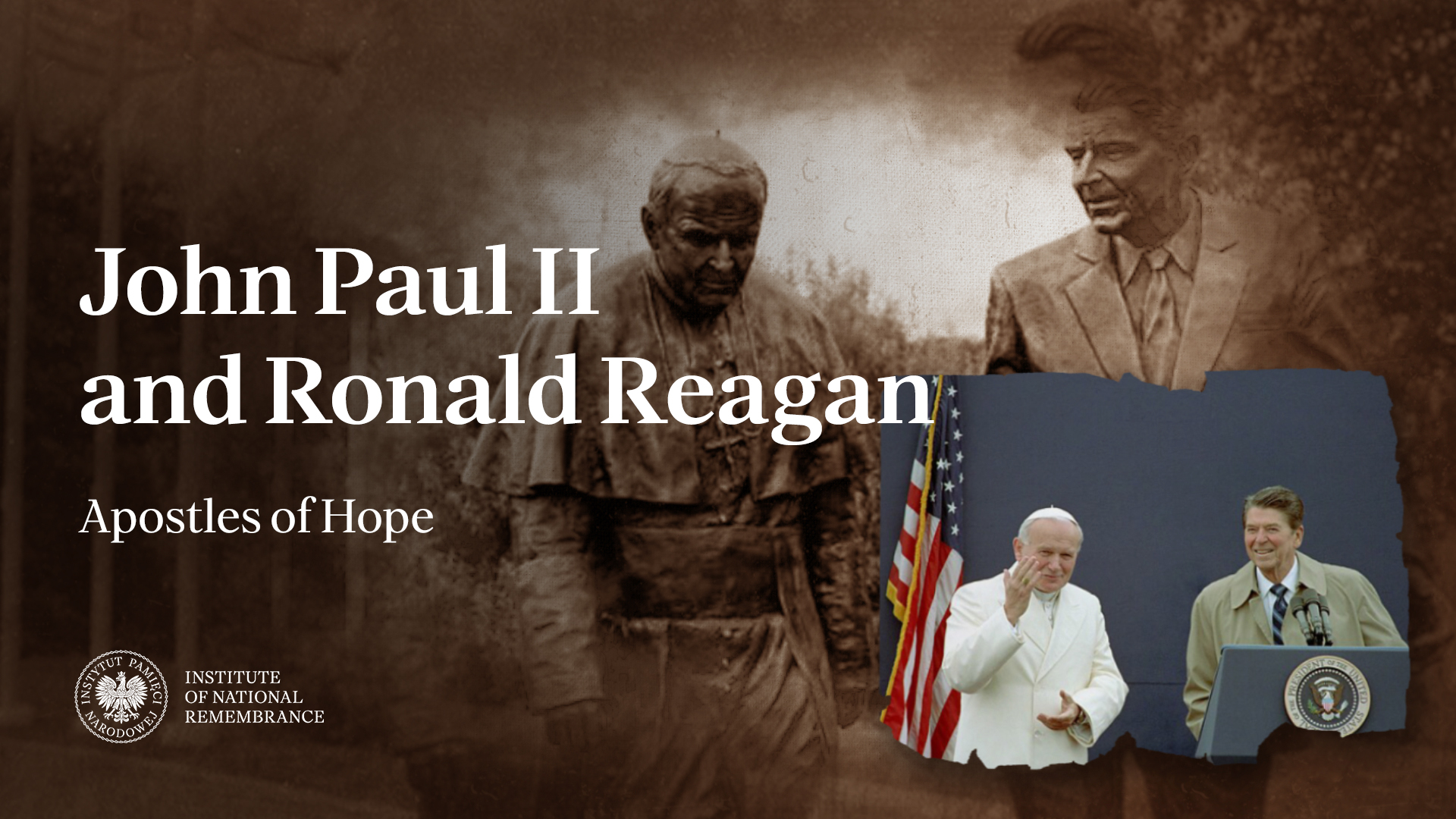
On the 20th anniversary of the death of Pope John Paul II we encourage you to watch a short film prepared by the IPN International Cooperation Office about the pivotal roles John Paul II and Ronald Reagan played in the struggle against communism during the Cold War. You will be able to find out more about their contribution to ending this global conflict and about how John Paul II emerged as a spiritual leader for those resisting communist regimes, particularly through his impactful pilgrimage to Poland in 1979, which inspired social movements such as 'Solidarity'.
The 1980s was a pivotal decade in which economic crises in the USSR coincided with papal messages that encouraged the faithful to be guided by values such as freedom and responsibility. At the same time, John Paul II warned against the disastrous consequences of misusing freedom. His message remains relevant today in the face of new challenges.
As a spiritual leader, John Paul II played a key role in mobilizing public sentiment against communism, especially in Eastern Europe. His pilgrimage to Poland in 1979 sparked a wave of national pride and resistance, culminating in the formation of the 'Solidarity' movement. This grassroots organization became a spark of hope for those who longed for freedom, showing how faith can animate political action. The Pope's messages emphasized the significance of human dignity and rights, having a profound effect on those living under authoritarian rule.
On the other hand, Ronald Reagan's assertive foreign policy played a key role in putting pressure on the Soviet Union. His administration's military buildup and initiatives, such as the Strategic Defense Initiative (SDI), were aimed at countering Soviet military capabilities. Reagan's rhetoric portrayed communism as an existential threat, rallying Western nations around a common cause and reinforcing their commitment to opposing Soviet expansionism.
The synergy between the two leaders became clear during their secret collaboration aimed at undermining communist regimes. The Vatican's support for anti-communist movements complemented US policy, which provided financial and logistic assistance to dissidents throughout Eastern Europe. This multifaceted approach created conditions in which change was not only possible, but inevitable.