
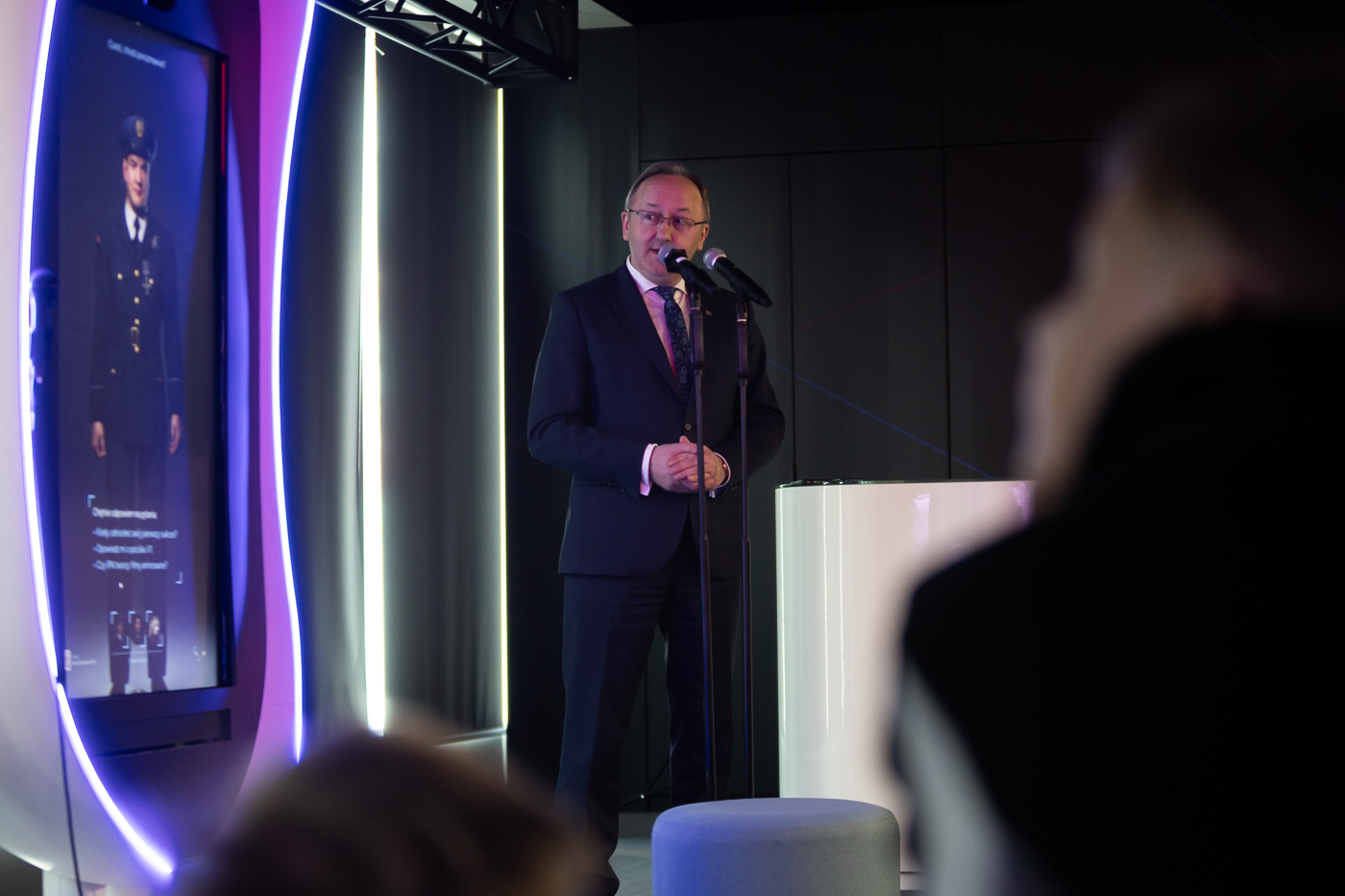
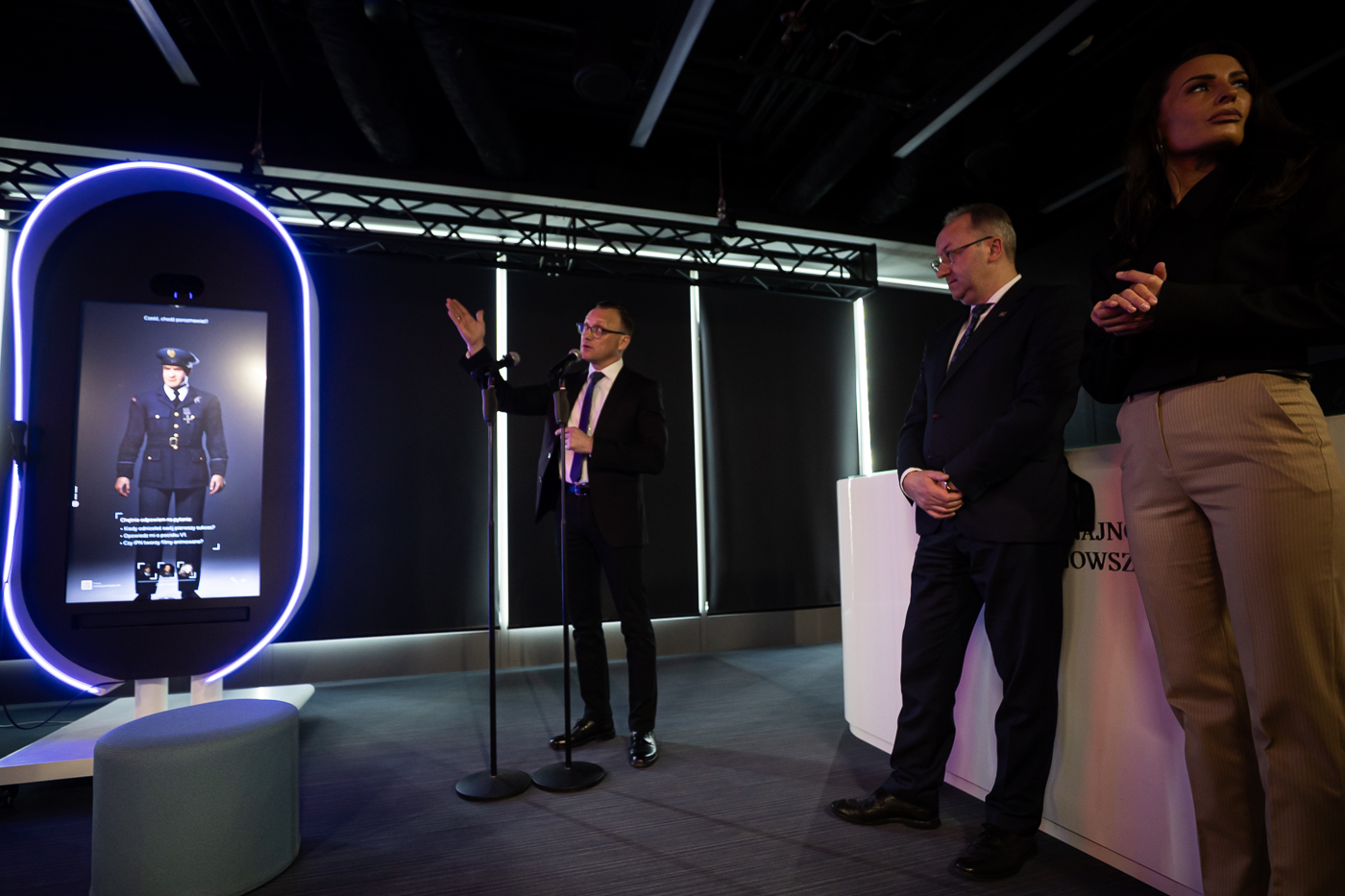
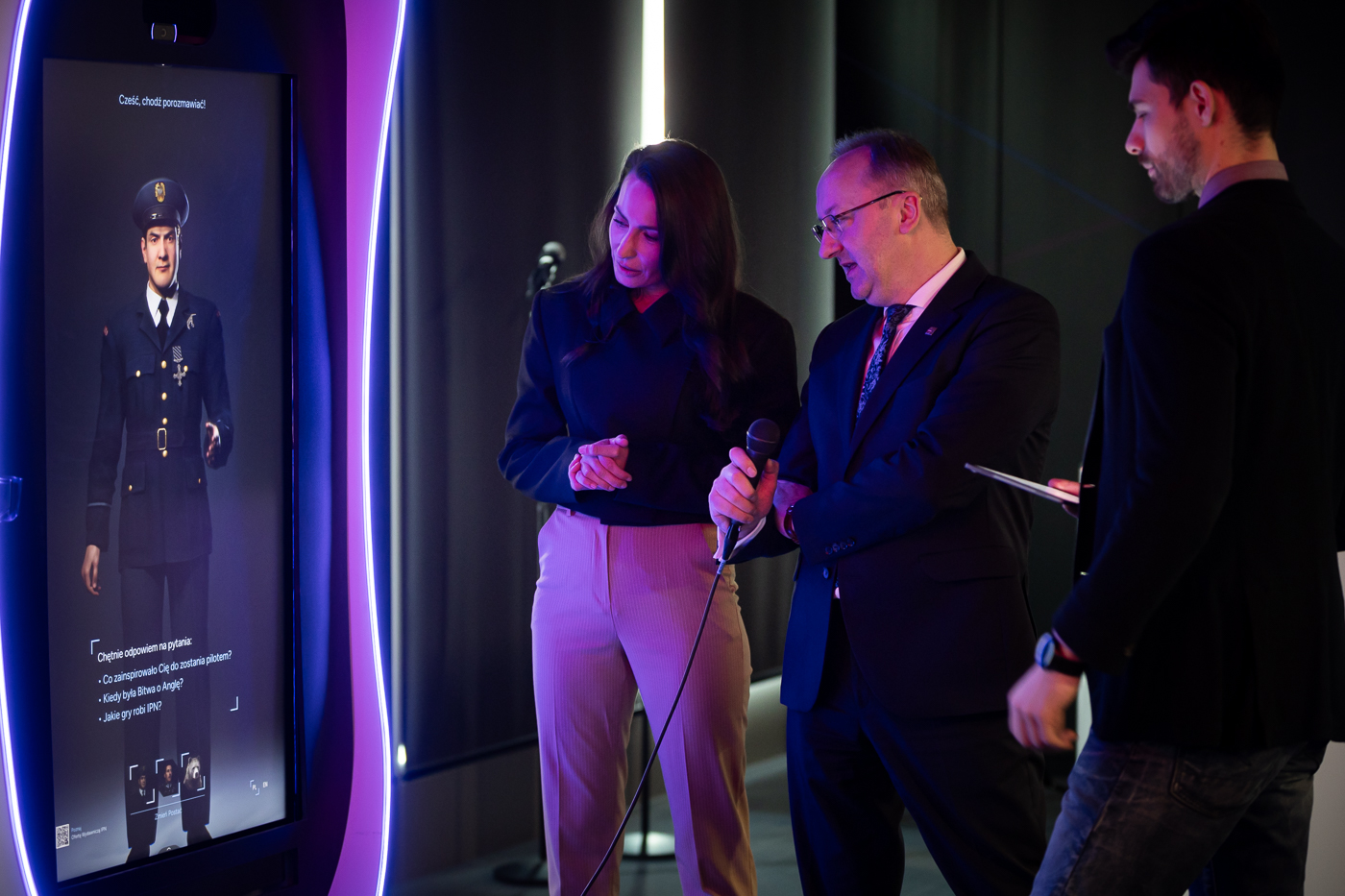
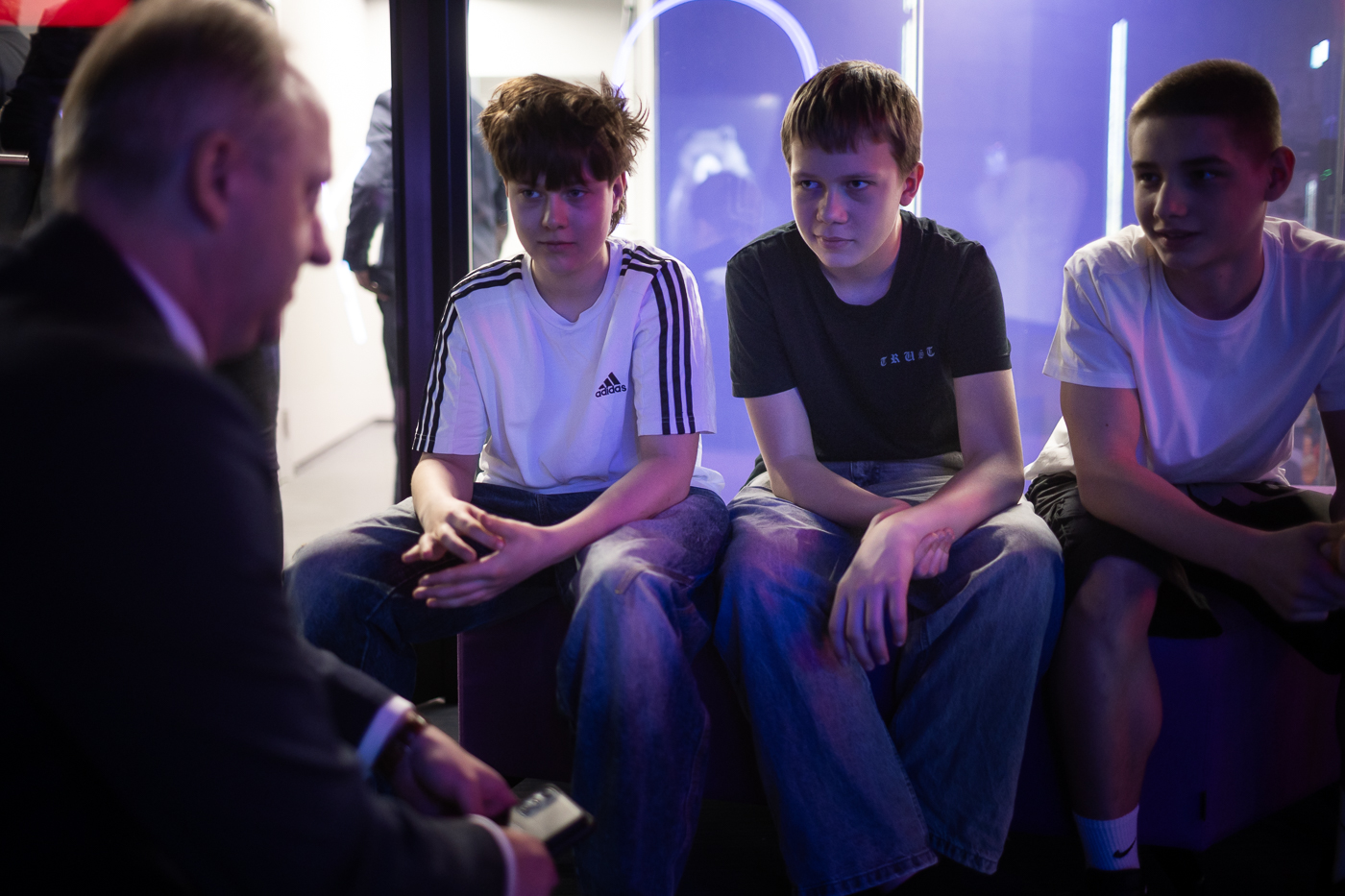
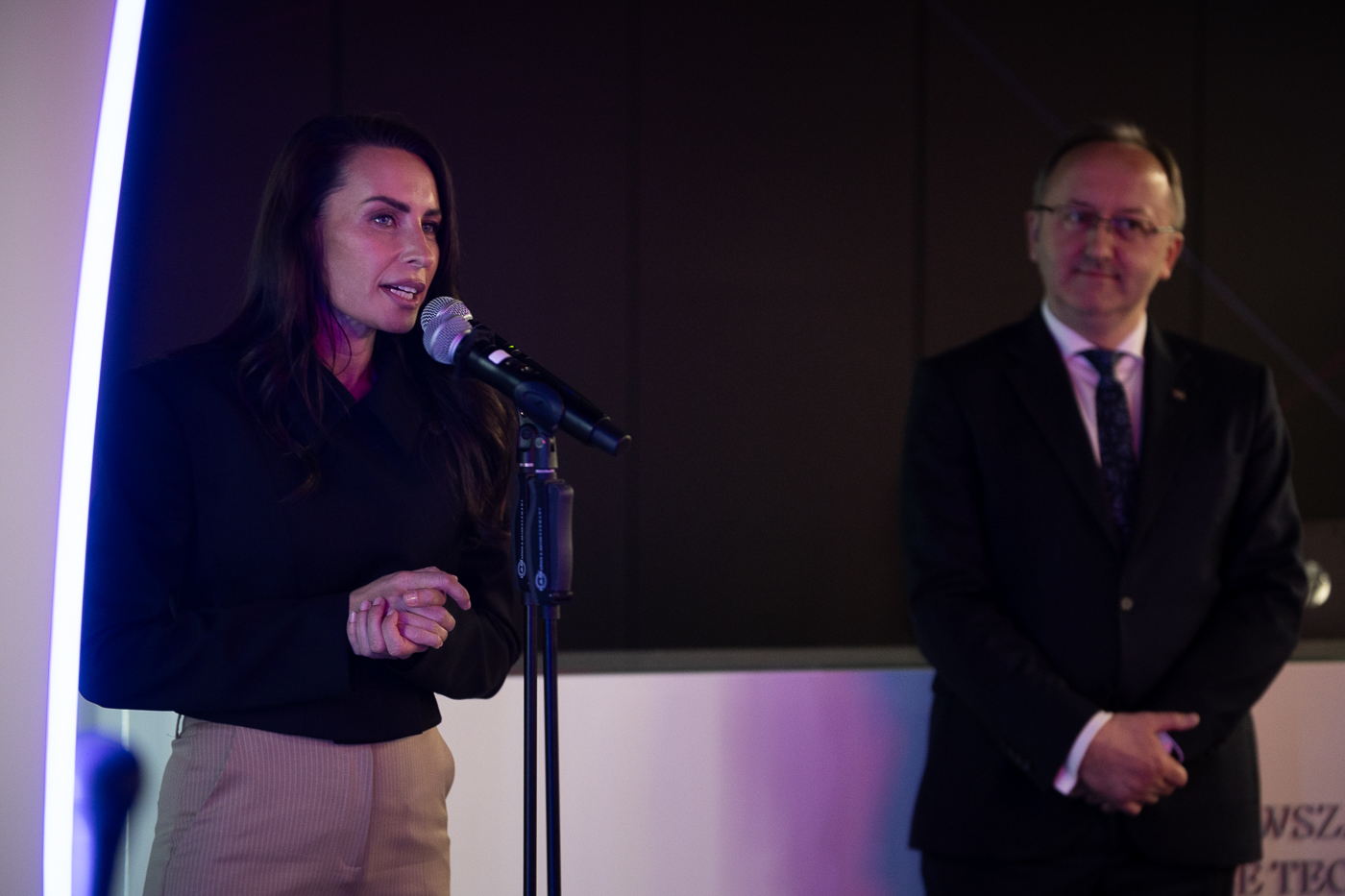
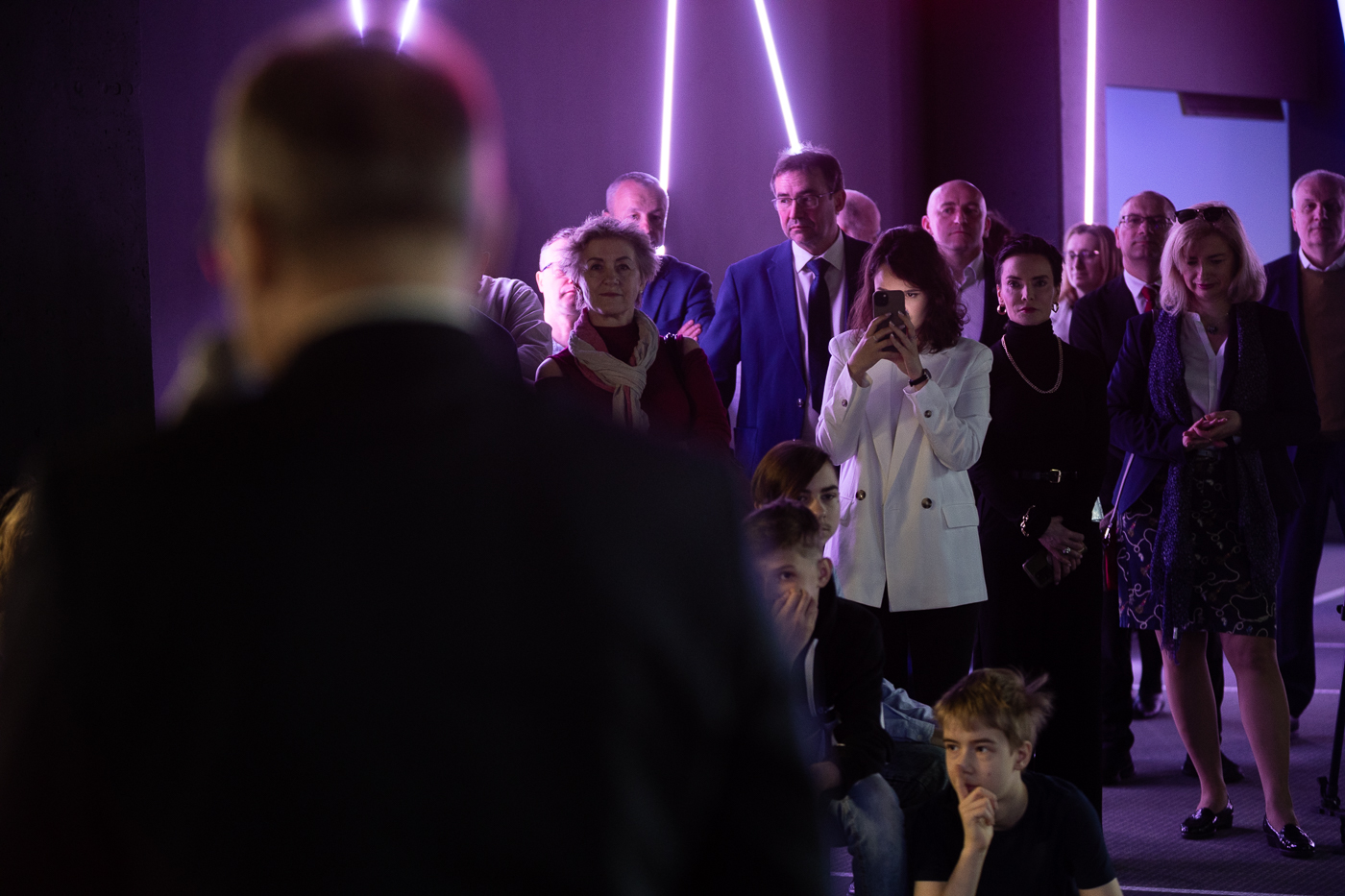
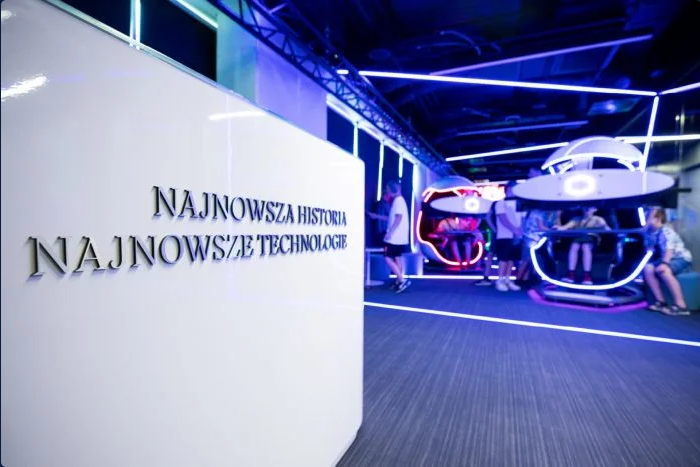
This innovative initiative consists of three sections. The heart of the project – the avatars – beats at the Central History Point at 107 Marszałkowska Street in Warsaw. This is where you can talk to the Digital Heroes. In addition, after the QR code is scanned, the characters will present themselves on your smartphone in the form of augmented reality (AR) and you will also see them in short videos published on the Institute of National Remembrance’s social media profiles – Facebook, Instagram, LinkedIn and YouTube.
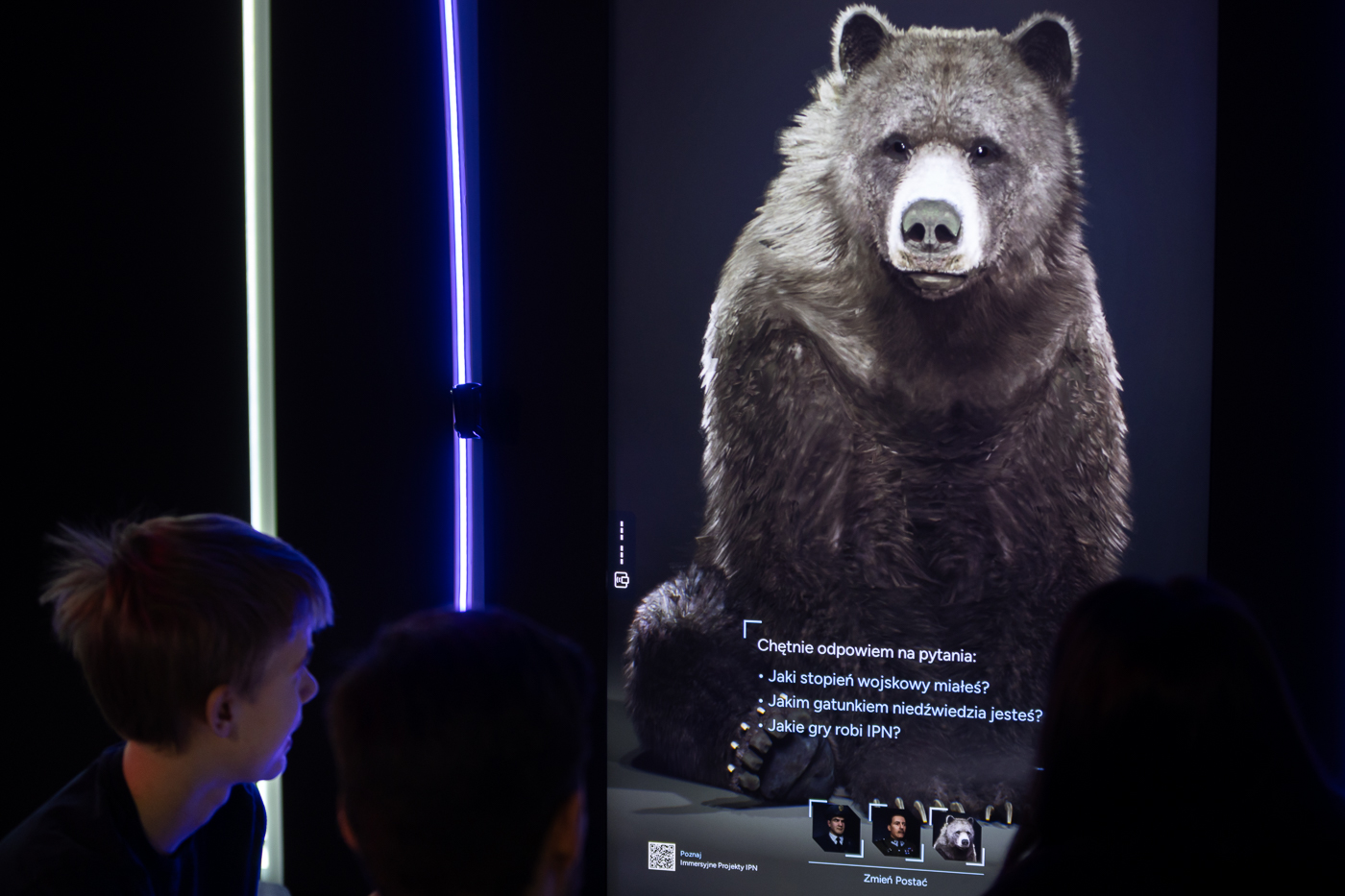
Digital Heroes, i.e. Jan Zumbach, Jan Kowalewski and Wojtek the Bear, whom you will meet in the New Technology Zone of the Central History Point are avatars generated on Unreal Engine 5 using a powerful PC unit and displayed on a TV screen. Each of them is a realistic 3D model capable of moving, gesturing, and answering various questions from visitors. The characters’ speech is handled by an original dialogue engine supported by machine learning using 11labs.
Each avatar is based on an artificial intelligence module whose memory has been loaded with historical resources obtained from the archives of the Institute of National Remembrance. Thanks to this, the answers provided will always be true. The project educates through a combination of digital technology and historical education.
A conversation with Jan Zumbach will make learning about the air battles over Europe more interesting, Jan Kowalewski will explain the secrets of cryptography in the Polish-Bolshevik war, and Wojtek the Bear will talk about the Battle of Monte Cassino. The ability to ask questions in real time allows you to deepen your knowledge at your own pace and steer the conversation as you see fit. Each answer from the avatar can lead to another question, and it is up to you to decide when the conversation ends and what topics are discussed.
The figures symbolise courage, patriotism and determination in action. They are role models. Thanks to direct contact with the avatar, you will understand history better, and the values presented will be easily transferred to today’s realities.
Visit the Central History Point and talk to the Digital Heroes
Meet the Heroes, ask them questions related to their participation in important events in Poland’s modern history and listen to their stories. Come and take advantage of the opportunity to talk to the avatar of your chosen hero. The Digital Heroes are waiting for you in the New Technology Zone of the Central History Point at 107 Marszałkowska Street in Warsaw.
Watch all the videos with Digital Heroes
Jan Zumbach was one of the leading Polish pilots during World War II, fighting in the famous No. 303 Squadron. He was born in 1915 in Ursynów, and his passion for aviation was born after an air show in 1928. Despite his initial career in the infantry, he began training at the Air Force Officer Cadet School in 1936, graduating as a second lieutenant in 1938. Before the outbreak of war, he suffered a car accident which interrupted his service, but after the outbreak of the conflict he managed to make his way to France, and later to the UK where he joined the No. 303 Squadron. During the Battle of Britain, he distinguished himself for his bravery by shooting down at least 13 enemy aircraft. He received numerous decorations, including the Virtuti Militari Cross and the Distinguished Flying Cross.
Jan Kowalewski was a prominent Polish military cryptologist and diplomat who played a key role in the Polish-Bolshevik War. Born in 1892, he initially worked as an engineer, but his cipher-breaking skills led him to work for Polish intelligence during the war in 1920. He became famous for breaking Soviet codes, which allowed Polish troops to anticipate the Bolsheviks’ movements and facilitated victory near Warsaw. After the war, he continued to work in intelligence. He received numerous awards for his services and his contribution to Polish history remains invaluable.
Wojtek the Bear was a Syrian brown bear who became an extraordinary member of Anders’ Army during World War II. In 1942, while still a small bear, he was purchased by Polish soldiers in Iran and accompanied them on their combat route through the Middle East and Europe. He is best known for his participation in the Battle of Monte Cassino, where he helped carry ammunition crates, which earned him the honorary rank of corporal. After the war, he lived in the Edinburgh Zoo, where he died in 1963.