
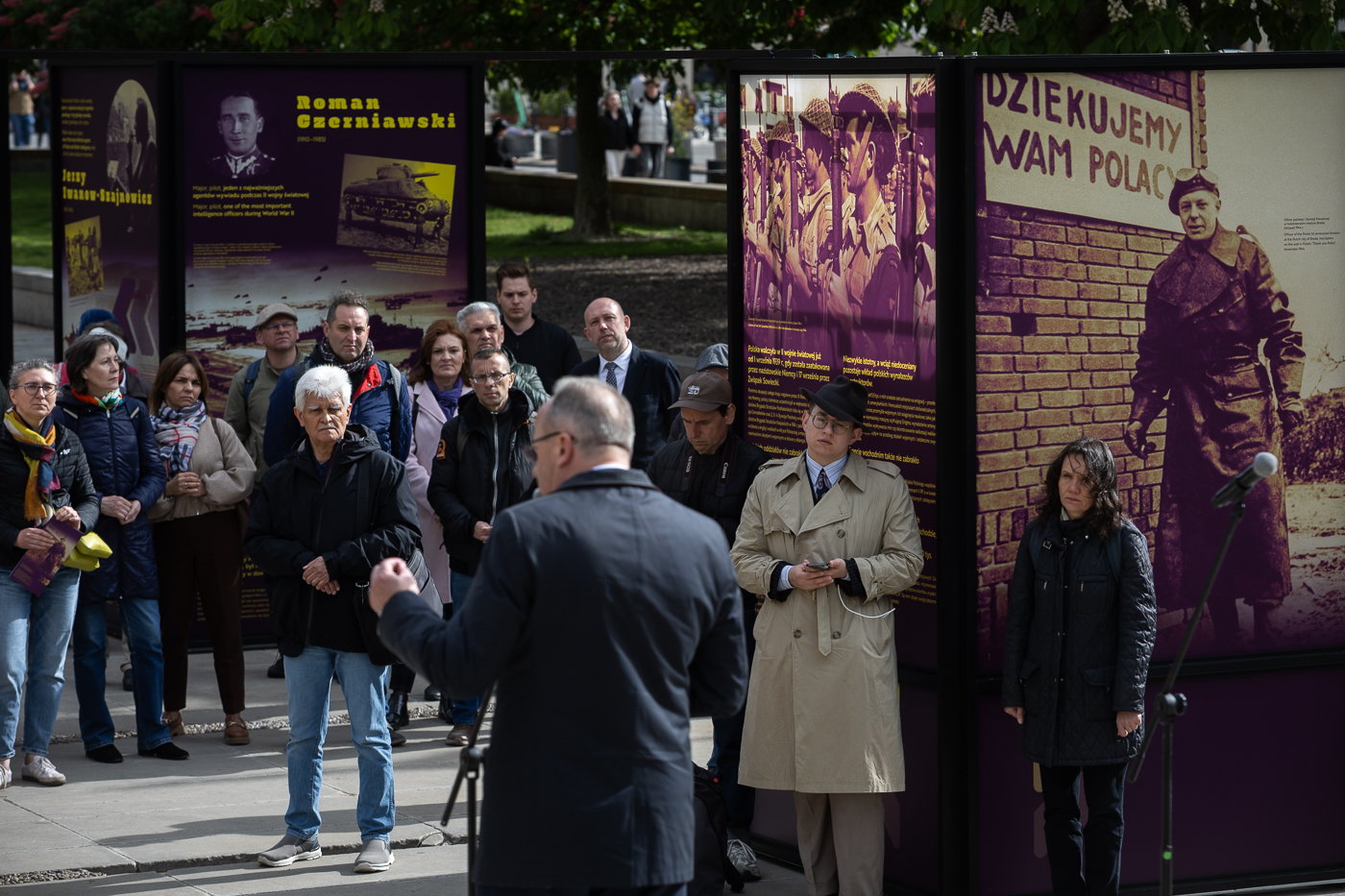
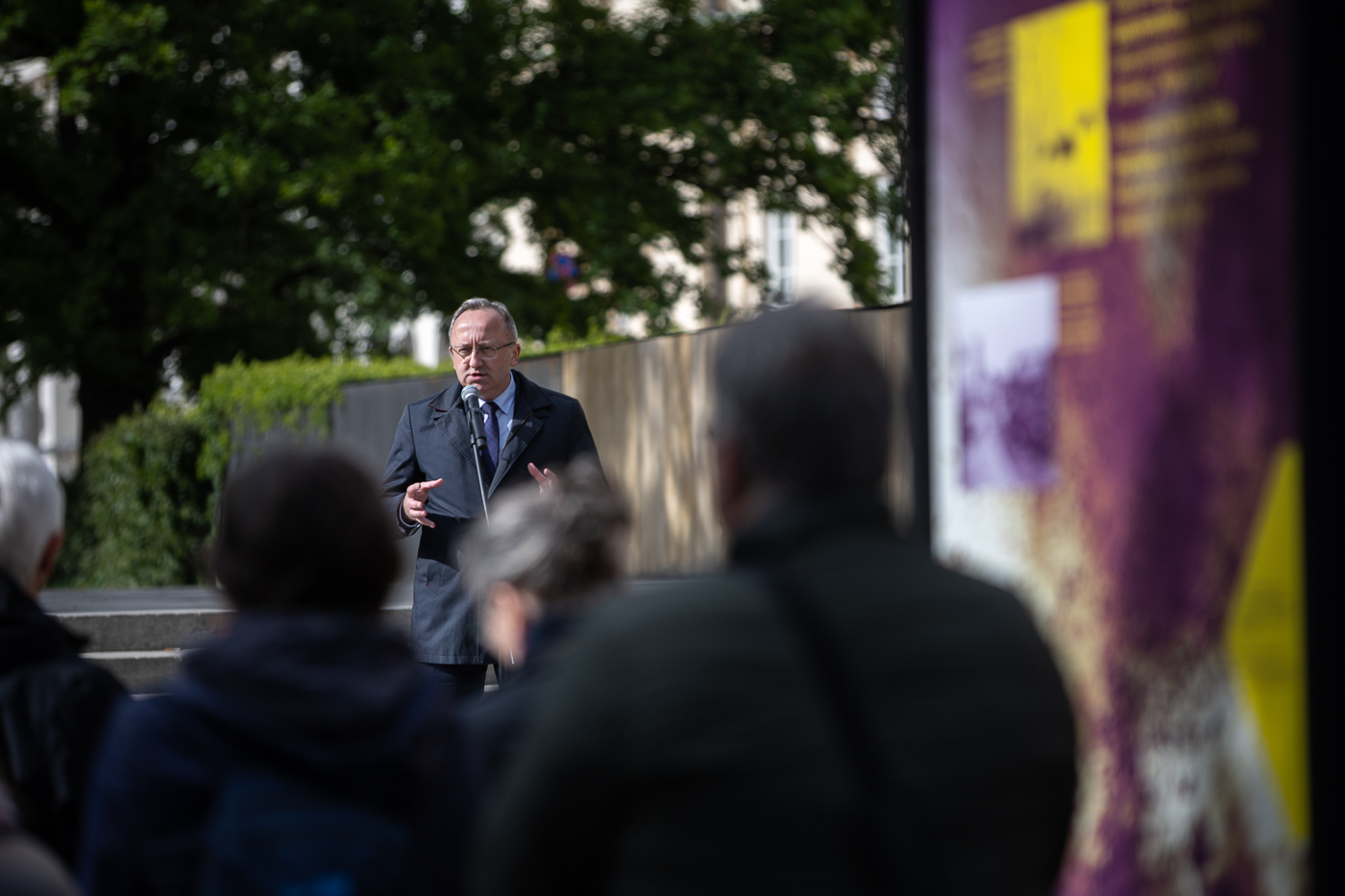
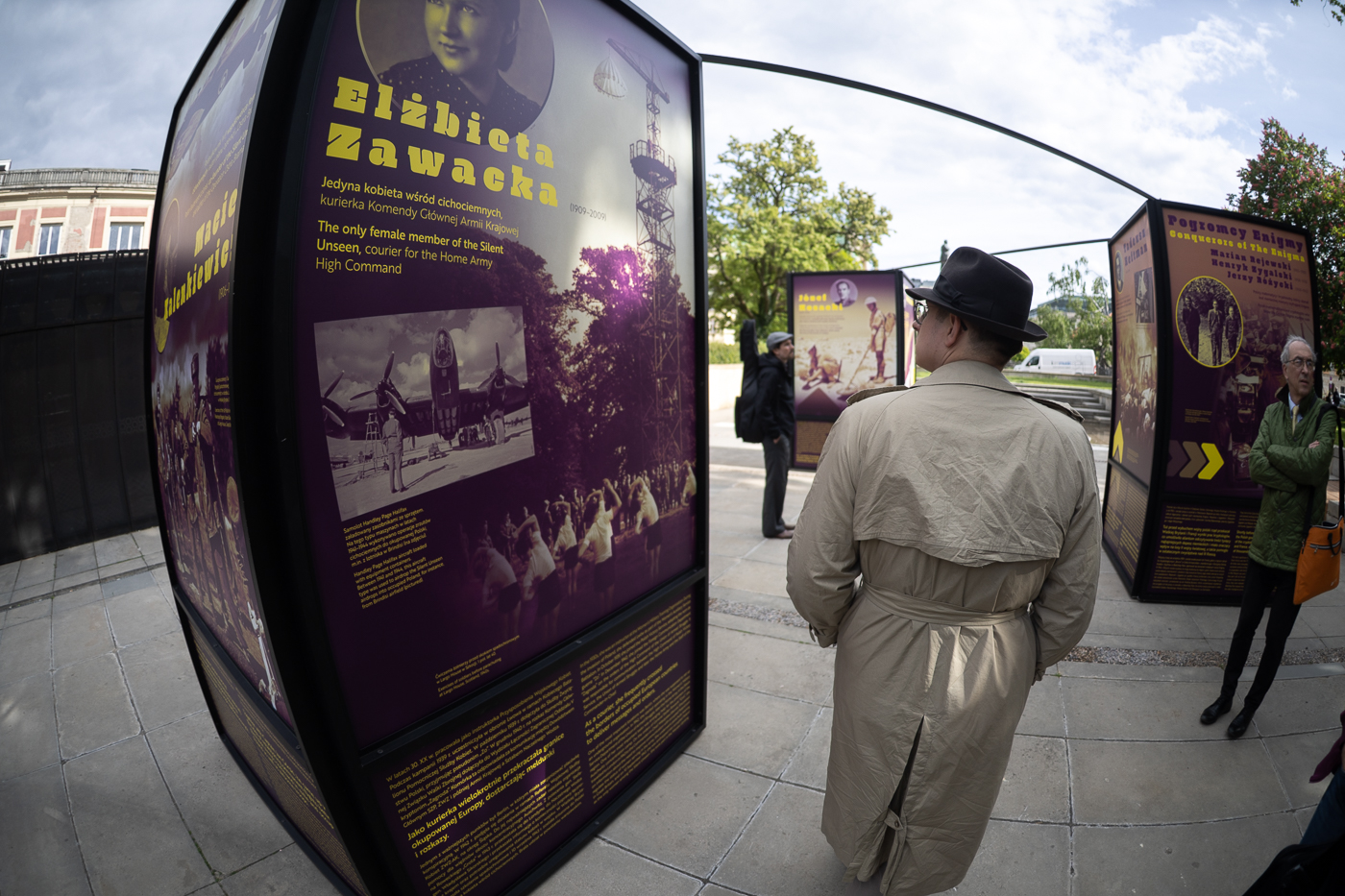
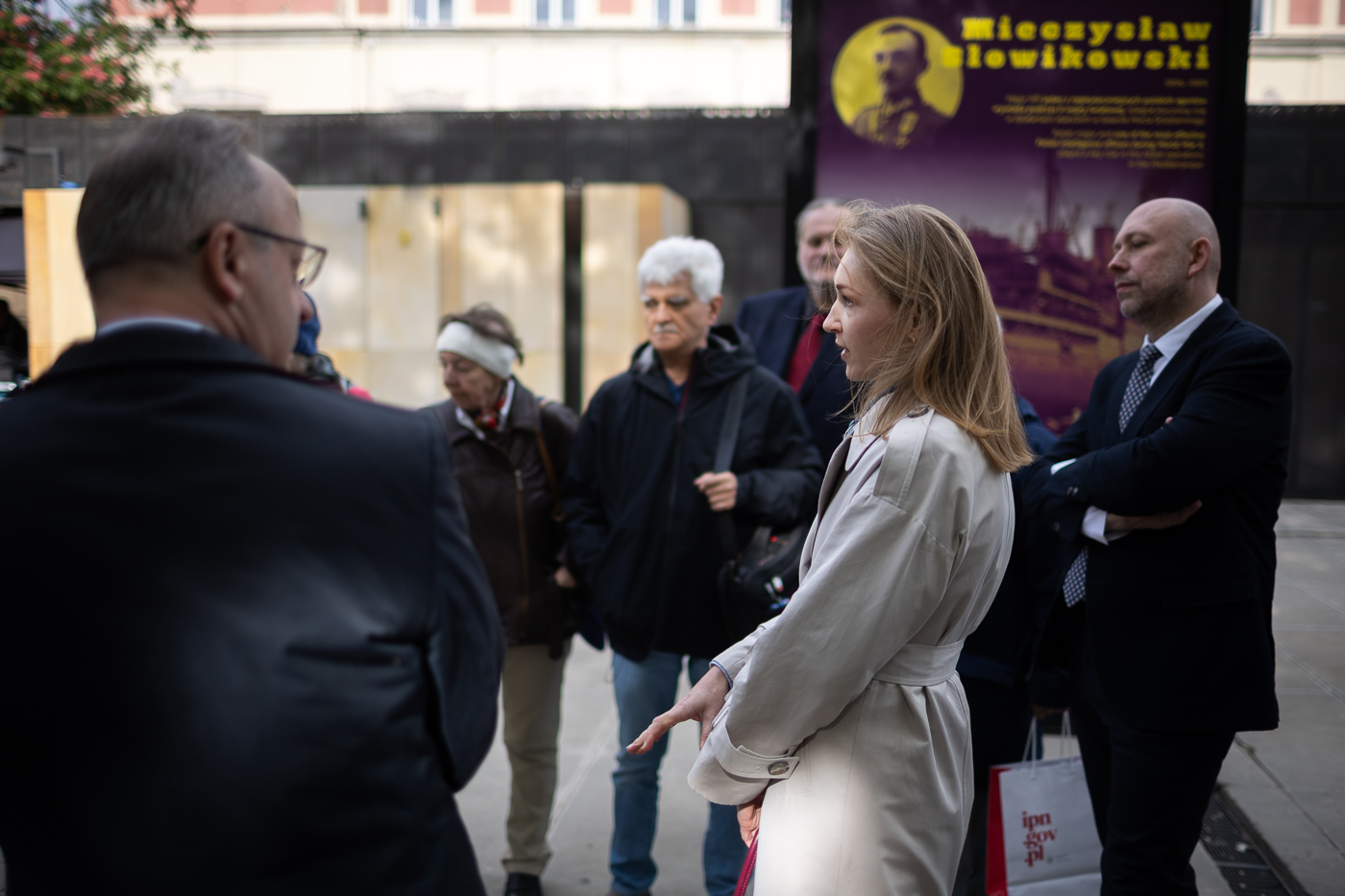
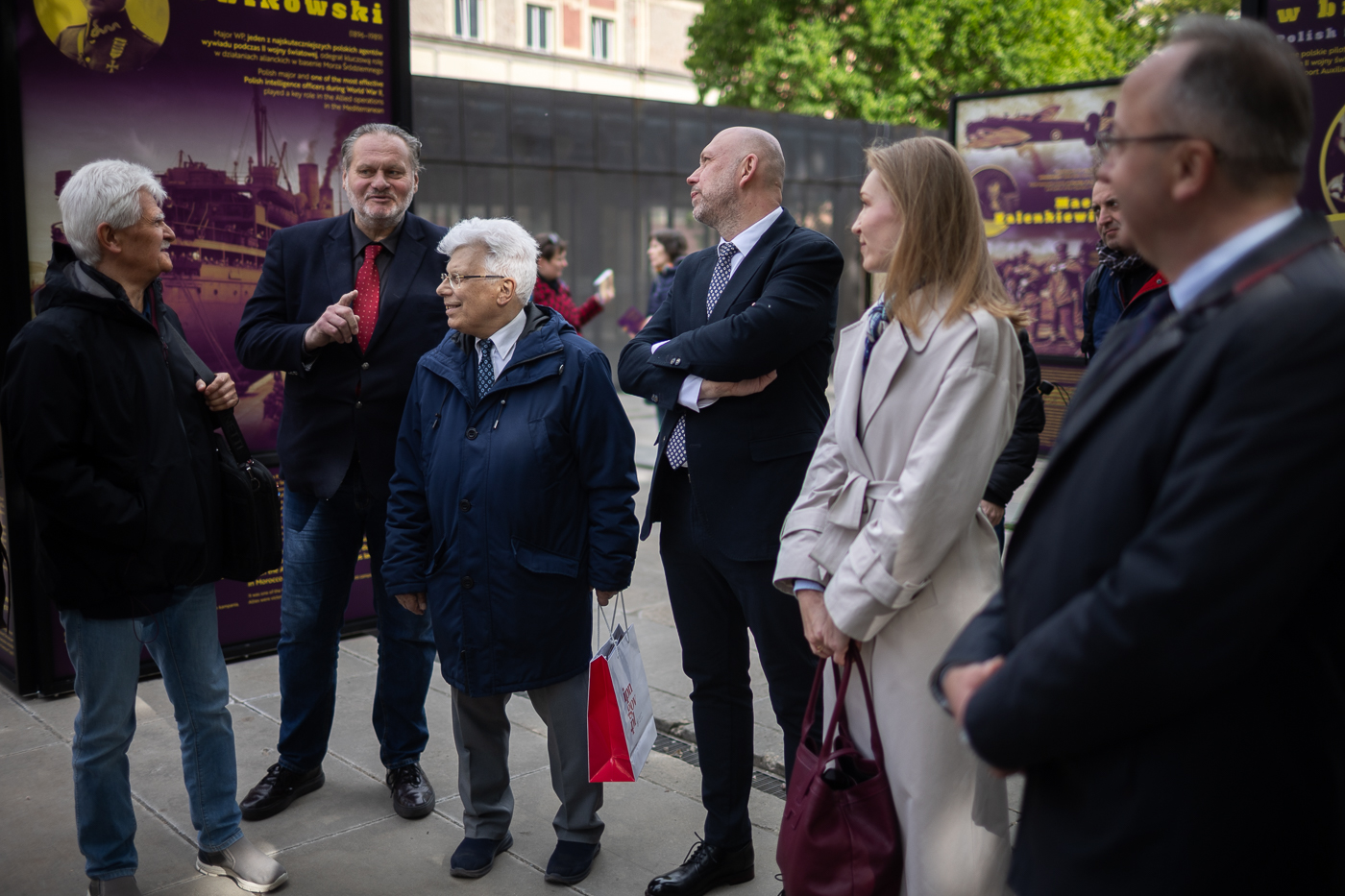
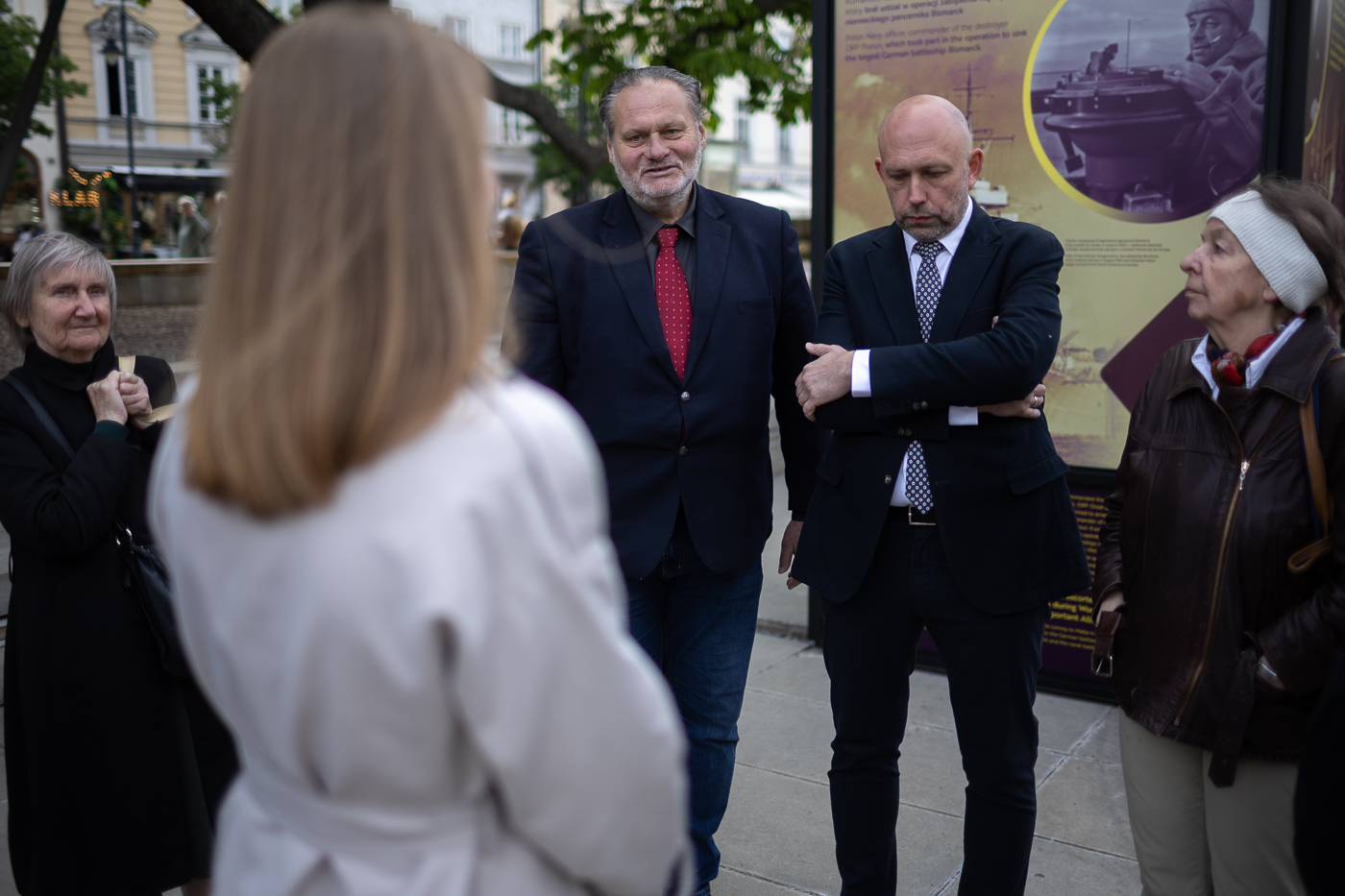
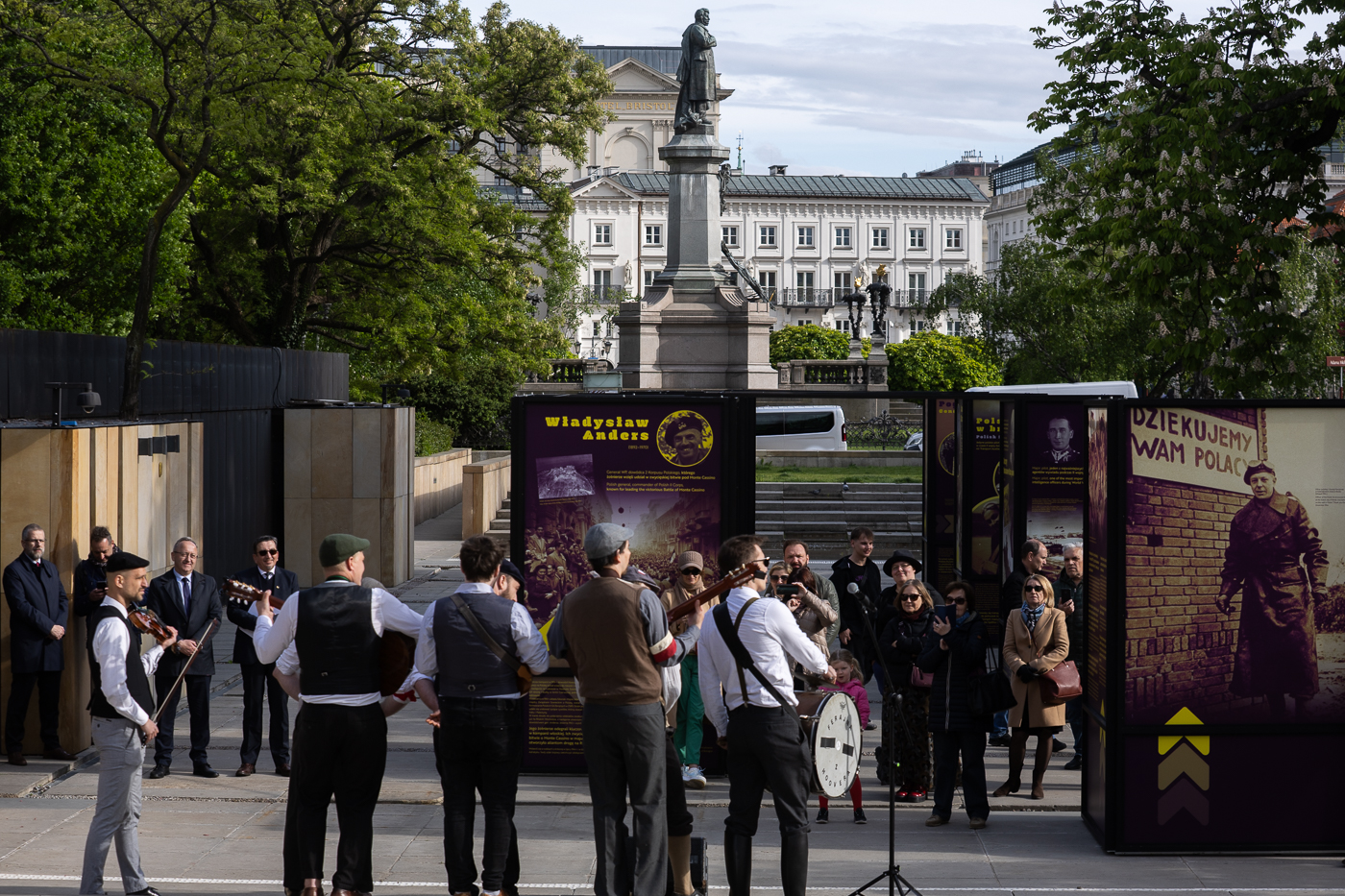
In connection with the 80th anniversary of the end of World War II, the outdoor exhibition prepared by the IPN Warsaw branch office was opened in Hoover Square in Warsaw. The ceremony was attended by the IPN Deputy President Prof. Karol Polejowski.
During the opening, Prof. Polejowski recalled the great Polish scientists who played a significant role in the victory over the Third Reich, including Polish cryptologists who broke the ciphers of the German Enigma.
"The Unconquered" exhibition presents the Polish contribution to the victory over the Third Reich. It is worth reminding the public of this fact, especially today, on the eve of the 80th anniversary of the end of World War II in Europe. That victory was possible thanks to the Poles, said Prof. Polejowski
The exhibition will be open to the public until 28 May 2025.
Poland fought in World War II from 1 September 1939, when it was attacked by Nazi Germany, and on 17 September by the Soviet Union. Despite the occupation of the whole country, first by the Third Reich and the USSR and then exclusively by Germany, Polish soldiers participated in most of the Allied campaigns. The Polish Independent Highland Brigade fought at Narvik in 1940, the 1st Grenadier Division and the 2nd, 3rd and 4th Infantry Divisions in the Battle of France of 1940, and the Polish Independent Carpathian Rifle Brigade at Tobruk in 1941. Airmen gained fame during the Battle of Britain and the North African campaign, while sailors protected convoys from German warships in the Battle of the Atlantic.
Polish troops were also involved in the largest landing operation in the history of the world, the Allied Normandy landings in 1944, and subsequent battles in France, Belgium, the Netherlands and Germany. In September 1944, paratroopers from the 1st Polish Independent Parachute Brigade supported the British and Americans at the Battle of Arnhem. Polish II Corps played a key role in breaking through the German defences in Italy in May 1944, capturing the monastery of Monte Cassino and later liberating Ancona and Bologna.
Members of Polish intelligence networks operating in Europe, the Middle East and North Africa also provided significant support to the Allied forces. Their courage, dedication, and knowledge of their commanders helped the Americans land in Africa (Operation Torch) and the Allies in Normandy (Operation Overlord). Their skill and determination led to finding information about the German Wunderwaffe (“wonder weapons”), the V-1 flying bombs and V-2 long-range missiles, and the factories where they were manufactured.
The contribution of Polish inventors and designers remains hugely significant and is still underestimated. After the invasion of Poland, more than 5,500 found employment abroad – primarily in British, American and French experimental institutes, planning and design companies and the war industry. Their scientific achievements, including breaking the German Enigma encryption machine codes, inventing an antenna for tracking U-boats and a mine detector, or constructing handheld radio transceivers, had a decisive impact on the course of the war and the ultimate victory of the Allies.
Polish troops were also present on the Eastern Front. The First and Second Polish Armies, subordinate to the Soviet Union, together with the Red Army, fought Germans in the territories of the Second Polish Republic. In April and May 1945, they fought in the Battle of Berlin, which ended with the capture of the capital of the Third Reich.
In the final stretch of the war, the Polish divisions fighting in the West and the East were the fourth largest army of the Allies, numbering nearly 600,000 soldiers. They stood out due to their extraordinary ability to rebuild combat units. The soldiers and the supporting cast of intelligence officers, engineers and designers whose achievements contributed to the Allied victory fully deserve the symbolic title of “the UNCONQUERED”. They earned it through their determination and courage because we remember and are grateful to them.