
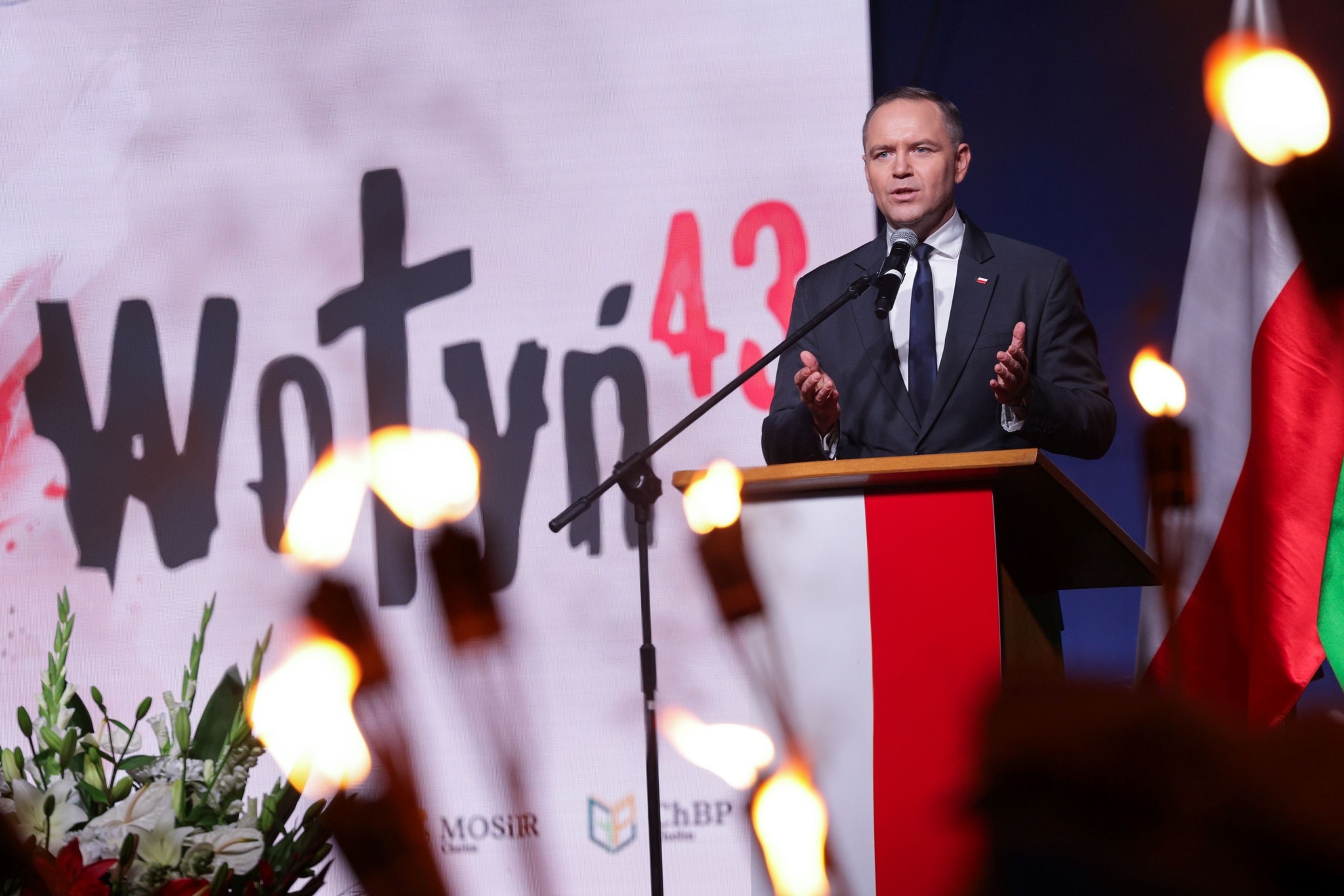
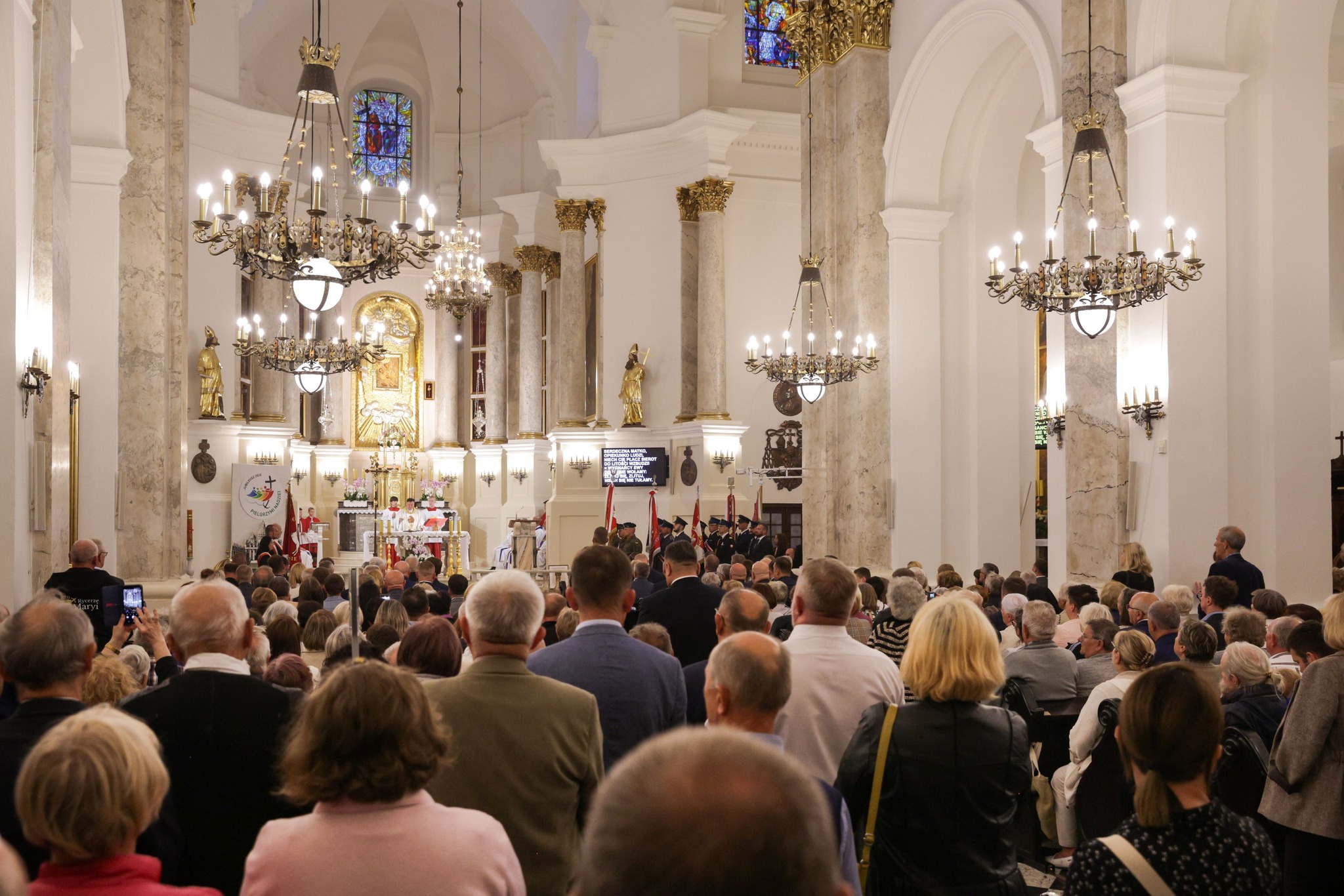
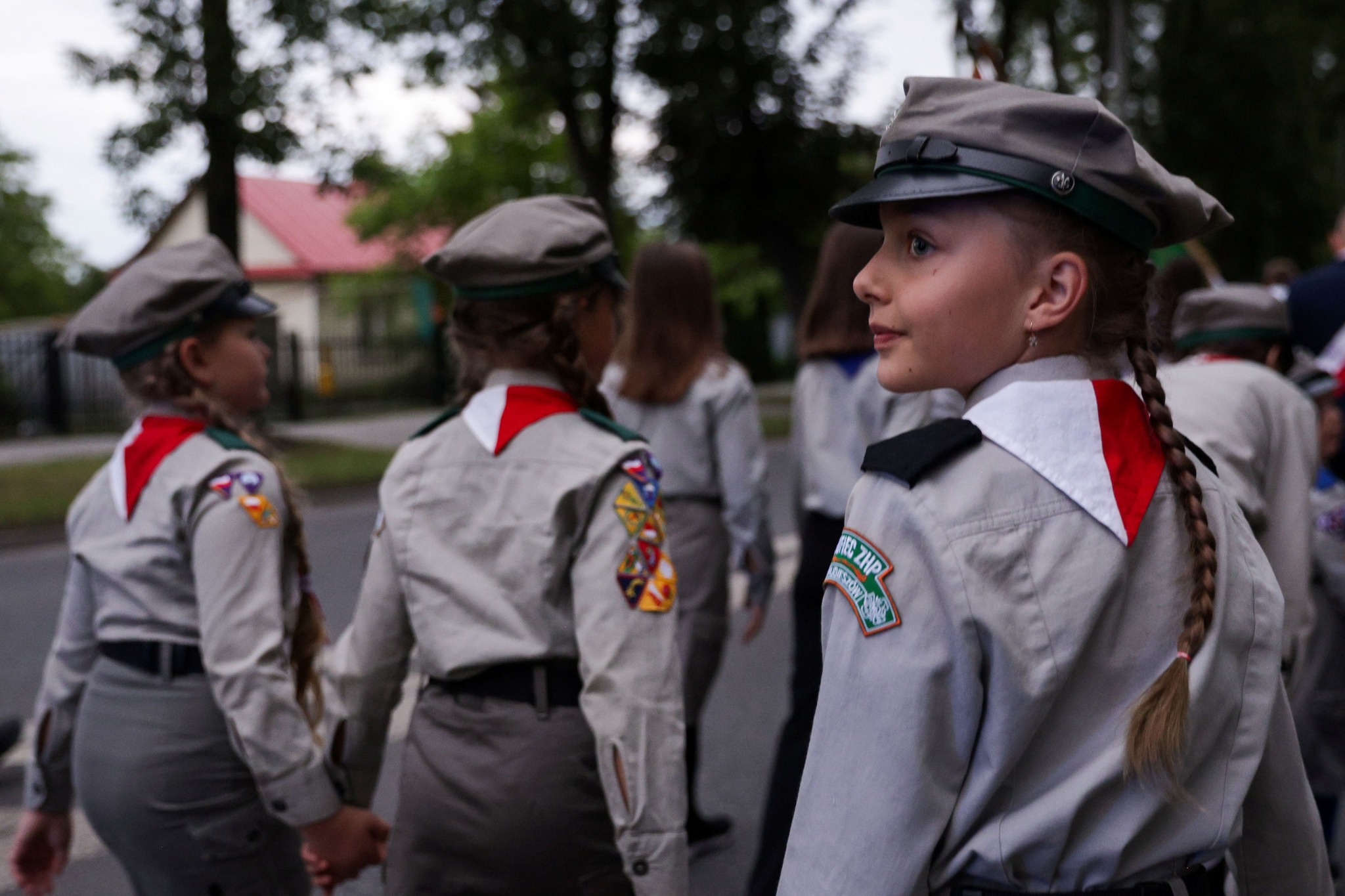

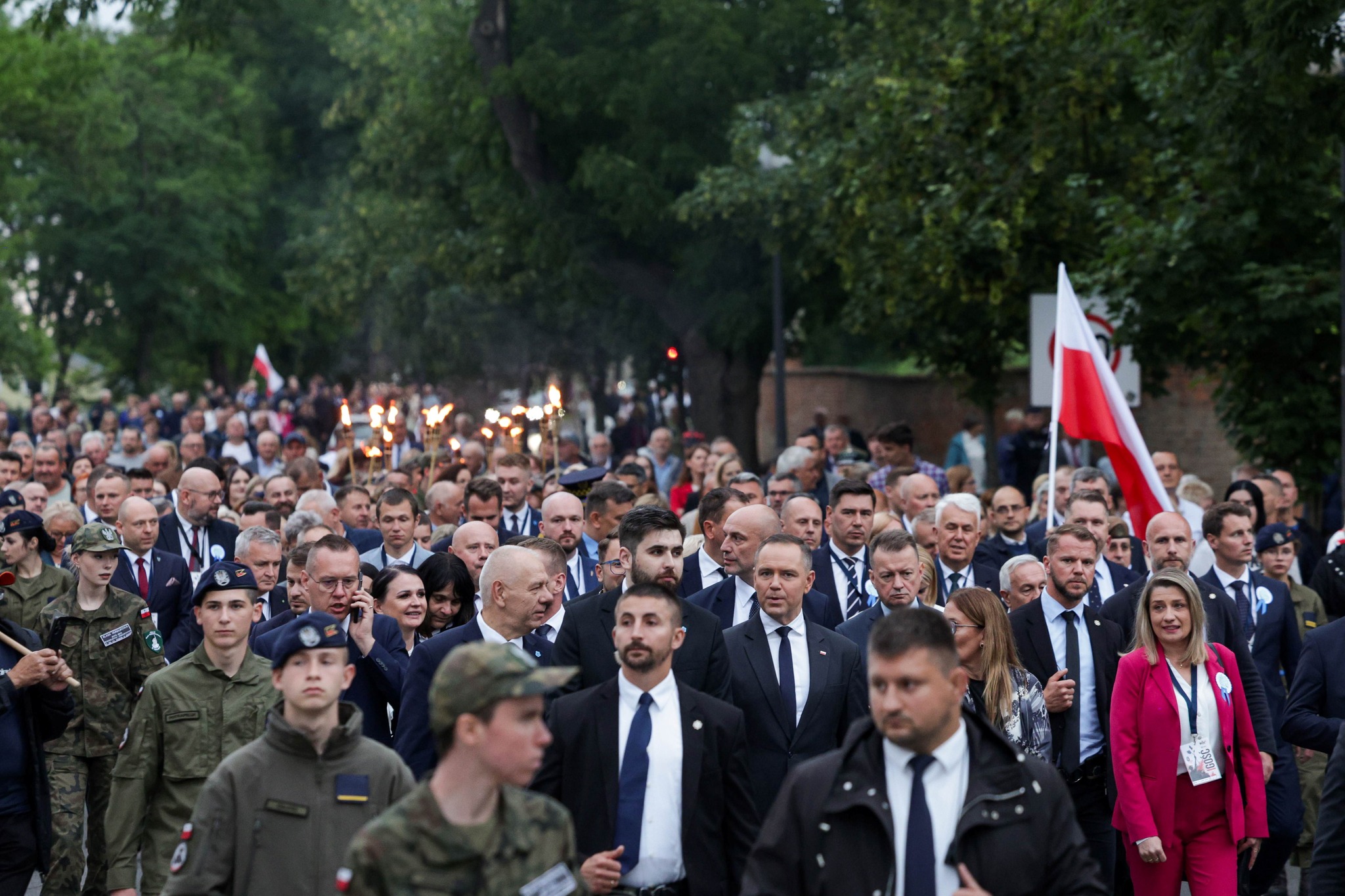
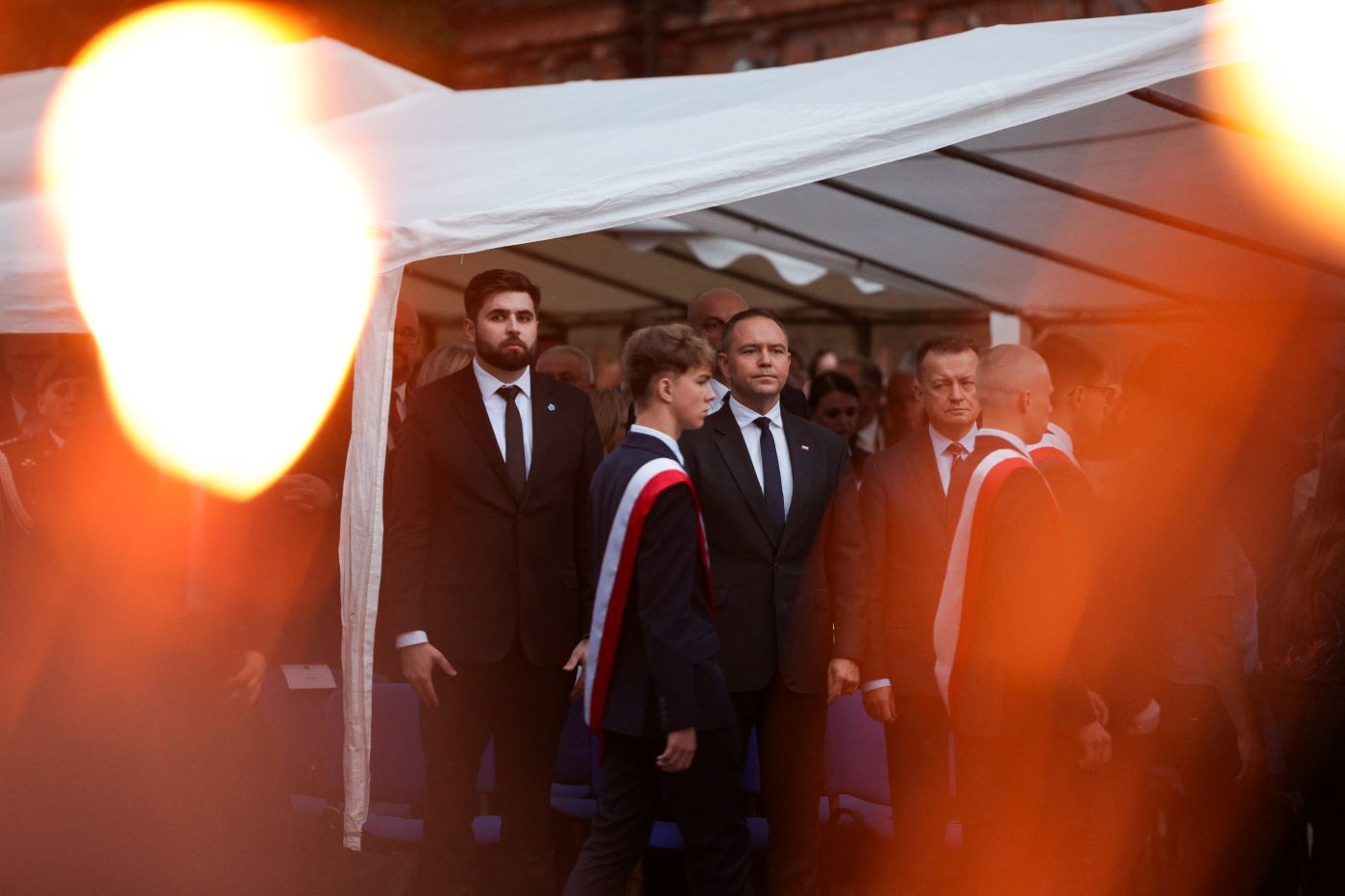
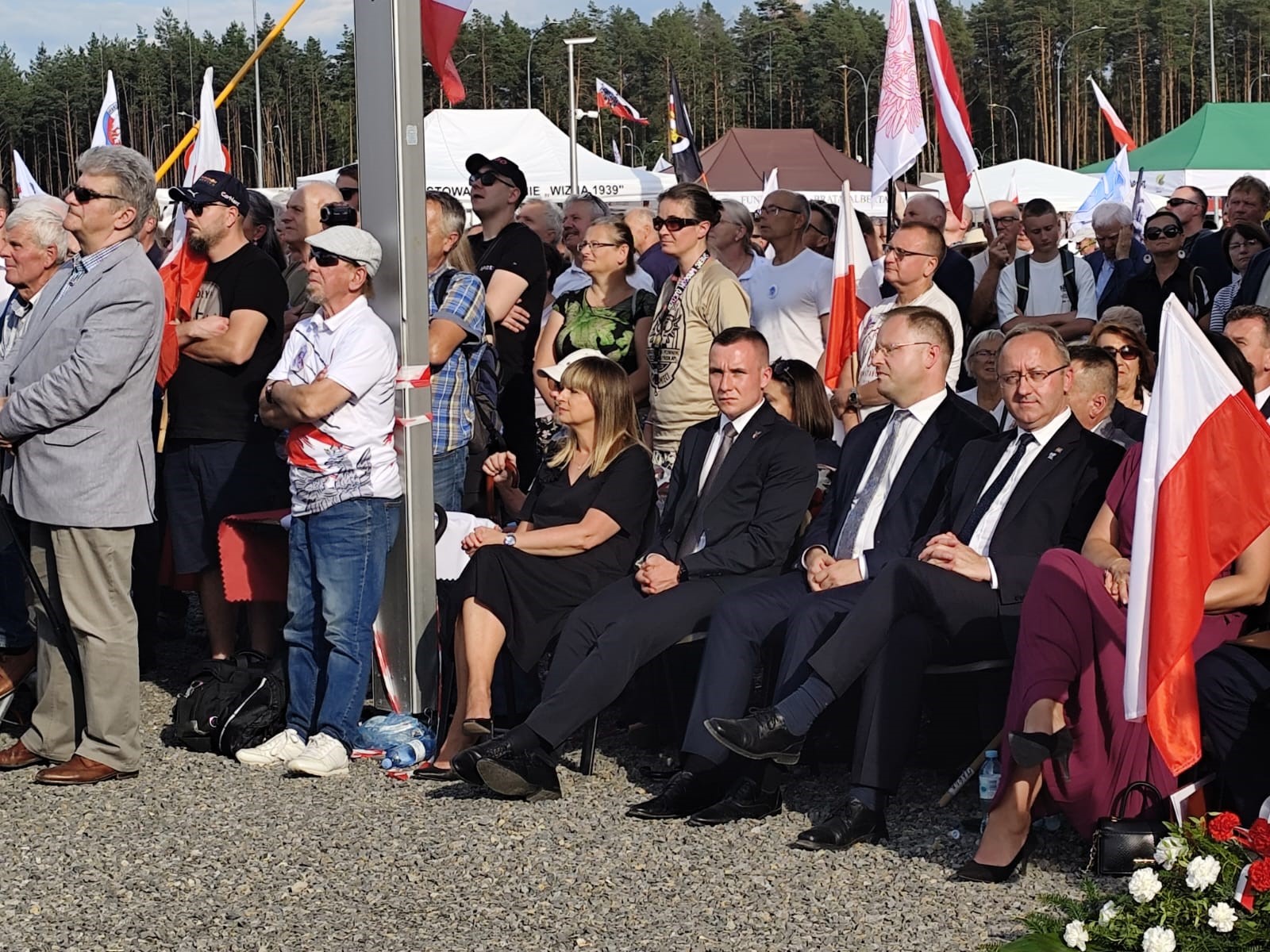
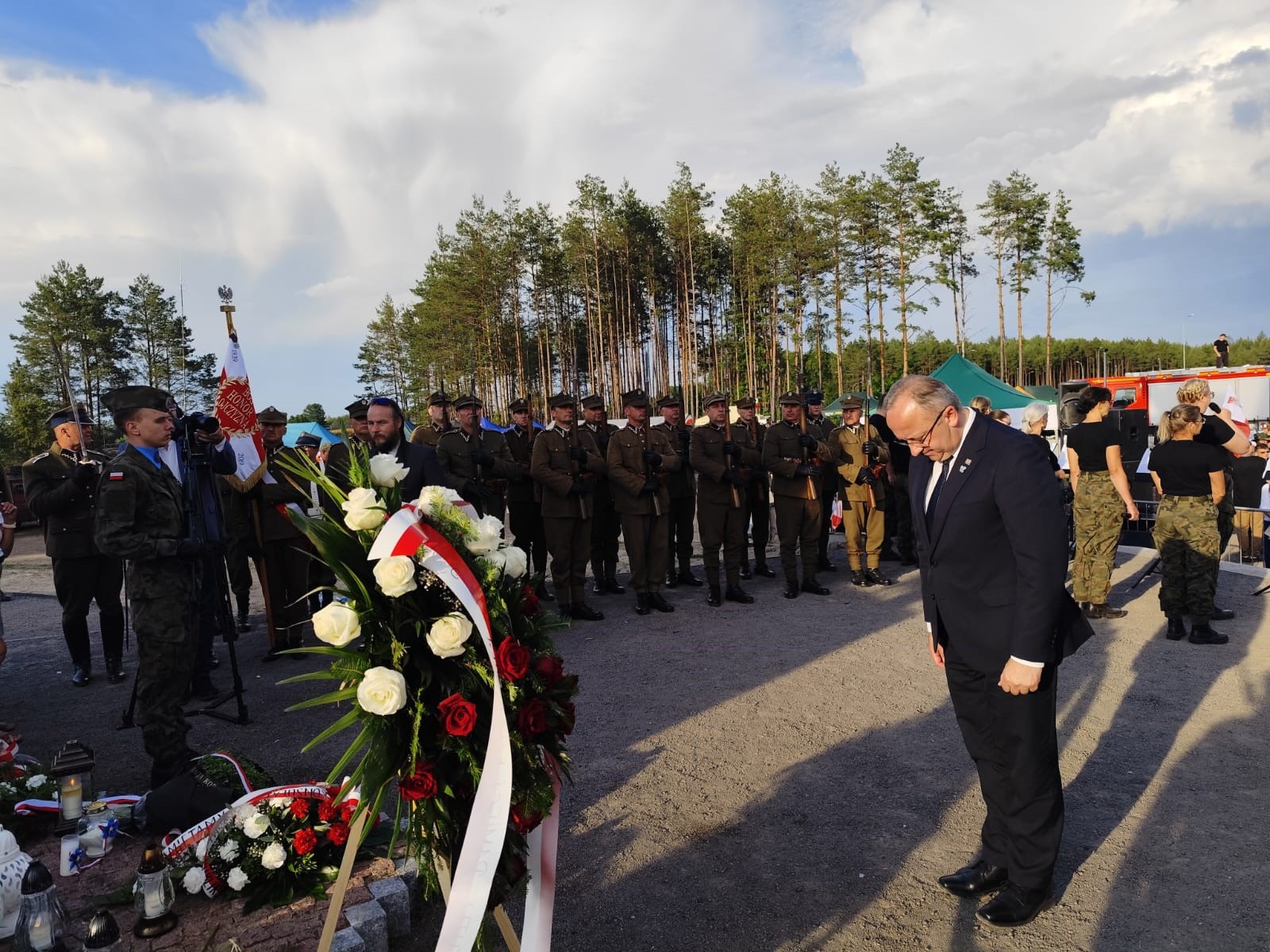
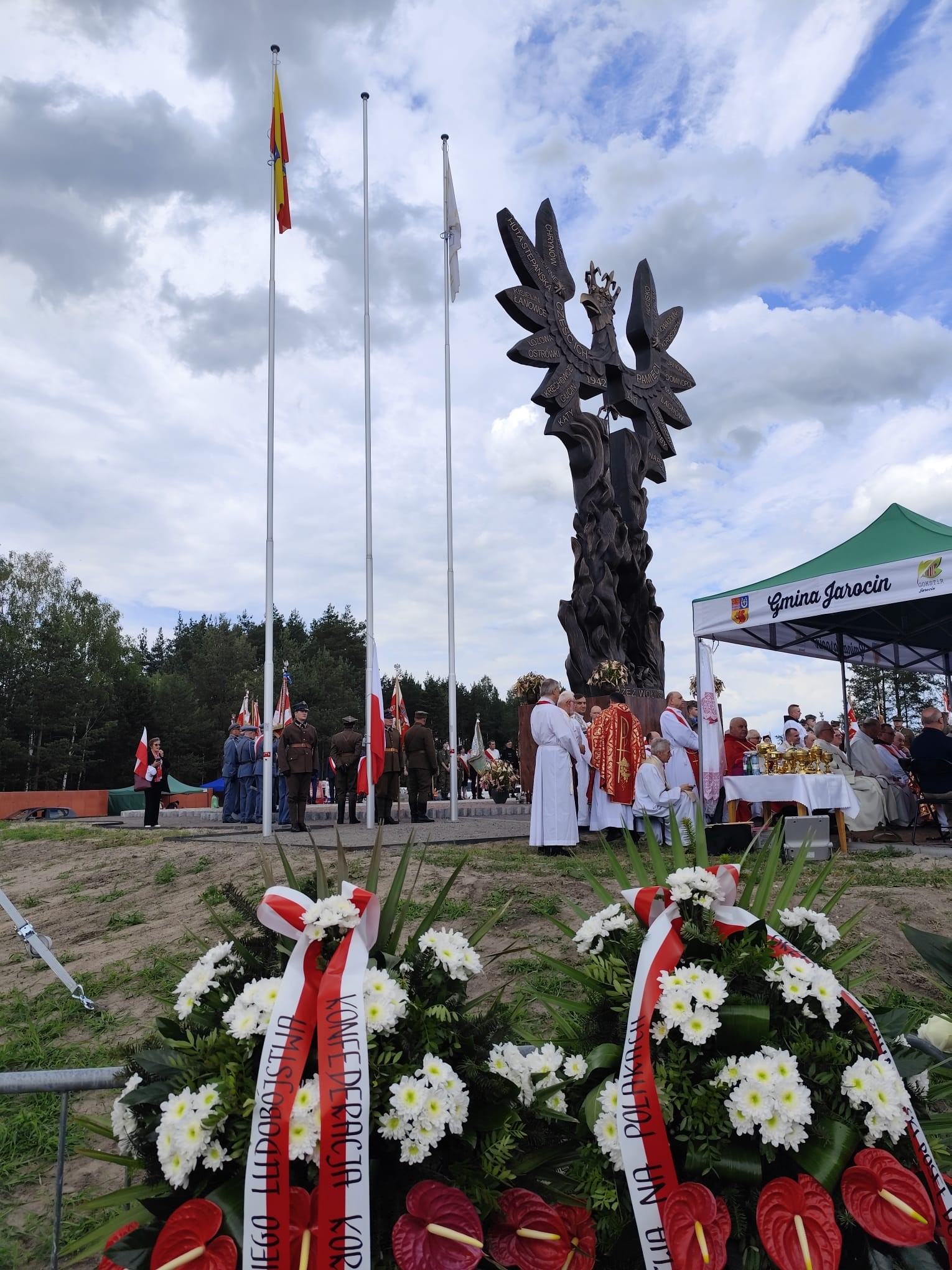
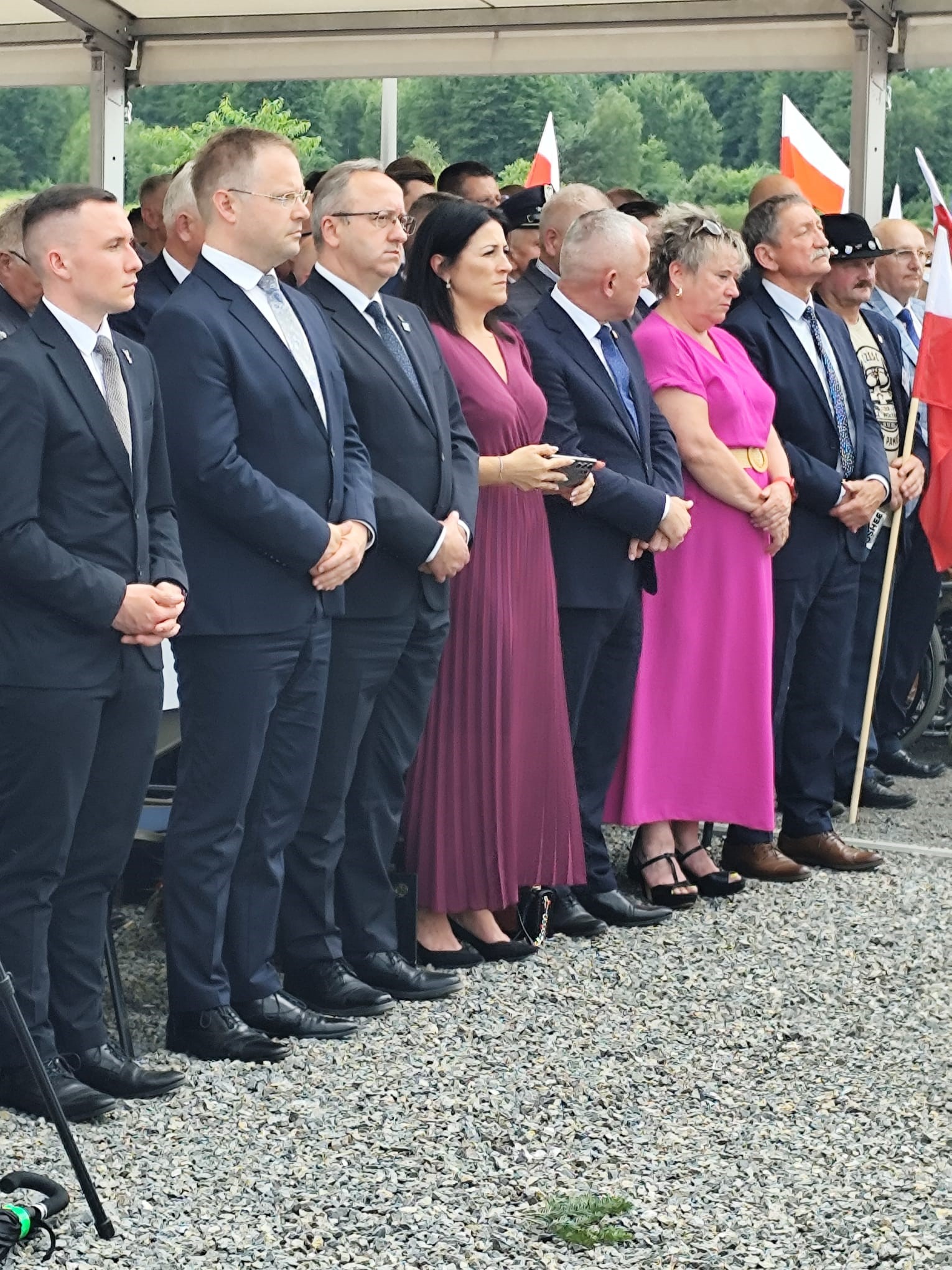
The main commemoration, with the IPN President and Poland’s President-Elect Karol Nawrocki representing the Institute, took place in Chełm. The town’s significance is in its location near the country’s eastern border and proximity to Volhynia, where most murders were committed, and in becoming a safe haven for many survivors.
Following a service in a local church, the participants took part in remembrance march, which headed for the site of a museum and memorial to the victims, still under construction. Once the place has been completed, it will tell the true story of the ethnic cleansing that targeted Poles, but meanwhile, it makes a perfect commemoration venue.
The IPN President and Poland’s President-Elect Karol Nawrocki repeated a call for exhumation and proper burial of the victims,
We Poles won’t accept being denied the right to bury the Volhynian genocide victims. It’s not revenge that they ask of us, but a cross, grave and remembrance.
The event, held under the patronage of the IPN President Karol Nawrocki, Ph.D. was aimed at commemorating the victims of genocide in the Eastern Borderlands and recognizing the efforts of individuals and communities who have been working many years preserving for the memory of these events.
***
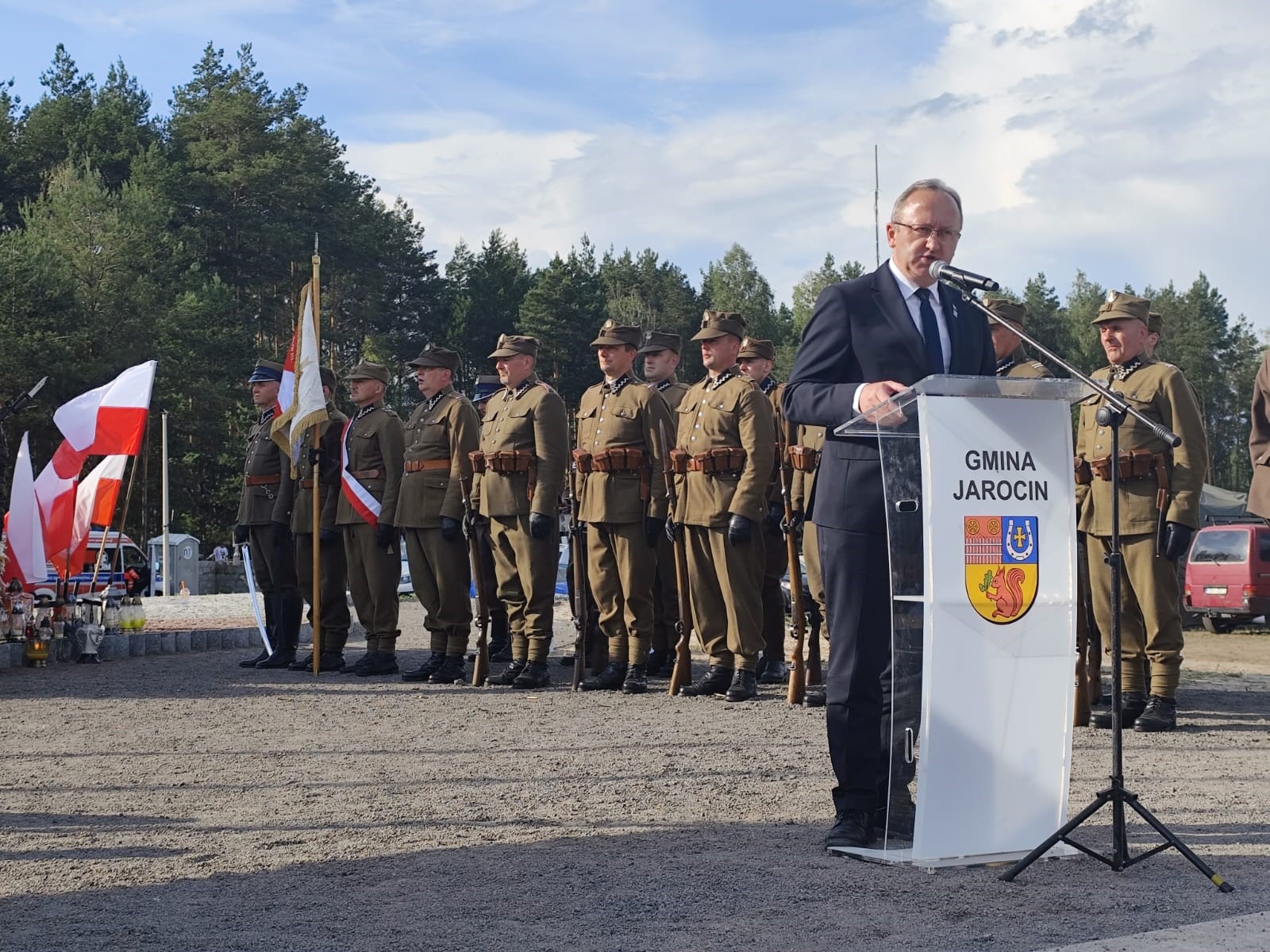
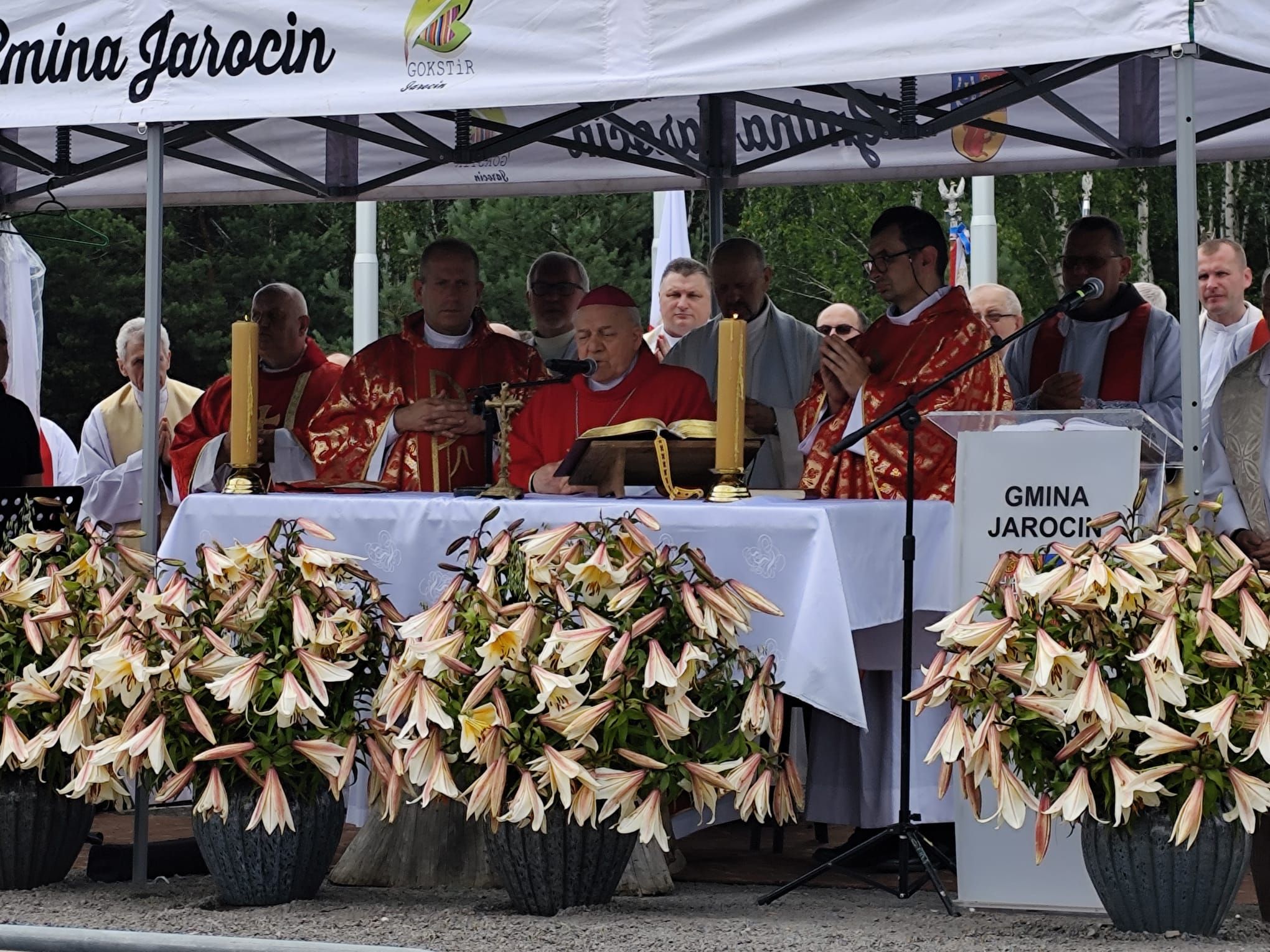
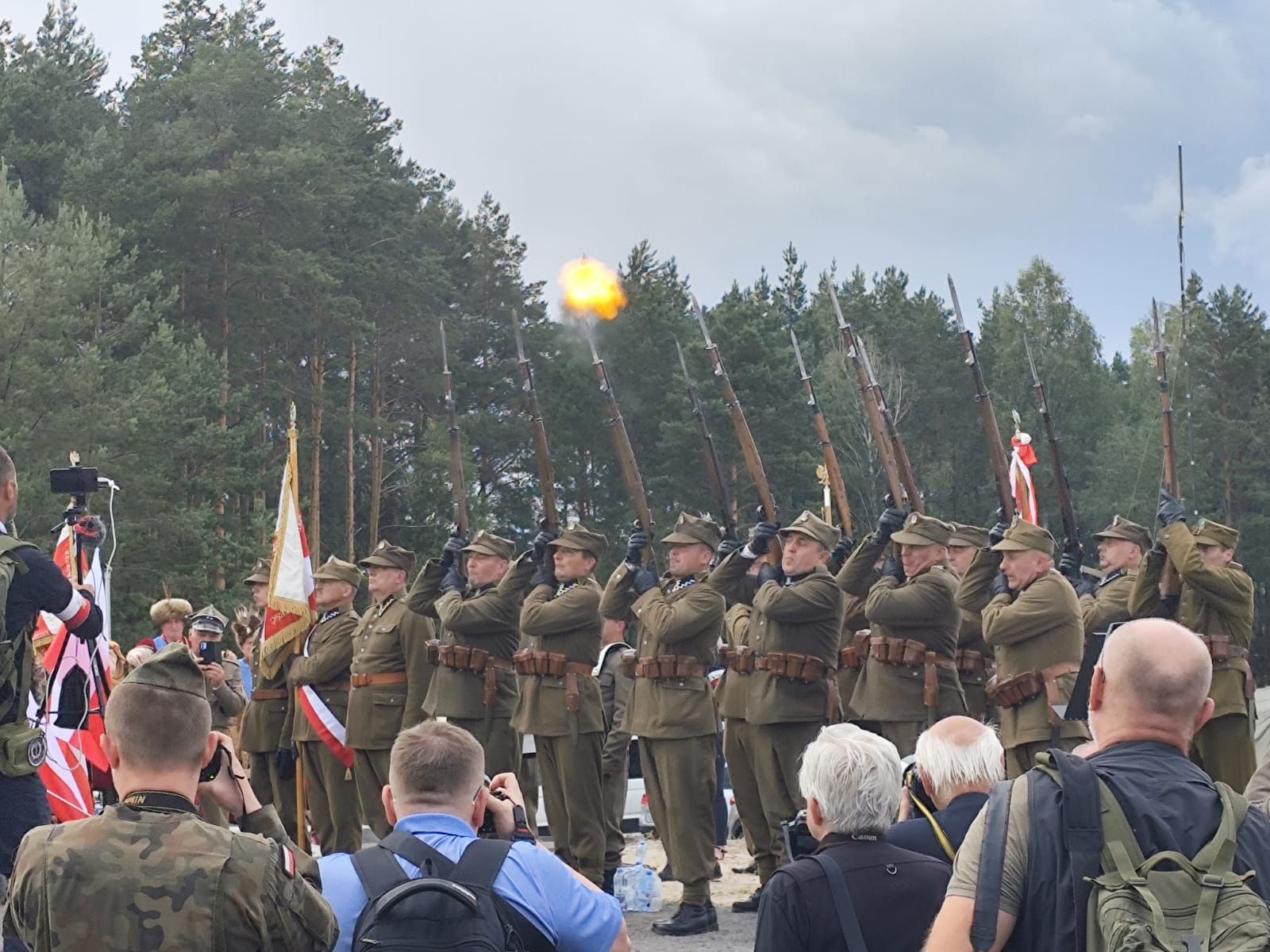
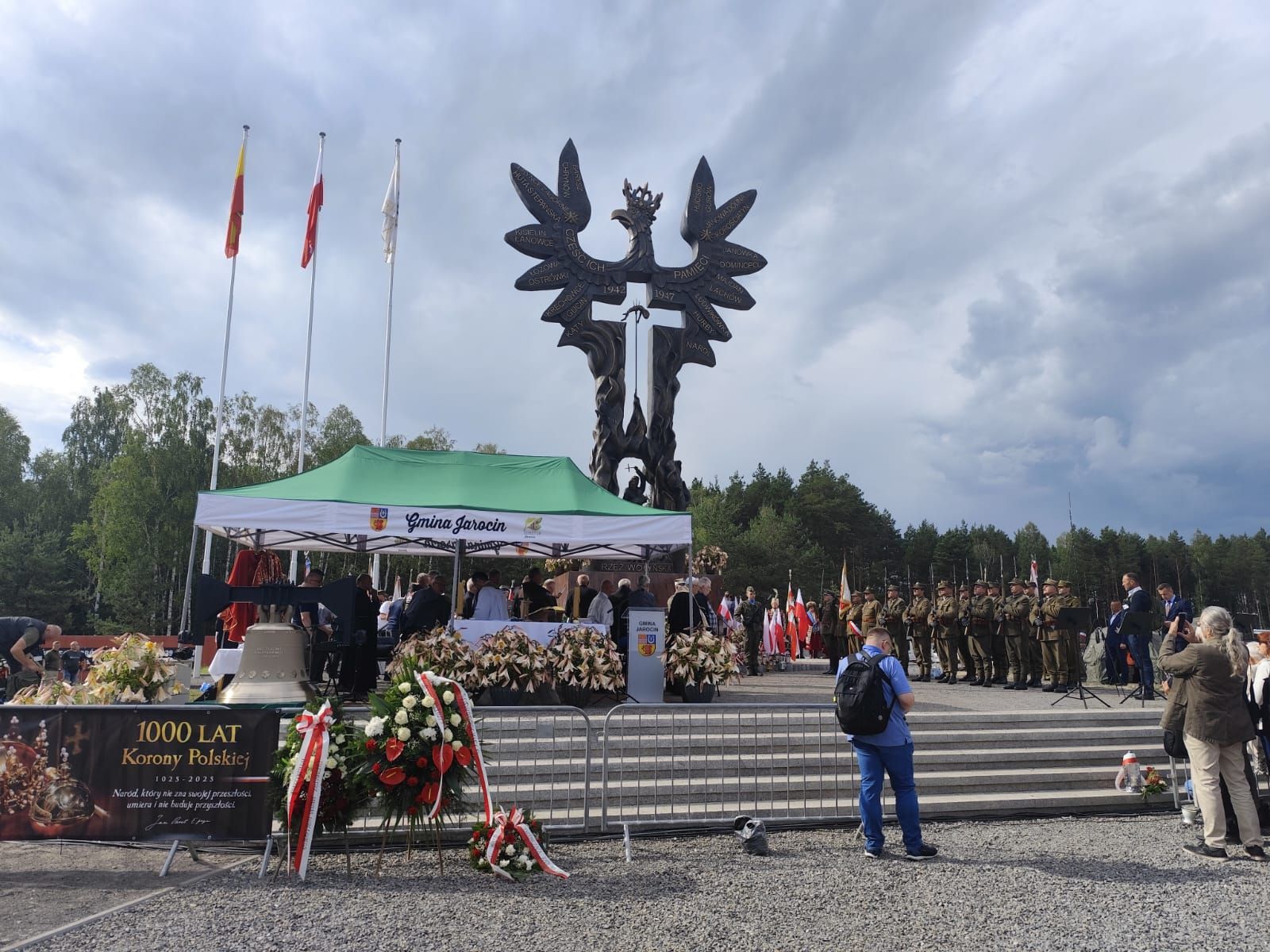
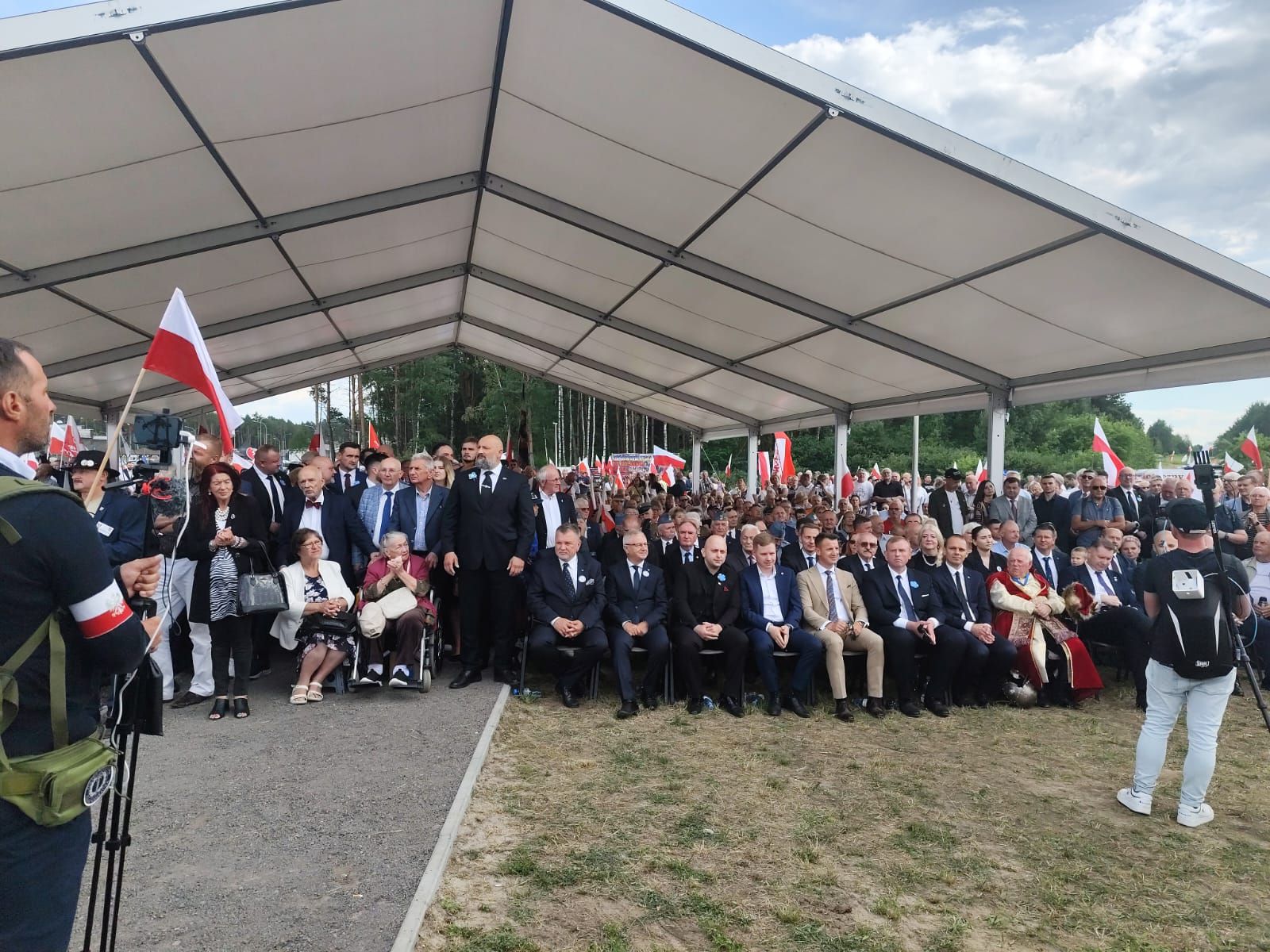
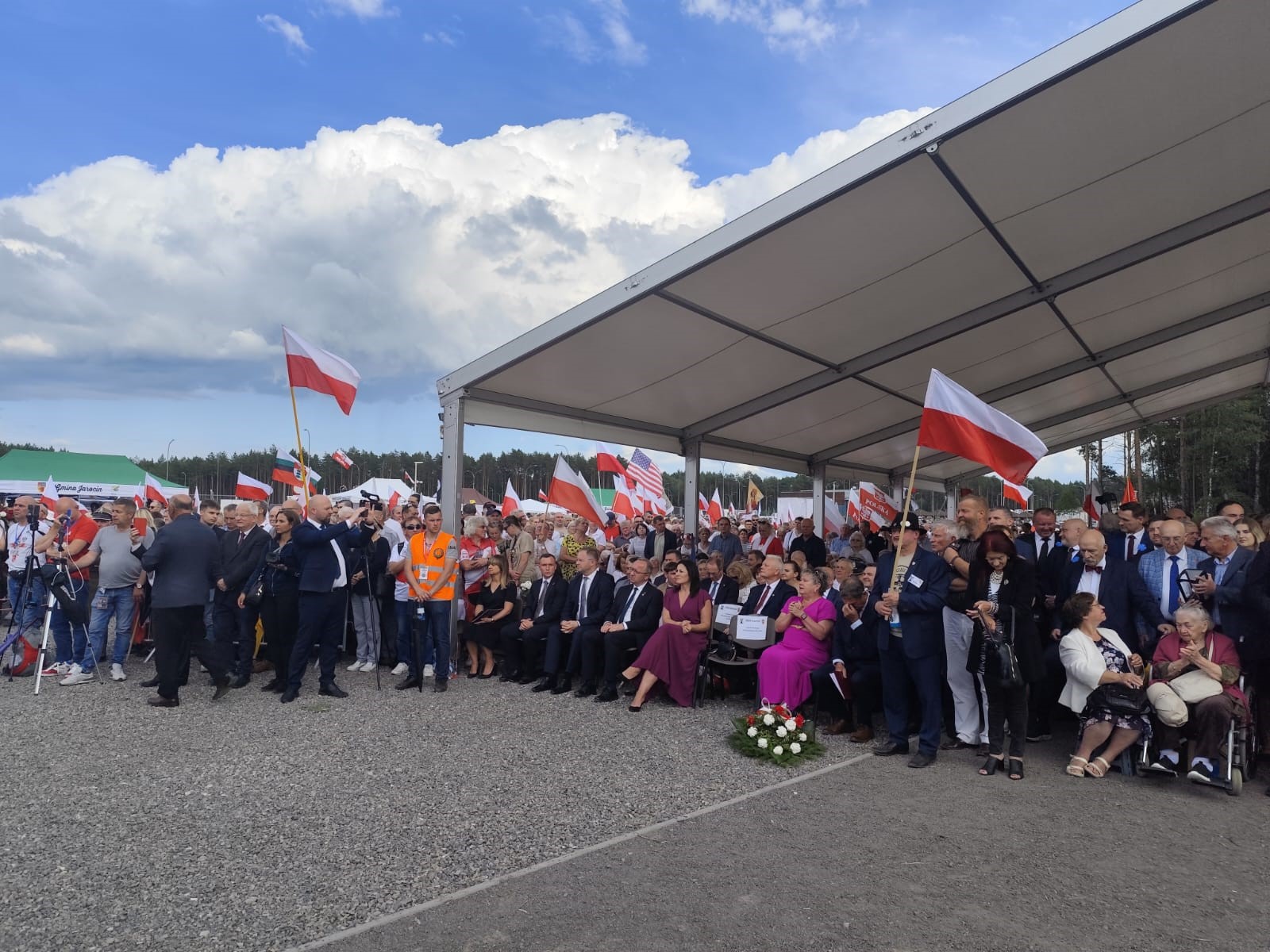
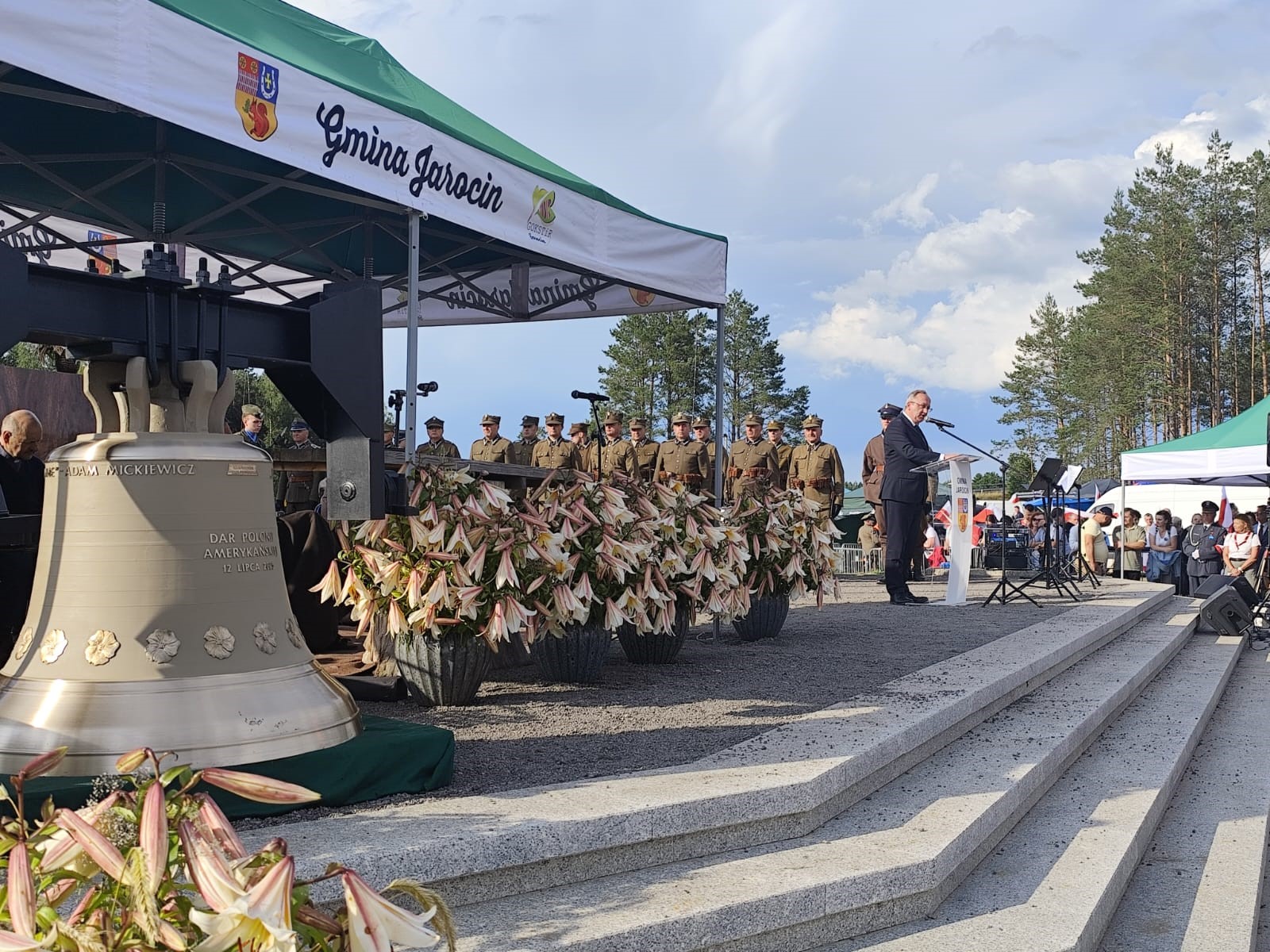
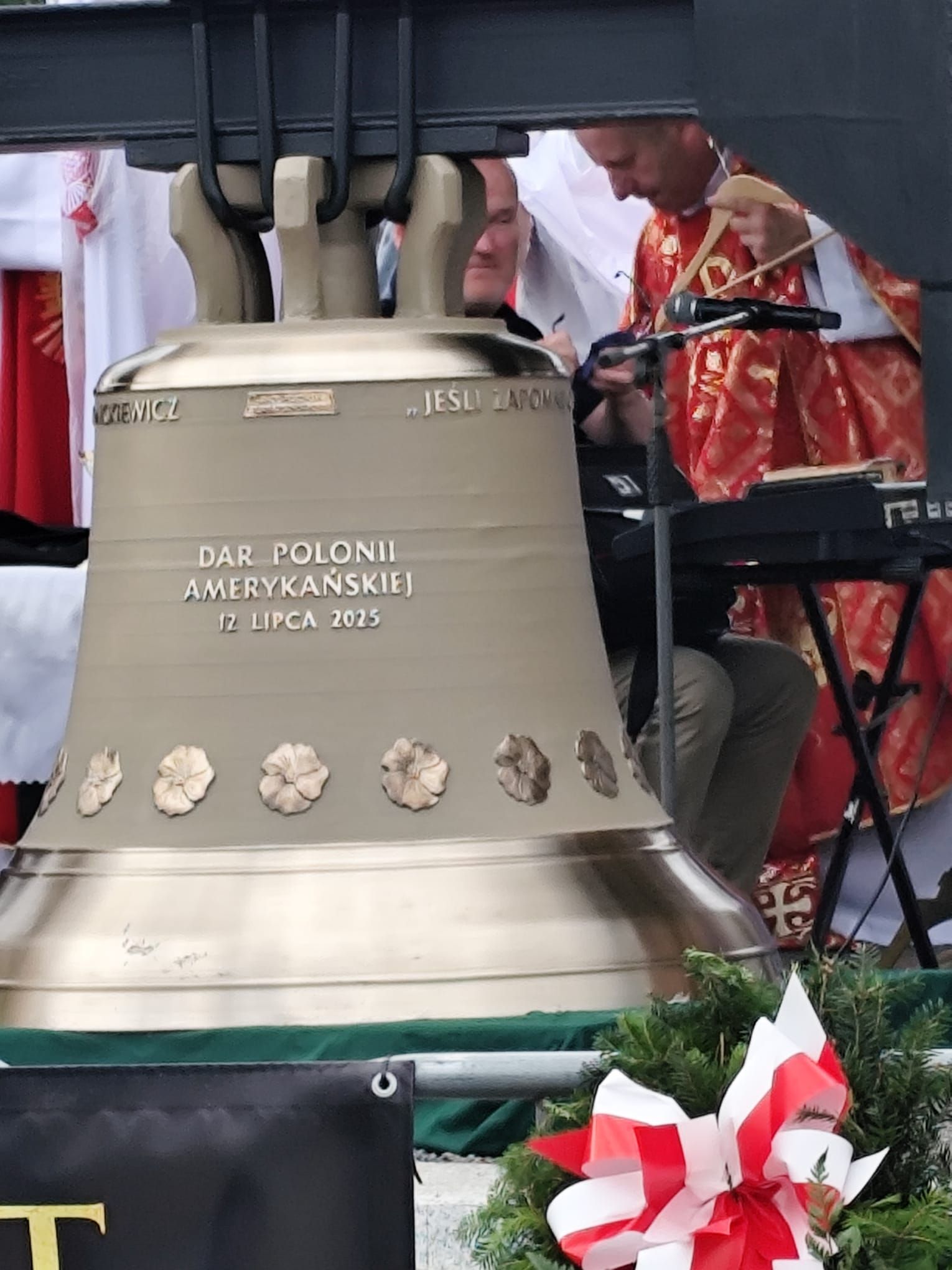
The celebrations in Domostawa began with an outdoor mass celebrated by Edward Frankowski, senior auxiliary bishop of the Diocese of Sandomierz. After the service, the Memorial Bell – a symbolic addition to the space around the monument was consecrated. This was followed by the roll call of remembrance, the laying of wreaths, and commemorative speeches.
The IPN President Karol Nawrocki, Ph.D. addressed a letter to the participants of the event, which was read out by his deputy, Prof. Karol Polejowski. The President of the IPN recalled the figure of Lieutenant Zygmunt Jan Rumel – a poet, soldier, and emissary who was killed by Ukrainian nationalists on the eve of the so-called Bloody Sunday:
On 10 July 1943, he was brutally murdered by Ukrainian nationalists while attempting to negotiate with the command of the Ukrainian Insurgent Army to stop the mass slaughter of the Polish population, which had been going on for many months.
Zygmunt Jan Rumel was one of nearly 120,000 victims of the genocide committed by Ukrainian nationalists in the south-eastern territories of the Second Polish Republic.
Karol Nawrocki, Ph.D. expressed his gratitude to those who have been working for many years to preserve the memory of the genocide in the Eastern Borderlands:
I would like to thank all of you for remembering our compatriots who were brutally murdered by Ukrainian nationalists. Thanks to you, knowledge about this genocide will be passed on from generation to generation. We still have to find and give a proper burial to those who were laid to rest in unmarked death pits outside the borders of today’s Poland. I assure you that I am going to pursue this goal regardless of the circumstances.
The ceremony ended with artistic performances: A concert entitled “A True Story Described in Song” performed by Grzegorz Podwójny and the band “Hubal” was held. The guests also had the opportunity to watch the second part of the documentary film titled “Neighbors.”
The “Volhynian Massacre” monument in Domostawa is the work of the sculptor Andrzej Pityński, winner of the IPN's "Custodian of National Memory" prize.
The ceremony was organized by the Social Committee for the Construction of the “Volhynian Massacre” Monument in Domostawa.
***
What were the Volhynian Massacres?
The Volhynian massacres were anti-Polish genocidal ethnic cleansings conducted by Ukrainian nationalists. The massacres took place within Poland’s borders as of the outbreak of WWII, and not only in Volhynia, but also in other areas with a mixed Polish-Ukrainian population, especially the Lvov, Tarnopol, and Stanisławów voivodeships (that is, in Eastern Galicia), as well as in some voivodeships bordering on Volhynia (the western part of the Lublin Voivodeship and the northern part of the Polesie Voivodeship). The time frame of these massacres was 1943−1945. The perpetrators were the Organization of Ukrainian Nationalists−Bandera faction (OUN-B) and its military wing, called the Ukrainian Insurgent Army (UPA). Their documents show that the planned extermination of the Polish population was called an “anti-Polish operation.”