
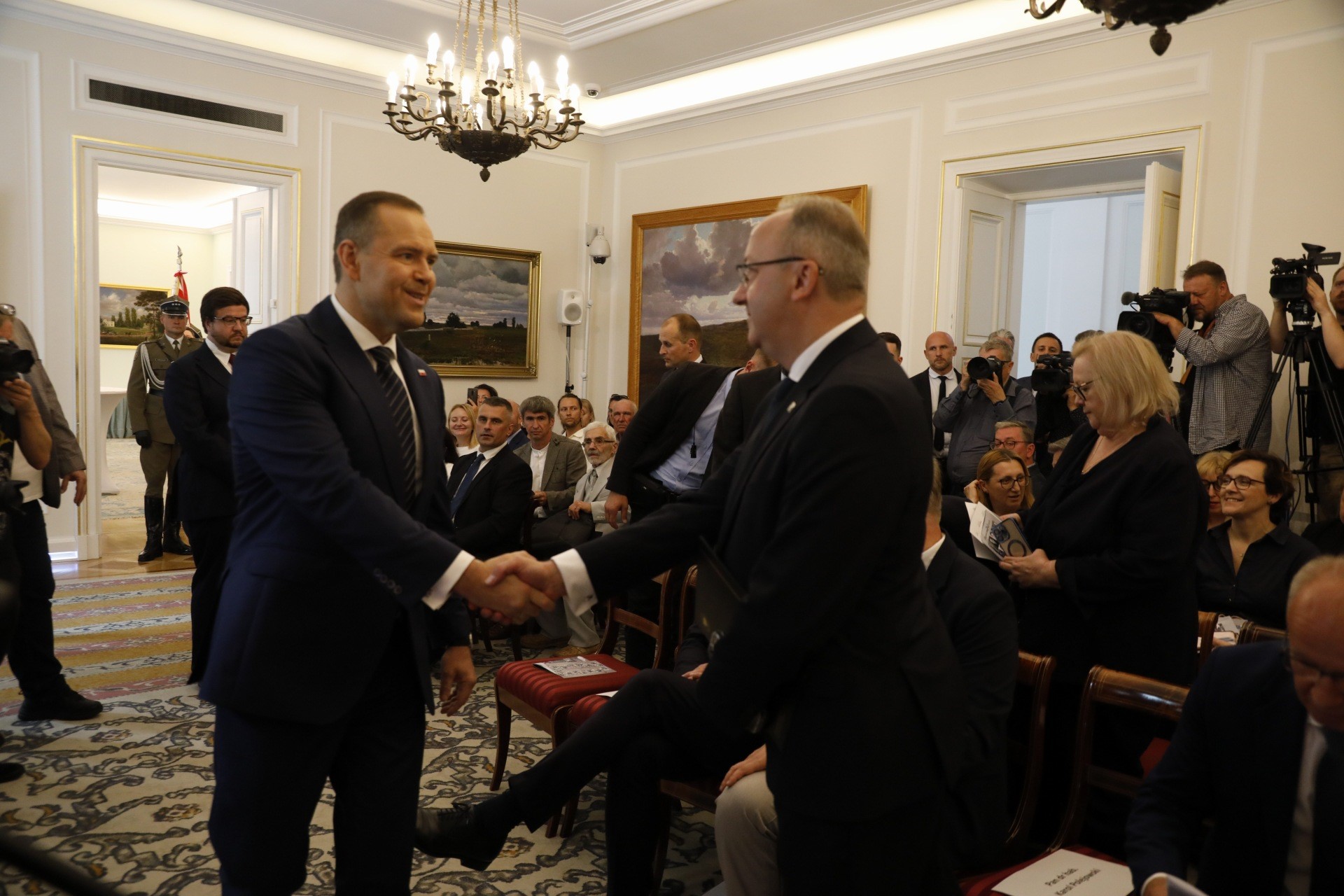
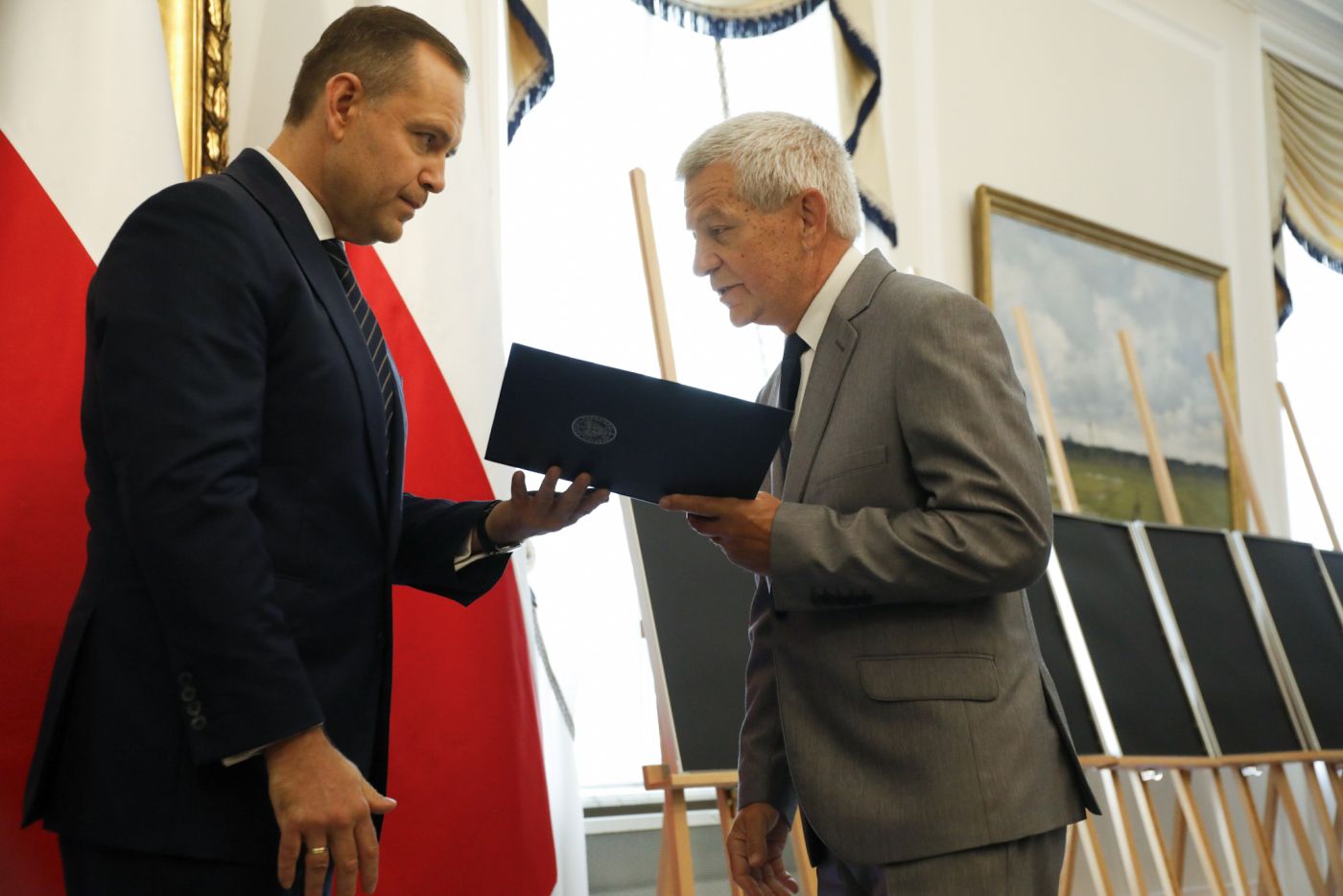
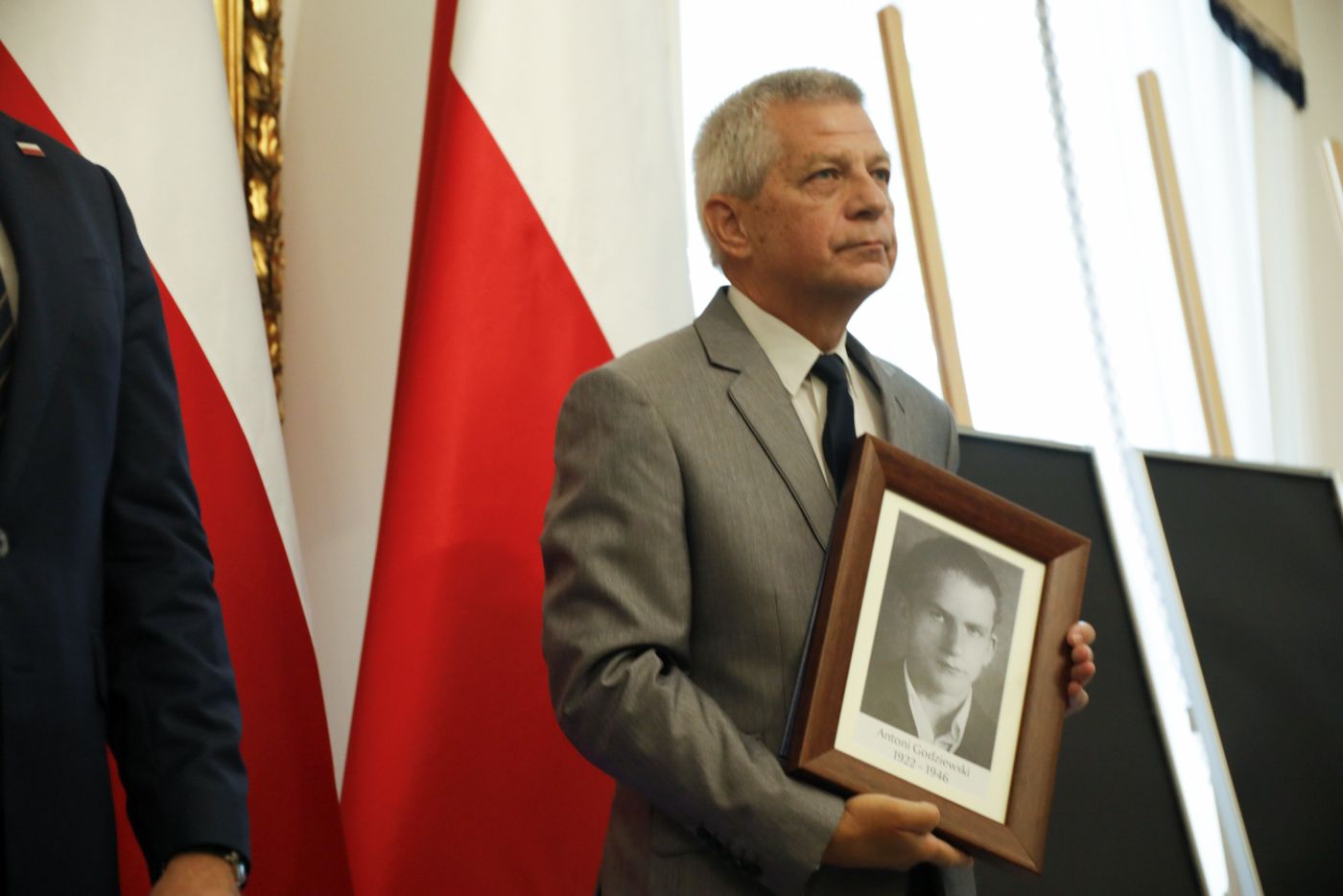
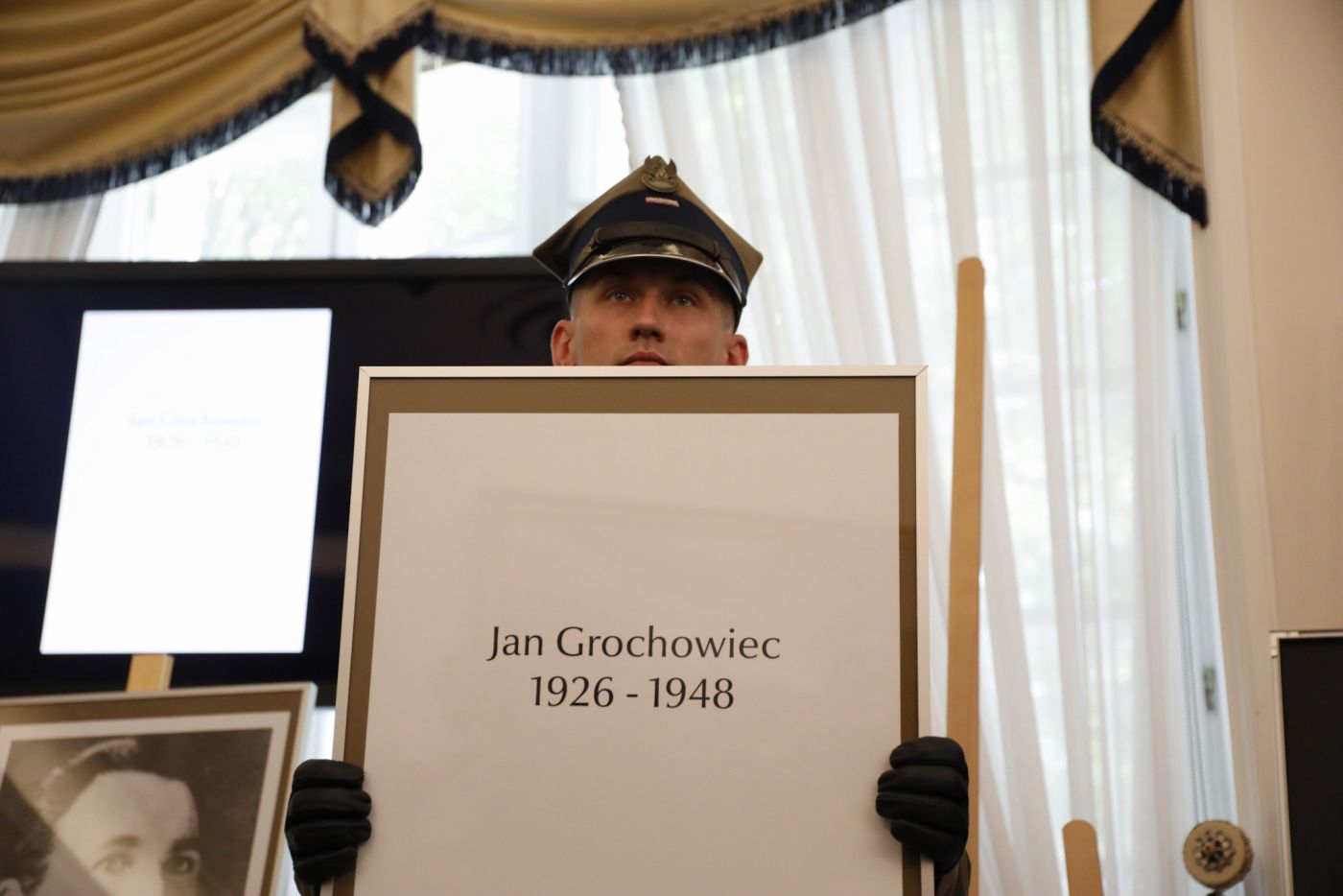
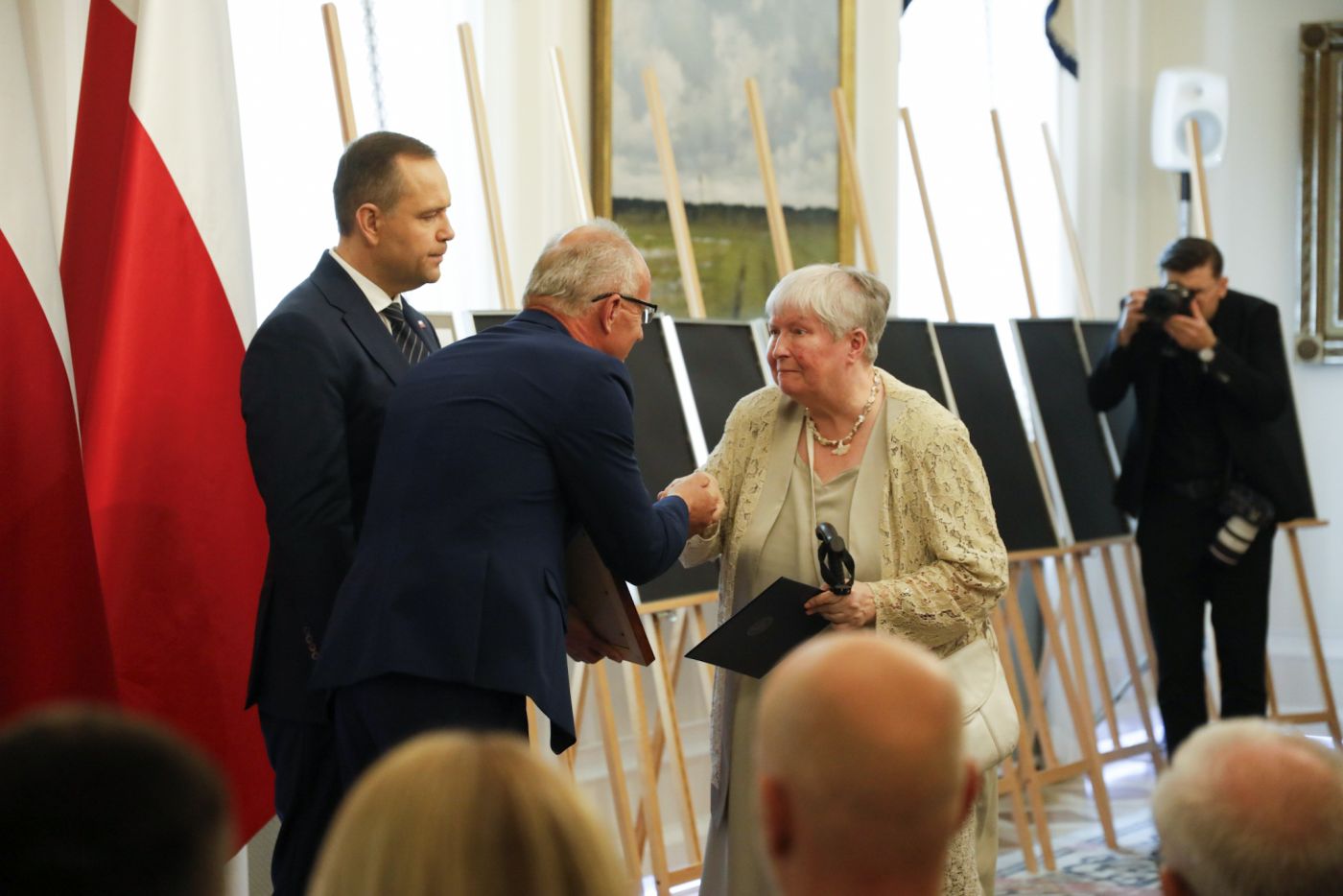
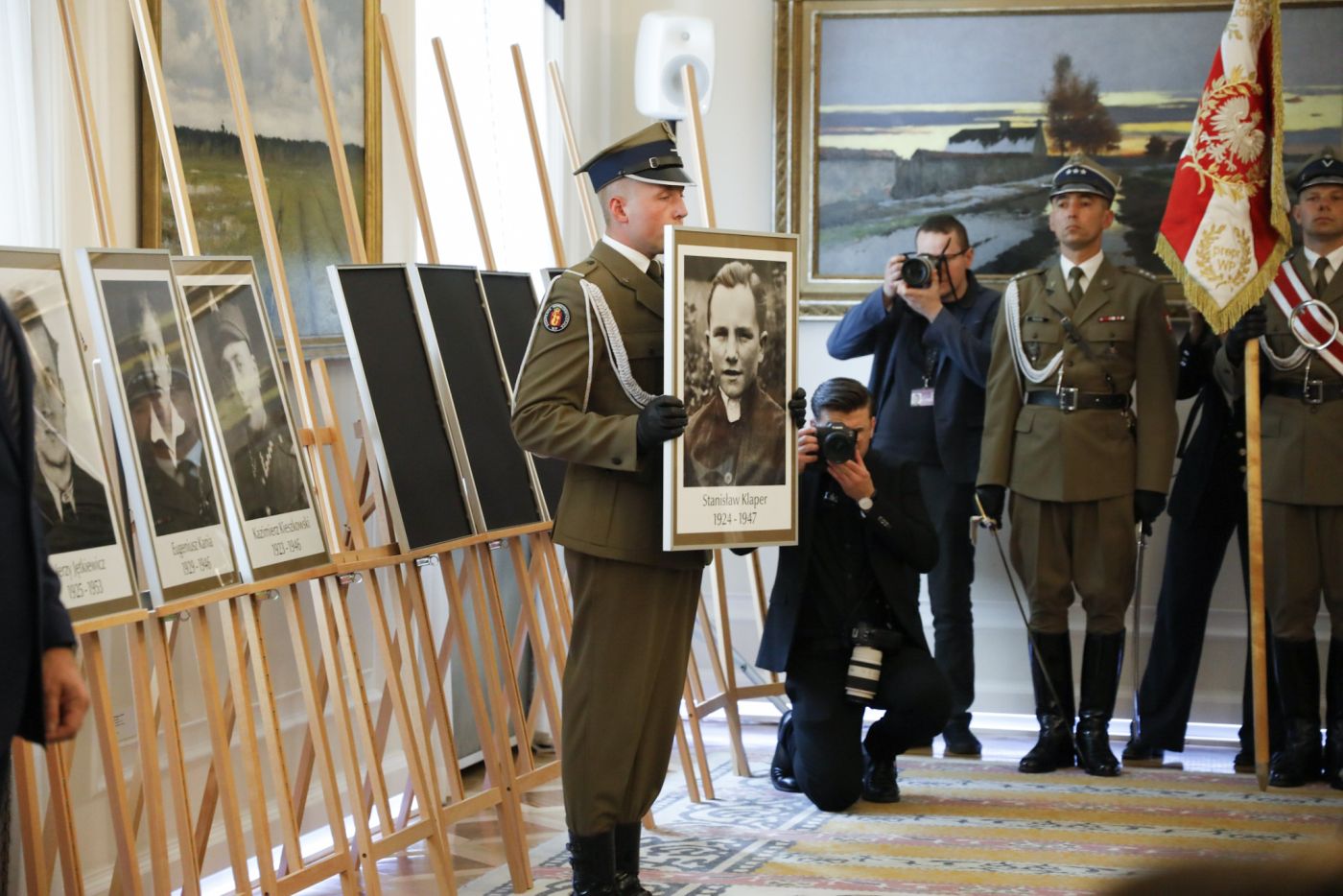
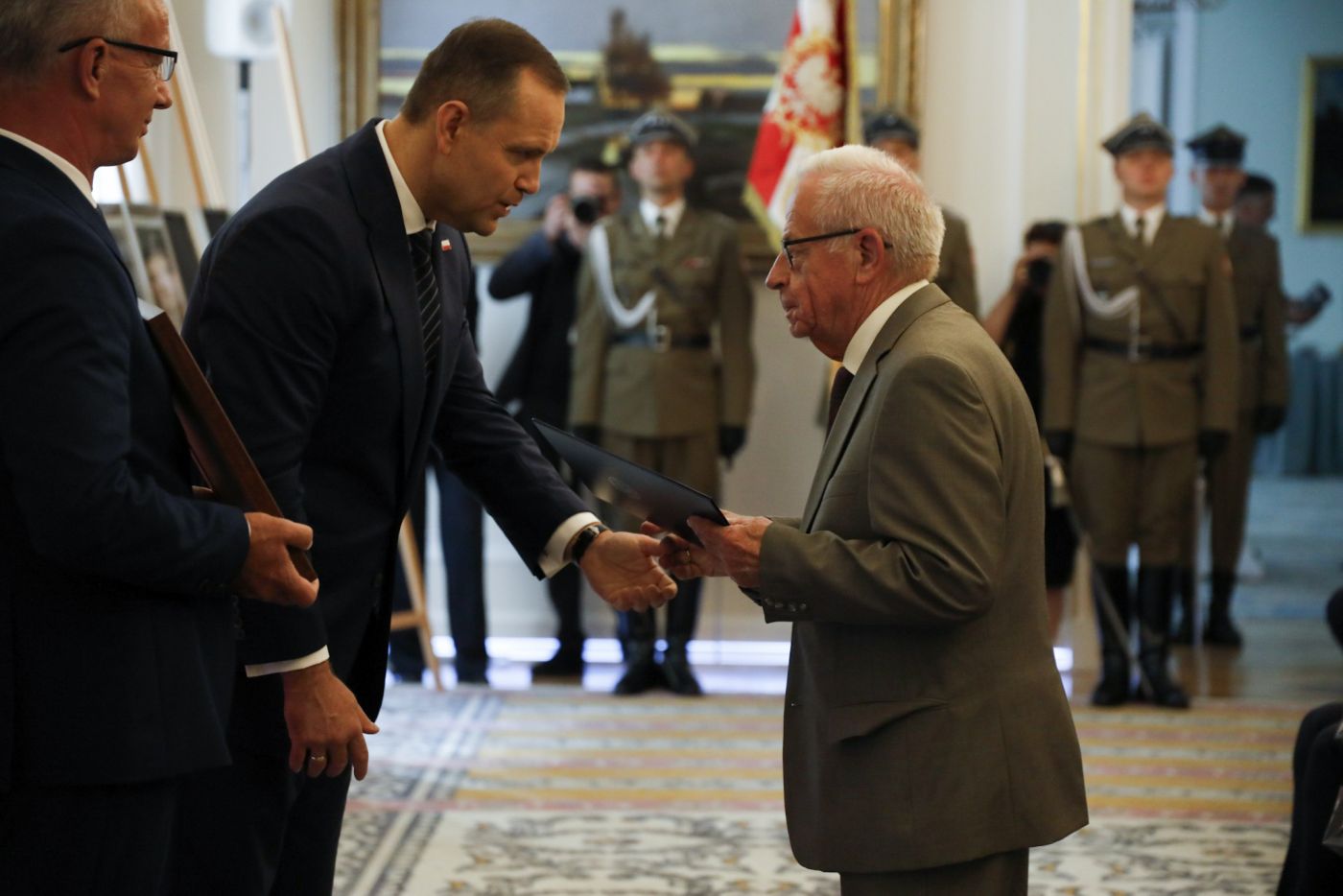
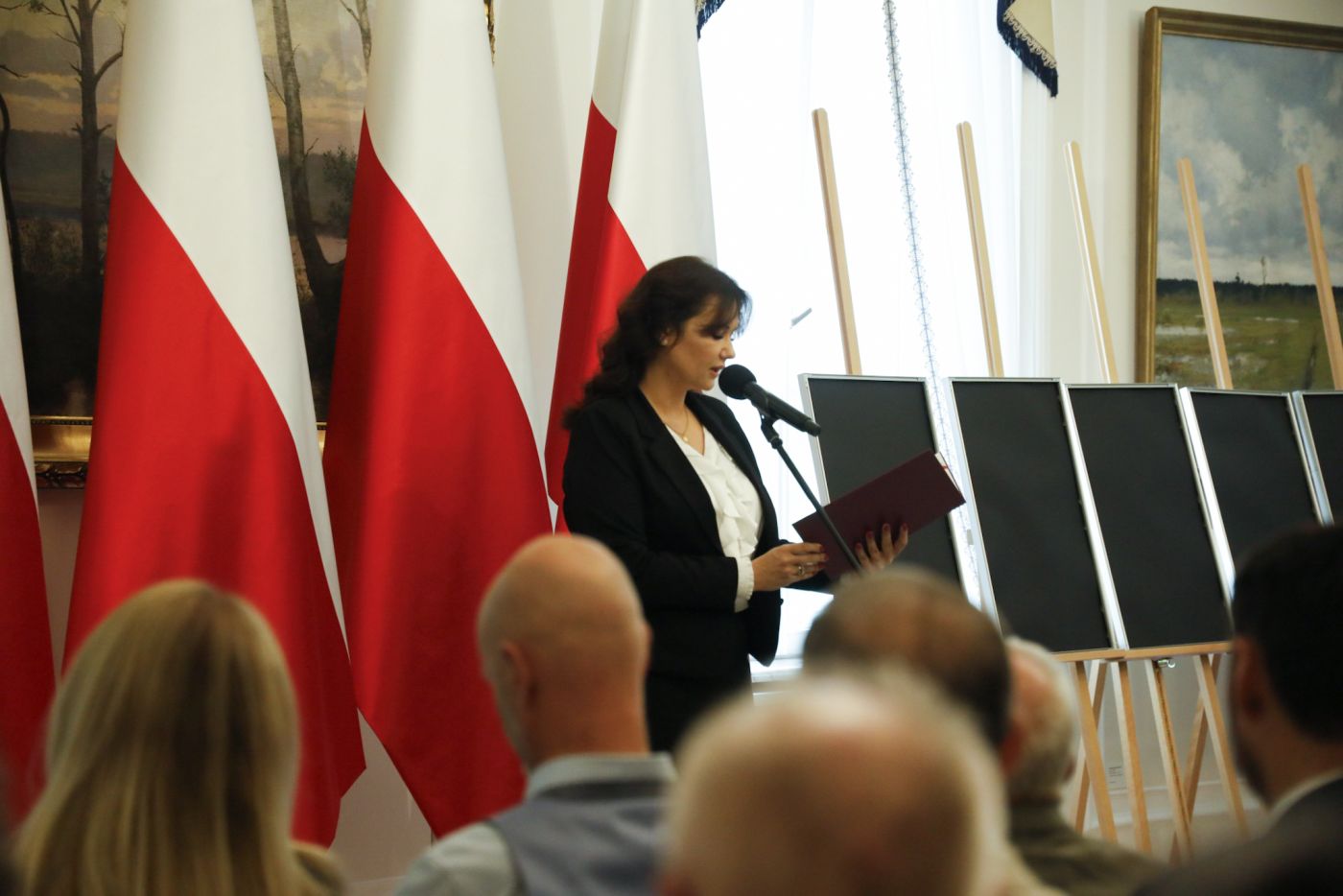
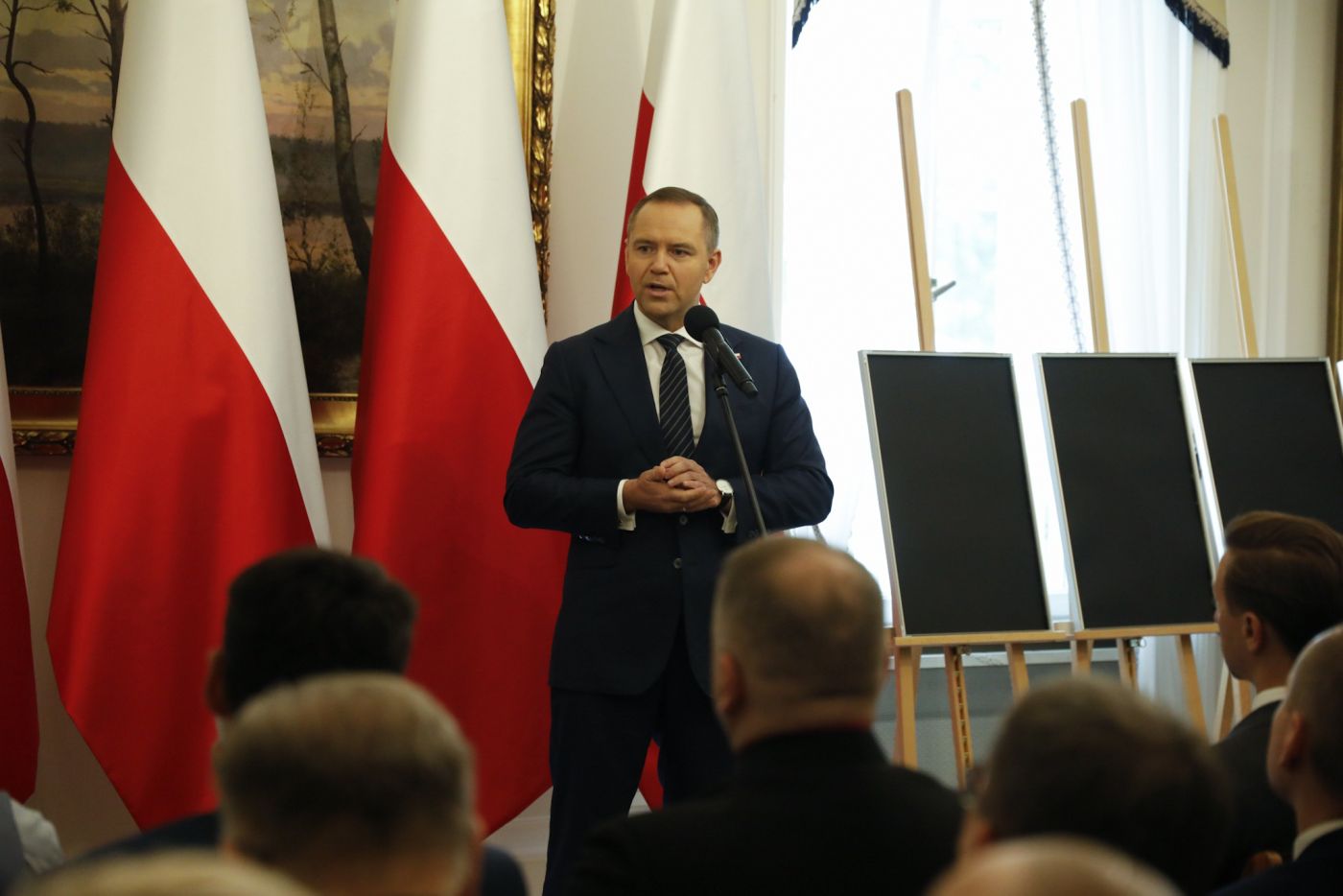
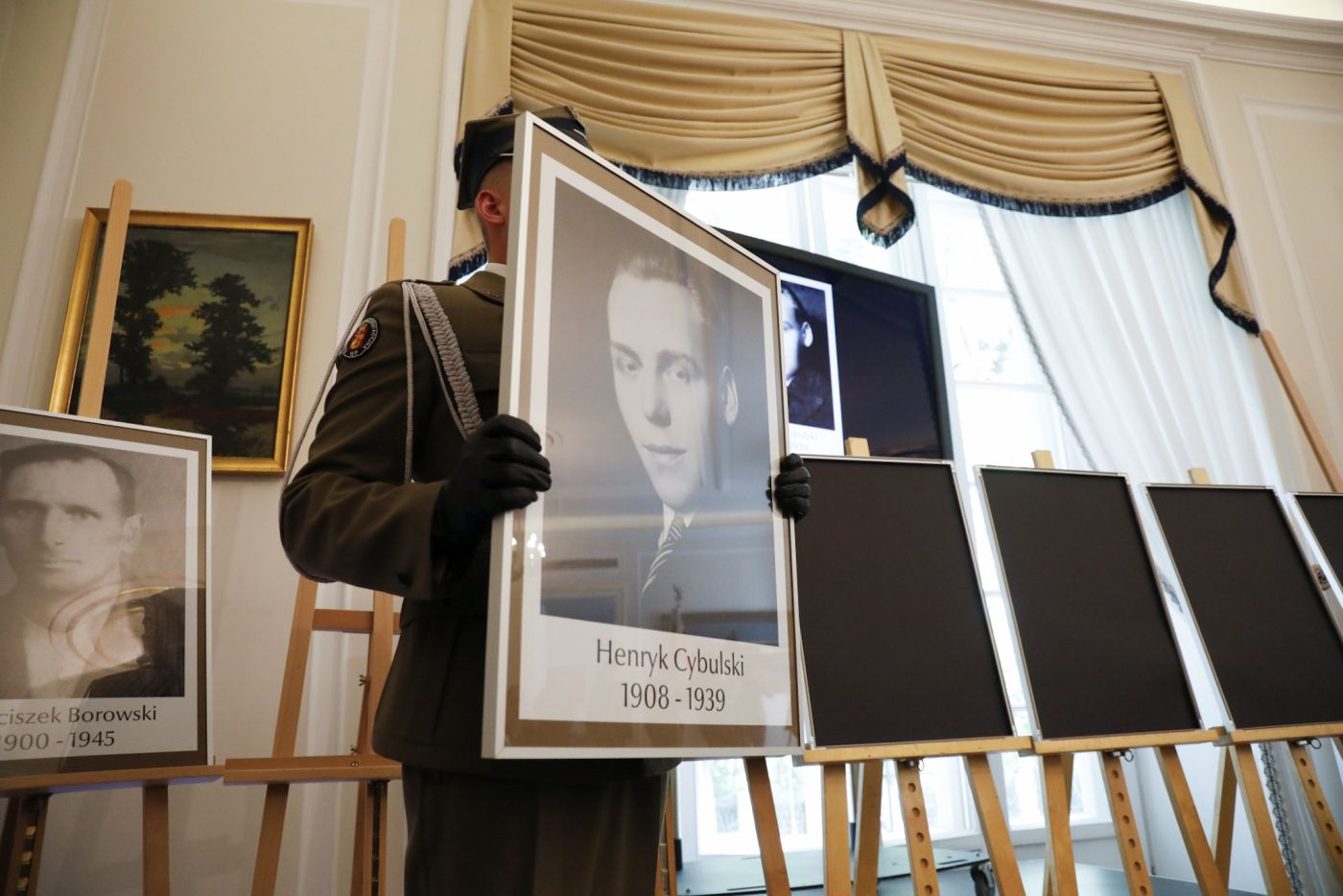
During a special ceremony, the relatives of 18 people murdered as a result of the functioning of totalitarian regimes – their remains found and identified by the IPN Office of Search and Identification – received notes confirming the identity of their family members. The event took place on 24 July 2025 at the Presidential Palace in Warsaw.
Apart from the relatives of the identified, the ceremony was attended by the Undersecretary of State in the Chancellery of the President of the Republic of Poland Katarzyna Pawlak-Mucha, President elect Karol Nawrocki, Ph.D., Deputy Presidents of the IPN Prof. Karol Polejowski, and Prof. Krzysztof Szwagrzyk as well as representatives of the highest state authorities.
The remains of the victims were found as part of the works carried out, among others, in Cracow, Wrocław, Katowice, Lublin and northern Mazovia. There is also one victim whose remains were found at the Powązki Military Cemetry in Warsaw.
The President-elect of the Republic of Poland and President of the Institute of National Remembrance, Karol Nawrocki, Ph.D., emphasized the importance of identifying victims and their place in Polish history:
"There are now 297 people, 297 heroes, who have specific biographies—the tragedy of World War II or the struggle against the communist system after 1945. These were people who had one thing in common: service to the Republic of Poland. These 297 names, which have been established by the Institute of National Remembrance, are not only a reminder of the past, but also a great commitment for all of us. A commitment to the fact that Poland should unite us, regardless of our emotions or worldview, we must remain faithful to a free, independent, and sovereign Republic.
Such ceremonies are the culmination of years of efforts on the part of the IPN Office of Search and Identification. The work always begins in the archives, where experts try to locate information on a victim’s fate and burial. Thorough research not only points to the probable location of their grave, but also determines physical characteristics (such as height, build or suffered injuries), the findings reinforced by witness testimonies.
The core of the process, involving archaeology and anthropology experts, is the excavation. It is performed in all kinds of terrain in Poland and abroad: in fields and forests, gardens, urban areas and cemeteries. Once the remains are uncovered, they undergo initial anthropological examination on-site, followed by a thorough one in the lab, and a sample of bone matter is taken to be tested against genetic material provided by victims’ relatives.
A genetic match means that a person’s identity has been confirmed. For the last few years, the IPN has been employing CODIS, a system that the Federal Bureau of Investigation developed to streamline the searching of the genetic material base. Each year, the percentage of people identified using this system has increased.
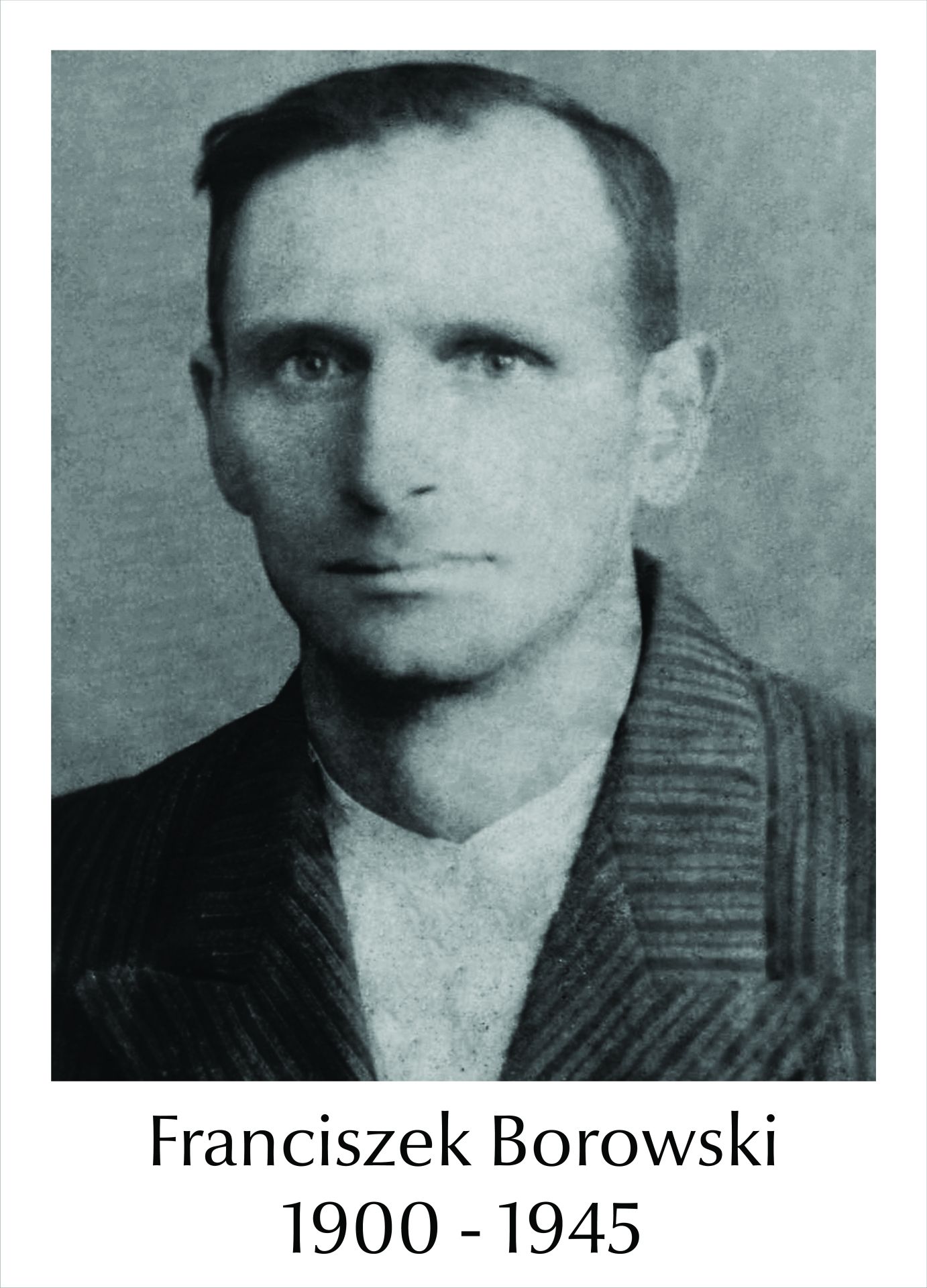
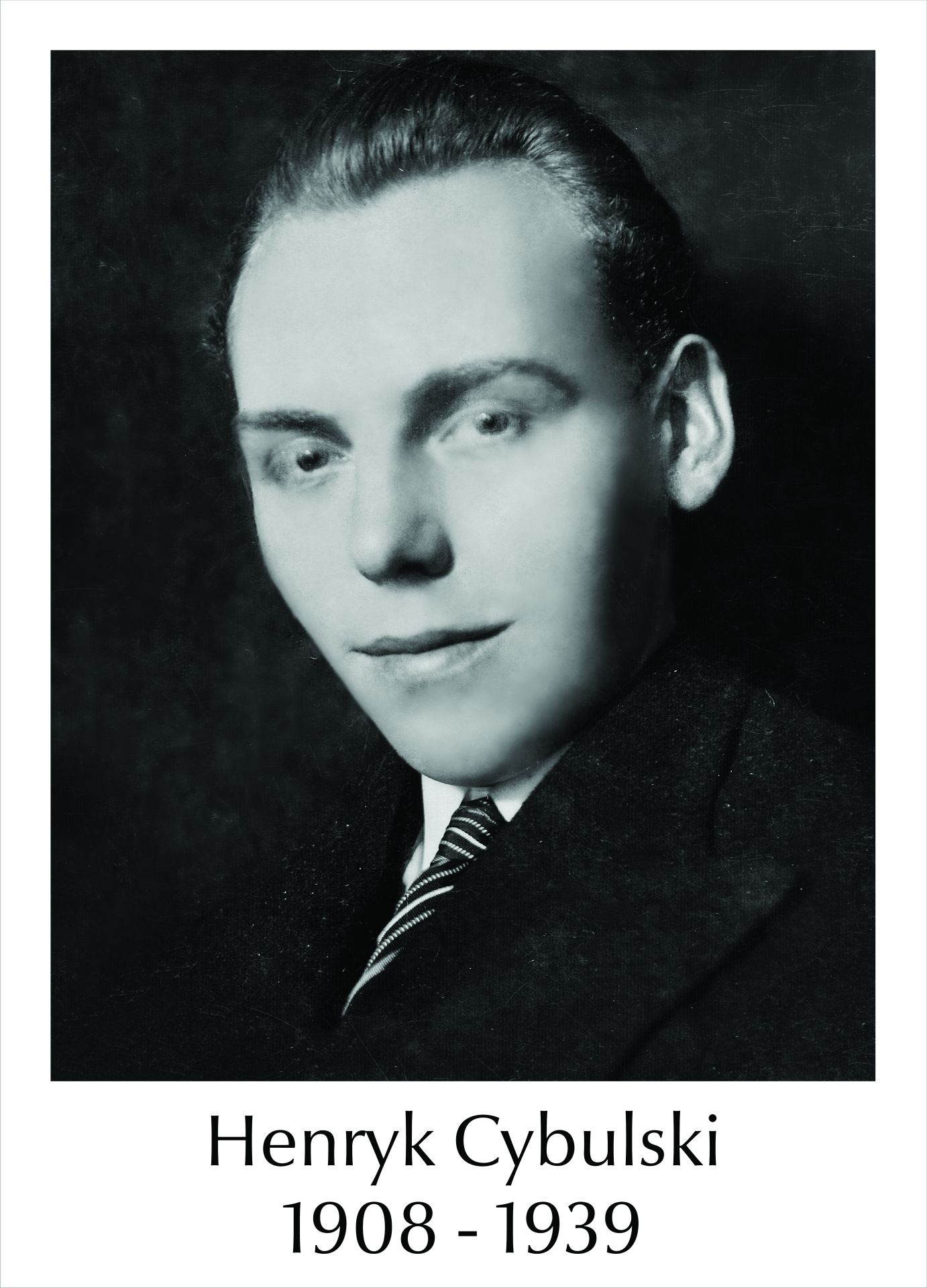
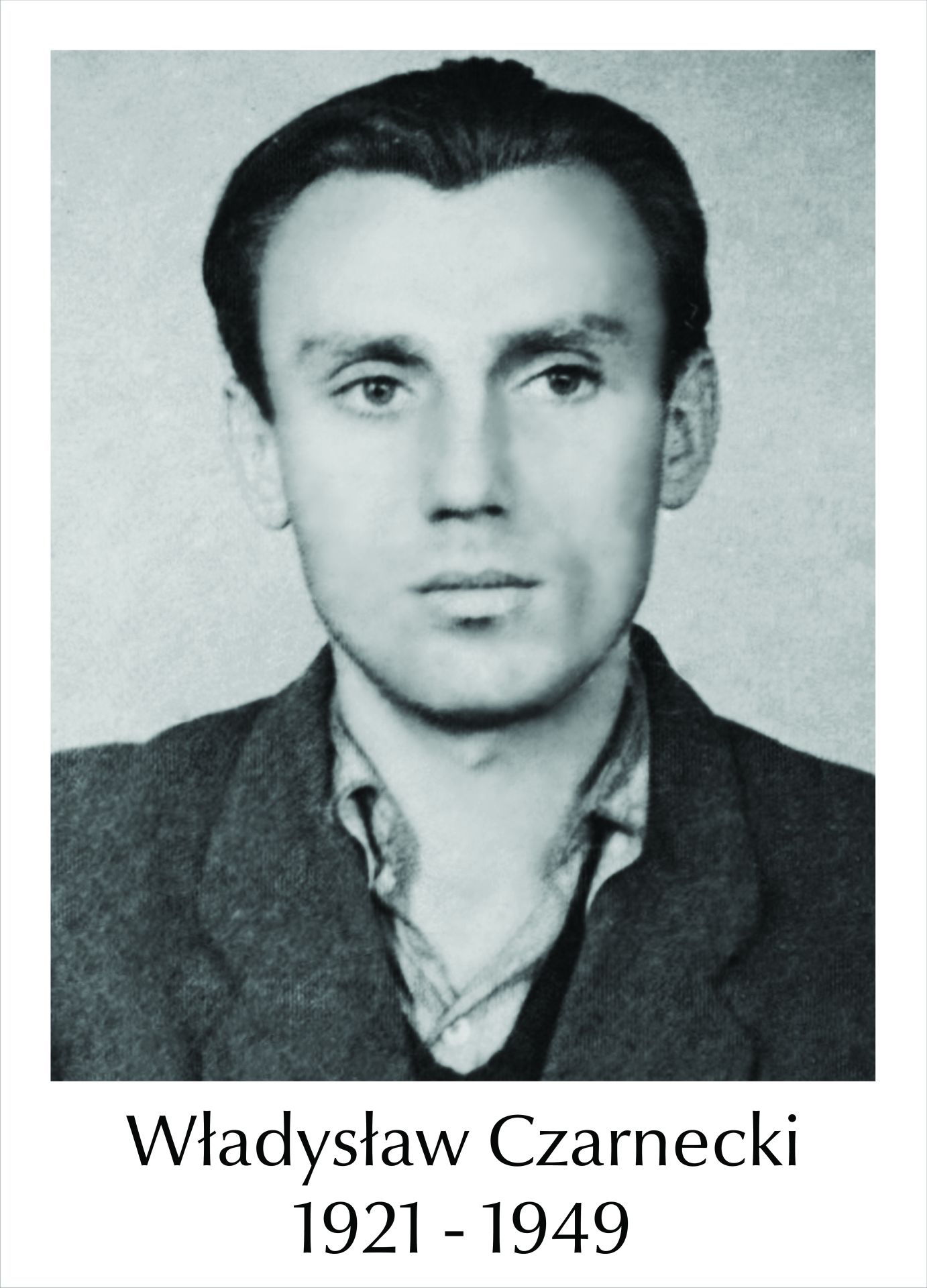

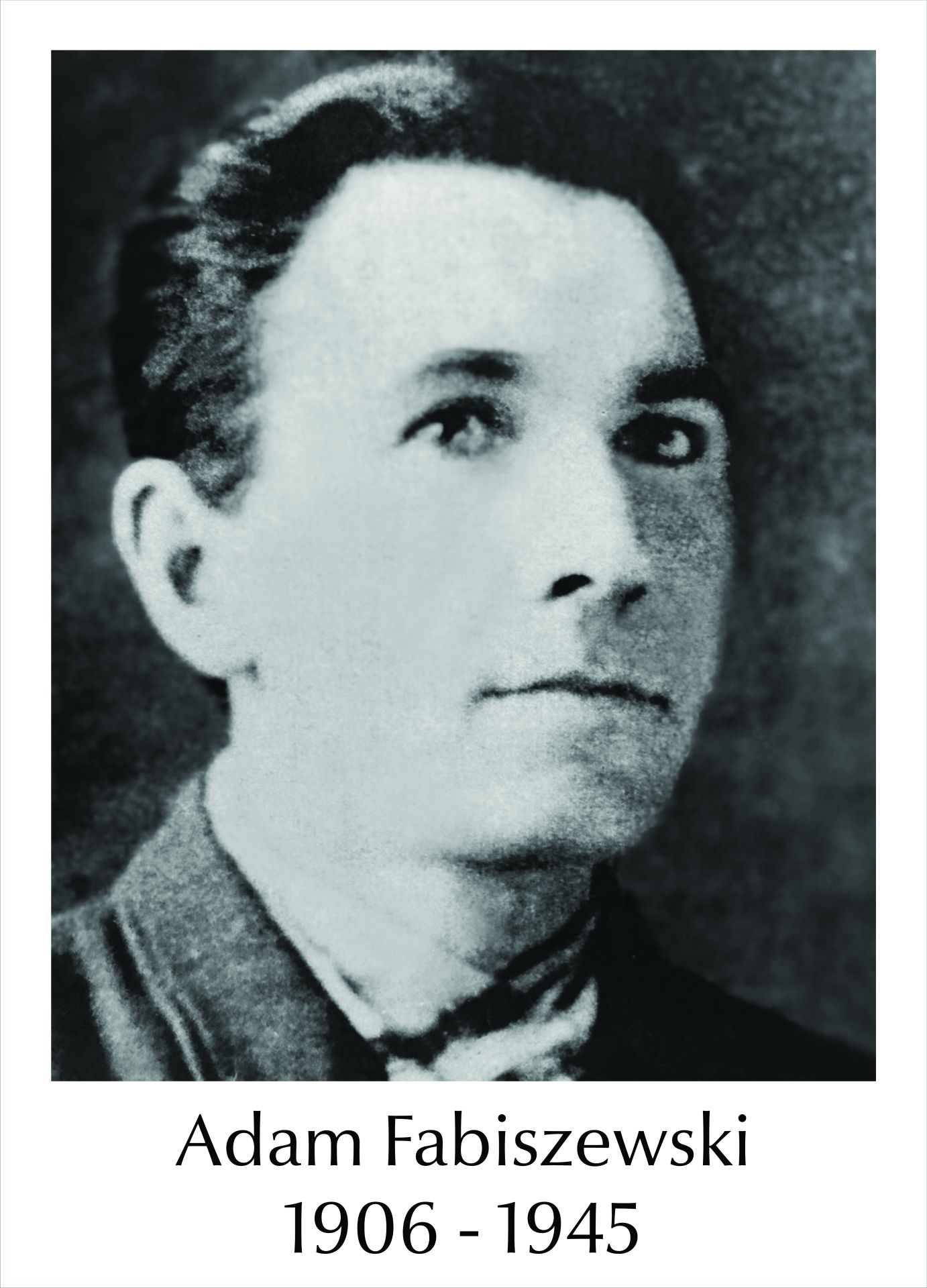
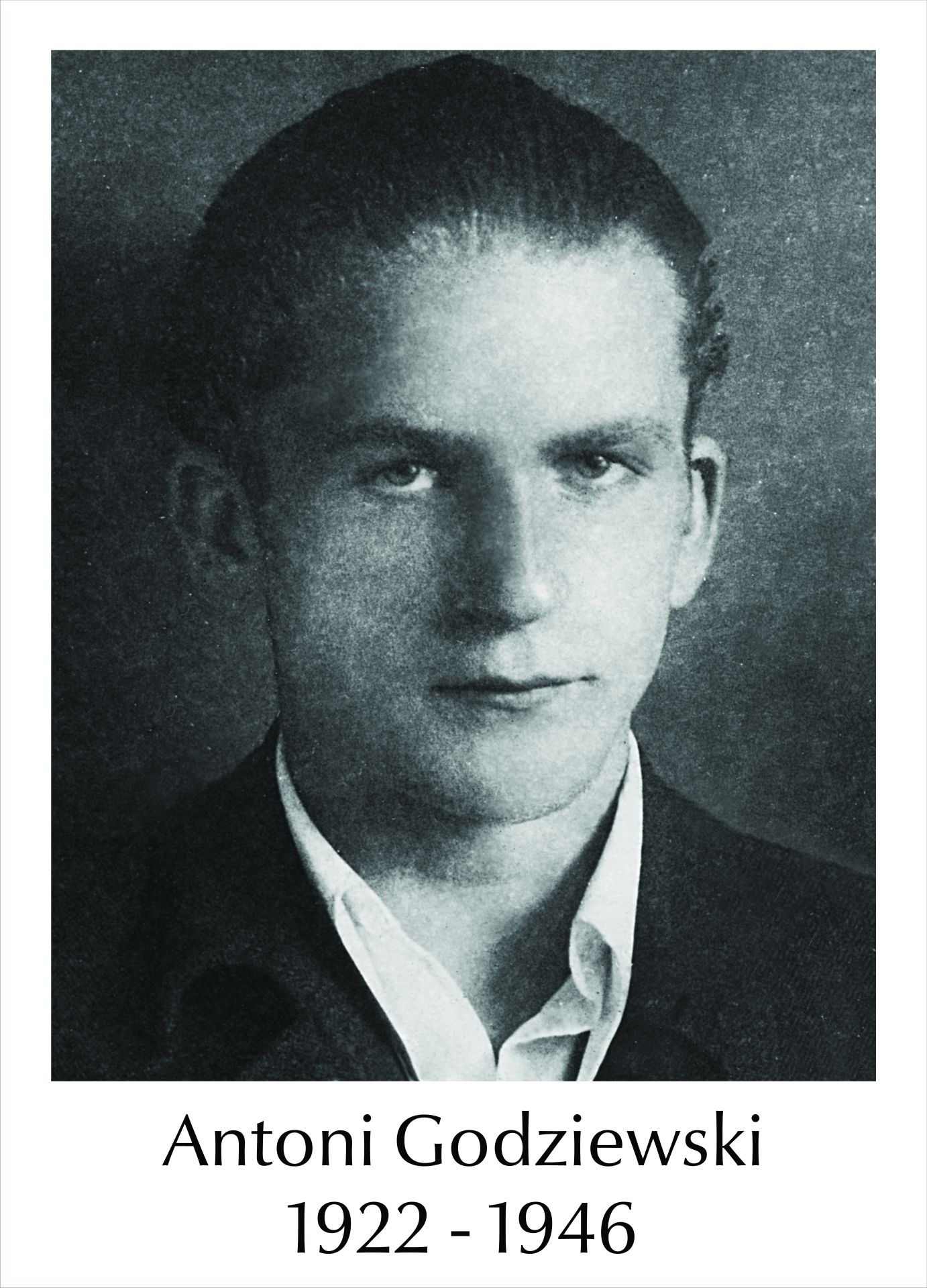

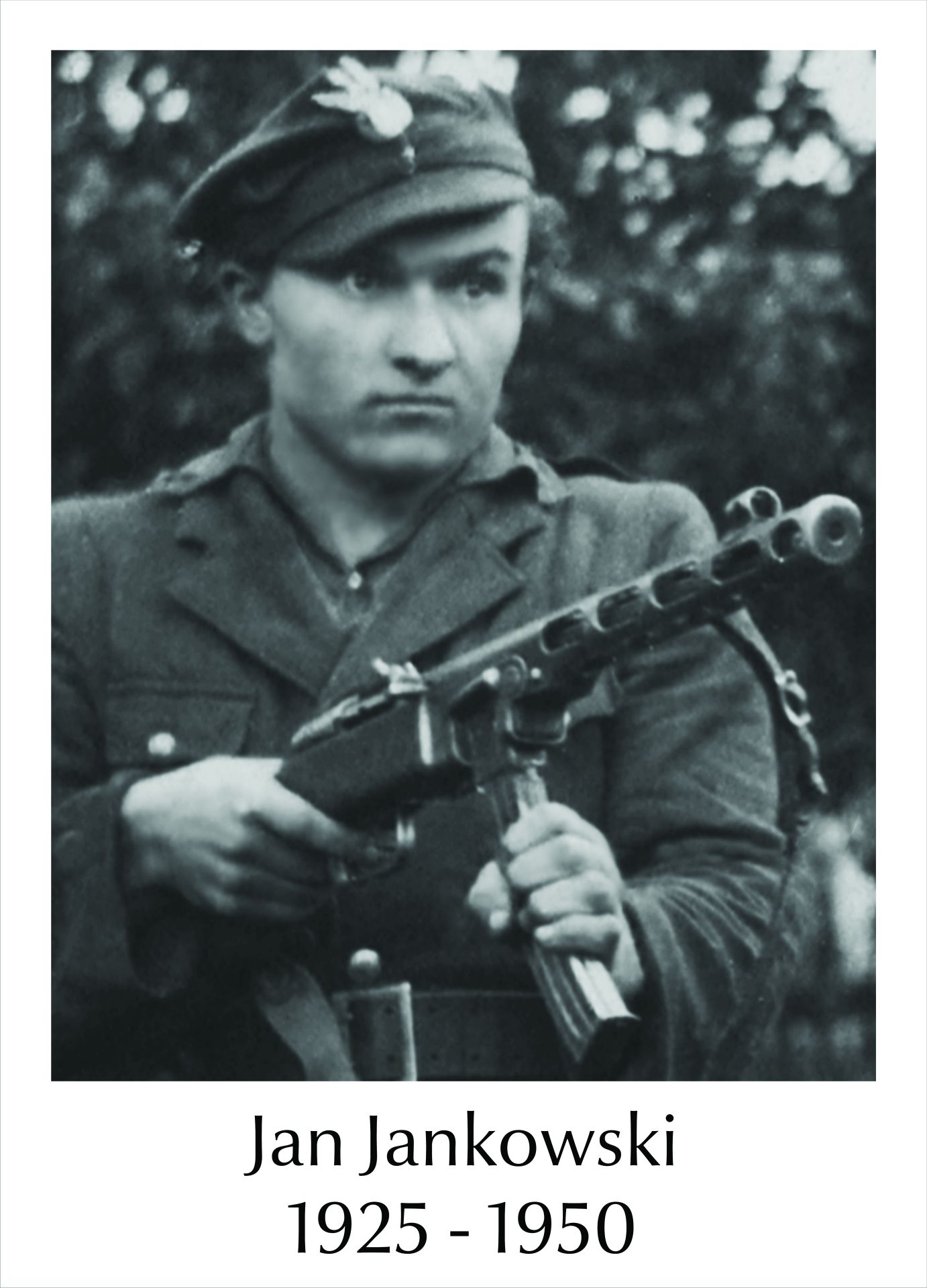
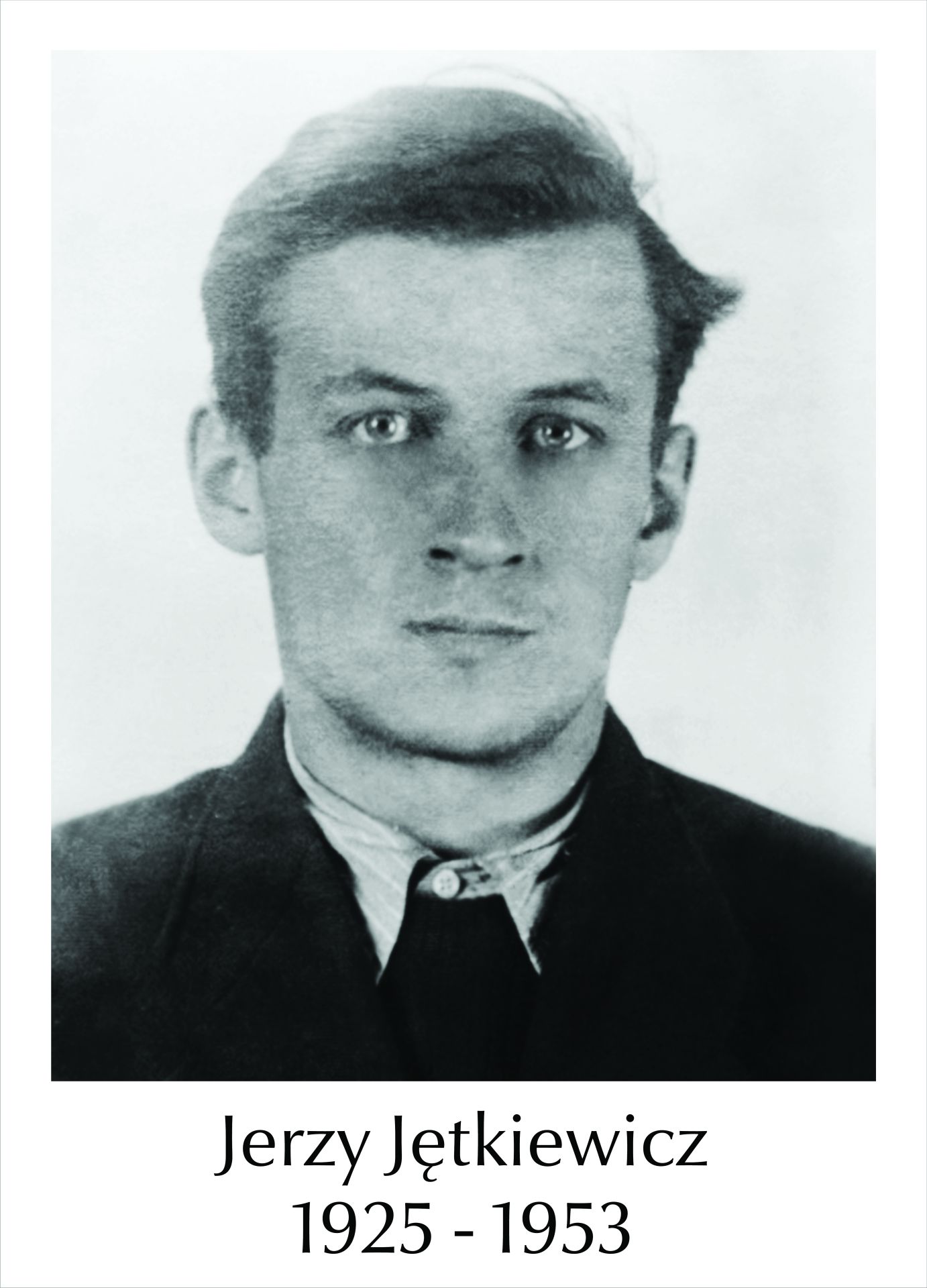
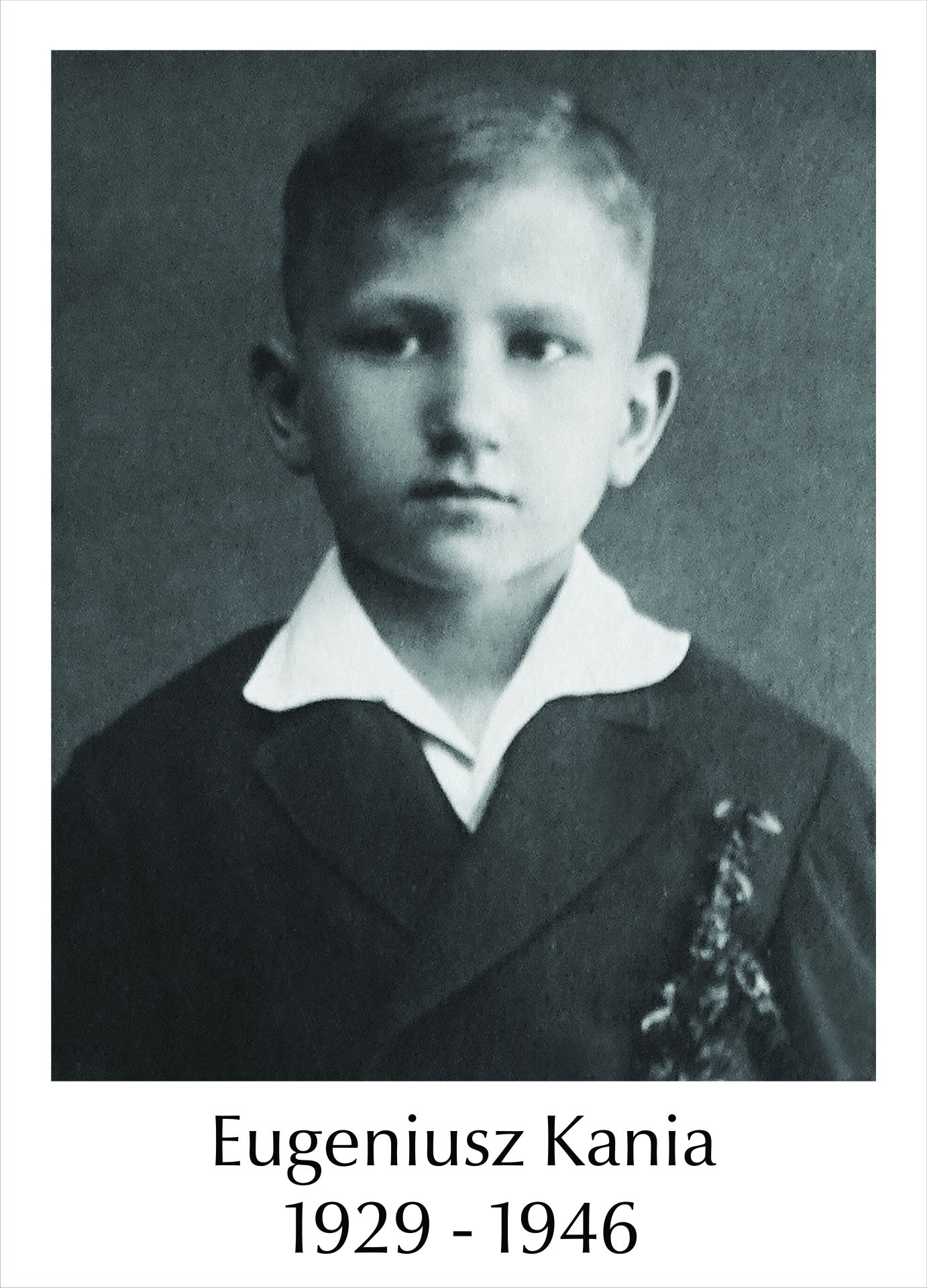
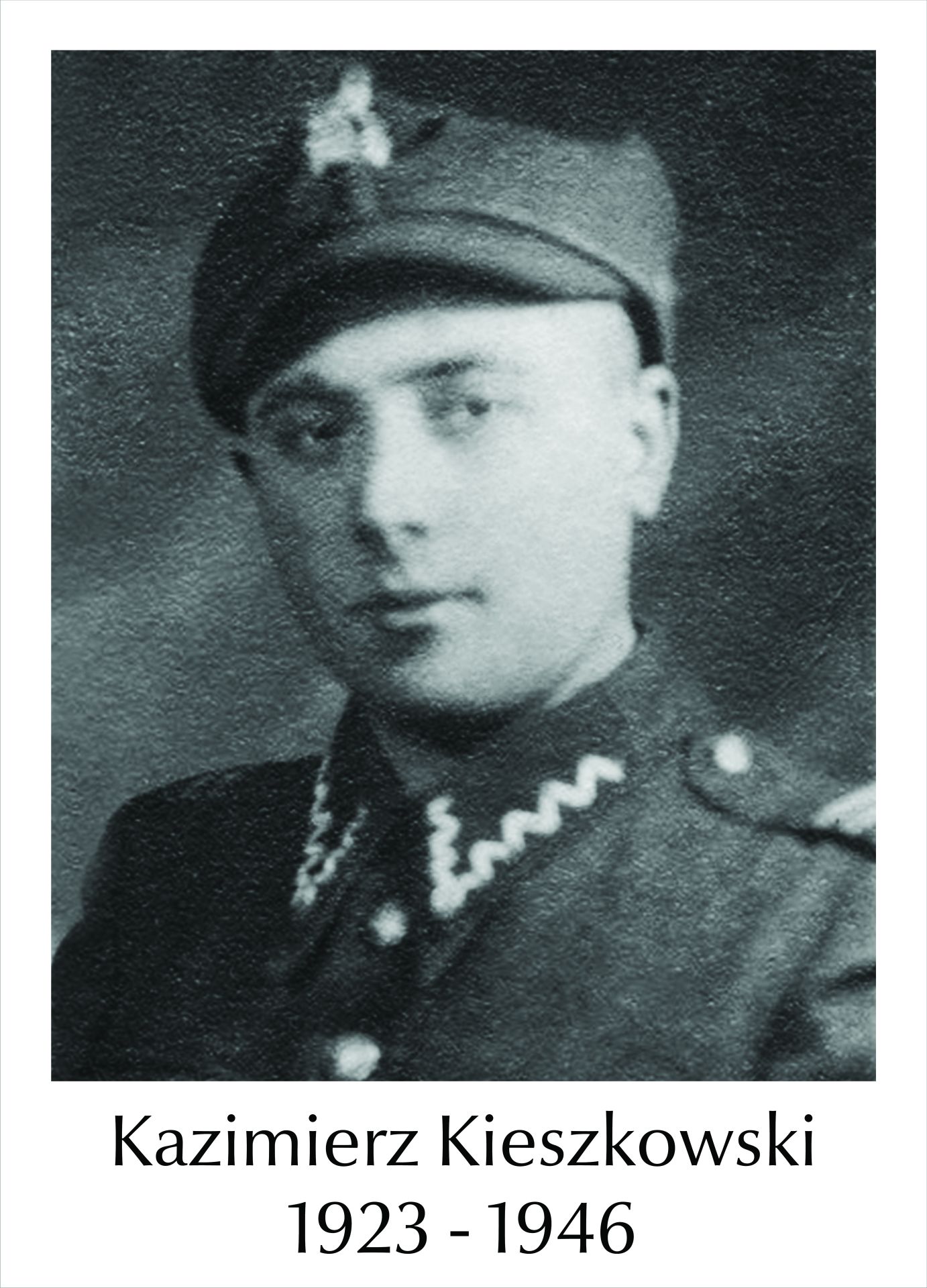
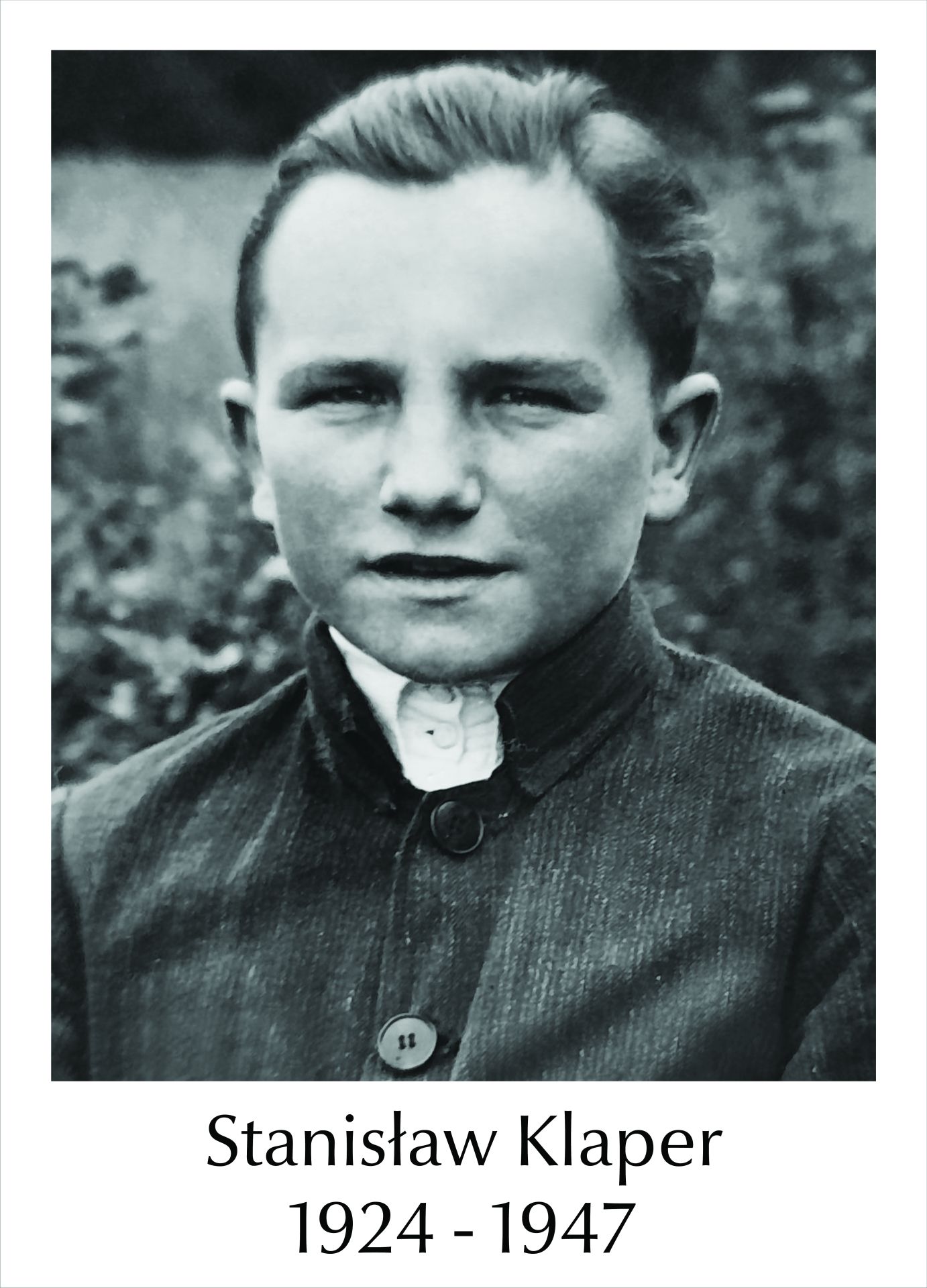

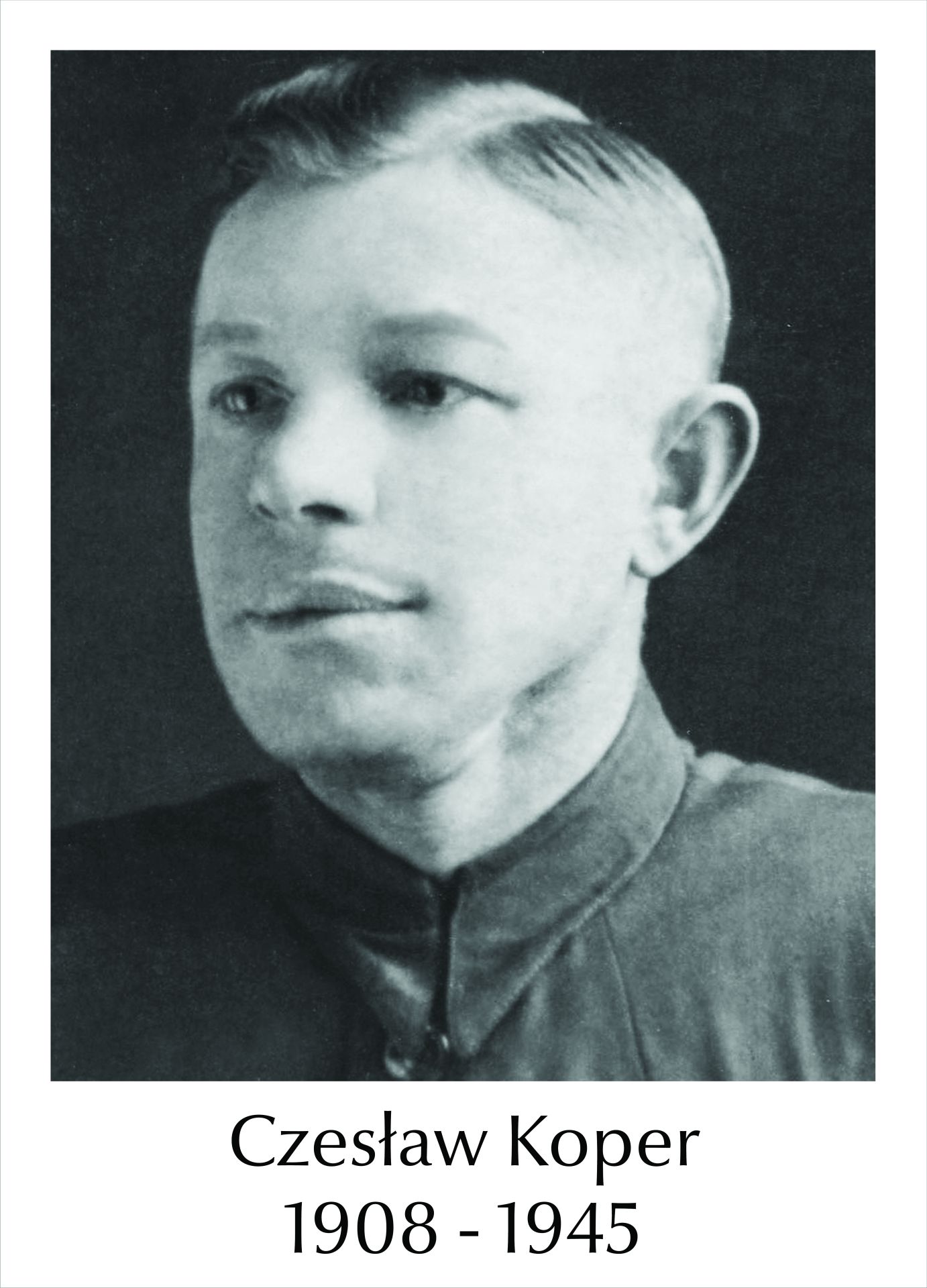
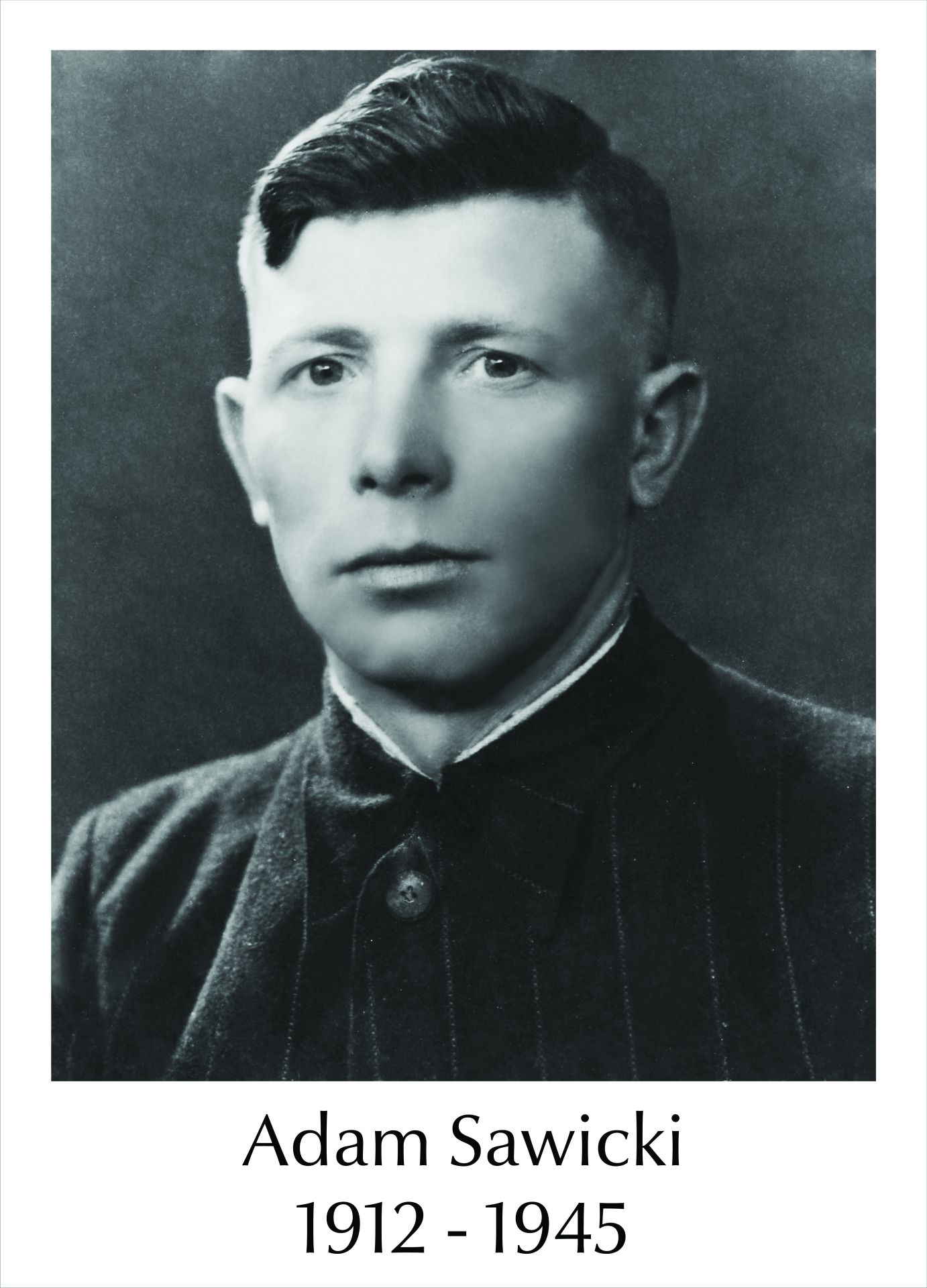

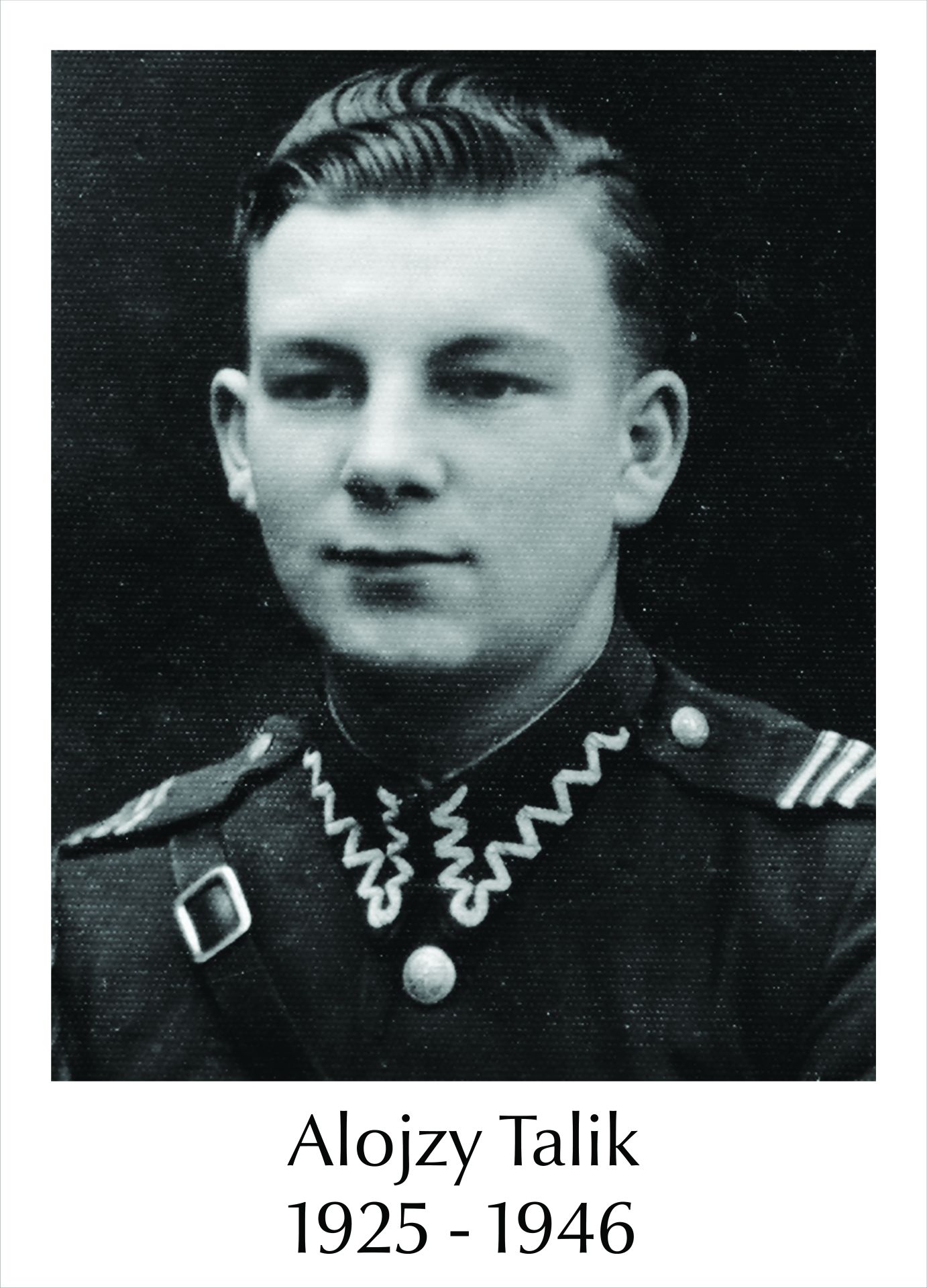
The Institute of National Remembrance searches for and identifies the victims of totalitarian regimes and ethnic cleansings as part of the activities of the IPN's Office of Search and Identification, in cooperation with the Chief Commission for the Prosecution of Crimes against the Polish Nation. As a result of the Institute’s activities, the remains of more than two thousand people have been located.
The IPN's Office of Search and Identification conducts search activities throughout Poland and abroad. A team of specialists has examined dozens of sites in Poland, and has also conducted work in, among others, Ukraine, Belarus, Lithuania and Germany.
The ceremony of handing identification notes to the families is organized in cooperation with the Chancellery of the President of the Republic of Poland.
More: