
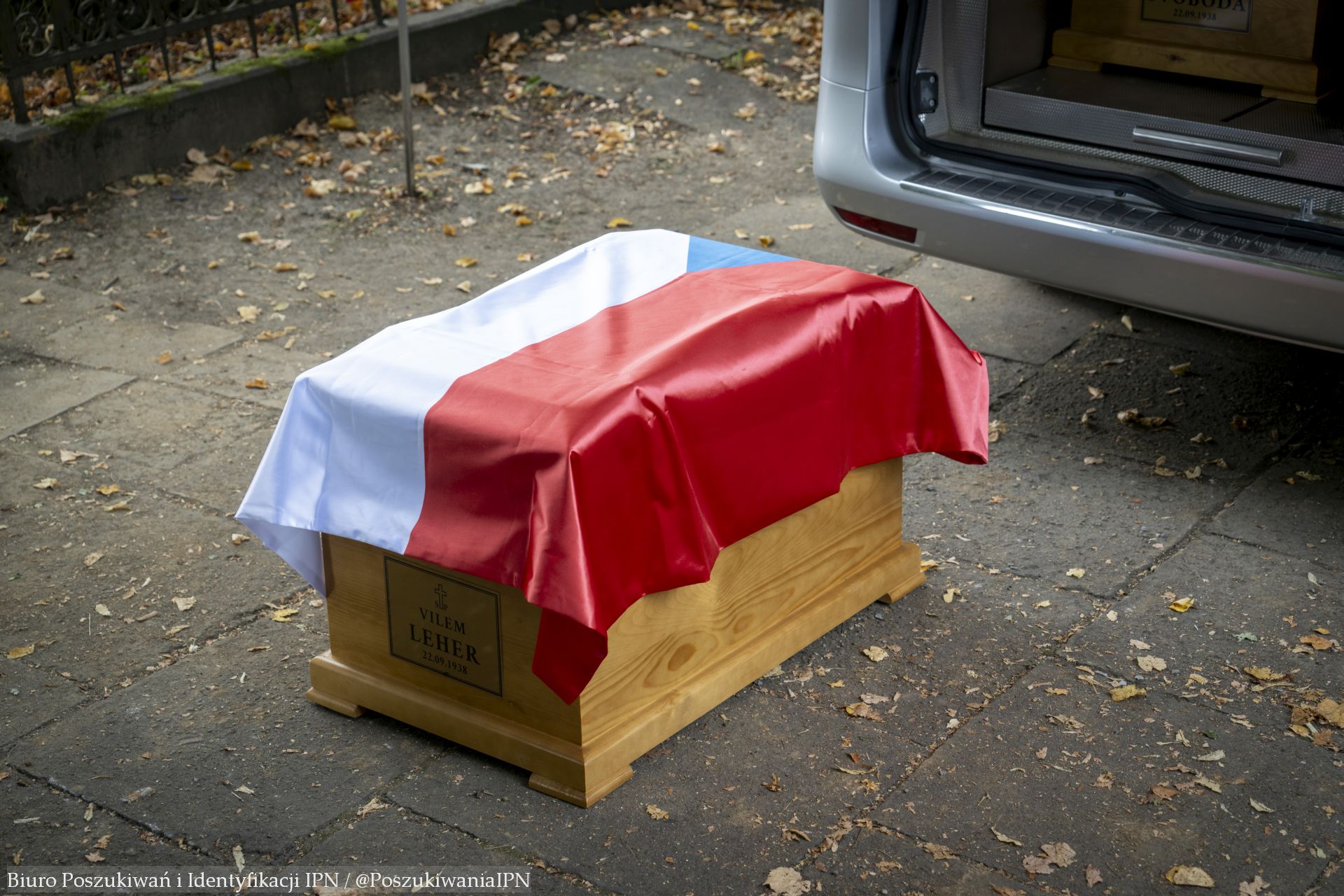
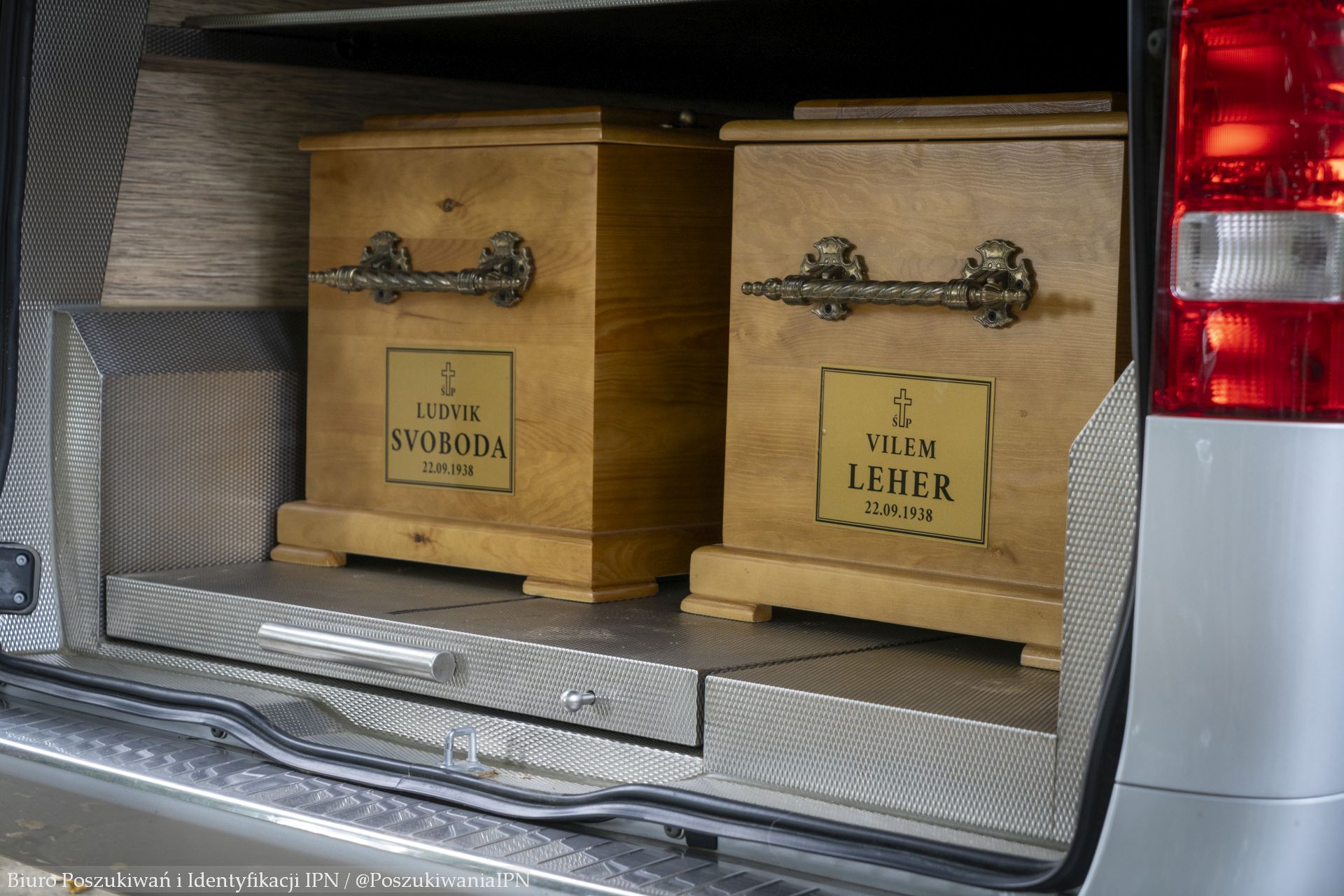
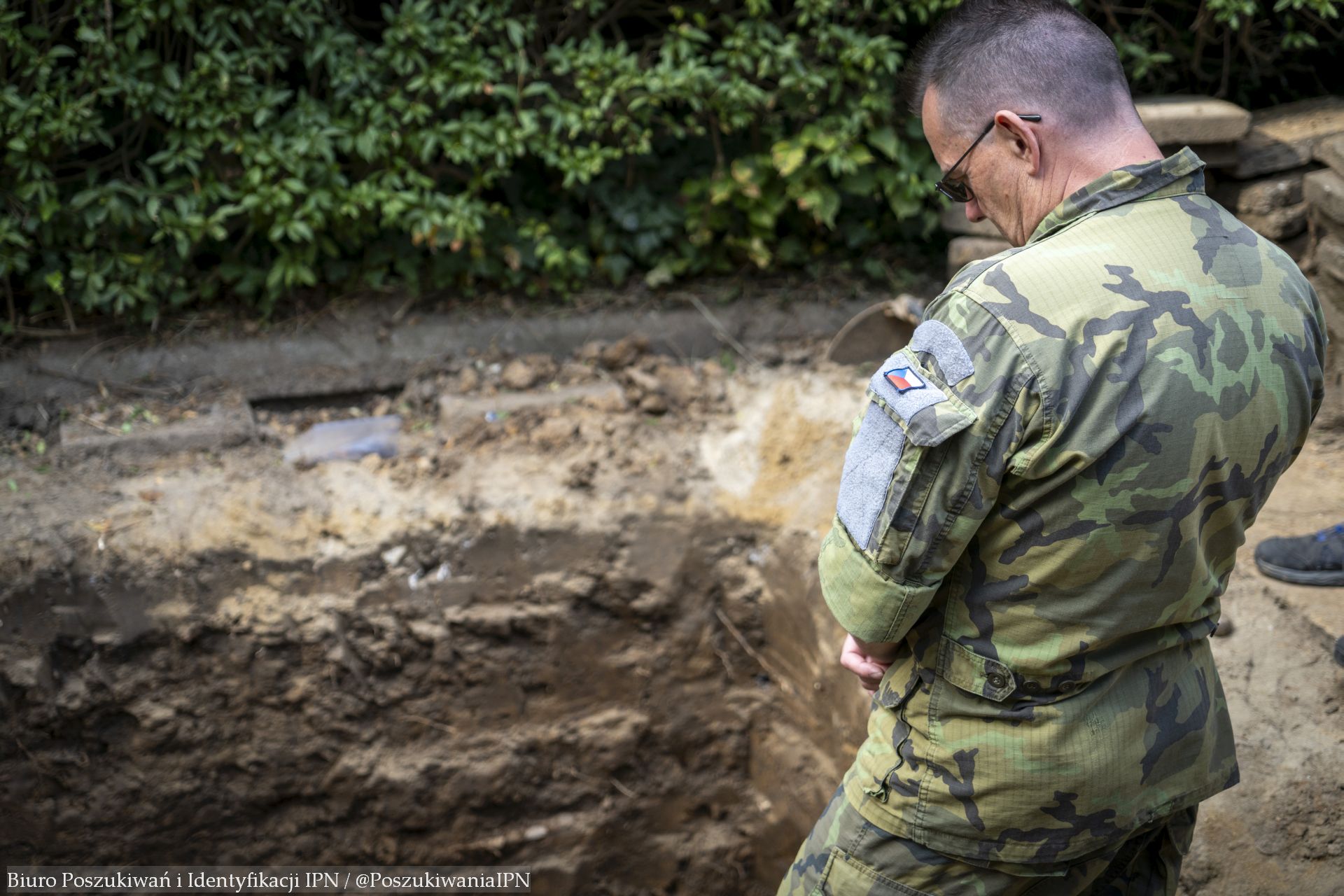
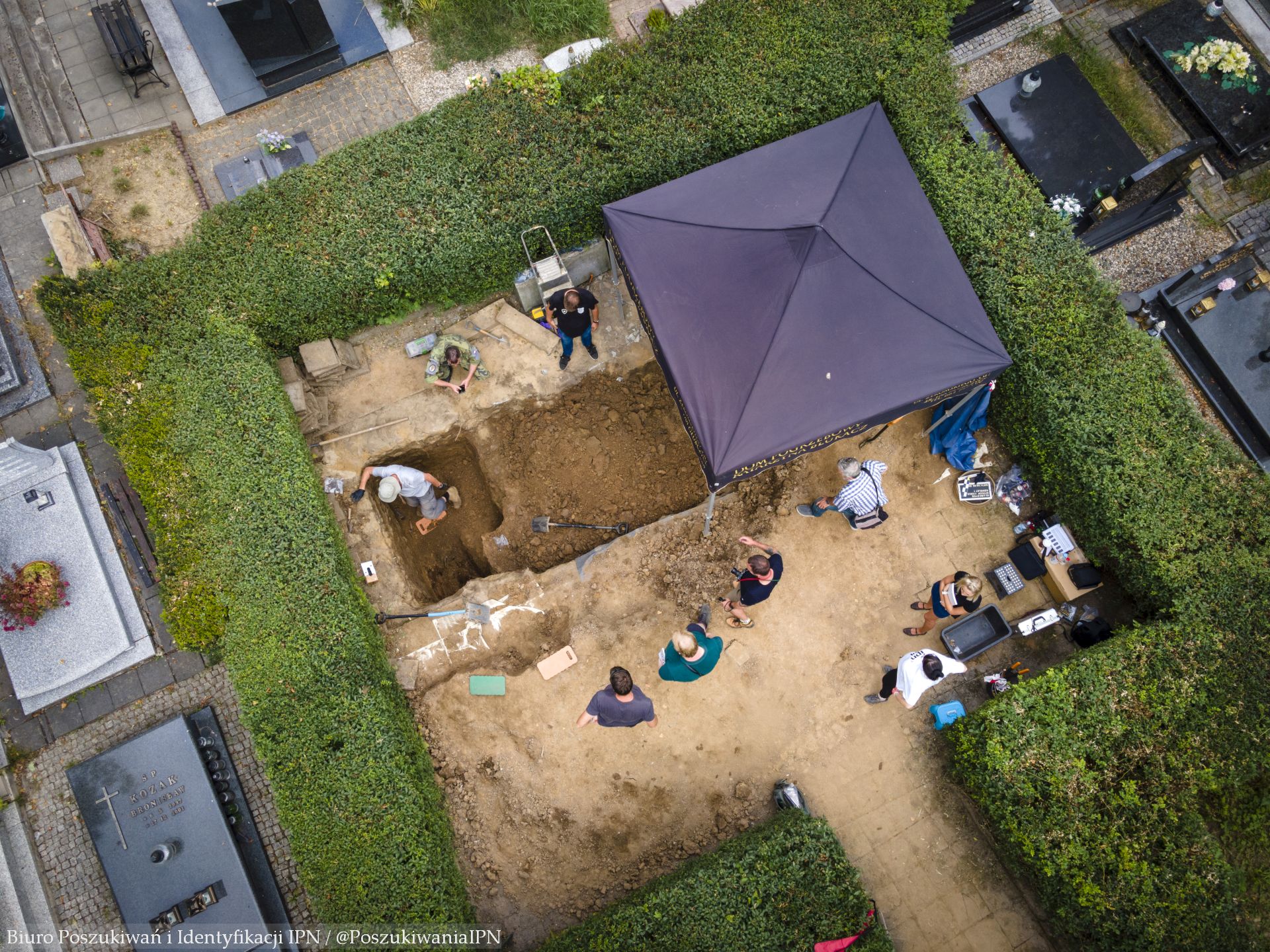
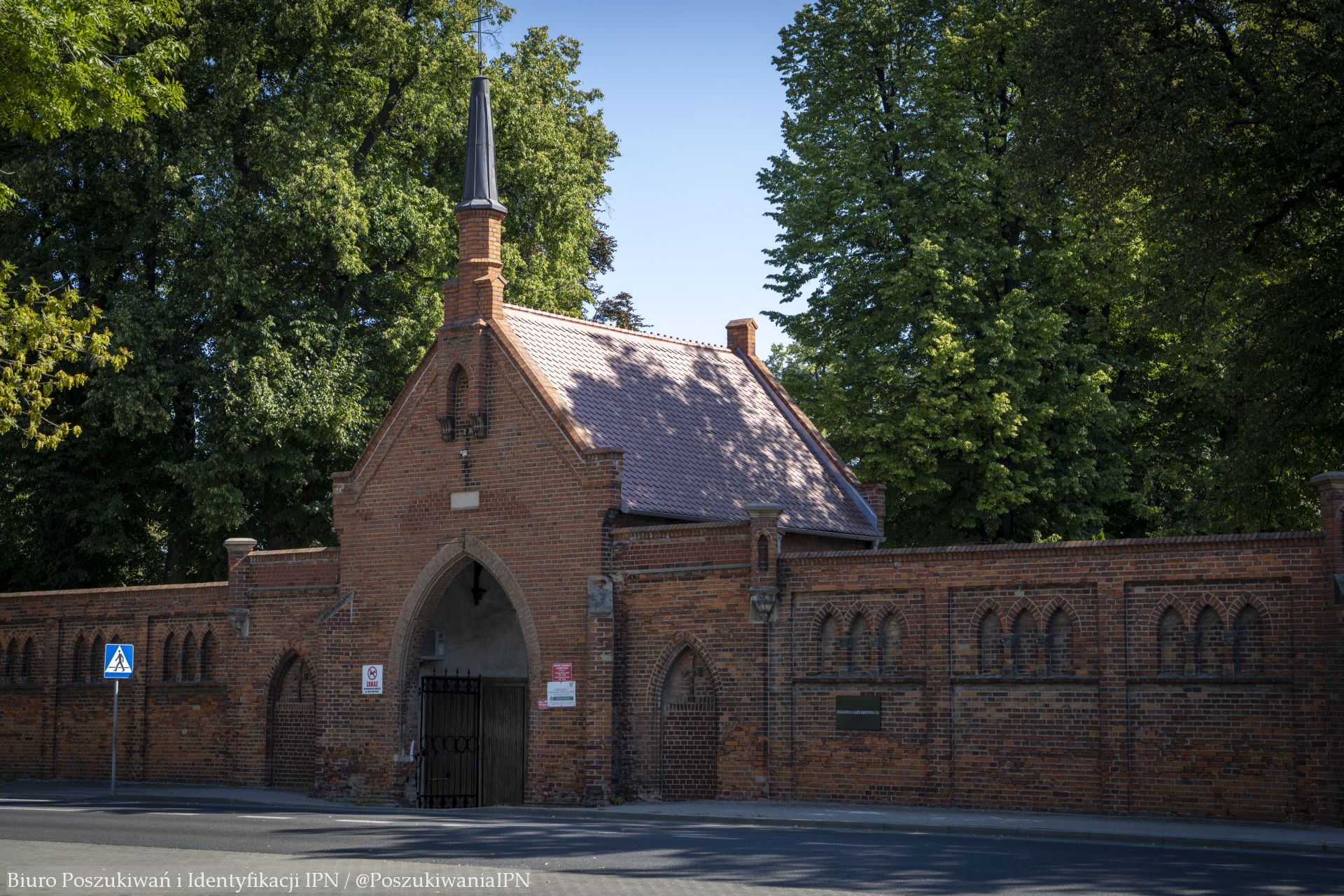
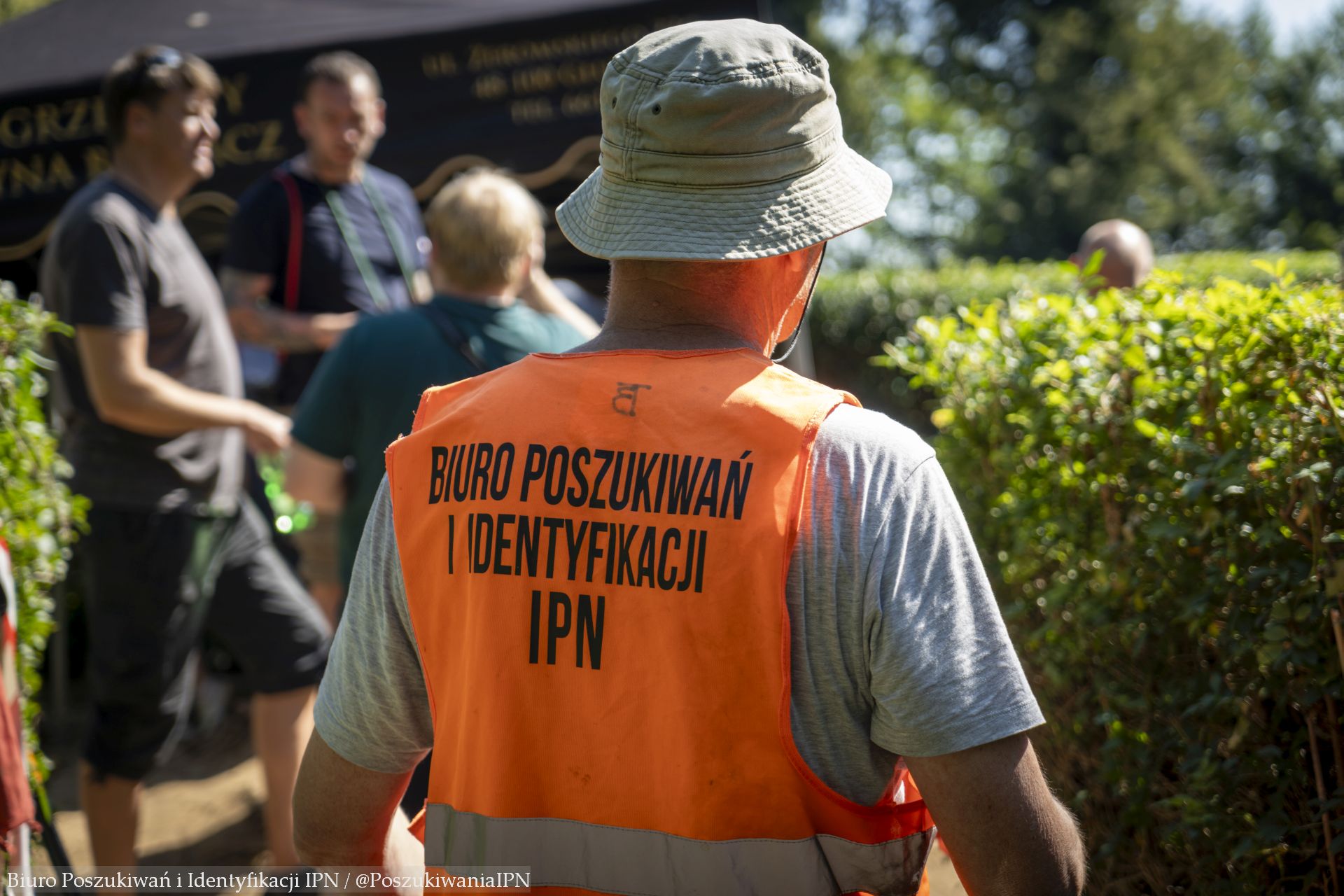
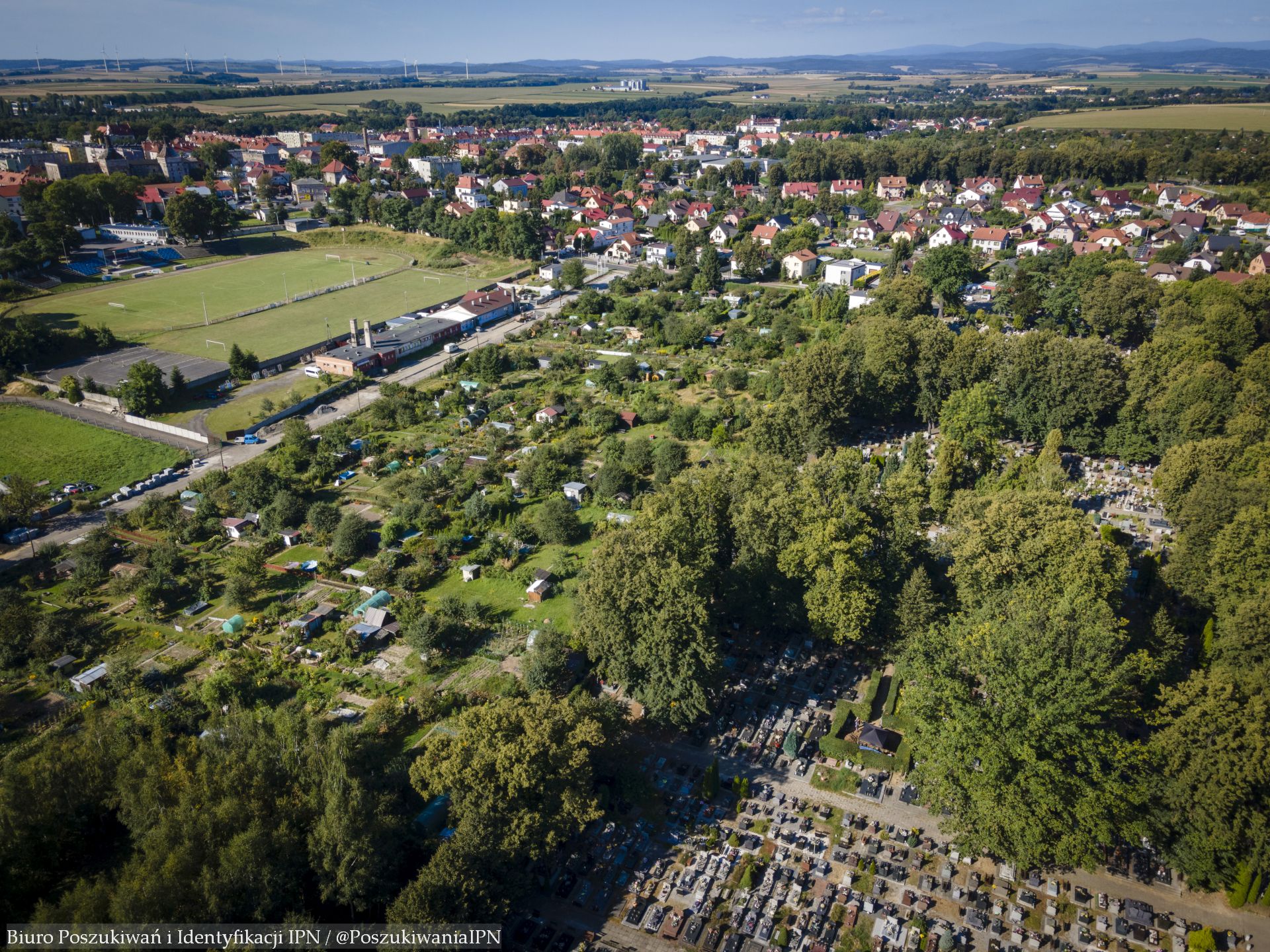
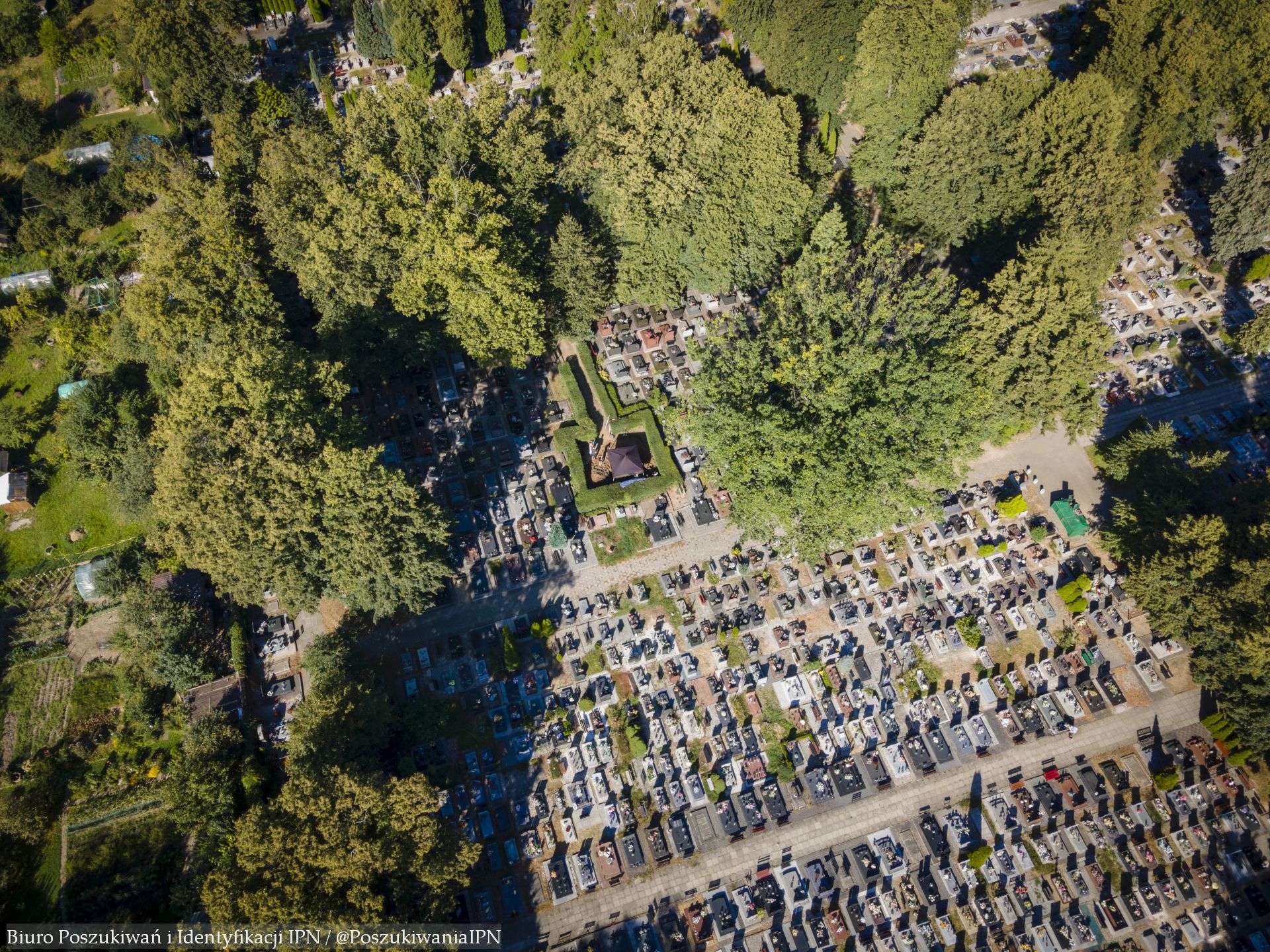

On 18-21 August 2025, at the request of and in cooperation with the Ministry of Defence of the Czech Republic, a team of experts from the IPN Office of Search and Identification conducted search and exhumation works at the Municipal Cemetery in Głubczyce (Opole Province). The aim of these works was to find the remains of two officers of the Czechoslovak State Defence Guard (SOS), murdered in 1938 by the Germans in Liptaň (currently the Czech Republic, Krnov region).
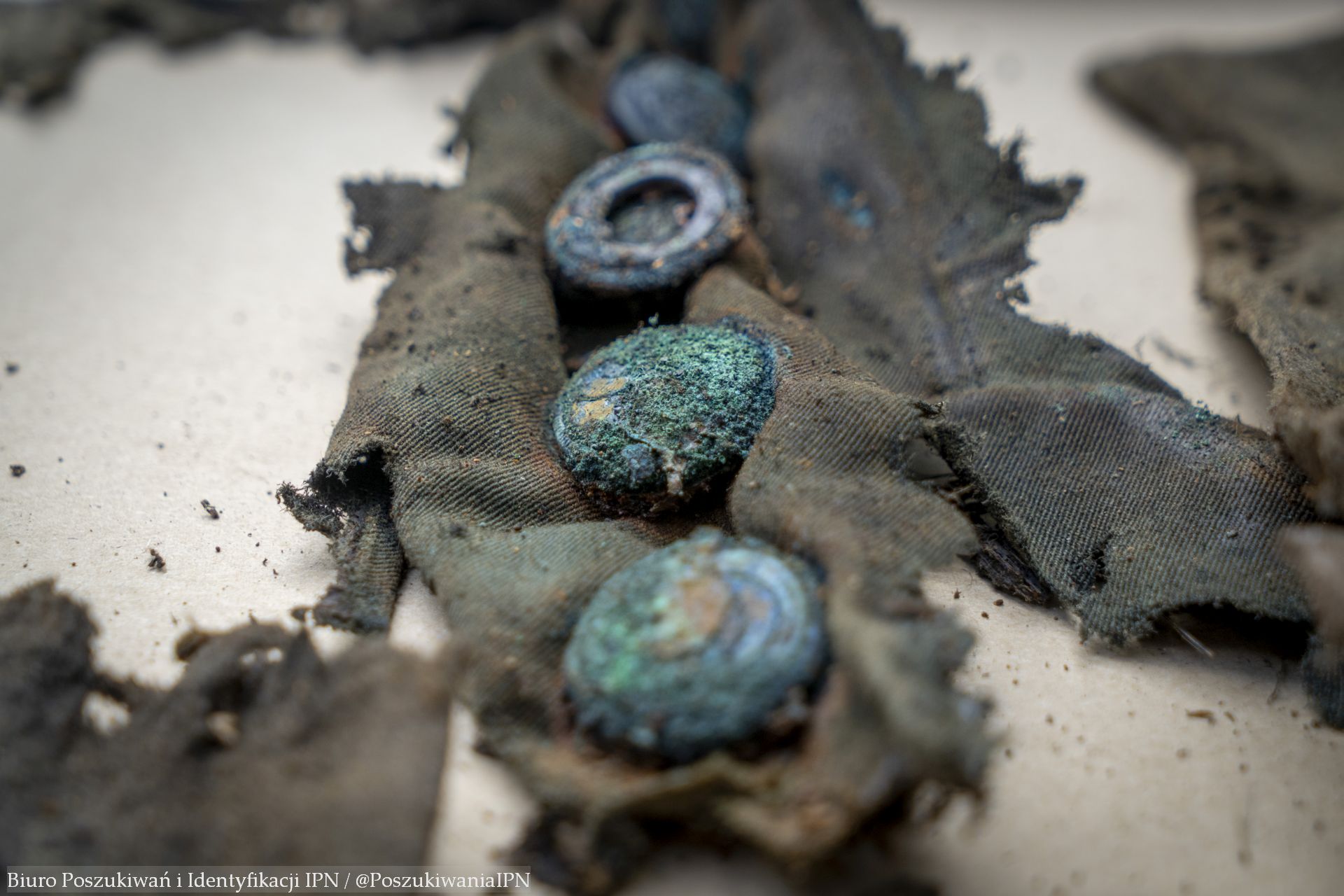
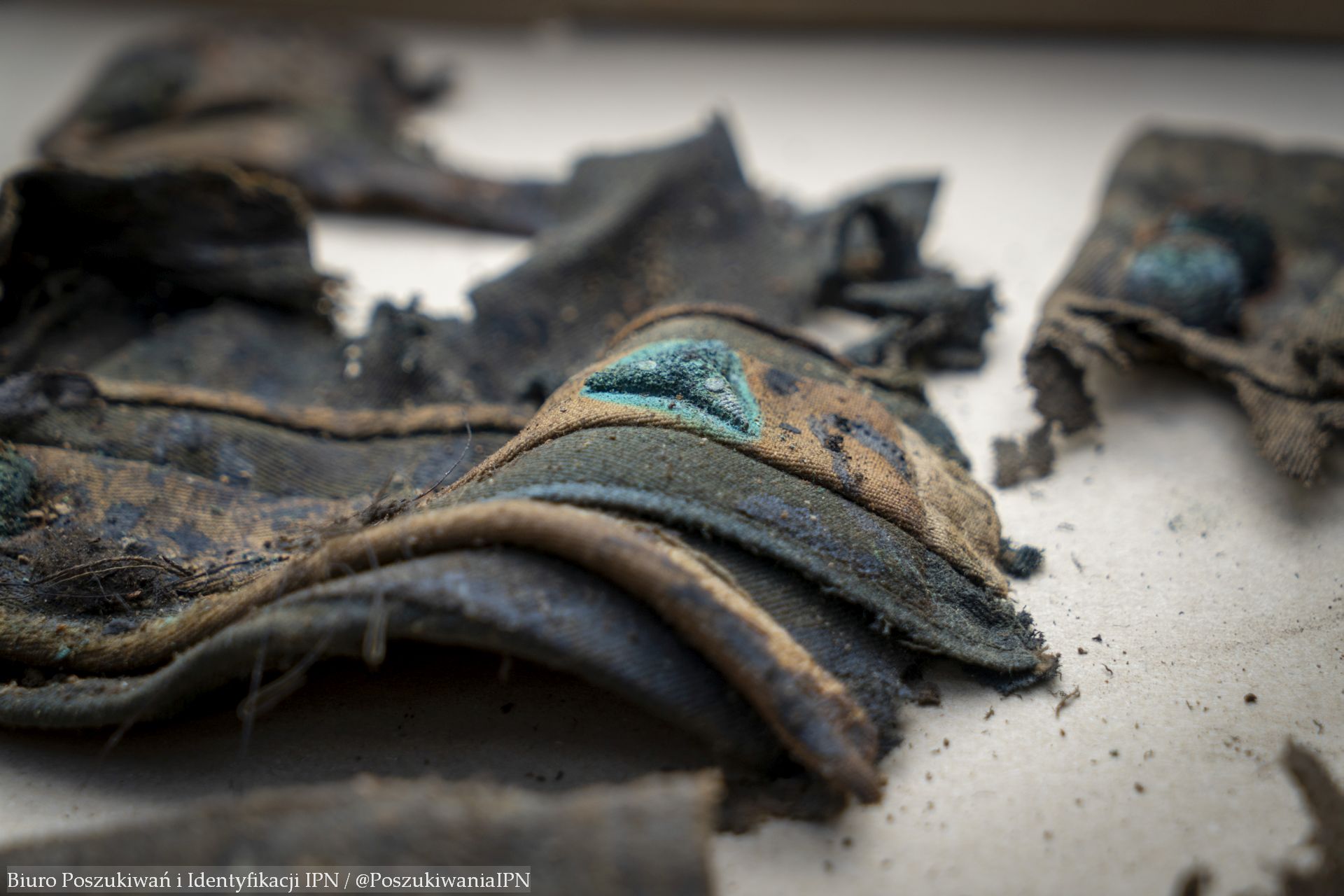
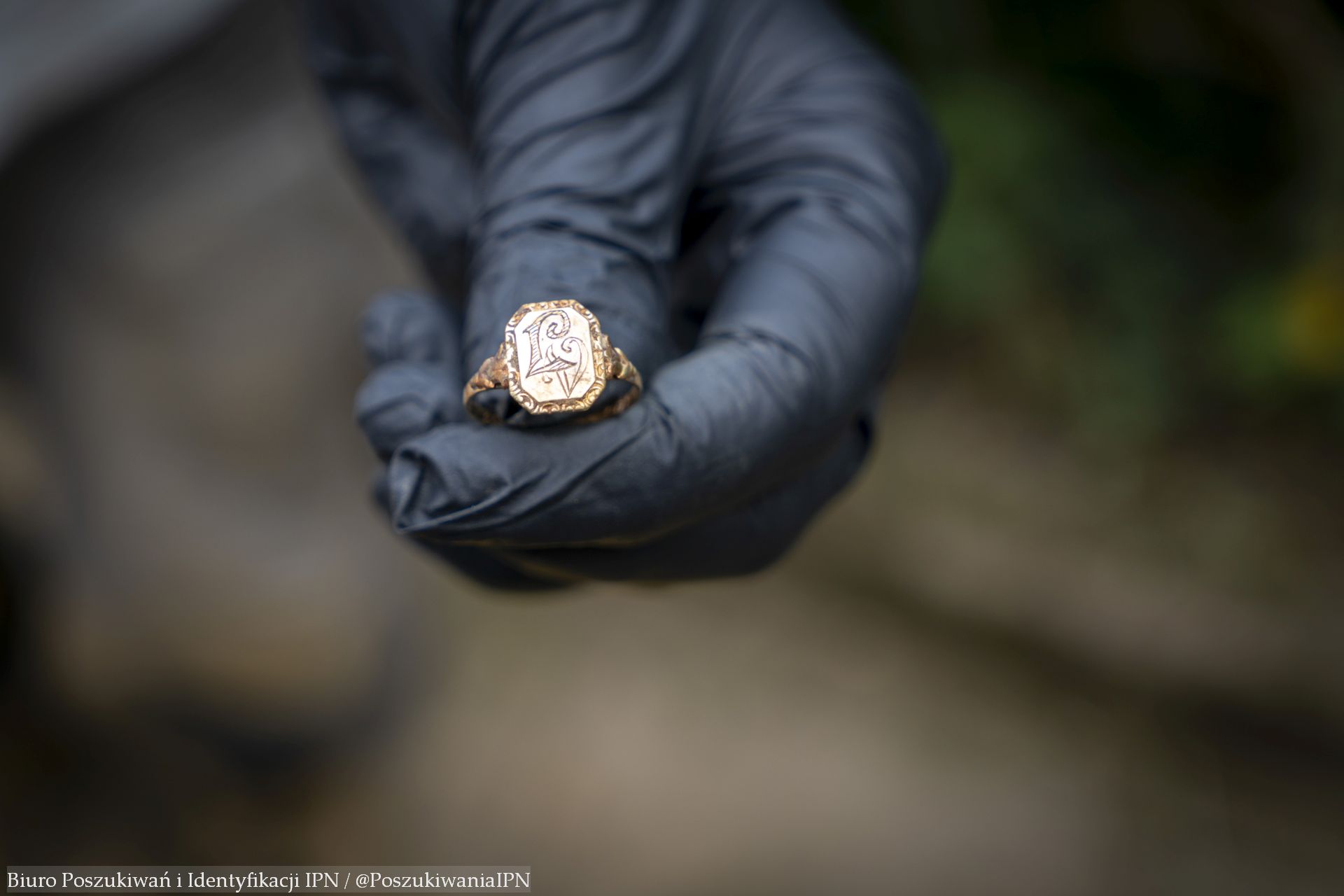
As a result of the Polish-Czech search and exhumation efforts, the remains of two males, in full uniform, corresponding to that of the SOS officers, were found. Moreover, a ring engraved with a wedding date and wife’s name was discovered nearby. The victims’ medical records, which the Czech side was in possession of, also confirmed that the remains were those of gendarme Vilém Leher and financial guard Ludvík Svoboda.
Among those present at the site were representatives of the Ministry of Defence of the Czech Republic: Colonel Robert Speychal, Director of the Department for War Veterans and War Graves, Dr. Pavel Kugler , Deputy Director of the Department for War Veterans and War Graves, and Captain Martin Vaňourek, historian and specialist in research on fallen officers. On behalf of the Institute of National Remembrance, the works were carried out by a team of archaeologists and anthropologists from the Office of Search and Identification under the supervision of Dr. Dominika Siemińska, Head of the Borderland Department. On 19 August 2025, the site was also visited by Prof. Krzysztof Szwagrzyk, Deputy President of the IPN.
The remains of the State Defence Guard officers were transported to the Czech Republic, where state funeral ceremonies will be held in September 2025, with the participation of their relatives.
***
In the autumn of 1938, Czechoslovakia found itself under strong political and military pressure from the Third Reich. After the annexation of Austria, the demands extended to the Sudetenland, inhabited by a large German minority. Radical German circles called for these lands to be annexed by the Reich. Units of the Sudetendeutsches Freikorps began armed diversionary actions and attacks on Czechoslovak border posts.
The most tragic event took place on 22 September 1938 in Liptán, where five officers of the Czechoslovak State Defence Guard and one Financial Guard officer were killed in an attack by Freikorps militants. The attack was carried out by, among others, brothers Alfred and Franz Selig. After an initial skirmish with an SOS patrol, Alfred Selig murdered the disarmed gendarmes Rudolf Mokrý and Vilém Leher as well as financial guard Ludvík Svoboda. Three more members of the financial guard, Vítězslav Hofirka, František Čech, and Inocenc Dostál, were then killed.
The victims were buried in Głubczyce, but their relatives or the authorities of what was then Czechoslovakia were not informed. It was the most tragic incident related to the revolt of Sudeten Germans against the Czechoslovak authorities in 1938. The related documentation was inaccessible for many years. The remains of four victims were exhumed in 1939 and returned to their families, while Vilém Leher and Ludvík Svoboda remained in the Głubczyce cemetery, their names engraved on a dedicated memorial.