
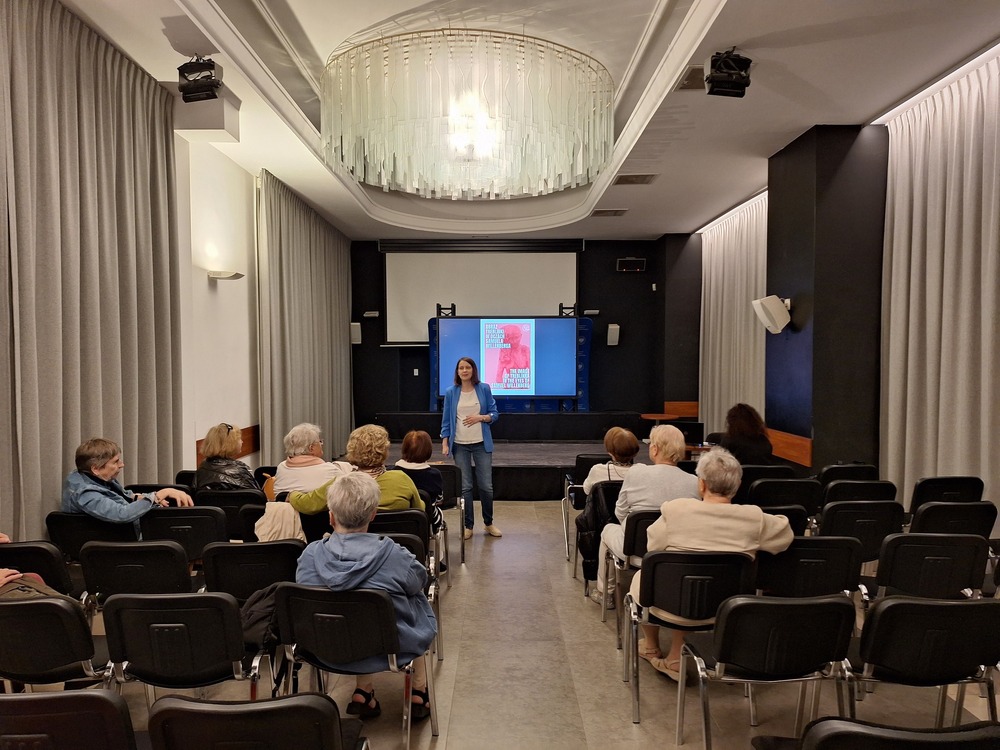
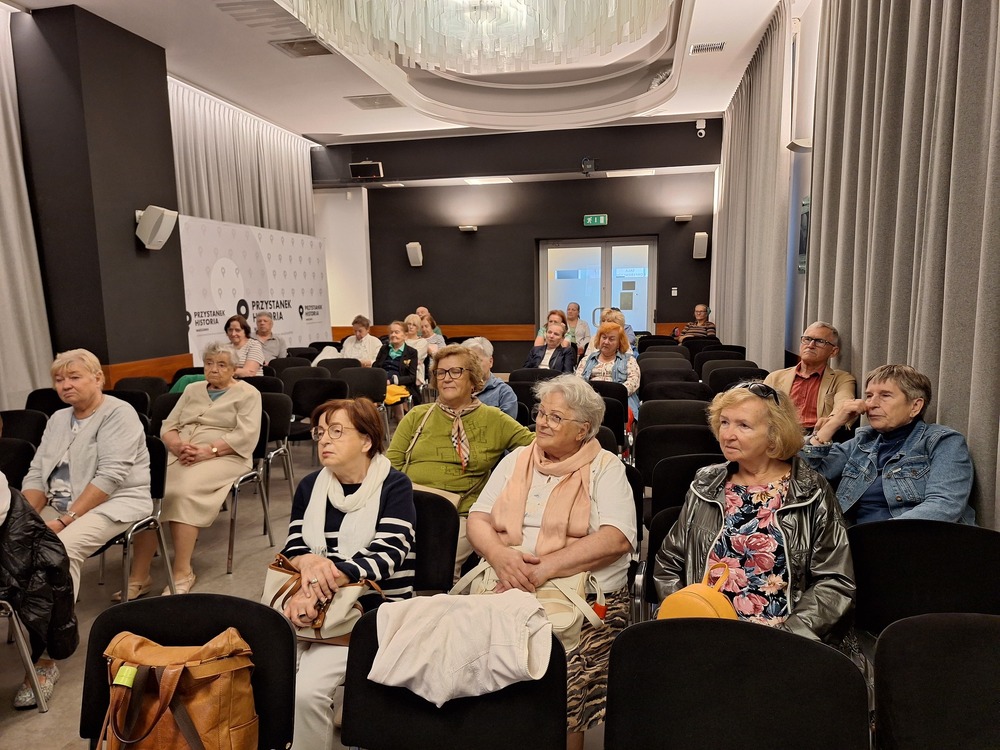
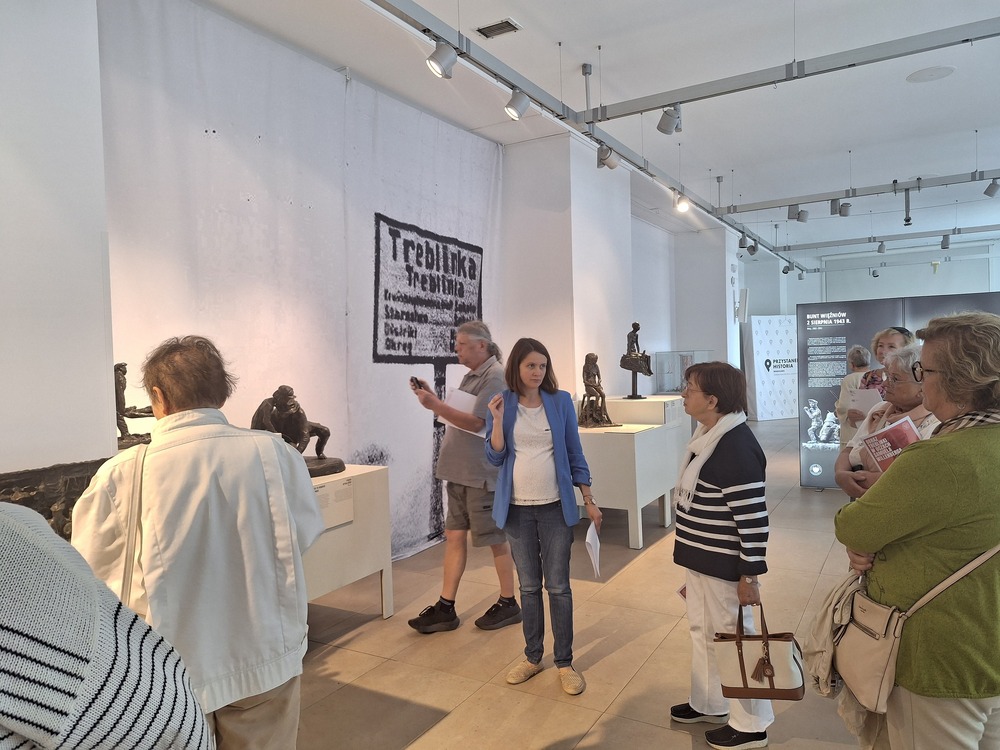
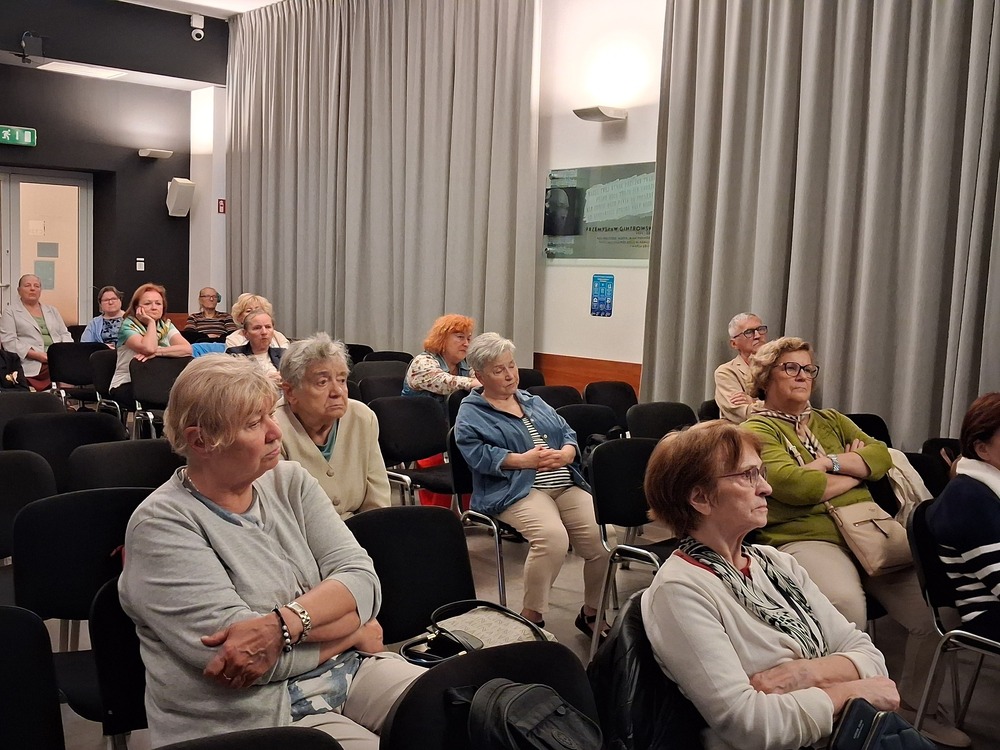
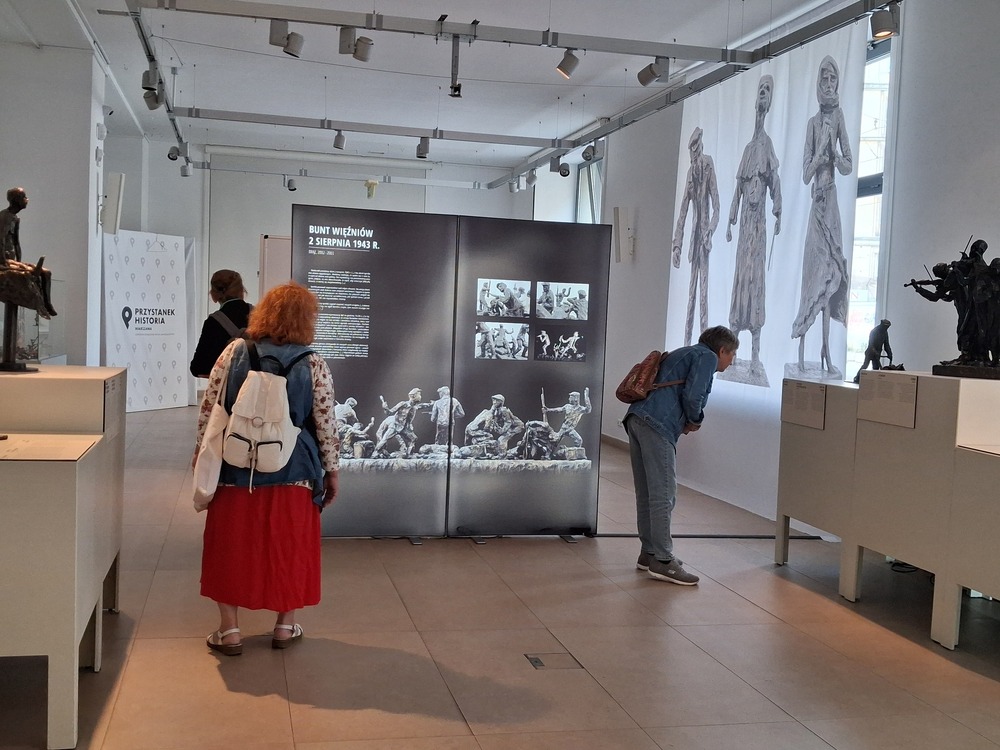
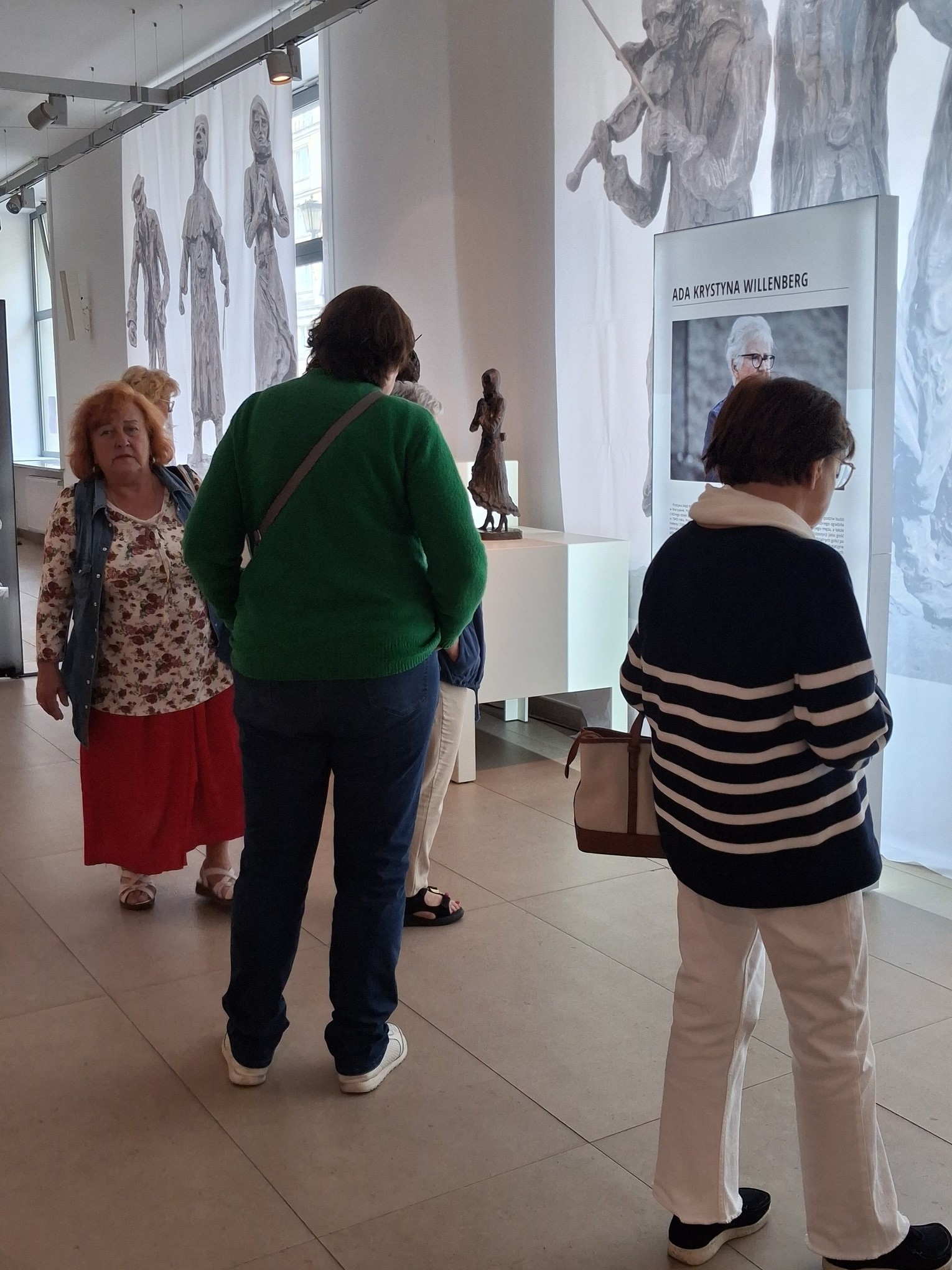
On 27 August 2025 – Marika Lis from the IPN Central History Point organized a special educational meeting for members of the ‘Third Age Institute’, focused around Samuel Willenberg – a soldier of the Polish Army, sculptor, writer, Holocaust survivor, and the last living participant of the Treblinka death camp revolt, which took place on 2 August 1943.
The event aimed to present the tragic events of World War II through the perspective of an individual who had experienced them firsthand by exploring Willenberg’s biography, memoirs, and artistic works, in the form of 15 bronze sculptures .
The classes included screenings of excerpts from “Treblinka’s Last Witness” documentary film produced by WLRN Public Television for South Florida, the analysis of selected passages from his book “Surviving Treblinka”, and a discussion focused around Willenberg’s sculptures, which serve not only as historical testimony but also as deeply personal tributes to the victims of the Holocaust.
Samuel Willenberg passed away in 2016, leaving behind not only a written testimony of the atrocities of World War II but also a powerful artistic legacy.
The Institute of National Remembrance plans to continue its series of educational events aimed at various age groups, with the goal of promoting historical awareness and honoring the victims and witnesses of 20th-century totalitarian regimes.
The exhibition will be on display at the Institute’s Janusz Kurtyka Educational History Point in Warsaw (Marszałkowska 21/25) until 11 September 2025
***
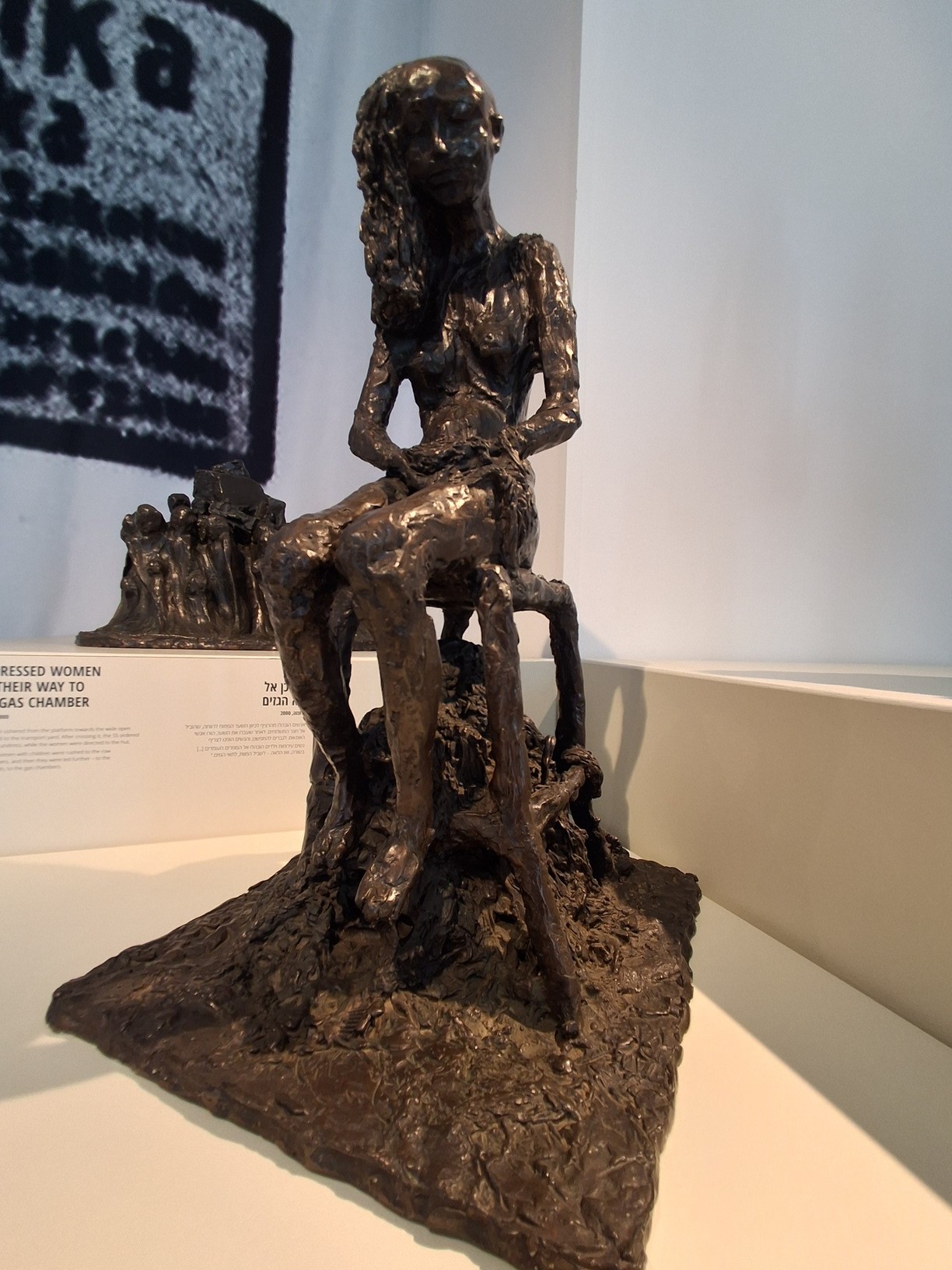
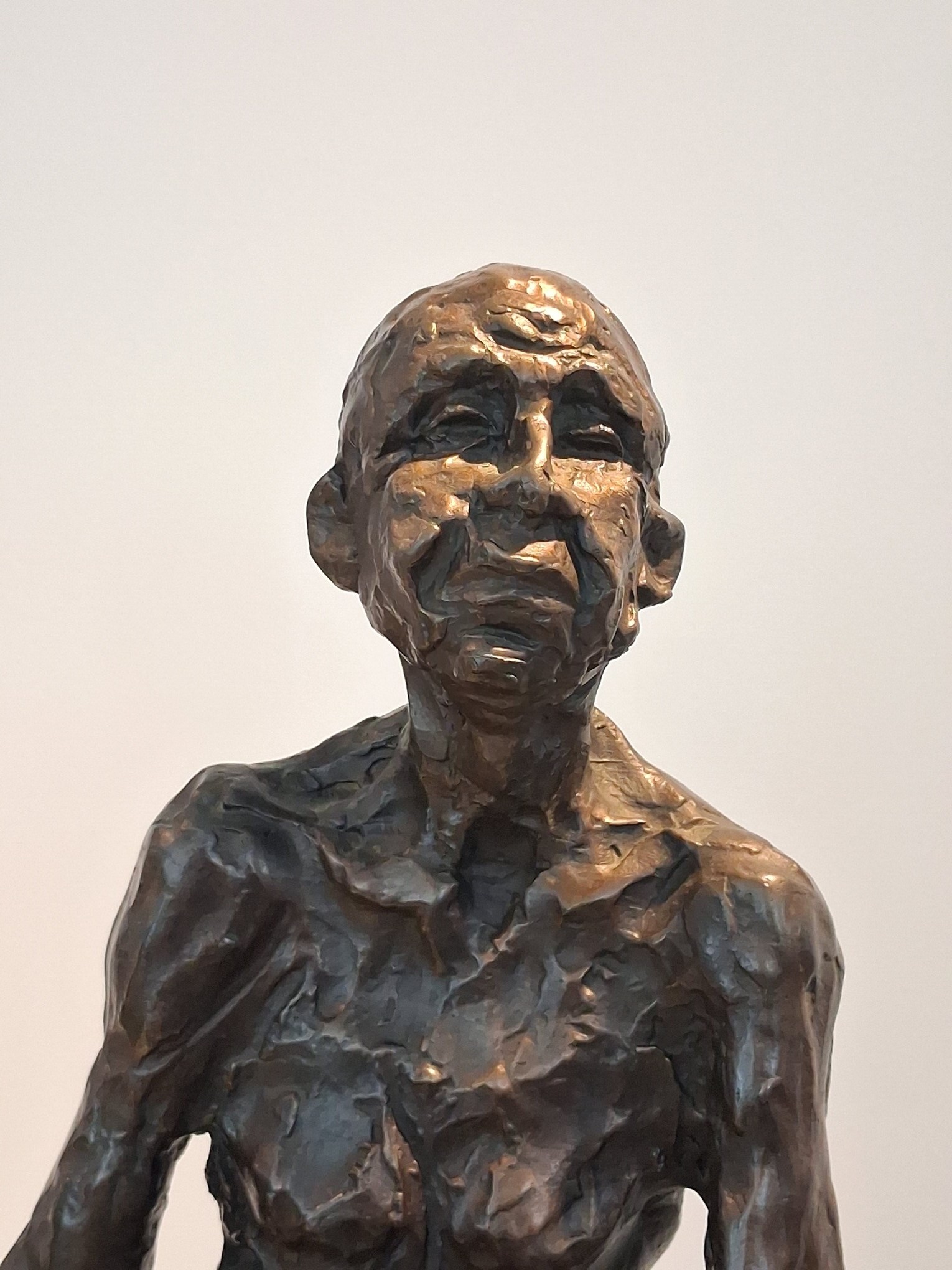
Samuel Willenberg was born in 1923 in Częstochowa, Poland, the son of Maniefa, nee Popov, and Perec Willenberg; he had two sisters, his elder Itta and younger Tamara. In October 1942 he arrived at the Treblinka camp in a transport of 6,000 Jews deported from the Opatów ghetto. Most perished immediately; he was the only one who remained alive. Willenberg was in Treblinka until the outbreak of the rebellion on 2 August 1943. He saw with his own eyes the arrival of hundreds of thousands of Jews and thousands of Roma and witnessed them being sent to death in the gas chambers; his own sisters Itta and Tamara also perished there. Willenberg himself suffered humiliation, violence, cruelty and extreme viciousness at the hands of the German SS staff and the Ukrainian “SS-Wachmänner” guards.
Samuel Willenberg was among 200 inmates who on 2 August 1943 succeeded in escaping from the German extermination camp in Treblinka. At the moment of his death in 2016, he remained the last survivor of the rebellion in Treblinka. Samuel Willenberg became the spokesman for good Polish-Jewish relations, speaking openly about both the tragic and beautiful events, linking these two groups of Polish citizens during the criminal German occupation.
For his activities during and after the Second World War Samuel Willenberg received the highest national honors of the Republic of Poland, including the Virtuti Militari, the Cross of Merit with Swords, the Cross of Valour, the Warsaw Uprising Cross, the Order of Merit of the Republic of Poland, the Order of Polonia Restituta, and the Polish Army Medal.