
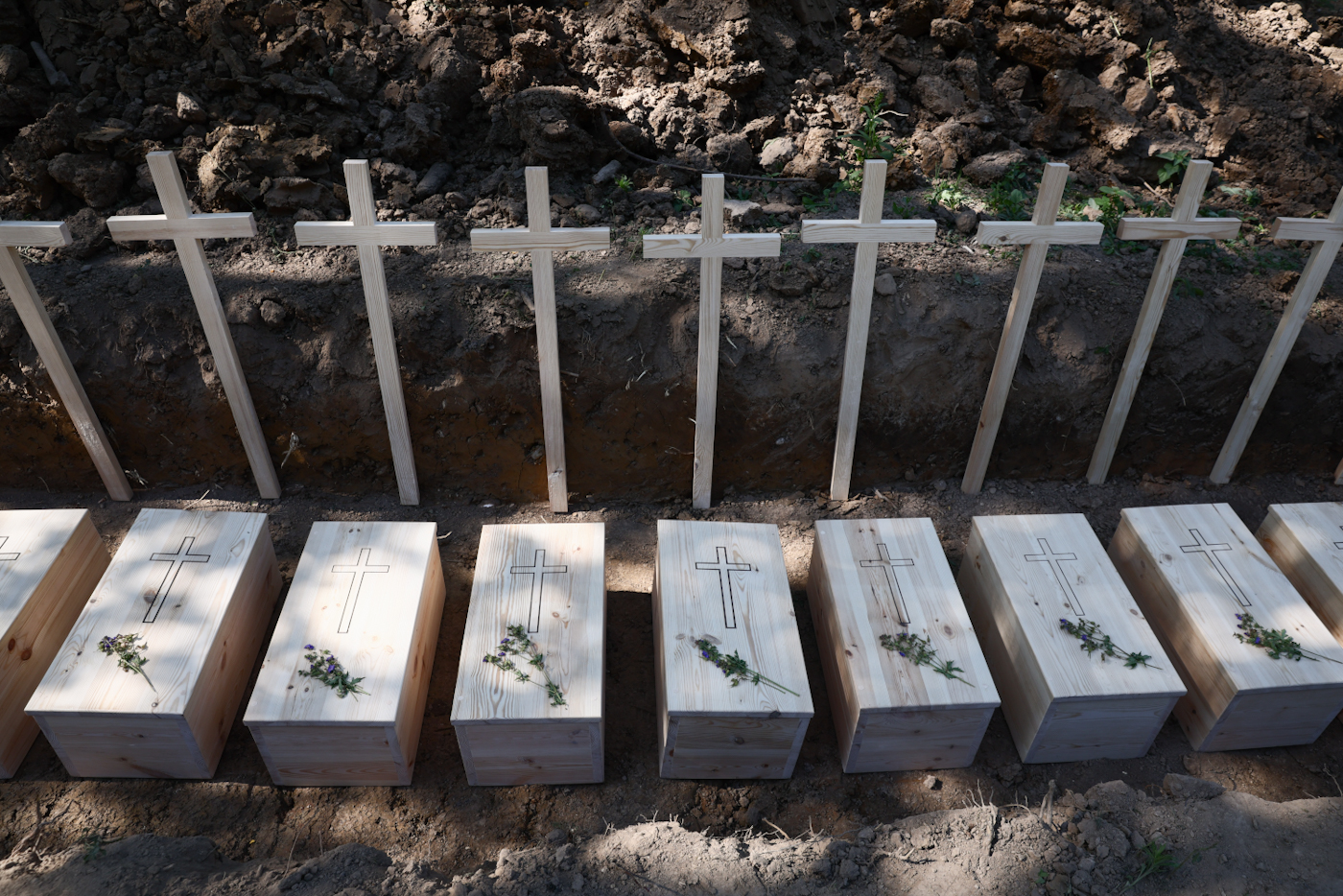
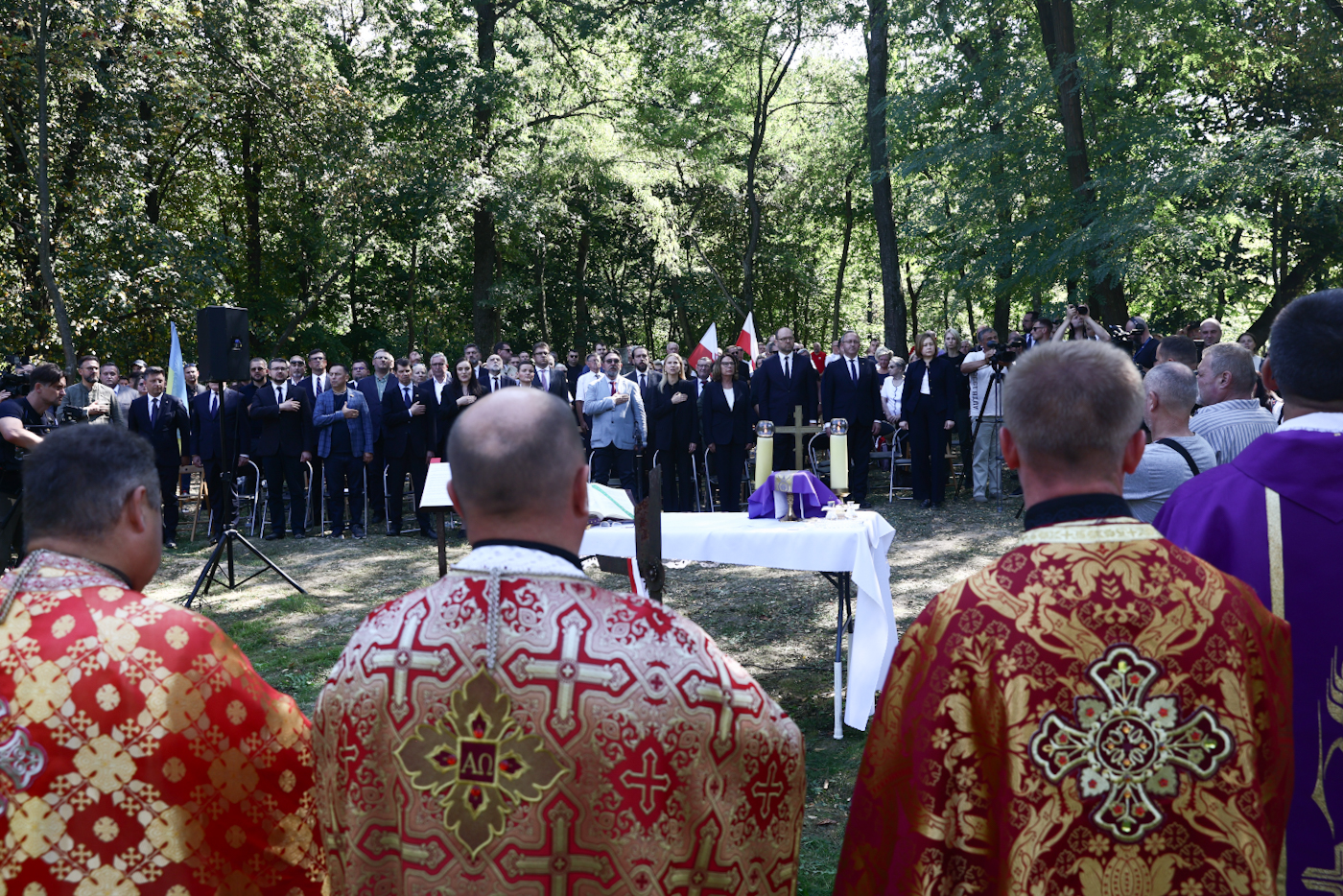
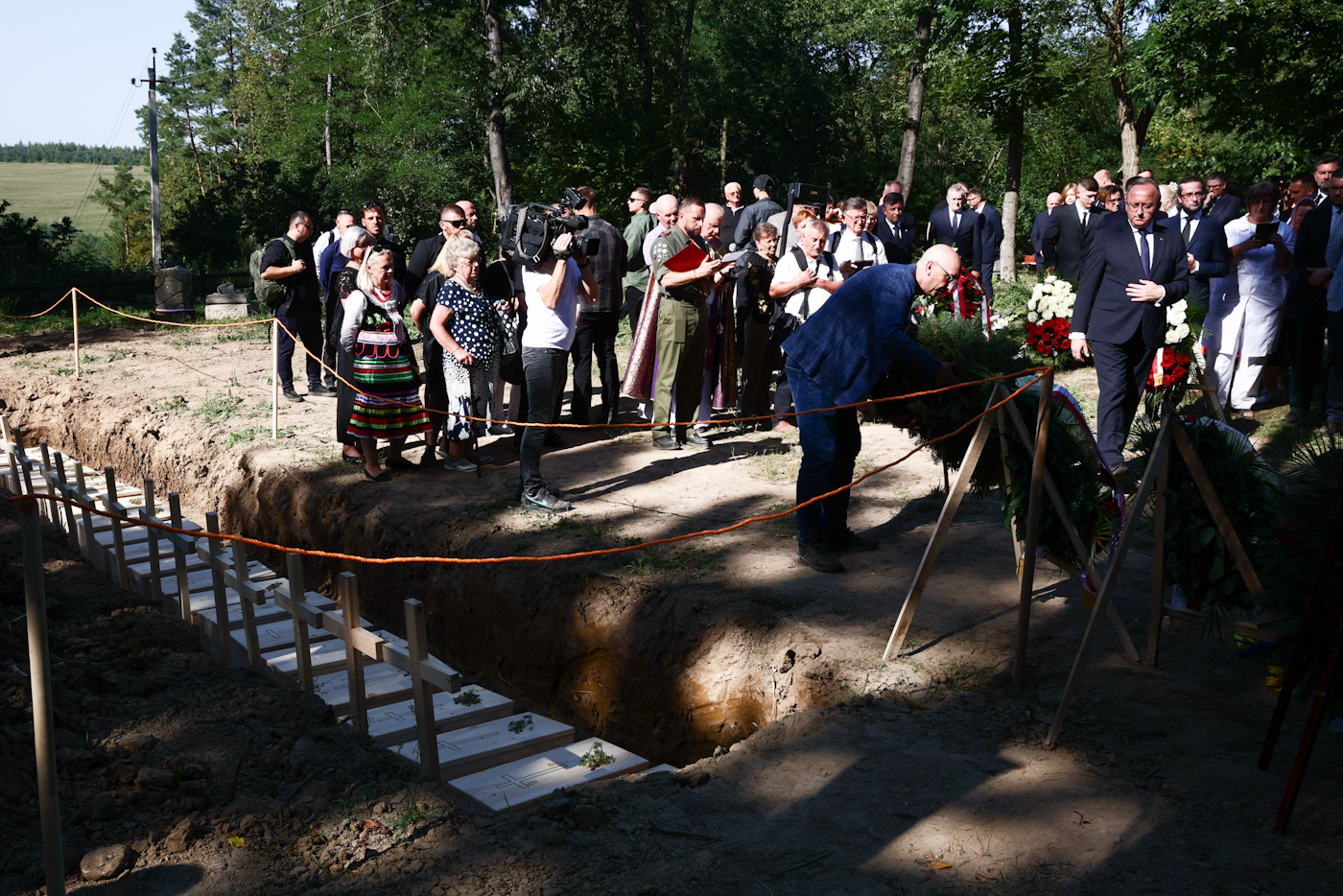
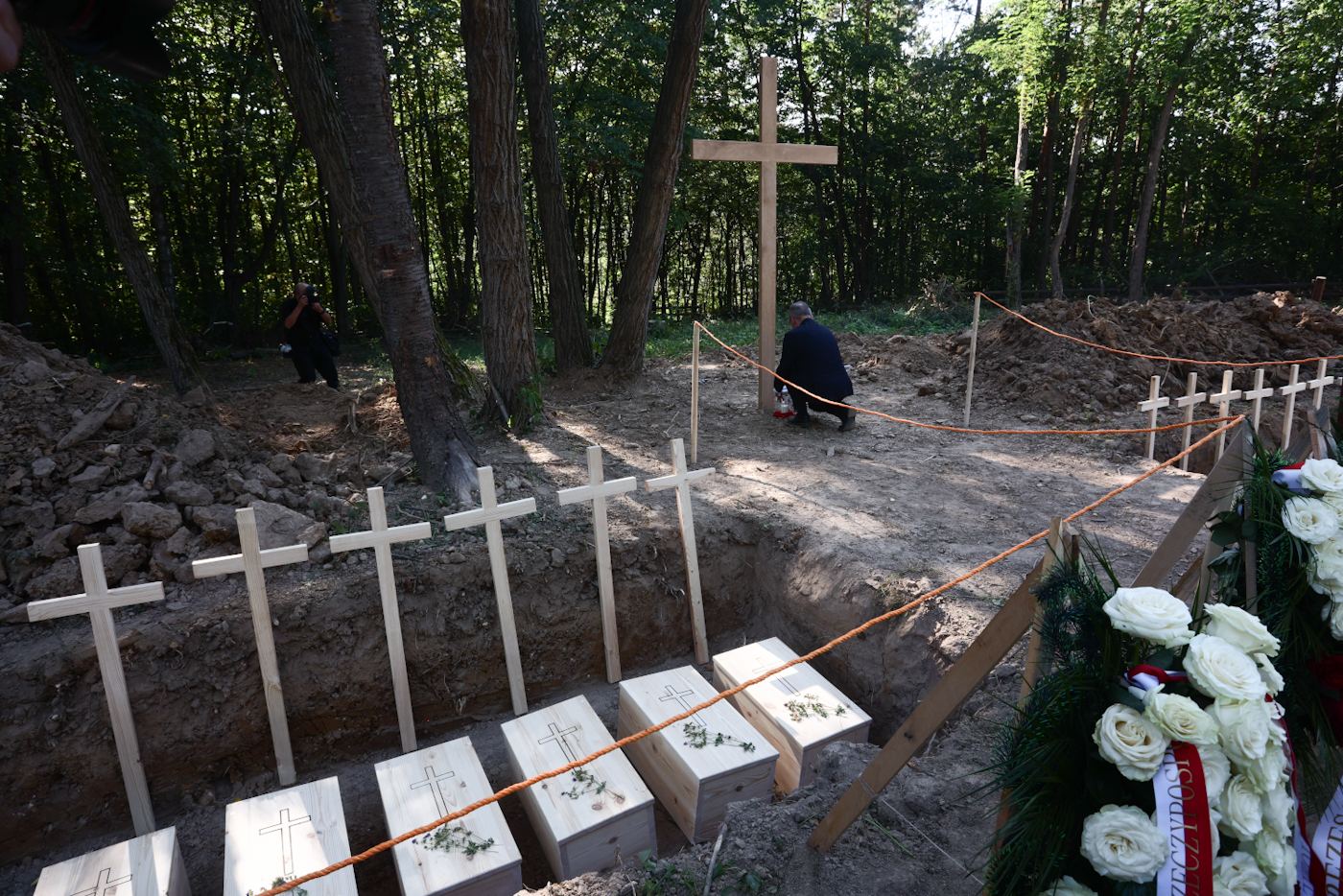
In a solemn and deeply moving ceremony, the remains of over 40 victims of the Volhynia massacre, exhumed earlier this year in Puźniki, were finally laid to rest. Among the victims were women, men, and children—innocent civilians brutally murdered during the ethnic cleansing of Poles in Volhynia and Eastern Galicia during World War II.
The burial ceremony marks a crucial act of remembrance and justice, restoring dignity to those who were denied it in life and in death. The massacre in Puźniki is one of the many tragic episodes of the Volhynia genocide, where entire Polish villages were annihilated by Ukrainian nationalist forces in 1943-1945.
This year’s exhumations, carried out by Polish and Ukrainian experts under the coordination of the Institute of National Remembrance (IPN), uncovered a mass grave containing the remains of at 40 individuals. The discovery adds to the growing body of evidence documenting the scale and brutality of the massacres.
A special message from the President of the Republic of Poland was read aloud during the ceremony. In his letter, Karol Nawrocki underscored the moral and historical significance of the burial, calling it a gesture of long-overdue justice and remembrance.
Anyone who has even heard about the genocide in Volhynia, Podolia, and Galicia cannot remain indifferent to this history. No righteous, honest person – and certainly no one who calls themselves Polish – can consider this tragedy to be an insignificant, distant episode in history, unnecessarily occupying our attention more than 80 years later,
wrote the President of Poland in a letter read by Marcin Przydacz, head of the International Policy Bureau at the Chancellery of the President of Poland.
For us Poles, today's ceremony has the significance of a momentous symbol. A symbol that will begin a lasting process – a process of sincere forgiveness and reconciliation. Therefore, I express my hope and expectation that it will soon be followed by further burials of victims – in all the places where genocidal crimes were committed against Poles.Today, no arguments or interests justify a situation in which the remains of victims are still waiting for a dignified burial, and the circumstances of their deaths are waiting to be reliably documented and commemorated, wrote Polish President Karol Nawrocki
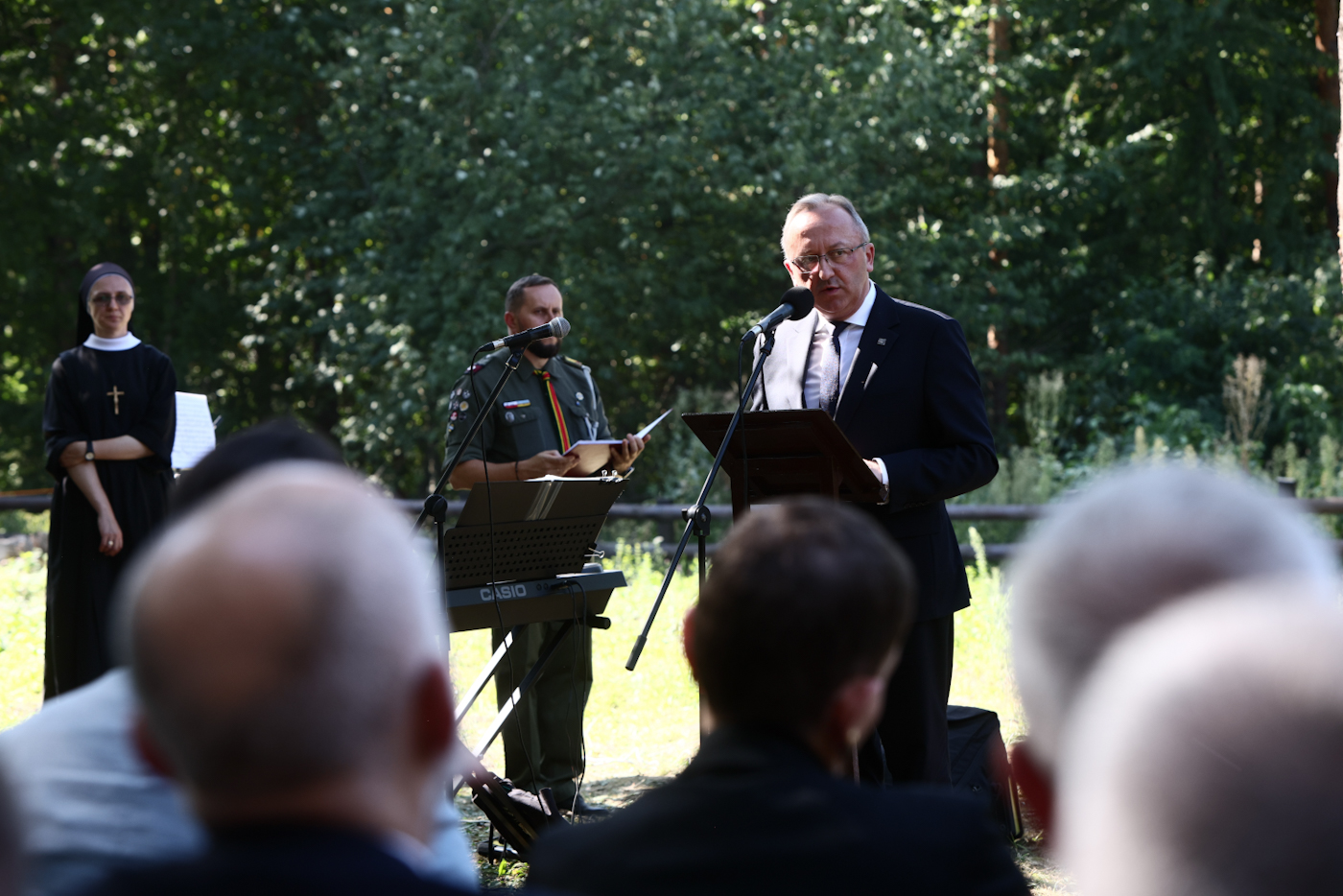
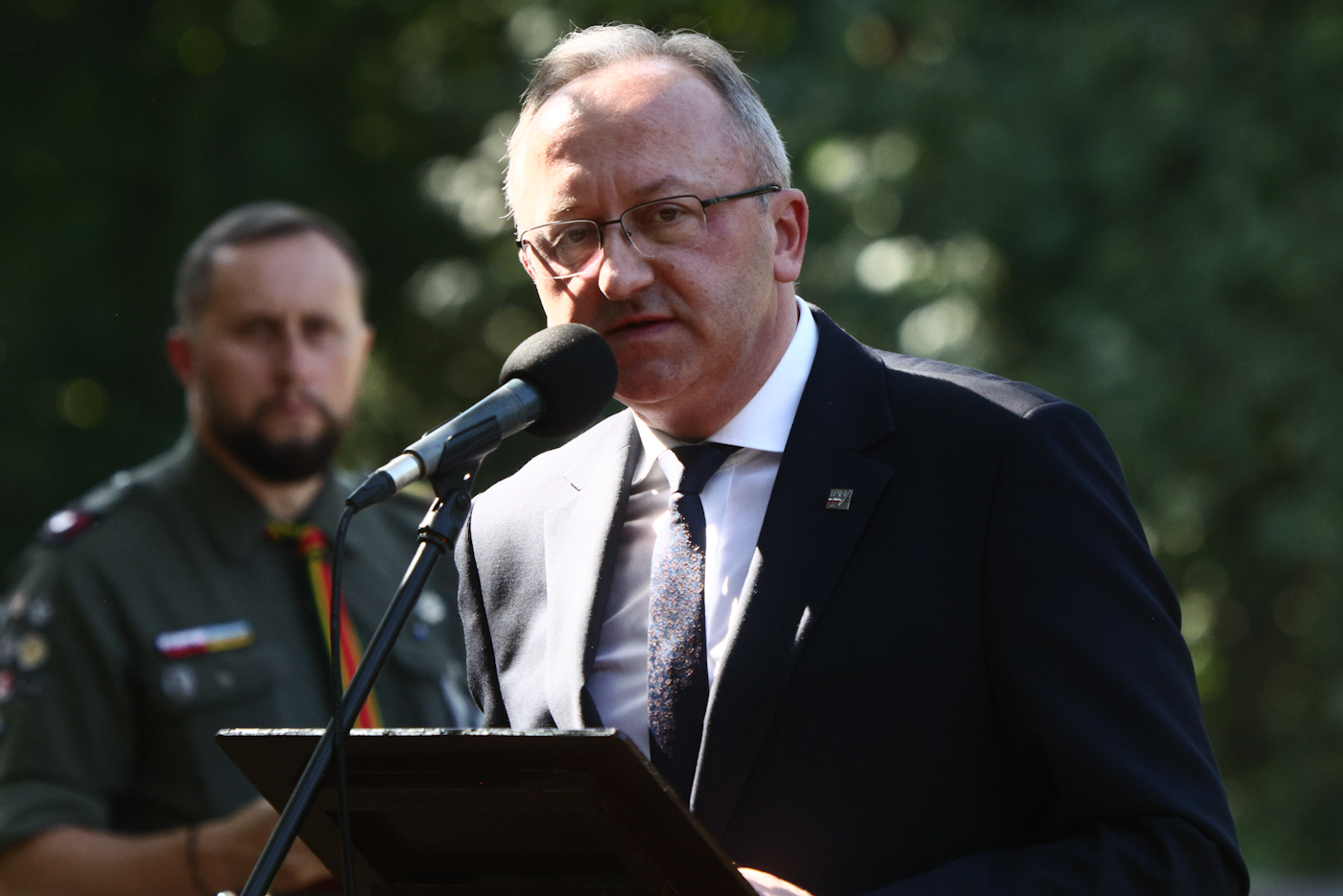
Representing the Institute of National Remembrance at the funeral was Deputy President Prof. Karol Polejowski, who emphasized the importance of preserving historical memory and honoring the victims with proper burials.
Today, we are burying 42, 43, or perhaps 46 victims of crimes committed 80 years ago, as genetic testing will reveal. It is safe to say that thanks to memory, a desire has survived and is now being realized. So that we, Poles and Ukrainians, can meet together in this cemetery and bury those who deserve a Christian burial. Only on memory and truth can we build reconciliation and a common, good future (...) More than 130,000 of our compatriots are still waiting to be exhumed, identified, and buried. Their blood has soaked into their native soil. Just as today, the blood of Ukrainian soldiers and civilians who are dying defending their homeland against the aggression of our common enemy, Russia, is soaking into their native soil, said Prof. Karol Polejowski
The funeral ceremony for the victims of the Volhynia massacre was attended by: Małgorzata Kidawa-Błońska, Marshal of the Senate of the Republic of Poland; Marta Cienkowska, Minister of Culture and National Heritage; Tatiana Bereżna, Minister of Culture and Strategic Communications of Ukraine; and Adrianna Garnik, Director of the Museum of Cursed Soldiers and Political Prisoners of the Polish People's Republic. The ceremony, attended by representatives of the Polish state, local Ukrainian authorities, clergy, and the families of the victims, was both a commemoration and a call to continue efforts to locate and identify the remains of Polish civilians who perished during the massacres in Volhynia.
For decades, political tensions and restrictions prevented the proper exhumation and burial of these victims. The burial in Puźniki is thus a milestone in Polish-Ukrainian cooperation on historical memory and a testament to the resilience of truth in the face of silence and denial.
As the white coffins were lowered into the ground, prayers and silence filled the air—an overdue moment of rest for those who lost their lives in unimaginable circumstances.
This burial is not the end—it is part of a wider mission to remember, to seek truth, and to ensure that the victims of the Volhynia massacre are never forgotten.