
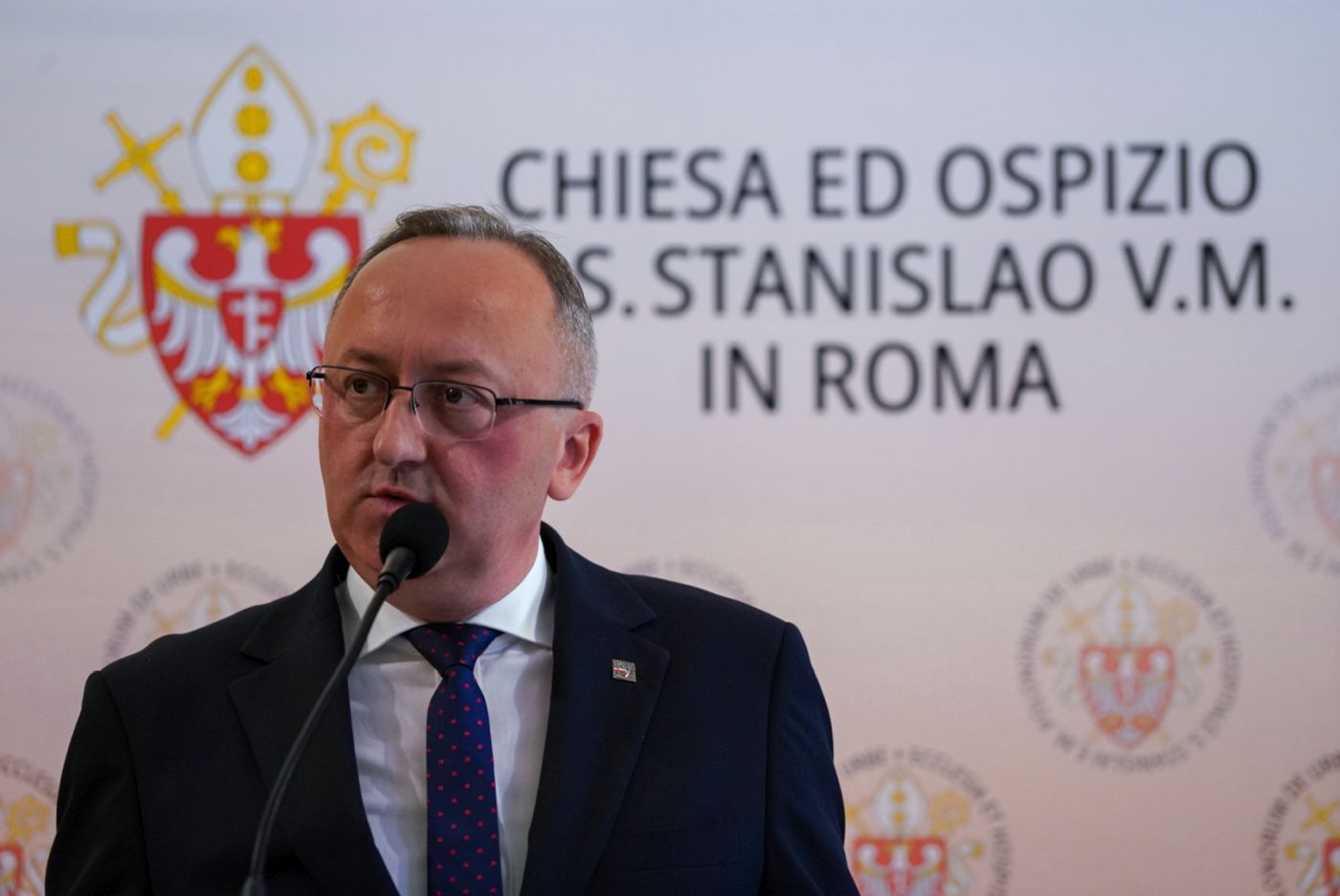
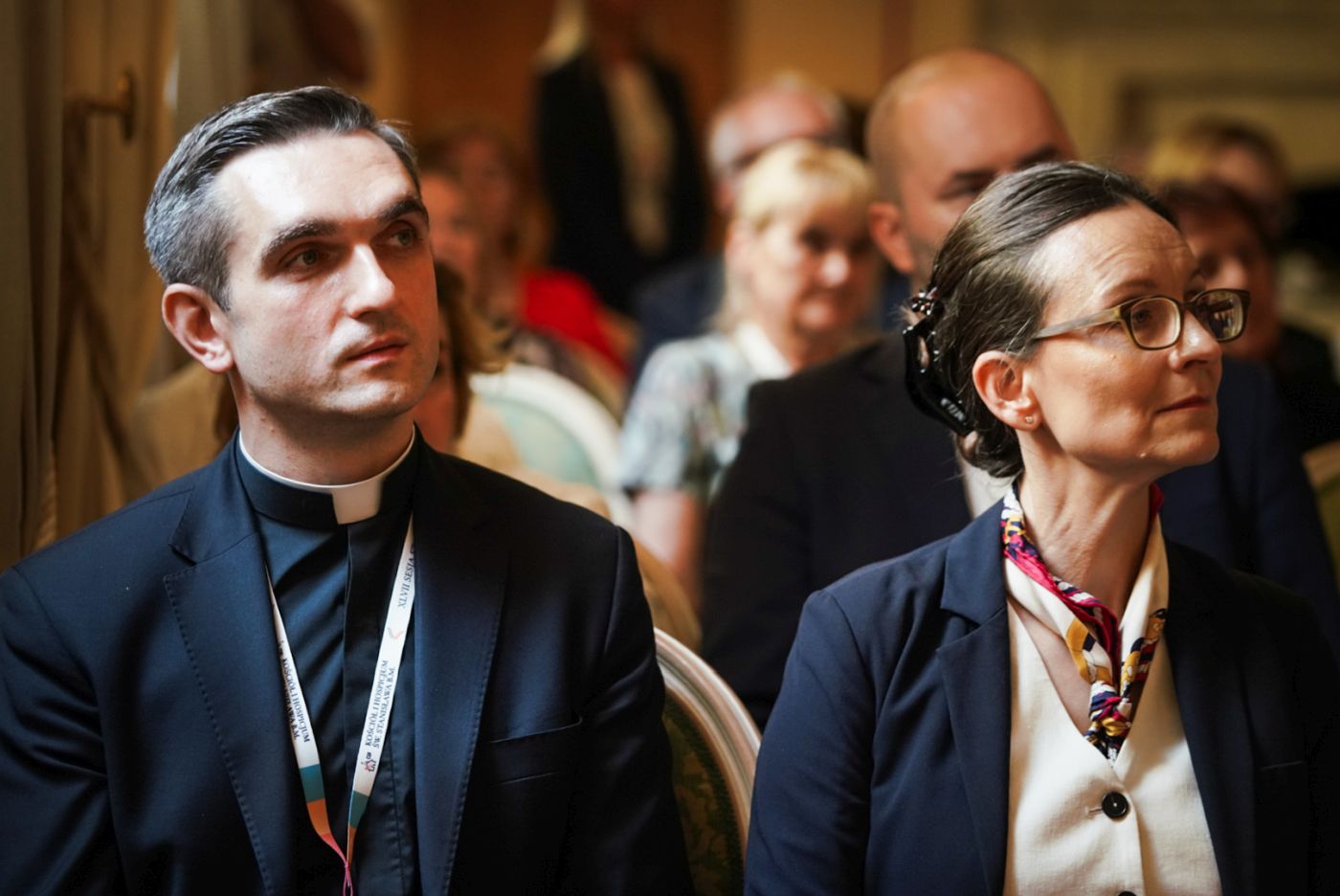
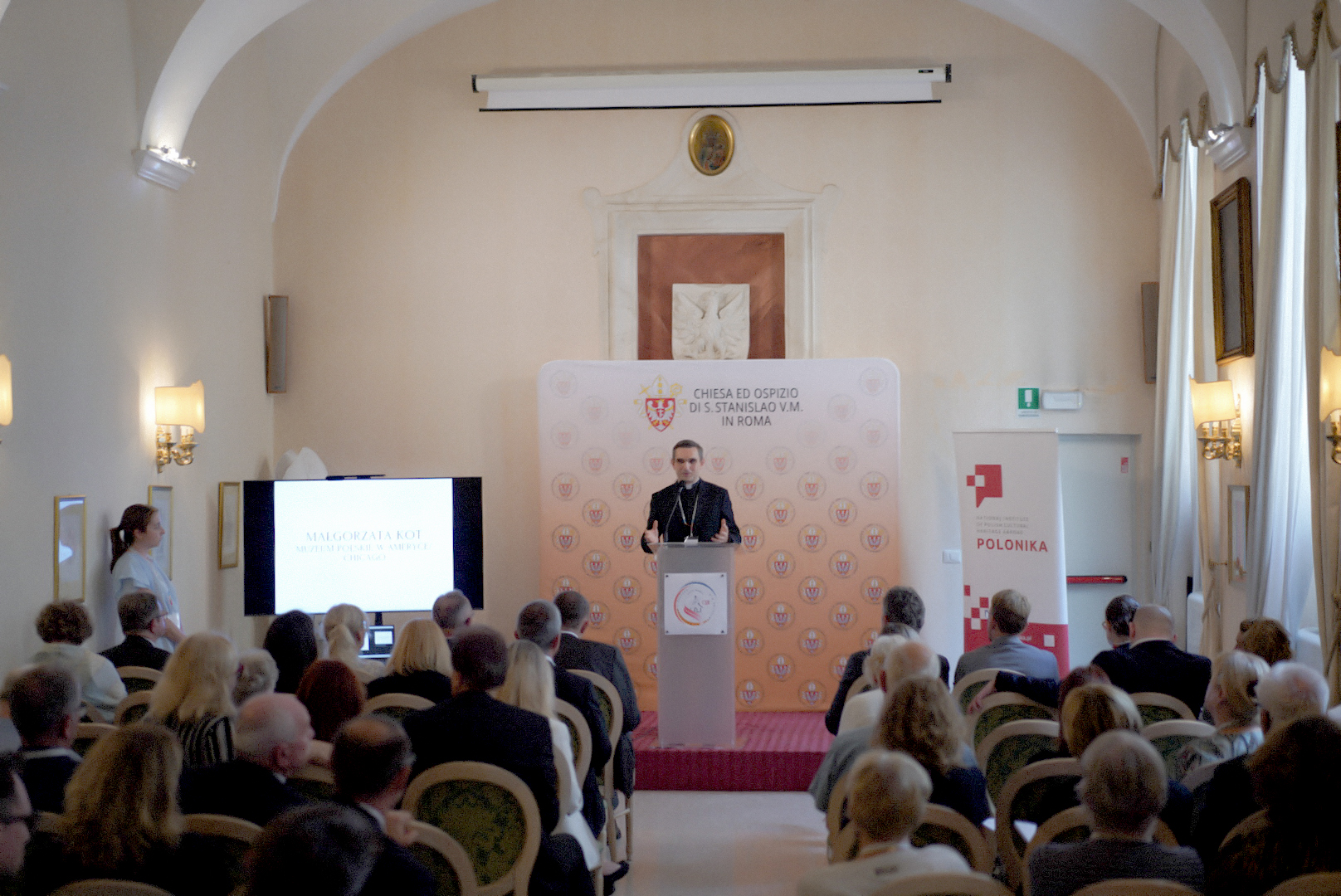
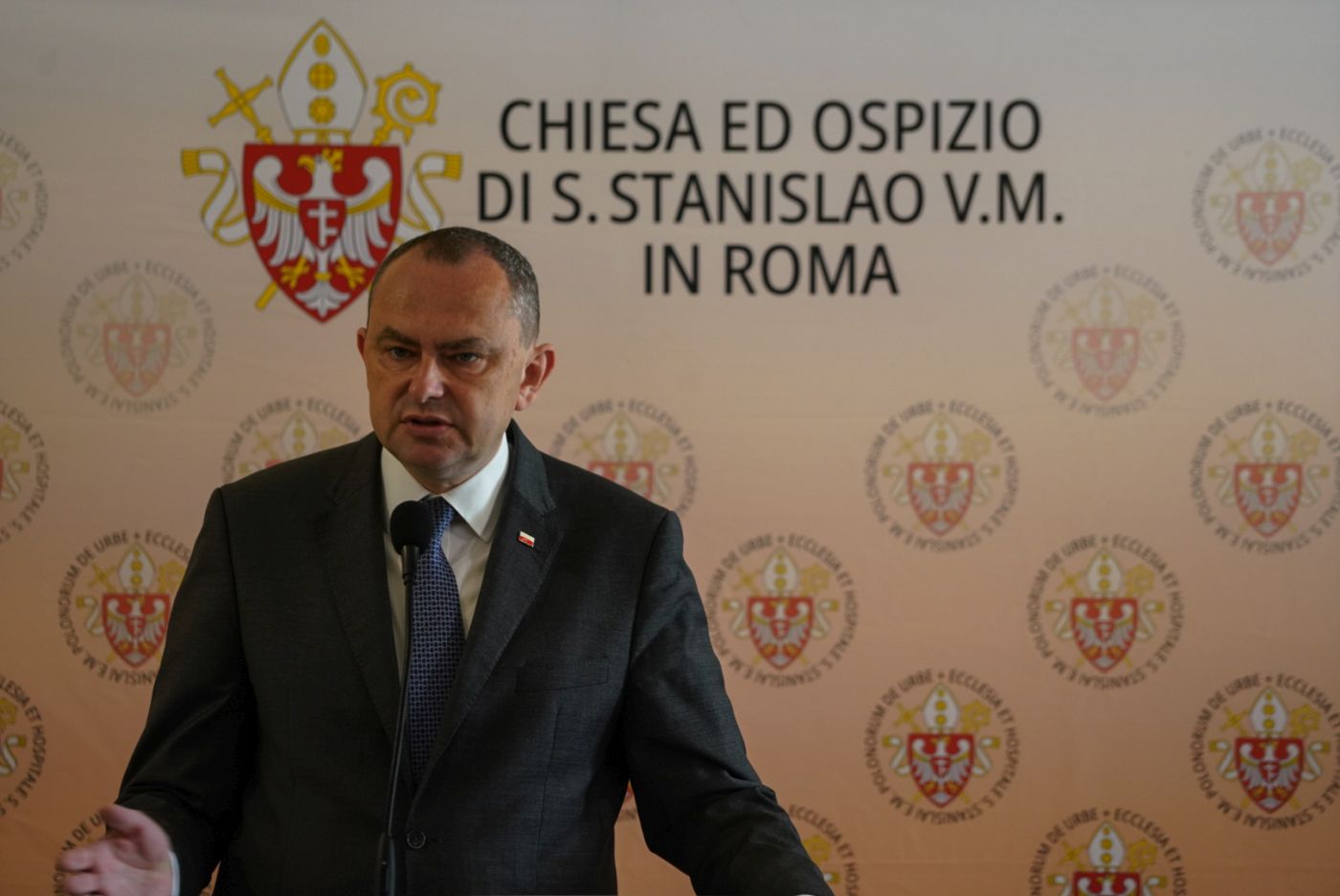
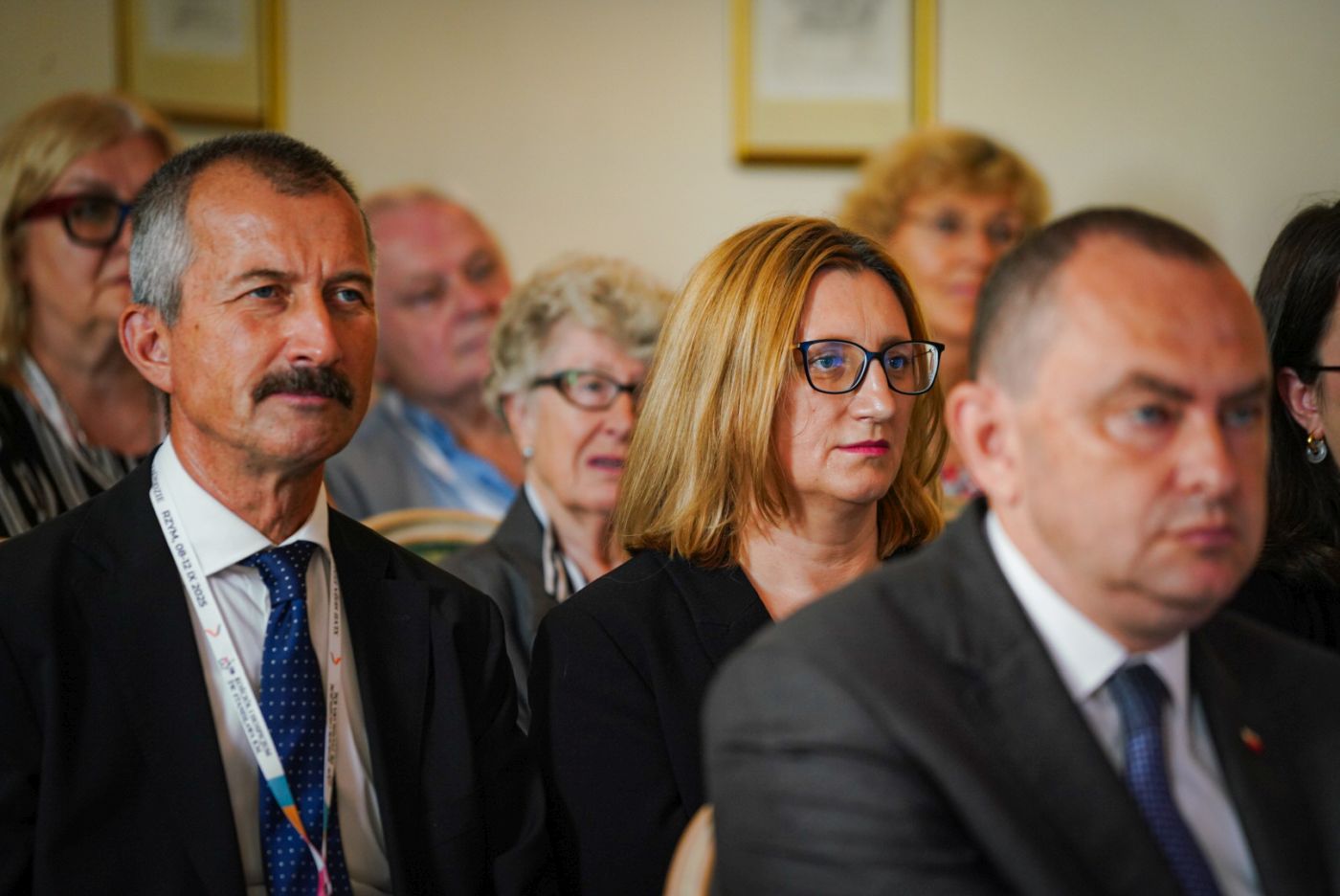
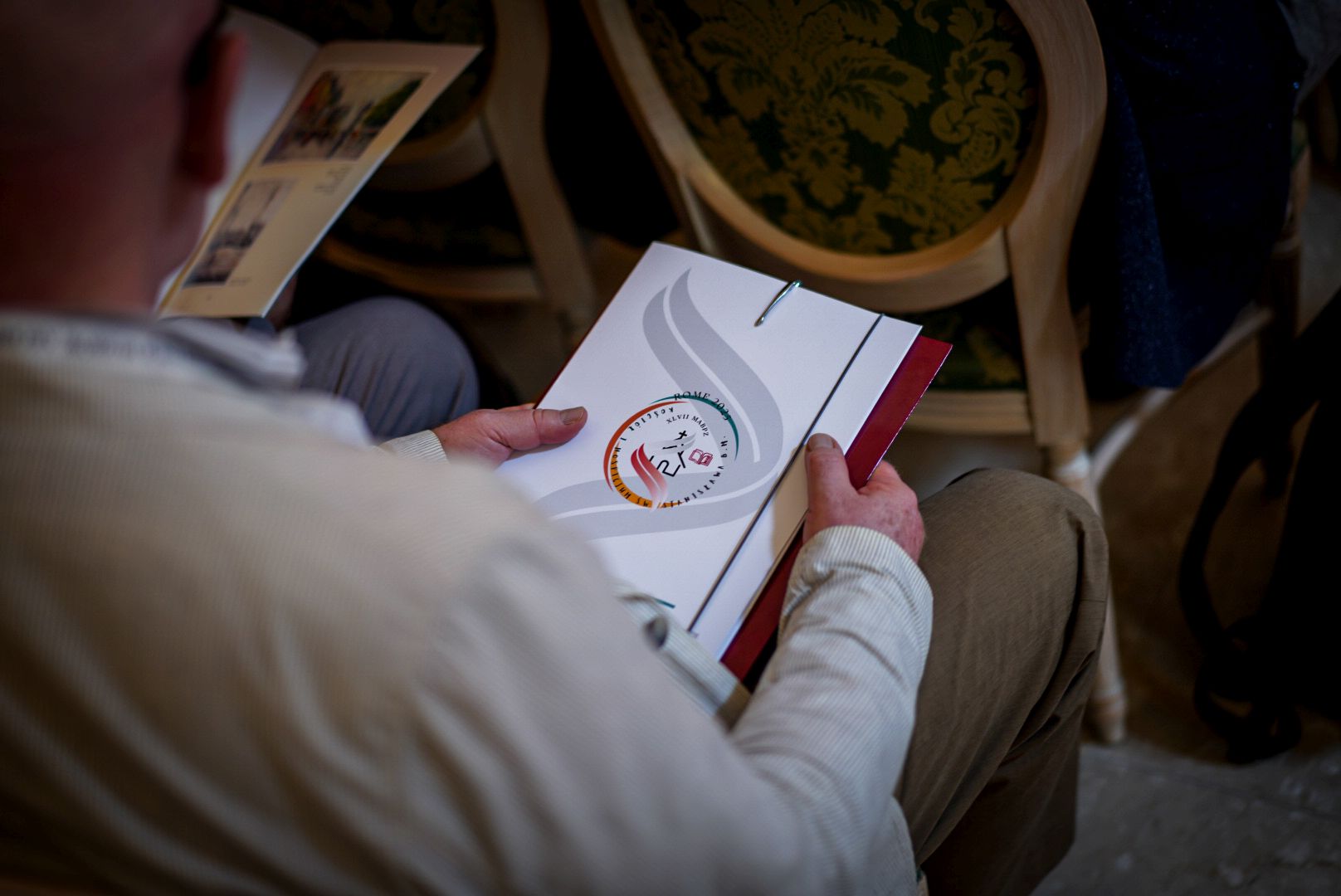
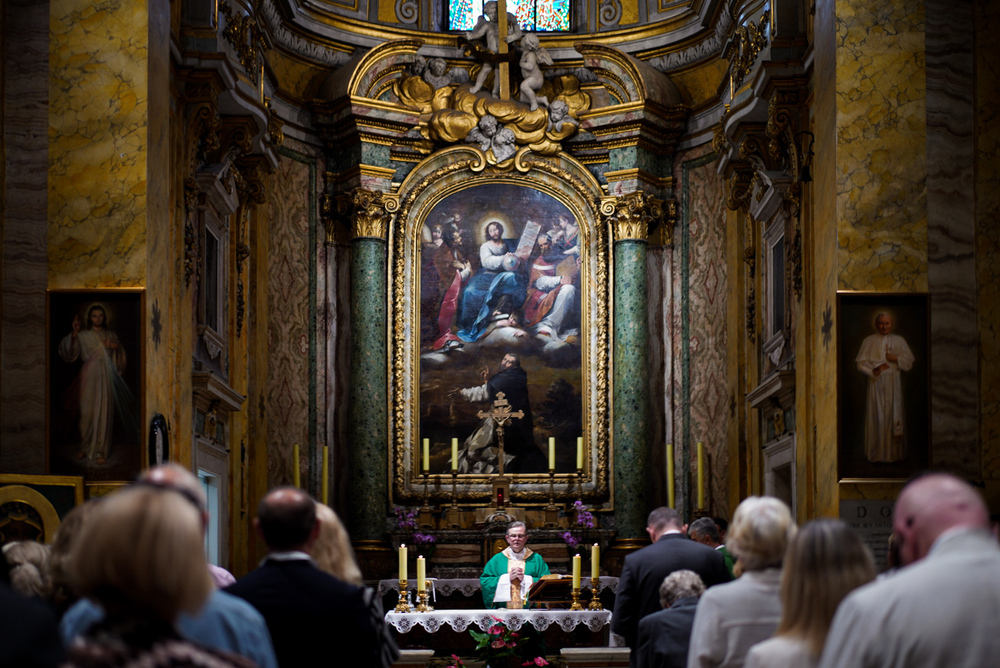
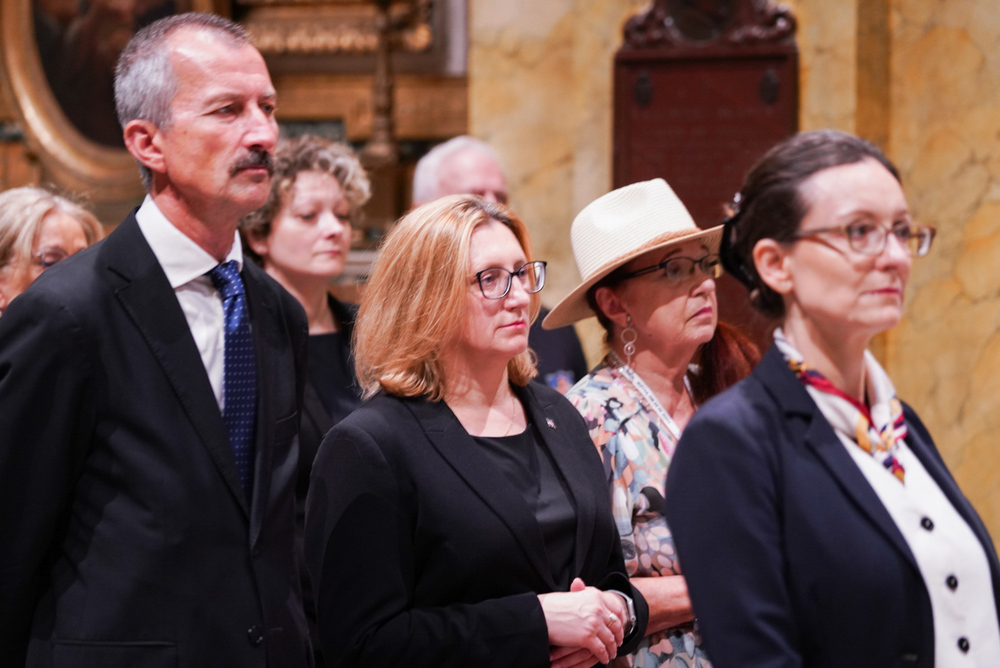
“It is our duty to preserve the memory of Poland’s great history, to link it with the future, and to highlight our achievements,” stated Prof. Karol Polejowski, Deputy President of the Institute of National Remembrance, during the opening ceremony of the 47th Session of the Permanent Conference of Polish Museums, Archives, and Libraries in the West, held in Rome on 9 September 2025.
The 47th session is hosted and organized by the Church and Hospice of St. Stanislaus Bishop and Martyr in Rome. The central theme of the conference is the fate of Poles outside the country’s borders following the end of the Second World War.
During the opening remarks, Prof. Polejowski emphasized the fact that:
“For the Institute of National Remembrance, the memory of our history – particularly the complex history of the 20th century—is of utmost significance. Without it, we would lose our identity, our sense of direction. We would no longer be certain which path to follow.The memory we cultivate is the one which we pass on to our successors. We firmly believe that the values we uphold and which we consistently refer to – God, the Homeland, and Honour – are inalienable.”
Prof. Polejowski further noted that the IPN Archive closely cooperates with numerous libraries and museums abroad to ensure the continuity of historical memory for future generations. He also highlighted the significance of the Institute’s international Trails of Hope. The Odyssey of Freedom project which presents the fate of Poles during the Second World War and in the post-war period.
The inauguration was attended, among others, by Marzena Kruk, Director of the IPN Archive, along with representatives of ministries and institutions from around the world.
During the second day of the MABPZ meeting, IPN Archive Director, Marzena Kruk, spoke about ongoing projects including the straty.pl documentation program, the main goal of which is to compile a list of citizens of the Second Polish Republic who were subjected to all kinds of repression by the German occupiers between 1939 –1945.
“Using archival materials from our collections, but also from the resources of other institutions in Poland, we obtain information and enter it into the database so that we can at least come closer to naming each of the victims of German barbarism. We include in the records the data of people who died at the hands of the Germans, but we also enter the names of people who were repressed in other ways, such as those sent to forced labor deep inside the Third Reich.
***
The Permanent Conference of Polish Museums, Archives and Libraries in the West (MABPZ) is an organization uniting Polish cultural institutions operating outside the country’s borders. These centers, located across nine countries on four continents, serve as bastions of Polish culture and hubs of the Polish diaspora, preserving the traditions and historical heritage of the Polish nation.
The Conference’s principal aim is to coordinate the activities of its member institutions, which are committed to safeguarding and promoting Polish cultural achievements. From its inception, the organization has functioned as an informal association, without a central governing body or formalized structure.
The idea of establishing the Conference – as a forum for Polish cultural institutions in the West – was first brought up in 1977 during a meeting in Rapperswil, Switzerland, attended by representatives of the Polish Museum in Rapperswil, the Polish Historical Society, the Polish Library in Paris, and the Polish Institute and General Sikorski Museum in London. Over time, institutions from the United States, Canada, Australia, and Argentina joined the European members of the Conference.
The primary form of MABPZ's activity is the annual plenary session.
The first formal session – the so-called Founding Conference – was held in 1979 in Rapperswil, Switzerland. During the 1981 session at Château de Montrésor in France, the Conference adopted its official statutes. In 1987, during the session in Solothurn, Switzerland, a resolution was passed stipulating that membership in MABPZ would be reserved exclusively for institutions operating in the spirit of Polish independence – thereby precluding cooperation with the communist authorities of the Polish People's Republic.
Each session consists of two parts: a reporting session, attended solely by representatives of member institutions, and an academic session, open to the public, during which papers are presented by individuals invited by the session's host institution.
The 17th session, held in Lublin in 1995, was the first to take place in Poland. It was organized by the Polish Library in London in cooperation with the Library of the John Paul II Catholic University of Lublin.
At the 38th session in 2016, the official MABPZ logo was presented for the first time—an initiative undertaken by the Polish Library in London.
Today, more than four decades since its founding, the Permanent Conference comprises 25 Polish institutions operating abroad. Over the years, it has seen the departure of two founding members: the Polish Institute and General Sikorski Museum in London, and the Museum of the Marian Fathers at Fawley Court, which was closed in 2009.