
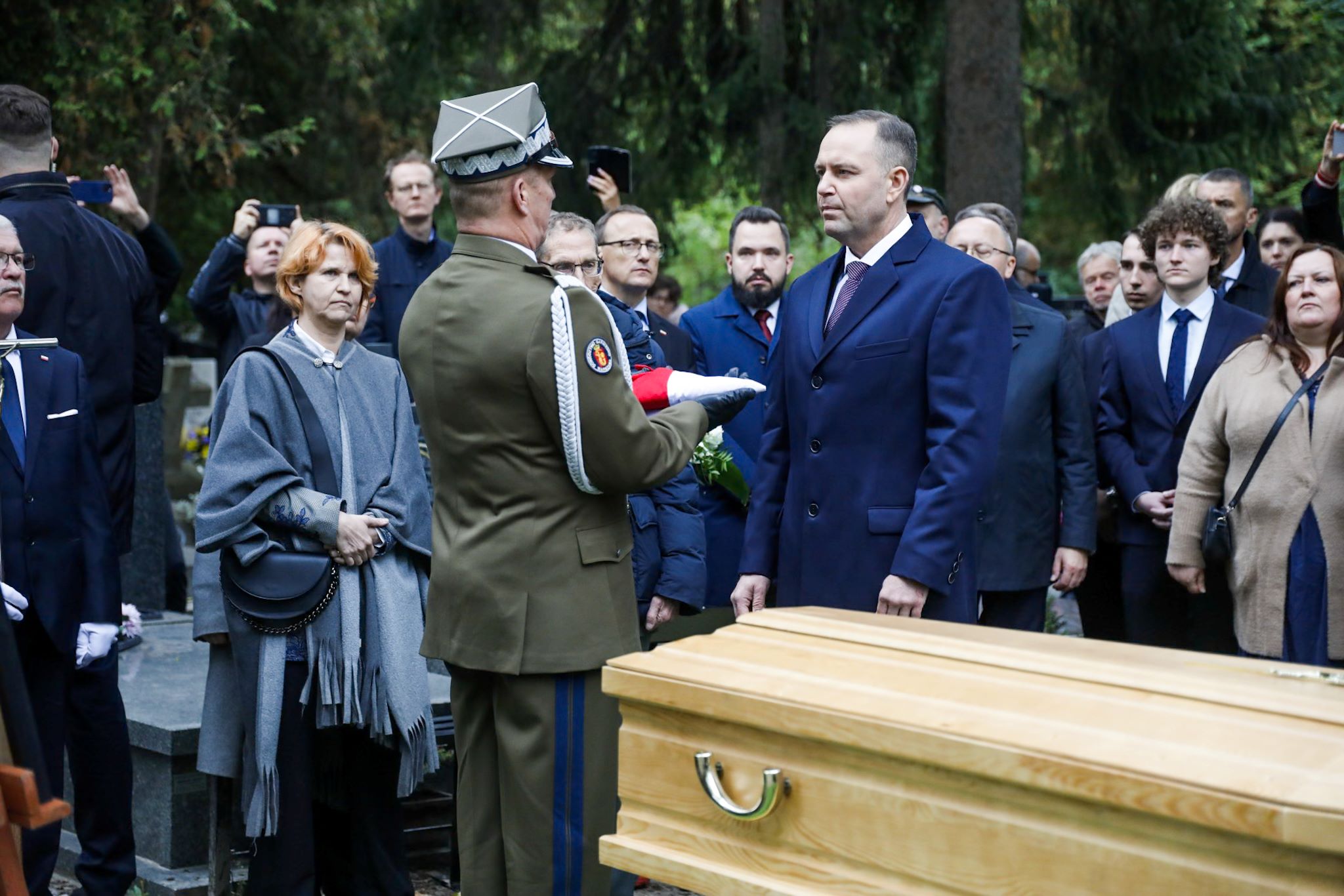

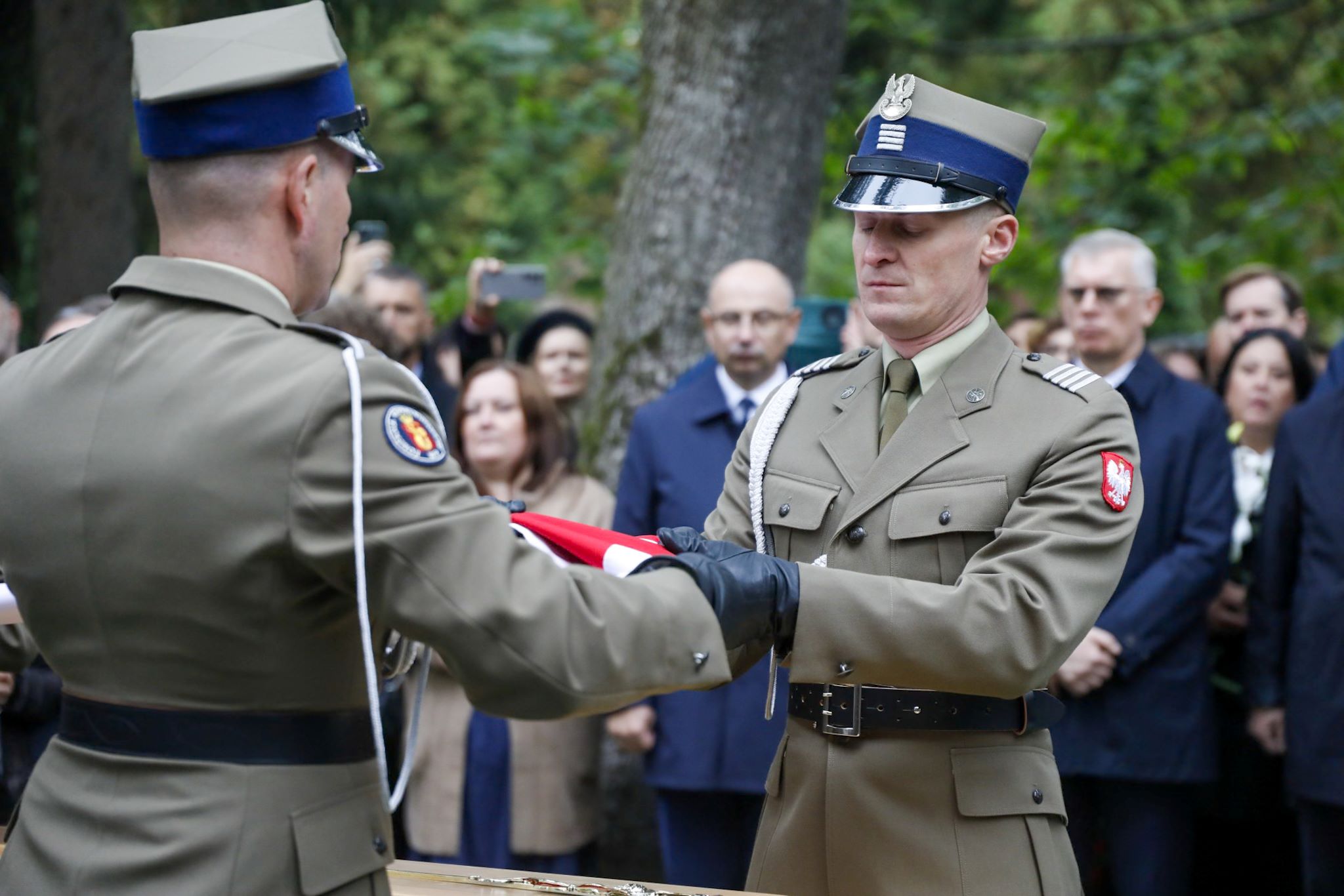
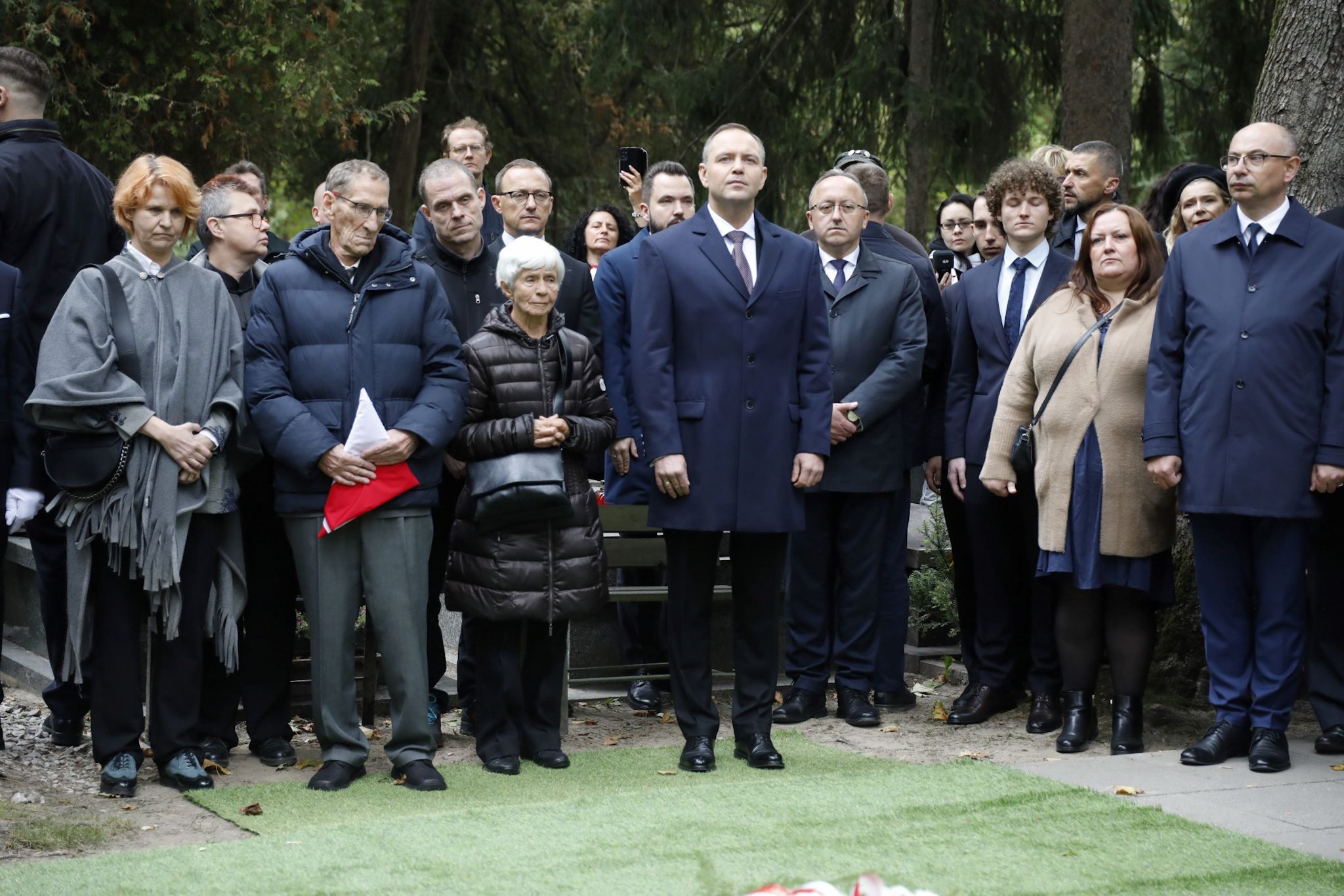
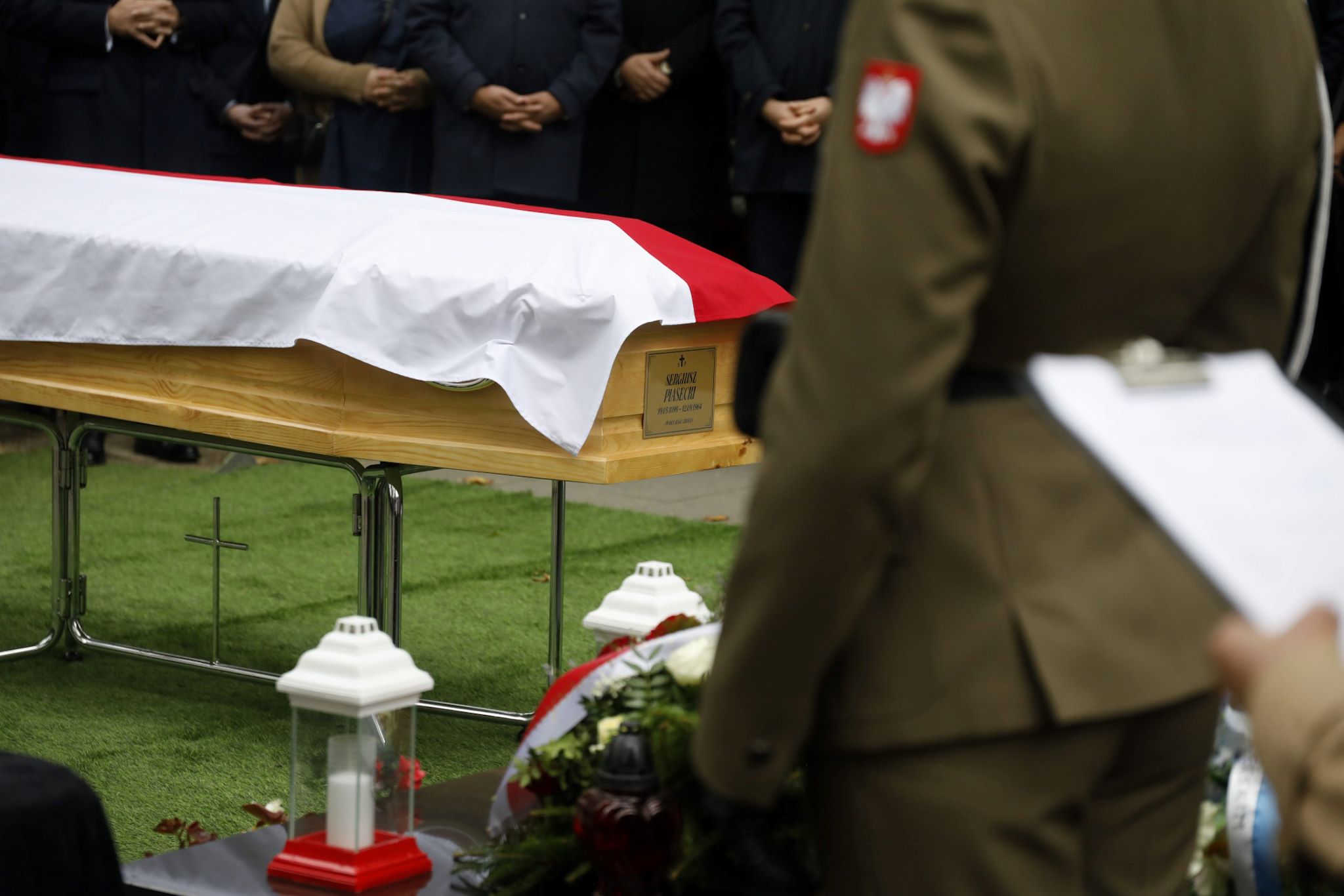
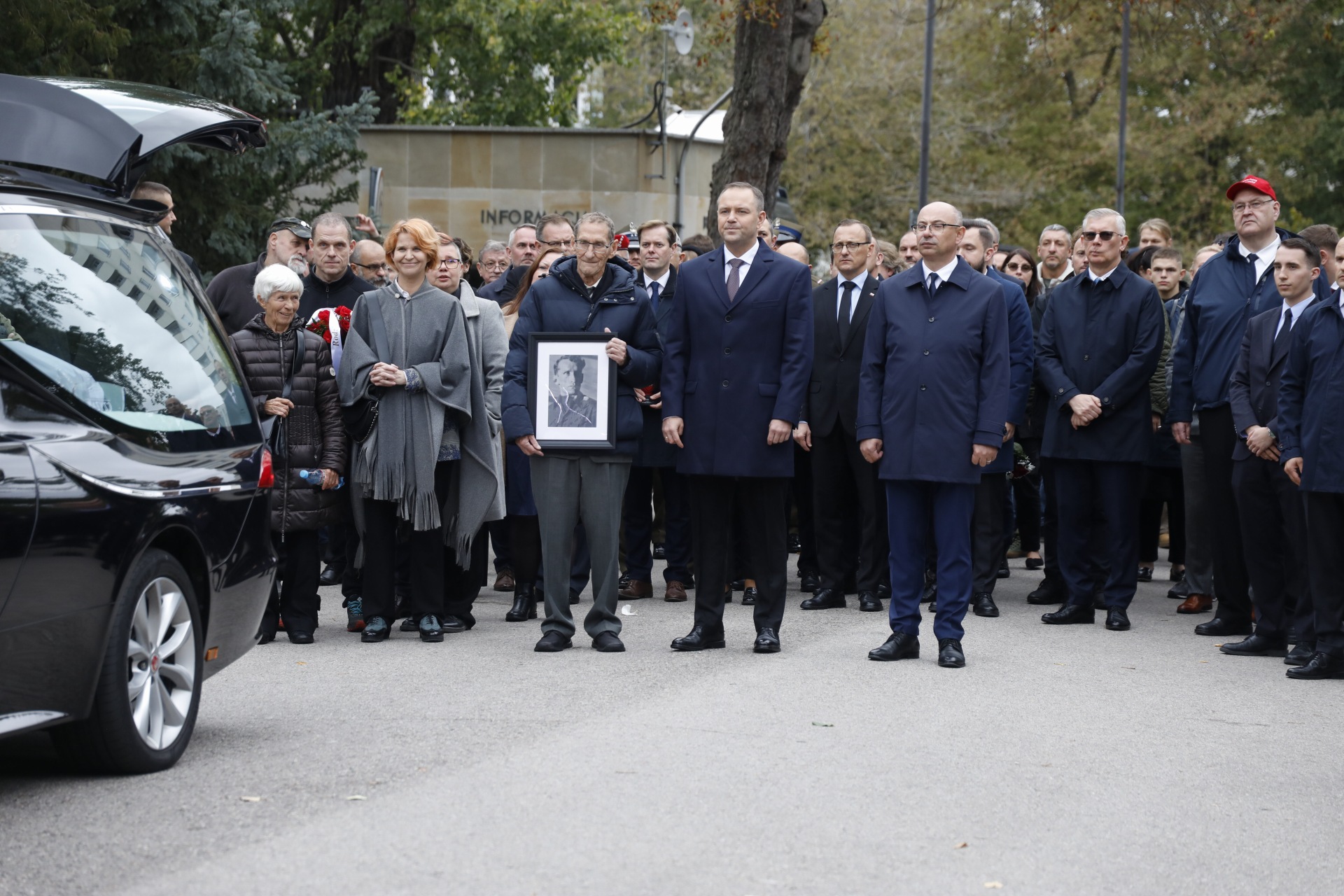
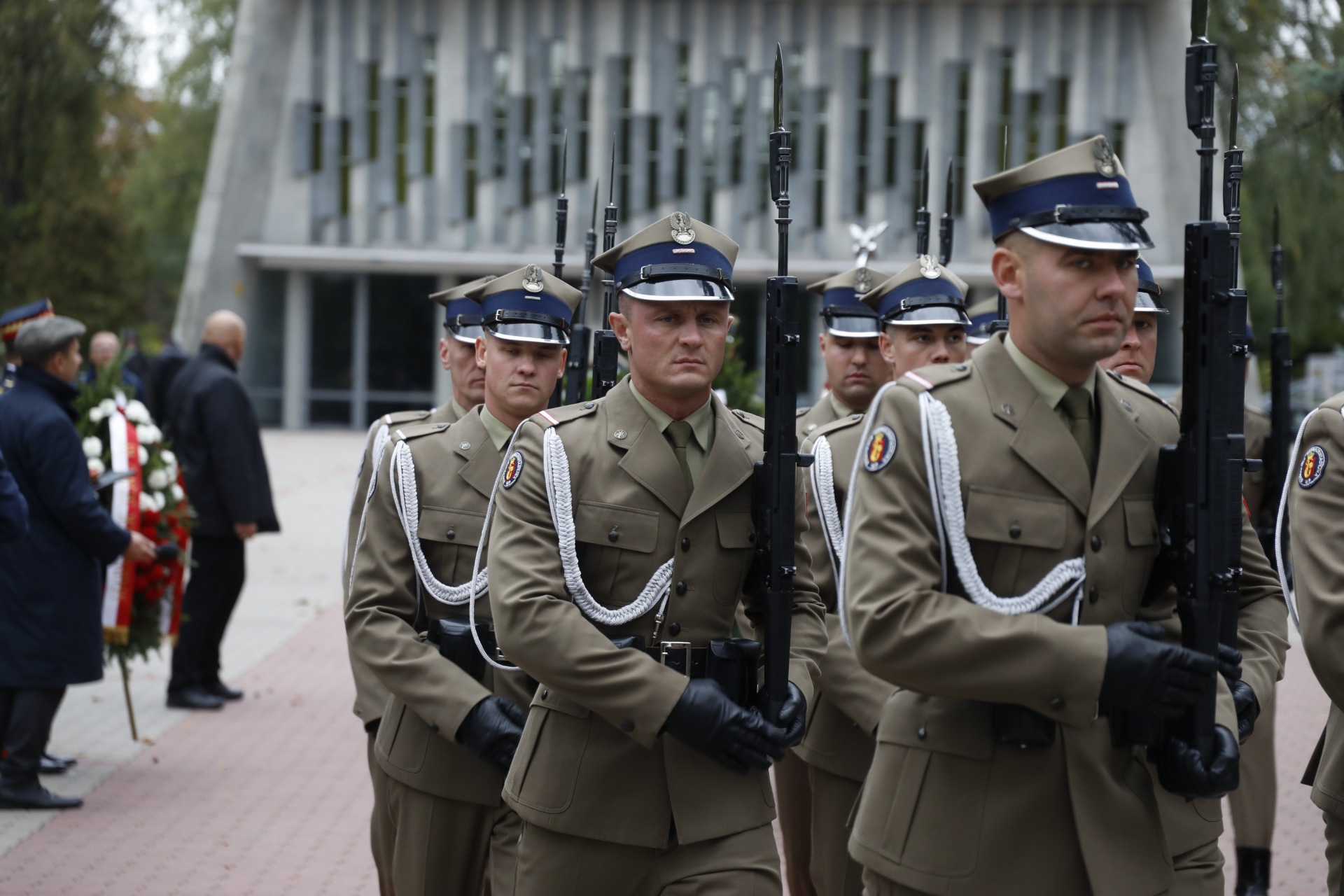
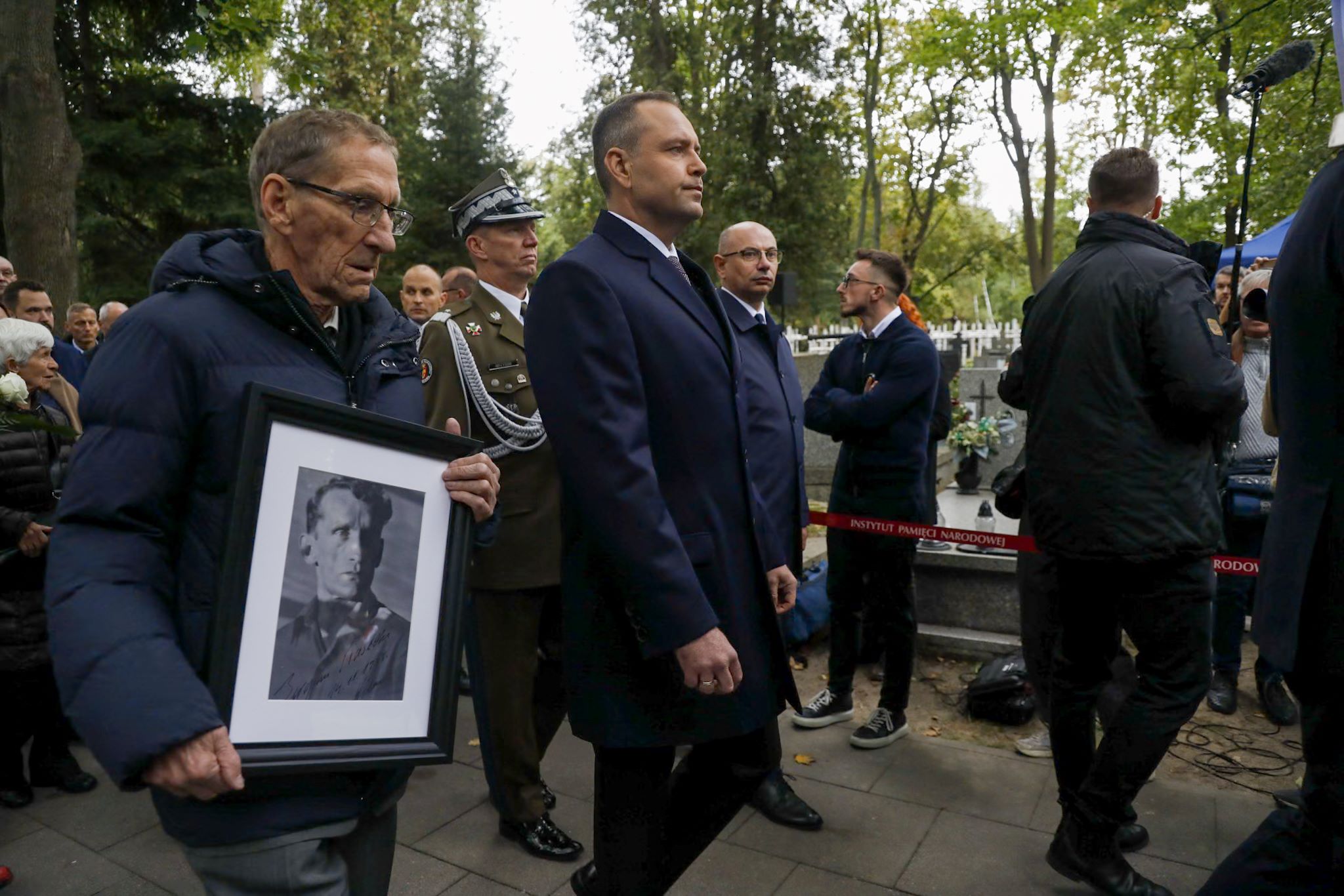
On 29 September 2025, in Warsaw, at the Field Cathedral of the Polish Army in Warsaw, funeral ceremonies were held for Sergiusz Piasecki – a participant in the Polish-Bolshevik War, intelligence officer, Home Army soldier, and distinguished writer.
The ceremony was a reburial. Piasecki had previously been laid to rest in Hastings, Great Britain. The IPN’s Office for the Commemoration of Struggle and Martyrdom, acting in agreement with Sergiusz Piasecki's family, undertook the exhumation of the writer's remains and their transfer to Warsaw.
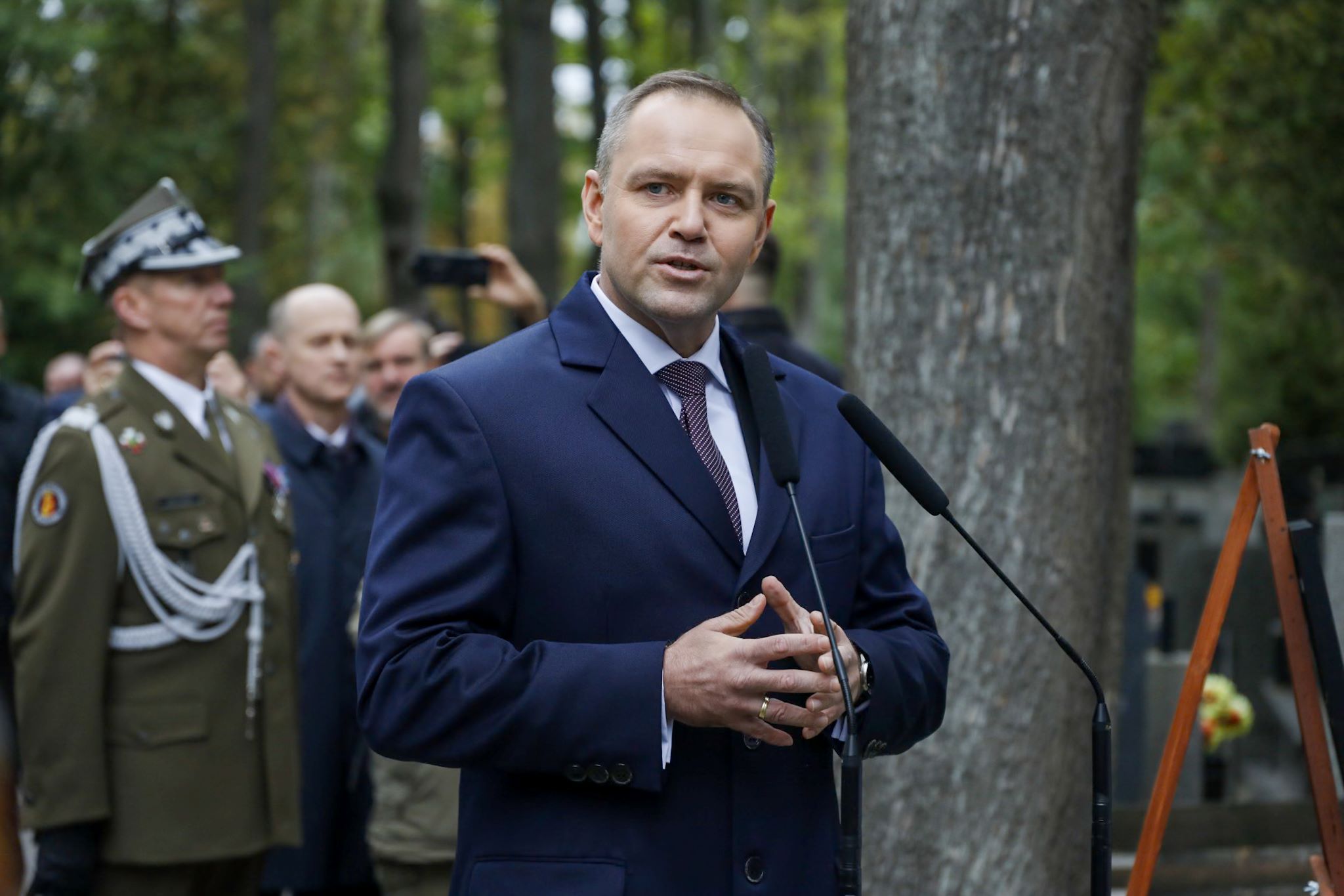
His complicated path—marked by both defeats and victories, and ultimately beautiful, has yet one more task to fulfill. With us are former prisoners, and perhaps there are also people watching who are still in the process of rehabilitation. I want to address you as well: look at Sergiusz Piasecki, whom the Republic bids farewell with great honor and deep respect as a national hero, whose road was winding and complex, said Karol Nawrocki.
The IPN was represented by Deputy Presidents Prof. Karol Polejowski, Mateusz Szpytma, Ph.D. and Prof. Krzysztof Szwagrzyk. The funeral ceremony was attended by the author’s son, Władysław Tomaszewicz, and the President of Poland, Karol Nawrocki.
A juvenile delinquent,1920 defender of Warsaw, avid anti-communist, crook and fraud, Intelligence agent, heavy drinker, drug addict, smuggler, robber, convict, death row inmate, prison troublemaker, novelist, conspirator, Home Army executioner (though not a member), émigré, laborer, political writer and finally cancer victim – all this was part of his life story, added Mr. President
While serving a prison term for armed robbery, he began writing. His "Lover of the Great Bear," account of a smuggler’s life on the Polish-Soviet border in the 1920s, earned him more than widespread acclaim; Melchior Wańkowicz and other great names of Polish literature campaigned for his release and in 1937 succeeded.
Owing life to one writer, he repaid his debt saving another. During WW2, he efficiently and ruthlessly executed people collaborating with the Germans in Vilnius, but refused to kill Józef Mackiewicz, doubting his guilt; as it turned out, Mackiewicz was indeed innocent.
After the war he returned to writing, creating his famous “The Memoirs of a Red Army Officer” (recently published by the IPN in English), or “The Tower of Babel,“ as well as a number of political essays.
Sergiusz Piasecki died in poverty on 12 September 1964, having earned and squandered a few fortunes. But then, he'd never cared much for money.
See also: