
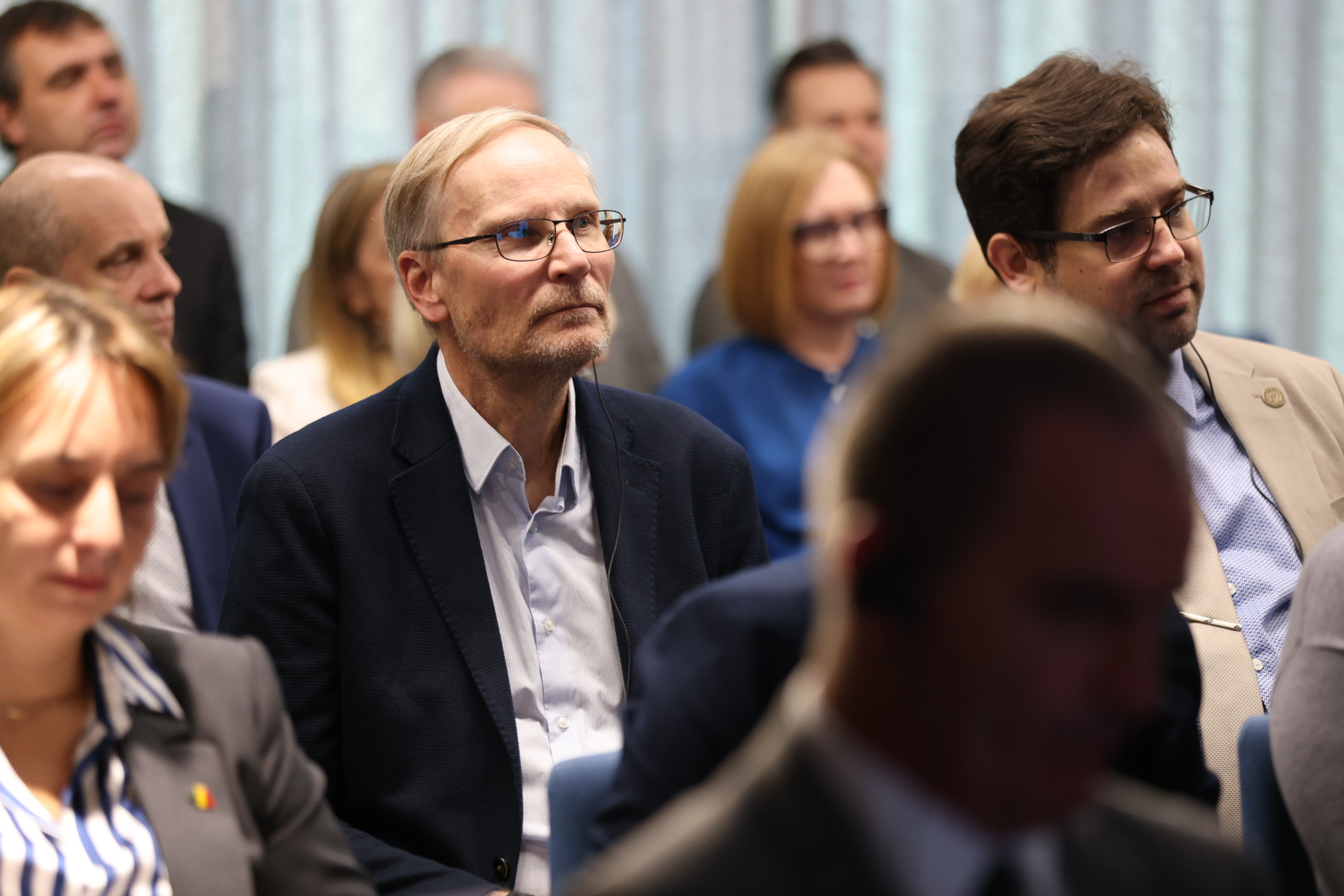
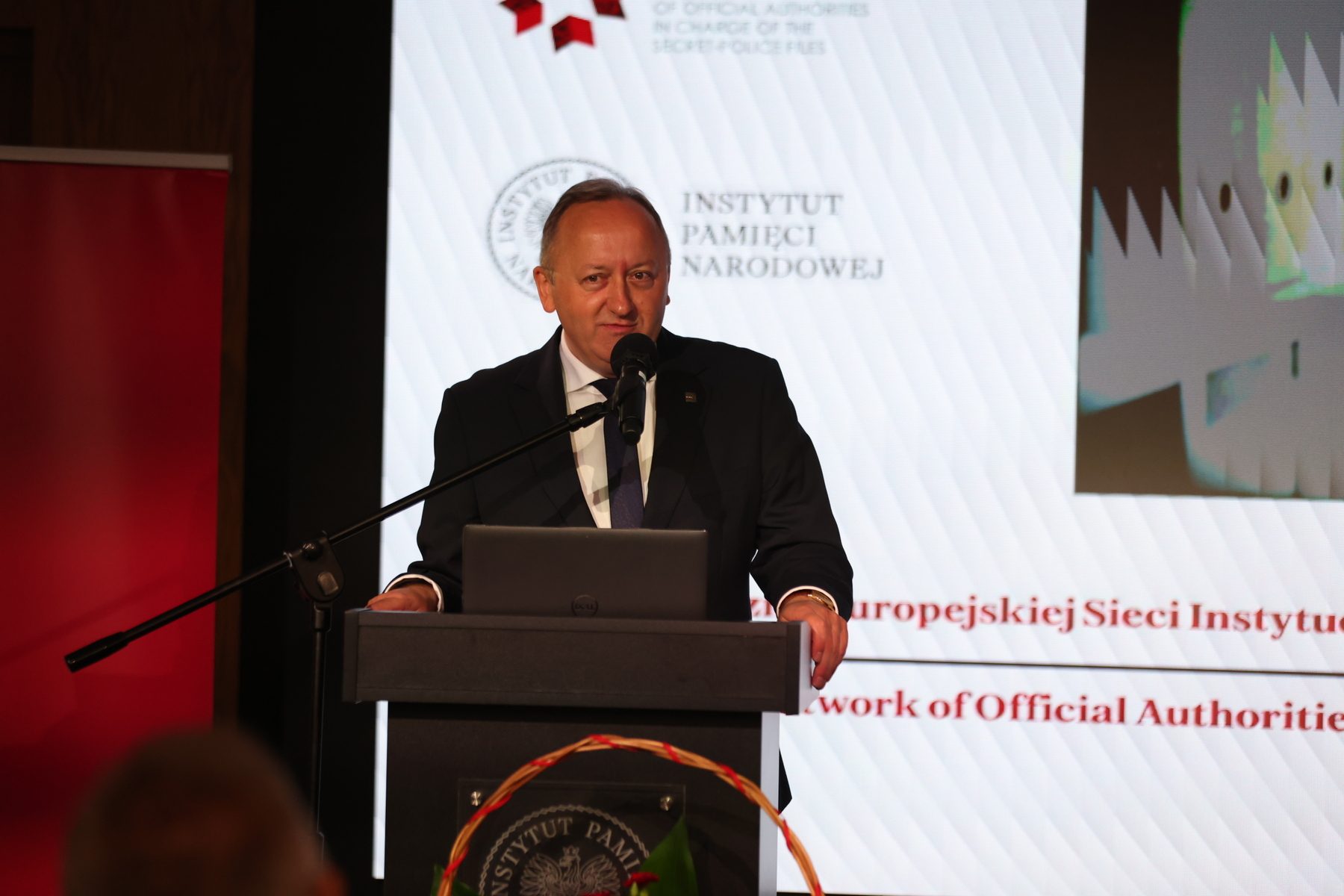
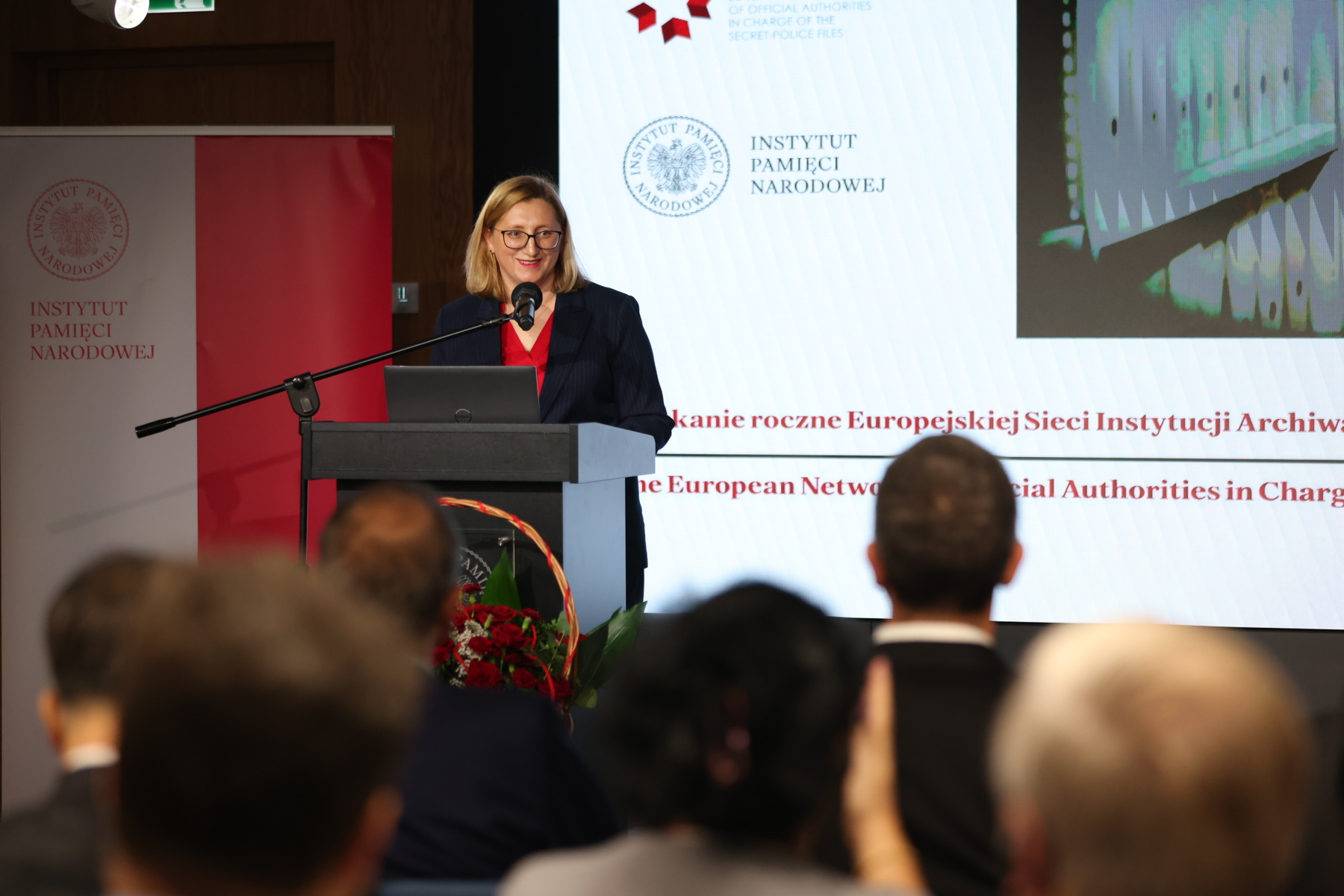
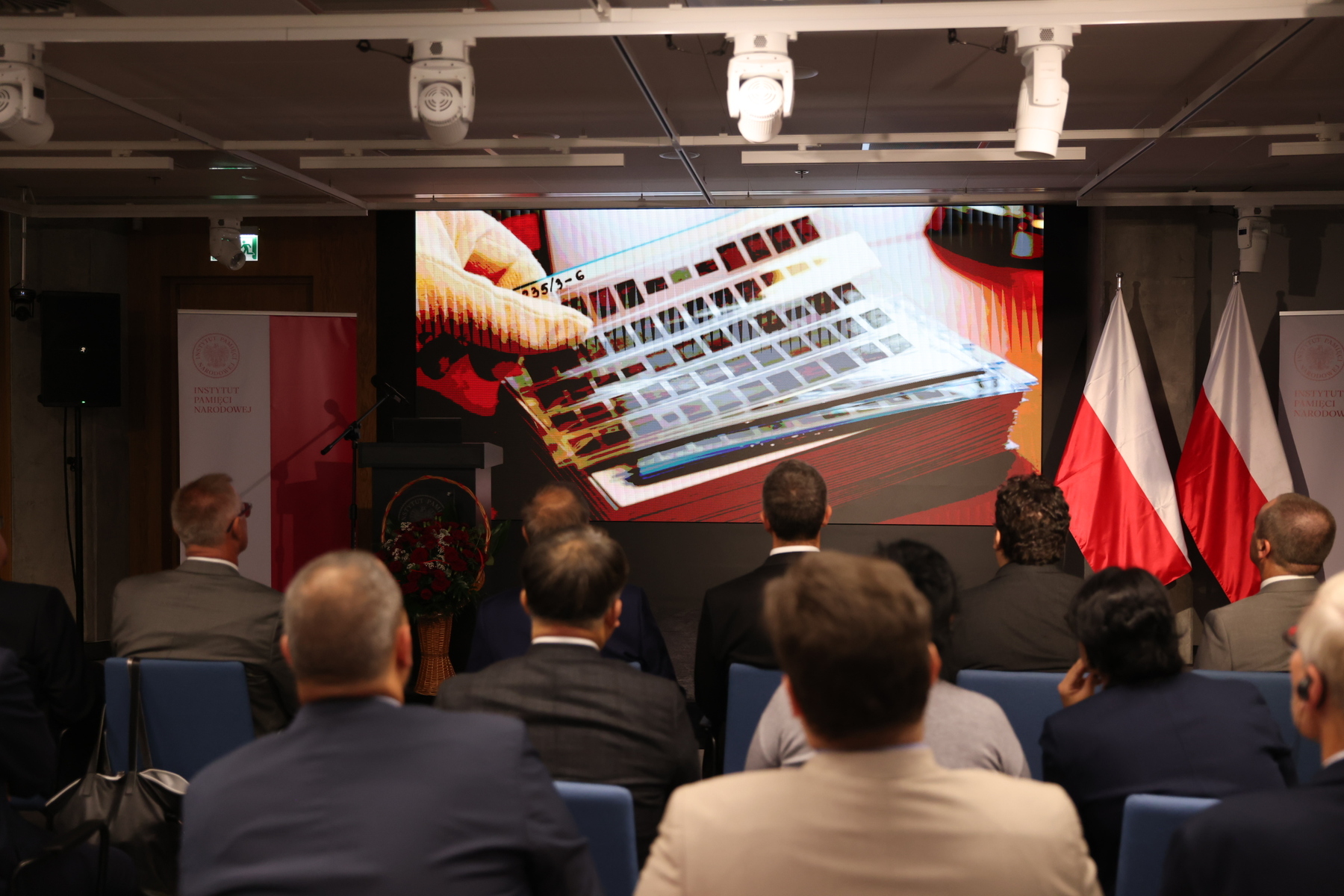
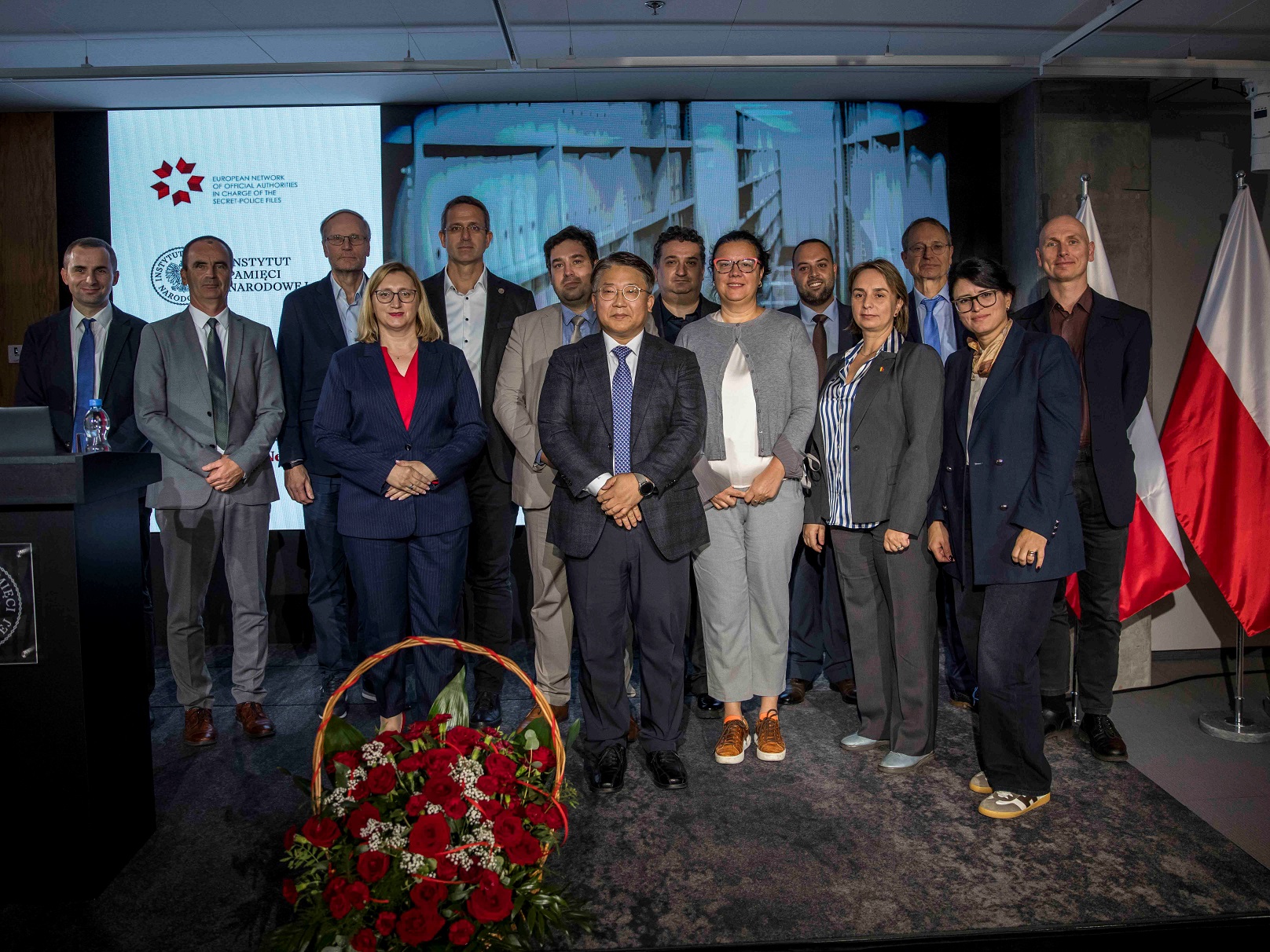

The participants of the event were welcomed by Marzena Kruk, the Director of the IPN Archive.
In his opening remarks, Prof. Polejowski emphasized the significance of this year’s conference, marking the conclusion of Poland’s presidency within the Network and its formal handing over to Romania. He also highlighted the close collaboration among member institutions in the fields of education, research, and publishing, stating that:
“Our mission is to safeguard the archives while ensuring they remain accessible to both citizens and scholars. These records must serve as tools of education and remembrance. We must never allow them to be used for short-term political gains. We must always remember that they tell the stories of our fellow citizens.”
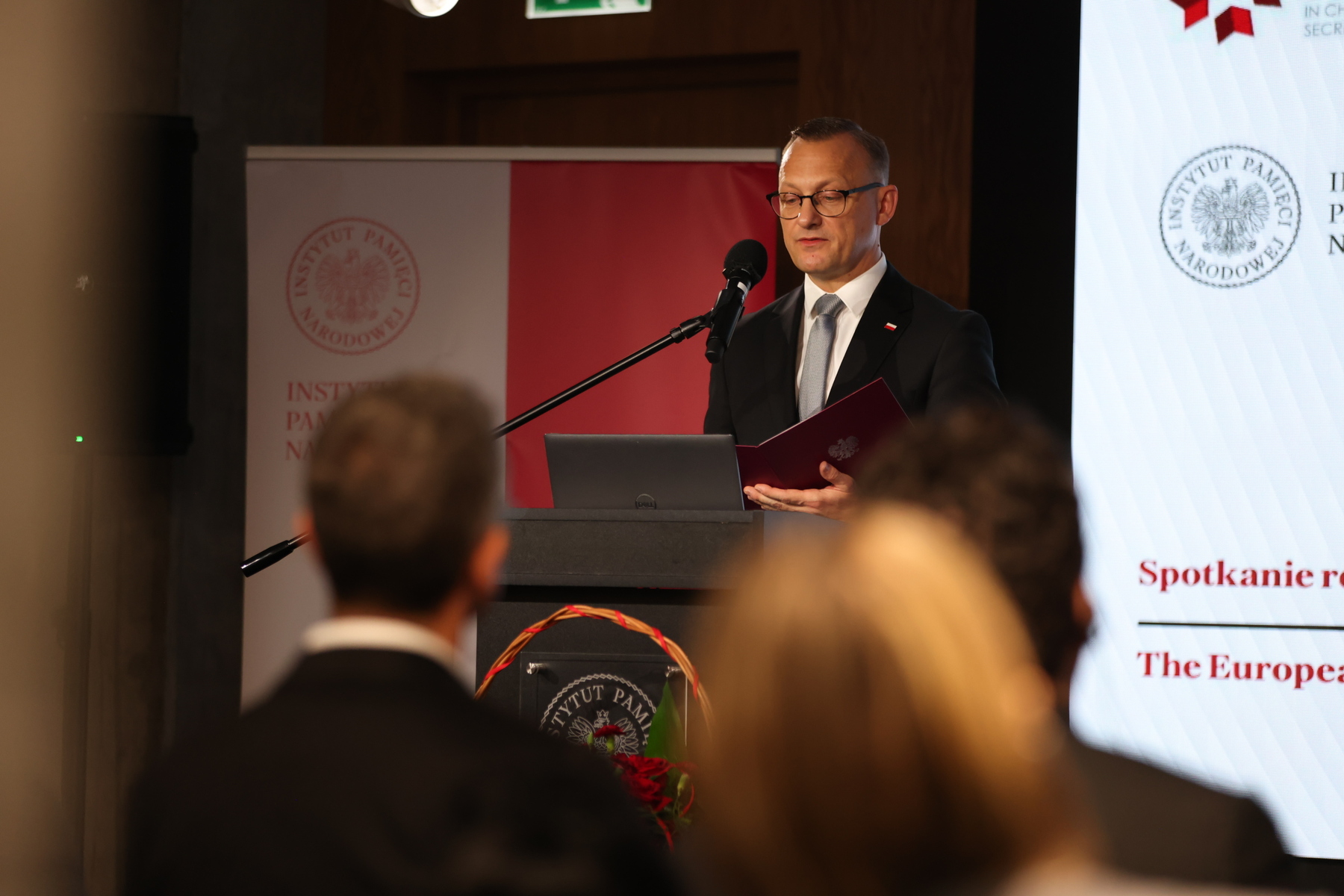
Following the opening address, a letter from the President of the Republic of Poland, Karol Nawrocki, was read out by Rafał Leśkiewicz Ph.D., Undersecretary at the Chancellery of the President.
Marzena Kruk, the Director of the IPN Archive, presented a summary of Poland’s presidency, highlighting the importance of cooperation between institutions responsible for preserving the records of former communist security services in researching 20th-century totalitarian regimes.
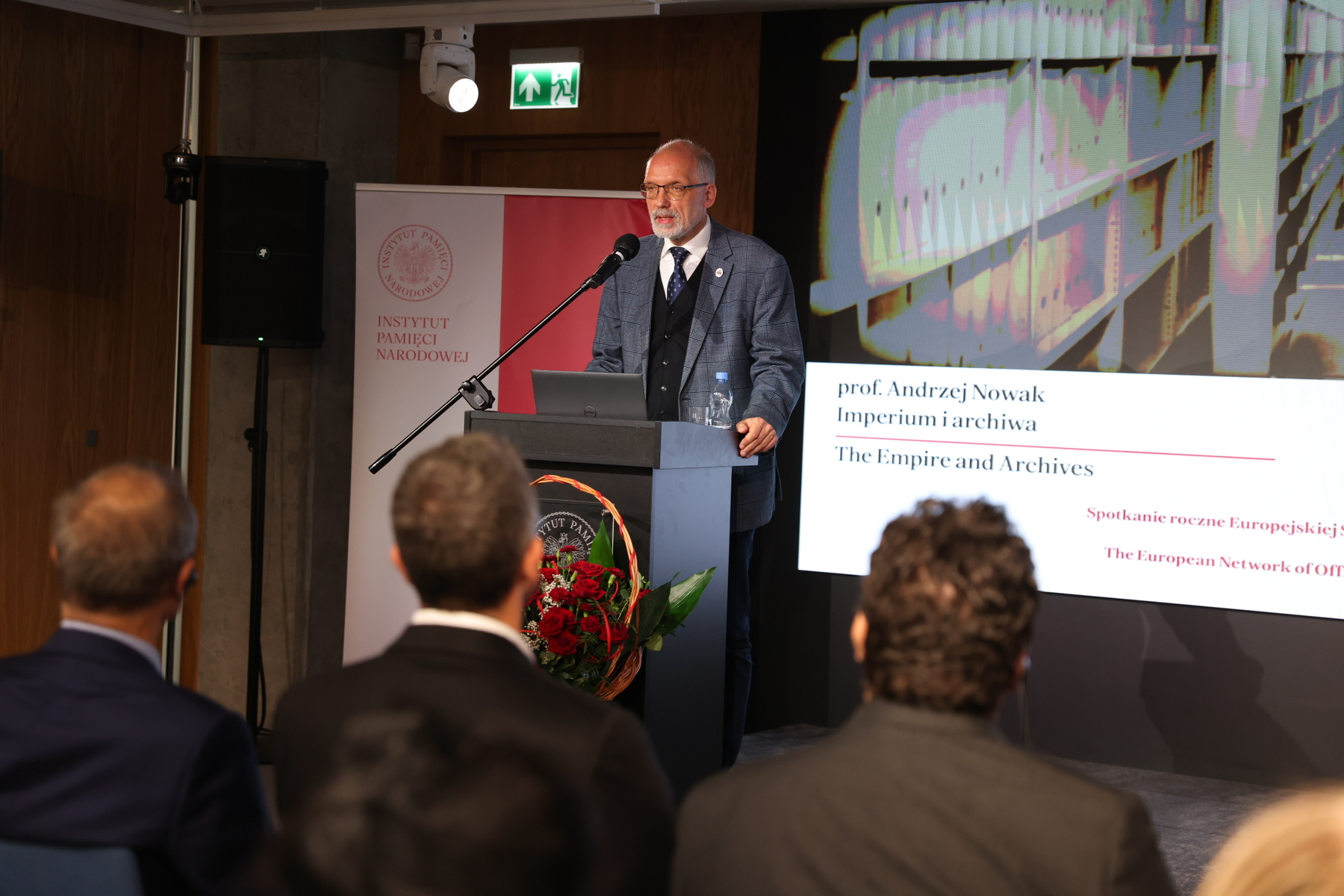
The session continued with a keynote lecture by Professor Andrzej Nowak titled "Empires and Archives", which addressed the use of historical falsification as a tool of societal manipulation. One particularly powerful conclusion from his lecture emphasized the role of archival sources in restoring historical truth:
“Archives hold the power of veto.”
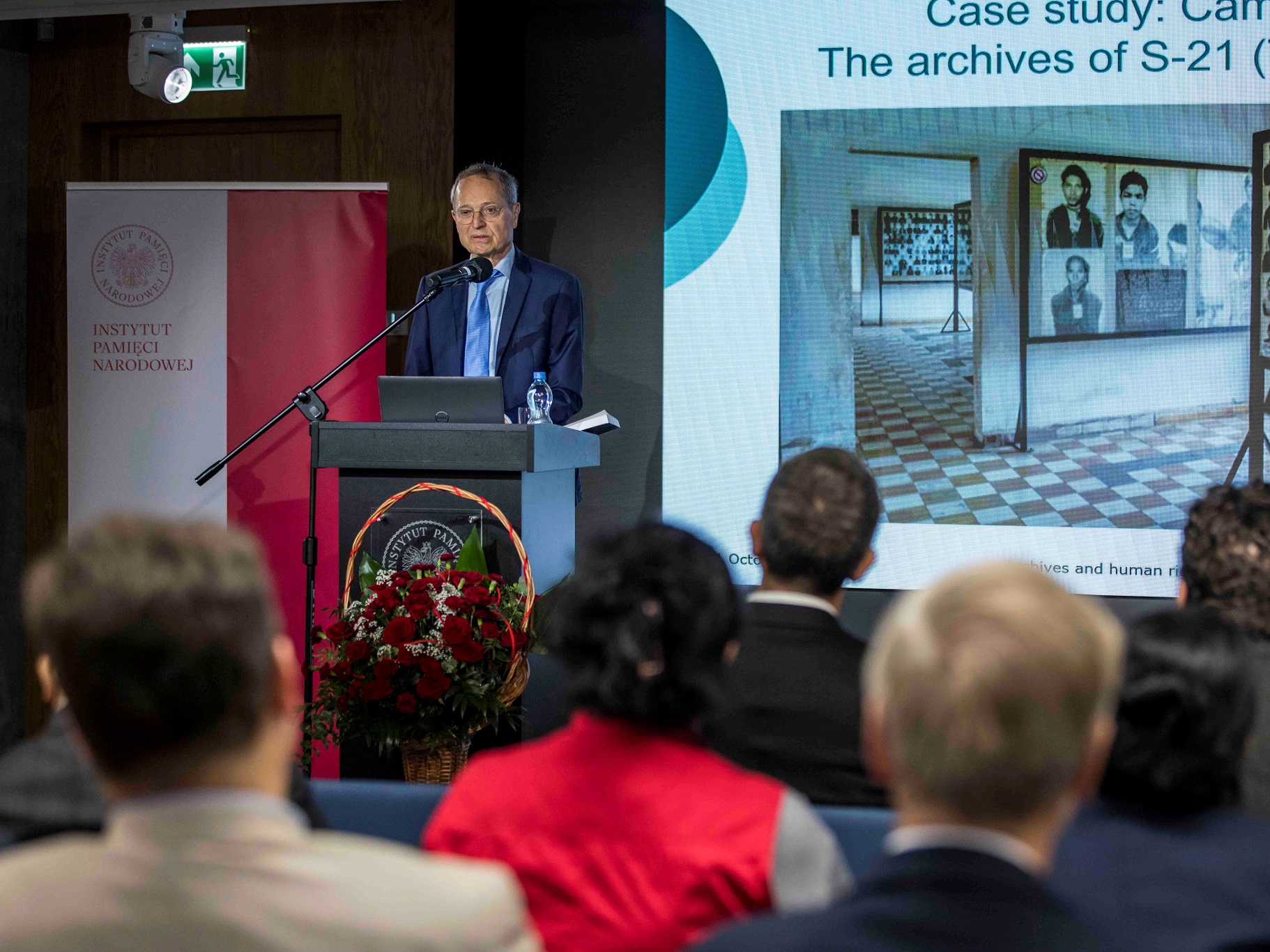
The next presentation was delivered by Jens Boel, Head of the Section on Archives and Human Rights at the International Council on Archives, entitled “Archives and Human Rights - A Close Relationship.”
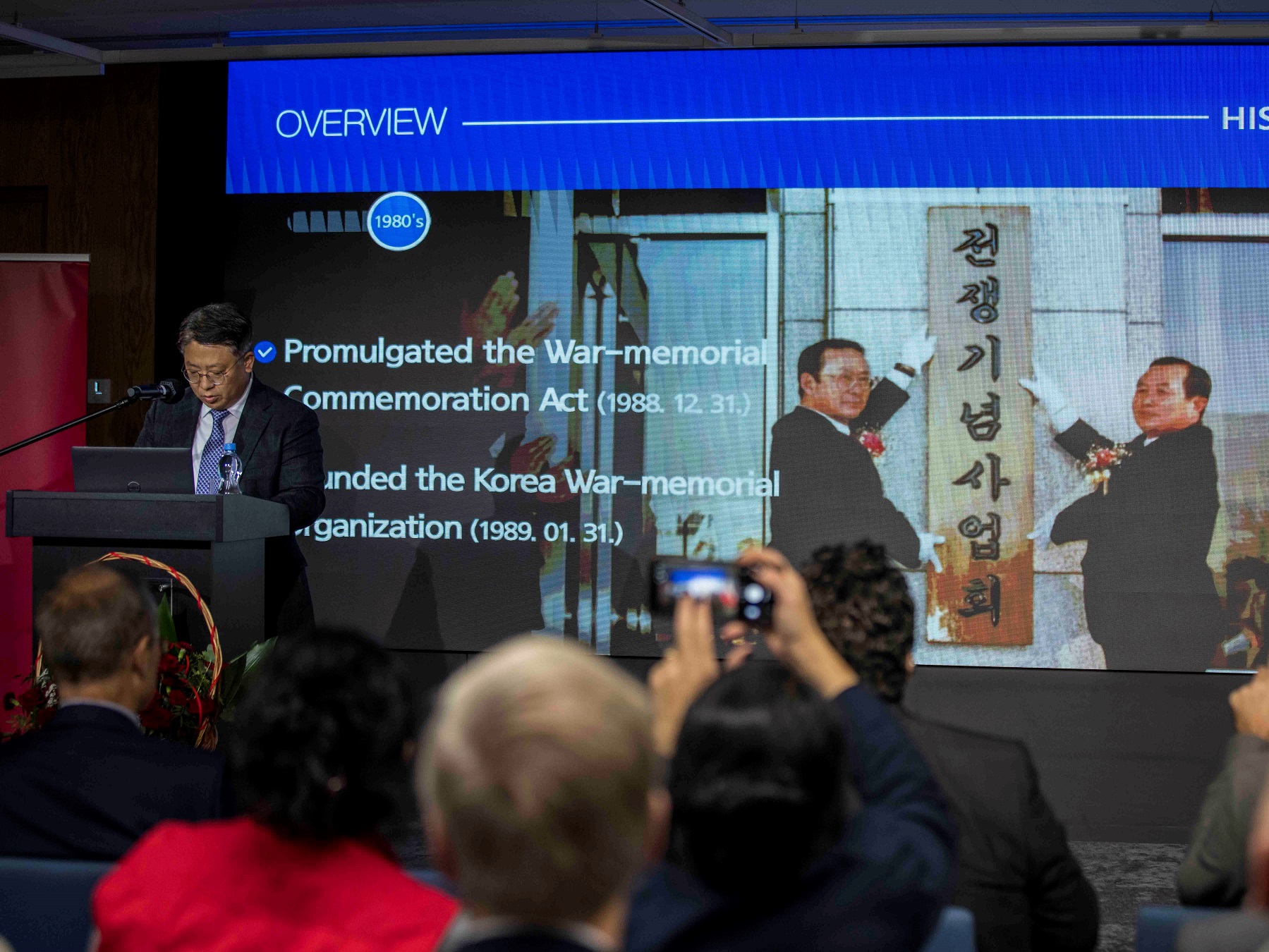
Kim Nak Jim, the Deputy Director of the War Memorial of Korea in Seoul, discussed the institution’s document collections and its ongoing documentation initiatives.
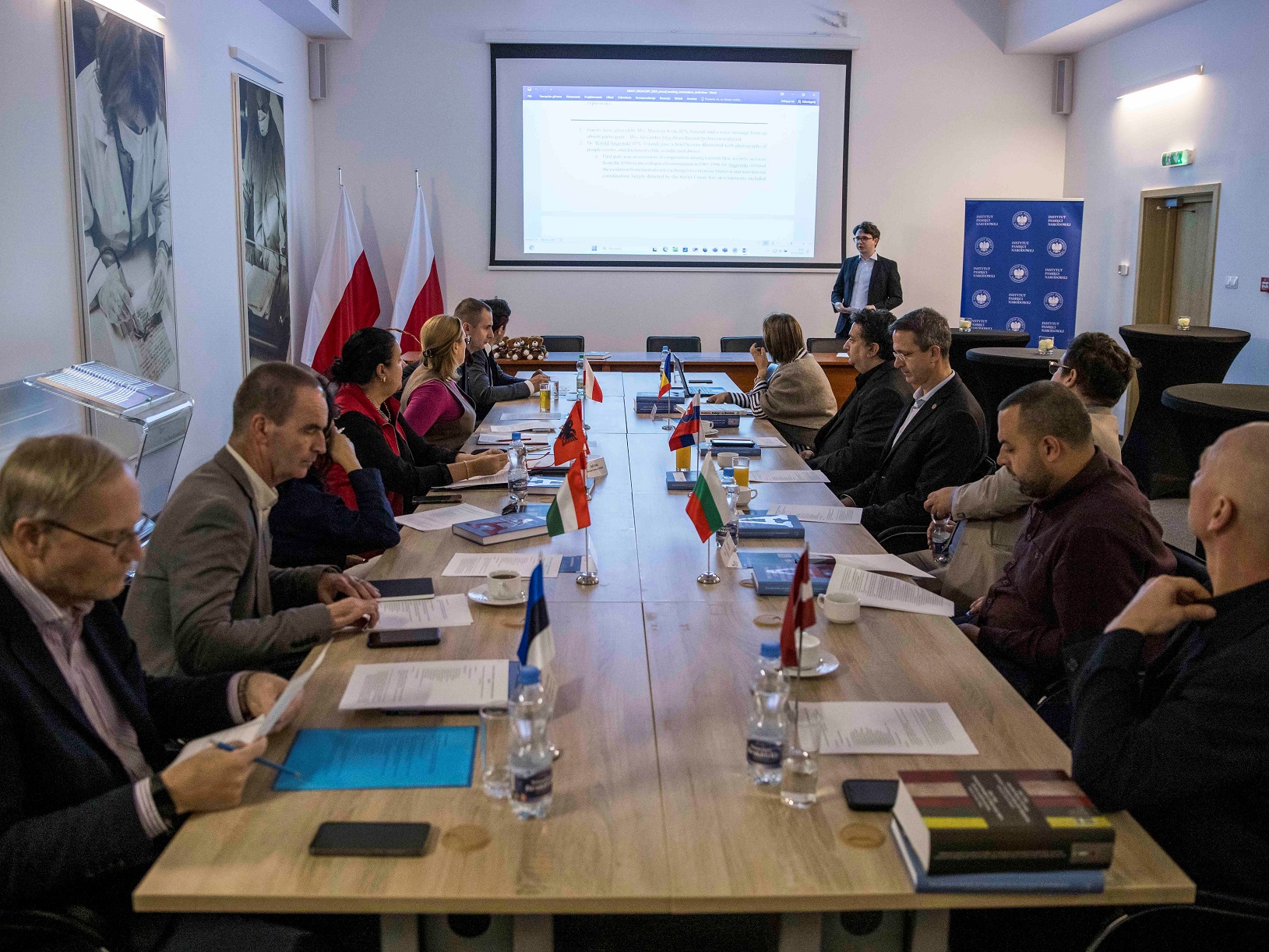
This was followed by a closed meeting of Network members, during which the presidency was officially passed on to the Romanian National Council for the Study of the Securitate Archives (Consiliul Național pentru Studierea Arhivelor Securității - CNSAS).
The conference was organized by the IPN Archive, which chaired the Network in 2024-2025.
The European Network of Official Authorities in Charge of the Secret-Police Files was established in 2008 to streamline research procedures and facilitate the exchange of documentation. Over time, the cooperation between member institutions has evolved into a broader platform for dialogue and joint initiatives.
The Network’s activities focus primarily on promoting public and political awareness around the process of confronting the legacy of totalitarian regimes. Education and outreach play a vital role in these efforts.
Today, the organization brings together institutions from eight member countries - Albania, Bulgaria, the Czech Republic, Germany, Poland, Hungary, Romania, and Slovakia - as well as five associated states: Estonia, Latvia, Lithuania, Slovenia, and Ukraine.
For more information about the Network, please visit the official English-language website: securityarchives.eu