
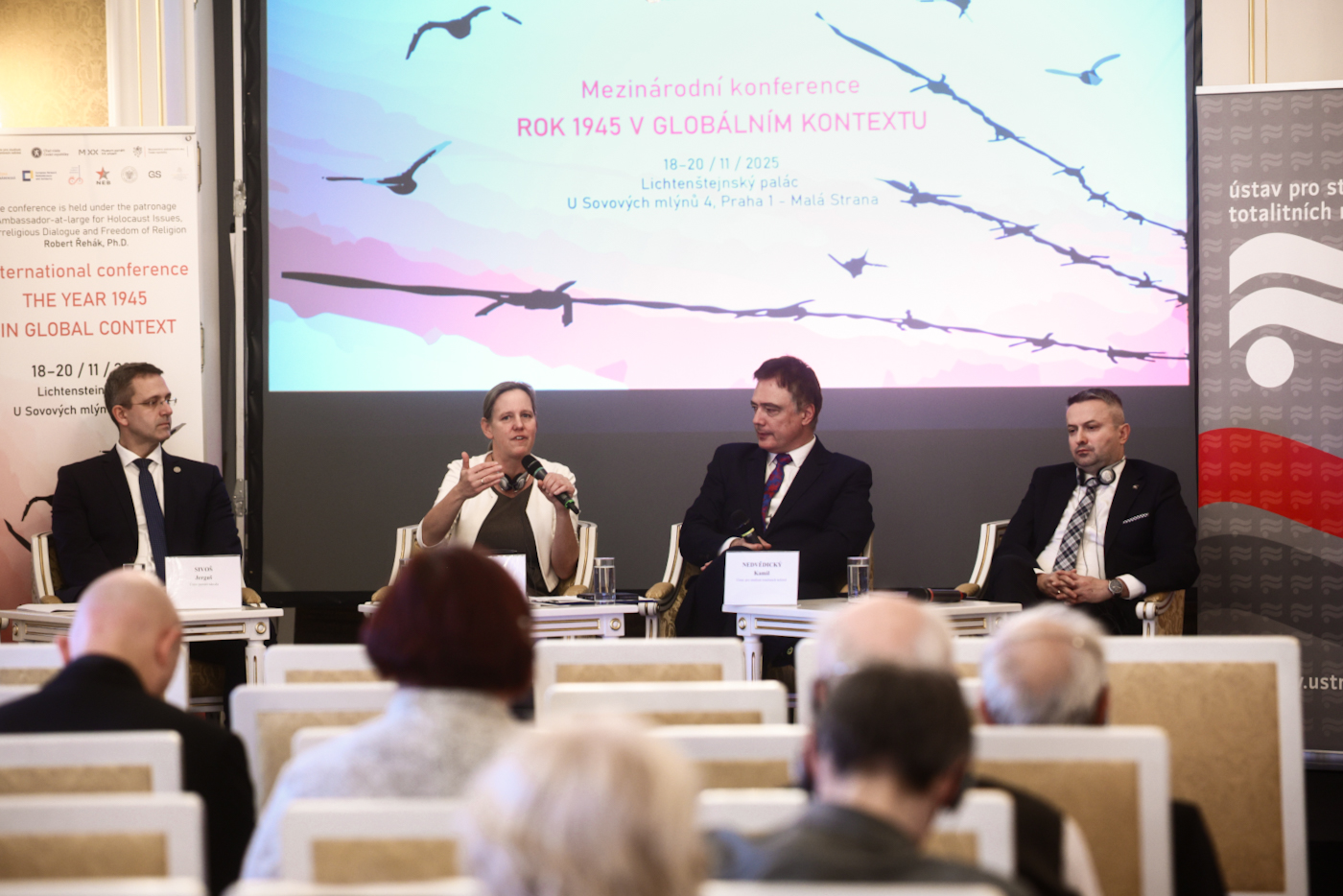
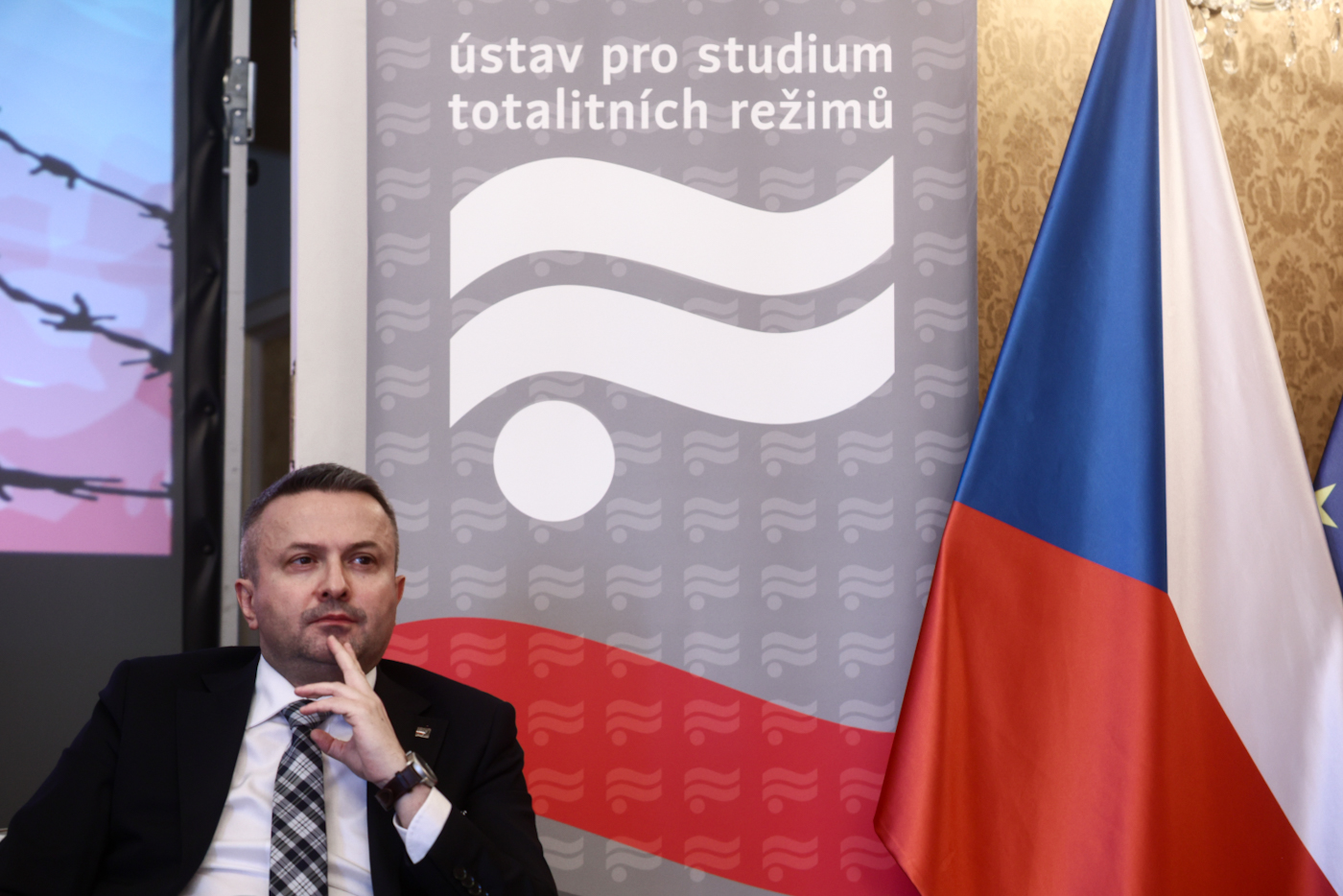
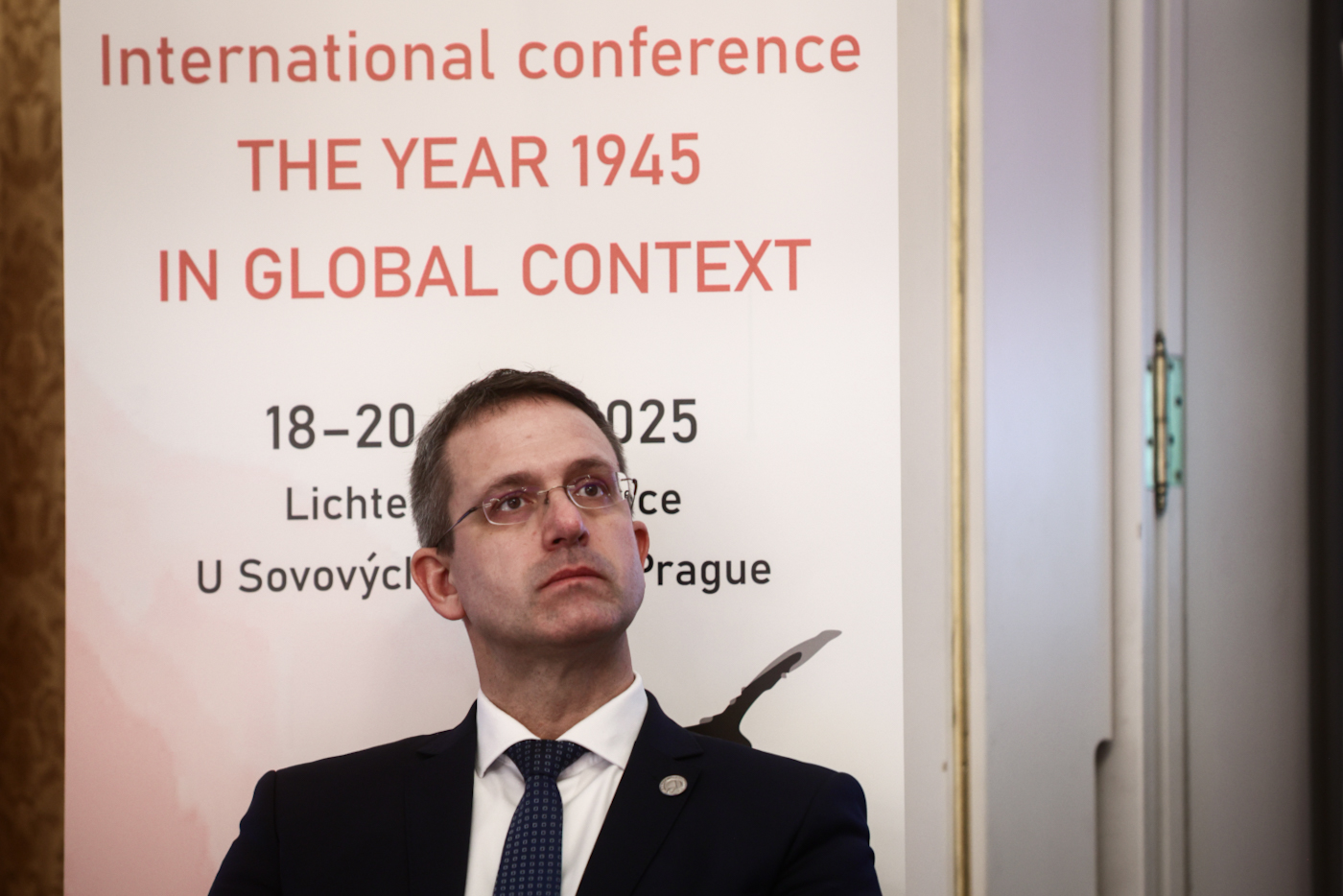
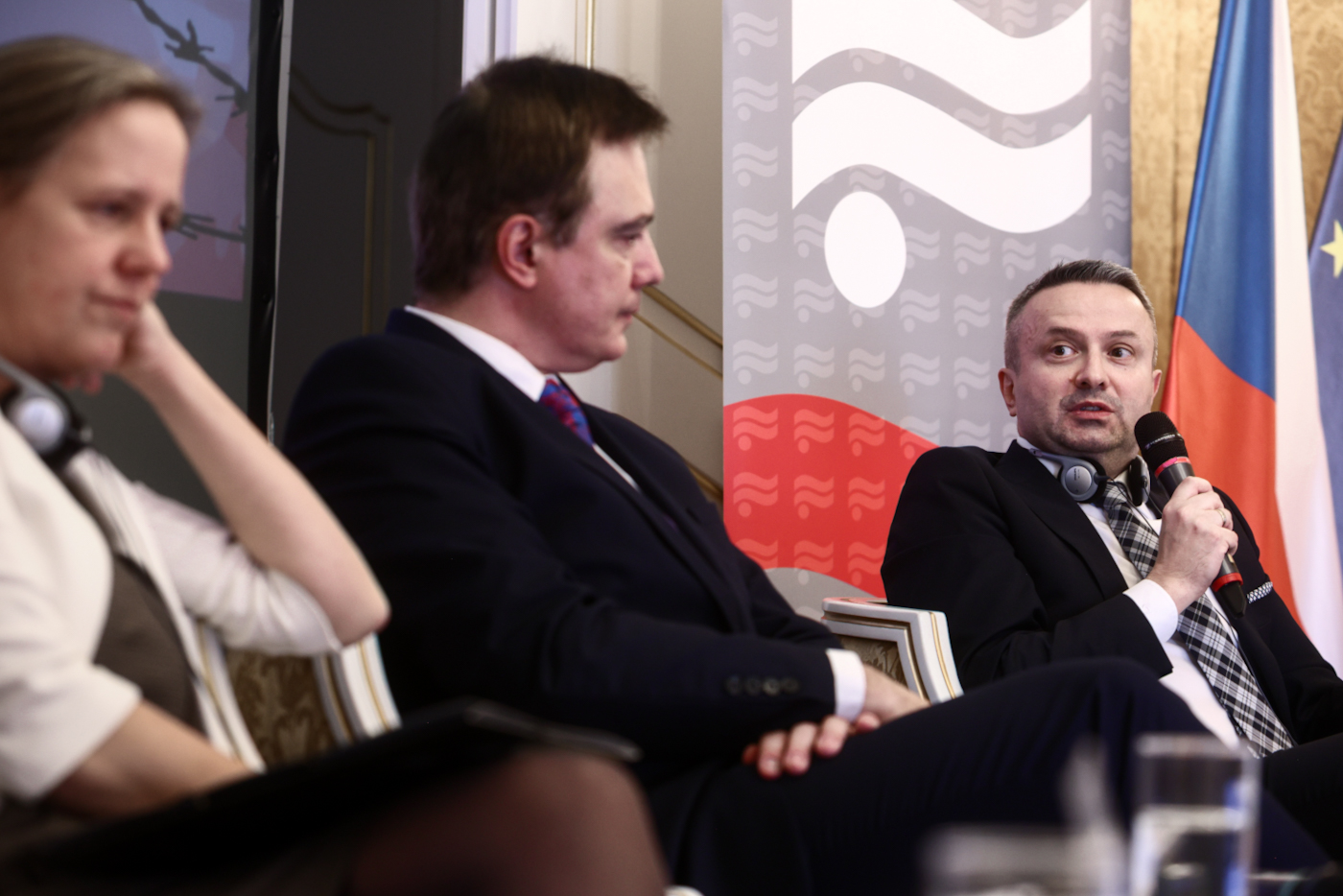
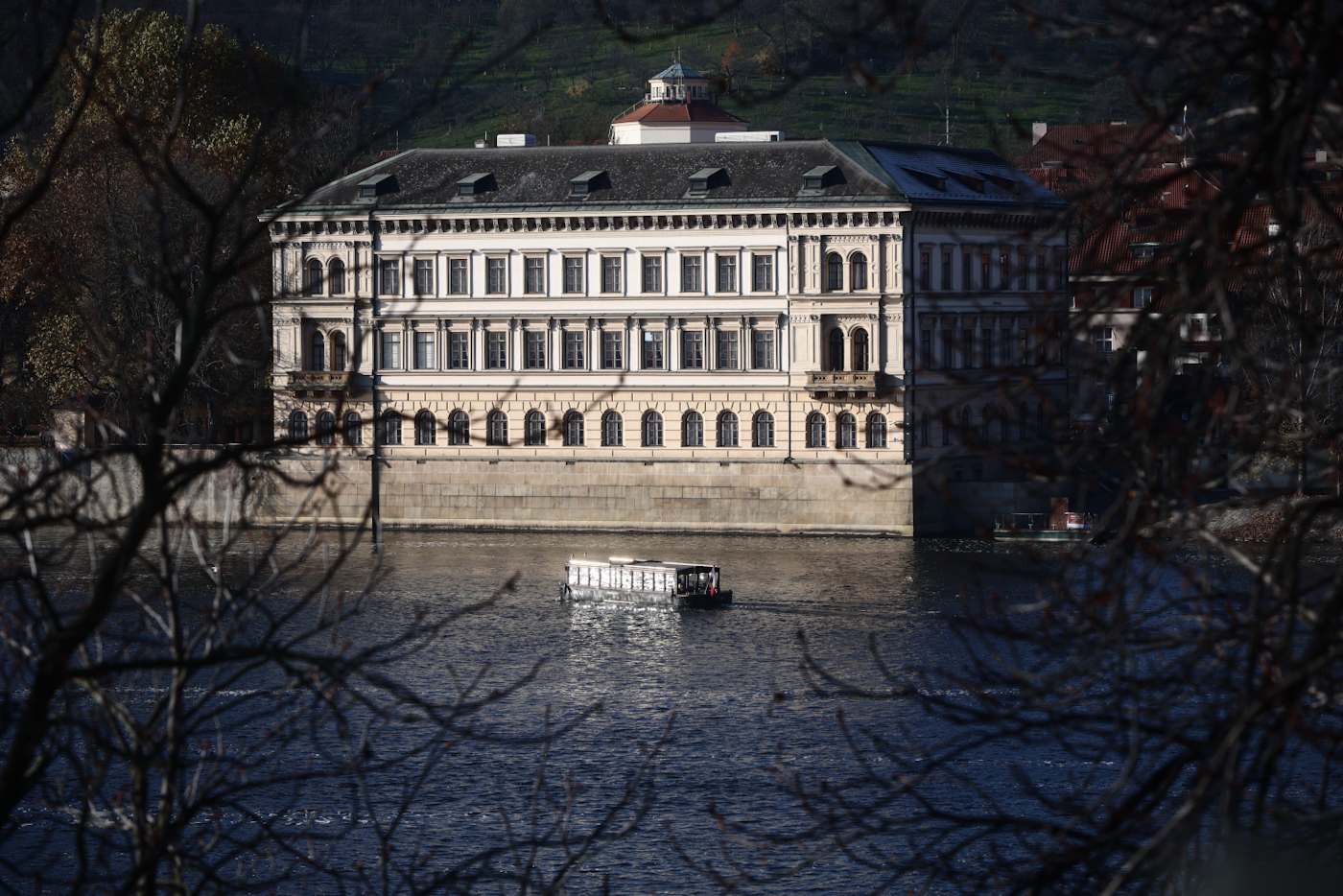
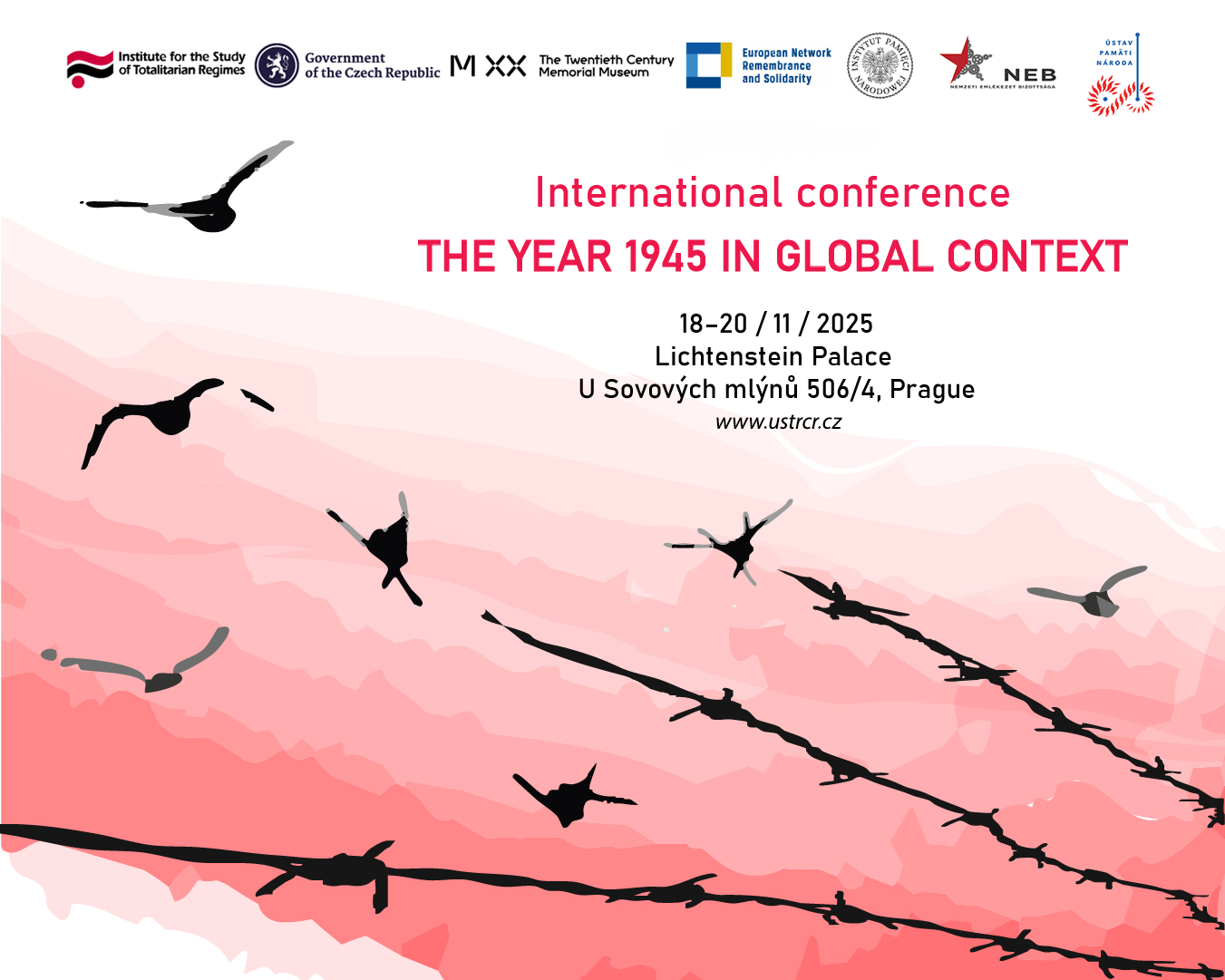
The international conference The Year 1945 in a Global Context took place at the Liechtenstein Palace in Prague from 18 to 20 November 2025. Bringing together leading historians, memory scholars, cultural institutions and policymakers, the event explored the global significance and complex legacy of the year 1945. The conference was organized by the Institute for the Study of Totalitarian Regimes with partnership of the ENRS.
On 19 November 2025, Sebastian Pilarski, Ph.D., Director of the Historical Research Office of the Institute of National Remembrance (IPN), took part in a discussion panel during the conference. In his speech, Sebastian Pilarski emphasized the importance of the 80th anniversary of the victory over Nazi Germany as a moment that calls for deep reflection on historical memory, contemporary challenges, and the responsibility to uphold the truth about the 20th century. He pointed out that in the Russian narrative, the victory over Germany is presented as the triumph of the so-called Great Patriotic War, limited to the years 1941–1945 and completely detached from the broader context of the global Second World War (1939–1945). This perspective omits the Soviet aggression against Poland and Finland, the annexation of the Baltic states, and the occupation of part of Romania — events that constituted the Soviet Union’s “original sin”, consistently erased from official memory.
As the Director of the Historical Research Office stressed, there is an urgent need to remind the West that for the nations of Central and Eastern Europe, the year 1945 did not mean liberation, but the beginning of a new form of enslavement imposed by Soviet imperialism. This experience is shared by Poles, Czechs, Hungarians, and the Baltic nations, although each nation lived through it in its own particular way.
He also underlined that the nations of Central Europe belong to Western civilization — historically, culturally, and institutionally. He referred to Milan Kundera’s famous essay The Tragedy of Central Europe, which describes how the nations of this region were violently torn away from the Western community and pulled into the sphere of Russian imperial influence.
In conclusion, Sebastian Pilarski, Ph.D., stressed that Europe must not allow Central and Eastern Europe to be torn away from its history and its rightful place. The mission of the Institute of National Remembrance is to safeguard the truth, document lived experience, and build awareness of what the year 1945 truly meant for our part of the continent.
***
The organizer of the conference – the Institute for the Study of Totalitarian Regimes (ÚSTR) – is a Czech research and archival institution focused on documenting, studying, and disseminating knowledge about the two totalitarian periods in the history of Czechoslovakia: the German occupation (1939–1945) and the communist regime (1948–1989). The Institute collects and provides access to archival materials (including those from the security services’ archives), conducts research and educational projects, and presents exhibitions as well as publications that popularize knowledge about the mechanisms and consequences of totalitarian systems.
The Institute began operating as a state documentation and research body (opened to the public in 2008, among other milestones) and serves as the central center for research on the totalitarian past in the Czech Republic, carrying out source editions, monographs, and digital projects (databases, encyclopedias).