
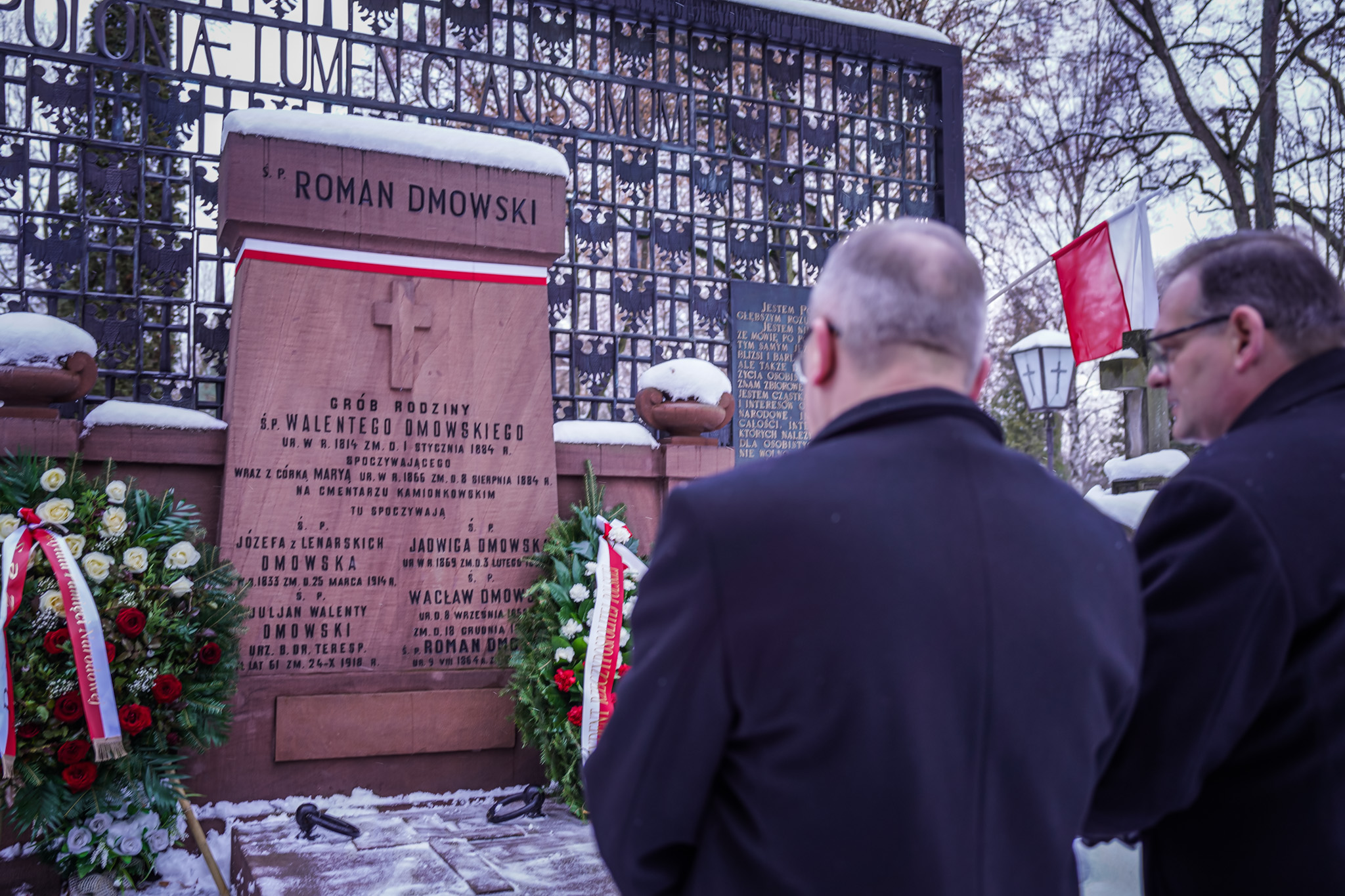
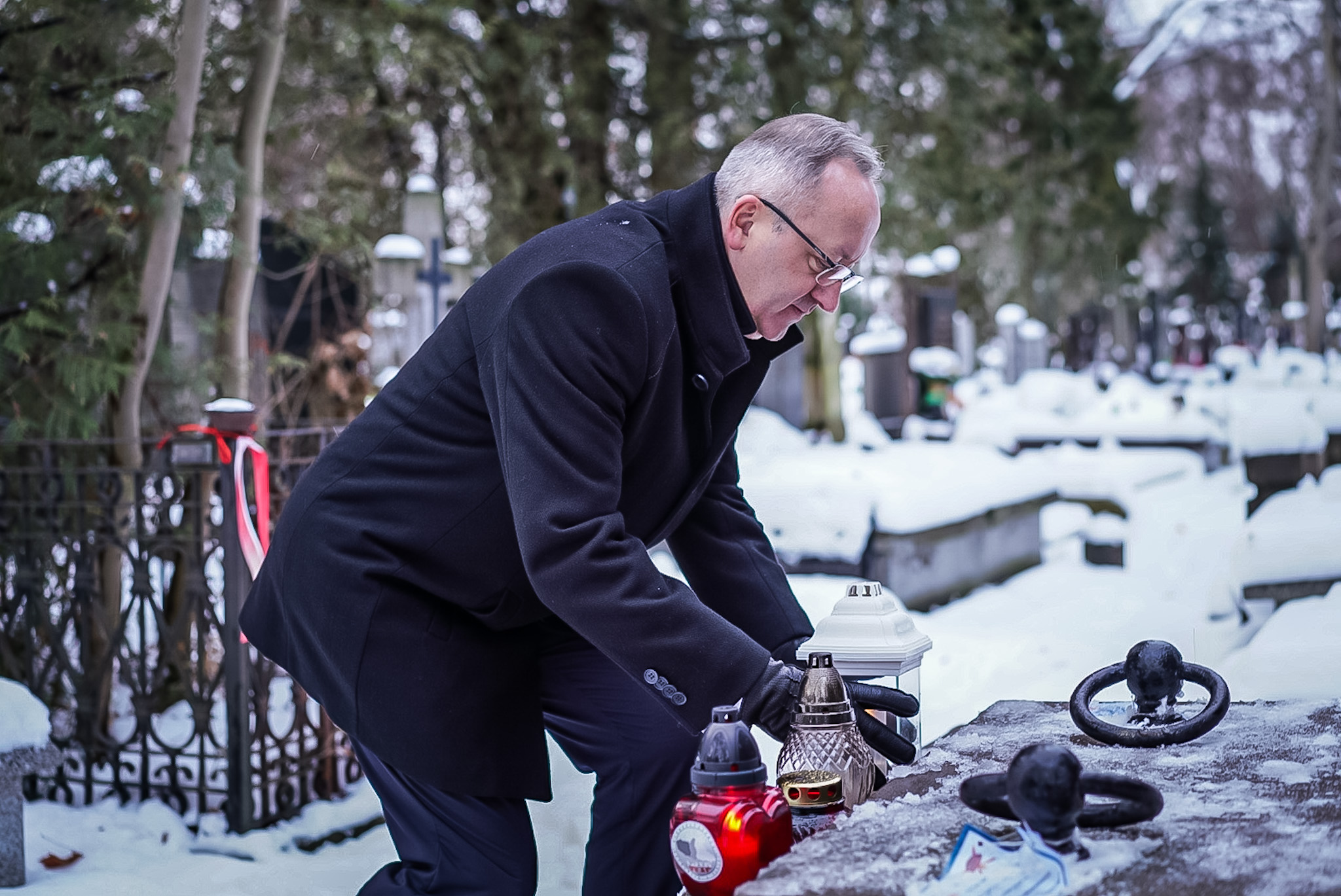
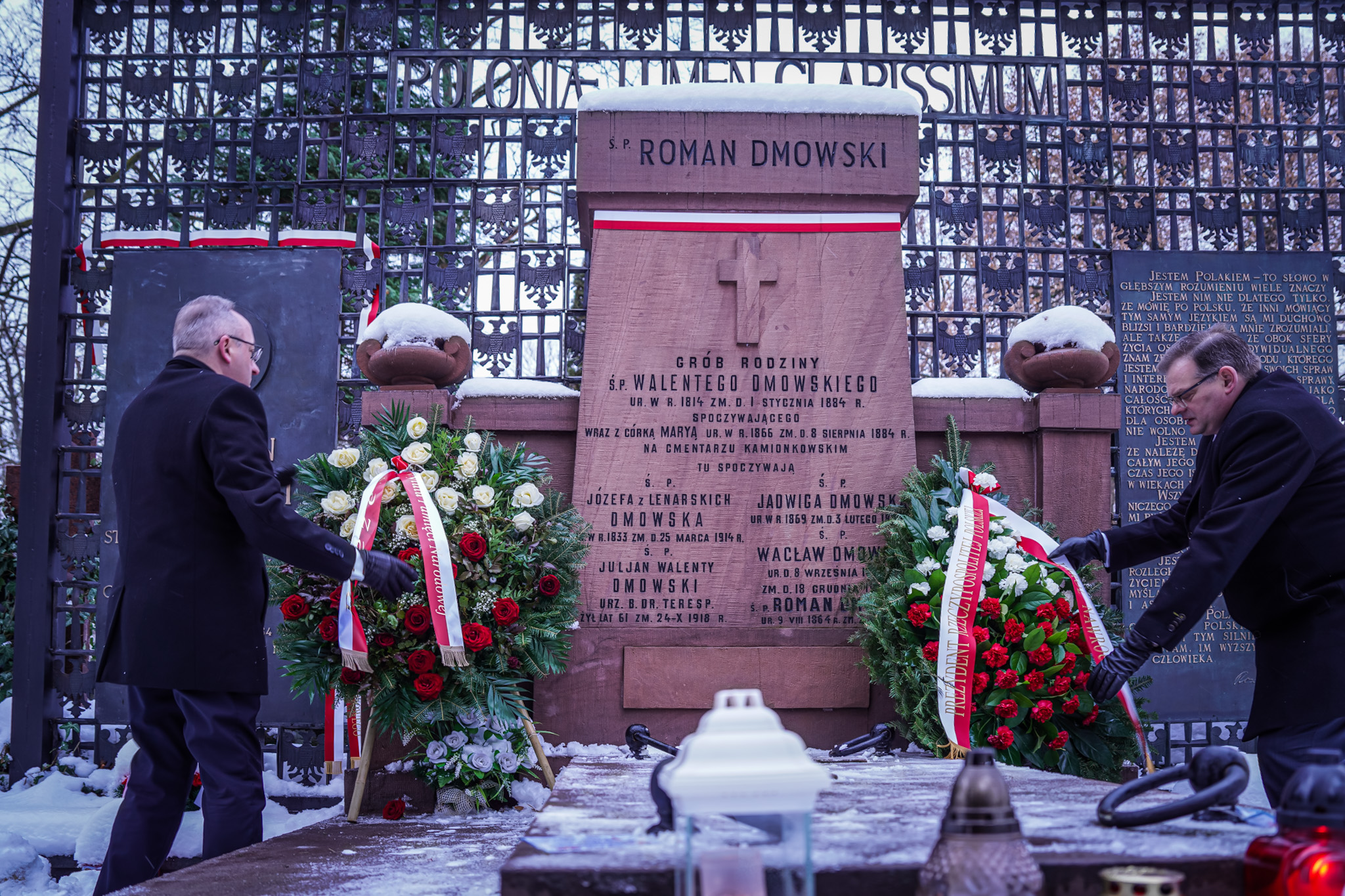
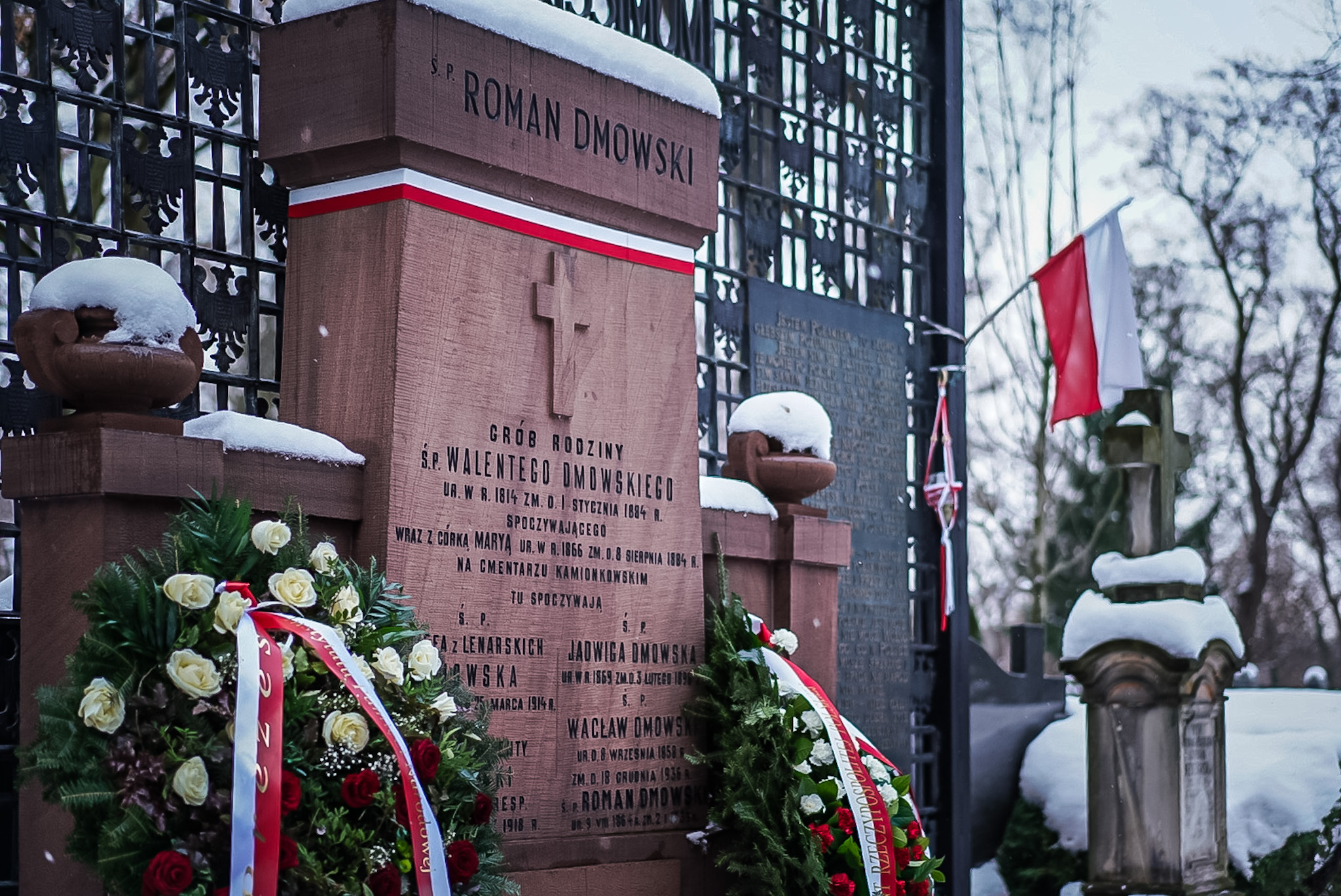
On 2 January 2026, at the Bródno Cemetery in Warsaw, Deputy President of the IPN Karol Polejowski and advisor to the President of Poland Jan Józef Kasprzyk laid wreaths and lit candles on Roman Dmowski's grave. Roman Dmowski passed away on 2 January 1939.
To be a Pole does not mean just to speak Polish or to feel close to other Poles, but to value the Polish nation above all else . . . [A Pole] must accept everything that’s Polish, both good and bad, and every period of the nation's history, both strong and weak, said Roman Dmowski, called one of the fathers of independent Poland.
He was not only a politician and diplomat, but also the founder of the Polish National Committee, recognised by the Entente states as the nation’s official diplomatic representation. It was he who negotiated the Treaty of Versailles and defended the Polish interest abroad. As the main founder of the national democratic movement, he also played a very important role in domestic politics.
Roman Dmowski received his education at the University of Warsaw, and from a young age, he was active in patriotic associations, for which he was imprisoned by the Russians in the Warsaw Citadel prison and then exiled. Later, however, he became a Polish deputy to the Russian parliament and, after the outbreak of the first world war, he founded the Polish National Committee in Warsaw. It did not stem from his affection for the Tsar’s empire, but from a deep conviction that the greatest threat to the Polish cause was Germany, and that the hope of regaining independence was France and England, which were allied with Russia at that time.
Dmowski actively worked for the Polish cause, among other places in St. Petersburg, Cambridge, Lausanne and Paris. It was he who initiated the formation of General Haller's Blue Army, and it was his signature that appears under the Treaty of Versailles, which defined the post-war order and determined Poland's western borders. The document, in which the international community accepted Poland's return to the map of Europe and the world, can be seen as the greatest achievement of Dmowski’s life.
In the interwar period, Roman Dmowski served as an MP and Minister of Foreign Affairs. He continued his involvement in the development of the national movement, and kept on writing. However, poor health forced him to quit the political activity. On 2 January 1939, in the village of Drozdowo, Dmowski died, having suffered a stroke and contracted pneumonia. His burial in the Bródno cemetery in Warsaw became one of the largest patriotic demonstrations in the Second Republic, with over 100,000 of his supporters attending.
Roman Dmowski was a politician who still arouses many emotions. His nationalist vision of the state and conflict with another great Polish leader, Józef Piłsudski, mean that not everyone regards him as a hero, but his contribution to Polish independence is unquestionable, and his journalistic output, expressed in works such as "Thoughts of a Modern Pole," remains relevant to this day.
Read more on the fathers of Polish Independence: https://tiny.pl/ff-747kq4