
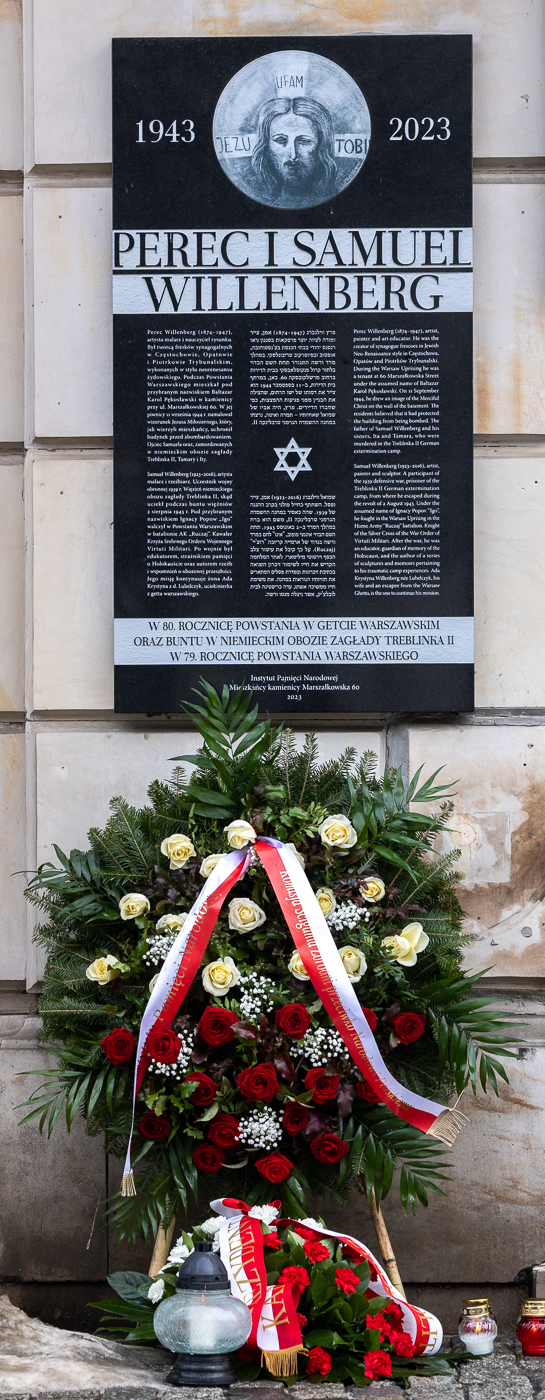
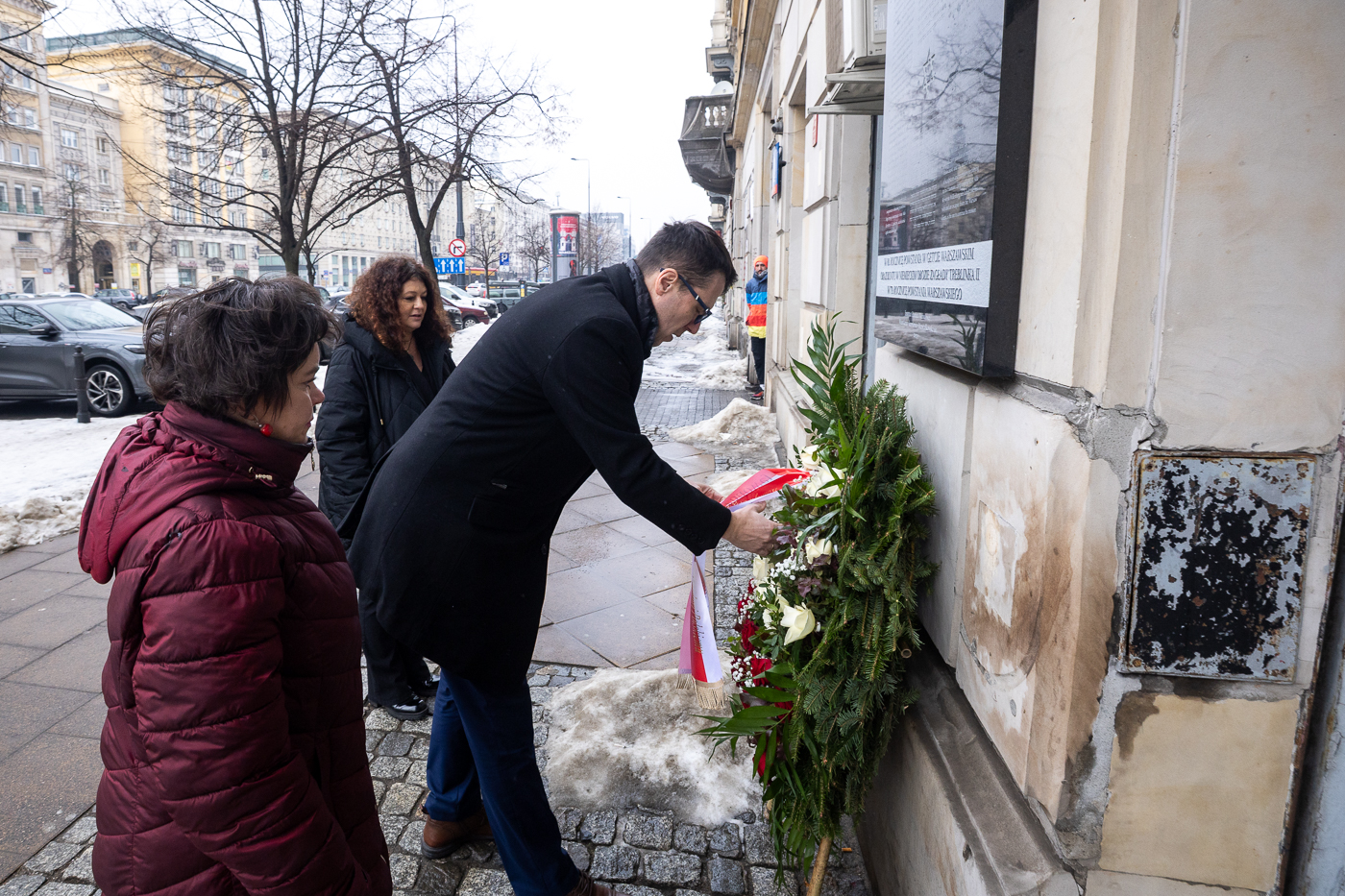
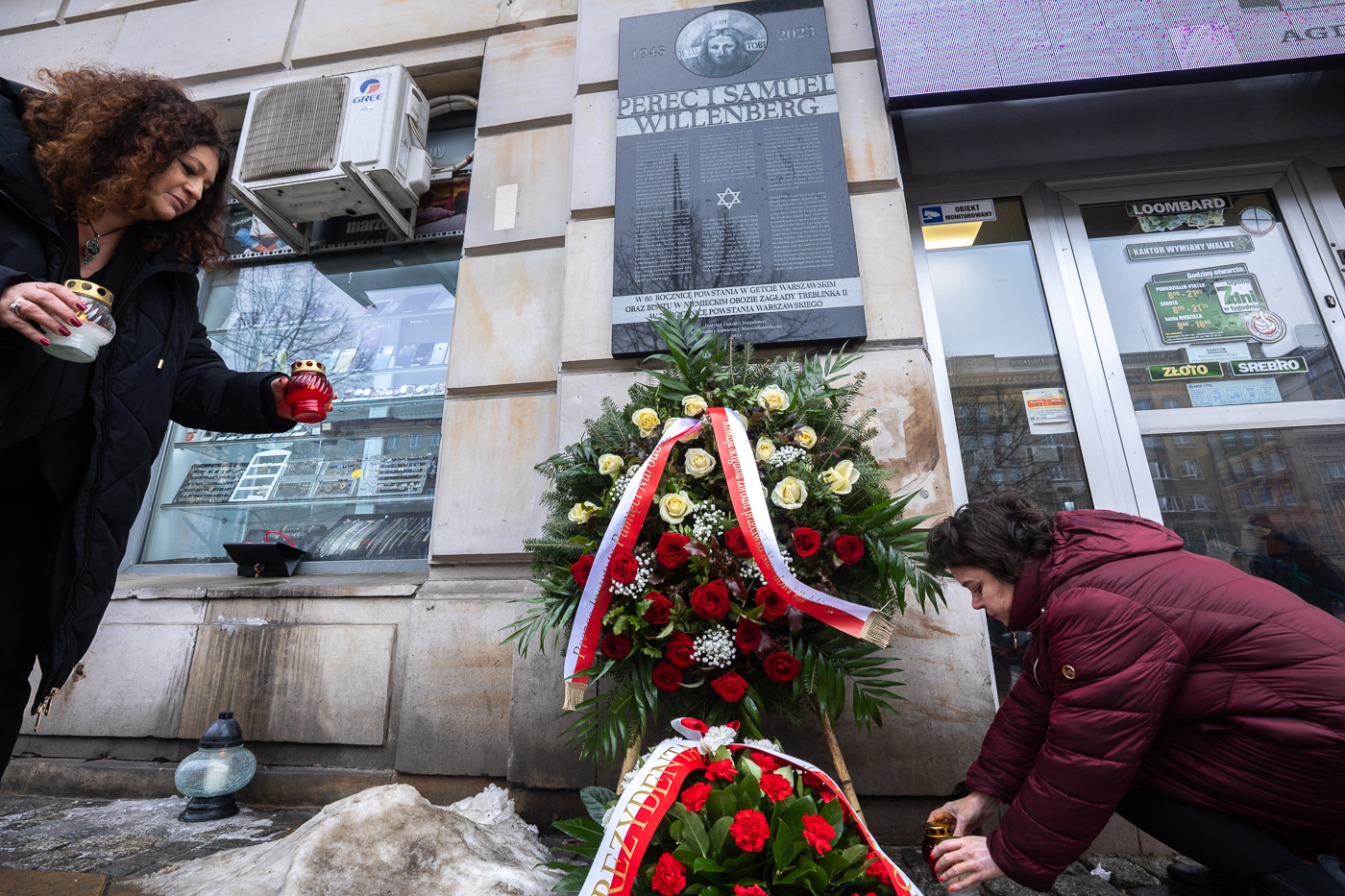
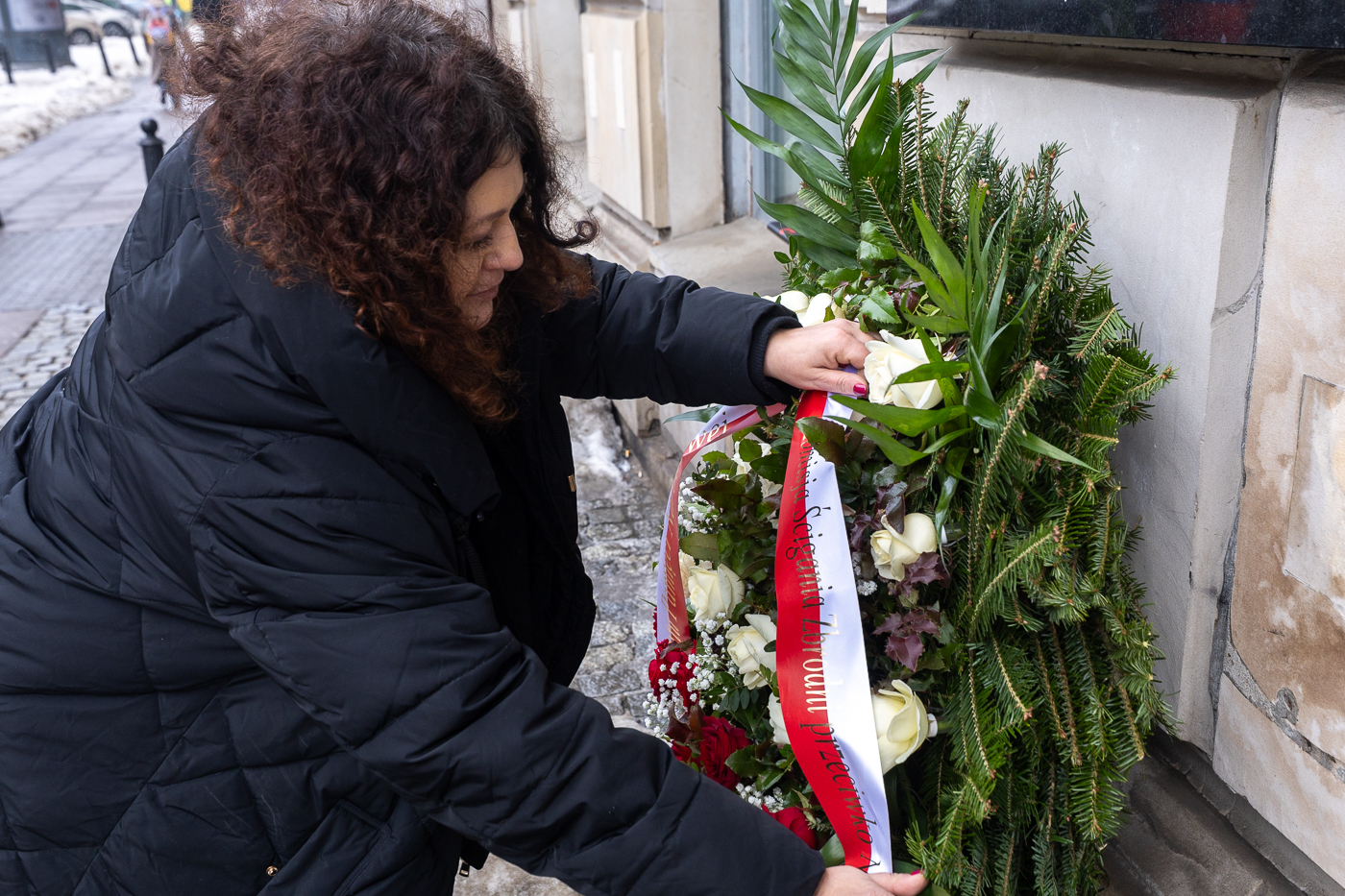
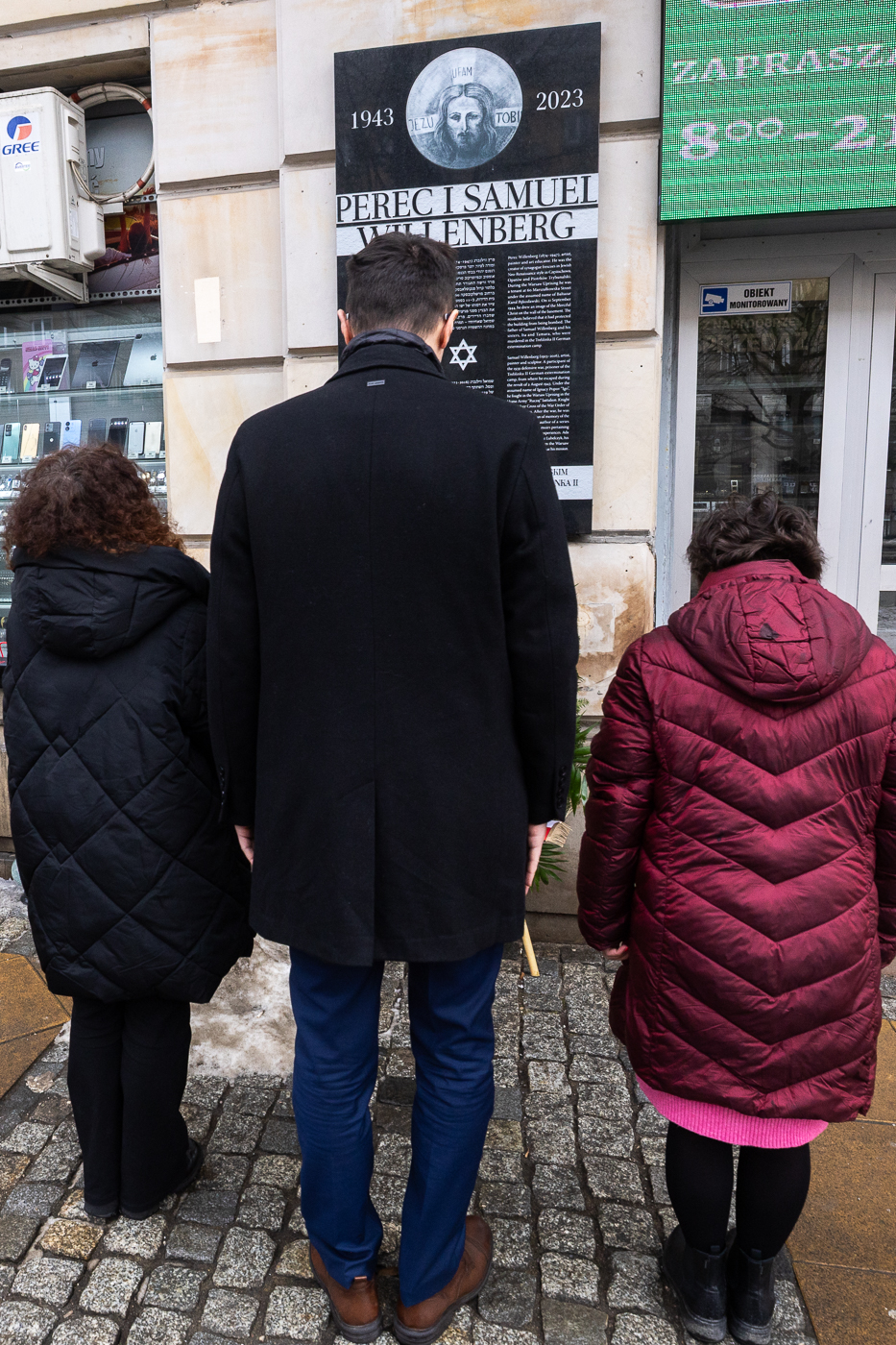
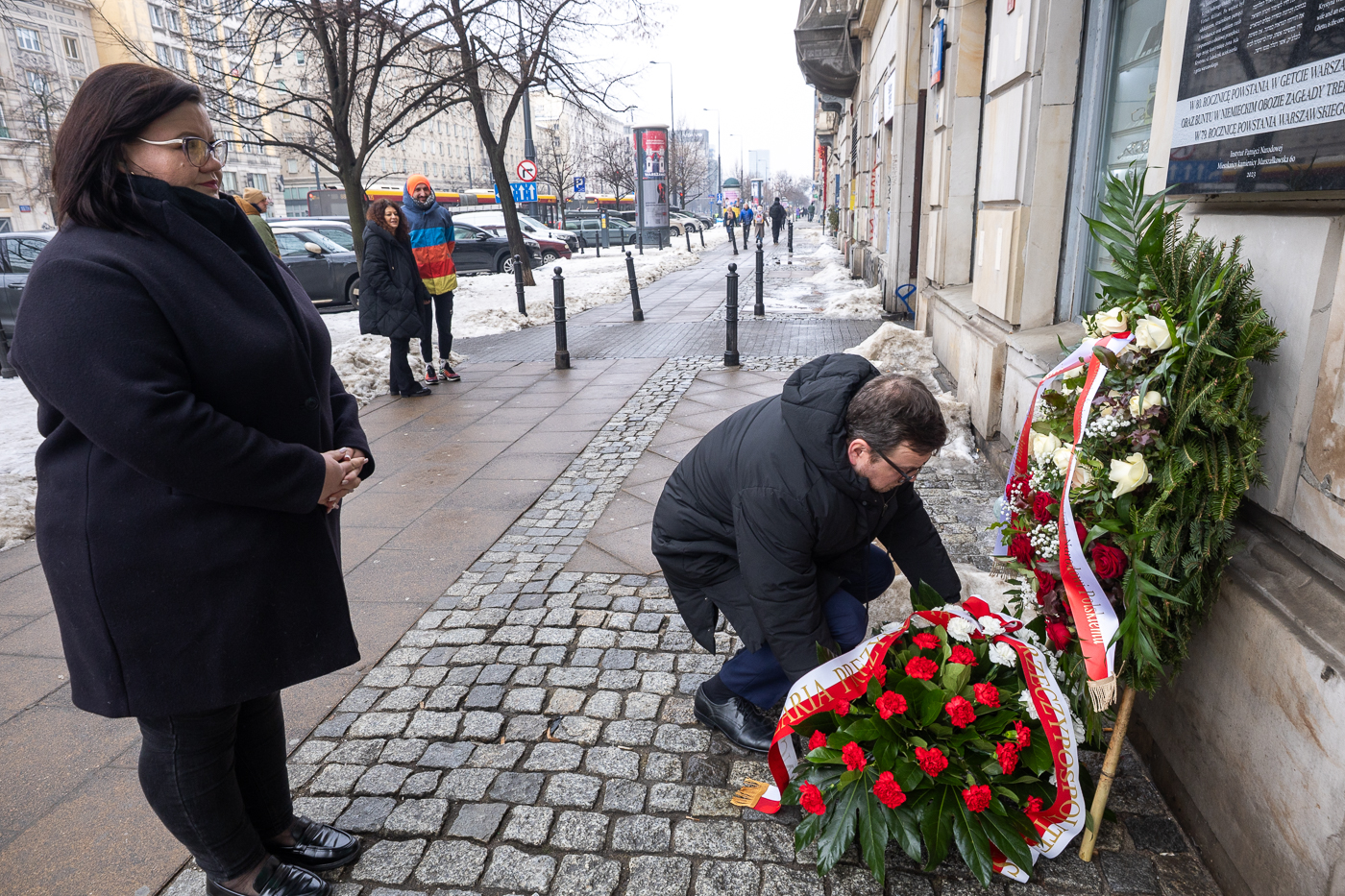
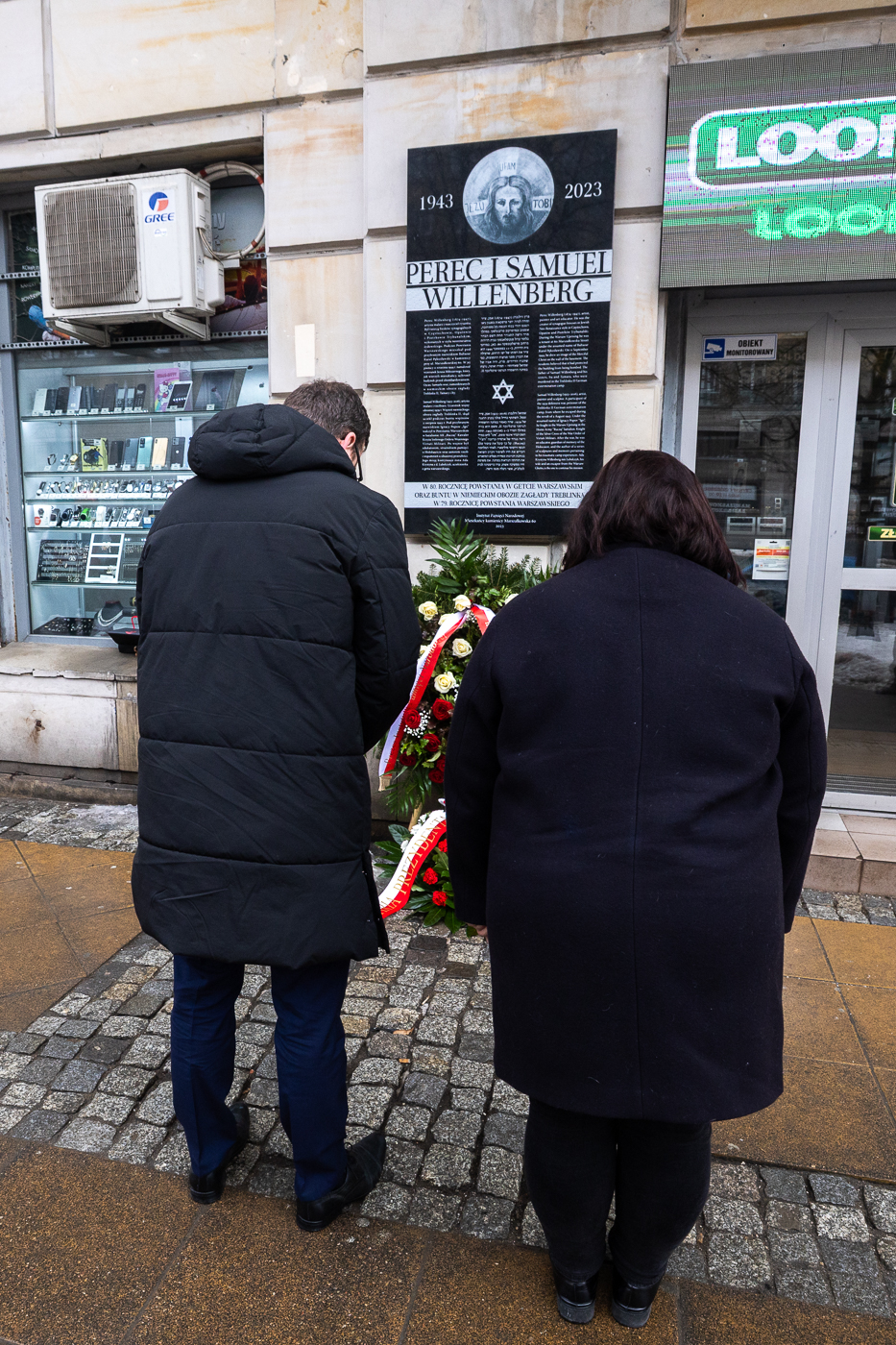
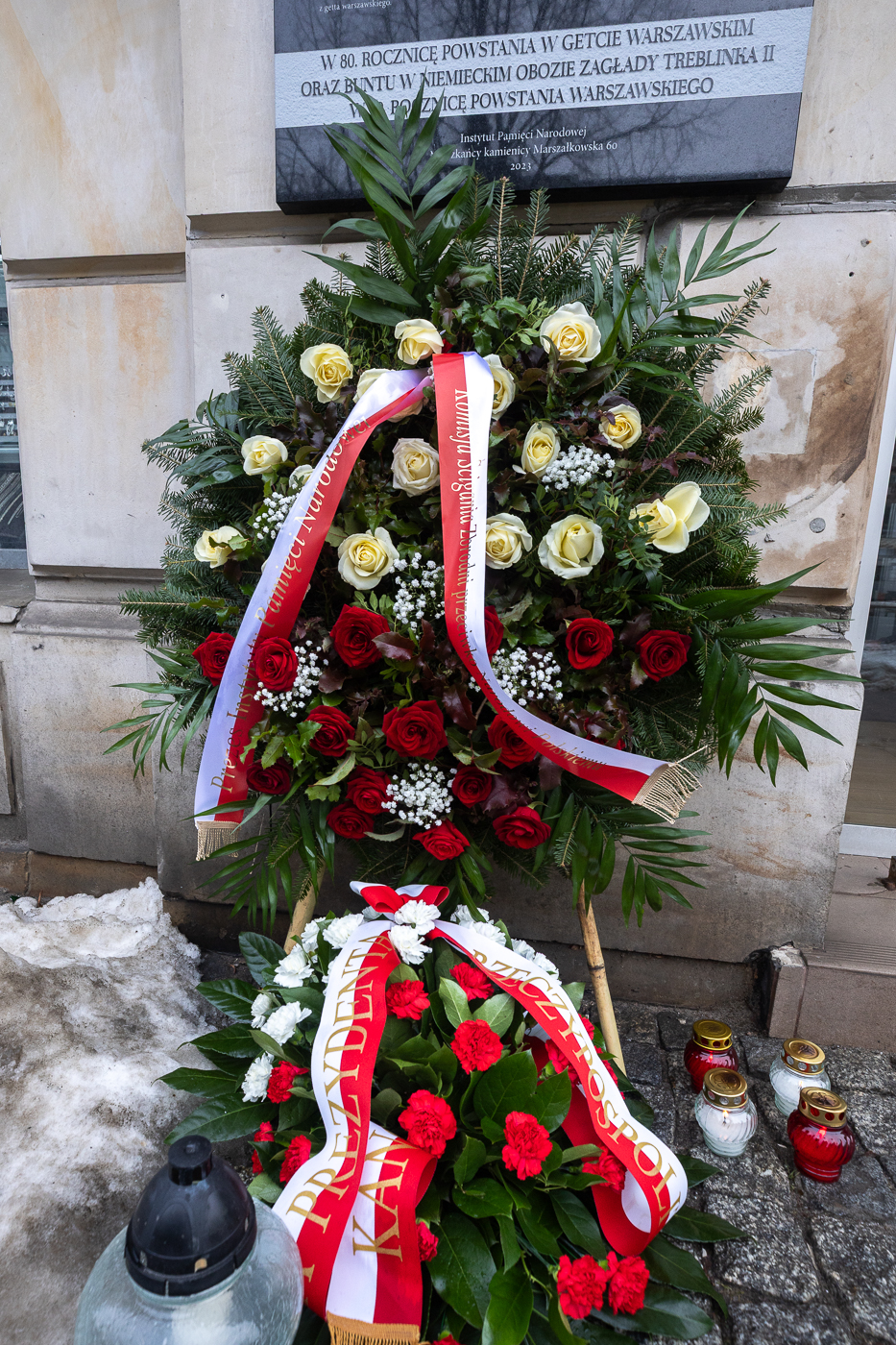
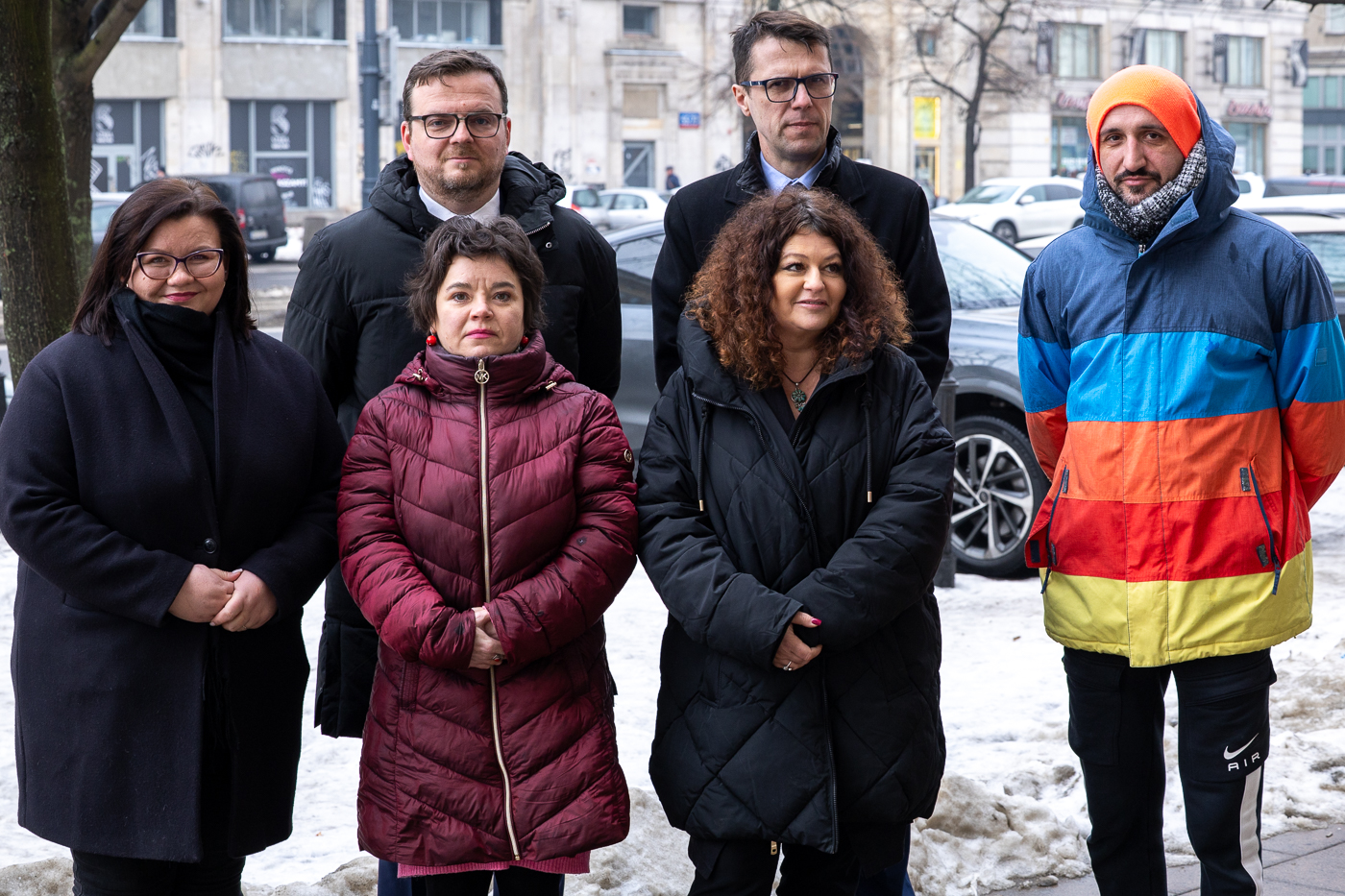
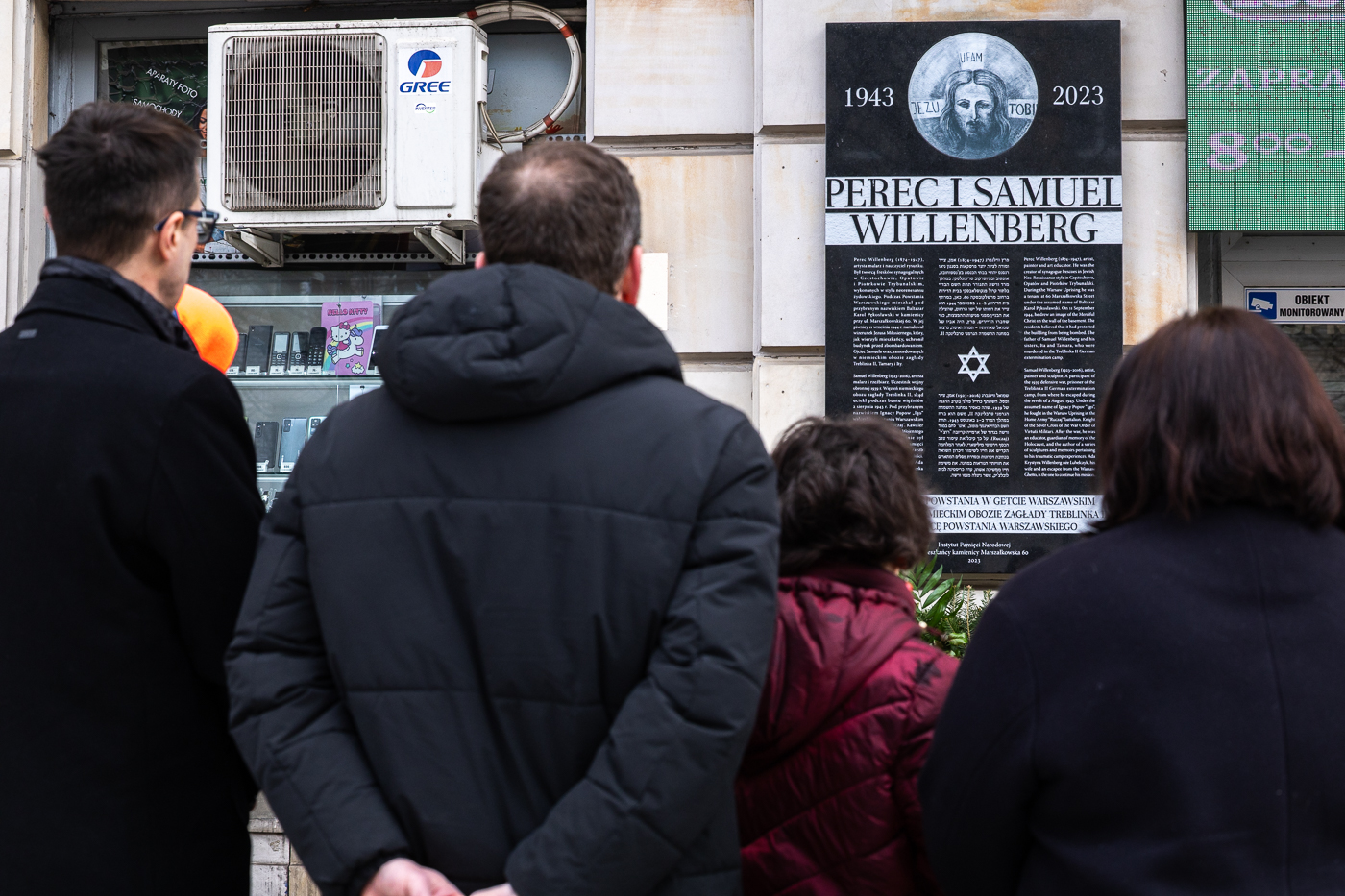
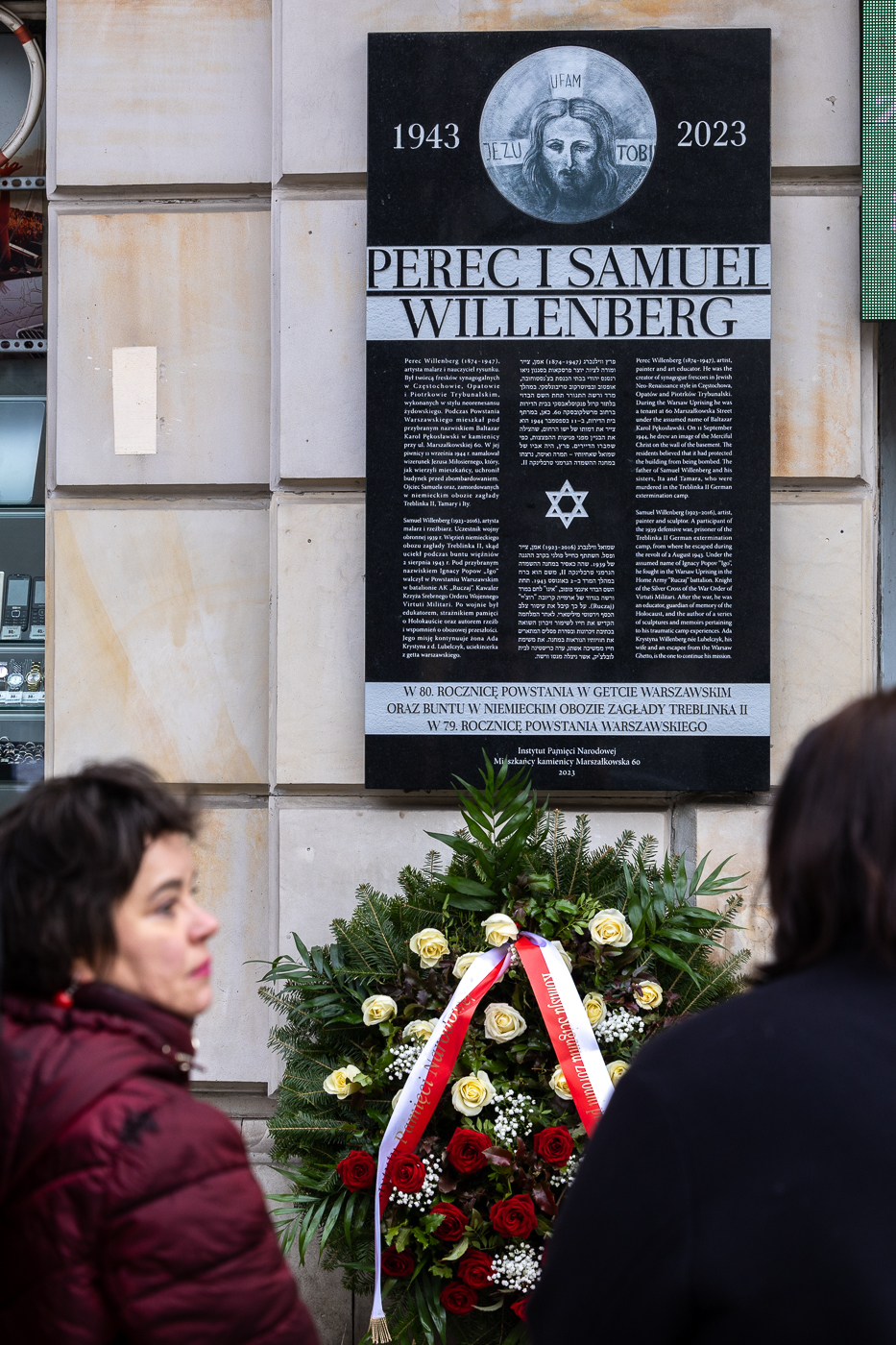
As part of the commemoration, representatives of the Institute of National Remembrance – Rafał Kościański Ph.D., the Director of the IPN Spokesperson’s Office, Dorota Lewsza Ph.D., Deputy Director of the office of International Cooperation and Blanka Kamińska-Pienkos –together with representatives of the Chancellery of the President of the Republic of Poland –Agata Talarków from the Office for Cooperation with the Polish Community and Krzysztof Orzechowski from the Office of Awards and Nominations – as well as Kuba Sitarski, representing the residential community of ‘Marszałkowska 60’, which takes care of the commemoration – laid wreaths and lit candles at the plaque honoring the tragic wartime fate of the Willenberg family.
On this solemn day, tribute was paid to Samuel Willenberg, who survived the Treblinka extermination camp and escaped during a prisoner uprising, as well as to his sisters, Ita and Tamara, who perished there. The joint commemoration also provided a moment to reflect on the value of human life and the responsibility to preserve and pass on the truth of the Holocaust to future generations, both as a warning and as a testament to the strength of humanity.
Samuel Willenberg was a soldier of the Polish Army and the Home Army, a prisoner of the Treblinka II extermination camp, and a participant in the 1943 revolt. He also took part in the Warsaw Uprising and, after the war, became a sculptor and painter. Despite the traumatic experiences he endured during the German occupation of Poland, he continued to return to his homeland until the end of his life. He passed away on 19 February 2016, in Tel Aviv.
After emigrating to Israel in 1950, Samuel and his wife Krystyna frequently visited Poland, both privately and as guides for Israeli youth. They became advocates of positive Polish-Jewish relations, openly acknowledging both the tragic and the inspiring events that connected these two communities of Polish citizens during the brutal German occupation.
In 2023, the Institute of National Remembrance, in cooperation with the ‘Marszałkowska 60’ residential community, commemorated Samuel Willenberg and his father Perec – a painter, artist, and art educator – with a memorial plaque at the tenement house at 60 Marszałkowska Street in Warsaw. During the Warsaw Uprising, Samuel’s father, the Jewish synagogal artist Prof. Perec Willenberg, hid there under the name Baltazar Karol Pękosławski.
On the forty-first day of the Warsaw Uprising, a mortar shell struck the building, destroying two floors and stopping just above Perec’s room. Perec was lying on his bed, covered in rubble. At his son Samuel’s urging, he decided to wait out the bombardment in the basement. On the way down, he sketched a depiction of the Merciful Christ on the stairwell ceiling in charcoal. It was the head of Christ against a cross, with the inscription: “Jesus, I trust in You” and the signature: “drawn by B. Pękosławski, 11 September 1944.” As Ada Willenberg later recalled, tenants believed the building had been spared thanks to this depiction created by her father-in-law.
In January 2020, the Institute of National Remembrance brought a collection of fifteen sculptures by Samuel Willenberg from Israel to Poland. The works depict the daily reality of life in the extermination camp, giving voice to individual victims and capturing collective scenes, such as the camp uprising on 2 August 1943, or the escape of a small group of survivors.
Despite the global pandemic, the project reached a wide Polish audience, in part thanks to a virtual exhibition created by the IPN (https://lastwitness.eu/) and online workshops for youth exploring representations of the Holocaust in art. Onceit became possible, the exhibition, supplemented with excerpts from the artist’s memoirs in English, Polish, and Hebrew, was presented in several locations across Poland, including sites of former German concentration camps in Bełżec, Sobibor, and Majdanek.
The exhibition and educational project, based on Willenberg’s works, were made possible thanks to the generosity and trust of the artist’s widow, Ada Krystyna Willenberg, who continues her husband’s legacy in preserving the memory of the Holocaust, particularly among younger generations.
More: