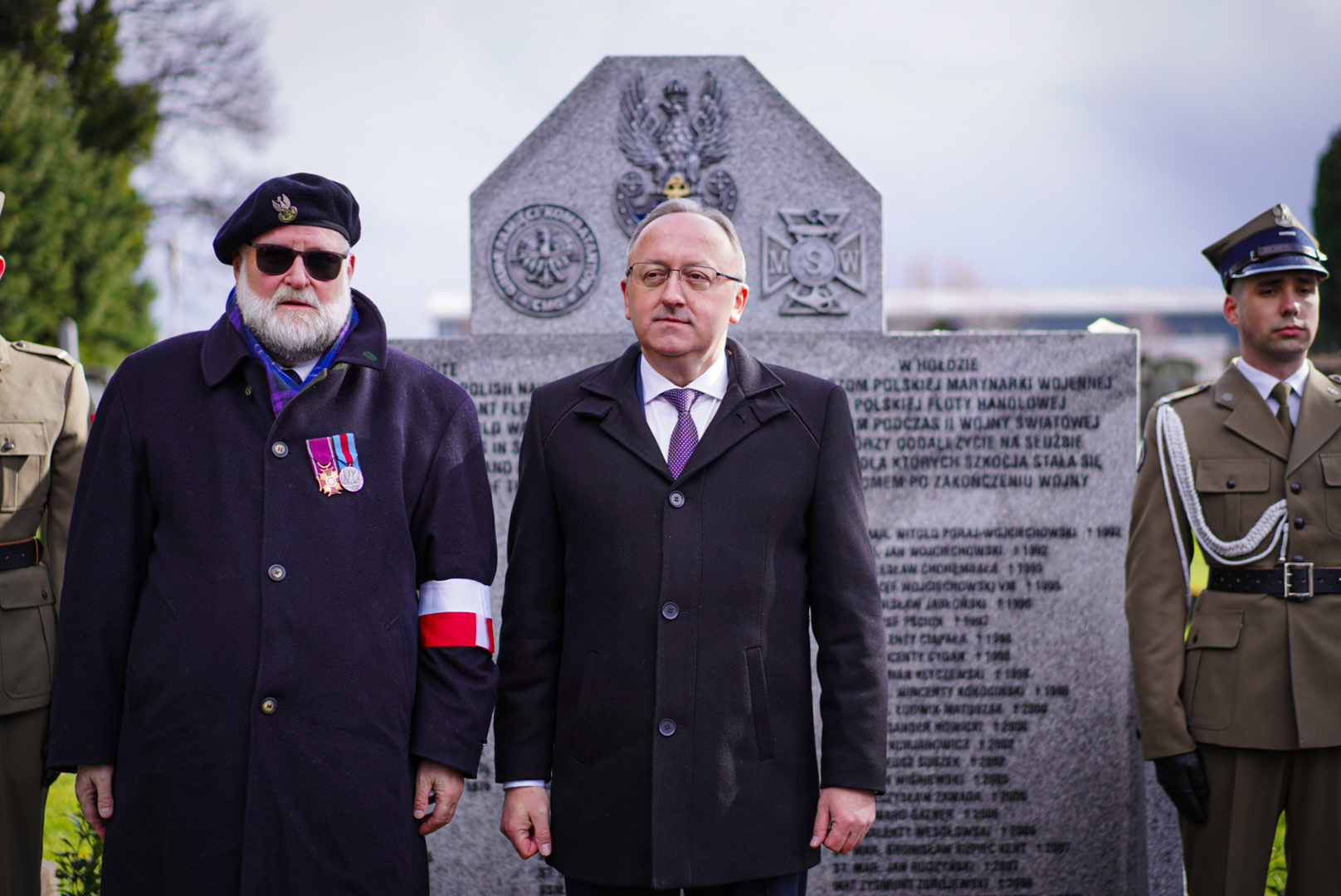
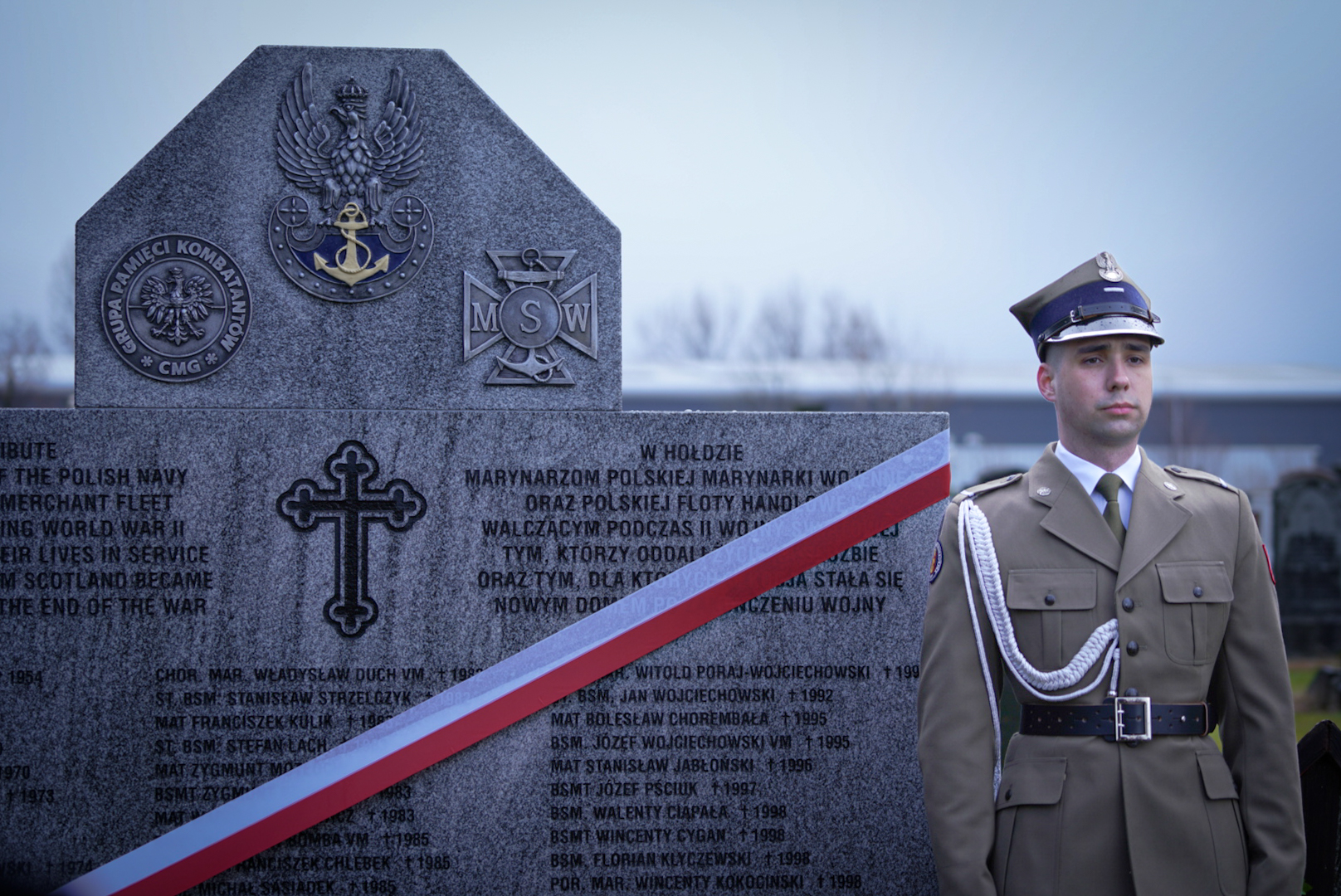
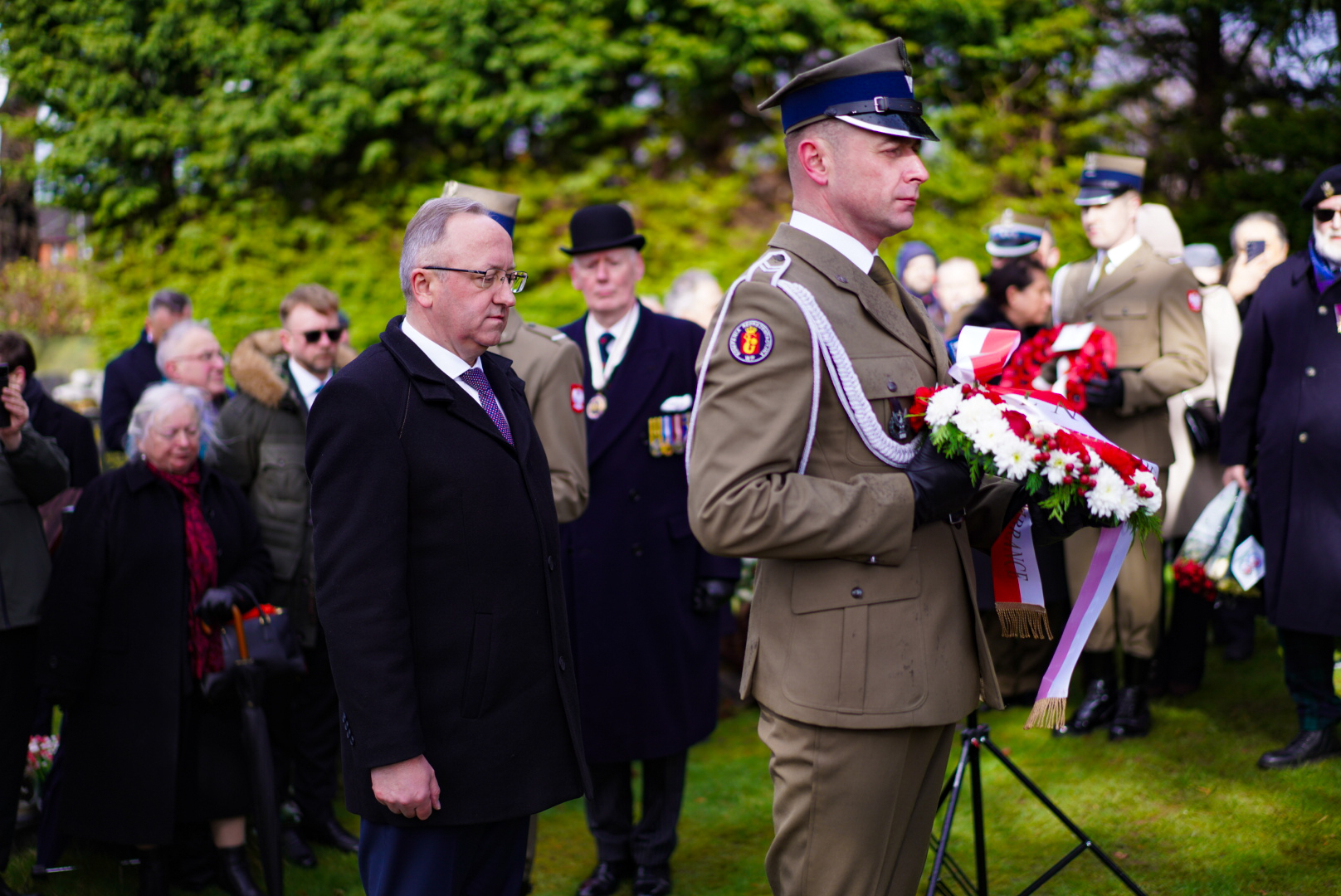
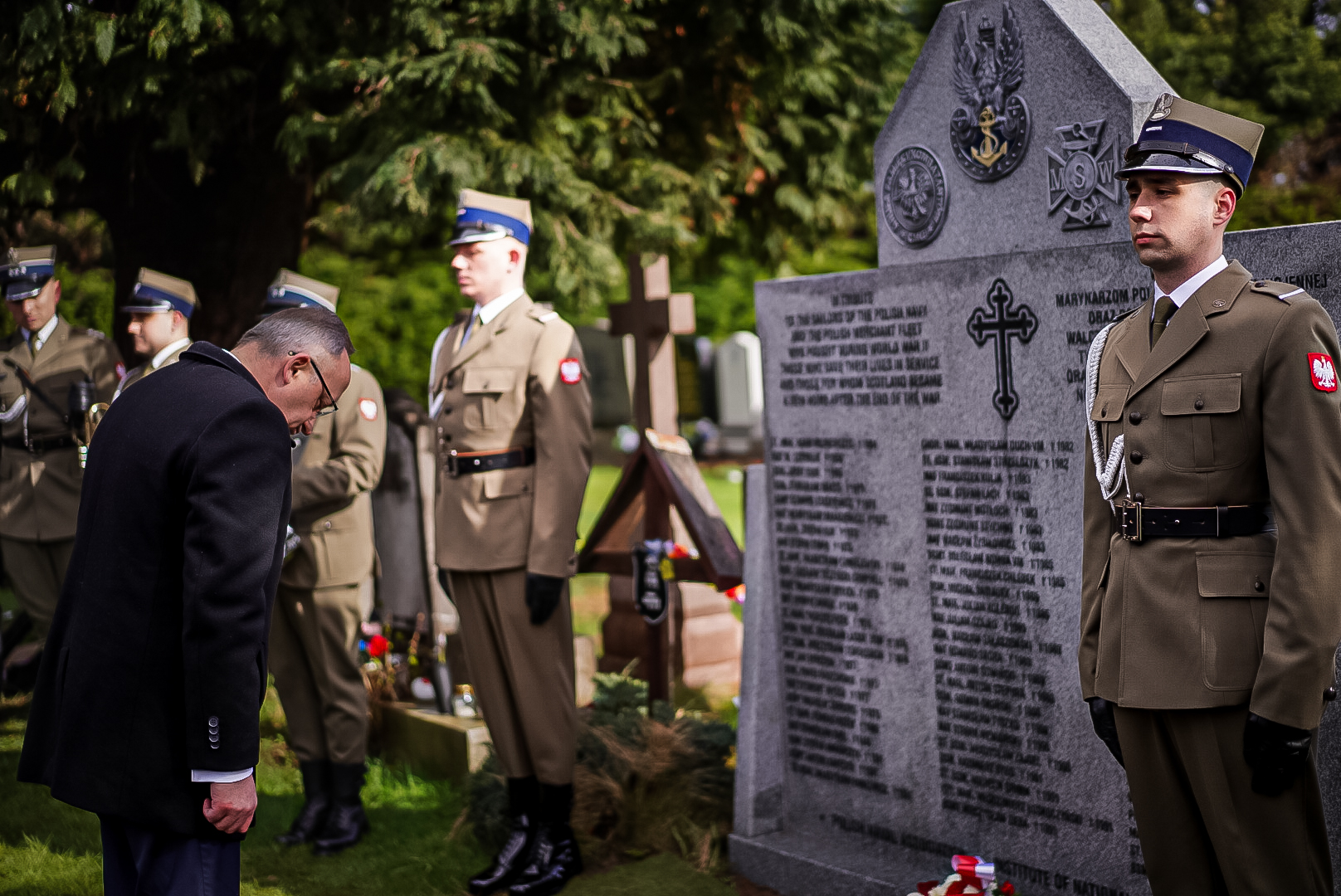
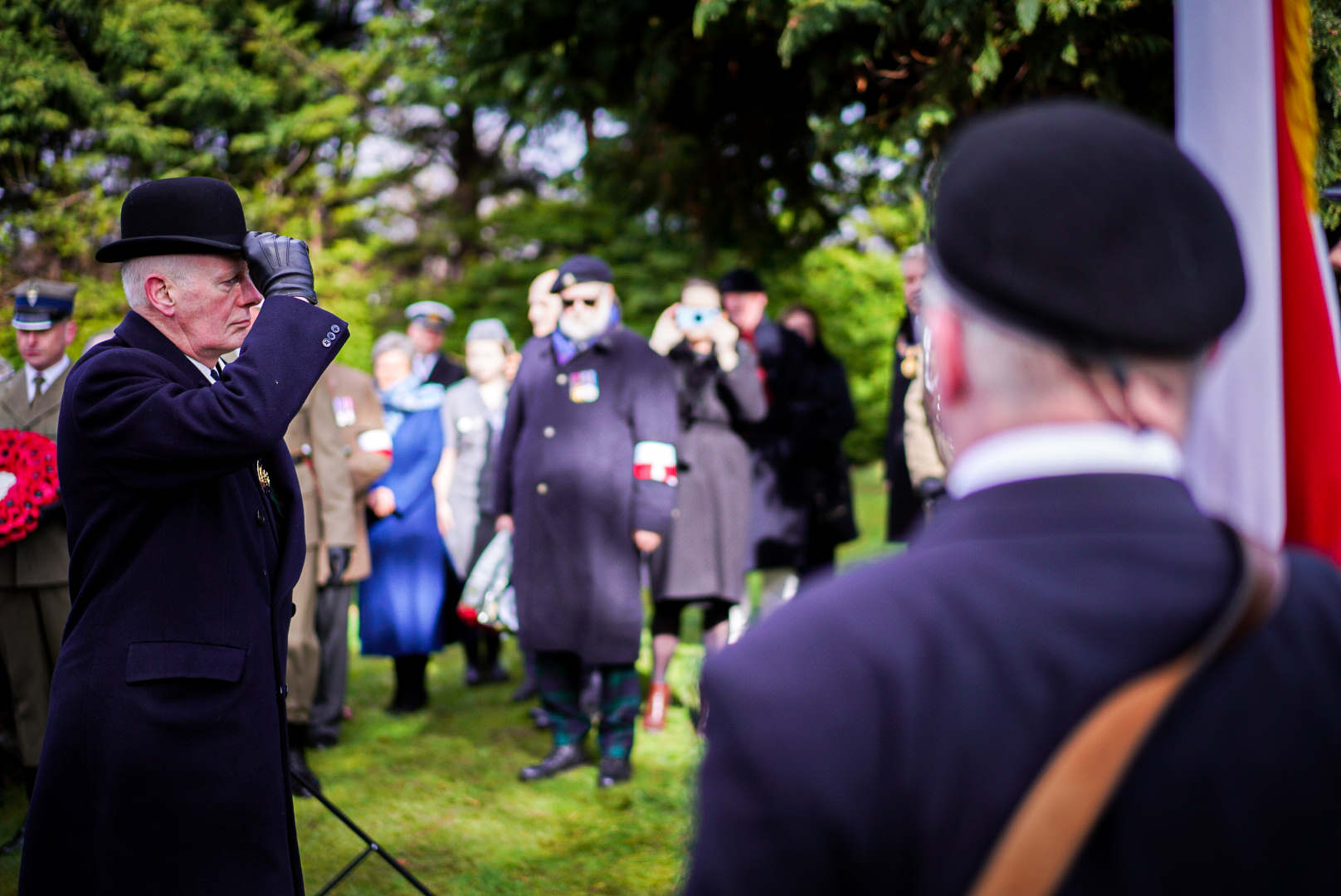
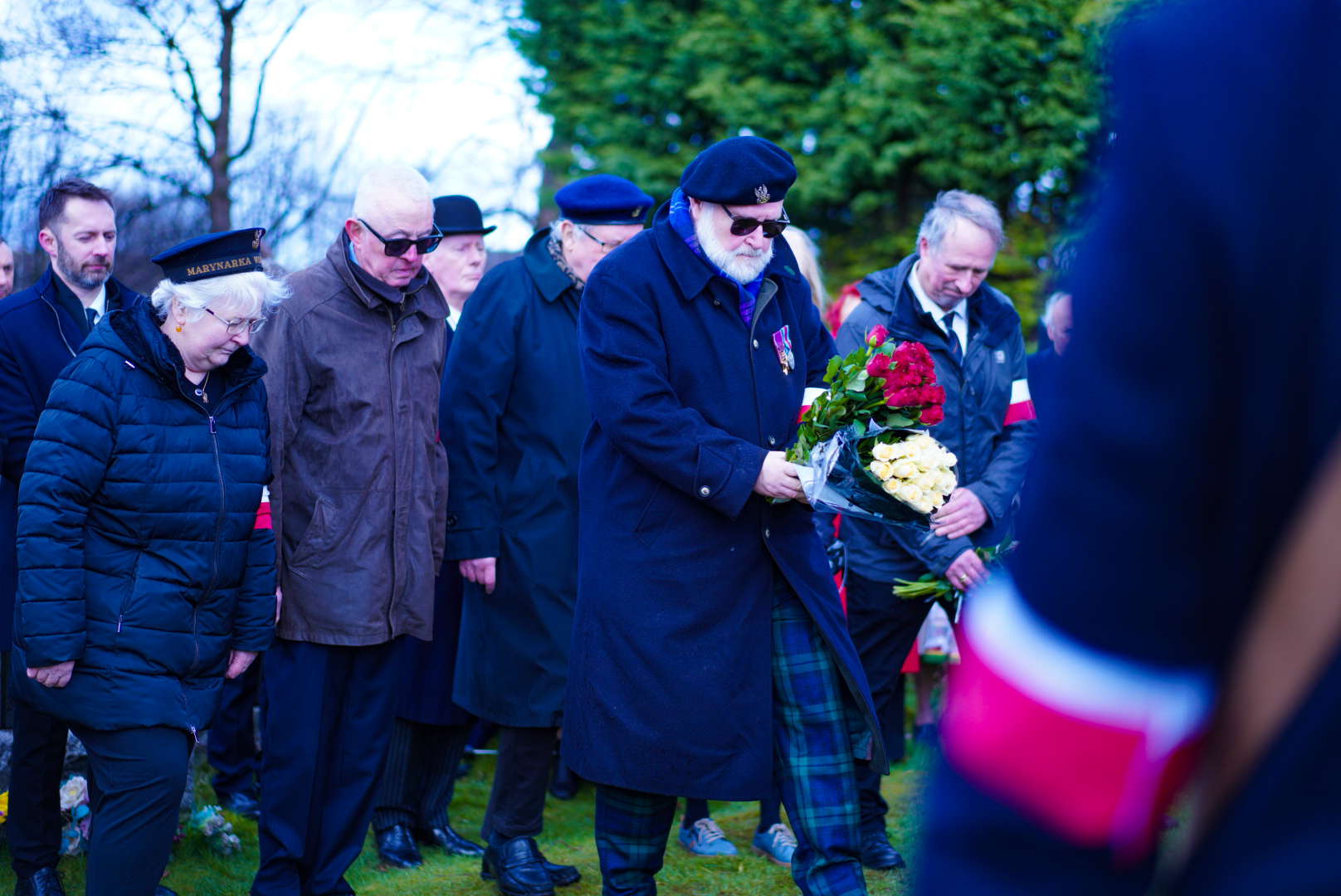
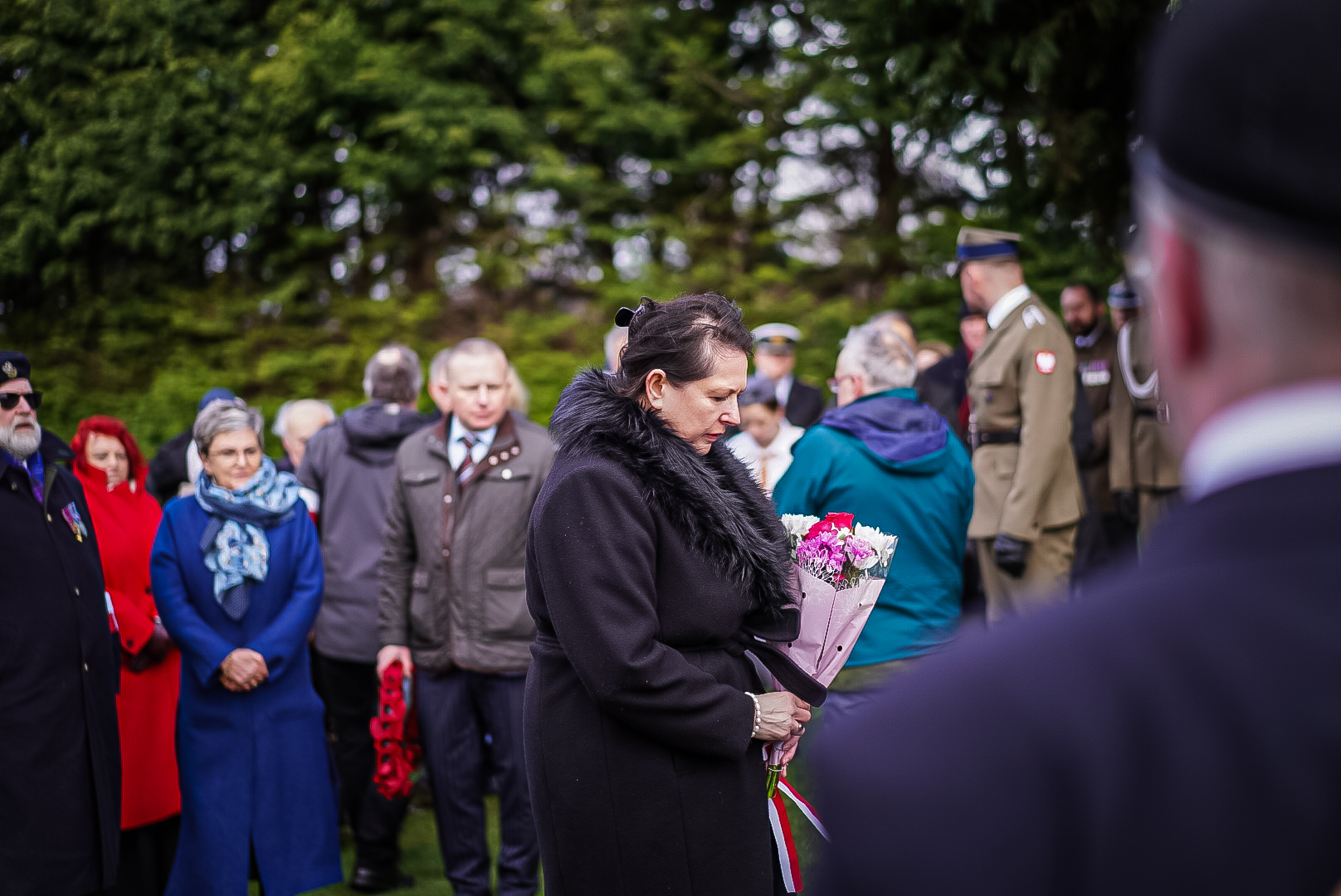
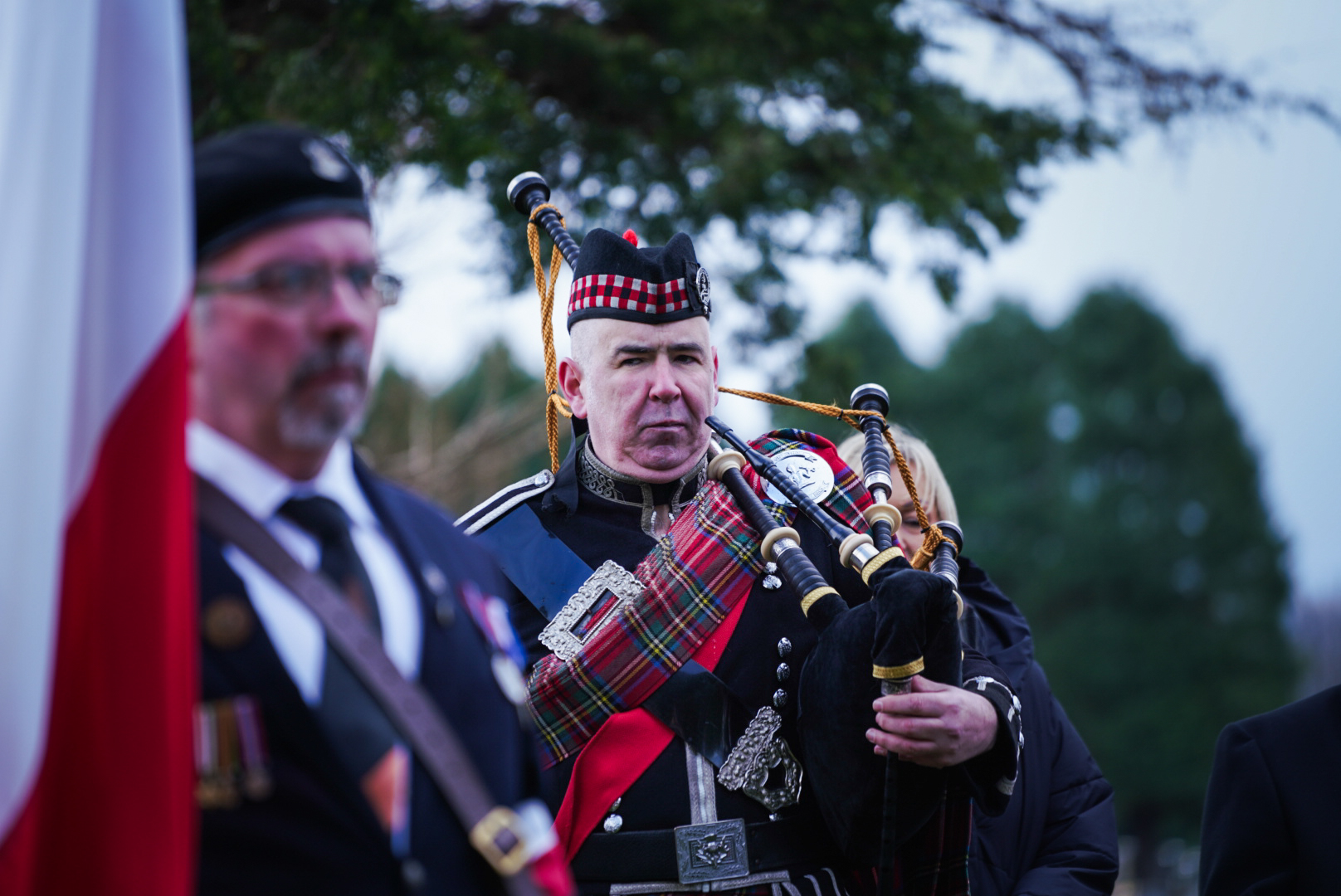

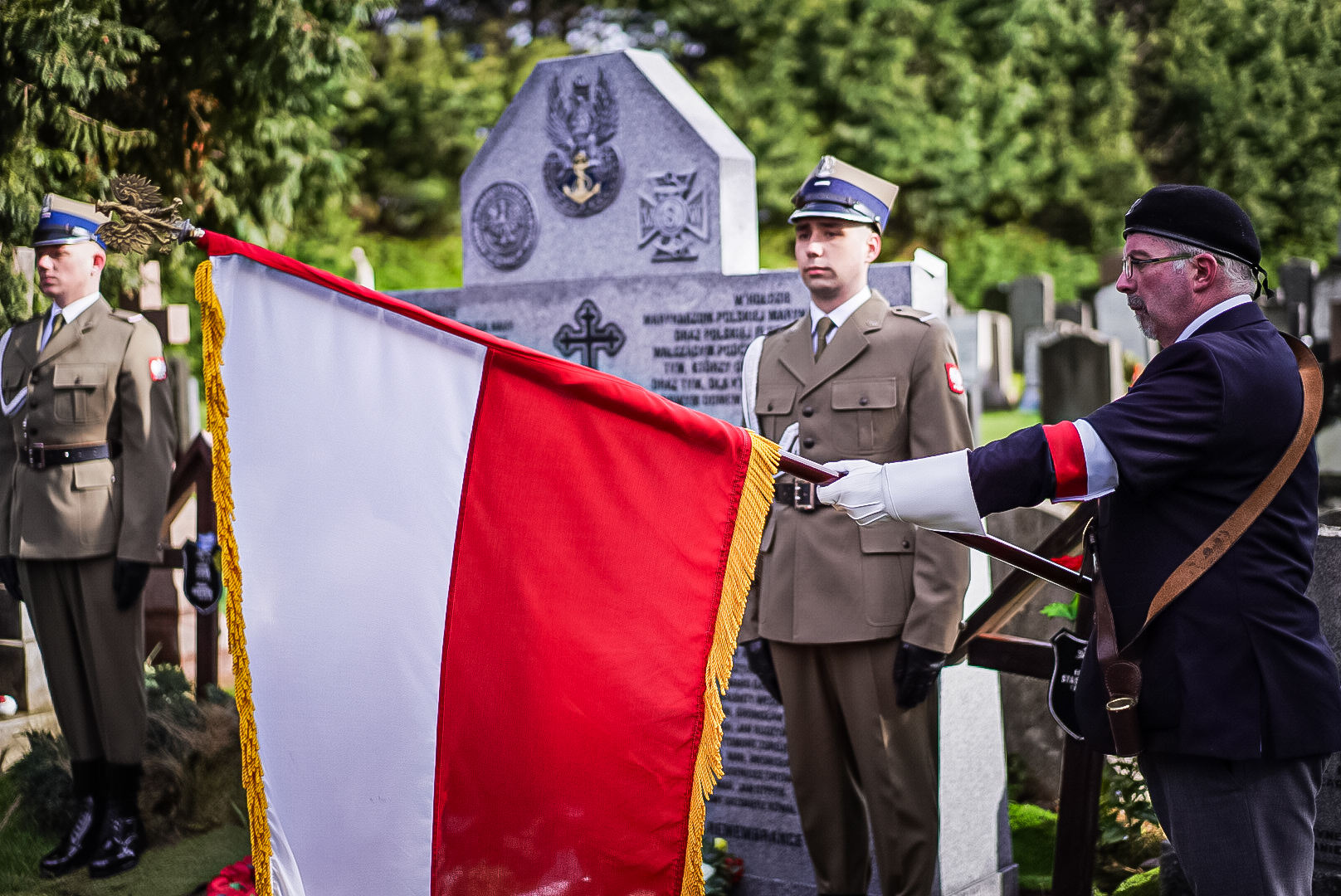
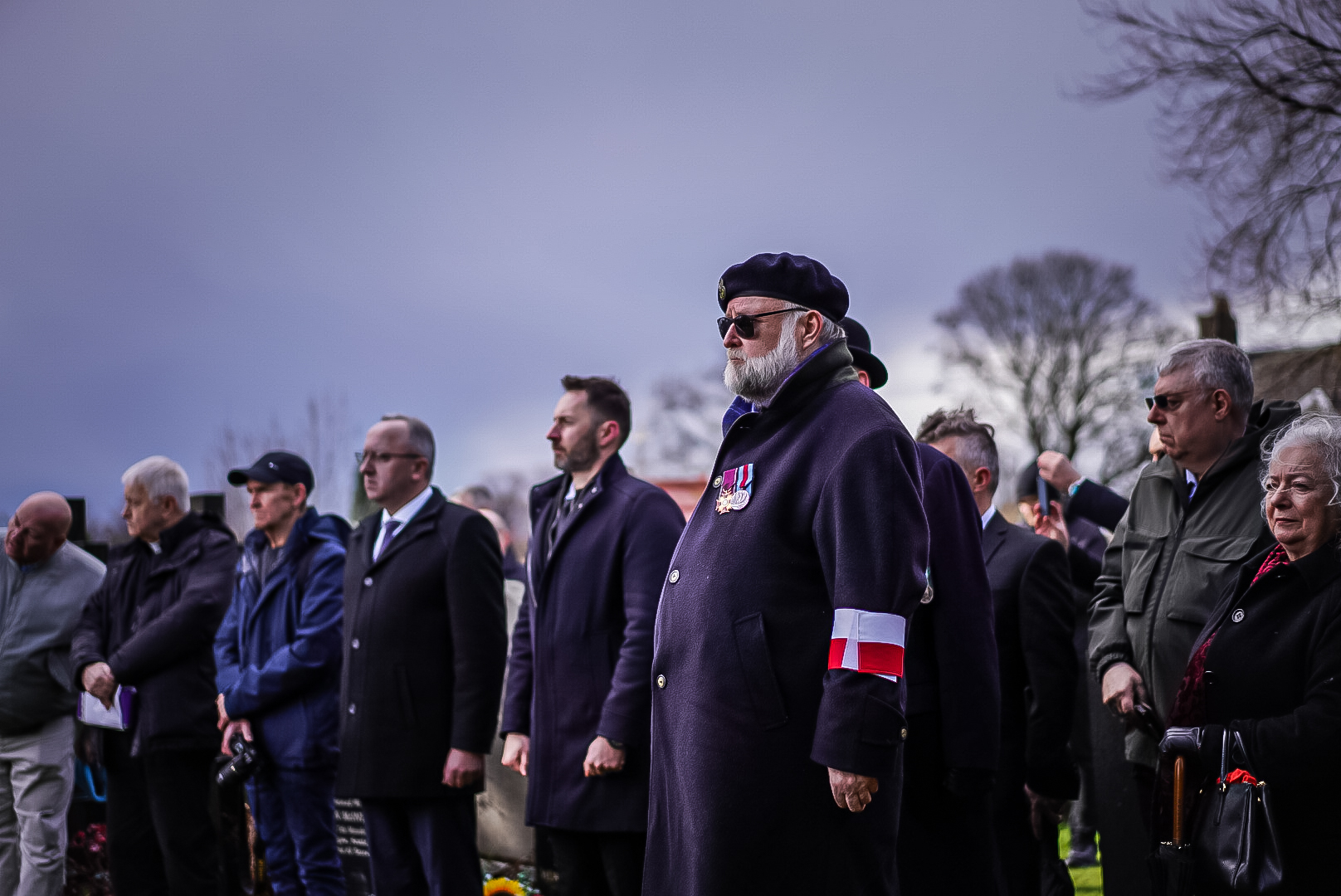
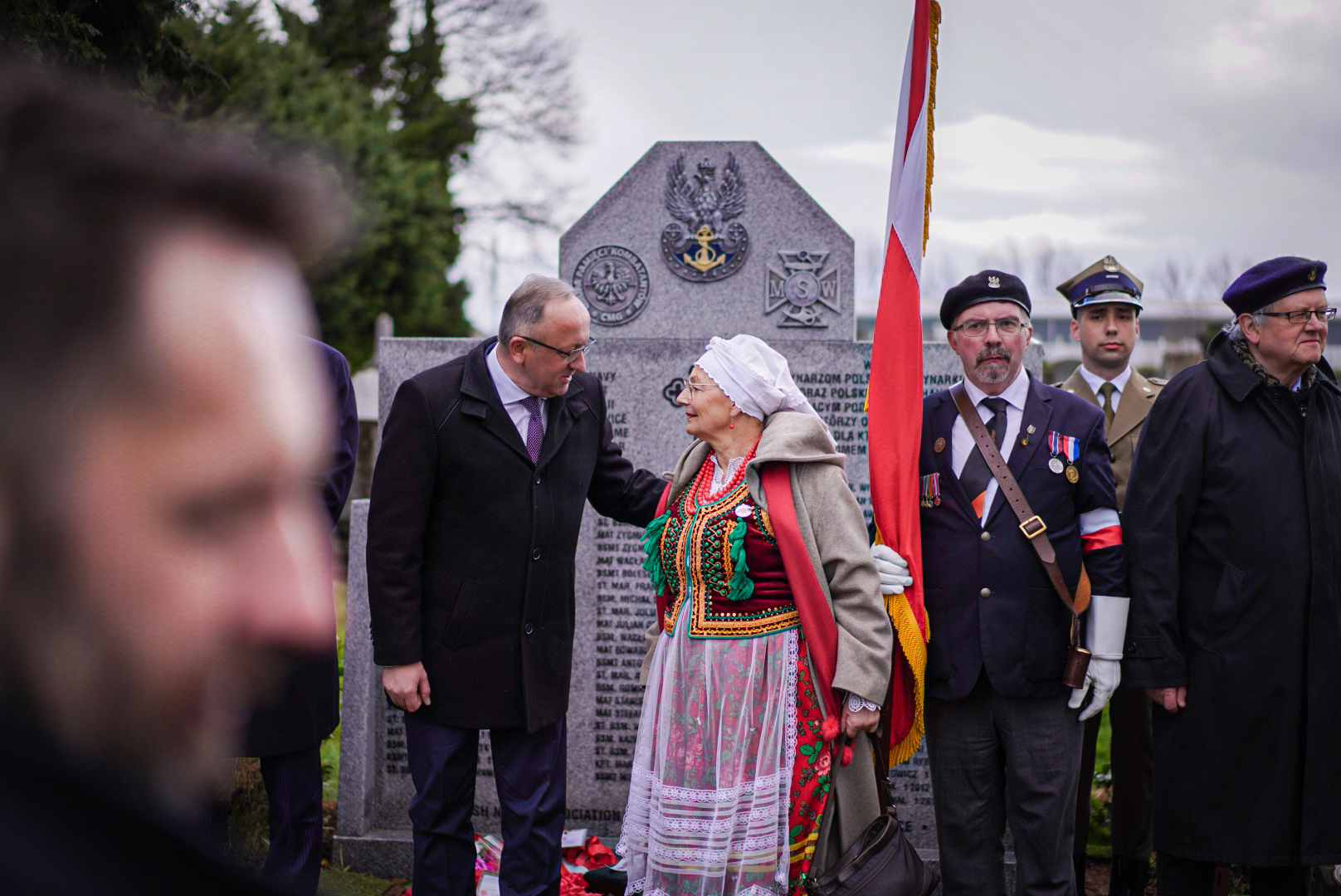
On 13 March 2026, a remembrance service was held at Dalbeth Cemetery in Glasgow to unveil a restored monument dedicated to Polish sailors of the Polish Navy and the Polish Merchant Fleet who fought for Poland’s freedom during World War II, many of whom remained in Scotland after the war ended. The Institute of National Remembrance was represented by its Deputy President, Prof. Karol Polejowski.
The ceremony was attended by descendants of Polish soldiers and sailors buried at Dalbeth Cemetery, as well as representatives of the Polish community and individuals involved in preserving the memory of Polish veterans.
During his speech, K. Polejowski recounted the history of the Polish Navy during World War II and the fate of its sailors fighting alongside the Allies. Moreover, he reminded about the efforts and heroism of Polish sailors who—despite the loss of their homeland and their own bases—carried out combat operations on the seas and oceans of the world. He also emphasized that Scotland became a place of residence for many of them after the war, and the cemetery in Dalbeth stands as a testament to this history.
Today we pay tribute to those who survived these hardships and settled on the hospitable Scottish soil, finding their final resting place here; To the sailors who took part in gruelling Arctic convoys, arduous patrol voyages, and the largest naval operations of World War II. Among those commemorated on the monument unveiled today is Petty Officer Adam Wisniewski, a rangefinder from ORP “Piorun” buried nearby, who most likely saw the silhouette of the German battleship “Bismarck” through his sights as it was pursued by the Polish ship on 26 May 1941, said K. Polejowski.
.
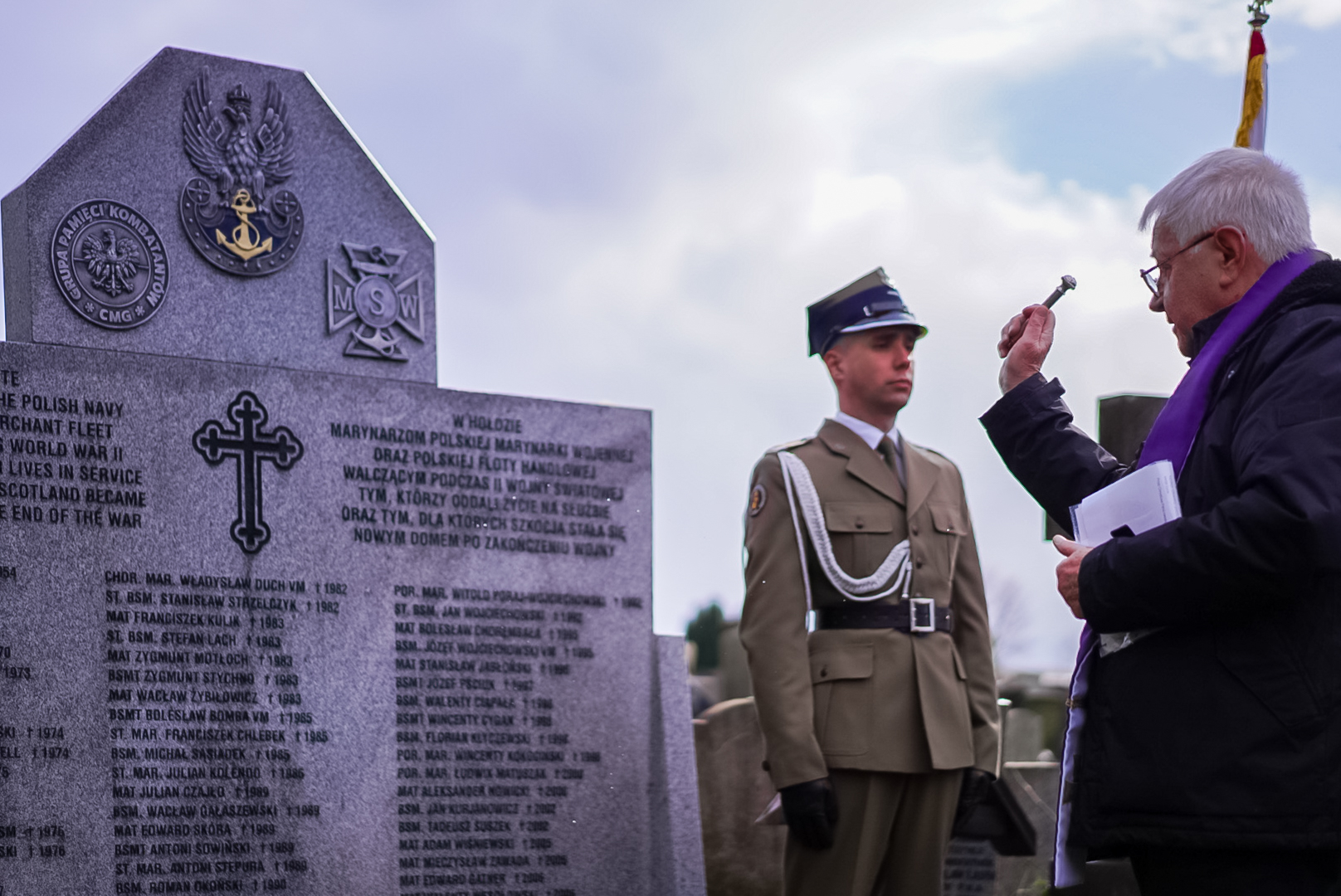
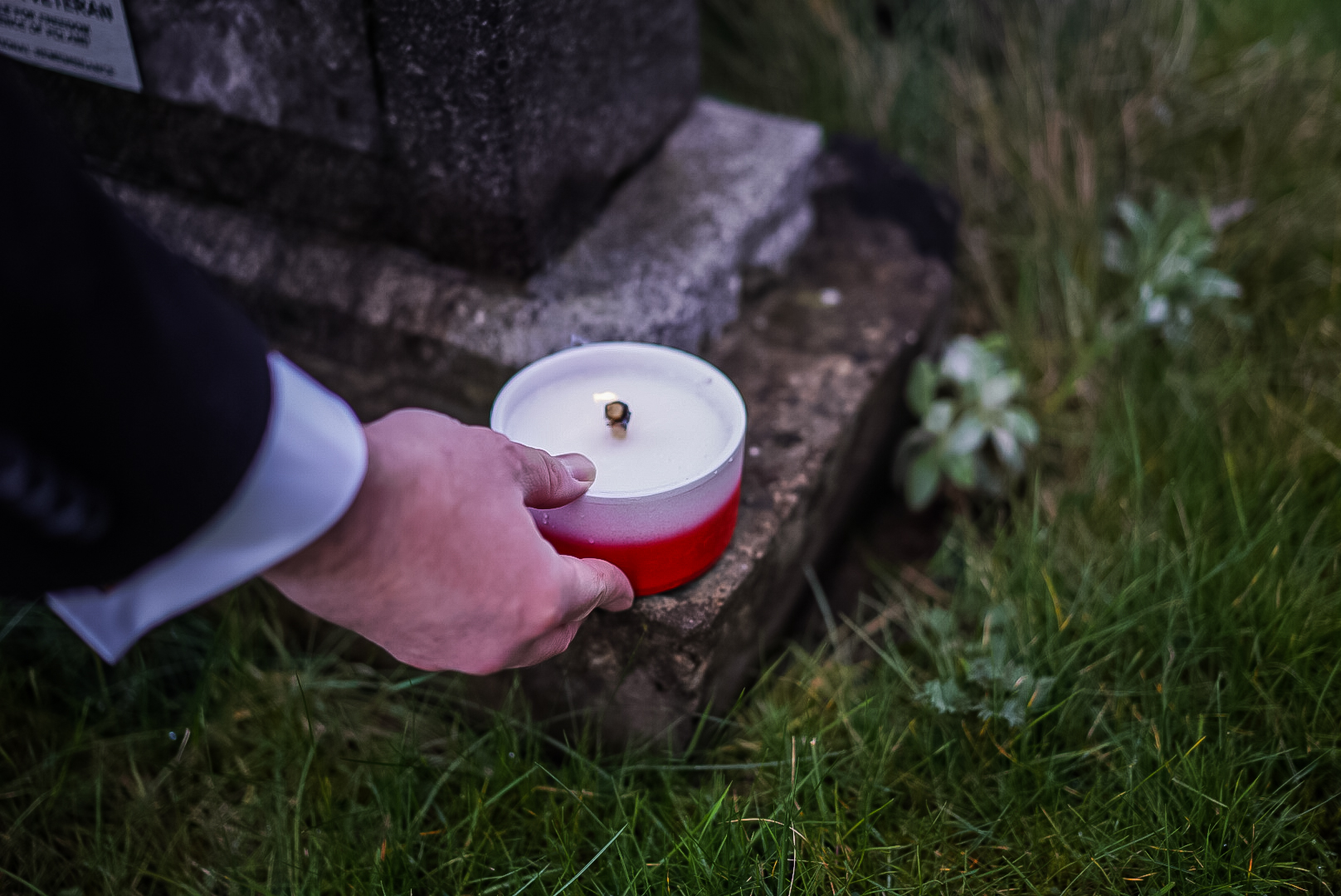
The restored monument was unveiled by Prof. Karol Polejowski, Deputy President of the Institute of National Remembrance (IPN), and John Lassa, son of the Polish naval hero Bolesław Lassa. Father Marian Łękawa, chaplain of the Polish community in Glasgow, then said a prayer and blessed the memorial, and those gathered for the ceremony laid flowers and lit candles.
***
On 14 March 2026, a delegation from the Institute of National Remembrance also visited sites commemorating Polish soldiers who fought during World War II. The IPN’s representatives lit candles at the graves of three Polish pilots buried at Arkleston Cemetery, who were killed in 1941.
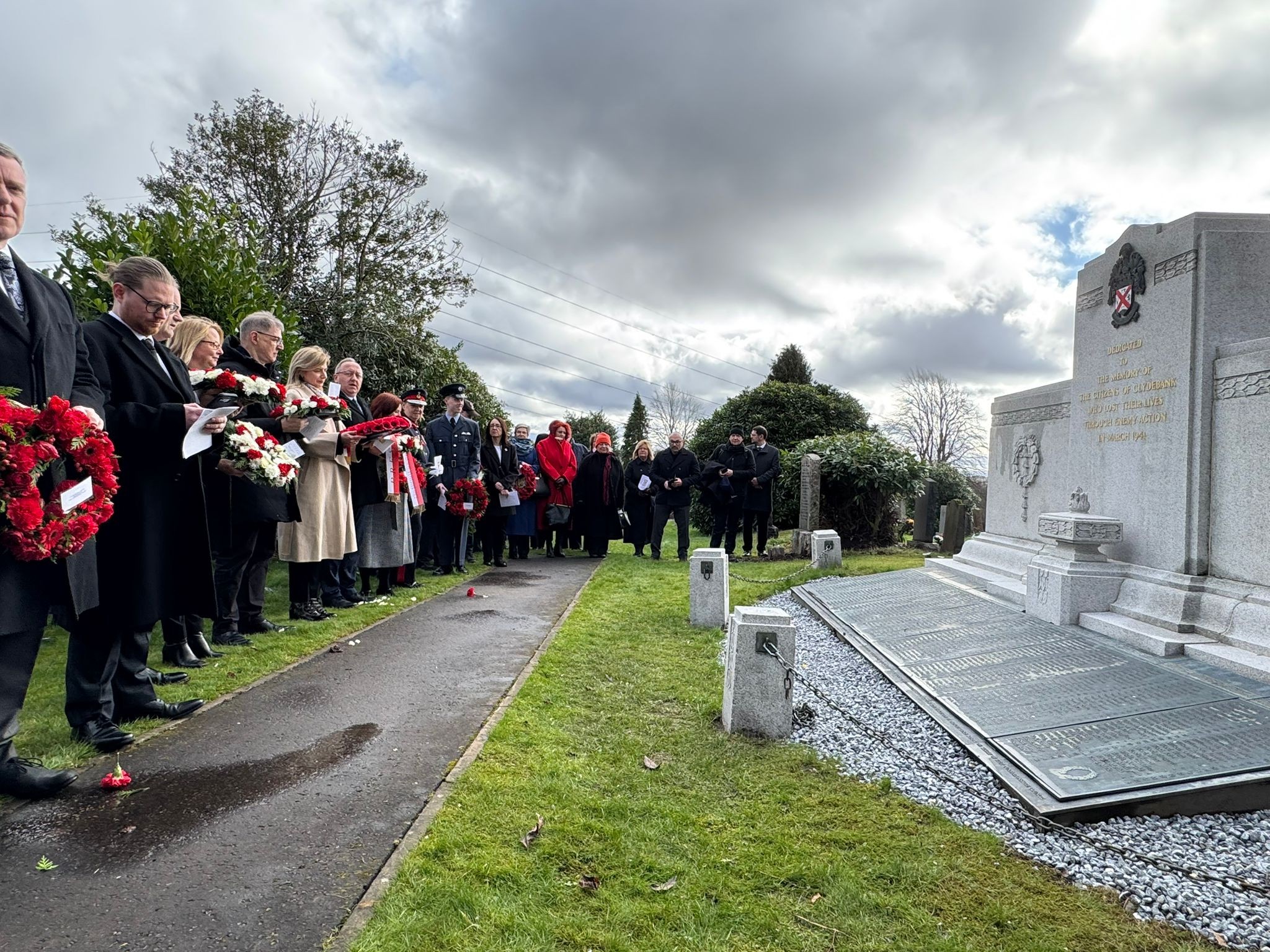
The delegation also took part in ceremonies commemorating the victims of the Clydebank Blitz, organized by the Clydebank municipal authorities. The IPN’s representatives laid flowers at the mass grave of the victims of the air raids of March 1941.
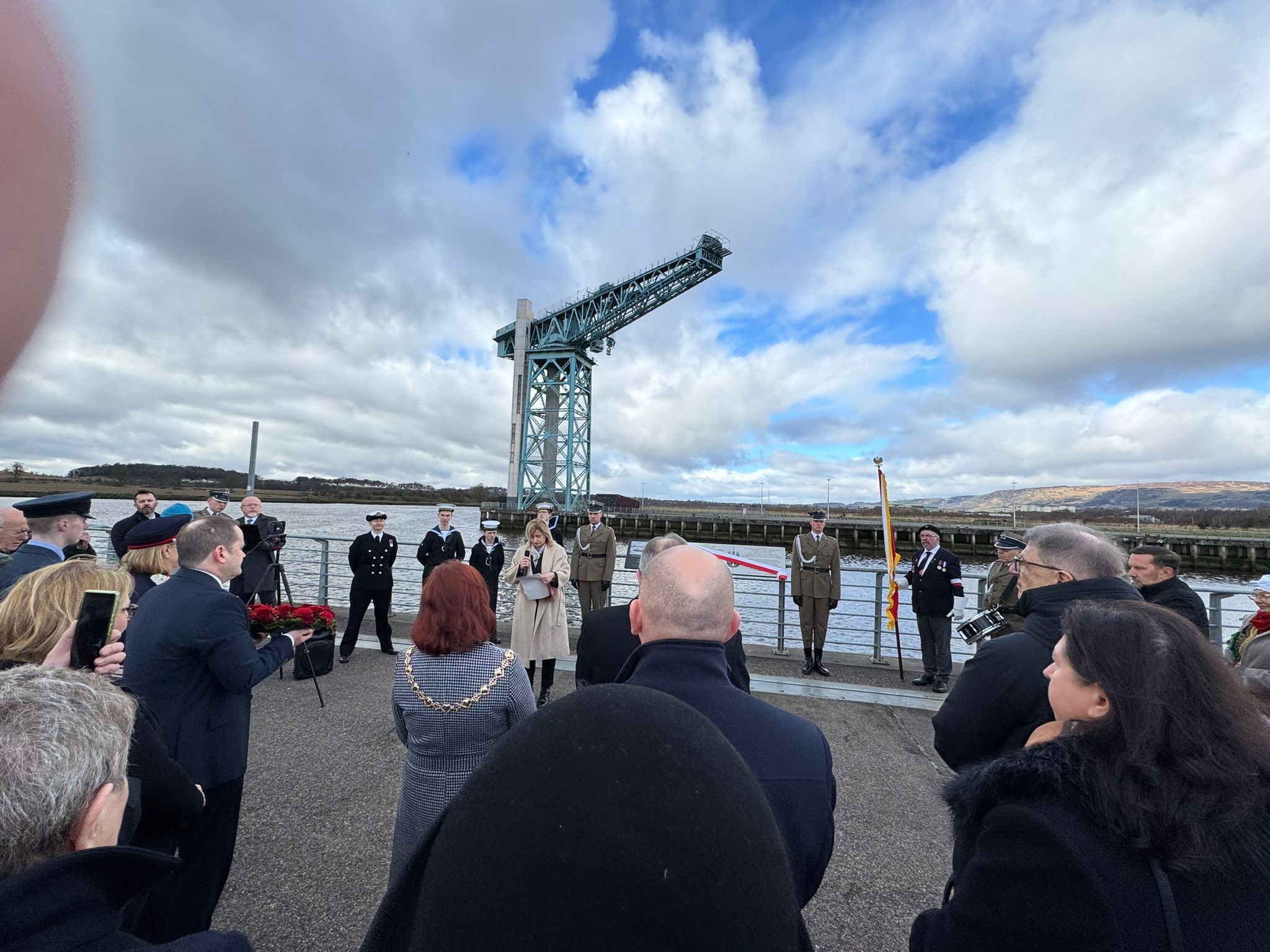
An important part of the visit was a gathering at the memorial site of the destroyer ORP “Piorun,” one of the most famous ships of the Polish Navy during World War II. The ship was launched at the Clydebank shipyard in May 1940 and, a few months later, transferred to the Polish Navy in exchange for the destroyer ORP “Grom,” which had been lost off Narvik.
During the ceremony, Prof. Karol Polejowski, Deputy President of the Institute of National Remembrance, recalled the history of Polish sailors who fought under the white-and-red flag, as well as the significance of their service in maintaining the continuity of the Polish state during the war:
The decks of Polish ships were regarded as pieces of their homeland, and their presence on the seas and oceans served as a testament to the continuity of the Polish state and the unyielding continuation of the struggle to liberate Poland.
In his speech, K. Polejowski emphasized that the Institute has consistently been committed to commemorating the history of Polish sailors who fought during World War II. He recalled initiatives carried out in recent years in various parts of the world—from the restoration of the grave of the crew of the steamship “Wigry” in Reykjavik, through the unveiling of a plaque dedicated to the destroyer ORP “Ślązak” in Dieppe, Canada, to commemorations in Liverpool and Halifax. He also mentioned the monument dedicated to Polish sailors currently being prepared in Świnoujście, carried out in cooperation with the Polish Navy Command.
Preserving the history of the Polish Navy and Merchant Marine is an important part of the Institute of National Remembrance’s work,added Prof. K. Polejowski.
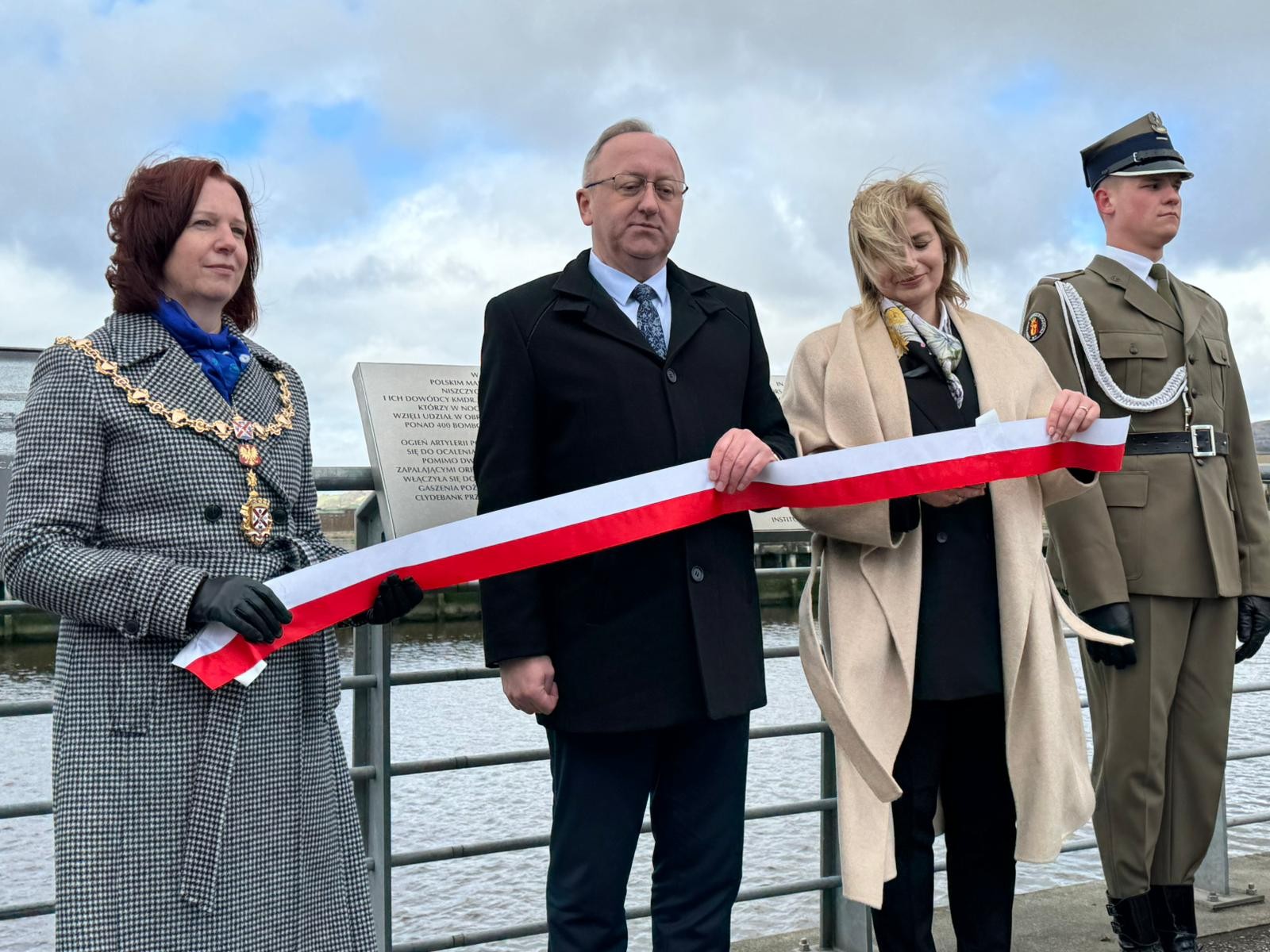
During the ceremony, a new plaque dedicated to the crew of the ORP “Piorun”—funded by the Institute of National Remembrance—was unveiled by Prof. Karol Polejowski and Karen Murray, Provost of Clydebank.
The Institute’s delegation also laid flowers at the Polish Monument in Clydebank, paying tribute to the Polish crew of ORP “Piorun.”