
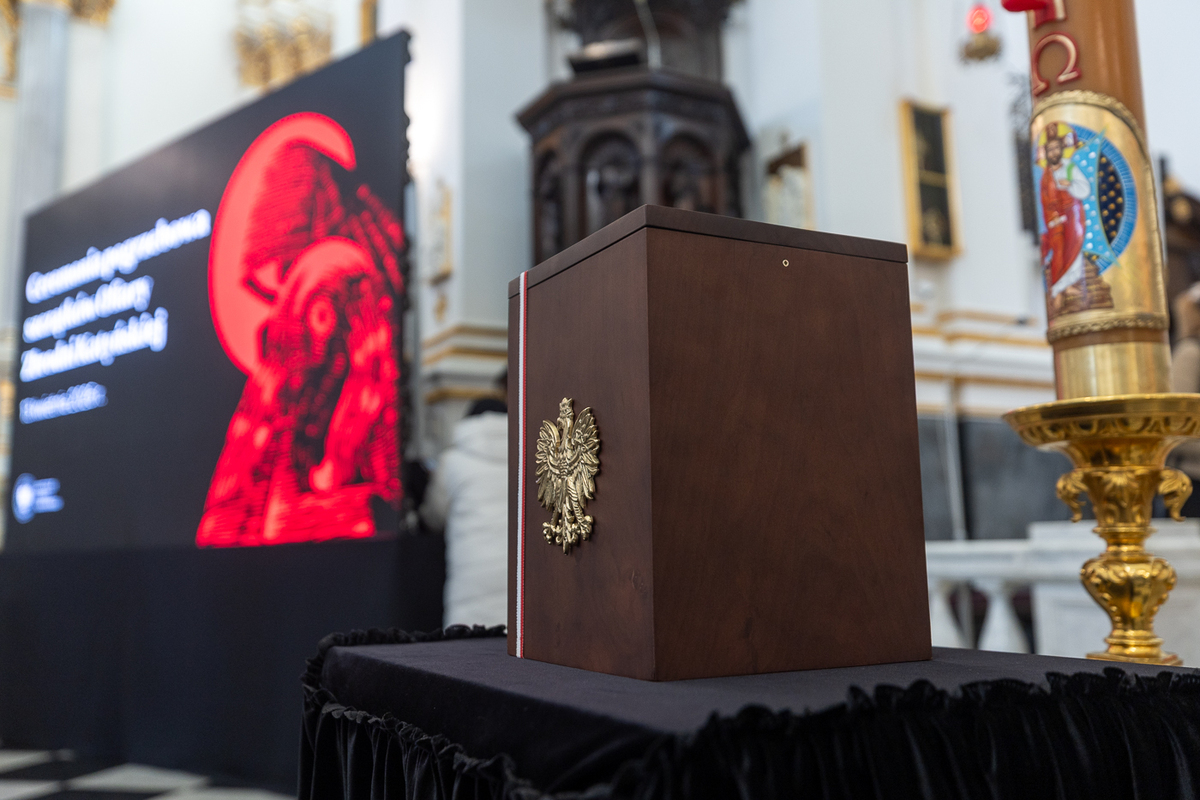
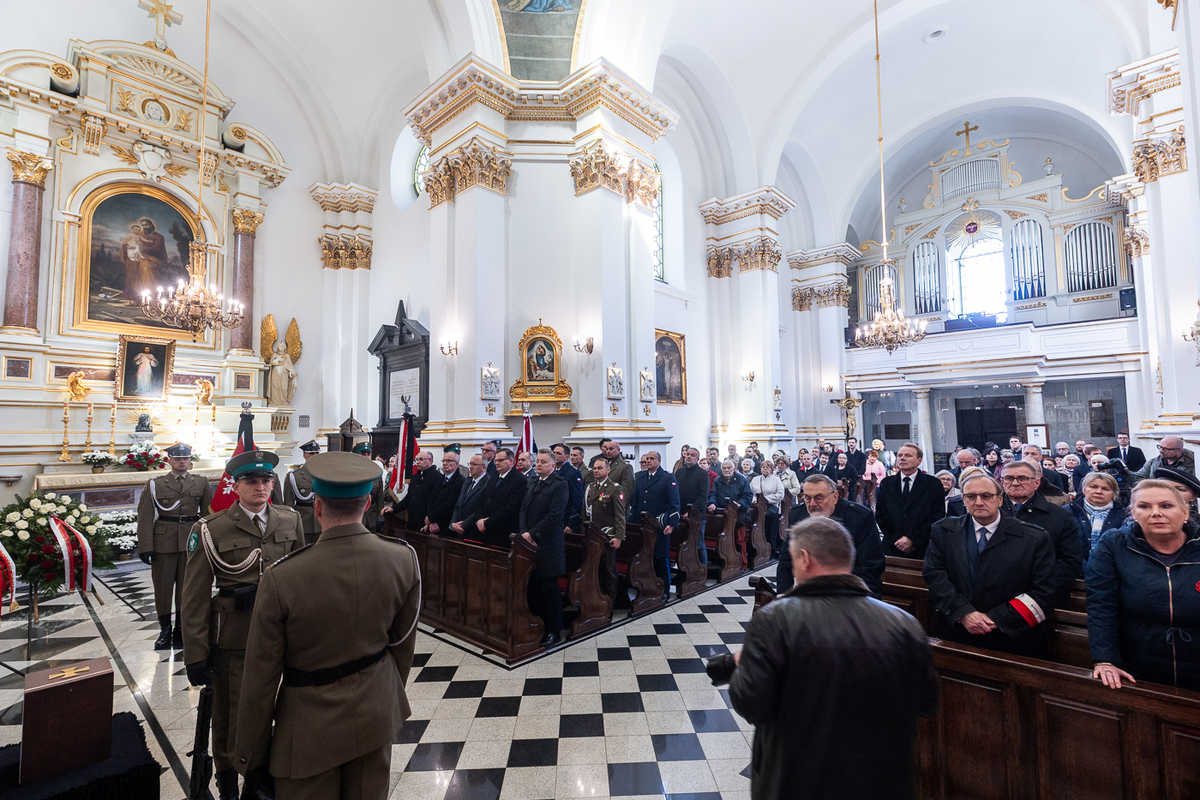
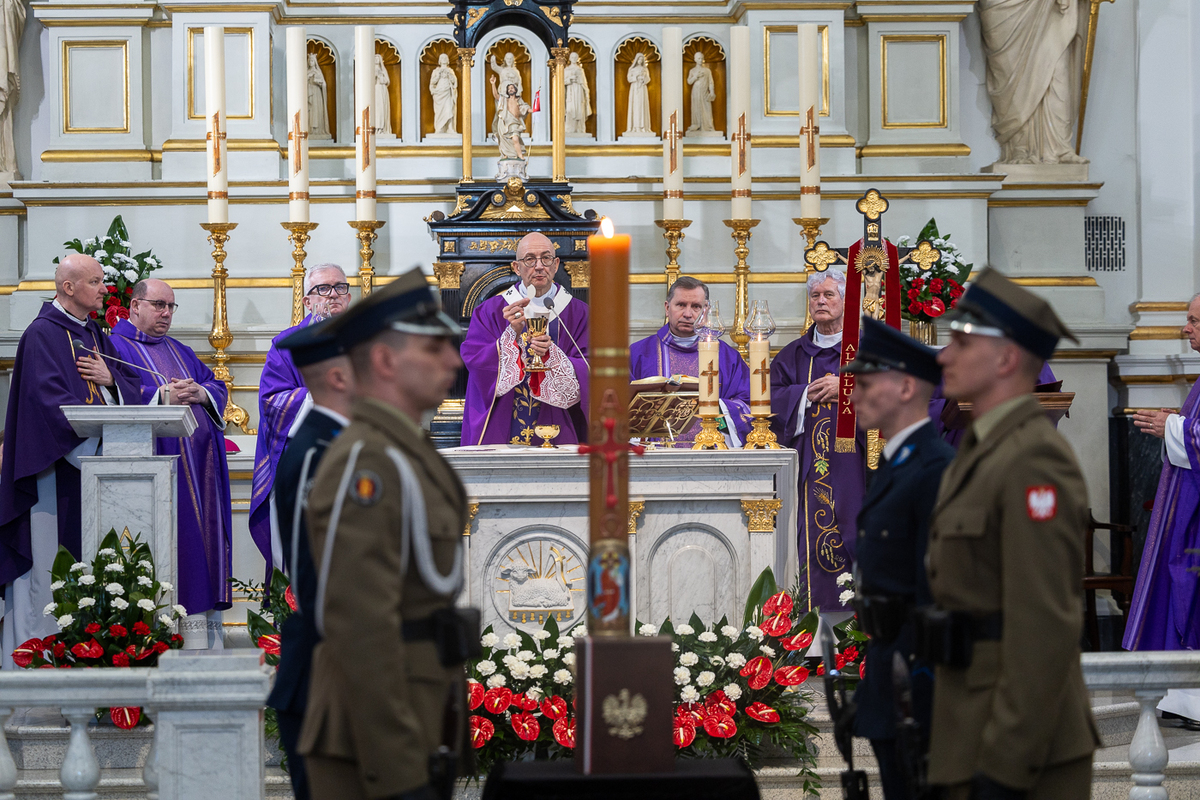
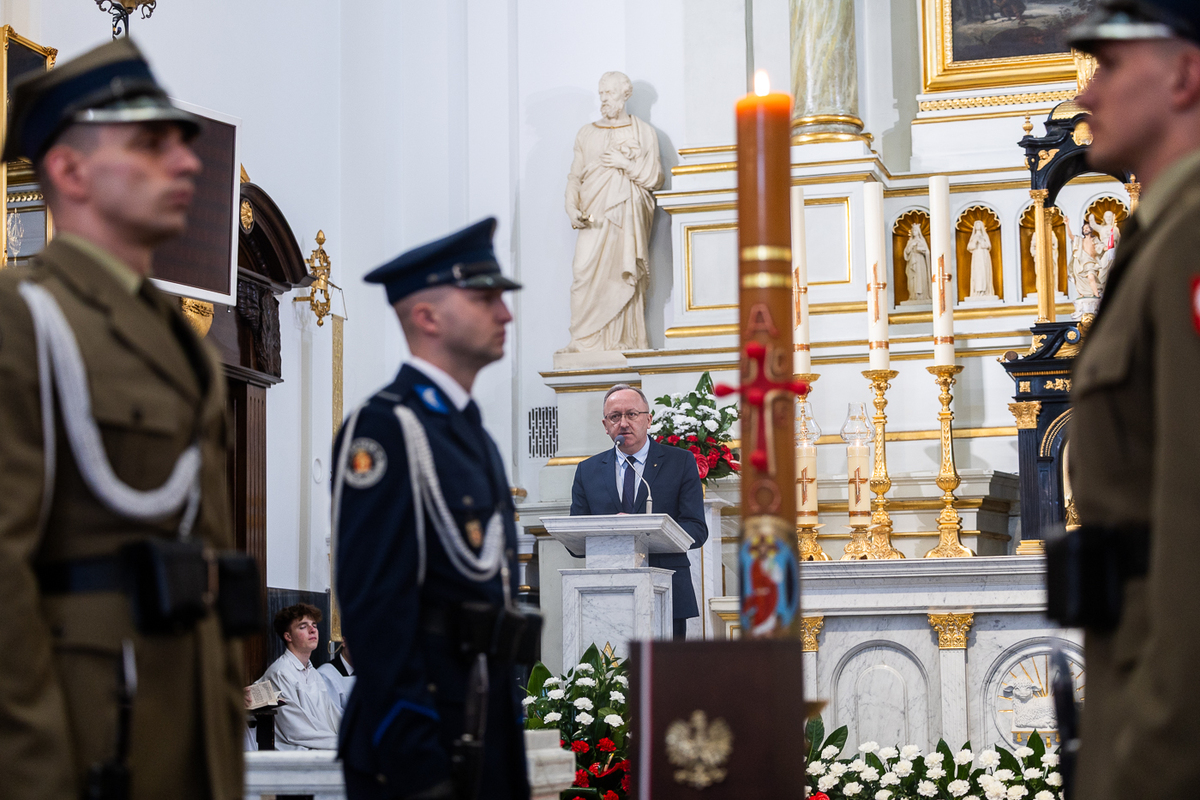
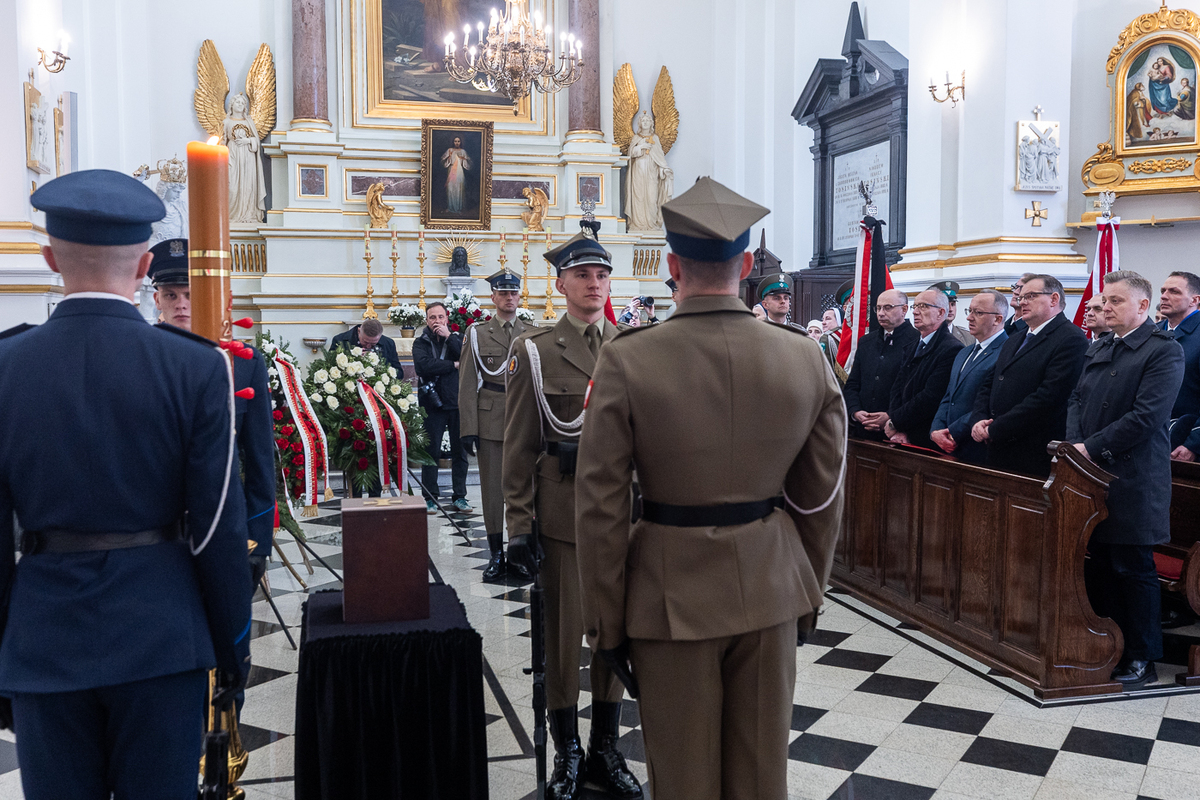
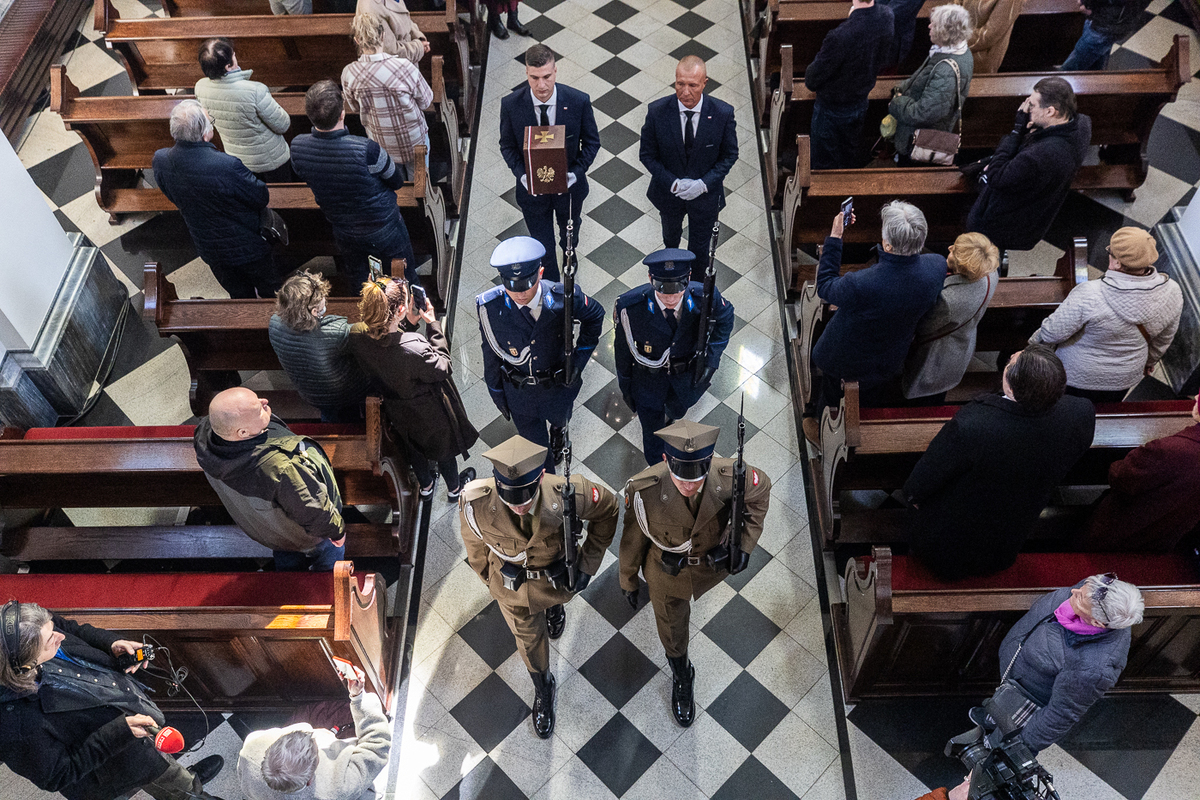
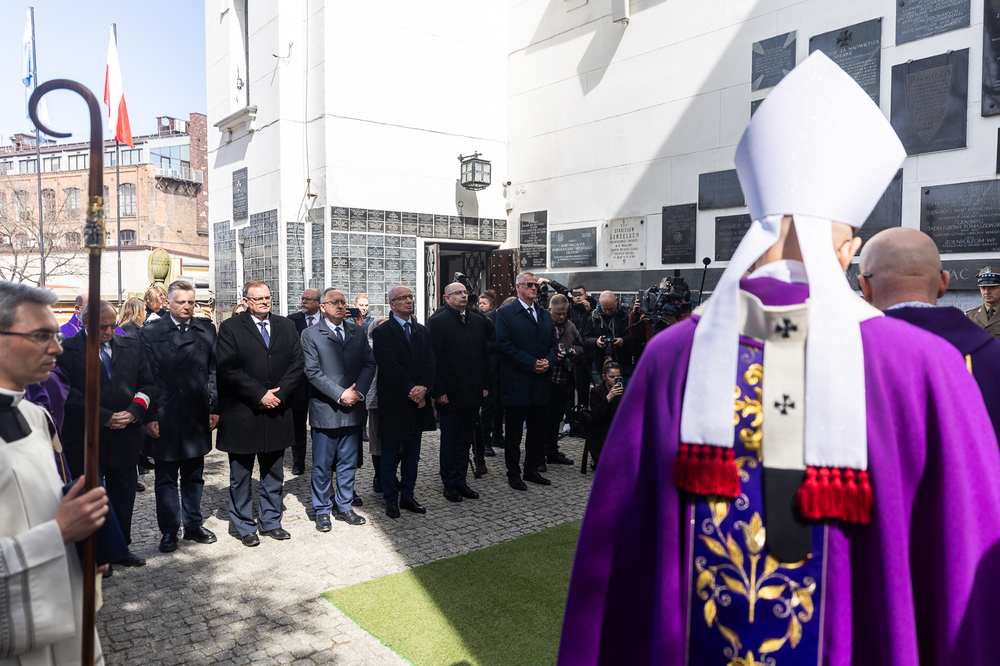
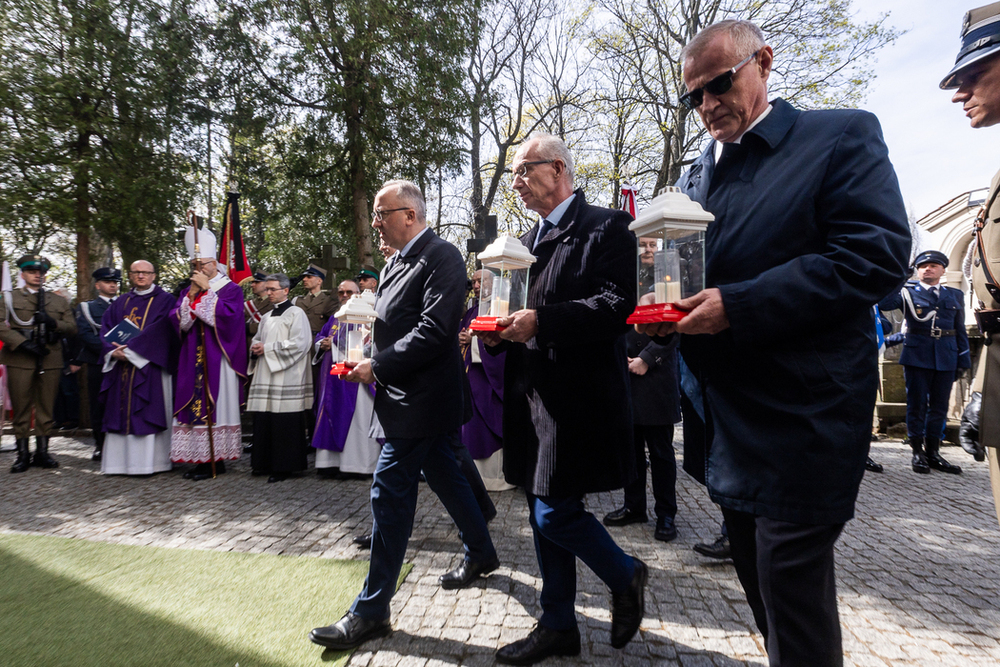
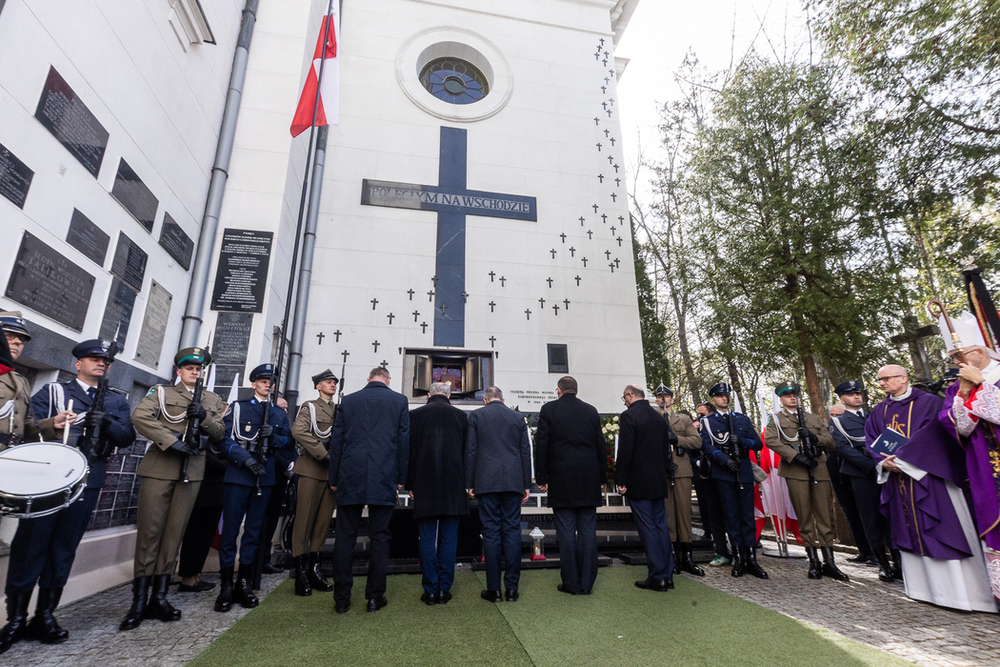
On the Day of Remembrance for the Victims of the Katyń Massacre, a state funeral for one of its victims was held at Stare Powązki Cemetery in Warsaw. The ceremony was attended by the Deputy Presidents of the Institute of National Remembrance: Dr Karol Polejowski, Dr Mateusz Szpytma and Dr Krzysztof Szwagrzyk.
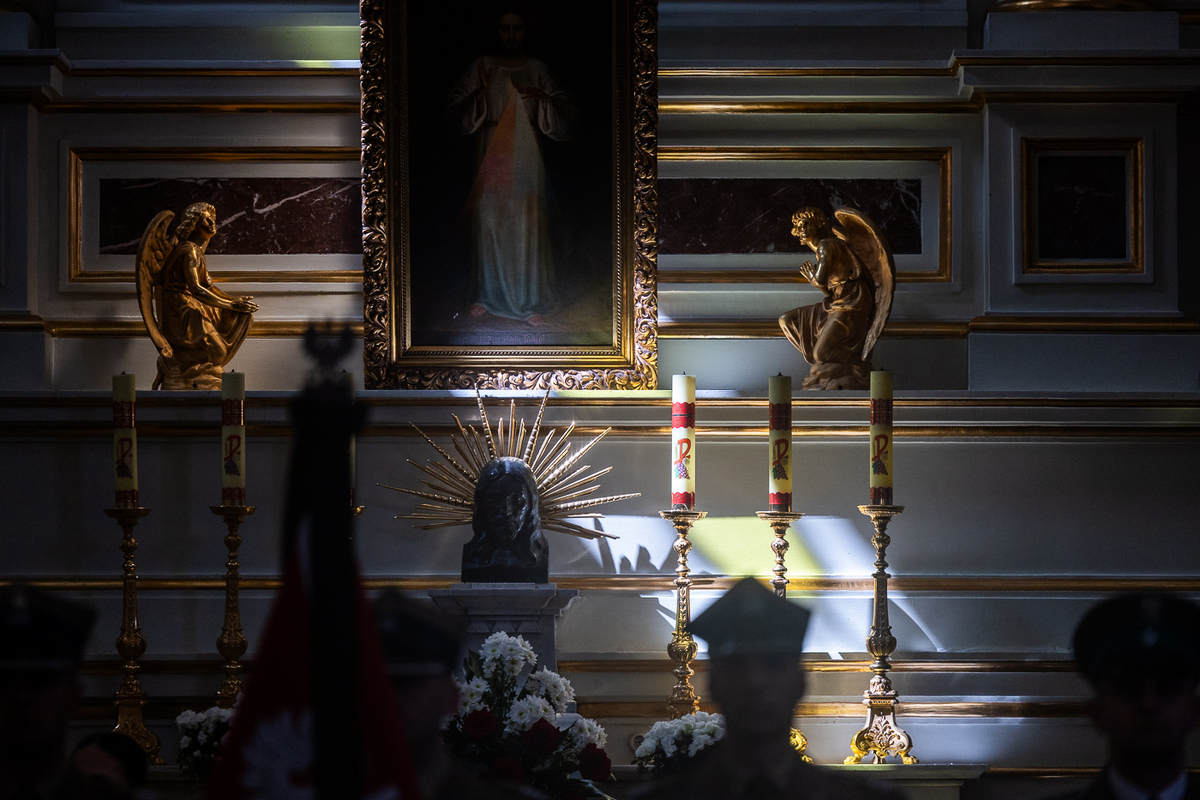
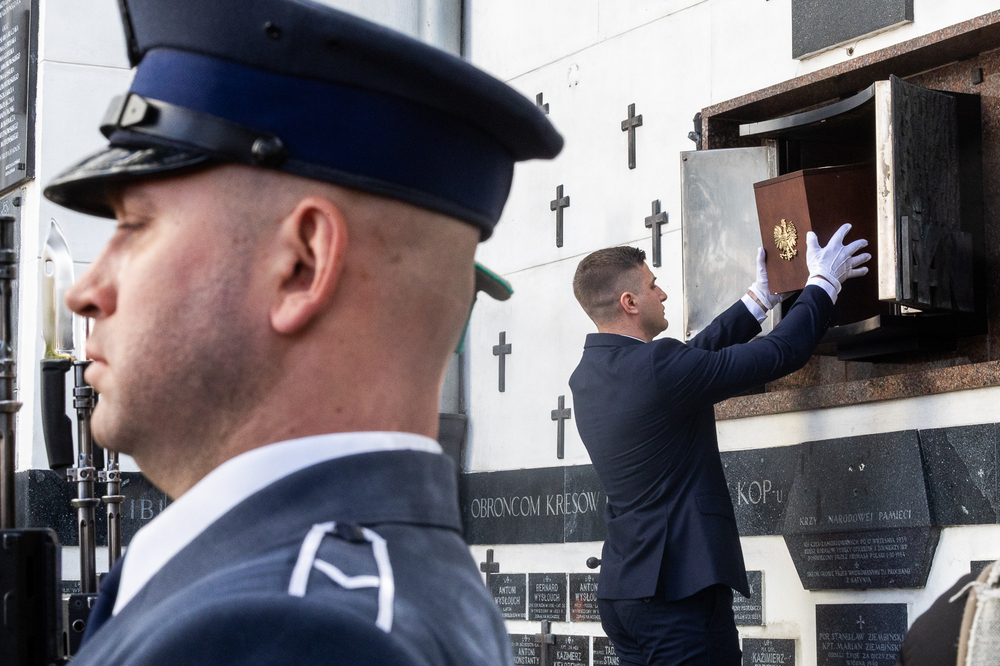
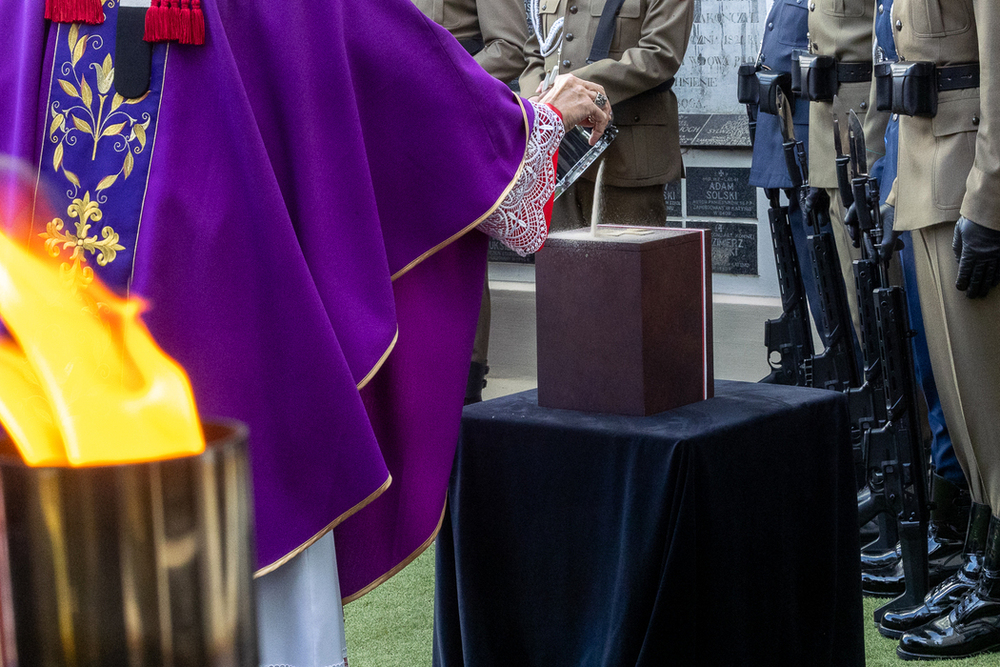
The skull of a victim of the Katyń Massacre was brought to Poland following an exhumation carried out by the Germans as part of an international medical commission. It was later placed in the Sanctuary at the Church of St Charles Borromeo, from where it was taken for prosecutorial examination. It has now been returned to its original resting place. On 13 April 2026, the remains were solemnly interred in the Sanctuary of the Fallen and Murdered in the East at the Church of St Charles Borromeo at Stare Powązki.
This act served as a tribute to the murdered citizens of the Second Polish Republic, whose fate remained hidden for decades and whose memory was deliberately silenced. The ceremony formed part of a wider series of funerals organised by the Institute of National Remembrance, aimed at ensuring the dignified burial of recovered and identified victims of the Katyń Massacre.
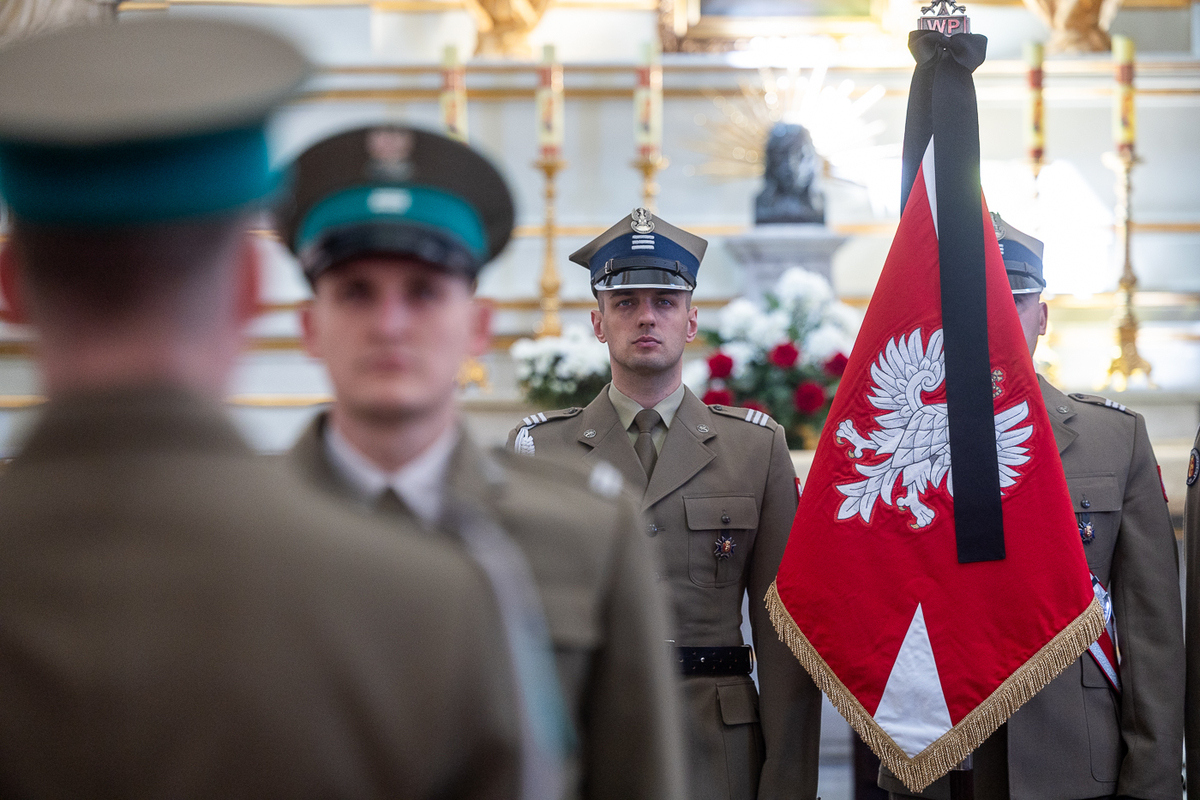
The commemorations at the Church of St Charles Borromeo began with a Holy Mass for all victims of the Katyń Massacre. Among those present were the Director of the Office of the President of the IPN, Dr Marek Jedynak; the Director of the IPN Office for Commemorating the Struggle and Martyrdom, Adam Siwek; and the Director of the Chief Commission for the Prosecution of Crimes against the Polish Nation, Prosecutor Andrzej Pozorski. They were joined by clergy, soldiers of the Polish Armed Forces and the Border Guard, officers of the Prison Service and the State Police, representatives of remembrance organisations, and numerous guests.
In a letter addressed to the participants, the President of the Republic of Poland, Karol Nawrocki, wrote:
“The Katyń Massacre is a symbol of the inhuman cruelty of its perpetrators and the suffering inflicted upon our compatriots. It is also a symbol of the lie with which the communists, for half a century, sought to replace the truth about the crime they had committed. May the truth about Katyń and the memory of its victims always remain part of our national identity and serve as a warning to future generations.”
Dr Karol Polejowski emphasised that the Katyń lie is re-emerging - not only in Russia, where the burial sites of Polish victims are being desecrated, but also in the West, where some still give credence to Soviet falsehoods about the crime.
“For those of us gathered here, there is no doubt as to who committed this crime, when, or why. Yet the struggle for the truth about Katyń must continue. It is the shared mission of the Institute of National Remembrance and other institutions of the Polish state to preserve this memory and pass it on to future generations.”
He also noted that the wound inflicted by Soviet perpetrators has never healed:
“These were steadfast soldiers - men who refused to enter into any pact with the evil that invaded Poland in September 1939. Their punishment was death and burial in anonymous mass graves. But those graves have spoken.”
In a letter read out by the Secretary of State in the Chancellery of the Prime Minister, Jakub Stefaniak, the Deputy Prime Minister and Minister of National Defence, Władysław Kosiniak-Kamysz, wrote that after years of silence and oblivion, the victims are returning with their names, their histories, and the dignity they were long denied. The burial ceremony, he stressed, is not only an act of remembrance, but also a restoration of justice.
“The memory of the victims of the Katyń Massacre is our shared responsibility. Their service, loyalty to the homeland, and ultimate sacrifice remain a lasting foundation of our identity.”
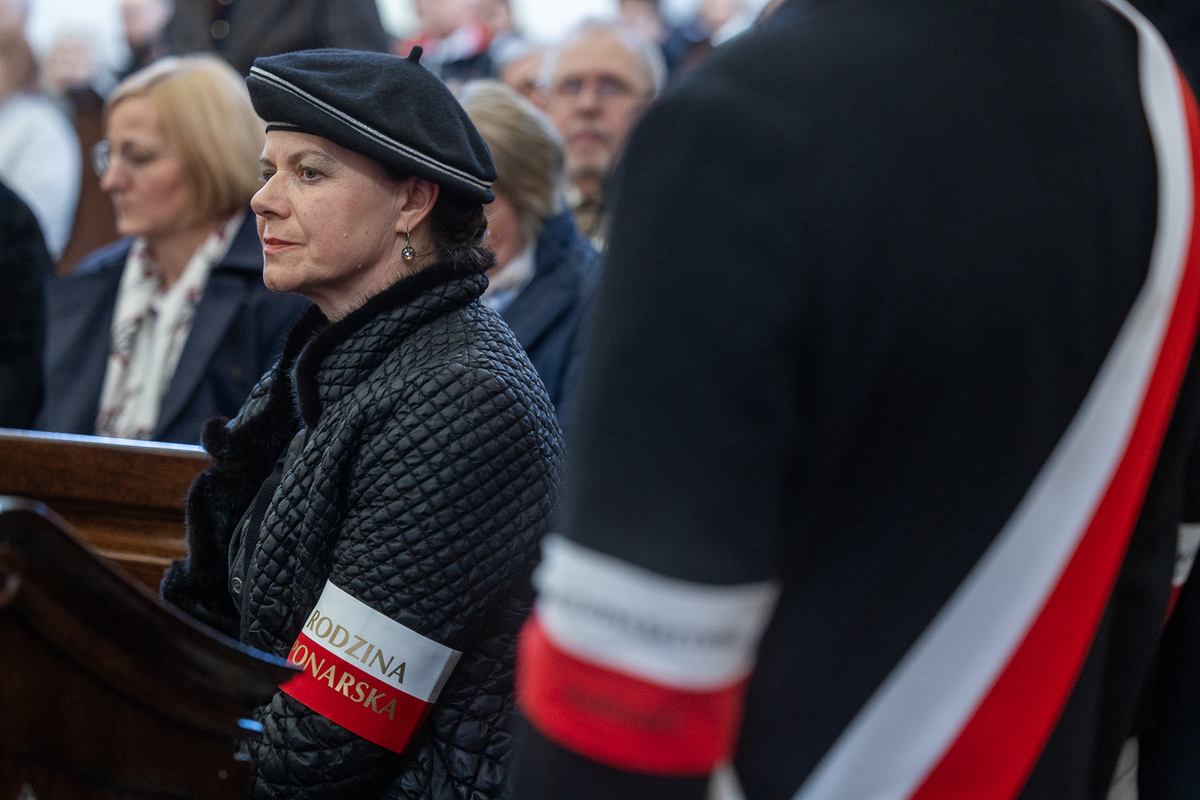
Speaking on behalf of the Katyń Families, Marek Krystyniak said:
“We, the Katyń Families, preserve this memory and pass it on to future generations. It is a memory we all need, for it serves as a warning.”
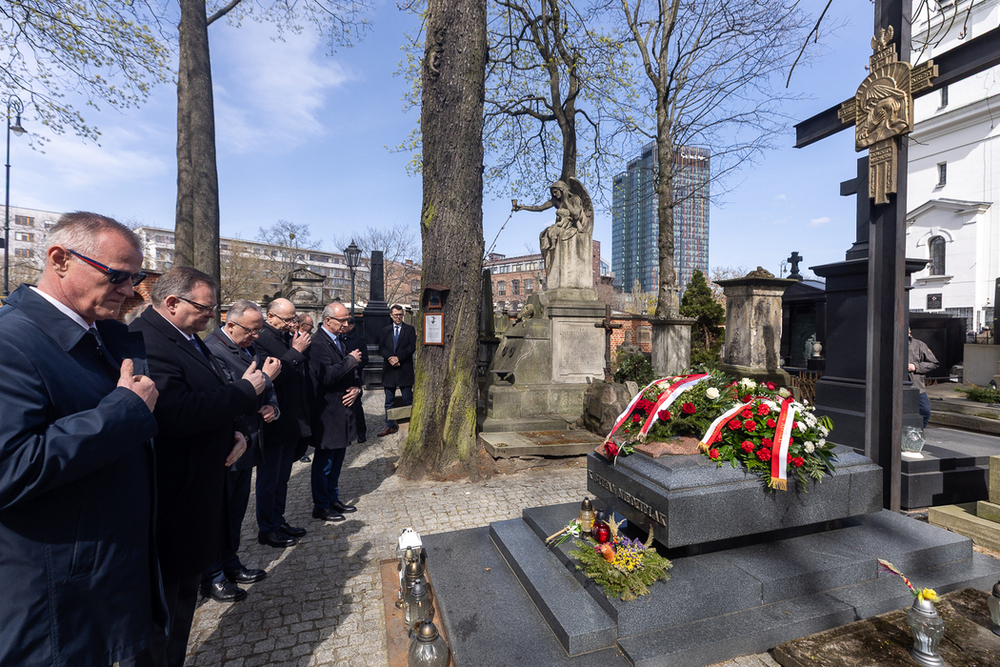
Following the ceremony, Jan Józef Kasprzyk, together with Dr Karol Polejowski, Dr Mateusz Szpytma and Dr Krzysztof Szwagrzyk, as well as Prosecutor Andrzej Pozorski, laid flowers at the grave of Father Stefan Niedzielak.
The ceremony was organised by the Institute of National Remembrance. The Warsaw event marked the final funeral in this series and the concluding stage in the long process of commemorating the victims of the Katyń Massacre and restoring their place in national memory.
Earlier ceremonies formed part of this effort. On 17 September 2025, a state funeral for victims of the Katyń Massacre was held at the Field Cathedral of the Polish Army, where their remains were laid to rest in the crypts in the presence of the highest state authorities. On 30 October 2025, a state funeral for an Unknown Policeman of the Second Polish Republic - a victim of the Katyń Massacre - took place at the Police Headquarters in Katowice. His remains, exhumed from burial sites in Mednoye, were interred at the so- called Grave of the Polish Policeman, a national memorial site. Subsequently, on 5 March 2026, further victims were laid to rest at the Basilica of St Elizabeth in Wrocław, where the remains of Polish officers were placed in the Katyń Chapel.
For a quarter of a century, the Institute of National Remembrance has worked to uphold the truth about Katyń, preserve the memory of its victims, and identify those responsible. This mission will continue so that future generations understand the truth about the extermination of the Polish elite carried out by the Soviet regime, acting in alliance with Nazi Germany.
Alongside these commemorative efforts, a formal investigation, initiated by the Warsaw Branch Commission for the Prosecution of Crimes against the Polish Nation, has been ongoing since 30 November 2004. It concerns the murder of at least 21,768 Polish citizens -officers, police personnel, officials and members of the intelligentsia - carried out on the basis of a decision by the highest authorities of the Soviet Union on 5 March 1940. The crime is recognised as both a war crime and a crime against humanity.