
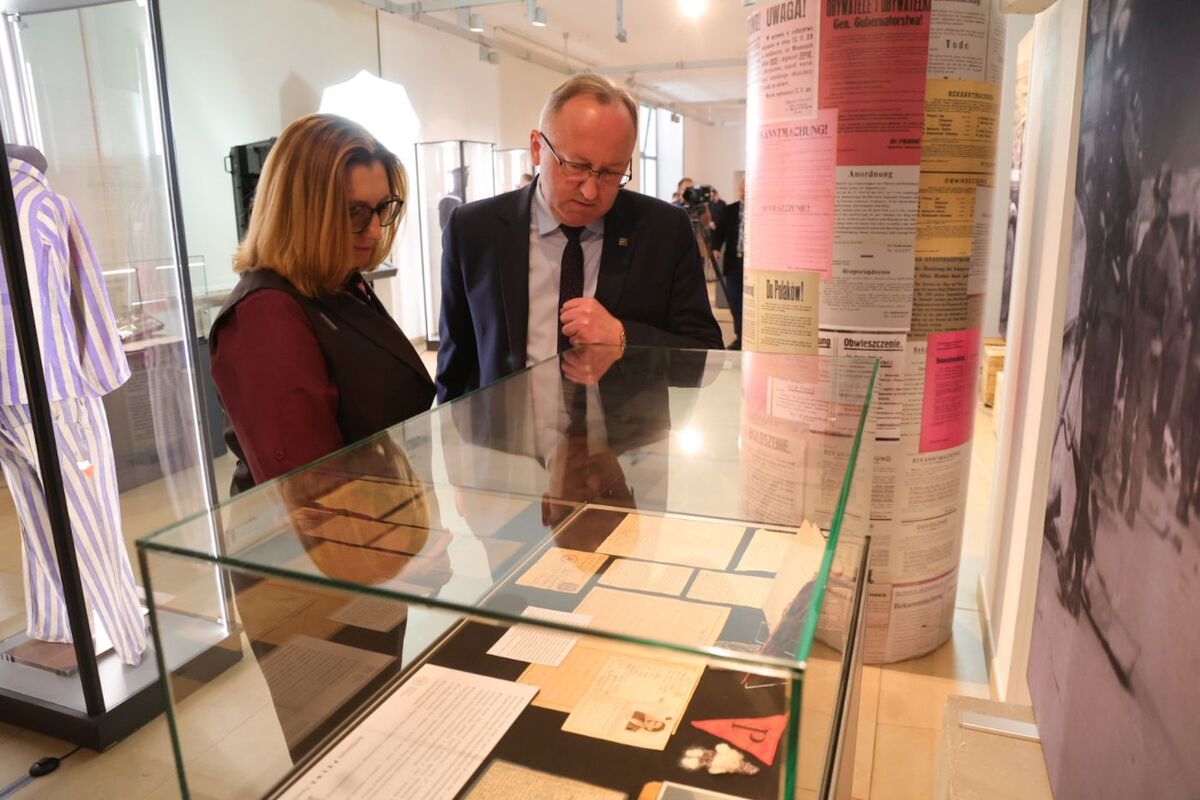
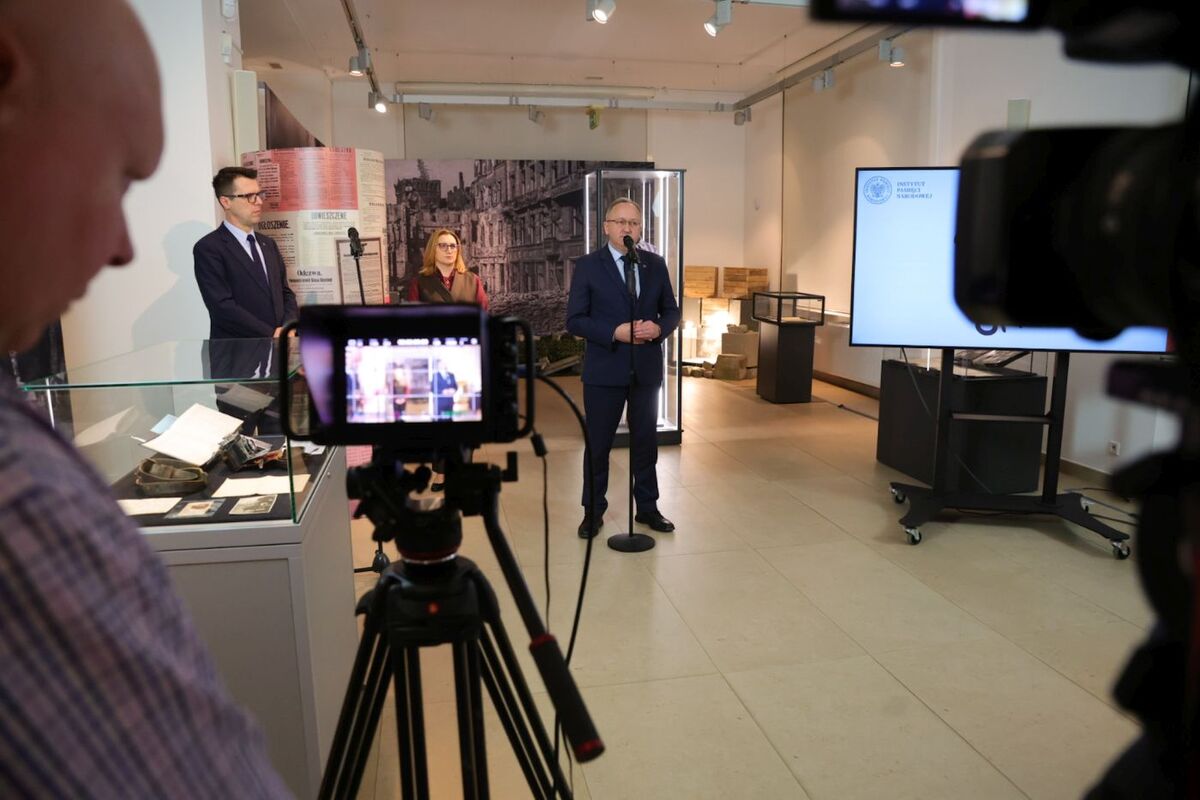
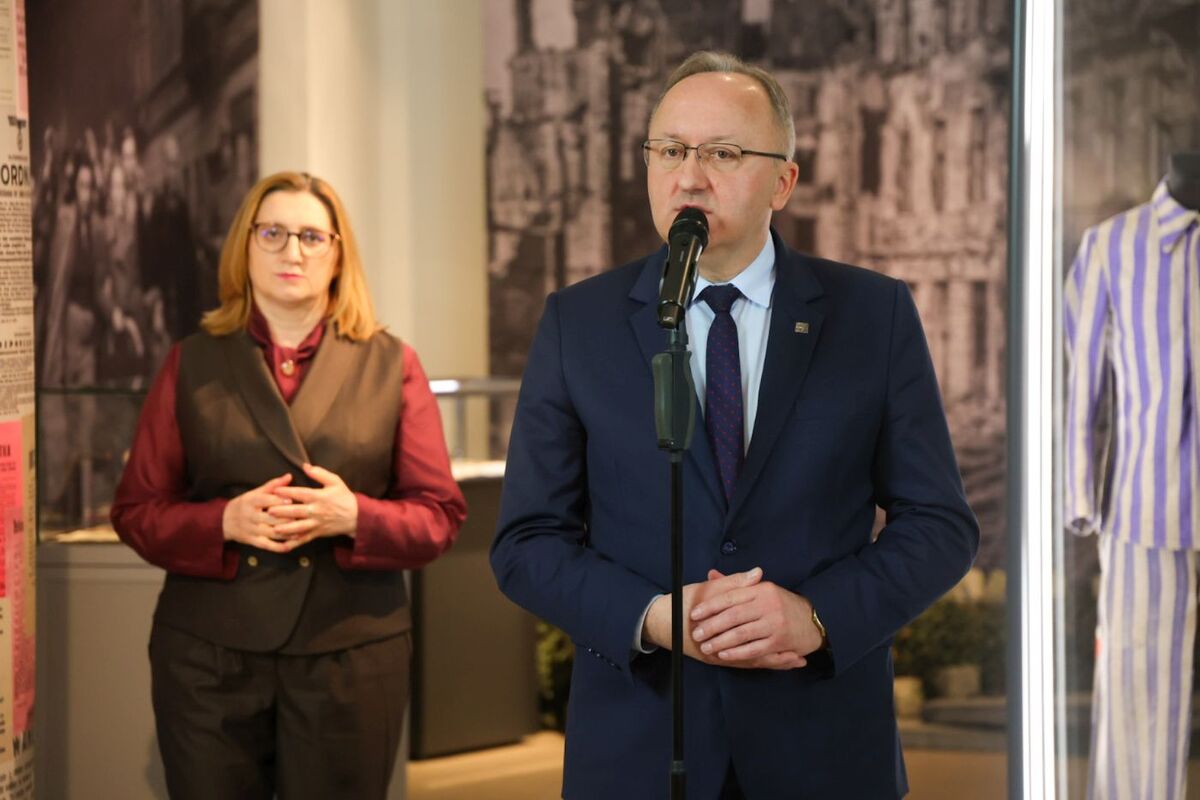
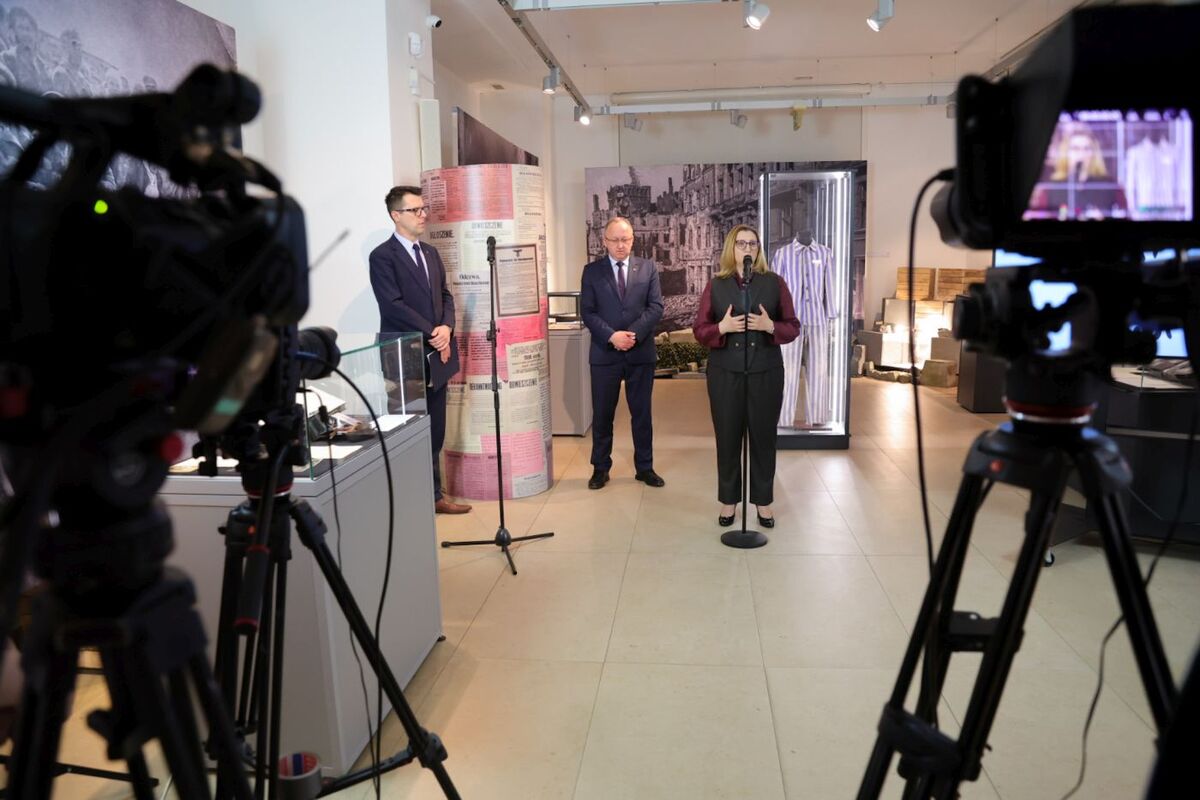

On 16 April, at the Central History Point of the IPN, a press conference was held with the participation of the Deputy President of the IPN, Dr Karol Polejowski, and the Director of the IPN Archive, Marzena Kruk. The conference focused on preserving historical heritage and advancing the “Archive Full of Remembrance” project. The press conference marks the beginning of the IPN's campaign “Preserve. Don’t Profit. Remembrance is priceless.”
The press conference was a response to the growing phenomenon of the commercialization of history. The direct trigger for addressing this issue was an event in November 2025 at the German Felzmann Auction House in Neuss, where memorabilia belonging to a prisoner of a German Nazi concentration camp was put up for sale. This fact sparked public debate and a strong reaction from communities involved in protecting historical artifacts. The IPN clearly emphasized that memory is not a commodity and remembrance is not for sale.
Deputy President of the IPN, Dr Karol Polejowski, stressed that trading of artifacts related to the German occupation and crimes committed against Poles is a very alarming phenomenon:
Remembrance is not a commodity. For the families of victims, such objects hold the status of relics. We cannot allow profit to be made from human suffering.
The IPN Deputy President encouraged people to donate their private collections to the Institute and thus contribute to the “Archive Full of Remembrance,” – a project that has been carried out for years by the IPN Archive:
Our main task is to preserve the Polish legacy connected with national memory. Memory is something that defines us as humans. Today it is hard to imagine our lives without our ancestors and their experiences. That is why we strongly oppose any attempts to commercialize Polish memory.
The Director of the IPN Archive, Marzena Kruk, spoke in more detail about the project. She discussed the documents and artefacts already held in the Institute’s archival collections. She emphasised that it is our duty to preserve the memory of our ancestors so that their suffering does not become an object of commercialisation and sale.
Memory is not for profit. It is our task, our mission, and our obligation to those who came before us—to whom we owe a free Poland.
The “Archive Full of Remembrance” project is about saving history at the human level—ensuring that personal stories and artifacts contribute to collective memory rather than being lost or commercialized. The project aims to preserve, secure, and provide access to private archival collections such as photographs, documents, letters, diaries, and testimonies of witnesses to history from the 1917–1990. The project’s statistics clearly demonstrate its effectiveness and growing social importance: in the first year, 234 private collections were secured; after its expansion in 2022, 412 donations were acquired; and in the last year, a further 379 unique family archives were added. In total, since 2017, 3,059 donors from around the world have contributed their memorabilia, creating a collection of over 900 linear meters of historical materials.
Visit the website "Archive full of remembrance"
