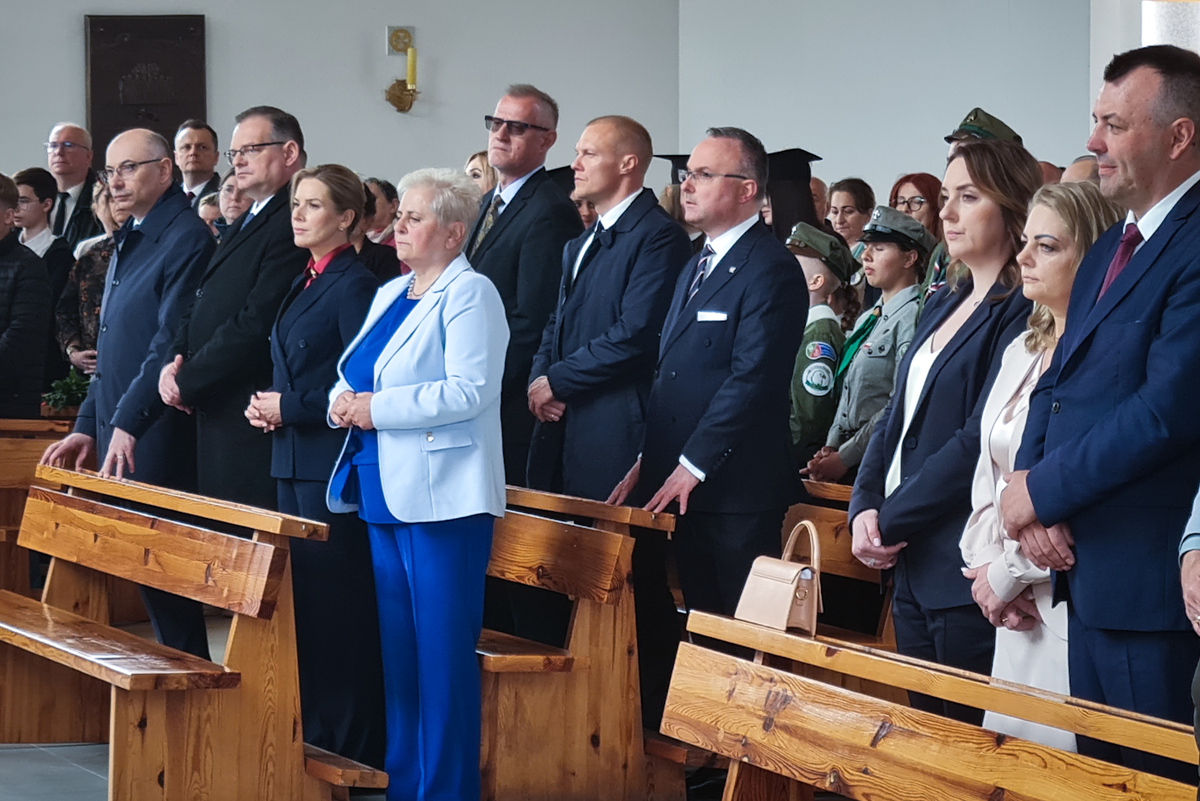
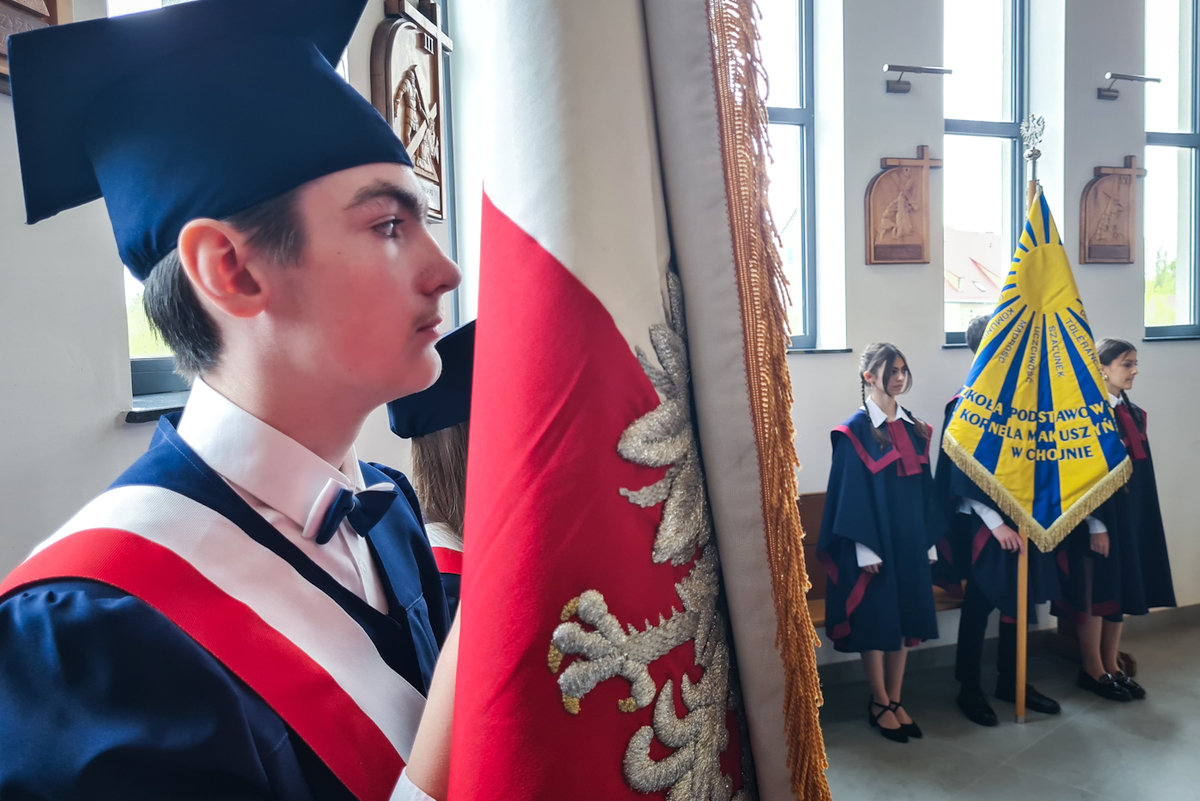
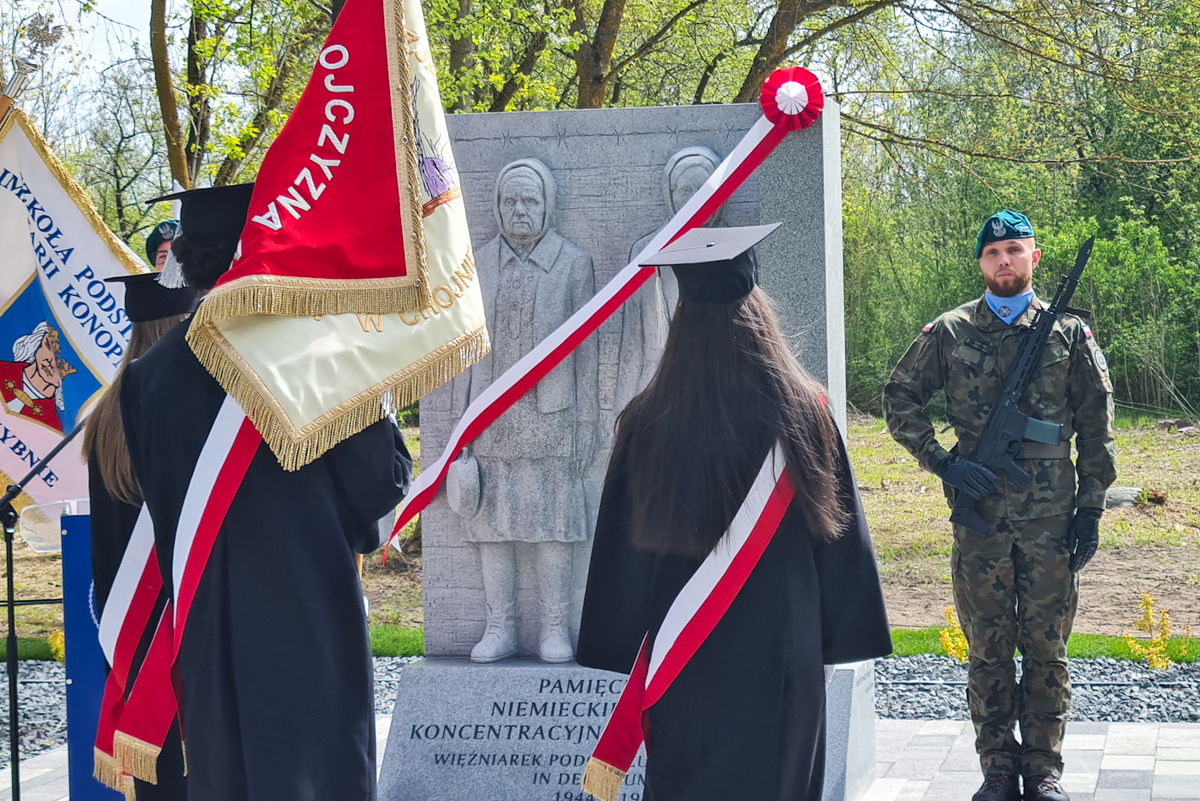
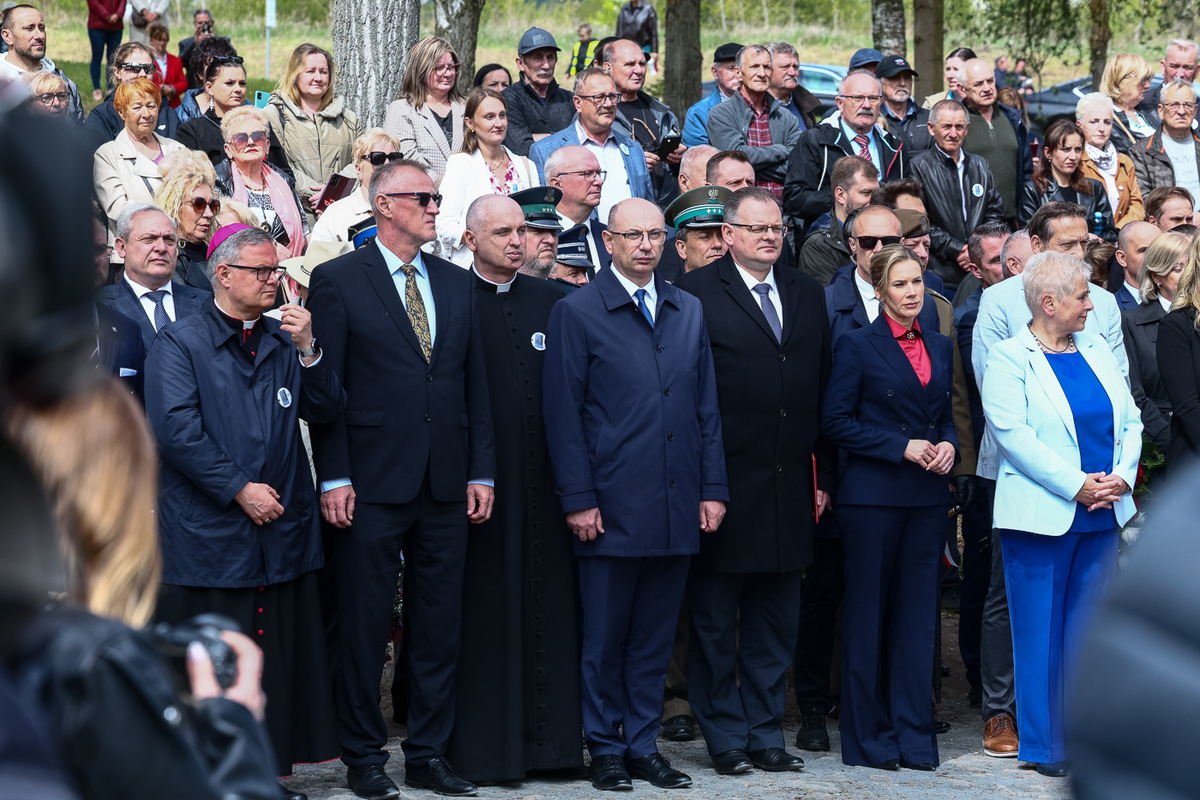
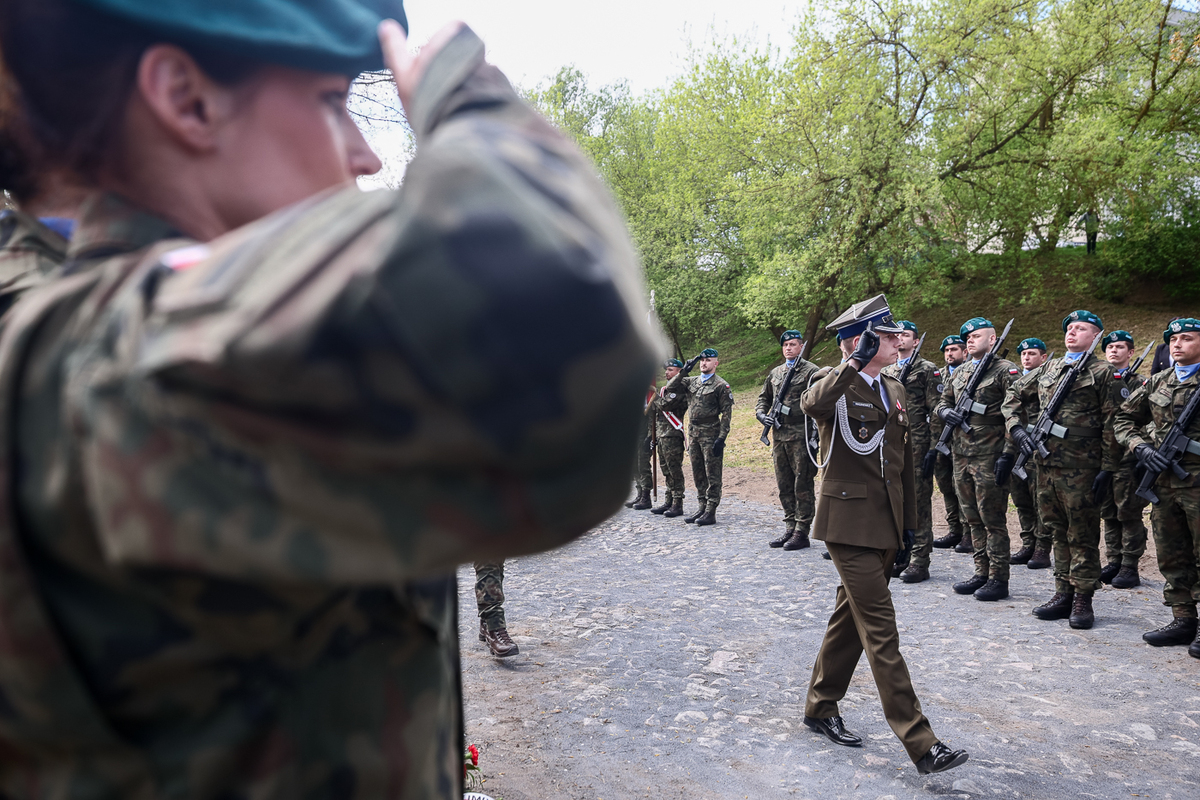
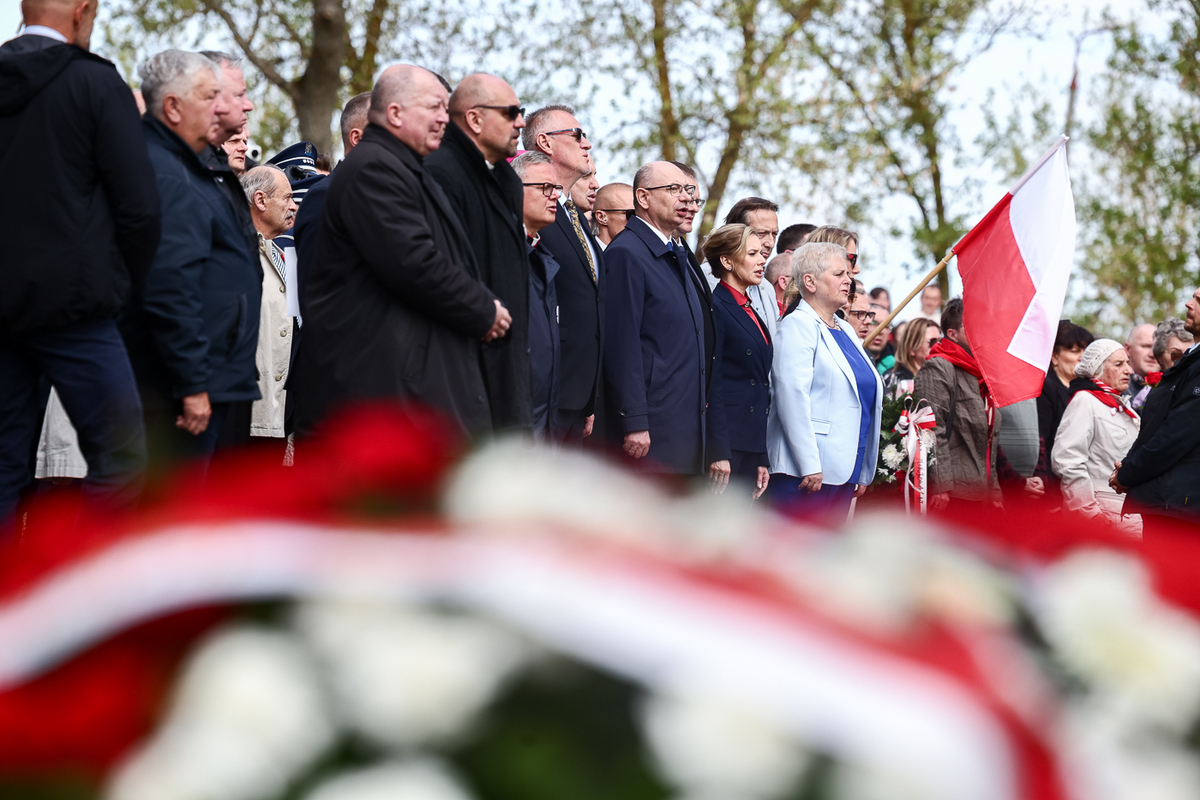
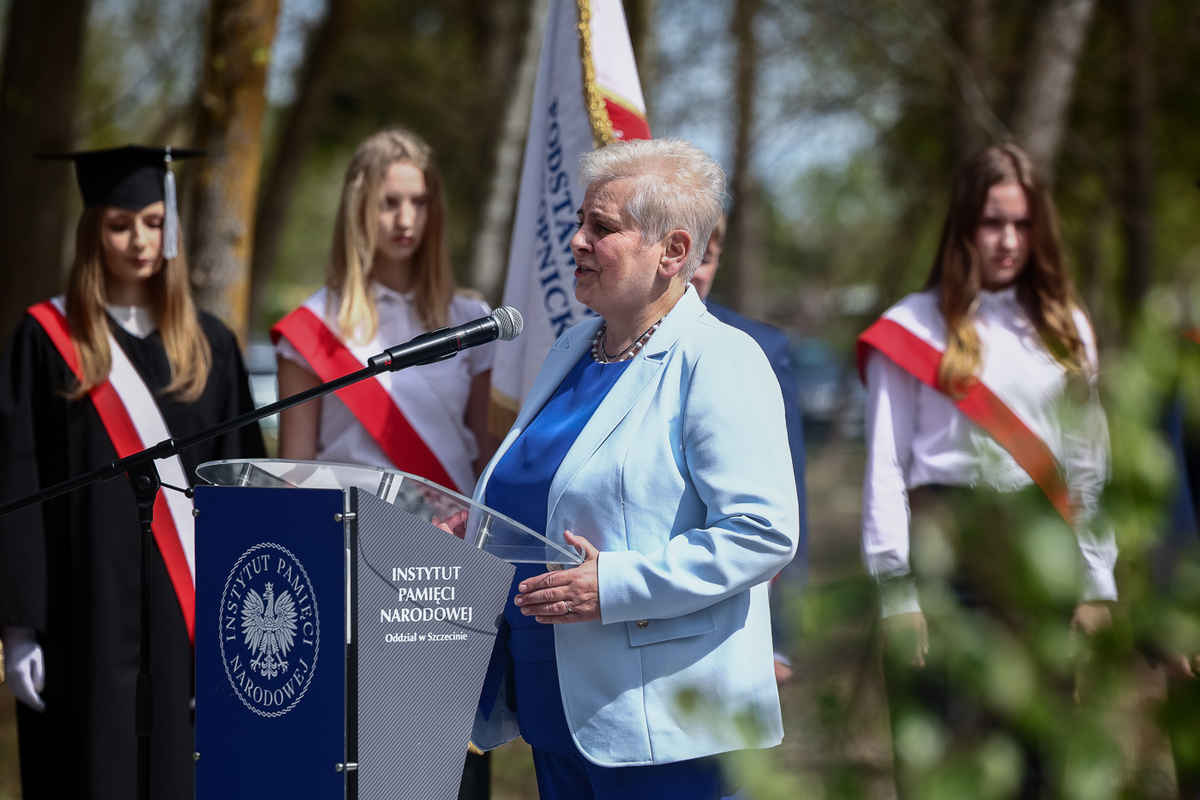
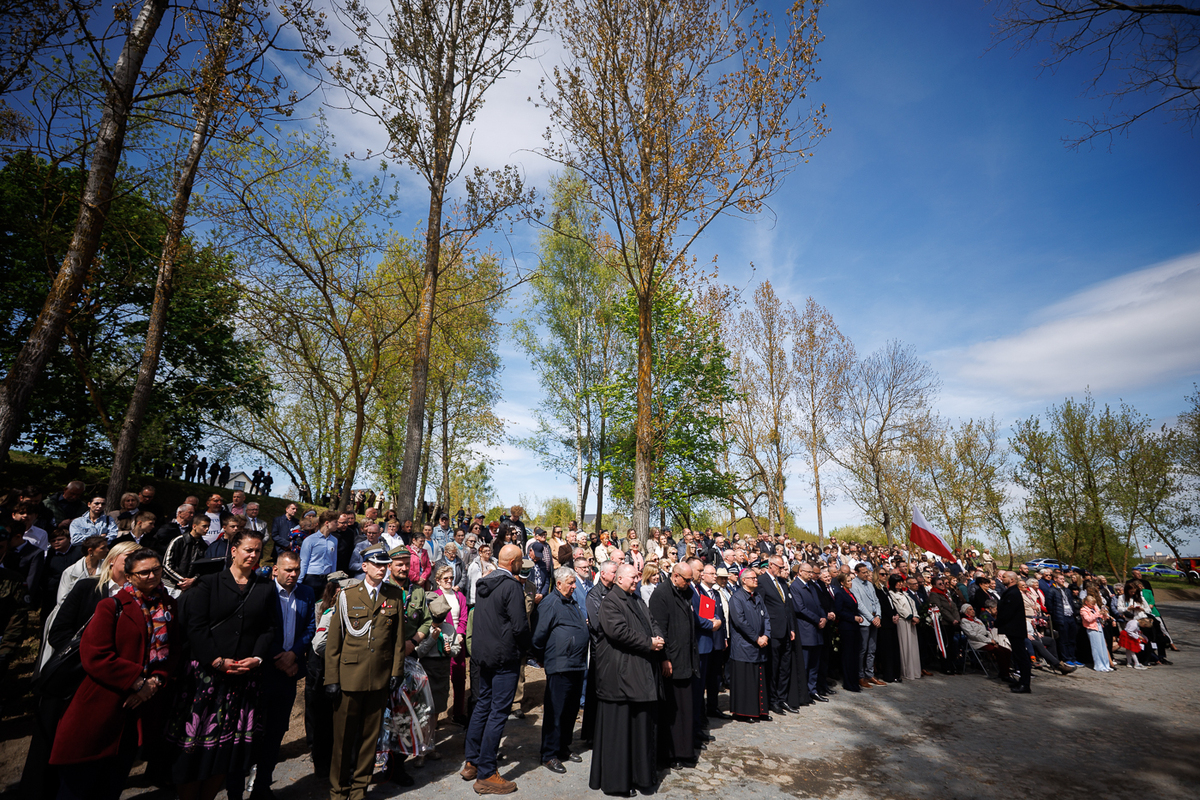
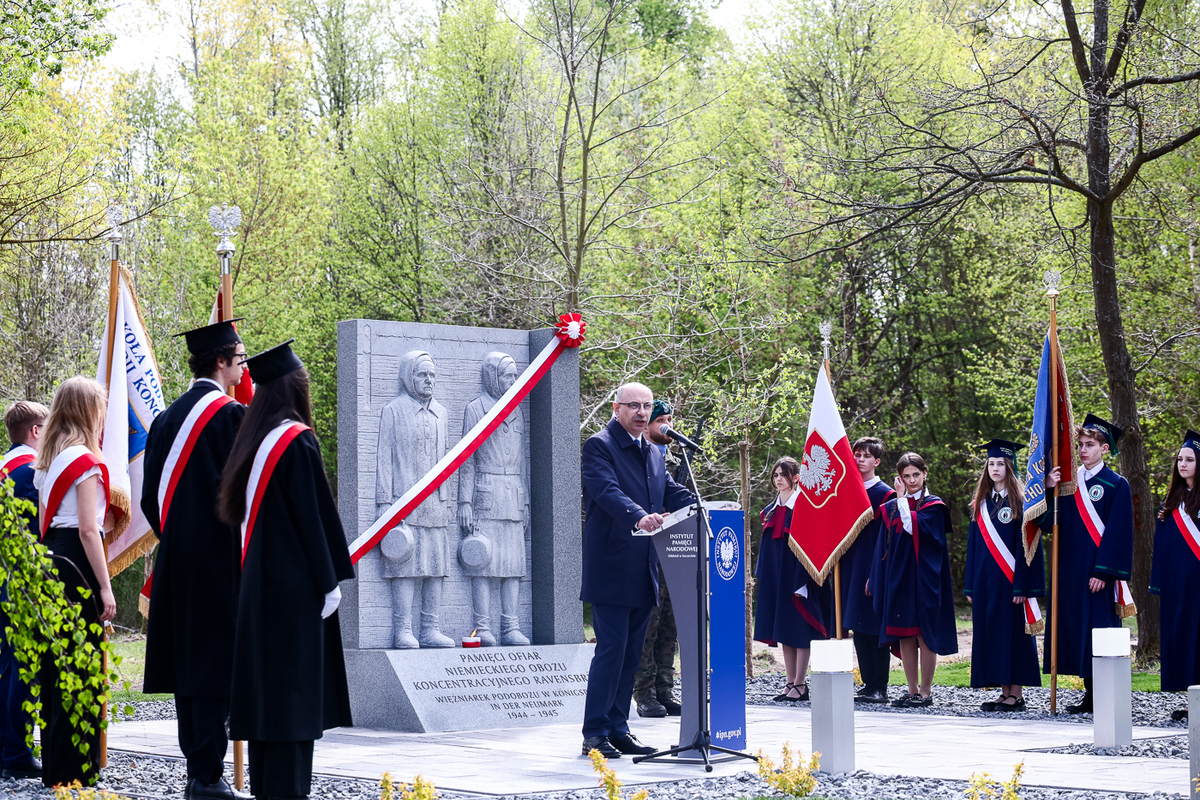
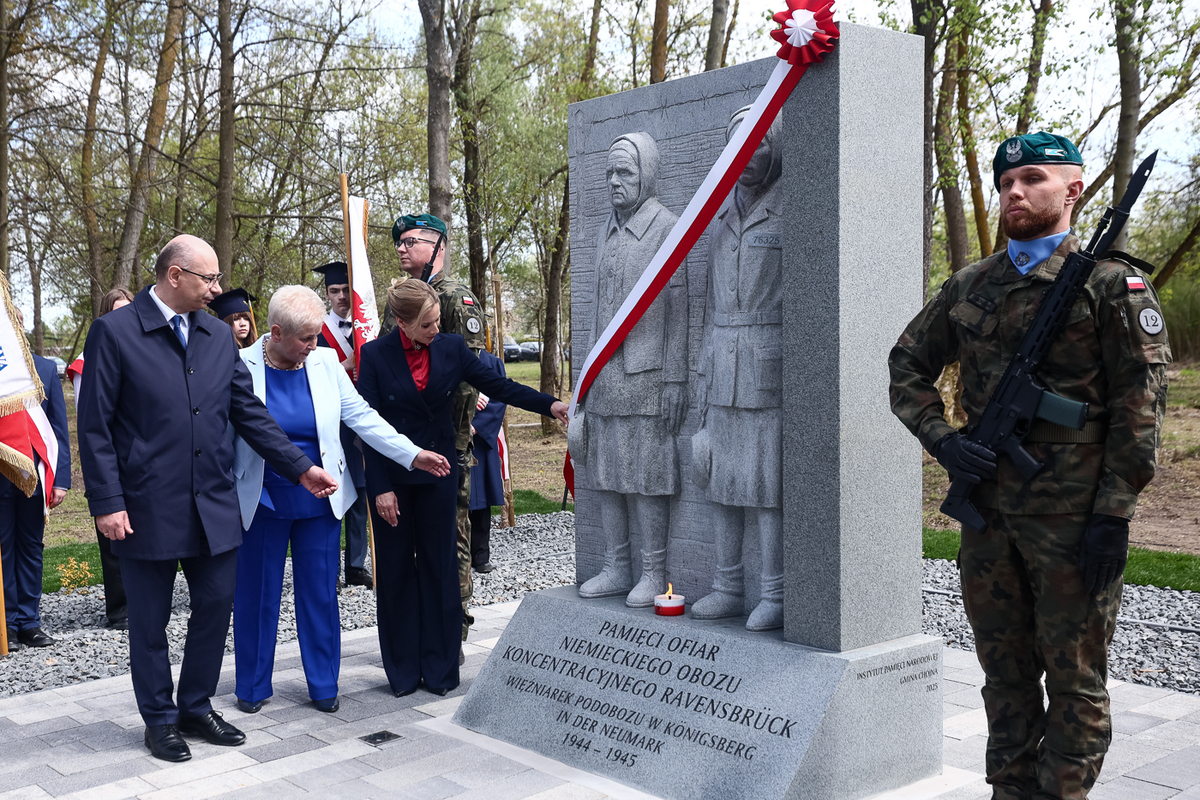
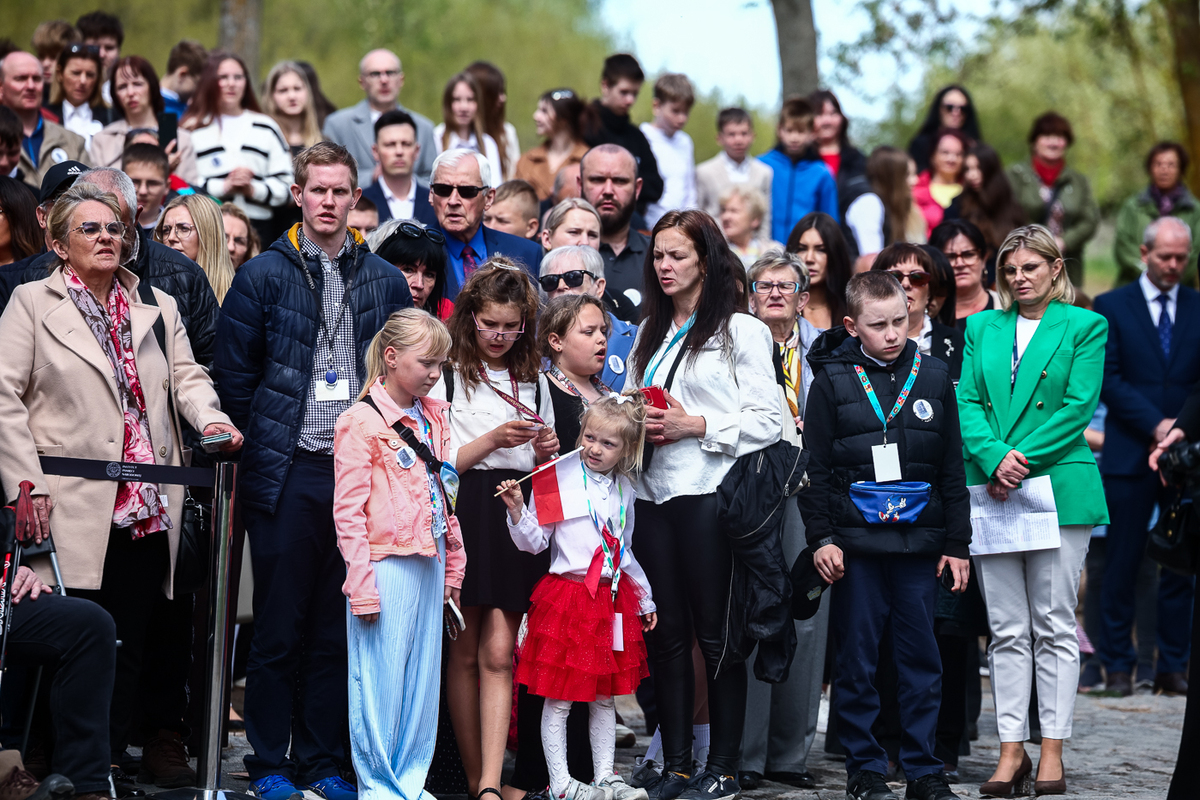
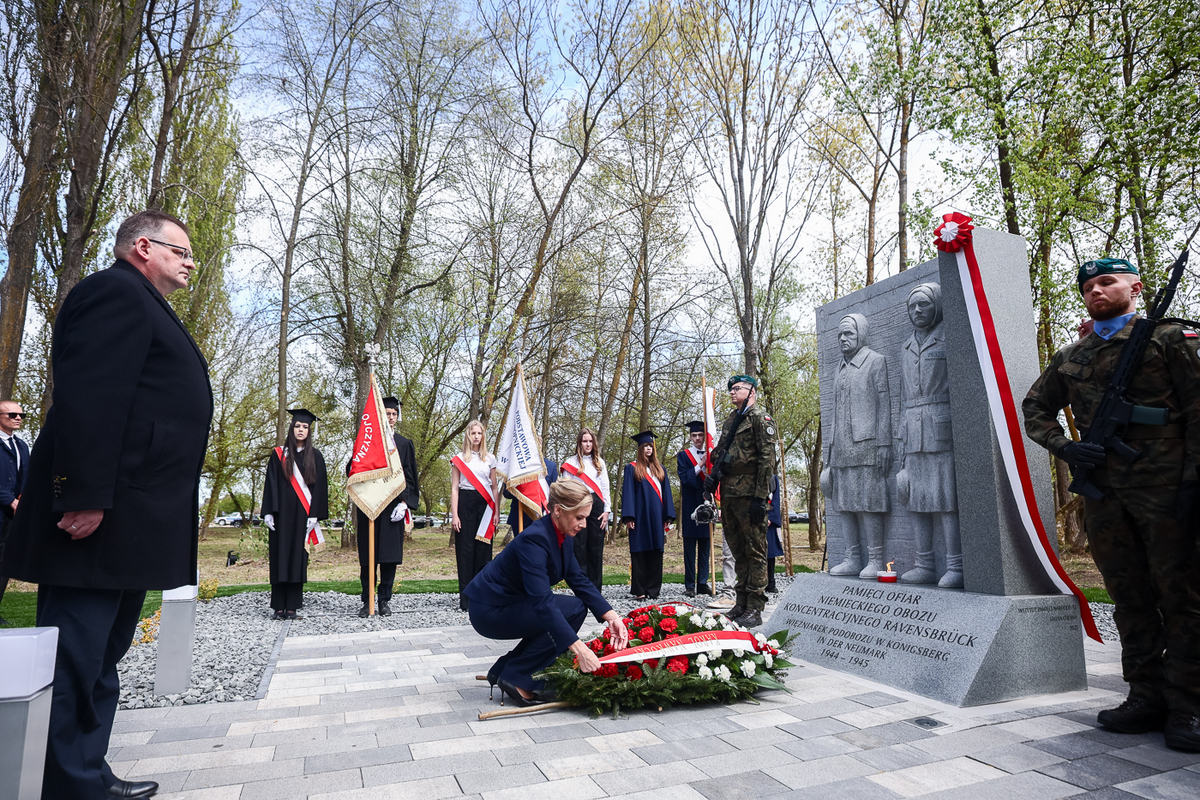
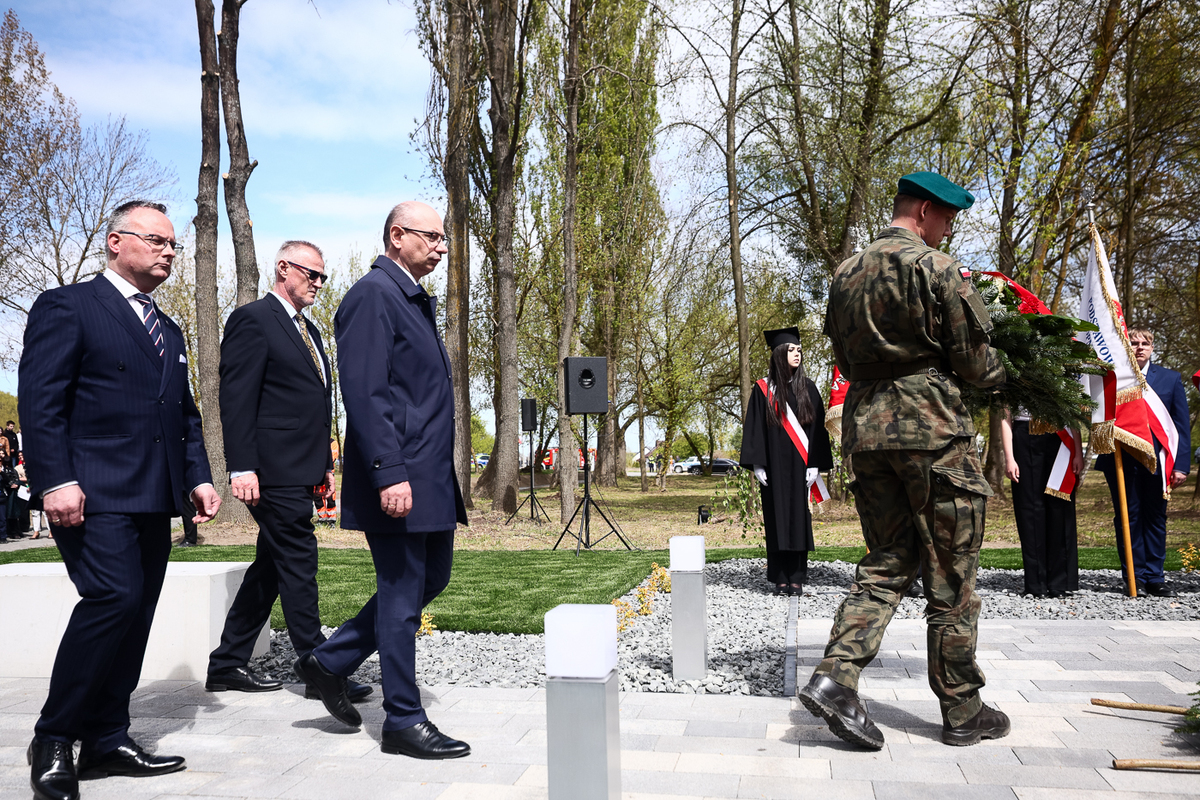
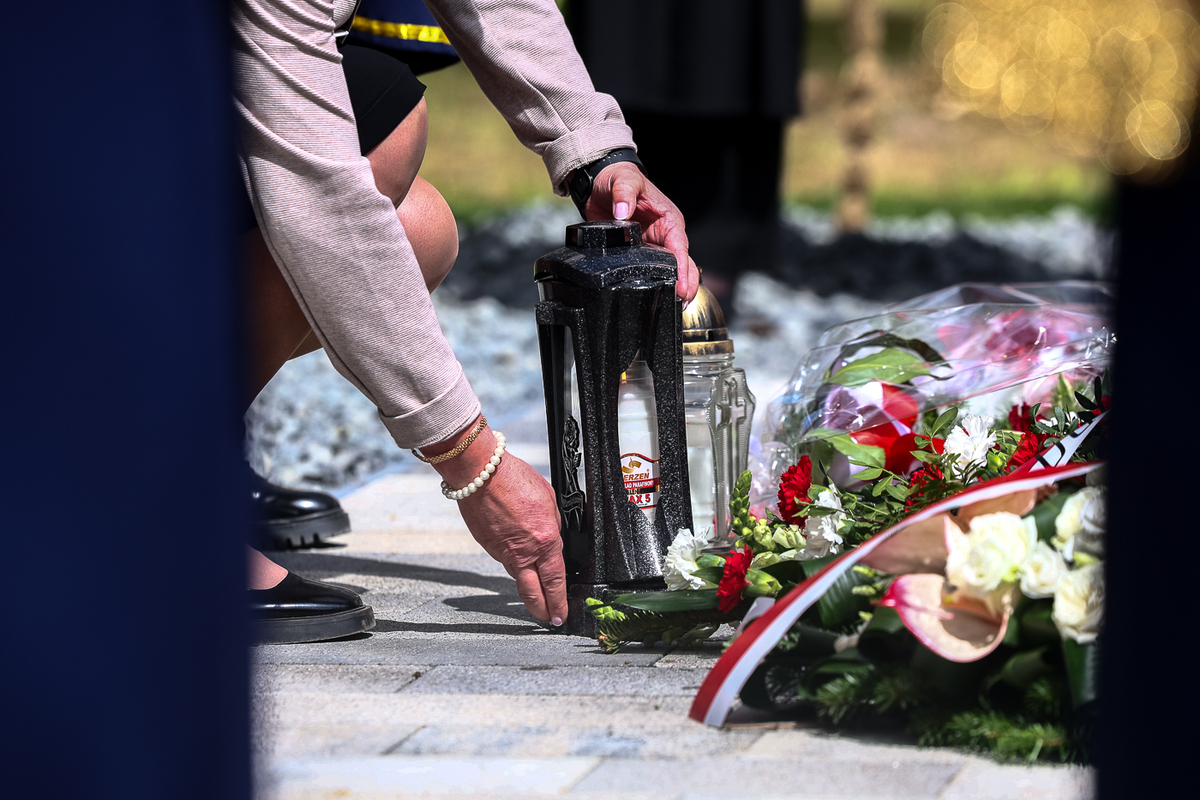
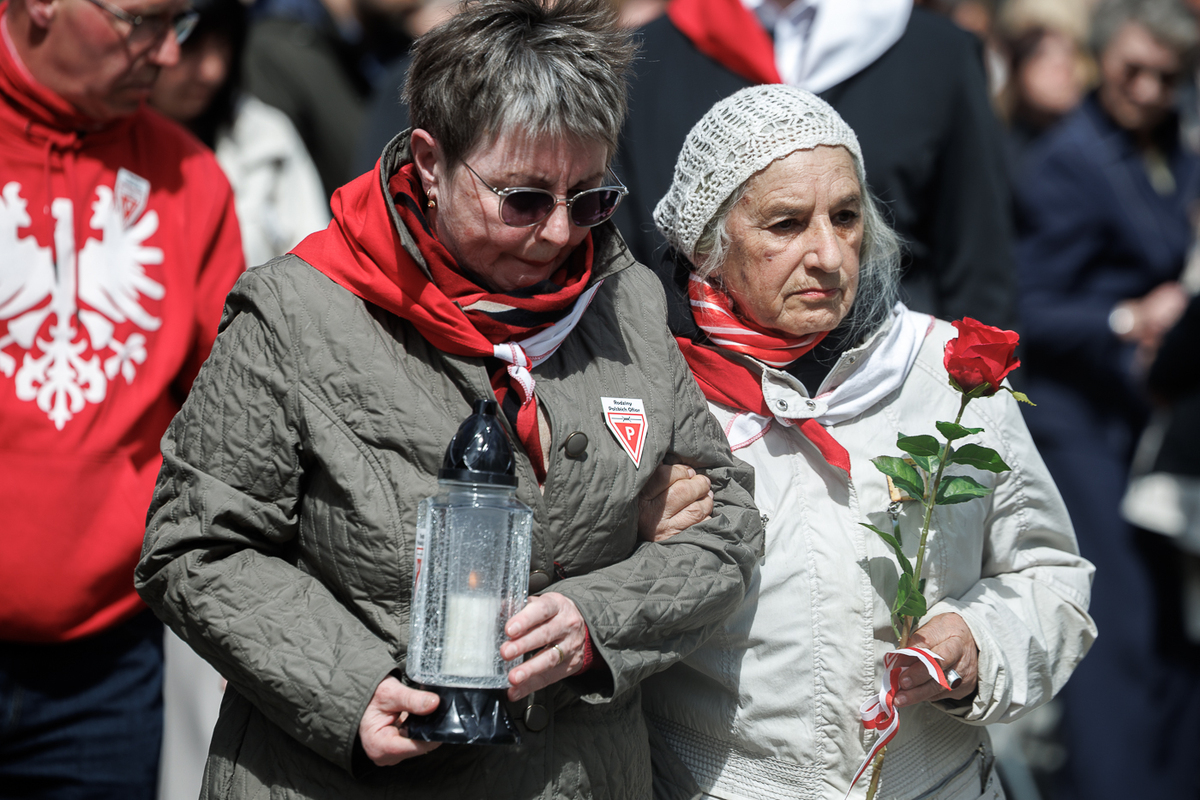
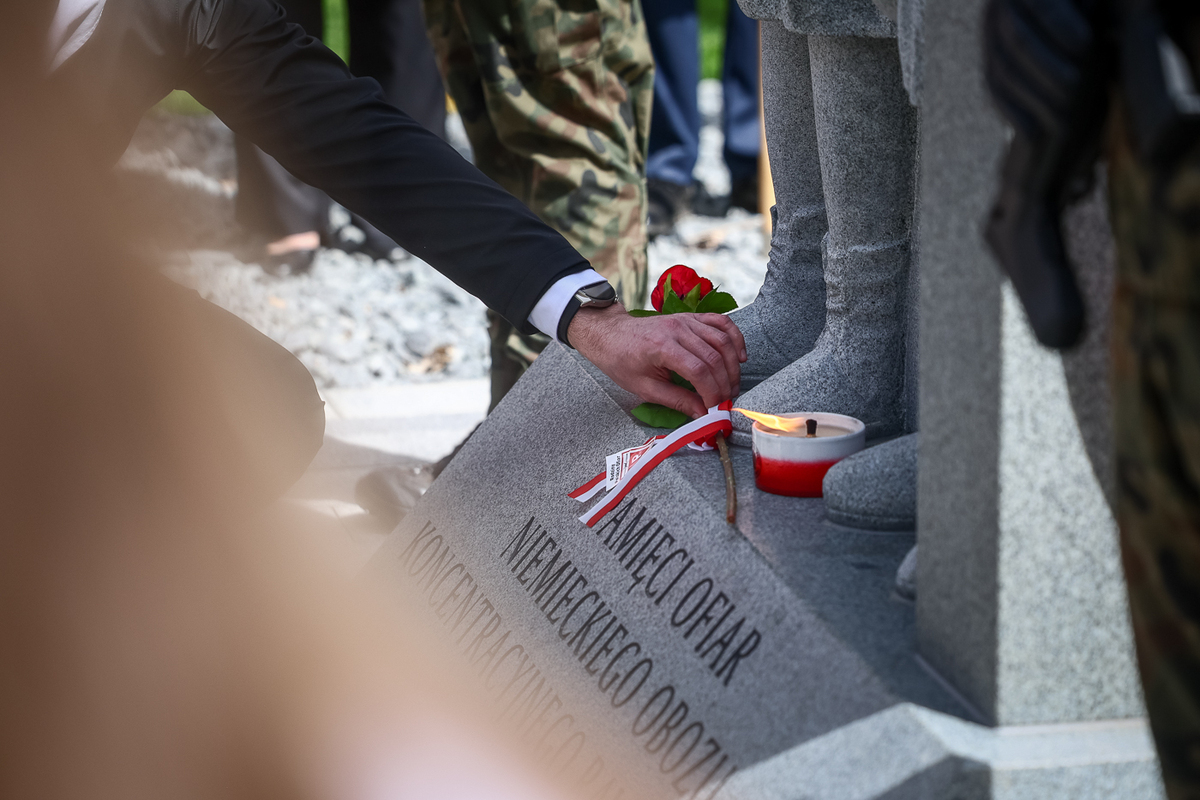
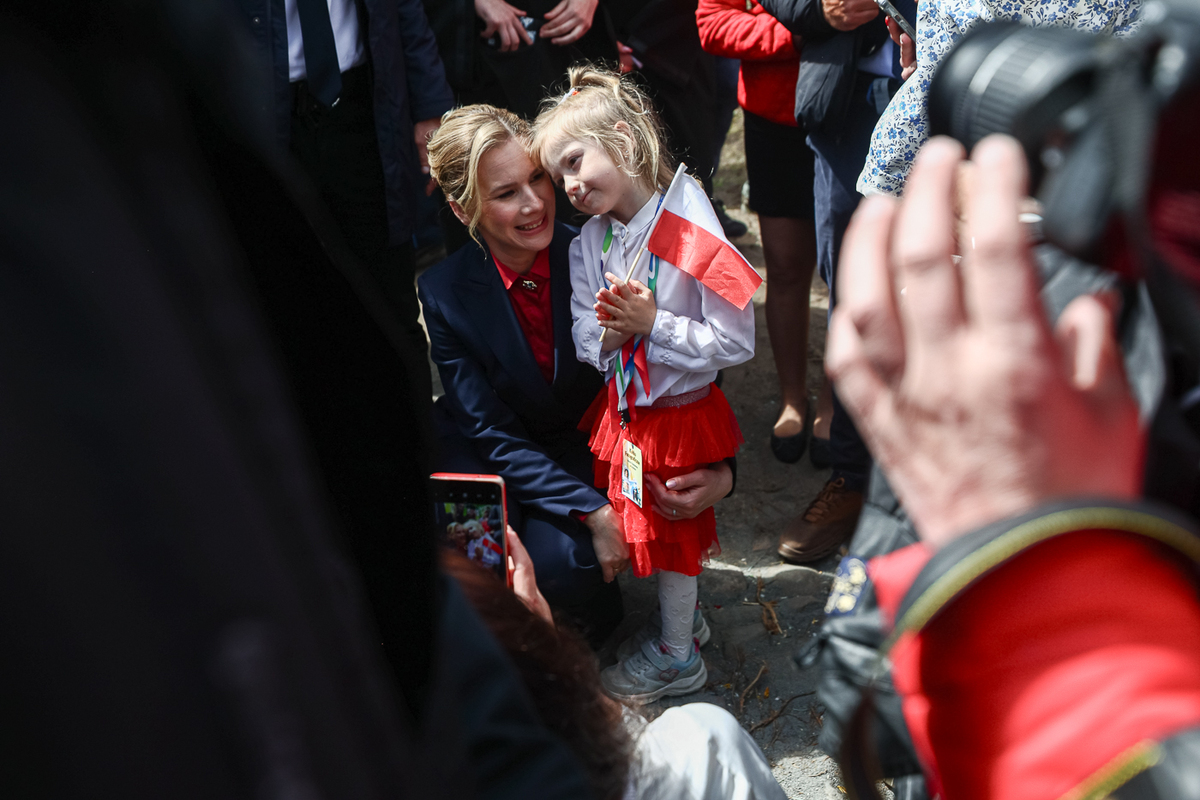
On 30 April 2026 in Chojna, First Lady Marta Nawrocka, Deputy President of the Institute of National Remembrance Dr Mateusz Szpytma, and the mayor of the Chojna, Barbara Rawecka, unveiled a monument dedicated to the female prisoners of the German subcamp of Ravensbrück concentration camp. The monument commemorates women condemned to forced, exhausting labor the victims of the terror of the Third Reich, whose stories often remained overlooked in collective memory for decades.
The unveiling ceremony took place during commemorations marking the 81st anniversary of the liberation of Ravensbrück. Approximately 130,000 people of various nationalities passed through the camp. When it was liberated on 30 April 1945, around 3,500 sick and emaciated prisoners remained there, utterly exhausted by hunger and labor beyond human endurance. At this site of torment, 92,000 prisoners were murdered or perished as a result of brutality and inhumane conditions. The number of women imprisoned in the Chojna subcamp is estimated at between 1,500 and 2,000.
The memorial is the result of cooperation between the Municipality of Chojna and the Institute of National Remembrance in Szczecin. The aim was not merely to create another site of remembrance, but to initiate a process of restoring knowledge about a little-known chapter in the region’s history. The monument is intended as the beginning of a story, not its conclusion.
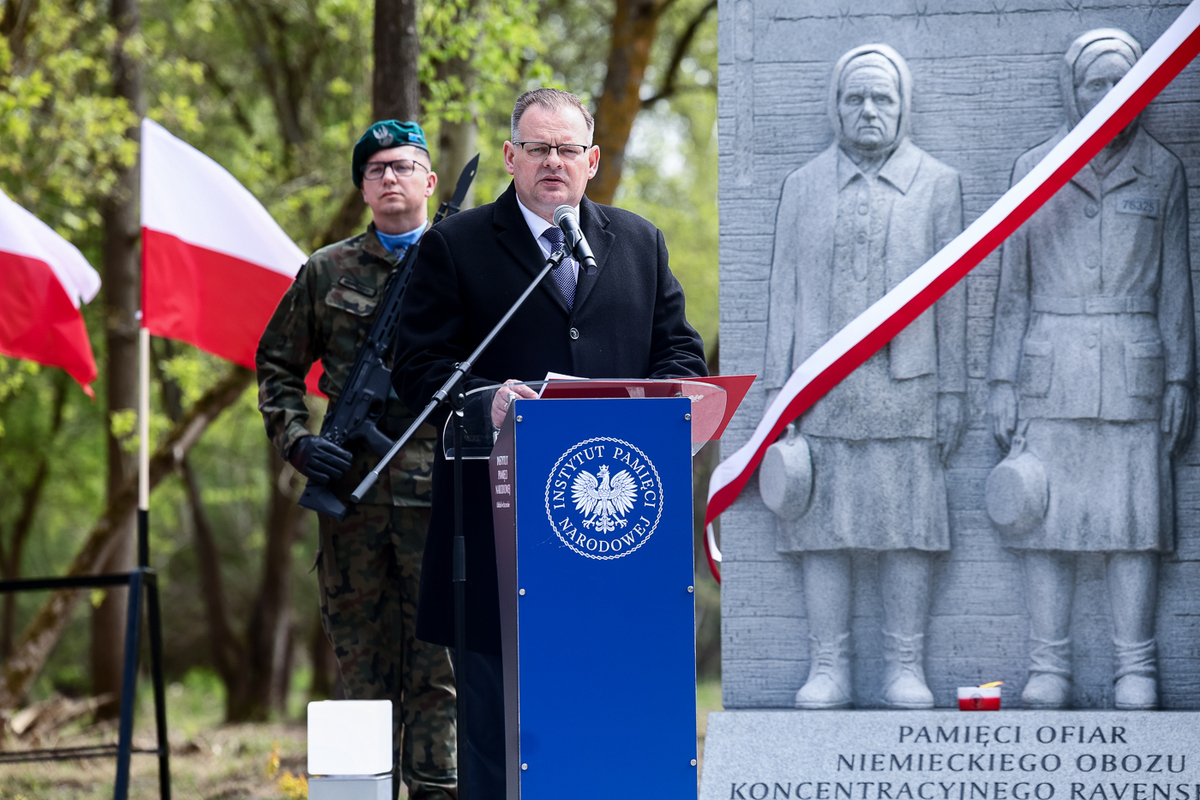
Dr Mateusz Szpytma emphasized the tragedy and suffering of the victims’ families:
“I could speak about the system of German concentration camps, about numbers, about the scale of terror that unfolded in Ravensbrück and its subcamps. That would be important, and it was addressed today in a letter from the President of Poland. But I would like to view this place through the lens of the family. Imagine that today someone abducts and arrests your mothers, takes your sisters, your wives, your daughters from your homes - takes them away into the unknown. Imagine your helplessness. There is nothing you can do, nothing with which you can help them. All you can do is pray. There was a time when Polish women were deported here simply for being members of the scouting movement, for teaching in underground schools, for participating in the Warsaw Uprising. Most of them perished.”
He concluded:
“We will not forget all those who died here. We will continue our work until we establish the last name, because that is what we owe to all those women imprisoned here, murdered here, and made to suffer.”
The ceremony was preceded by a Holy Mass for the victims of Ravensbrück at the Church of the Blessed Virgin Mary, Mother of the Church.
As part of the commemorations, a documentary screening titled “The Girl from the Photograph” was held at the local town hall. The film recounts the story of Jadwiga Chomicka and the investigation conducted by Prosecutor Marek Rabiega into the functioning of the Chojna subcamp. At the heart of the narrative is Jadwiga Chomicka, a 13-year-old girl from Warsaw. Her tragic fate, captured in an archival photograph, becomes a symbol of the unimaginable suffering of Polish women deported into the inferno of the camps. Like the monument, the film highlights the extent of the “blank spots” in both local history and the urgent need to fill them.
The ceremony was atended by, among others, Prosecutor Andrzej Pozorski, Deputy Prosecutor General and Director of the Chief Commission for the Prosecution of Crimes against the Polish Nation; Archbishop Wiesław Śmigiel, Metropolitan of Szczecin-Kamień; Marshal Marcin Łapeciński; members of local authorities; Krzysztof Męciński, Director of the IPN Branch in Szczecin; representatives of state and local government, uniformed services, social organizations, clergy, and the media.
On the same day, a group of young people from secondary schools in Szczecin and Wolin, along with residents of the Youth Educational Centre in Trzebież (50 participants in total), visited the former Ravensbrück camp. Educators from the IPN’s National Education Office in Szczecin guided them through the site and its permanent exhibition. They spoke about the fate of Polish women imprisoned there between 1939 and 1945, their forced labor for the German war economy, criminal pseudo-medical experiments, and the general conditions within the camp. They also emphasized the prisoners’ solidarity, their will to survive, and their organized resistance against their oppressors.
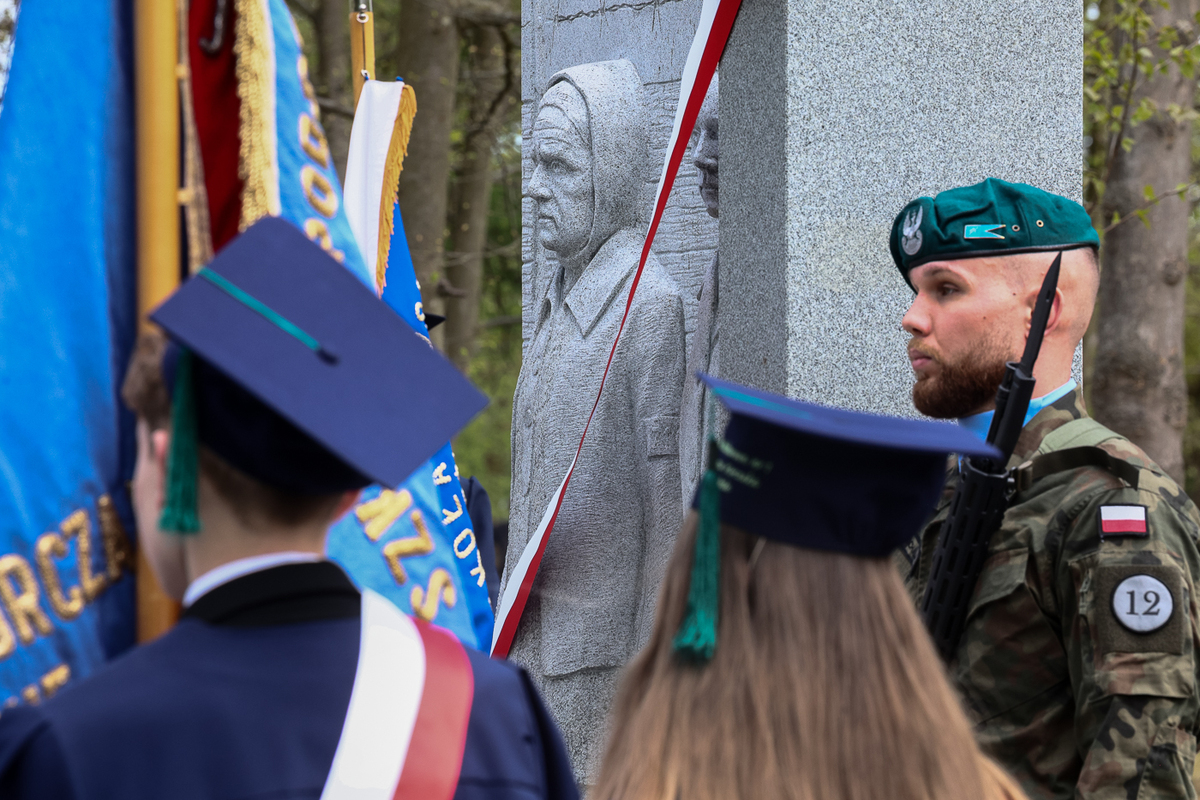
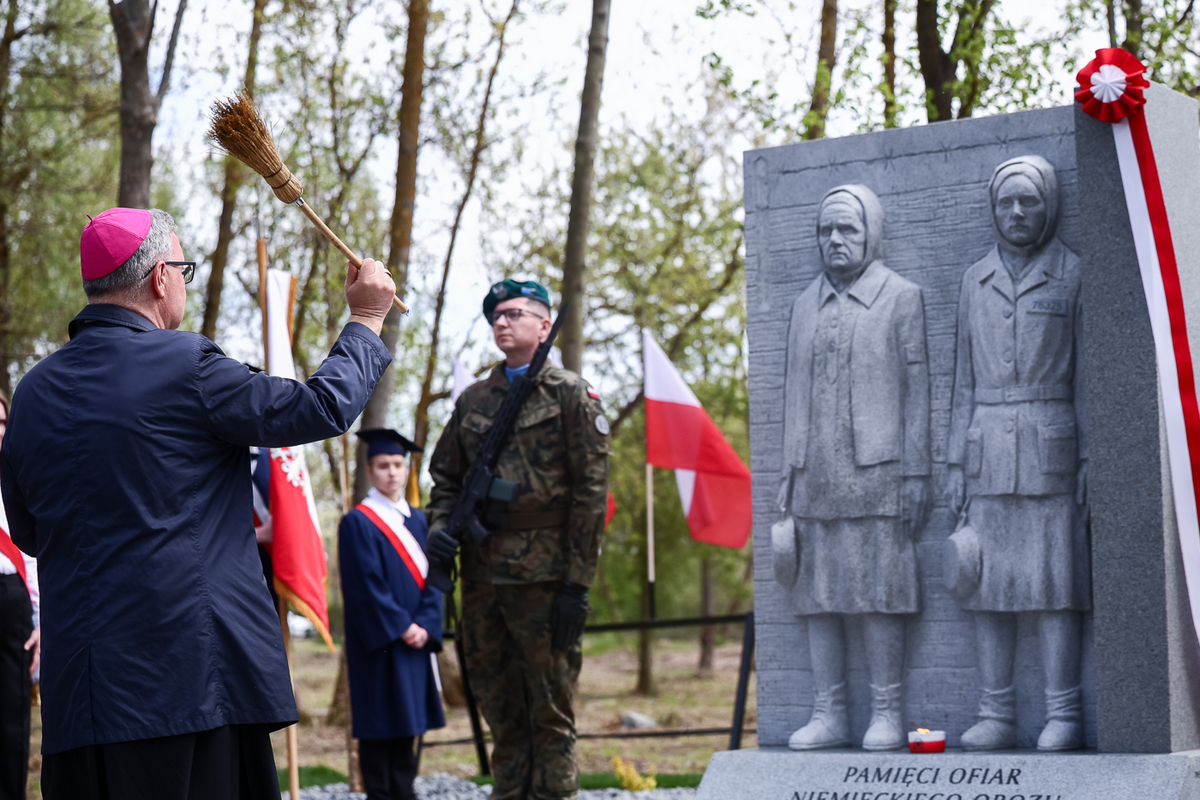
Monument: “In Memory of the Victims of Ravensbrück Concentration Camp, Prisoners of the Königsberg in der Neumark Subcamp 1944–1945”
The monument depicts two female figures. Although inspired by specific individuals - Jadwiga Chomicka and Wiesława Sołtys - they are meant, above all, to symbolize all the prisoners of the Chojna subcamp: Polish women, but also women of other nationalities, forced into labor, deprived of basic rights, reduced to registration numbers and work assignments. The figures are rendered in a stark, unembellished manner, grounded in the reality of the camp experience.
A particularly striking element of the monument is a bowl - an object seemingly mundane, yet in camp reality essential for biological survival. Its presence serves as a reminder of the prisoners’ daily struggle, fought not only against exhaustion and hunger, but also against the constant threat of losing the one item that enabled them to receive food.