
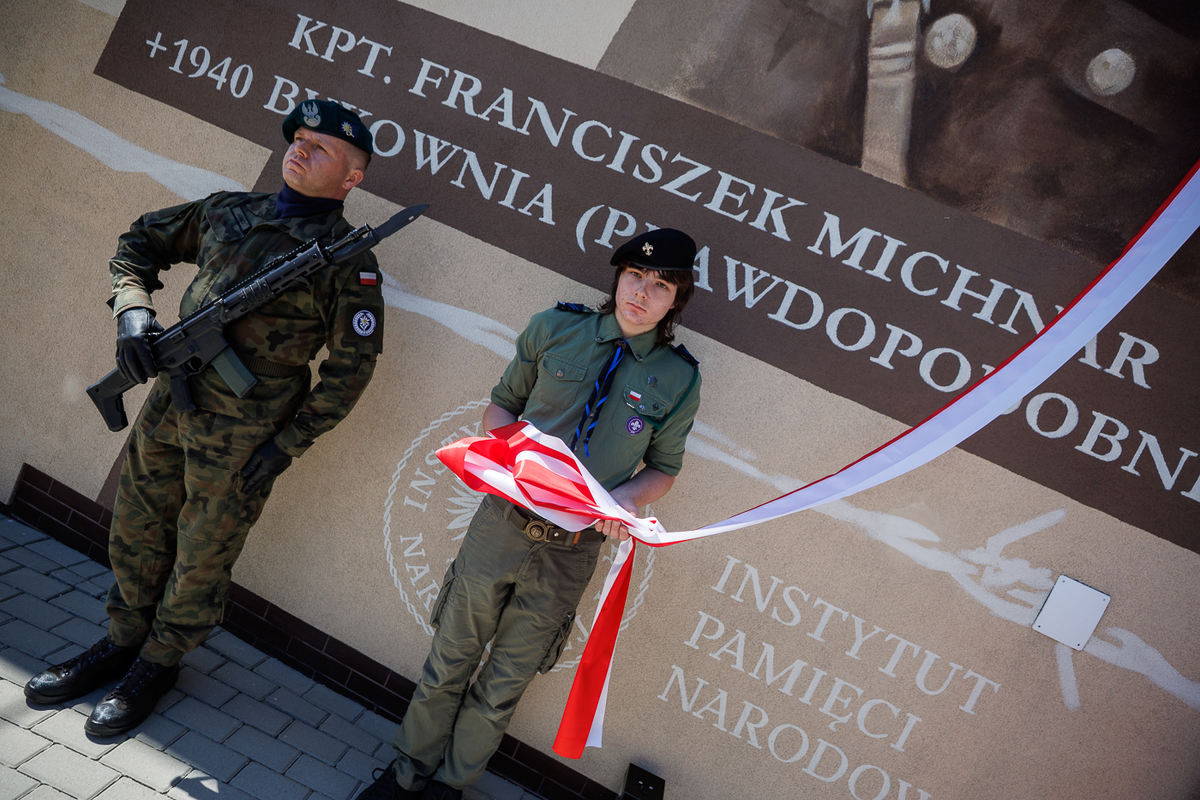
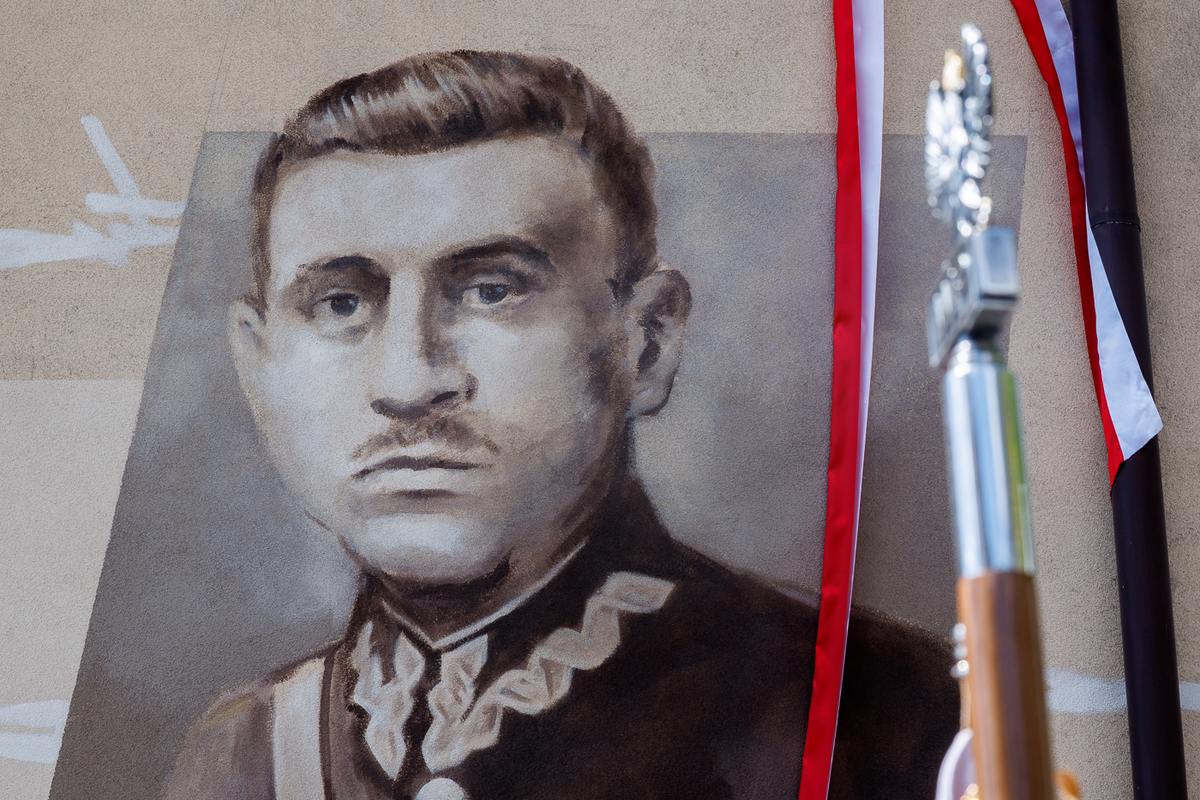
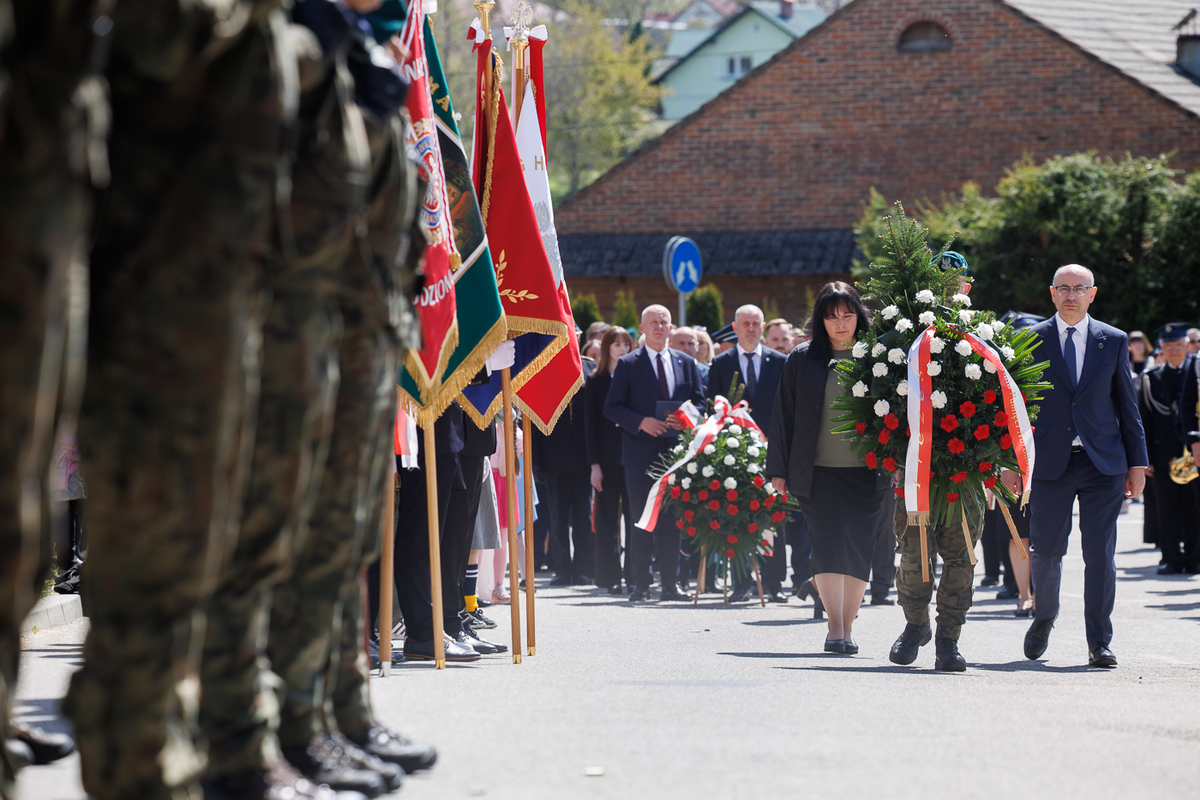
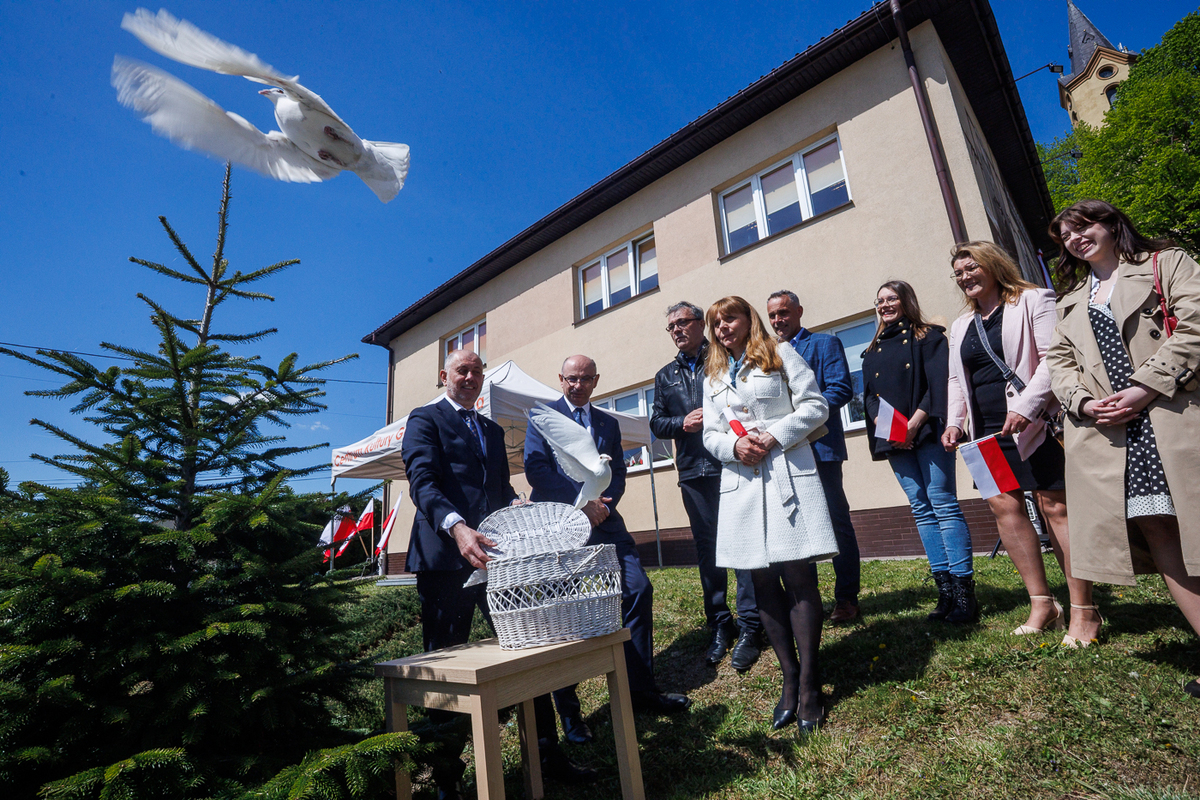
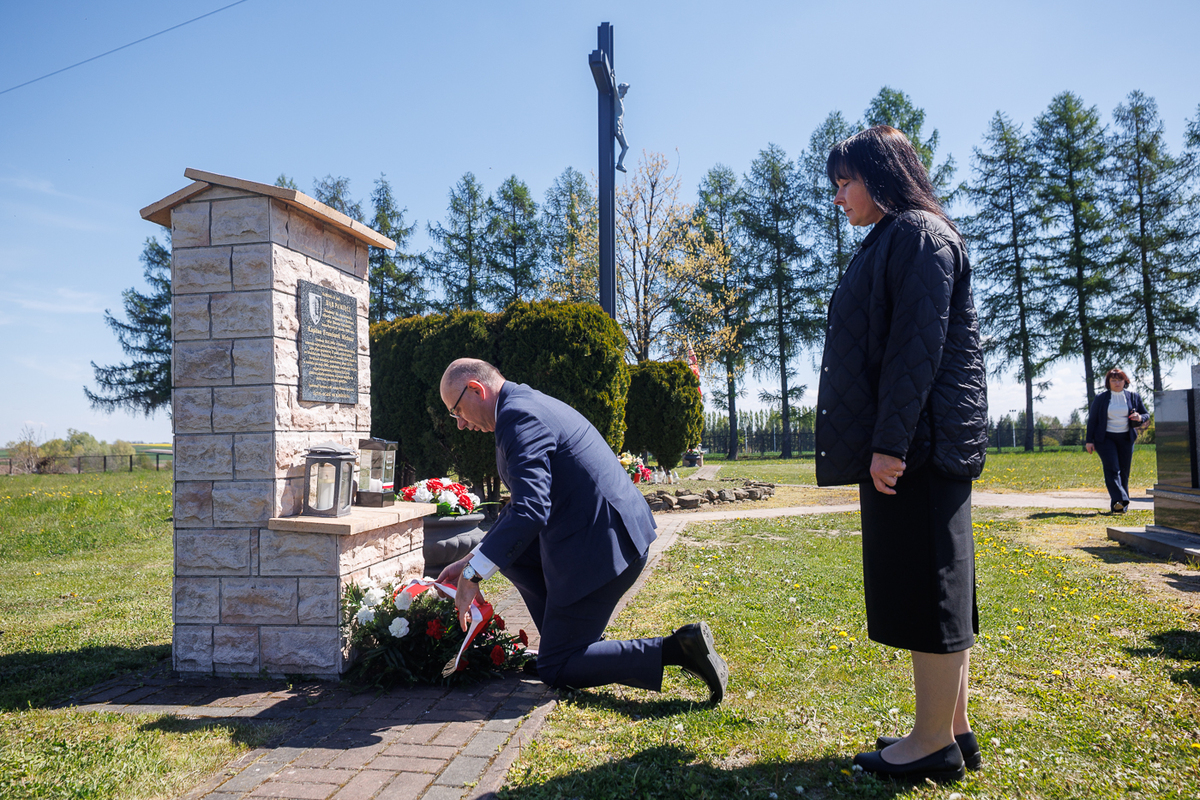
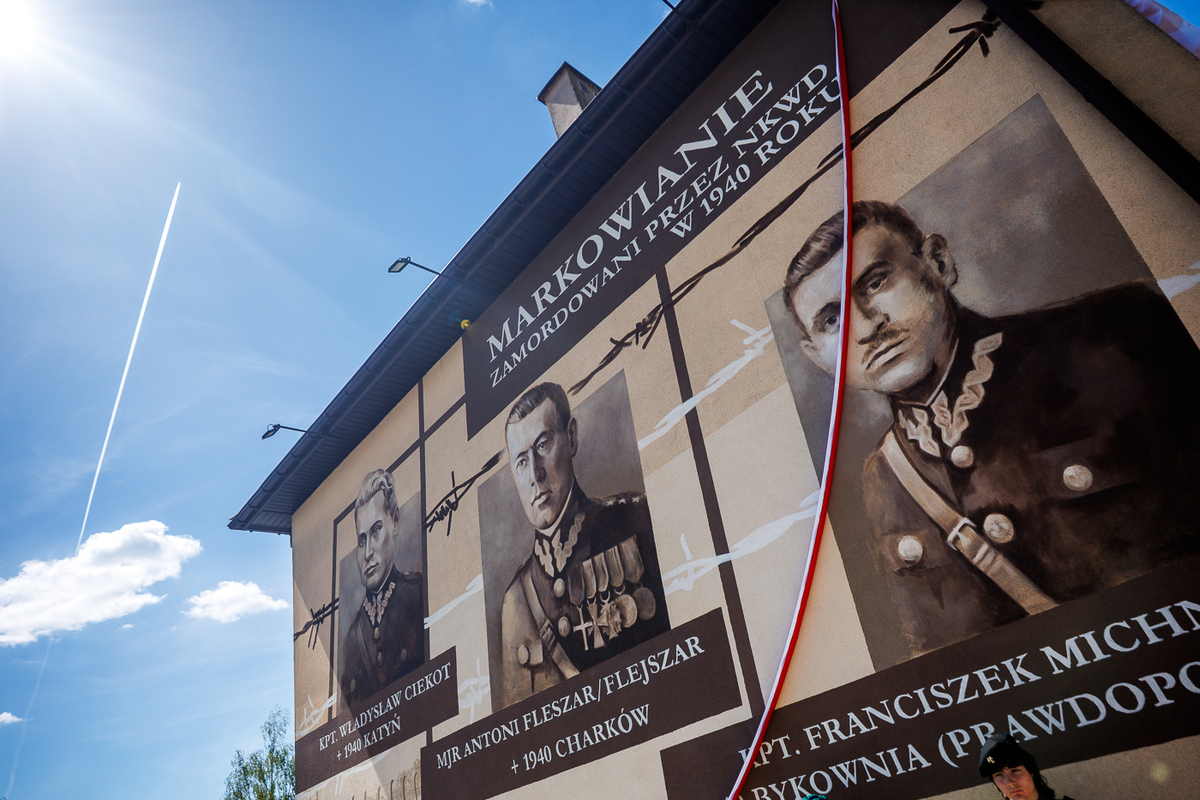
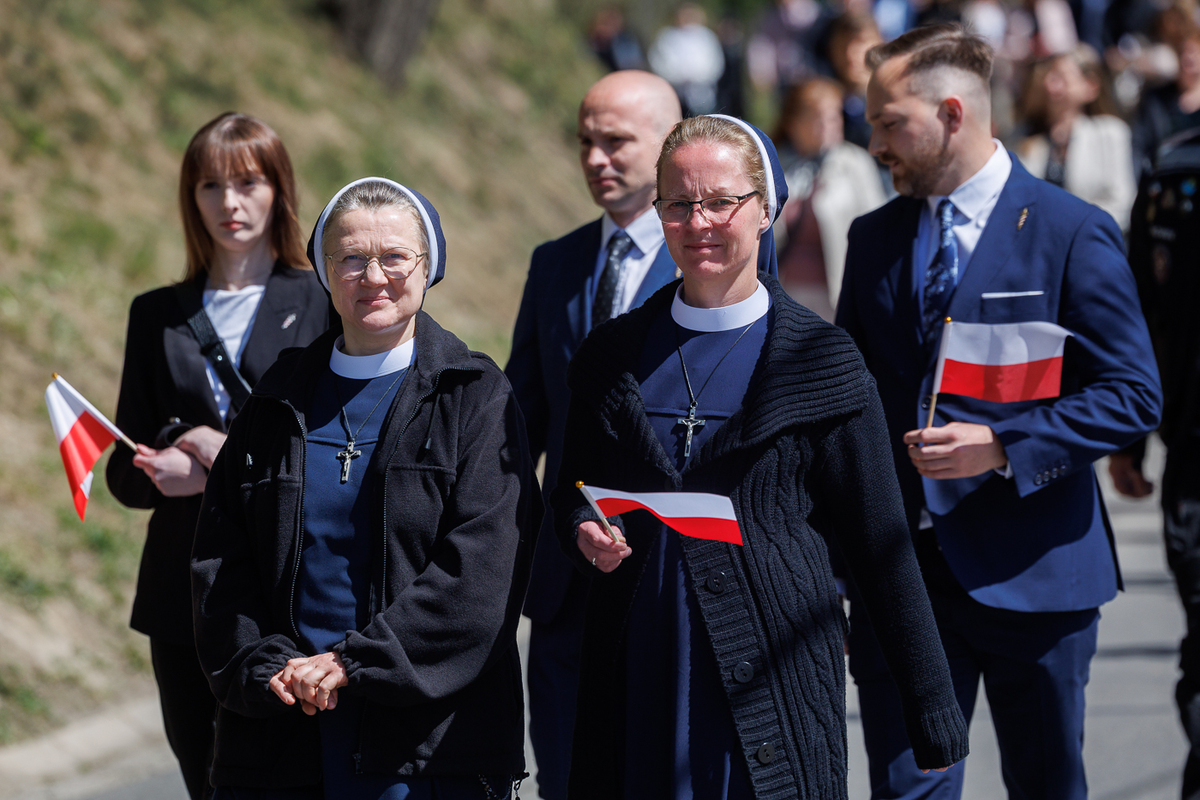
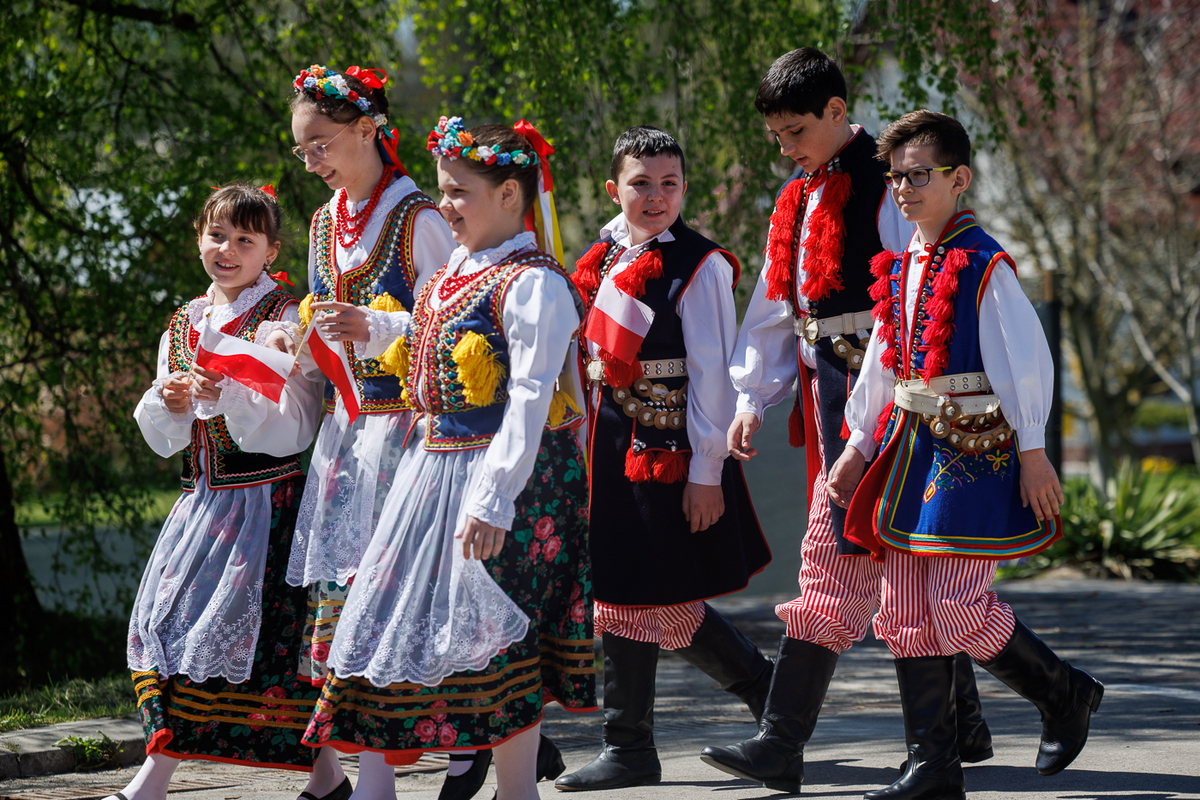
On 2 May 2026, Dr Mateusz Szpytma, Deputy President of the Institute of National Remembrance, unveiled a mural dedicated to the victims of the Katyn Massacre connected with Markowa.
In the spring of 1940, the Soviet NKVD murdered nearly 22,000 Polish citizens - both uniformed personnel and civilians. Their bodies were buried anonymously in mass graves, intended never to be found. Among those eliminated as part of this crime were three officers who came from or were associated with Markowa: two officers - Major Antoni Fleszar (1897–1940), Commander of the Divisional Reserve Officer Cadet Course of the 24th Infantry Division, and Captain Franciszek Michnar (1892–1940) of the 27th Light Artillery Regiment in Włodzimierz Wołyński - as well as a reserve officer, physician, and community member who worked in Markowa shortly before the war, Captain Władysław Ciekot (1907–1940).
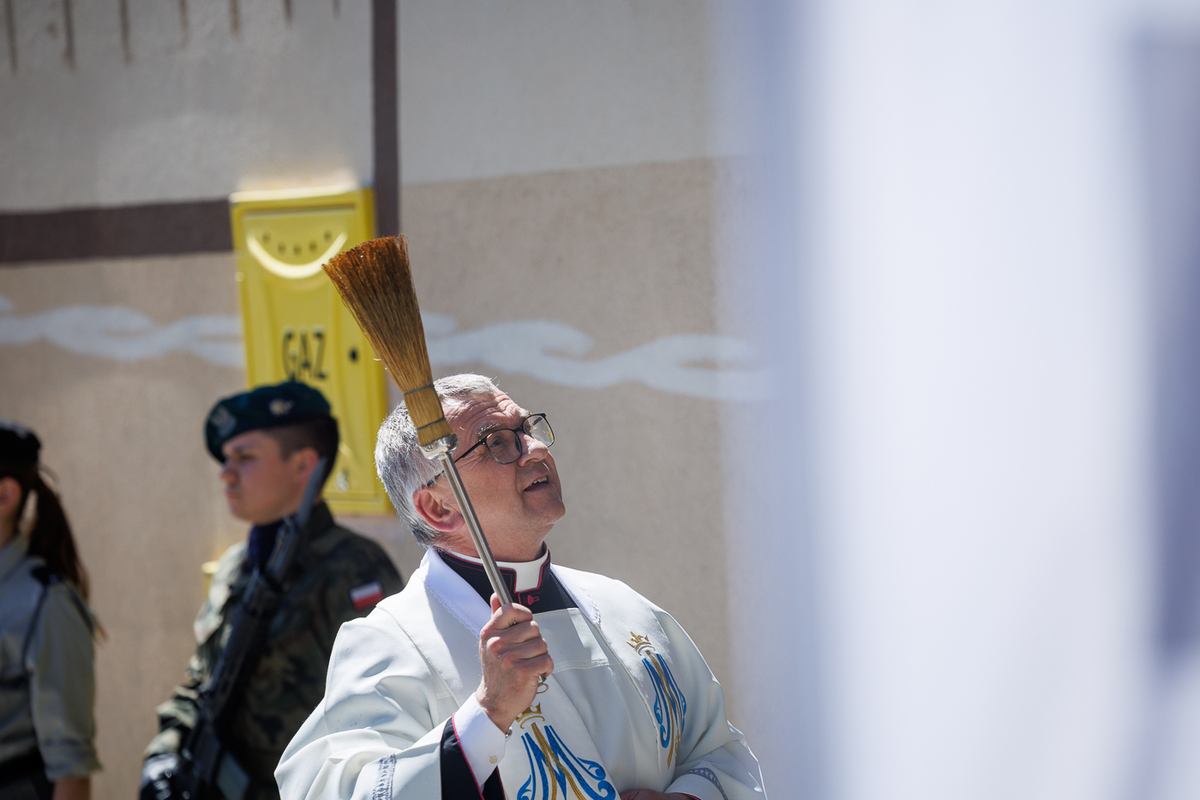
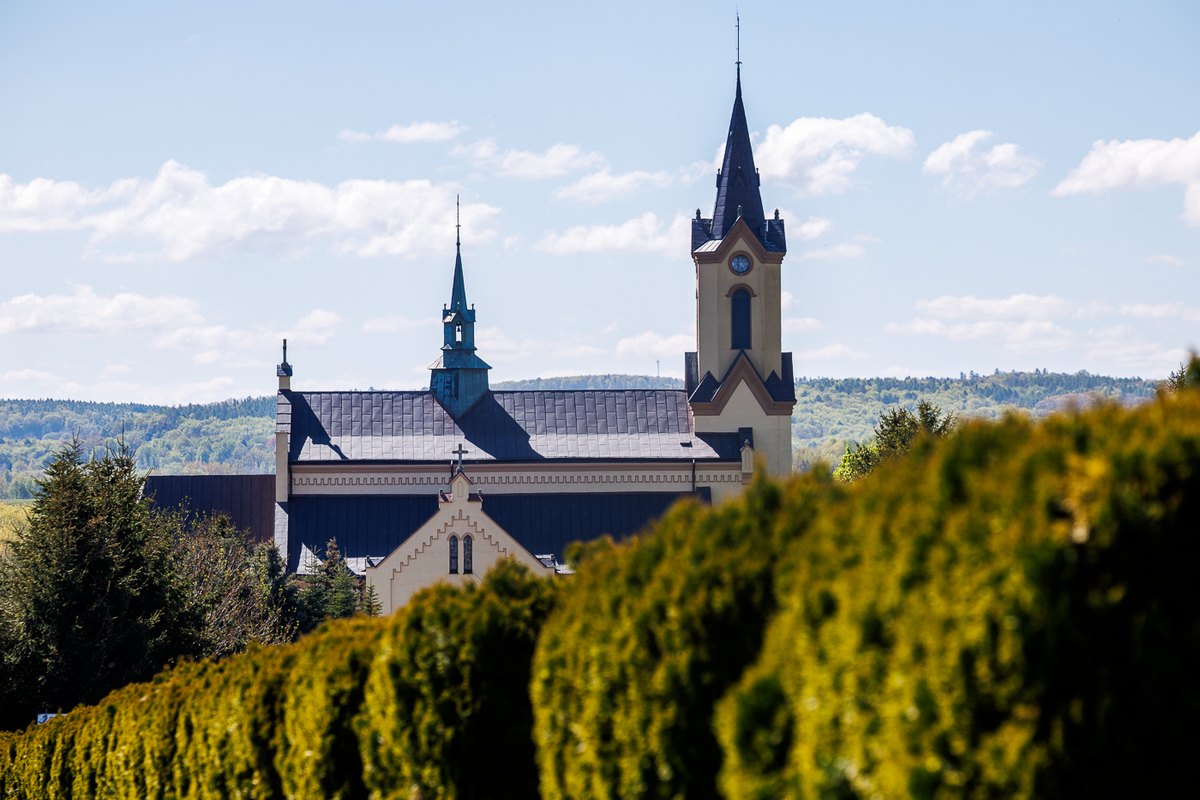
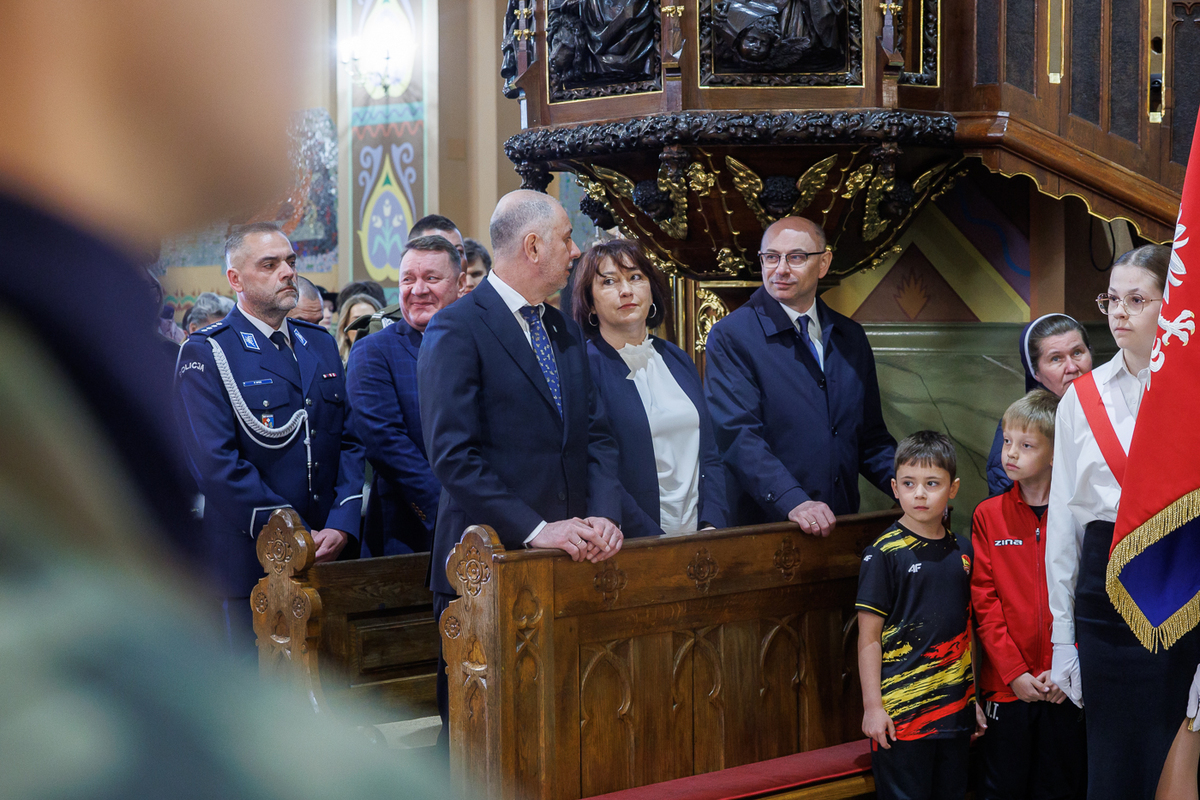
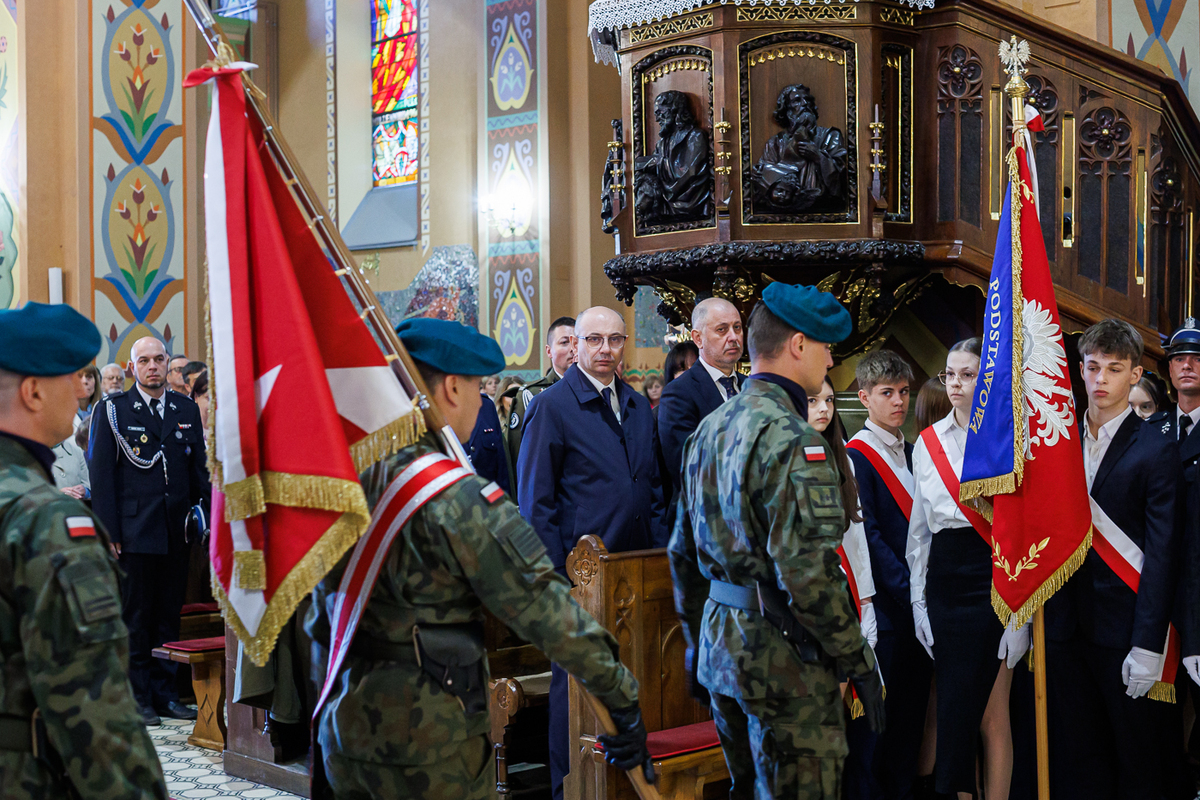
The mural was painted on the building of the Public Library in Markowa. The official unveiling of the memorial, funded by the Institute of National Remembrance, was preceded by a Holy Mass at the local Church of St. Dorothy.
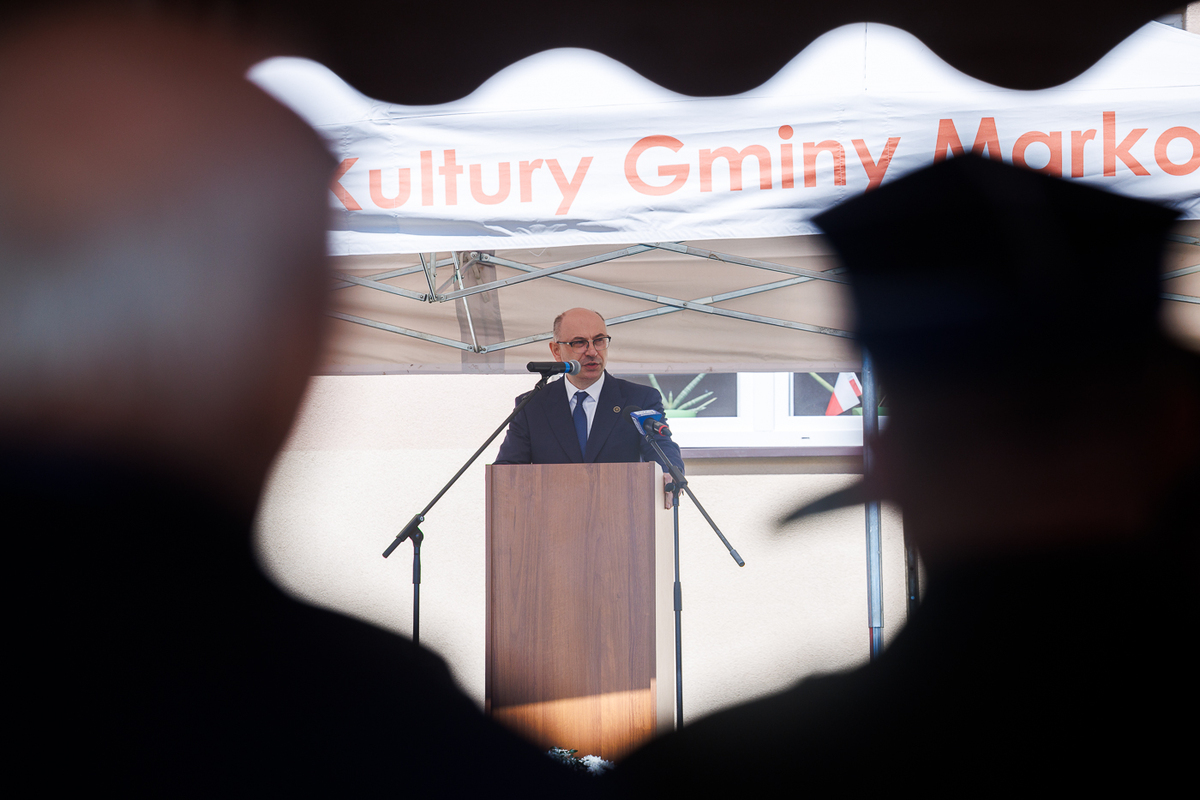
During his speech, Dr Szpytma emphasized:
“During the Katyn Massacre, nearly 22,000 officers and policemen were murdered. These were people of strong character - people who loved Poland and enriched their communities. When we consider the immense losses suffered by Markowa during the Second World War, we can begin to imagine the scale of loss endured by the entire Republic of Poland. Today, as a state that can finally speak the truth about the Katyn Massacre, we are fulfilling a duty of profound gratitude toward these individuals. On behalf of the Institute of National Remembrance, I would like to assure you that we will continue to honor our heroes in Markowa and in other places across our homeland.”
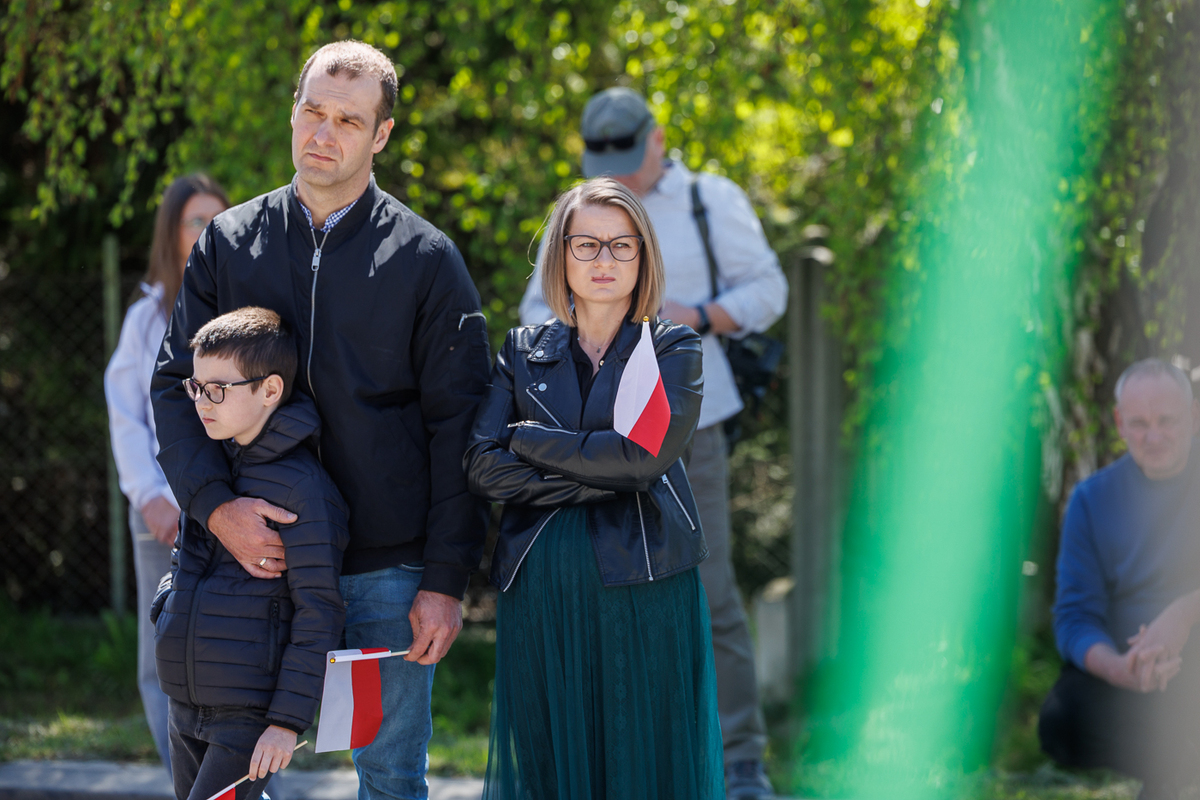
The ceremony was attended by the Mayor of the Markowa, Aleksander Cwynar, and local residents.
Władysław Ciekot
A patriot. For years he devoted himself to the service of others, earning widespread respect and recognition. Captain Władysław Ciekot – a soldier, physician, and community activist - was murdered with a shot to the back of the head in the Katyn Forest.
Antoni Fleszar
A battle-hardened hero of Poland’s struggle for independence. “The homeland calls,” replied Major Antoni Fleszar in September 1939 as he set out for yet another war. Eight months later, he was killed at the hands of Soviet executioners.
Franciszek Michnar
He fought for independence and, after it was regained, served with dedication in the reborn Polish Army. Taken prisoner by the Soviets, he was murdered in the spring of 1940. For men like Captain Franciszek Michnar, the NKVD executioners showed no mercy.