
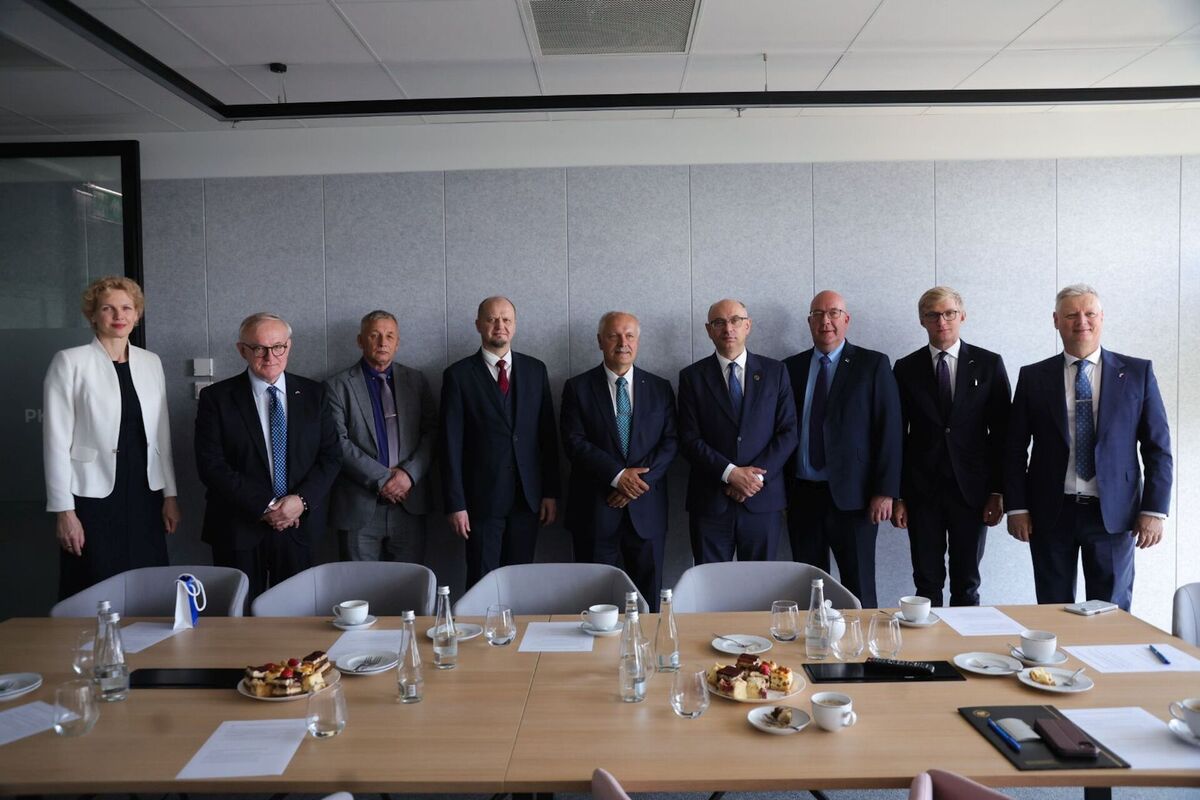
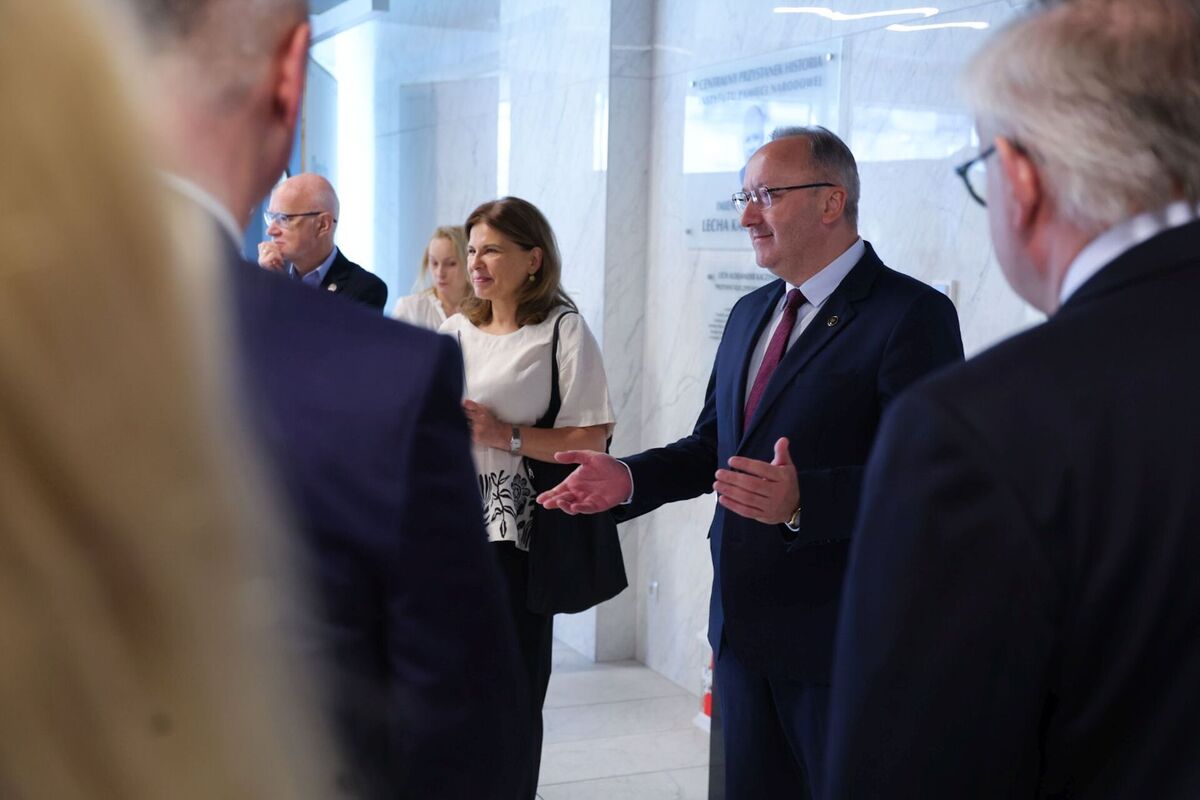
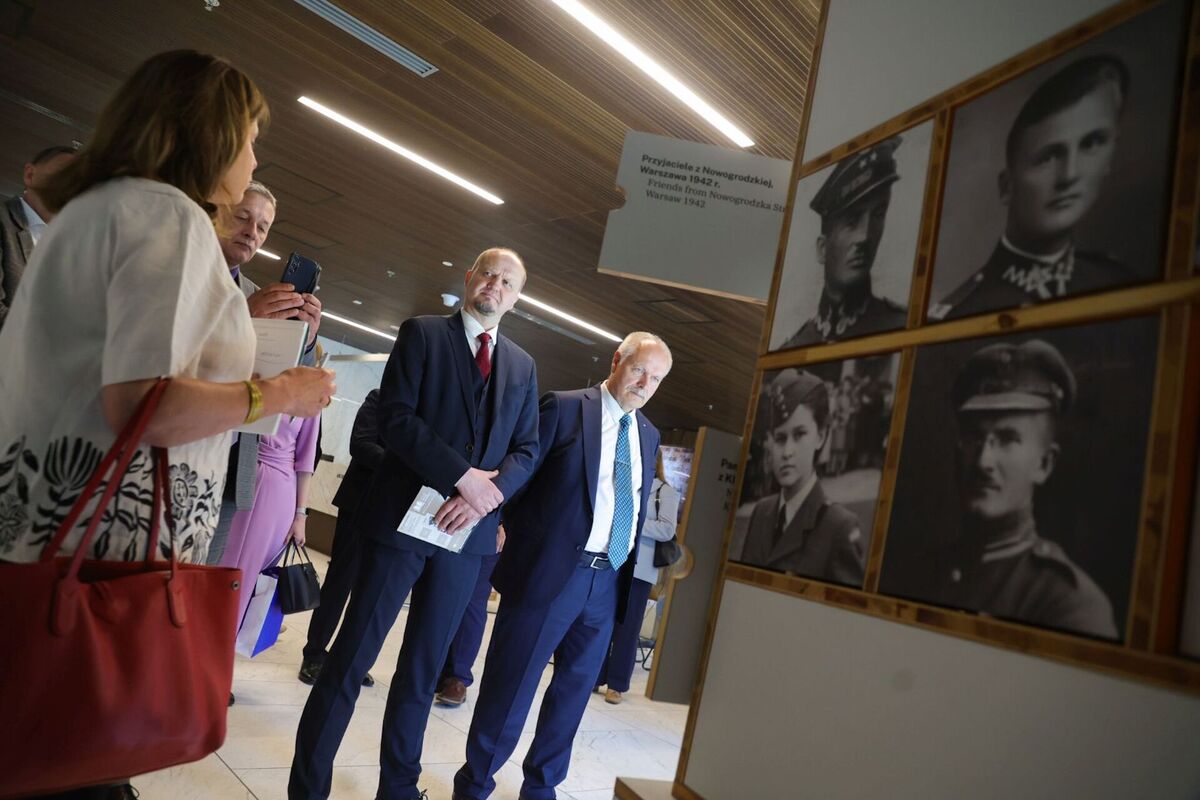
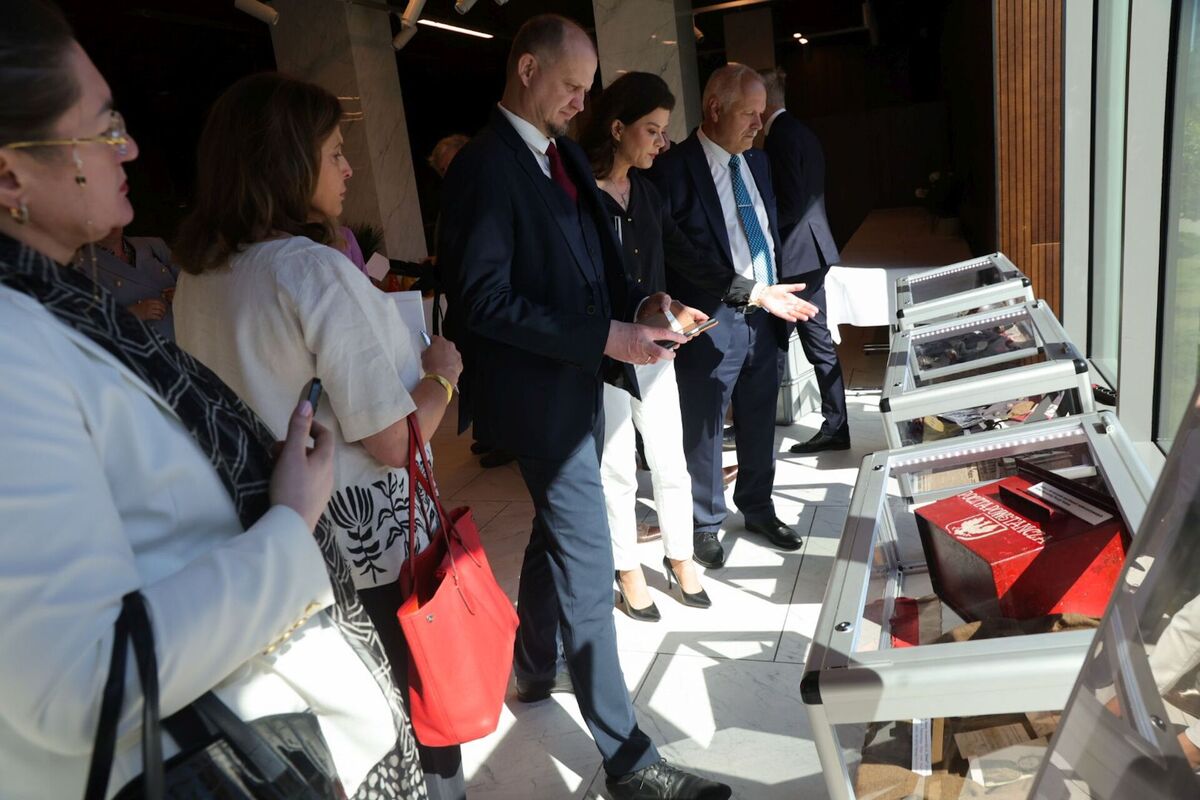
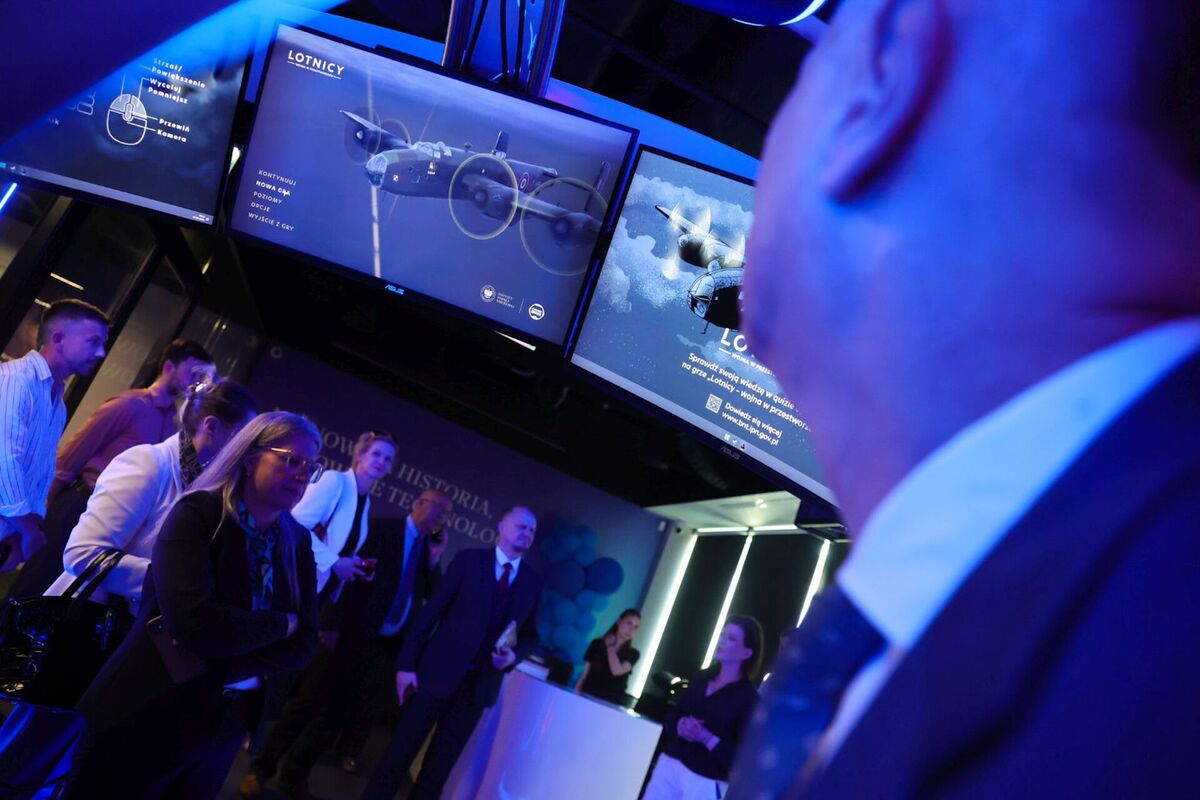
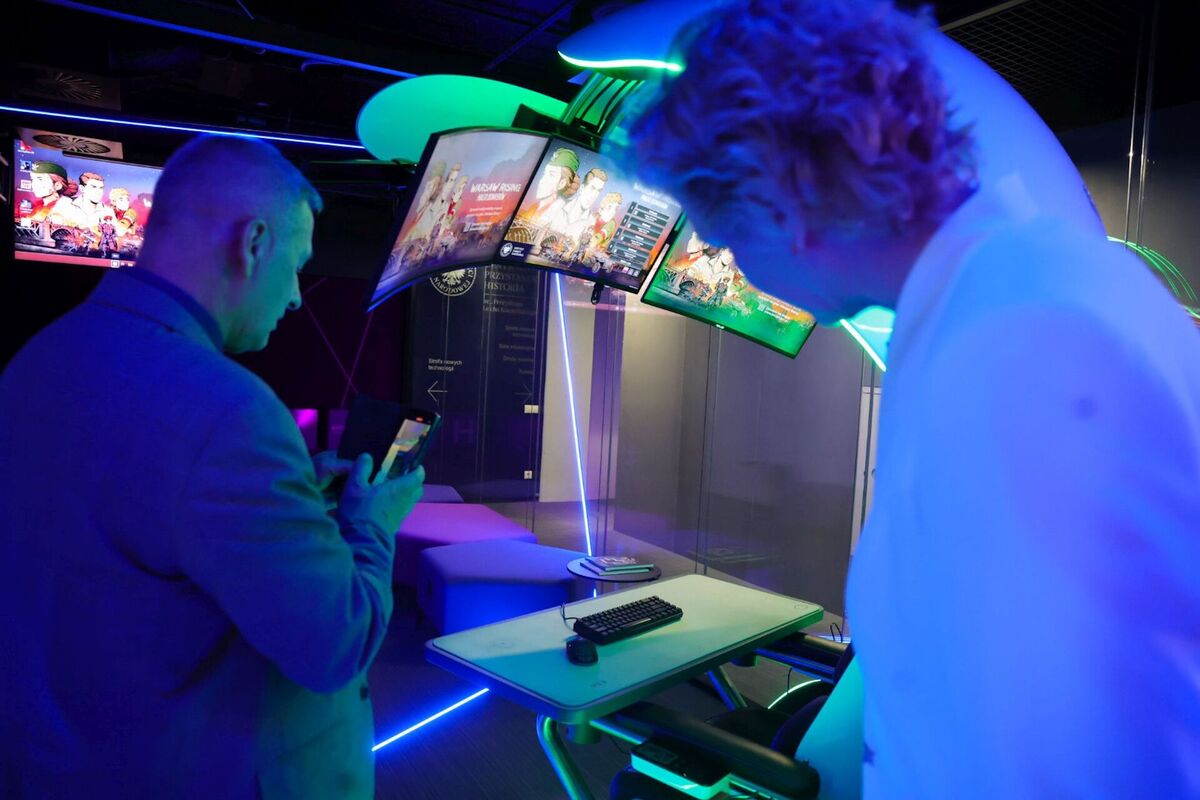
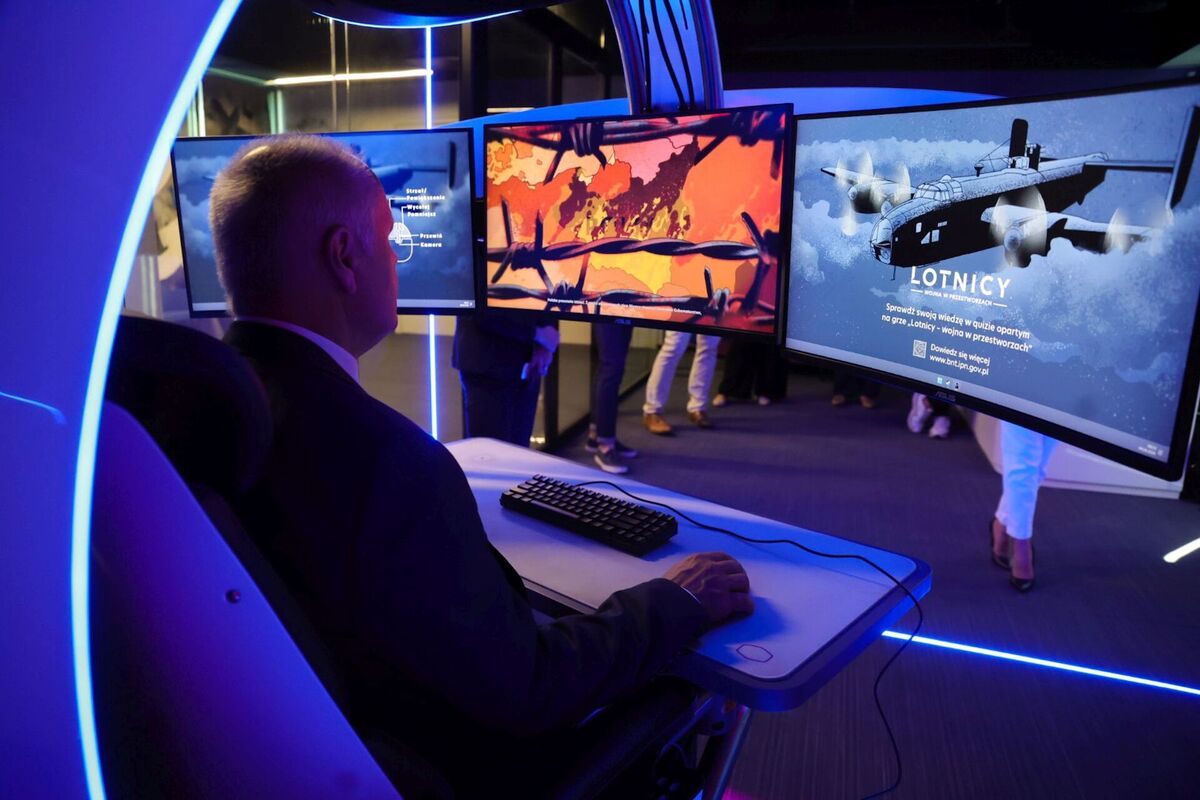
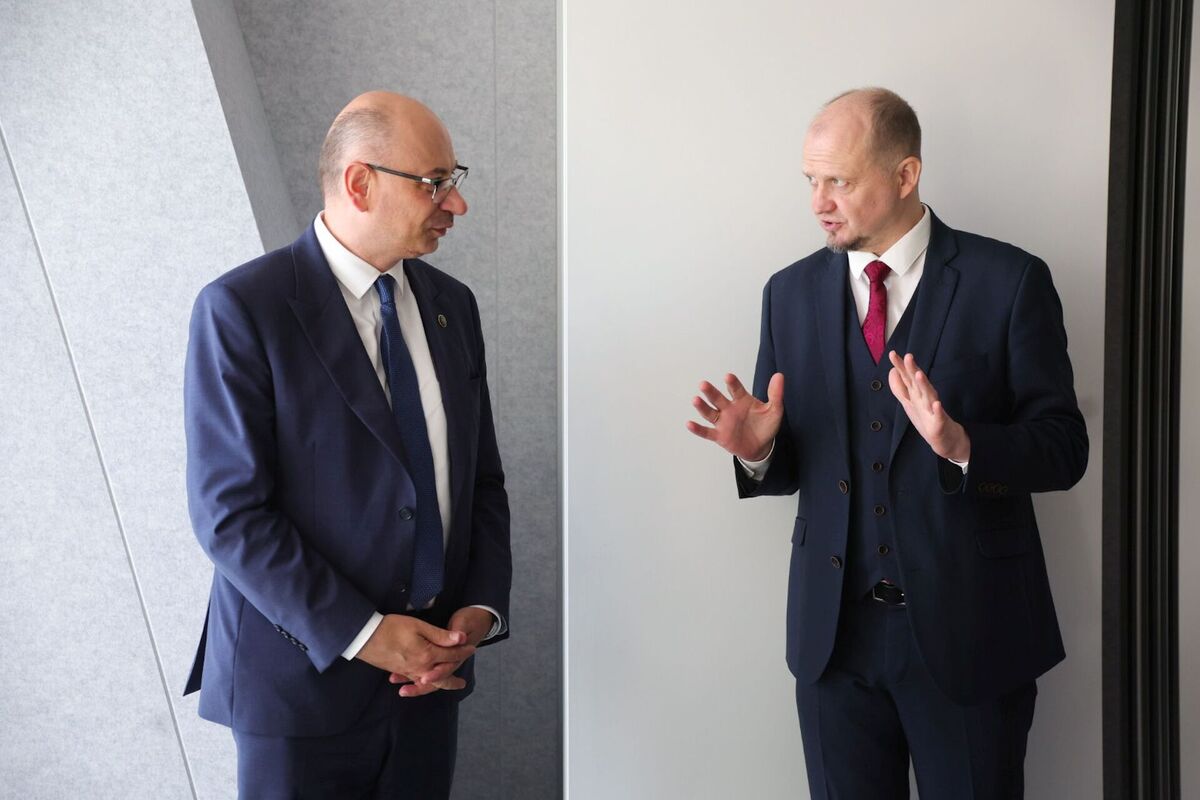
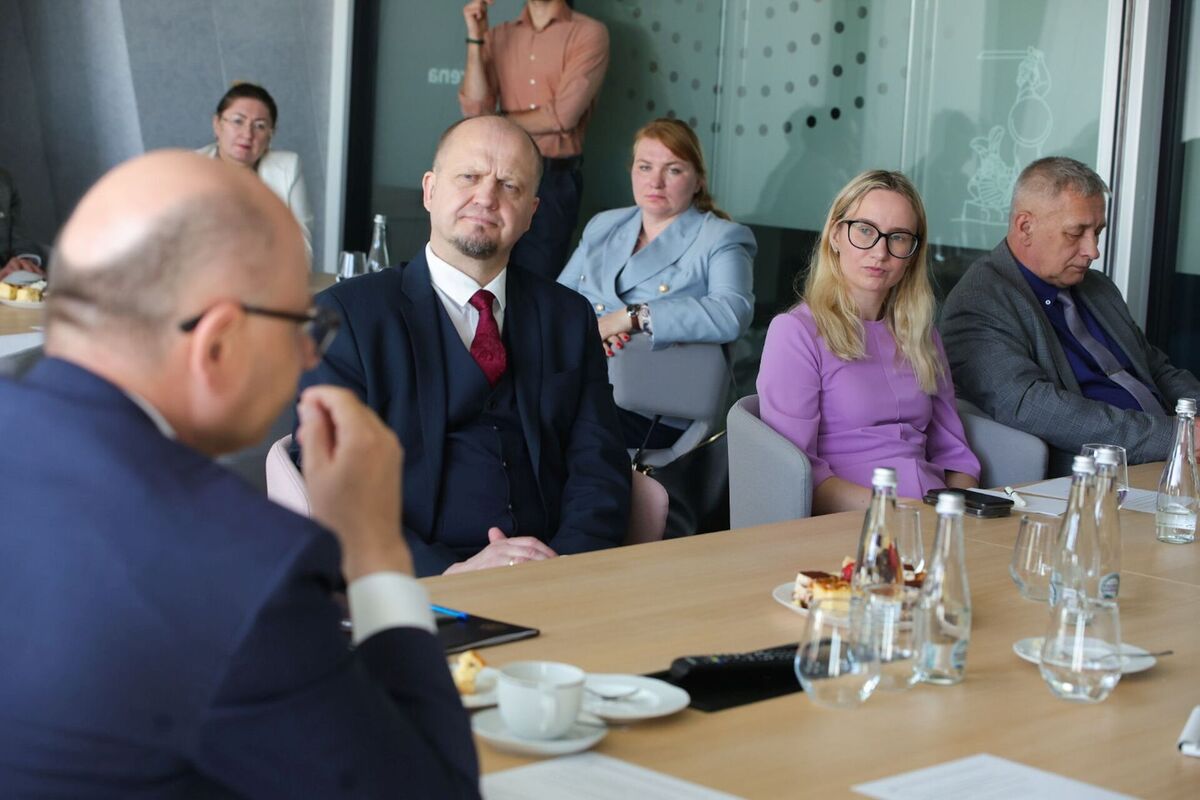
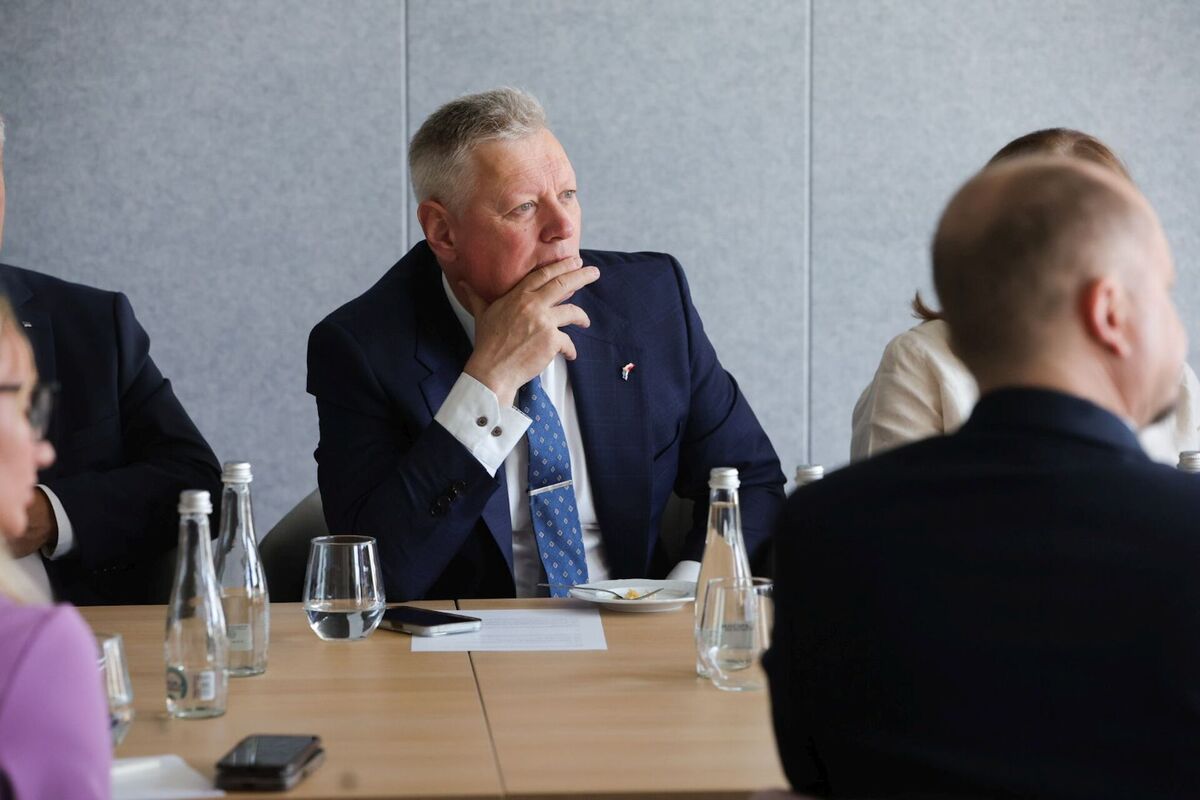
On 9 June 2026, a delegation from Estonia visited the IPN Central History Point in Warsaw. The Deputy President of the IPN, Mateusz Szpytma, Ph.D. met with the Ambassador of Estonia to Poland, Miko Haljas, and the visiting parliamentarians.
The guests toured the Central History Point, where history is presented using both traditional methods and the latest technologies. Representatives of the New Technologies Office and the National Education Office discussed IPN’s educational projects, which present Poland’s recent history in an engaging way. The visitors learned about the use of historical games, VR technology, interactive exhibitions, and other modern tools for promoting knowledge about the country’s history.
Also present at the meeting were Prof. Karol Polejowski, Deputy President of the IPN, Katarzyna Dryńska, Director of the International Cooperation Office, and Anna Putkiewicz, Director of the Central History Point.
The Estonian parliamentarians visited Poland at the invitation of the Deputy Speaker of the Sejm of the Republic of Poland, Szymon Hołownia.
Poland and Estonia share similar experiences in their recent history. The German-Soviet non-aggression pact, known as the Molotov–Ribbentrop Pact, signed on 23 August 1939, had a profound impact on both countries. For more than half a century, they found themselves within the sphere of influence of Soviet imperialism. An integral part of the pact was a secret protocol that divided German and Soviet spheres of influence in Poland, the Baltic states, and Romania. Under its terms, part of Polish territory, as well as Estonia, was incorporated into the USSR.
Today, Estonia—like Poland—is active in international structures dealing with the legacy of communist secret service archives and, as an associated country, is part of the European Network of Official Authorities in Charge of the Secret Police Files. The organization, co-created by the Institute of National Remembrance, currently brings together institutions from eight member countries (Albania, Bulgaria, the Czech Republic, Germany, Poland, Hungary, Romania, and Slovakia) and five associated countries (Estonia, Lithuania, Latvia, Slovenia, and Ukraine). Cooperation is mainly network-based (through international organizations) and project-based (conferences, publications, and educational initiatives).
See also: