
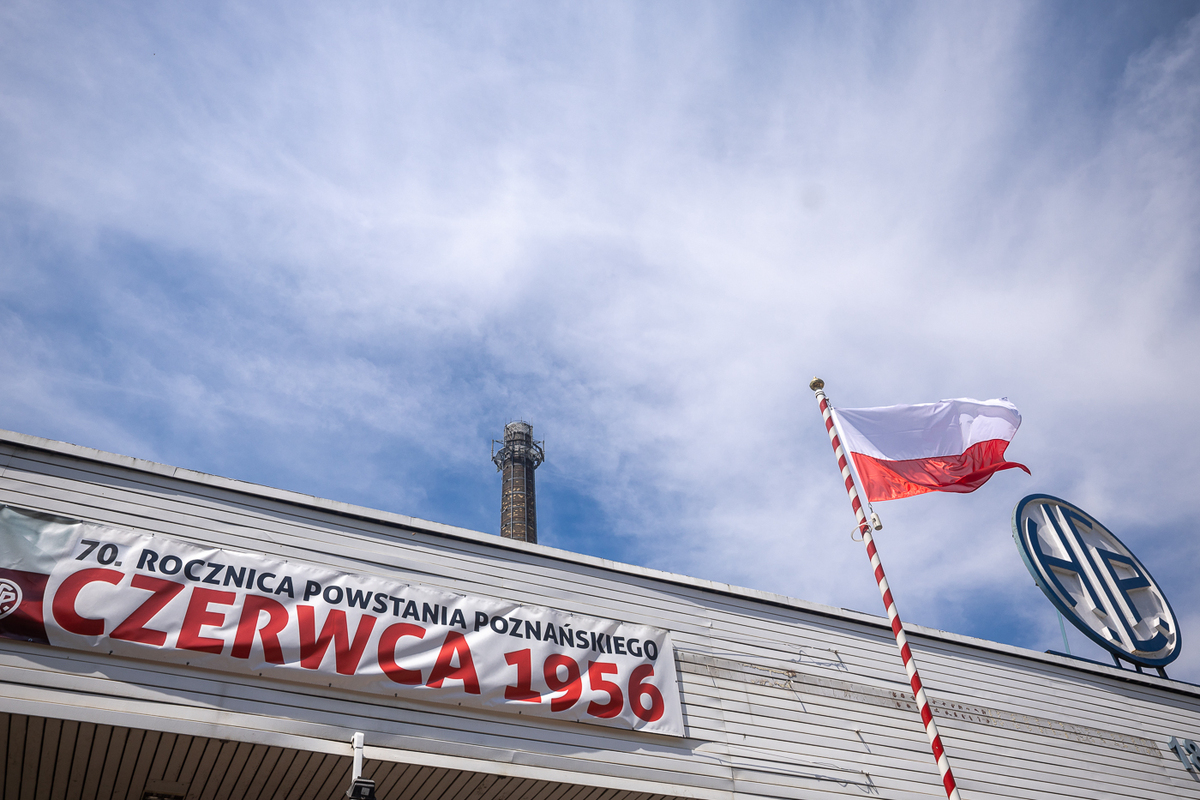
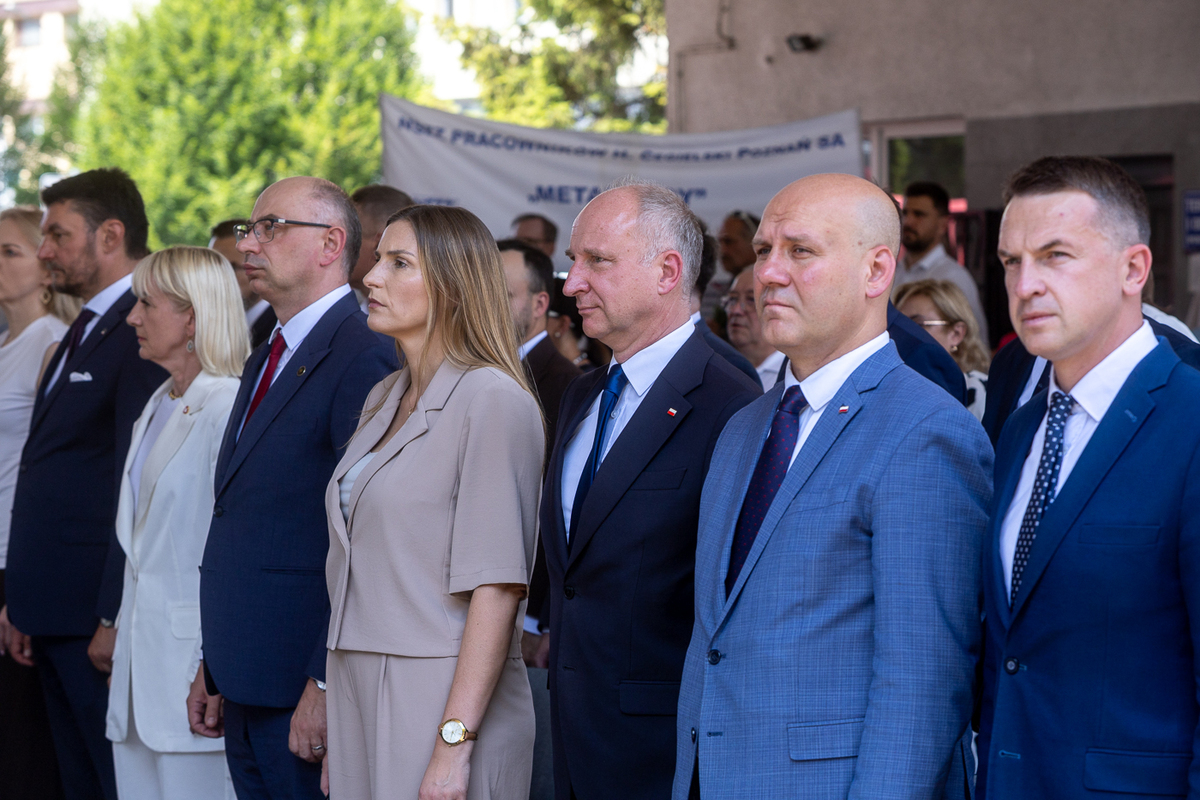
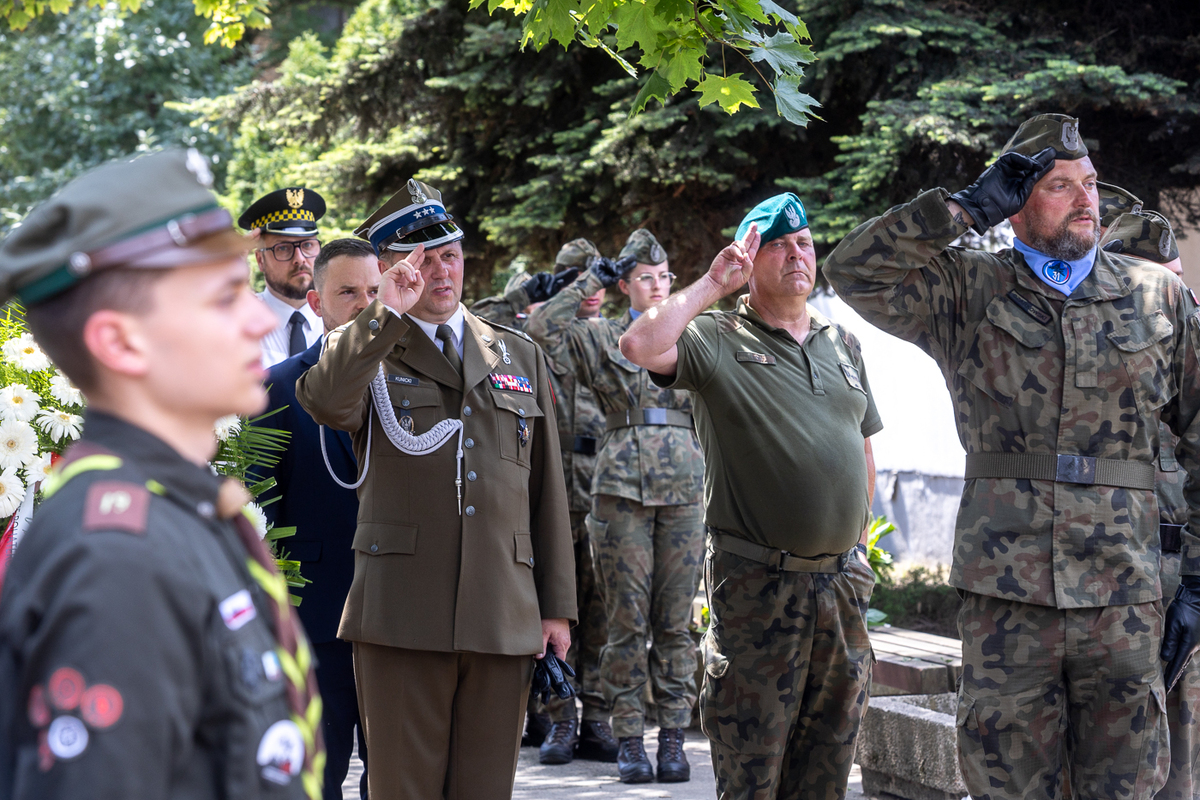
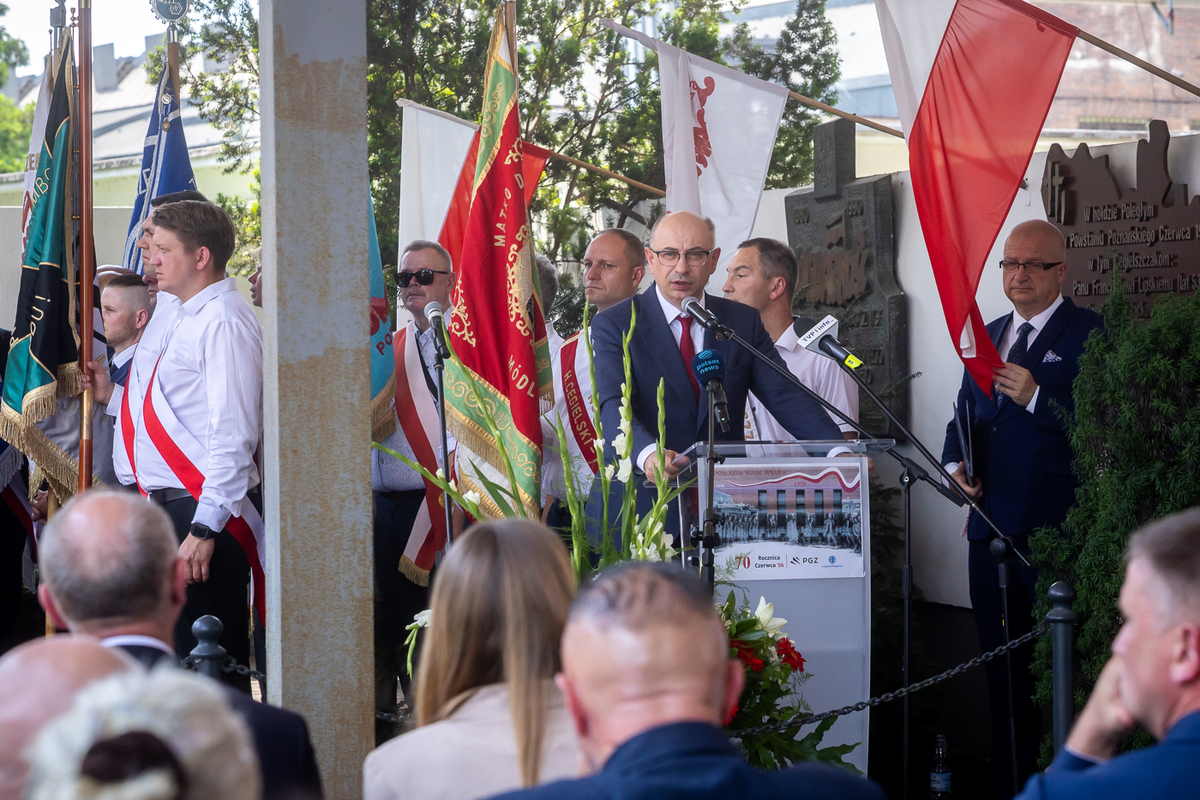
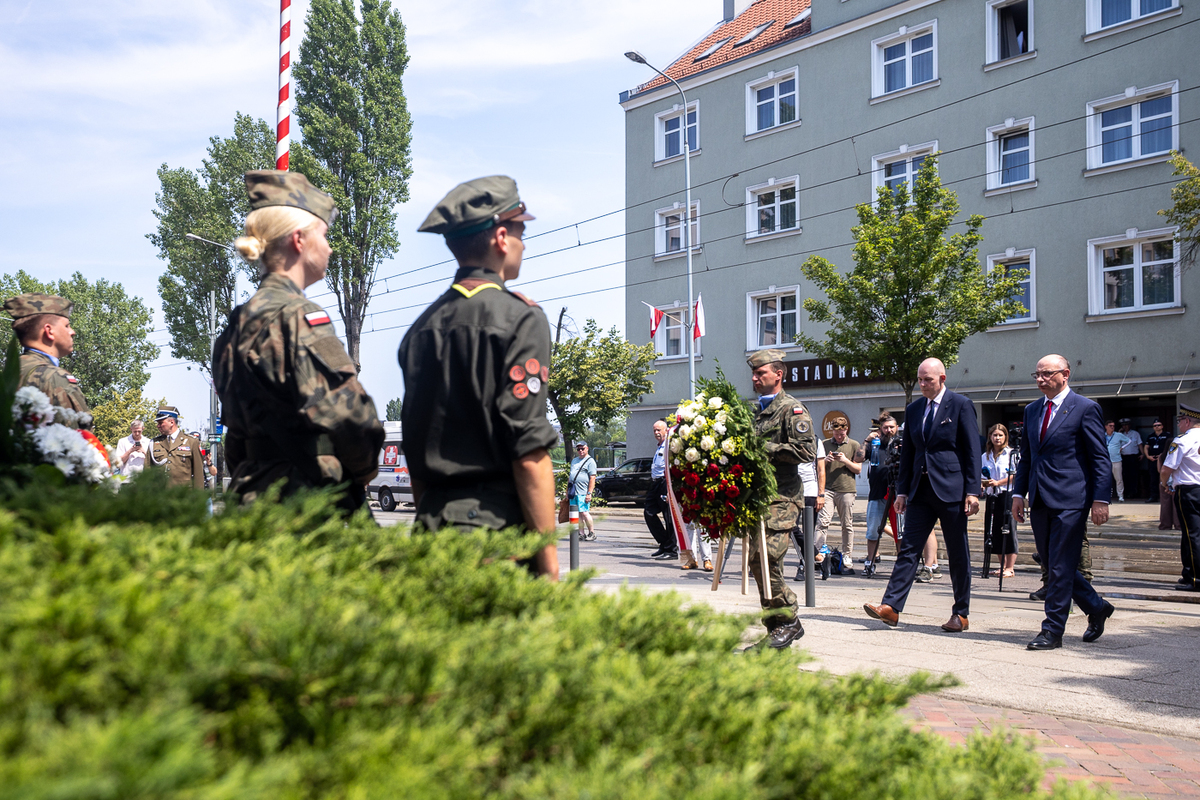
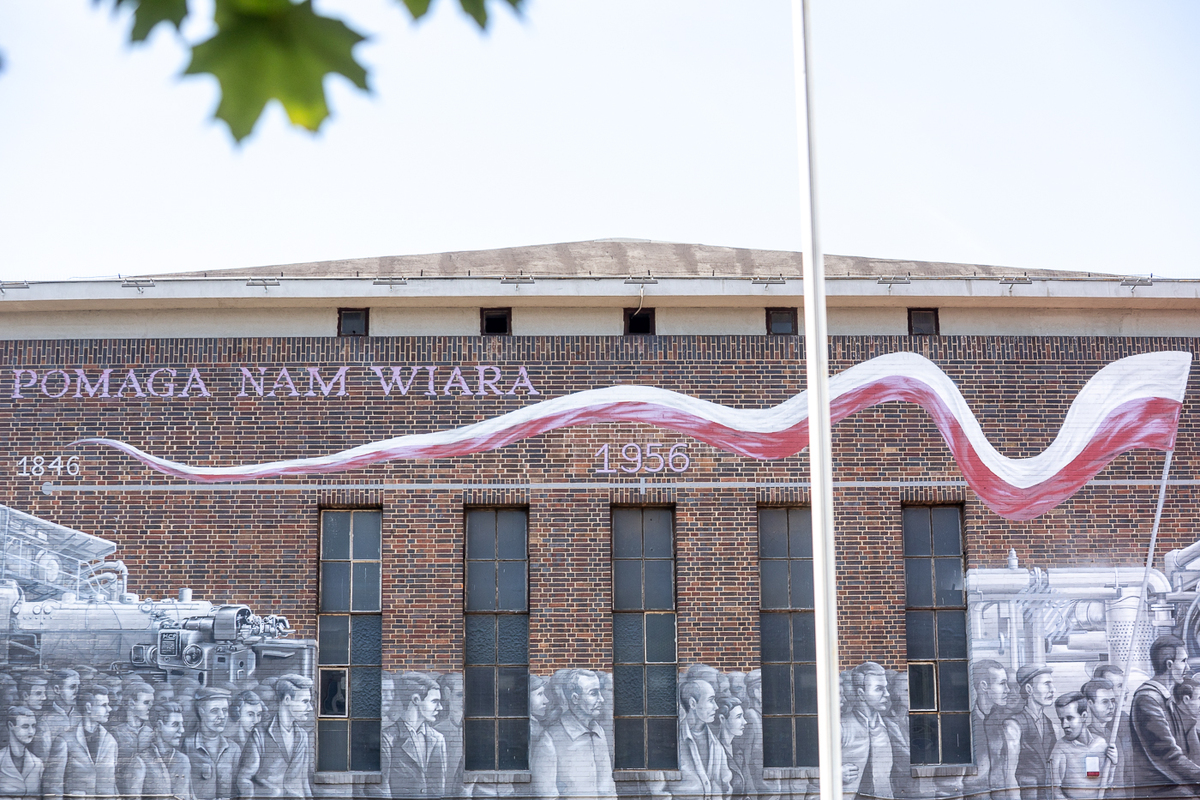
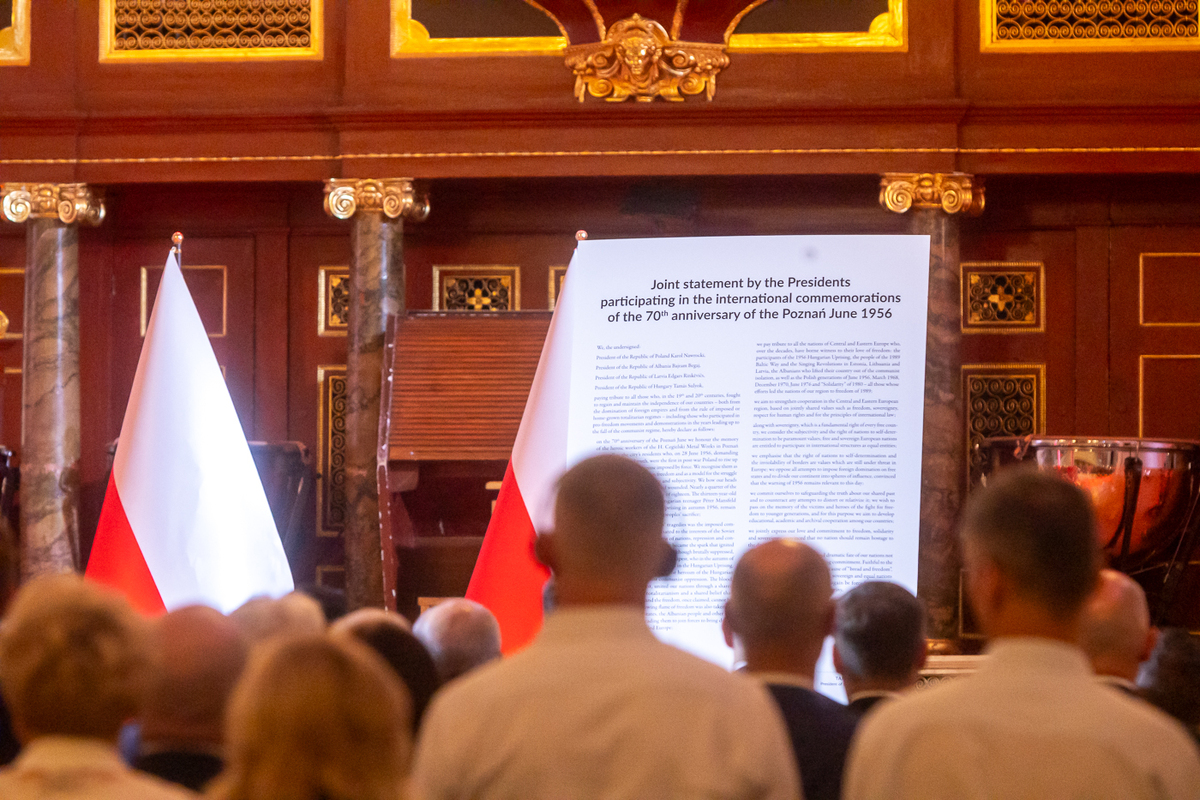
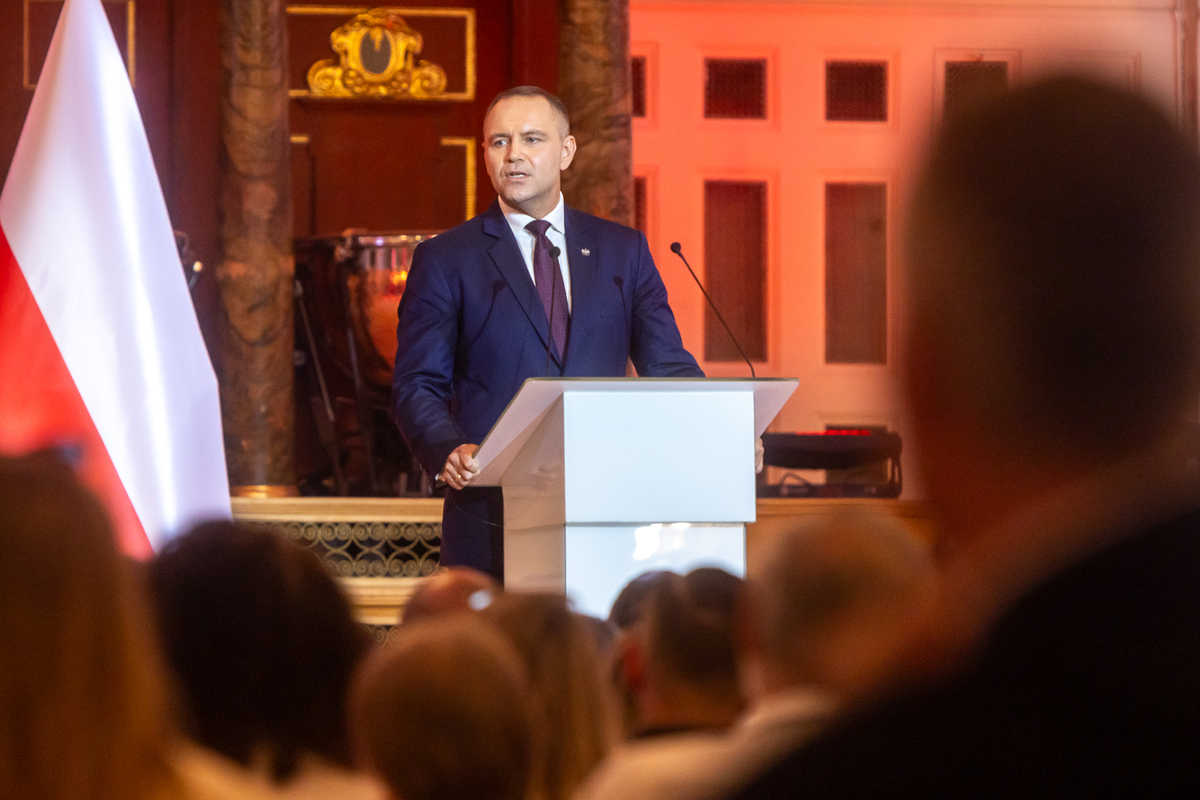
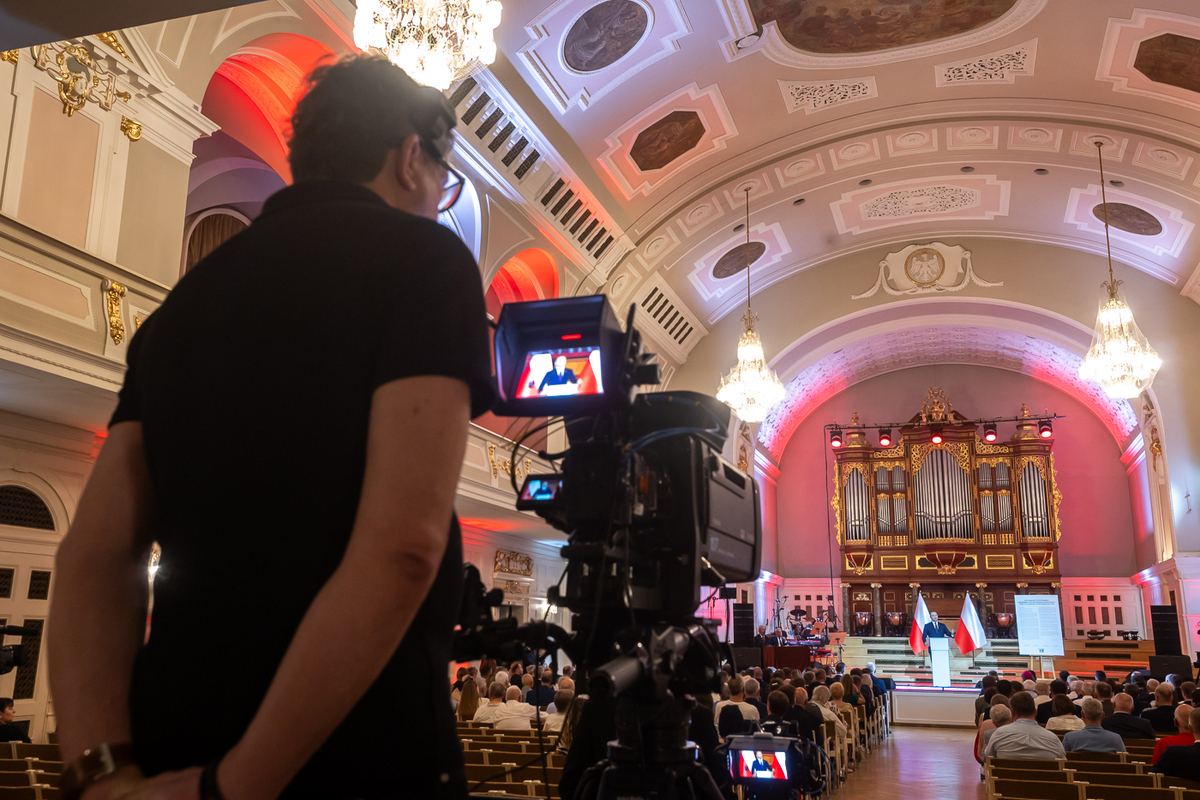
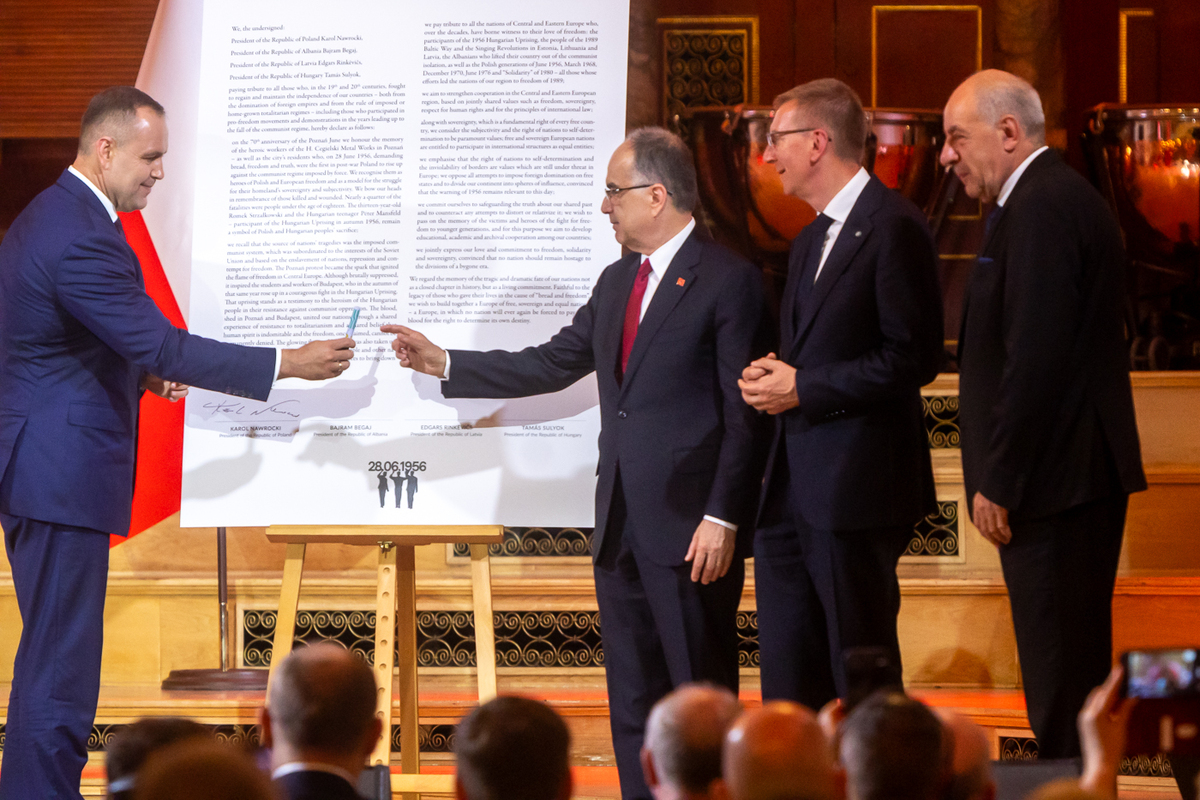
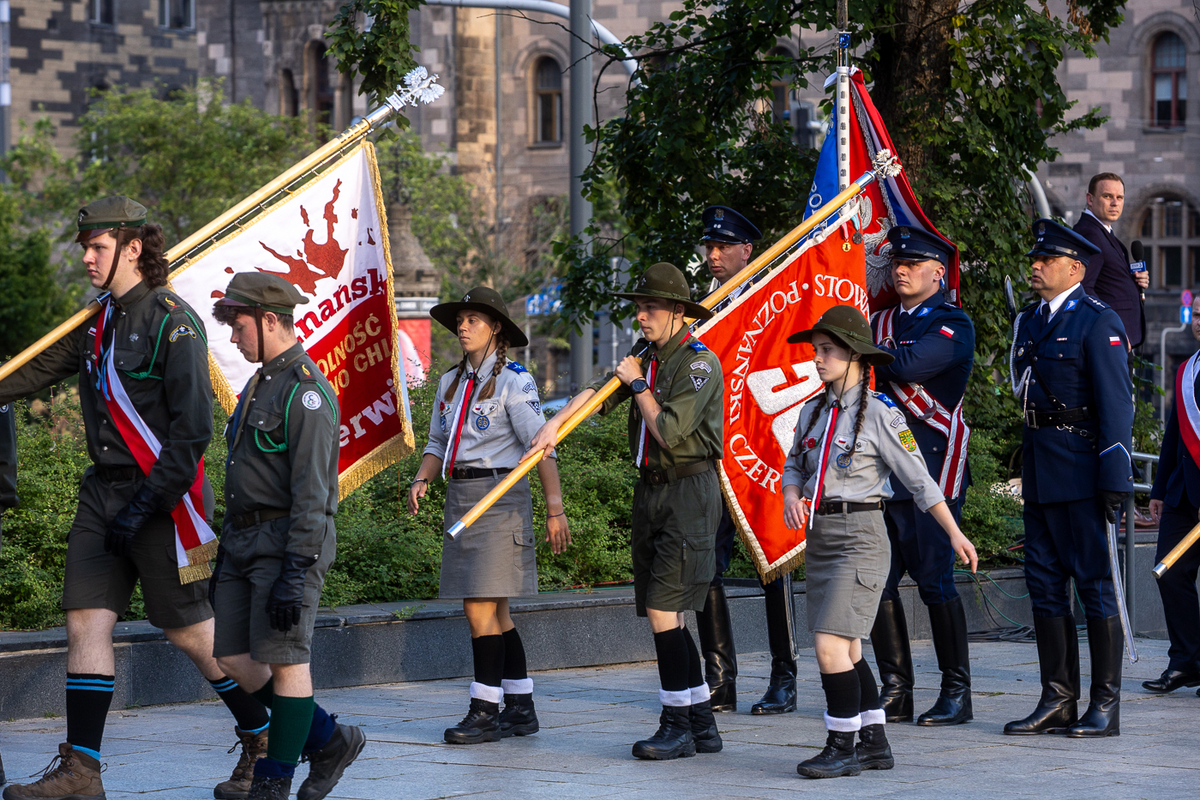
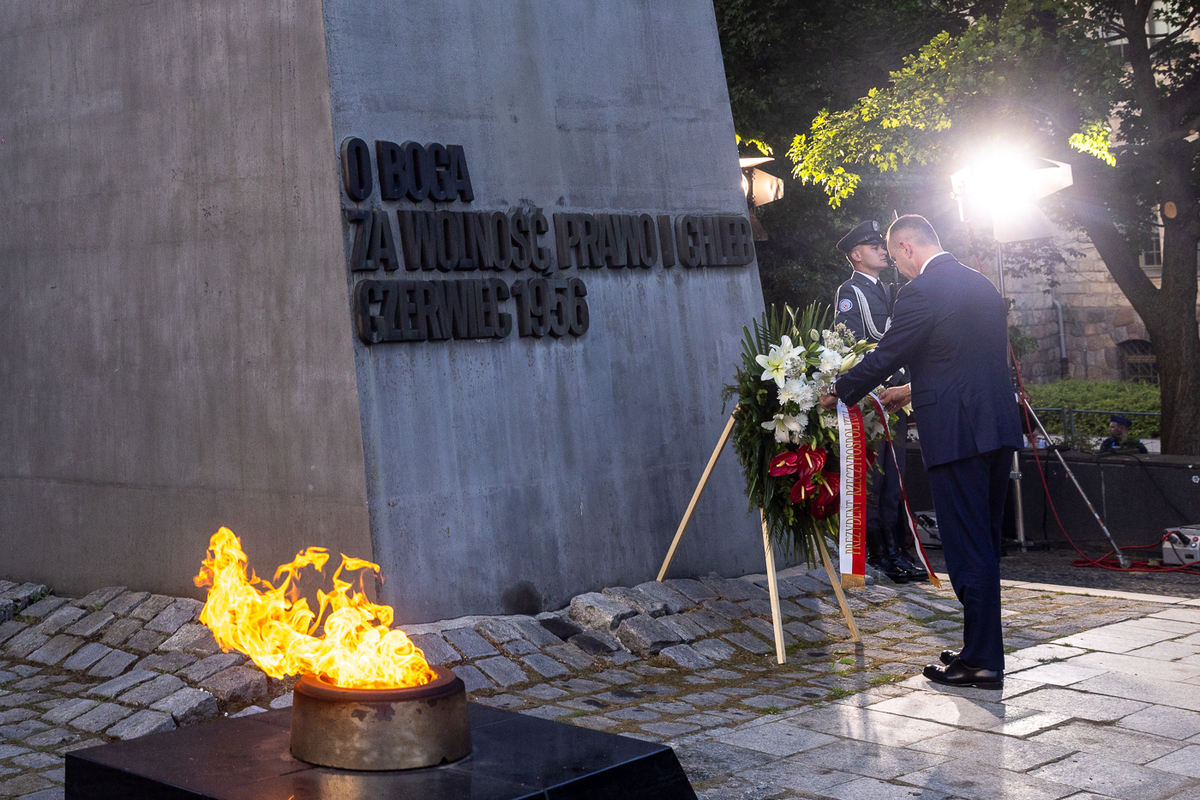
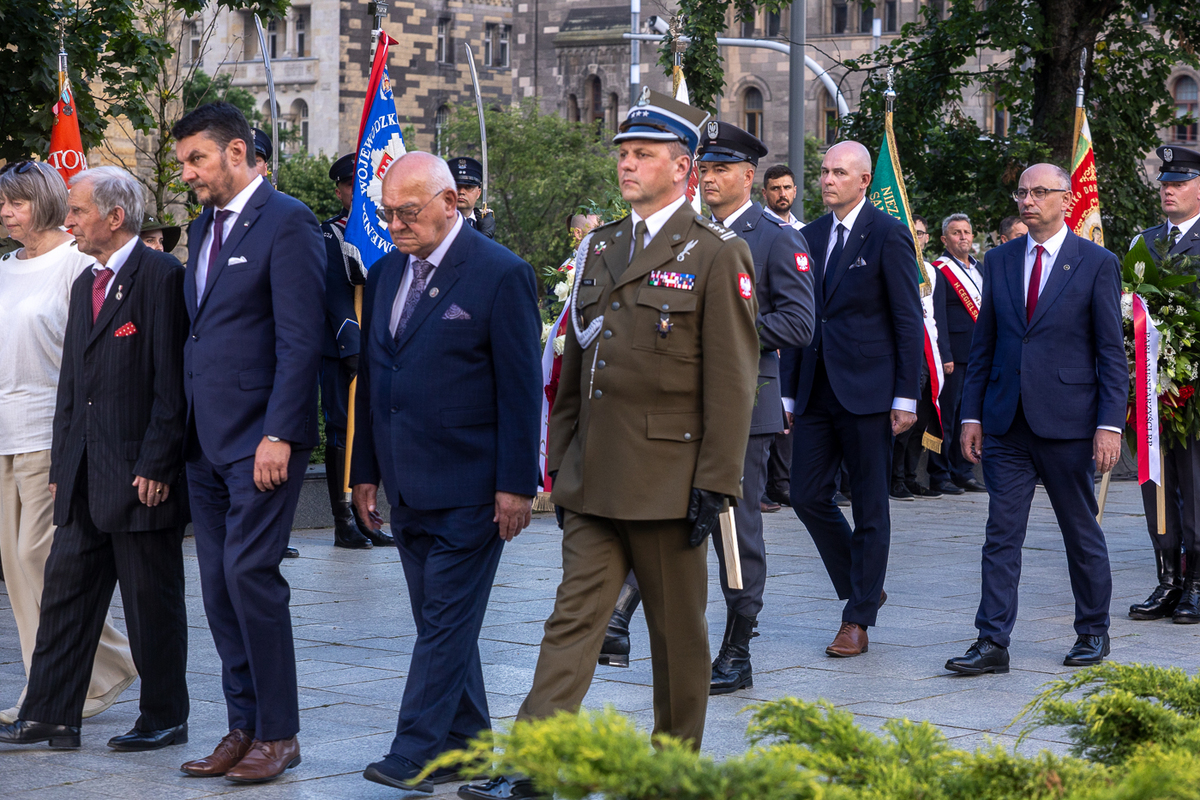
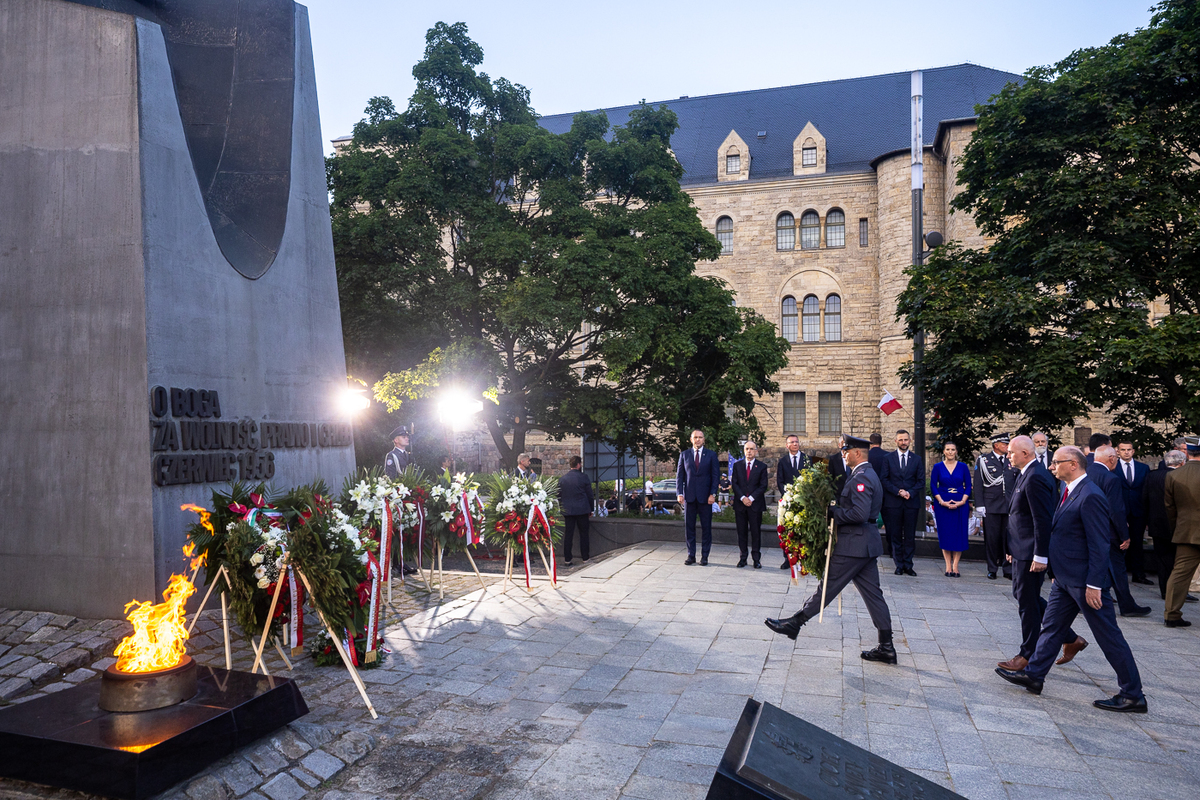
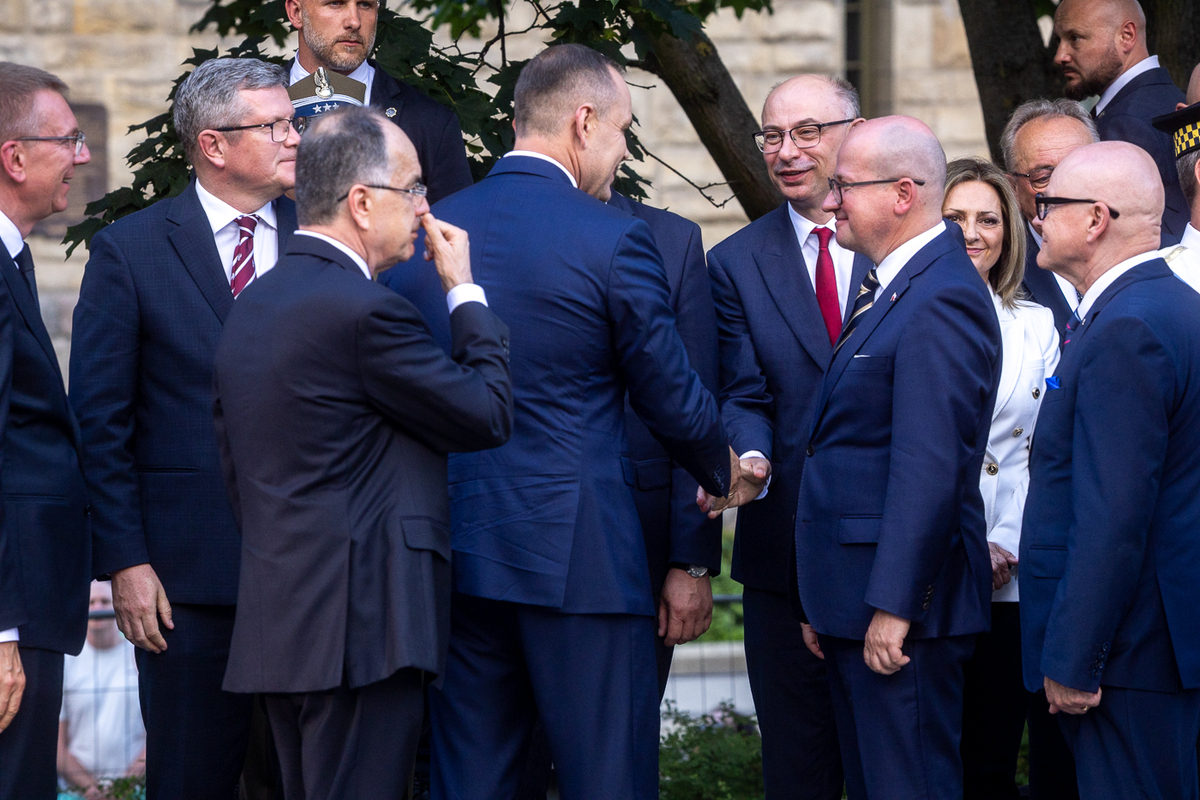
The main commemorative ceremony marking the 70th anniversary of the Poznań June 1956 protests - the first mass workers' protest against communist rule in post-war Poland - was held in the Assembly Hall of the Adam Mickiewicz University in Poznań. The event was attended by the President of the Republic of Poland, Karol Nawrocki, and the Deputy President of the Institute of National Remembrance, Dr Mateusz Szpytma.
"The communists once divided Europe with the Iron Curtain. Today, it is our duty to build a great wall of responsibility - a wall of democracy, a wall of infrastructure protecting our part of the world, and a wall safeguarding European civilisation", President Karol Nawrocki said during the ceremony.
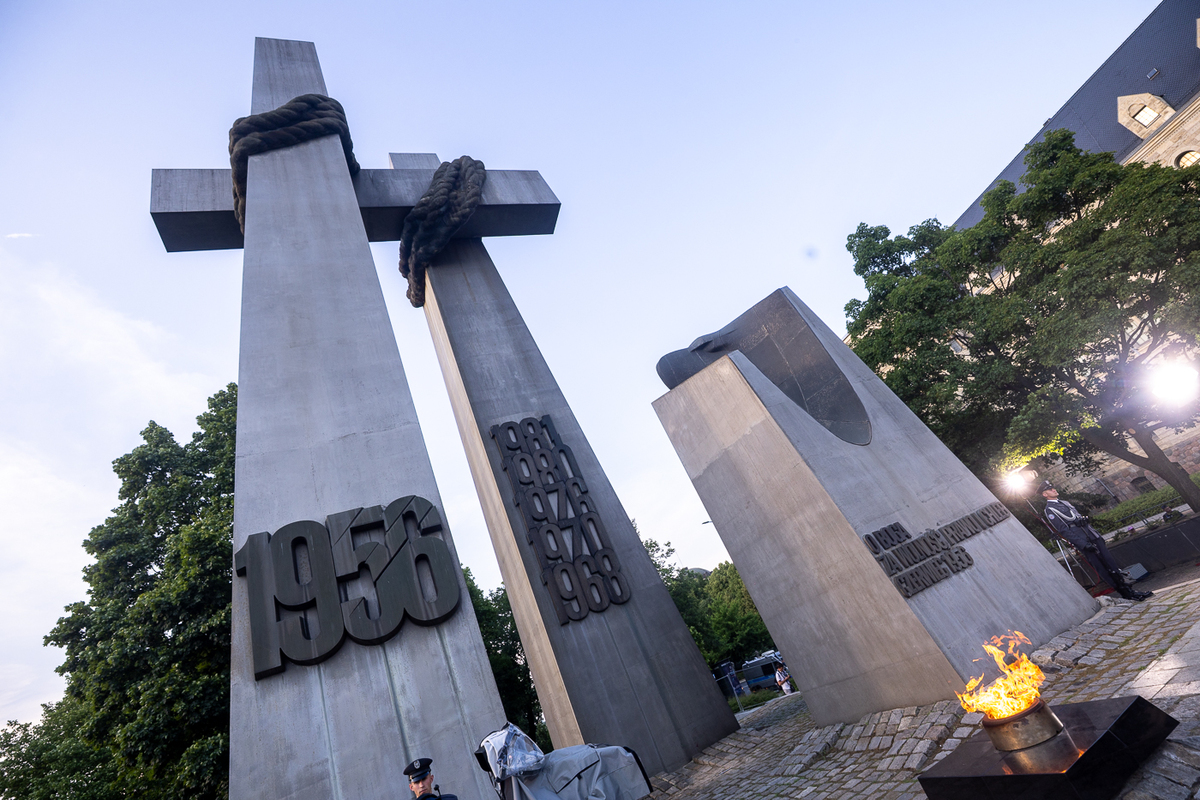
The participants laid wreaths and lit candles at the Poznań June 1956 Memorial, also known as the Poznań Crosses. The monument was unveiled during the grand commemorations of the 25th anniversary of the June 1956 events. Those celebrations began at 10:00 a.m. on 28 June 1981, heralded by factory sirens sounding across the city and church bells ringing in every church in Poznań. The scale of the ceremony - directed by Lech Raczak, leader of the renowned Poznań-based theatre ensemble Ósemki - was reflected in the attendance of at least 100,000 people.
Prior to the central commemorations, Deputy President of the IPN, Dr Mateusz Szpytma, took part in a ceremony at the Main Gate of H. Cegielski–Poznań S.A., from where workers set out on 28 June 1956, launching the protests. Accompanied by the Director of the IPN Poznań Branch, Professor Rafał Reczek, he laid wreaths beneath a commemorative plaque bearing the inscription:
28 VI 1956 – 28 VI 1981
On the 25th anniversary of the workers' protest by the employees of the Wagon Factory, in remembrance for the living and as a warning to future generations, the Independent Self-Governing Trade Union Solidarity of the Locomotive and Wagon Works pays tribute to the heroes of June 1956.
Addressing those gathered, Dr Szpytma reflected on the historical significance of the protests:
"At first glance, the protests appeared to have ended in defeat. Yet only four months later, the authorities were forced to make concessions and introduce far-reaching reforms. Although the communist regime remained in power for decades to come, it was no longer the Stalinist system that had prevailed between 1948 and 1956. The Poznań June 1956 protests also became a vital point of reference for those who took to the streets in 1968, 1976, 1980–81, and again in the final years of the 1980s."
Deputy President Szpytma also highlighted the Institute's ongoing efforts to investigate the events of June 1956:
"The investigation conducted by the Institute of National Remembrance has identified 536 criminal acts committed by the communist authorities during the Poznań June 1956 protests. These include more than 50 killings - crimes perpetrated against workers and young residents of Poznań."
The Deputy President of the IPN then attended a Mass in memory of the victims of the Poznań June 1956 protests celebrated at the Dominican Church. Following the service, the participants proceeded to the Assembly Hall of the Adam Mickiewicz University in Poznań, where the central anniversary commemorations took place.
***
Background
In the early 1950s, nearly all aspects of political, social, economic and cultural life were subject to the decisions of a single party—the Polish United Workers’ Party. A planned and state-controlled economy was introduced, with the Six-Year Plan (1950–1955) intended as its flagship project. It was implemented, however, at the expense of the population, as it significantly worsened living conditions. Since 1953, the standard of living had been gradually falling due to wage reductions, higher work quotas, and the withdrawal of bonuses and benefits. Working conditions deteriorated, and shortages of food and everyday consumer goods became increasingly common. This fuelled discontent across all social classes.
What people feared most, however, was the powerful security apparatus, consisting of thousands of officers whose main task was to crush any resistance and ensure complete control over society on behalf of the Polish United Workers’ Party (PZPR). The security services were intended to function as the party’s “eyes and ears” and its “shield and sword”. The death of Joseph Stalin on 5 March 1953 triggered changes throughout the communist bloc in Central and Eastern Europe, ushering in the period known as the “thaw”. As the widespread terror that had characterised the Stalin era subsided, people began to feel less afraid and increasingly started to demand better living conditions and respect for their rights.
This period saw numerous protests by discontented workers in Czechoslovakia and the German Democratic Republic. On 30 May 1953, workers’ unrest broke out at the Škoda works in Plzeň, which was subsequently suppressed by security forces. On 17 June 1953, construction workers in East Berlin began protesting against increased work quotas. A wave of strikes and demonstrations swept across 272 towns and districts of the GDR, with demands including free elections. The protests were violently suppressed by Soviet tanks. All these upheavals were driven by workers’ dissatisfaction with living standards, and the ruling communist parties were widely seen as responsible.
The situation in Poznań and the Wielkopolska region was among the most difficult in Poland. Farmers owning medium and large farms found themselves on the verge of bankruptcy as a result of state policy aimed at agricultural collectivisation. This led to reduced agricultural production and food shortages in Poznań. Moreover, the authorities closed down or scaled back numerous craft workshops, small industrial enterprises and trading businesses which had previously played an important role in more than one hundred towns across Wielkopolska, providing services primarily to agriculture. Newly established craft and supply cooperatives failed to meet public demand, resulting in increasingly difficult living conditions.
In addition, expenditure on healthcare, education, municipal services and housing in Poznań and the region was reduced, officially justified by the need to support less economically developed areas. Particularly severe for the inhabitants of Wielkopolska were persistent food shortages, especially of meat. Between August 1955 and May 1956, there was a continuous shortage of butter on the market, and coal shortages also caused significant hardship.
Since July 1953, the ZISPO plant had experienced a gradual increase in work quotas, incorrect payroll tax calculations, poor organisation of work, and ineffective factory management. Workers’ discontent continued to grow, expressed through petitions to the authorities, renewed negotiations, and the sending of workers’ delegations to Warsaw (including meetings with the Management Board of the Metal Workers’ Union and the Ministry of Machine Industry). ZISPO employees submitted 4,704 proposals to improve work organisation. At numerous meetings, mass gatherings and rallies, workers presented their grievances to factory management and party officials.
The situation in other Poznań-based enterprises was similar. The breakdown of talks between a delegation of Poznań workers and state authorities in Warsaw on 26 June 1956 was one of the immediate triggers for the decision to take to the streets. Another factor was the 25th Poznań International Fair taking place in the city at the time.
The protests
In the early morning of 28 June 1956, the procession of ZISPO workers was joined by employees of the Rolling Stock Repair Works, the Municipal Transport Company, the Paris Commune Poznań Textile Works, the Marcin Kasprzak Printing House, the Poznań Harvesting Equipment Factory, the “Wiepofama” Wielkopolska Mechanical Devices Factory and other enterprises. Thousands of protesters made their way to the square in front of the Imperial Castle, surrounded by buildings housing the city and party authorities.
“Those who saw this procession will probably remember it until the end of their lives,” attorney Michał Grzegorzewicz later said during one of the Poznań trials. “As they marched in orderly ranks, they displayed discipline, pride and dignity. But let us not forget that this was not a crowd of passers-by, onlookers or sympathisers […]. It was a seething, surging crowd, filled with anger. As it grew and the sound of their footsteps intensified, so too did the emotions. Such a mood is like dynamite. Any spark can become dangerous.”
The demonstration gradually took on a national, anti-communist and anti-Soviet character. The following slogans were shouted: “We want bread!”, “We are hungry!”, “Down with the exploitation of workers!”, “We want a free Poland!”, “Freedom!”, “Away with Bolshevism!”, “We demand free elections under UN supervision!”, “Russians, go home!”, “Away with the Russians!”, “Away with the communists!”, “Away with the Red bourgeoisie!”, “We want God!”, and “We demand religious instruction in schools!”. Participants also sang the national anthem, Rota, and religious hymns.
A delegation of protesters met Franciszek Frąckowiak, President of the Municipal National Council (MRN), requesting that senior state officials from Warsaw—either Józef Cyrankiewicz, Chairman of the Council of Ministers, or Edward Ochab, First Secretary of the Central Committee of the Polish United Workers’ Party—come to Poznań. After these talks, the delegation proceeded to the headquarters of the Provincial Committee of the PZPR (KW PZPR). During a conversation with Wincenty Kraśko, Secretary for Propaganda, the request for Cyrankiewicz’s arrival was repeated.
Encouraged by the delegates, Kraśko addressed the crowd. Some protesters returned to the MRN building, while others entered the KW PZPR headquarters, where they tore down red flags and placed protest banners. Another group forced their way into the Provincial Headquarters of the Civic Militia, urging police officers to join the protest.
Following rumours that members of the workers’ delegation had been arrested, the previously peaceful crowd stormed the prison on Młyńska Street in an attempt to free the detainees. Inside, demonstrators seized the armoury, taking approximately 80 firearms and ammunition. Devices used to jam Western broadcasts were thrown from the roof of the Social Insurance Institution building at the junction of Jarosława Dąbrowskiego Street (now Jana Henryka Dąbrowskiego Street) and Adama Mickiewicza Street. Protesters also entered the City Committee of the PZPR on Mickiewicza Street.
At the same time, another group moved towards Jana Kochanowskiego Street, where the Provincial Office for Public Security (WUdsBP), a symbol of repression and state terror, was located. The first shots were fired from the building’s windows, triggering street fighting across the city. As weapons had already fallen into the hands of demonstrators, exchanges of gunfire between civilians and security forces began in front of the building. The siege and subsequent clashes continued for many hours, lasting into the night. The building remained under fire throughout the night.
During the day, armed groups of protesters also disarmed police stations in Poznań and nearby towns in order to obtain additional weapons and ammunition.
Casualties and repression
On 29 June 1956, the majority of factories in Poznań remained closed as workers continued their strike. Strikes were also under way in plants in Luboń, Swarzędz and Kostrzyn. In the afternoon, a group of demonstrators attempted to approach the building of the Provincial Office for Public Security (WUdsBP), but dispersed after spotting tanks.
The authorities decided to deploy the army to suppress the workers’ protests. Two armoured divisions and two infantry divisions, totalling more than 10,000 troops, were sent to the city. General Stanisław Popławski, Deputy Minister of National Defence, was placed in command of the military operation to pacify Poznań, which continued over the following two days. Together with Colonel Mieczysław Puteczny, Deputy Chief of the Internal Security Corps, and Colonel Teodor Duda, Deputy Commander-in-Chief of the Civic Militia, he arrived in Poznań by military aircraft at around 2:00 p.m. on 28 June. A total of 360 tanks were deployed during the operation.
On the evening of 29 June, Józef Cyrankiewicz, Chairman of the Council of Ministers, delivered a radio address to the inhabitants of Poznań in which he stated that: “Any provocateur or lunatic who raises his hand against the people’s government may be sure that this hand will be chopped off by the people’s government (…)”.
The number of casualties of the Poznań June 1956 protests remains disputed. In 1981, the figure was estimated at 74. More recent research places the death toll at 57, while the investigation unit of the Institute of National Remembrance gives the figure of 58. Some publications mention up to 100 casualties, although without providing supporting evidence. The youngest victim was 13-year-old Romek Strzałkowski, who later became a symbol of the events. Approximately 650 people were injured during the clashes.
Repression against participants began immediately. The first arrests were made during the suppression of the protests. On the night of 28 June, officers of the Security Office and Civic Militia carried out large-scale detentions of the most active participants, which continued for many weeks. According to Security Office reports, a total of 746 people had been detained by 8 August 1956.
Investigations were conducted under coercion, including physical abuse. In accordance with official propaganda, the authorities sought to distinguish between ordinary workers participating in the strike and so-called “trouble-makers” and “provocateurs” responsible for criminal offences. In a press interview on 17 July 1956, Marian Rybicki, Prosecutor General of the Polish People’s Republic, referred to the concept of “two currents”, guiding both the investigation and the forthcoming trials.
Indictments were prepared against 132 participants and submitted to the courts in Poznań. Ultimately, only three trials were held: the “trial of three” (concerning the killing of a Security Office officer), the “trial of nine”, and the “trial of ten”. These trials attracted significant international attention, with coverage by foreign correspondents and the presence of diplomatic representatives, including from the United States and France. Defence attorney Stanisław Hejmowski became widely known for his conduct during the proceedings and was subsequently placed under surveillance by the security services.
Struggle for remembrance and legacy
In 1957, Władysław Gomułka, First Secretary of the Central Committee of the Polish United Workers’ Party, called for a “veil of silence” to be drawn over the Poznań June protests ahead of their first anniversary. As a result, official commemorations were modest and subdued. In June 1957, the Church in Poznań, together with Archbishop Antoni Baraniak, restored the memory of the victims of “Black Thursday” during solemn religious services. Families of the deceased received financial assistance. In October 1957, a Christian Charity Department was established at the Poznań Curia to support, among others, those requiring financial aid due to the “Poznań events”. Through the Curia, assistance was also provided by the editors of the Paris-based Narodowiec, a magazine of the Polish émigré community.