
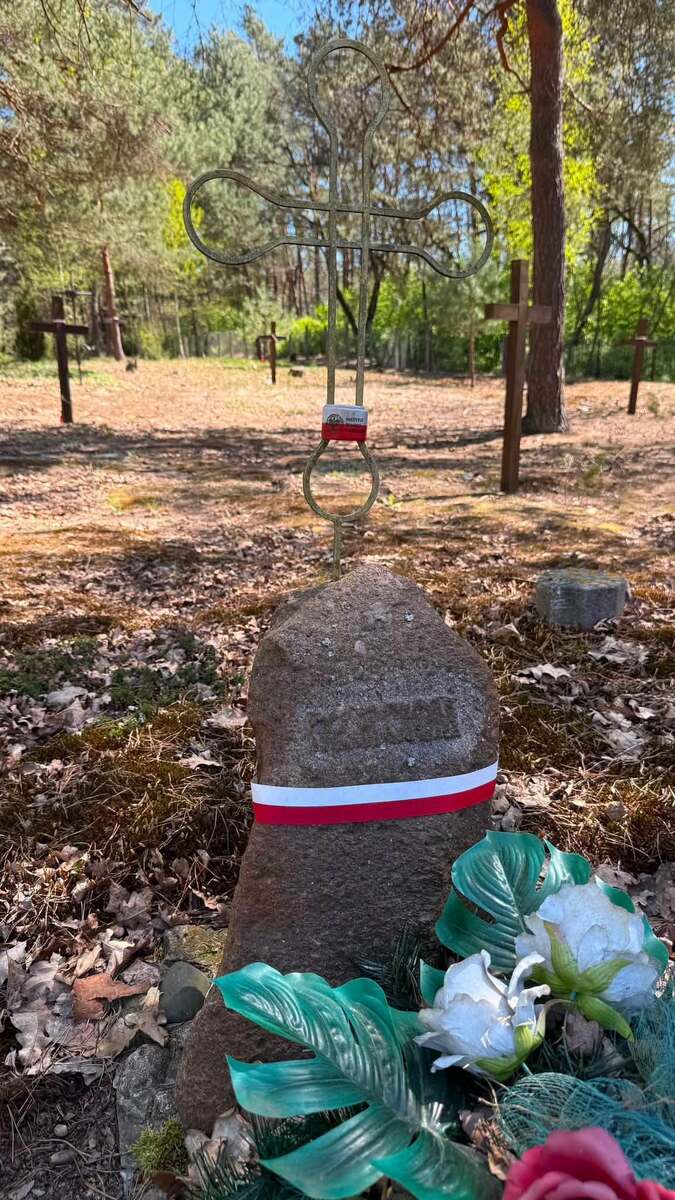
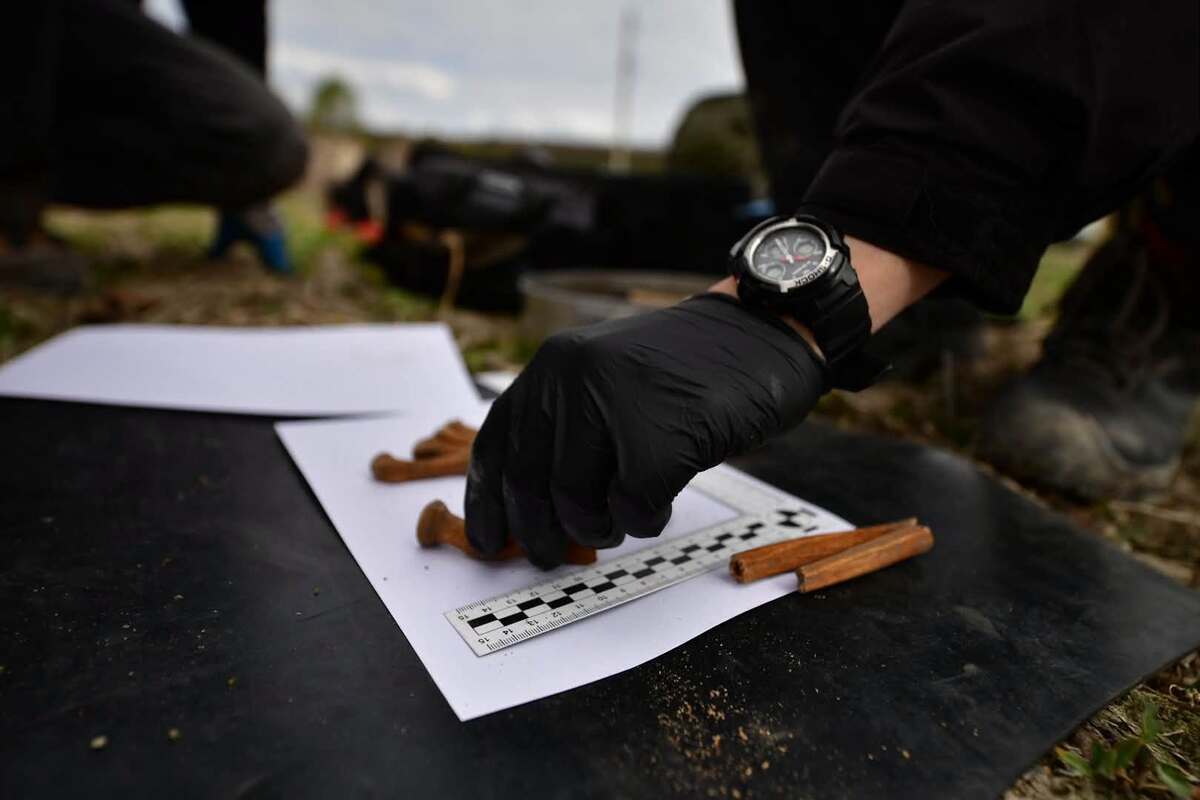
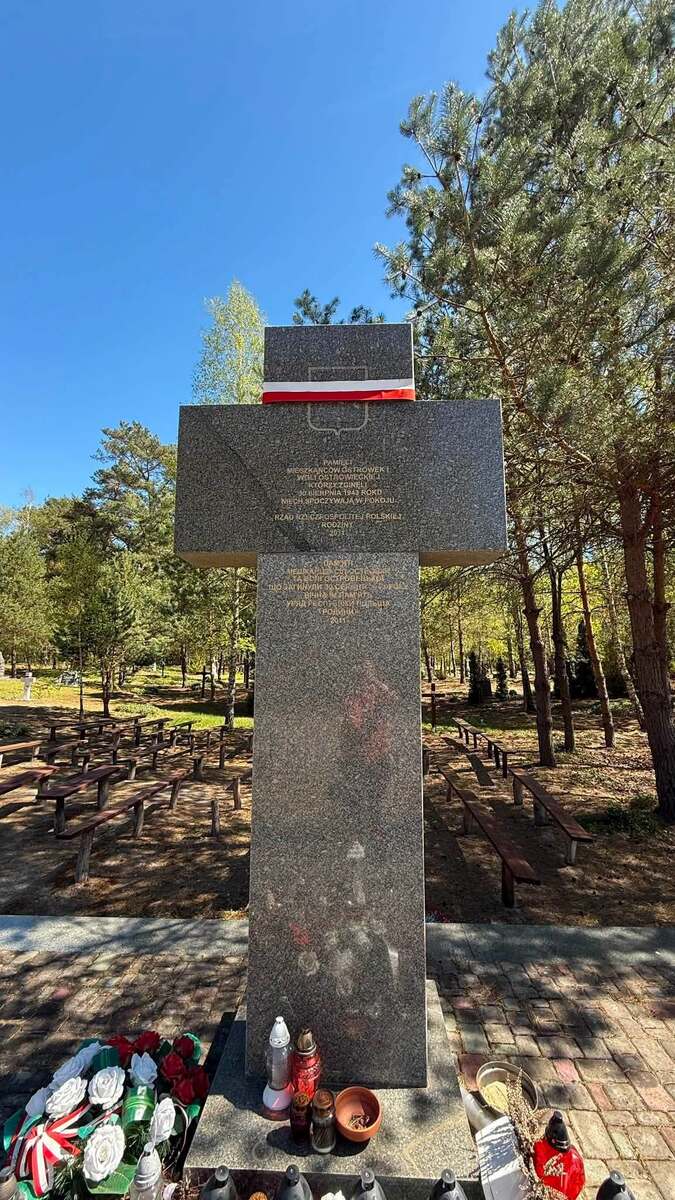
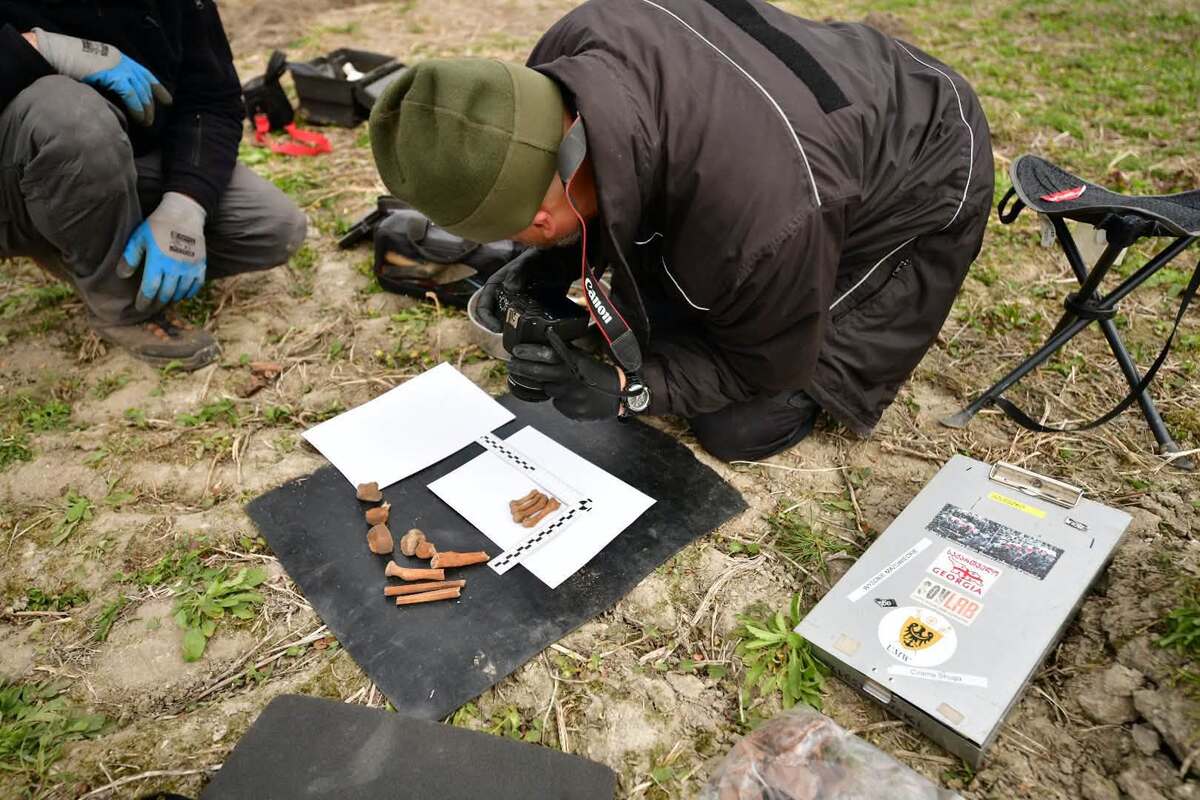
On 13 July 2026, the Institute of National Remembrance commenced exhumation works in Ostrówki and Wola Ostrowiecka, two of the most significant sites connected with the Volhynia Massacre. The works are being carried out by the IPN Office of Search and Identification in cooperation with the Ukrainian Volhynian Antiquities (Wołyńskie Starożytności), the Polish Ministry of Culture and National Heritage, and Dr Łukasz Szleszkowski of the Wrocław Medical University.
The burial sites of Poles murdered by Ukrainian nationalists were identified during search operations conducted in April 2026, making the commencement of today's exhumations another significant step towards restoring the victims' identities and dignity.
Between 1943 and 1945, thousands of Polish civilians living in Volhynia and Eastern Galicia were murdered during a campaign of ethnic cleansing carried out by the Organisation of Ukrainian Nationalists (OUN) and the Ukrainian Insurgent Army (UPA), accompanied by attacks on hundreds of towns and villages. Entire communities disappeared, and many victims were buried in hastily dug, unmarked mass graves.
For decades, countless burial sites remained undiscovered. Families were denied the opportunity to recover their loved ones, identify them, or provide them with a dignified burial.
The IPN, through its Office of Search and Identification, has made locating these victims one of its principal humanitarian and historical missions. The work combines archival research, witness testimonies, archaeological excavations, forensic anthropology, and DNA identification. Every excavation seeks not only to establish historical facts but also to restore the names and dignity of those who were murdered.
Since the establishment of the Office of Search and Identification, the Institute has prepared and submitted applications to conduct search and exhumation works at numerous locations in present-day Ukraine associated with the Volhynia Massacre and other wartime crimes. These include, among others, Ostrówki, Wola Ostrowiecka, Huta Pieniacka, Stanisławówka, Orzeszyna, Małe Hołoby, Kukle, Polska Góra, Tynne, as well as military burial sites in Lviv (Hołosko and Zboiska).
Following the removal of an illegal UPA monument in Hruszowice, Poland, in 2017, the Ukrainian authorities suspended permits for Polish search and exhumation works. For several years thereafter, numerous formal applications submitted by the IPN remained unanswered, despite the Institute's continued readiness to resume fieldwork. During this period, the Institute concentrated its efforts on archival research, documenting crime scenes, interviewing witnesses, and expanding its database of victims while awaiting permission to continue excavations.
Recent years have brought important progress. Following renewed bilateral cooperation, IPN specialists resumed search and exhumation activities at selected sites in Ukraine. These efforts have included work in Puźniki, where victims were recovered and documented, as well as the resumption of operations at Ostrówki, Wola Ostrowiecka, and Huta Pieniacka, sites of some of the largest massacres of Polish civilians during the Second World War. These investigations continue to uncover previously unknown burial sites and provide new evidence concerning the crimes.
Alongside field investigations, the IPN has been developing the Volhynia Massacre Victims Database, launched in 2019. The project brings together archival documents, court records, photographs, scholarly research, and eyewitness accounts to identify individual victims, document the places where they were murdered and buried, and preserve the memory of whole communities destroyed during these atrocities.
Every discovered grave, every identified victim, and every dignified burial constitutes an act of restoring fundamental human dignity. Regardless of the passage of time, the IPN remains committed to locating the missing, identifying the victims whenever possible, and ensuring that they are finally laid to rest with the respect they were denied for more than eight decades.