
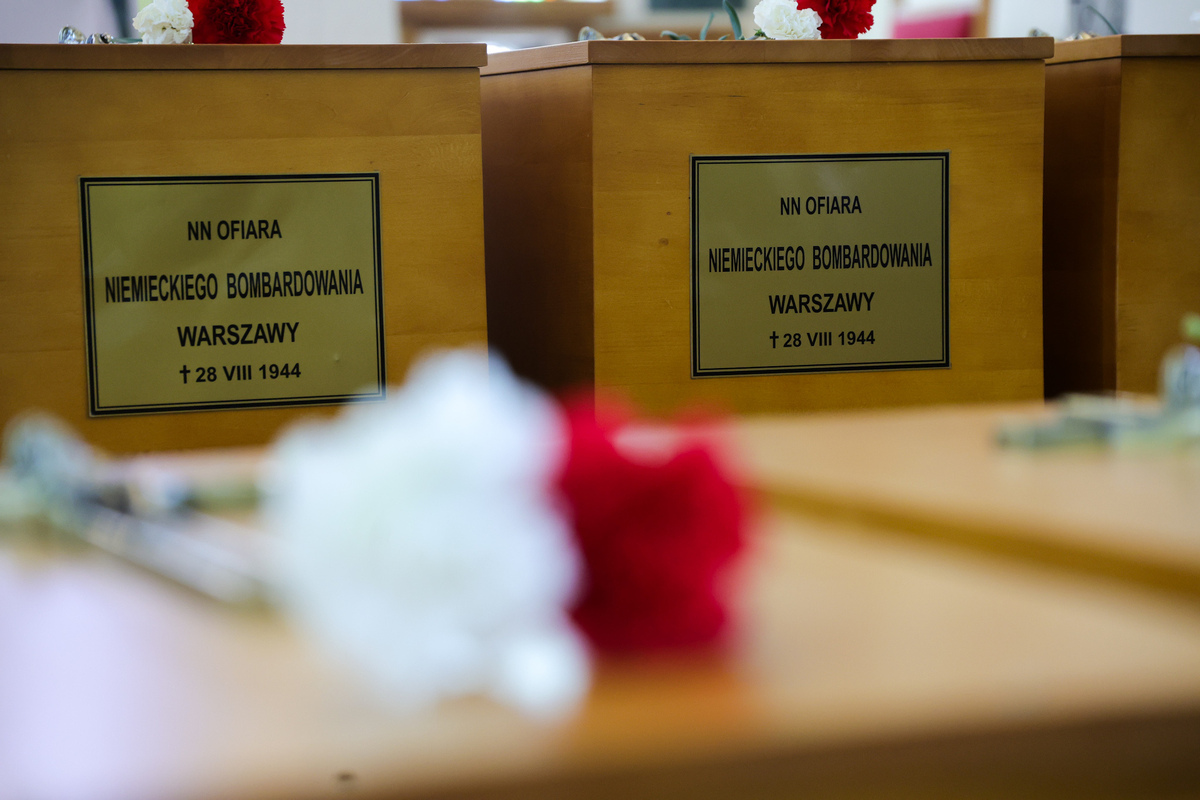
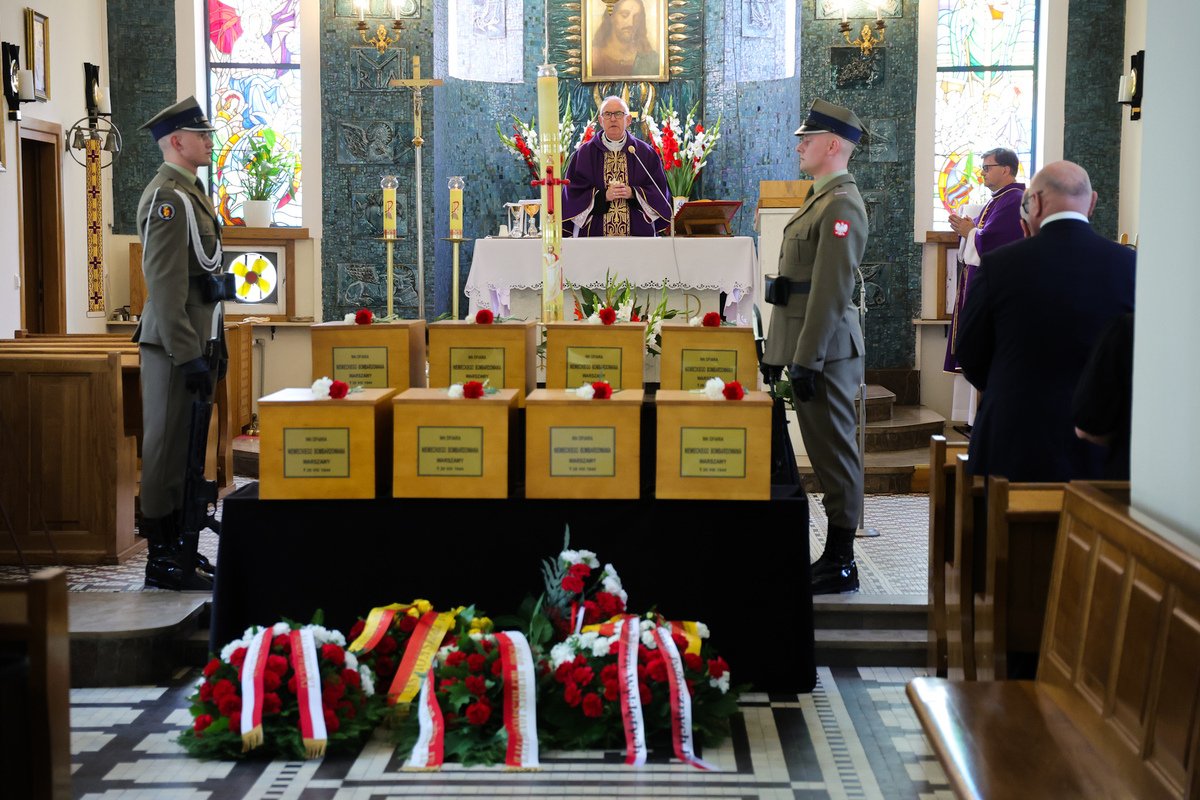
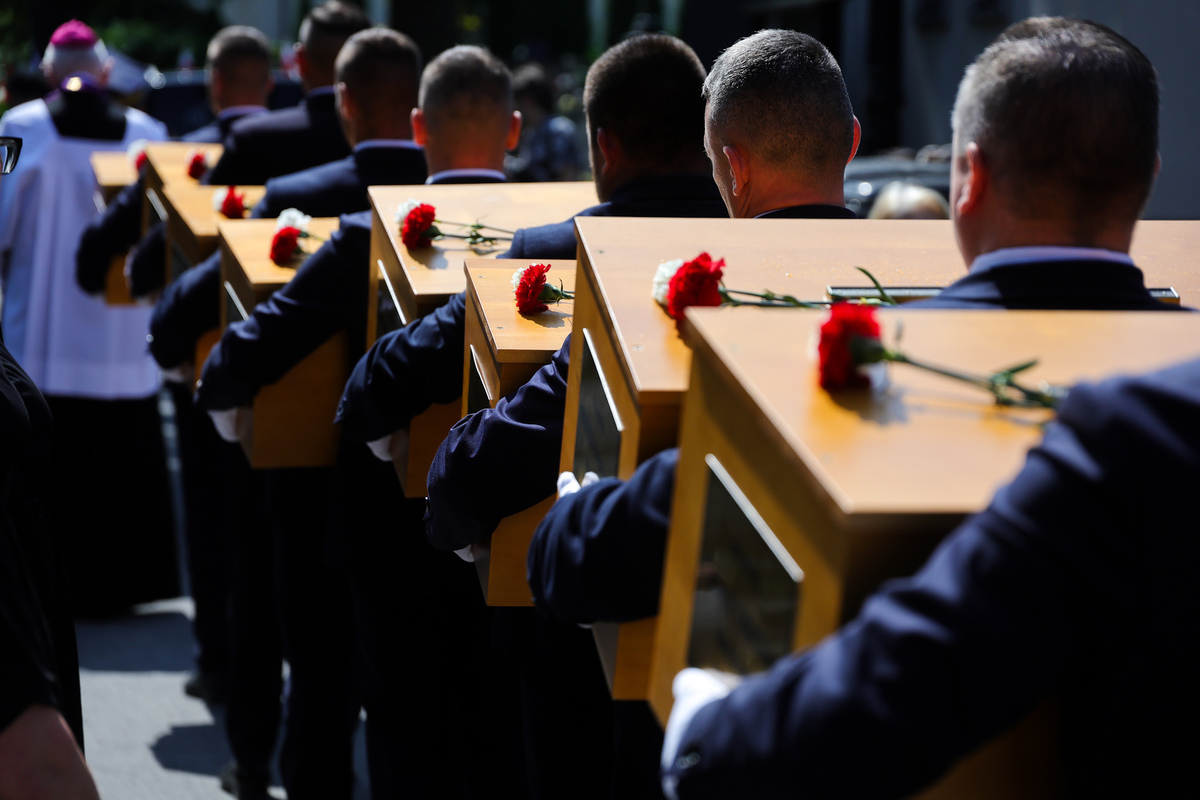
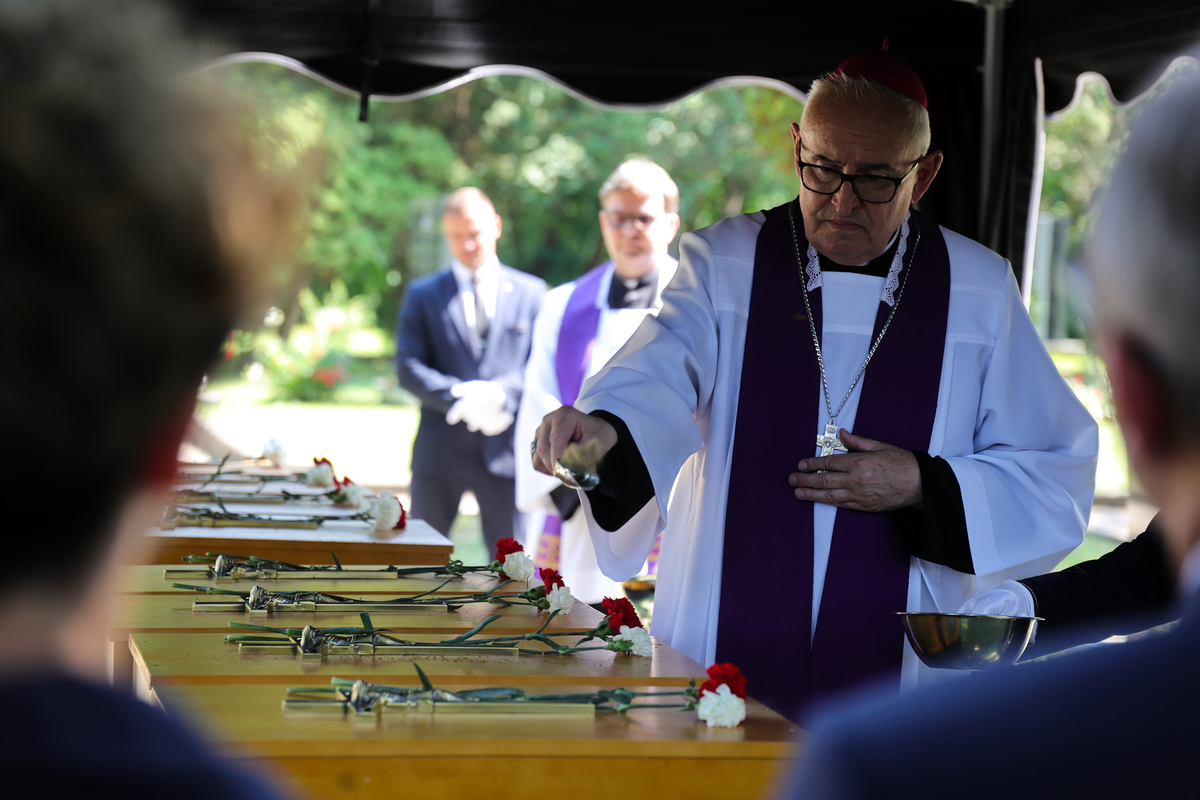
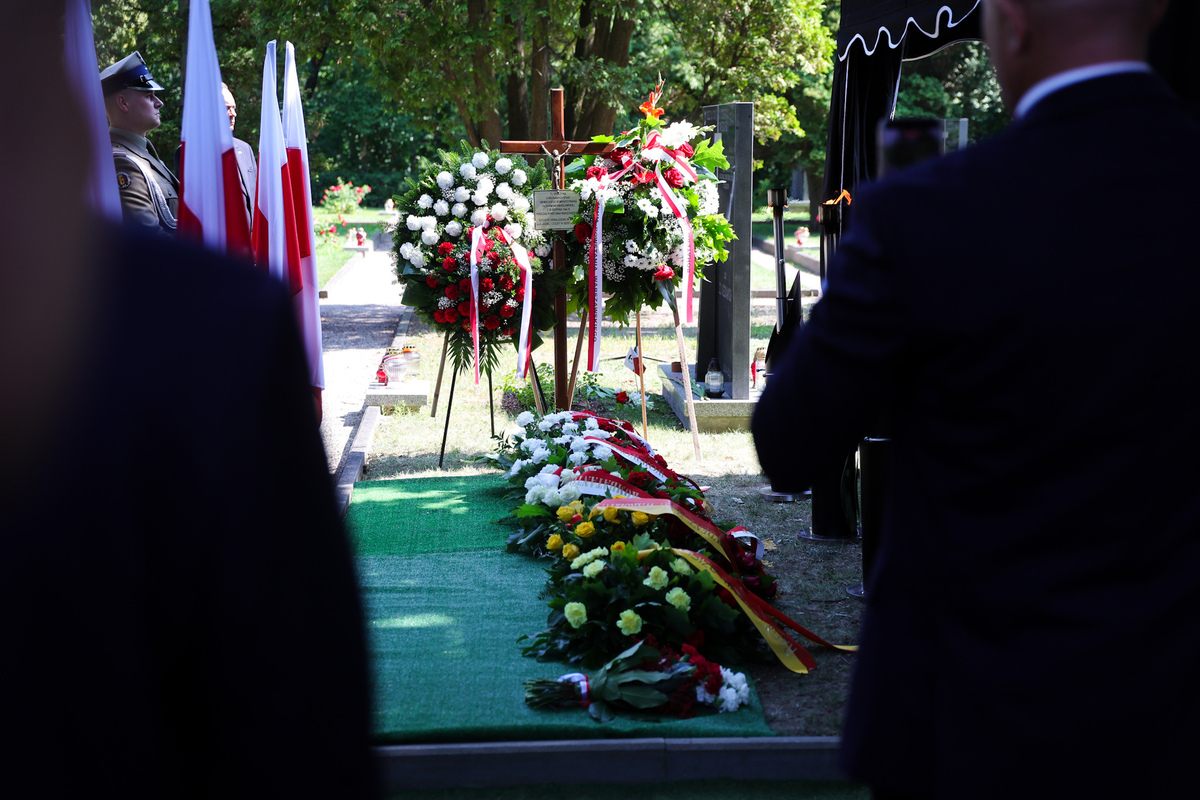
On 3 August 2026, the remains of eight victims of the Warsaw Uprising, discovered in 2024 at the intersection of Złota and Zgoda Streets in Warsaw, were laid to rest. The ceremony was attended by Dr Karol Polejowski, the Deputy President of the Institute of National Remembrance.
Archaeological investigations revealed a small cemetery dating from the Warsaw Uprising, where civilians killed during the bombardment of the Warsaw Philharmonic had been buried. The burial is documented in photographs taken on 28 August 1944 and preserved in the collections of the Warsaw Rising Museum. They depict the bodies being placed into the grave, covered with newspapers, while Bishop Stanisław Adamski prays over the deceased in the presence of gathered mourners. Bishop Adamski had served as Bishop of the Diocese of Katowice since 1930 and, from 1938, as pastor of the Zaolzie region. Deported to the General Government in 1941, he was the only Catholic bishop to minister in Warsaw throughout the Uprising.
The ceremony in memory of the victims of the Warsaw Uprising commenced with a Holy Mass celebrated at the Church of St Gregory the Great in Warsaw.
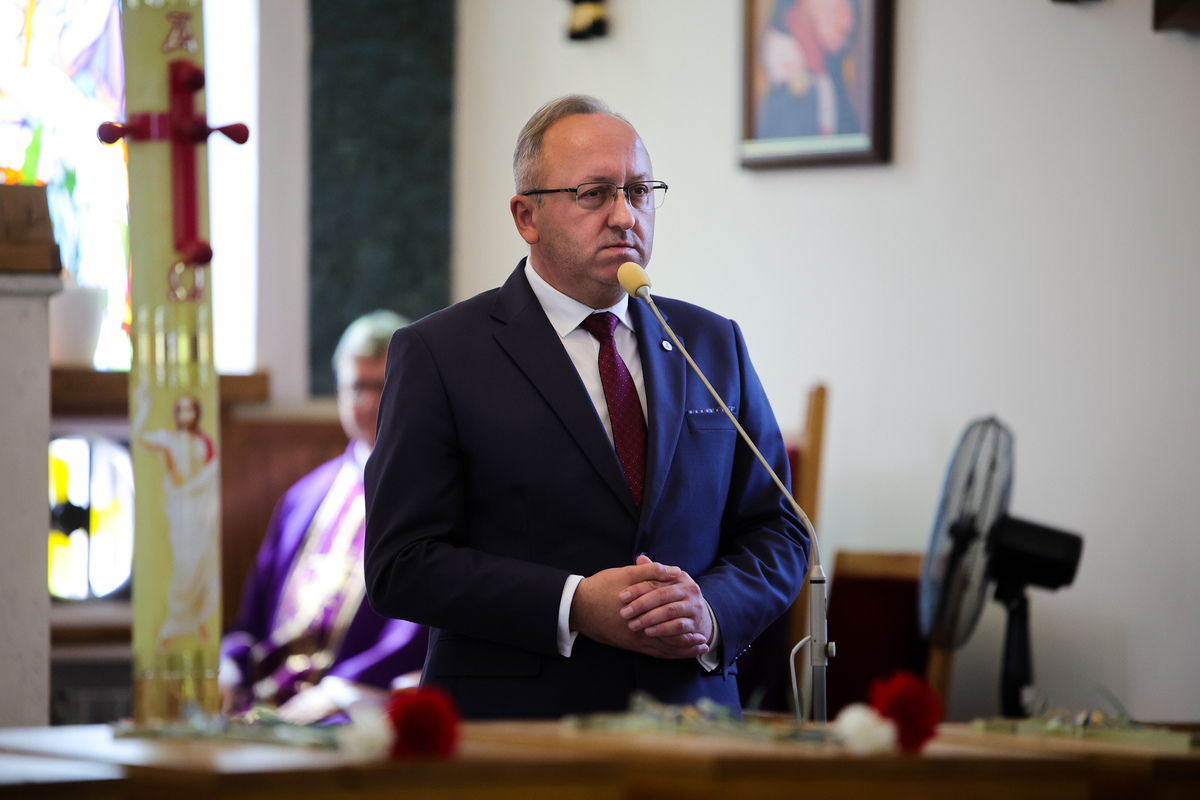
“Today we fulfil a duty that rests upon us. This obligation arises not only from our statutory tasks, but also from a profound conviction that we owe it to those who came before us. It is our duty to find them and lay them to rest with dignity. Today, eight victims of German terror will be escorted to their final resting place,” said Karol Polejowski during the ceremony.
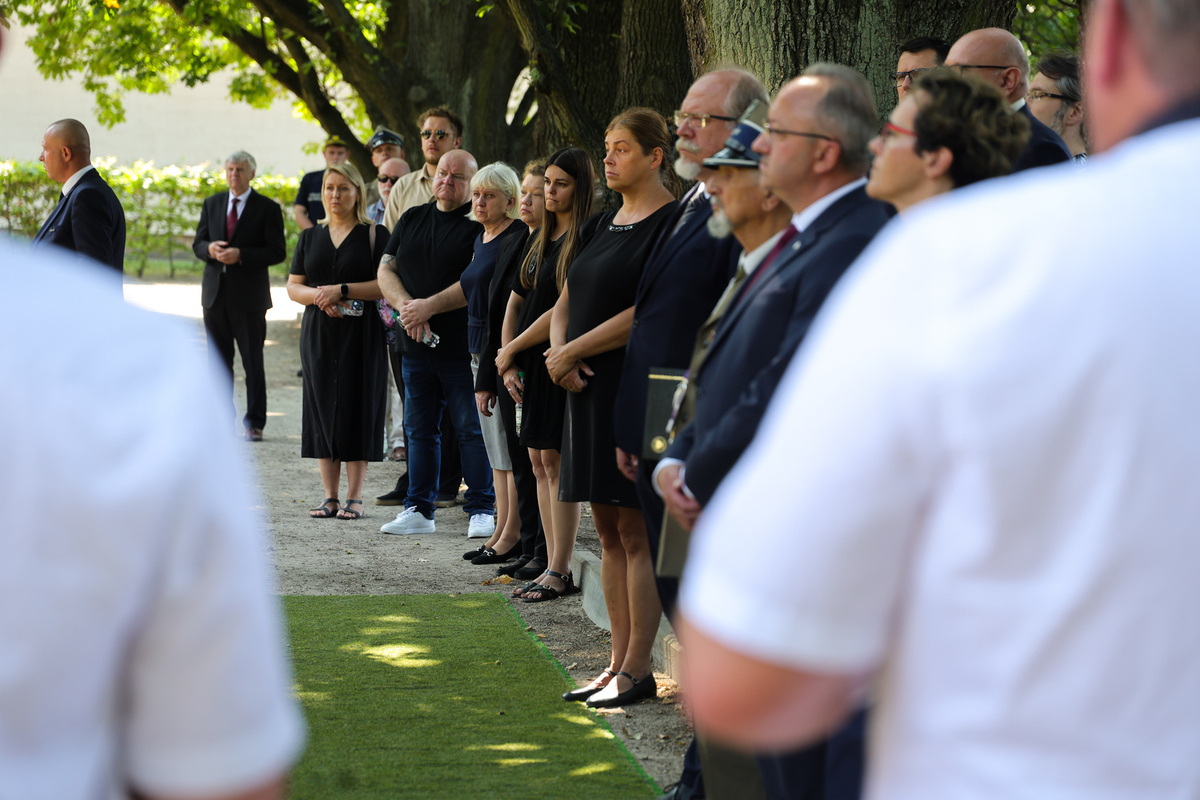
The victims were laid to rest at the Warsaw Insurgents Cemetery (Section 25). Among those attending the final farewell were Adrianna Garnik, Adviser to the President of the Republic of Poland; Adam Siwek, Director of the IPN Office for Commemorating Struggle and Martyrdom; his Deputy, Joanna Sulej-Piskorz; and Dr Rafał Kościański, Director of the IPN Press Office and the Institute's spokesperson.
The reason these burials were overlooked during the post-war exhumations remains unknown. The remains had been arranged with great care, accompanied by glass bottles containing slips of paper bearing the victims’ personal details. Tragically, the paper had deteriorated beyond recovery, and only a single name could be deciphered: Wanda.
The square had also served as a temporary burial site for victims of the Siege of Warsaw in September 1939.