
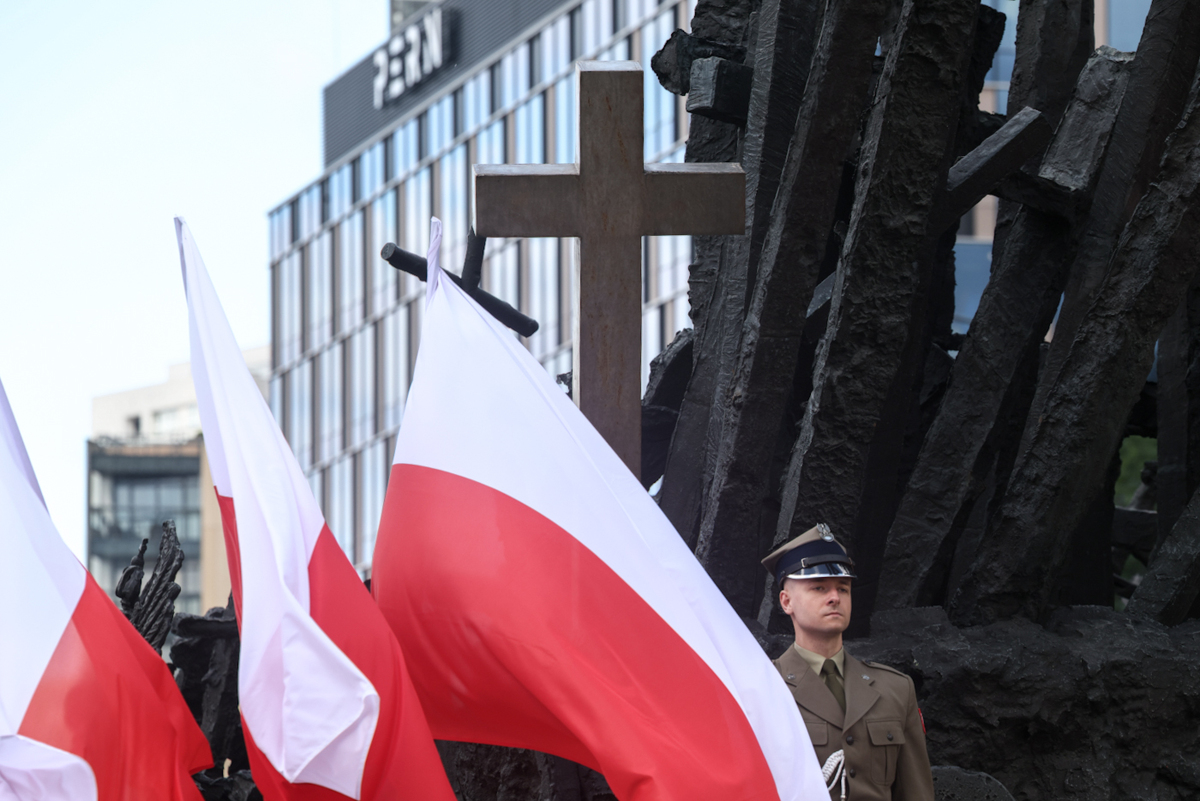
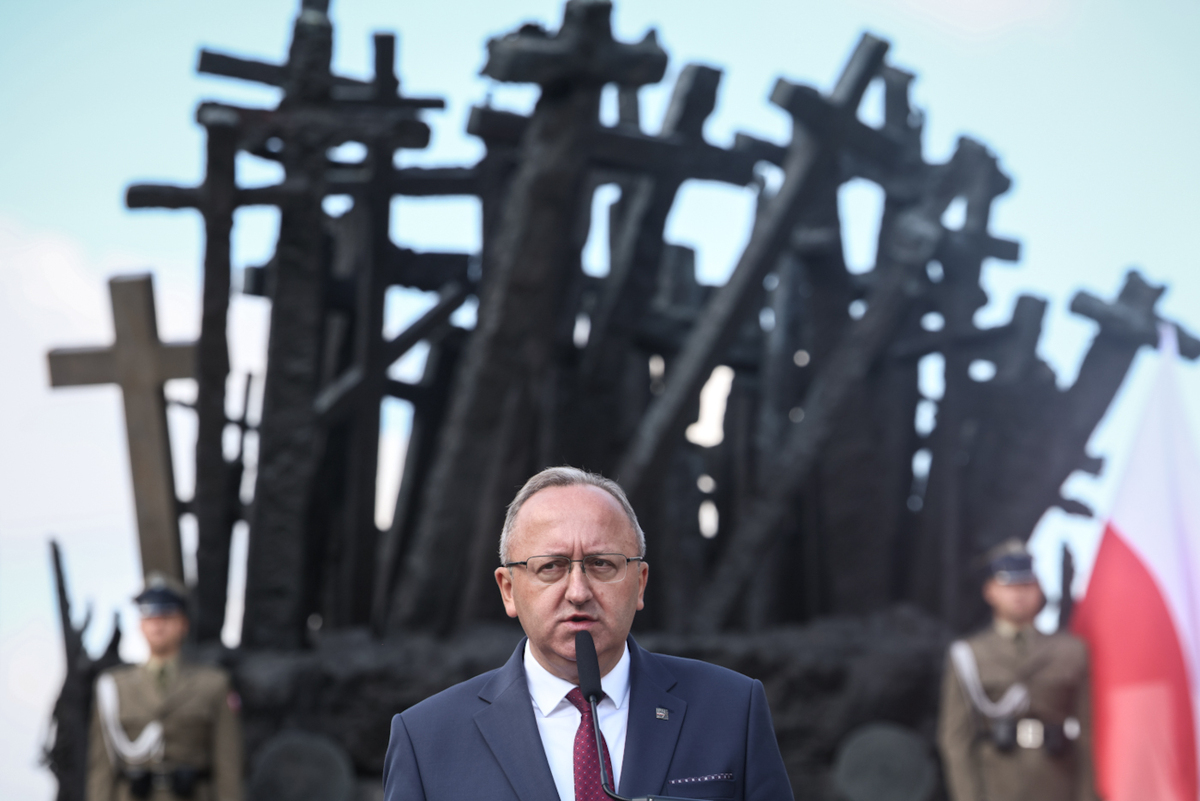
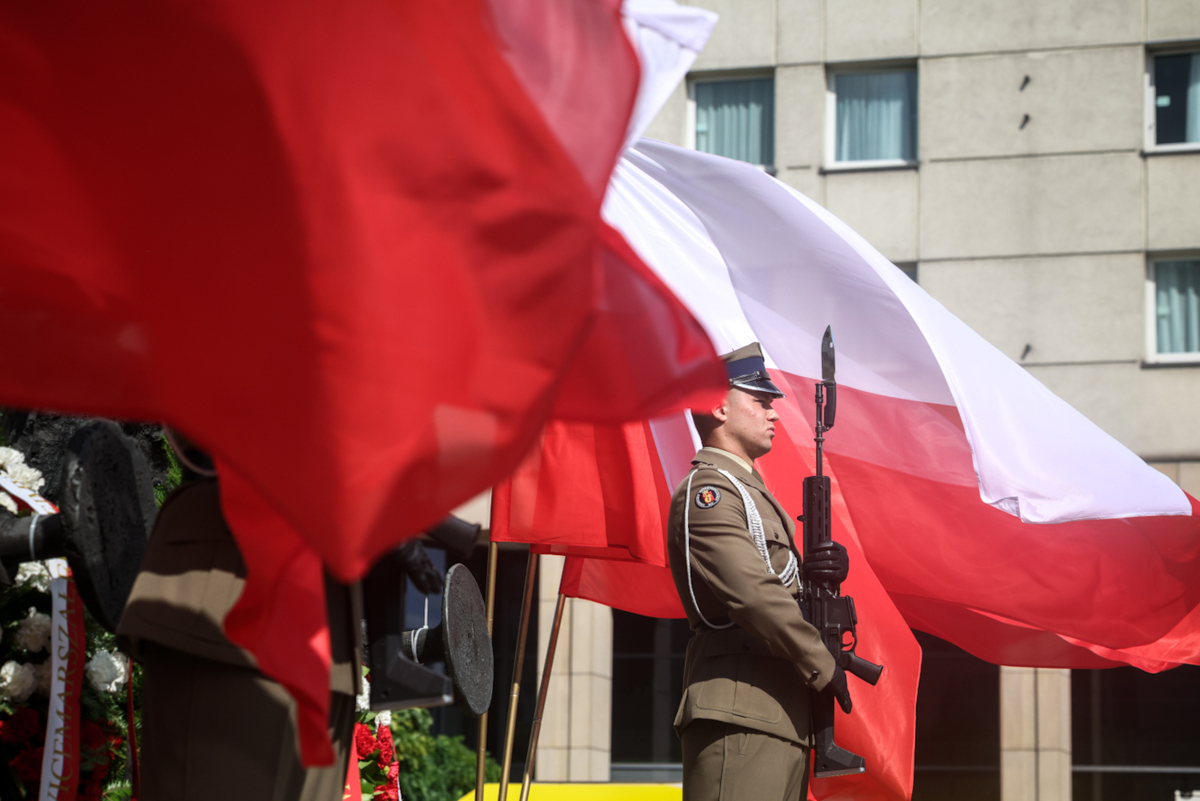
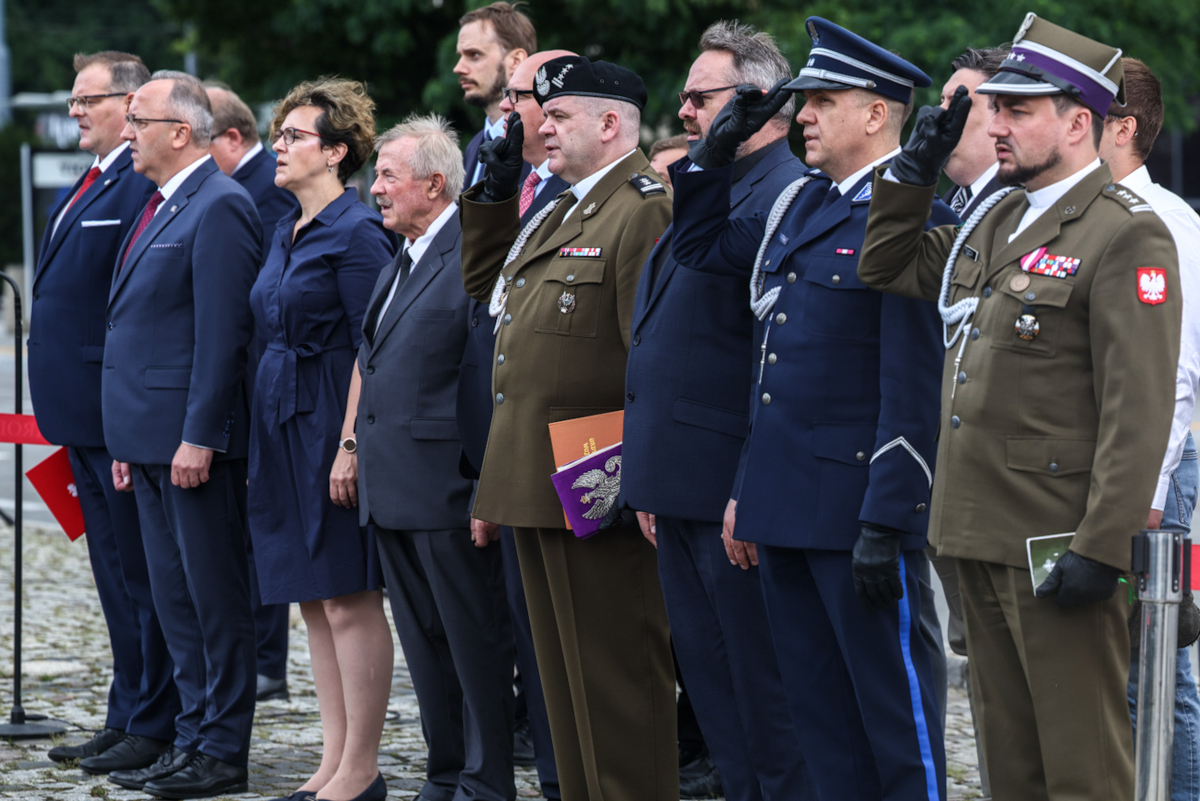
On 11 August 2026, a commemoration was held in Warsaw to honour the victims of the NKVD’s so-called “Polish Operation” during which Poles were persecuted and murdered in the Soviet Union between 1937 and 1938. Dr Karol Polejowski, Deputy President of the Institute of National Remembrance, took part in the ceremony.
Eighty-nine years ago, the Soviet authorities launched a brutal campaign of Stalinist terror against Poles living in the eastern territories of the former Polish Republic. Under the pretext of combating espionage and counterrevolutionary activity, more than 140,000 people were arrested. Between 1937 and 1938, over 100,000 Poles were murdered.
The President of the Republic of Poland, Karol Nawrocki, sent a letter to the participants of the ceremony, which took place in front of the Monument to the Fallen and Murdered in the East.
“Of those sentenced by the so-called NKVD troikas, nearly 140,000 Poles received the death sentence—more than 111,000, or as many as four-fifths. The vast majority of the remainder were imprisoned in labour camps, while their children were taken from them and placed in orphanages,” he wrote.The letter was read out by Jan Józef Kasprzyk, Advisor to the President.
In his address, Dr Karol Polejowski emphasized that it is our duty to remember and honor those who lost their lives simply because they were Poles and who refused to surrender their language, traditions, and faith.
“We are not speaking only about Catholics, but also of Orthodox Christians and Greek Catholics—of all those who paid the ultimate price for remaining faithful to the beliefs and traditions of their ancestors,” he said.“Today, we gather to pay tribute to our compatriots who were persecuted and who lost their lives, freedom, health, and even their names and surnames as part of the so-called anti-Polish operation. Like other nationalities living in the Soviet Union—including Germans, Jews, Ukrainians, and Belarusians—Poles were treated as enemies by Stalin and his regime.“Yet the scale of repression was greatest against Poles. They were murdered simply because they were Poles,” Dr Polejowski said.
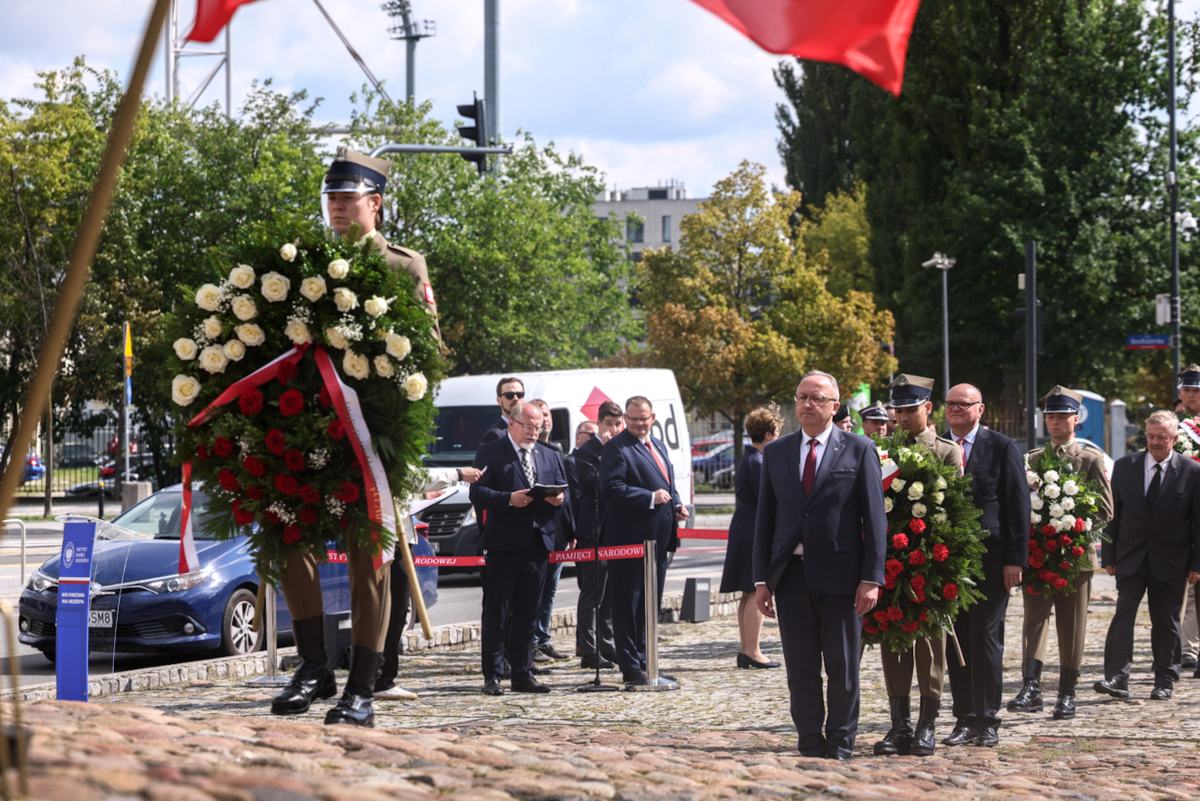
The ceremony was attended, among others, by Adrianna Garnik, Advisor to the President of the Republic of Poland; Adam Siwek, Director of the IPN Office for Commemorating the Struggle and Martyrdom, representatives of state and local authorities, and soldiers.
The commemoration, organized by the IPN Office for Commemorating the Struggle and Martyrdom concluded with a joint prayer and the laying of wreaths at the monument.
***
The “Polish Operation” carried out by the NKVD during the Great Terror in the USRR was indubitably one of the greatest atrocities – with the characteristics of genocide – in the history of 20th-century Europe.
Under order No. 00485 issued 89 years ago today, on 11 August 1937 by the People’s Commissar for Internal Affairs of the USSR Nikolai Yezhov, not fewer than 139,835 people were targeted, including 111,091 who were murdered, in most cases with a shot to the back of the head, due to their membership of the Polish Military Organisation (POW), which allegedly carried out espionage and subversion for the benefit of Poland.
The vast majority of the victims of the “Polish Operation” committed by the NKVD were Poles, but the victims also included Russians, Ukrainians, Belarussians, Jews and members of other nationalities and ethnic groups living in the USSR.
In addition, under Order No. 00486 of 15 August 1937, also issued by Nikolai Yezhov, the wives and children of the convicted “traitors to the Motherland” were also subjected to oppression.
The Soviet system of power was based on the intimidation of its own citizens and forcing them into subjugation. An experiment consisting in establishing Polish autonomous districts in the Soviet Ukraine and Belarus between the mid-1920s and the mid-1930s ended in disaster, and the Poles resisted collectivisation and atheisation the most. What is more, Poles were regarded as an “uncertain element” – the potential “fifth column” before the expected war between the USSR and the Second Polish Republic and the Western countries.
Despite the enormous scale of the atrocities, the “Polish Operation” conducted by the NKVD between 1937–1938 is shrouded by general ignorance. Measures taken by the Centre for Polish-Russian Dialogue and Understanding and the IPN, including the development of a popular history web portal wholly devoted to the topic of the “Polish Operation” aims to change this state of affairs and contribute to restoring these atrocities against the Polish nation to its rightful place in popular consciousness and memory.