
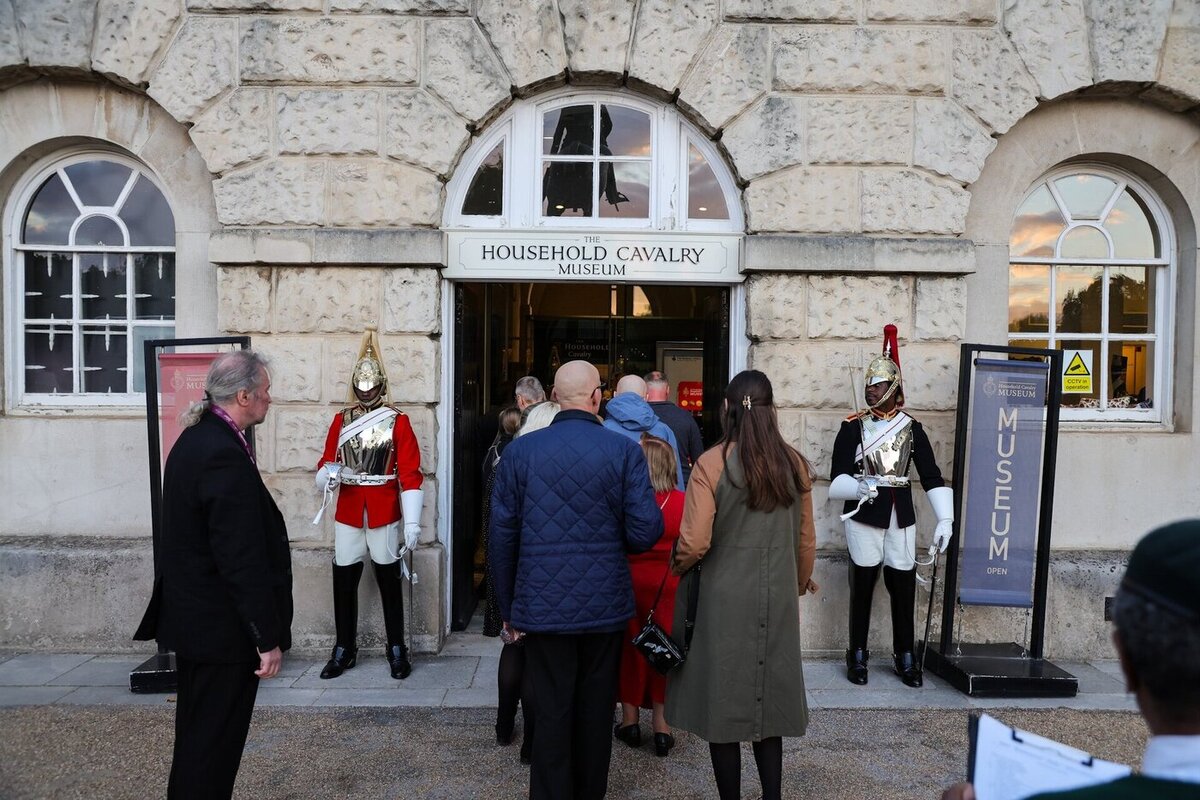
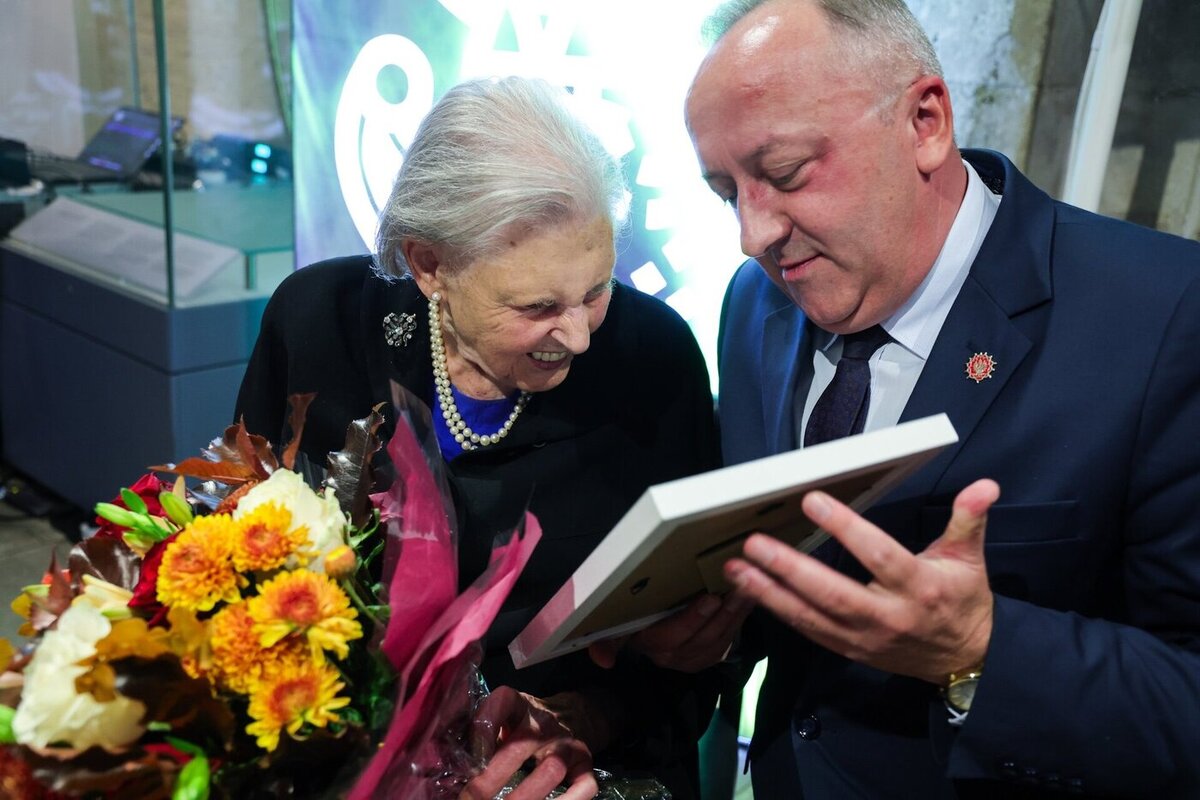
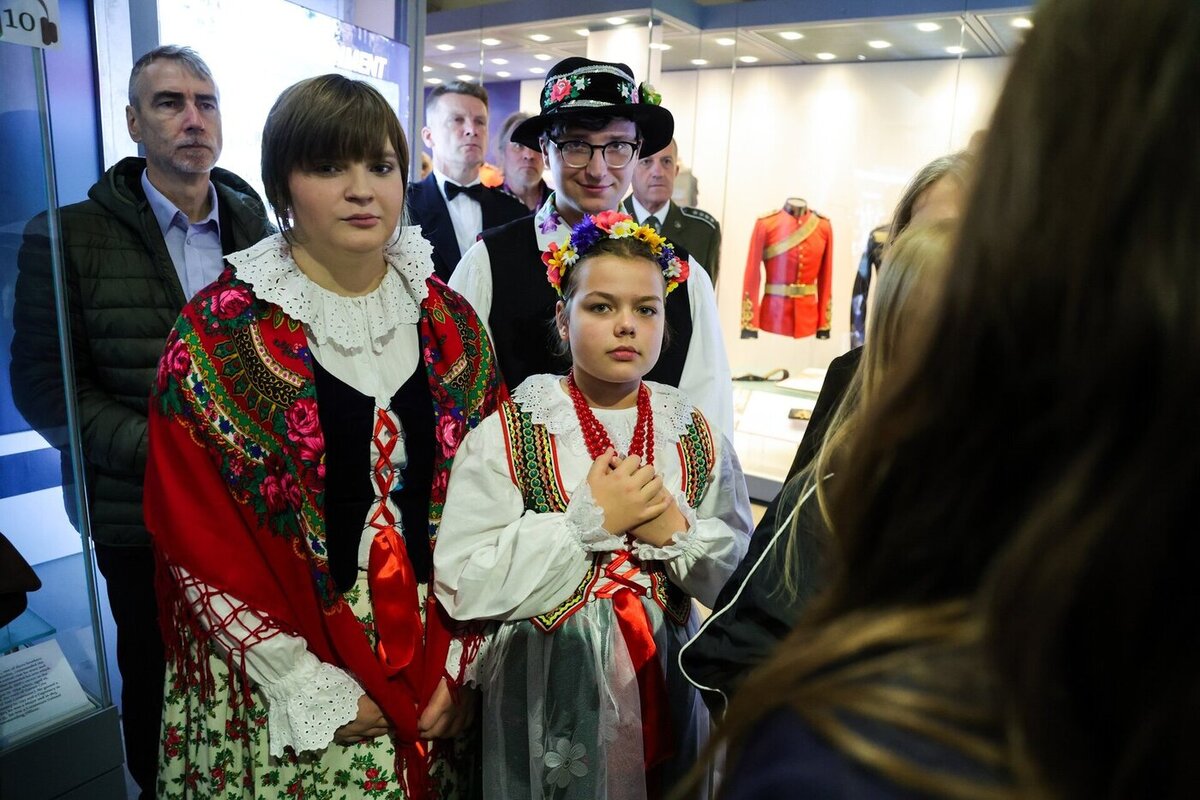
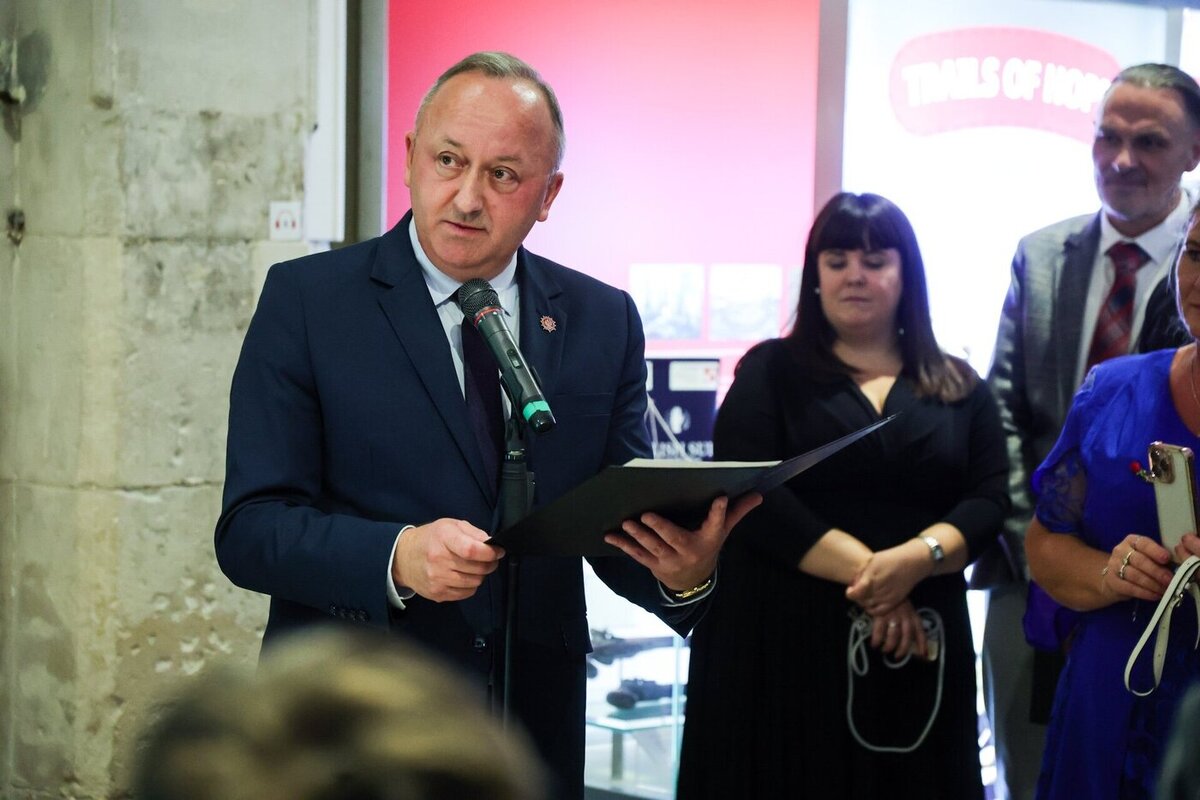
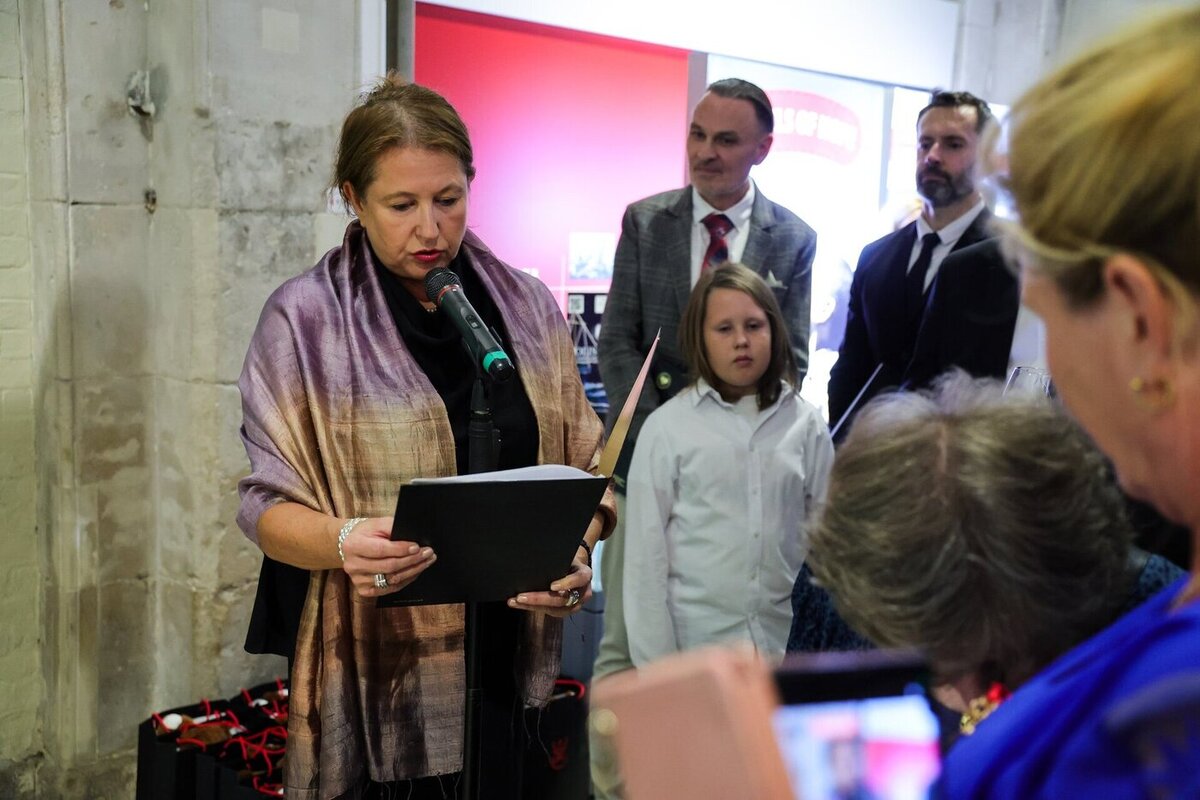
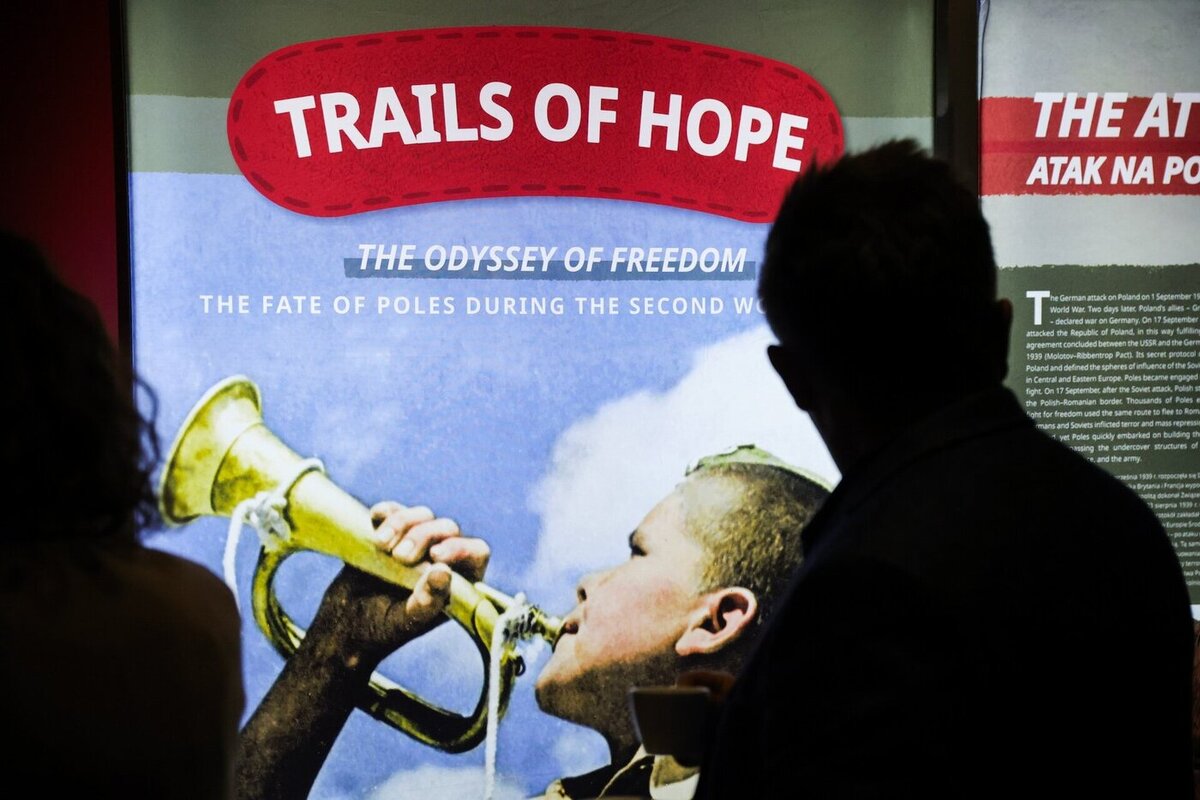
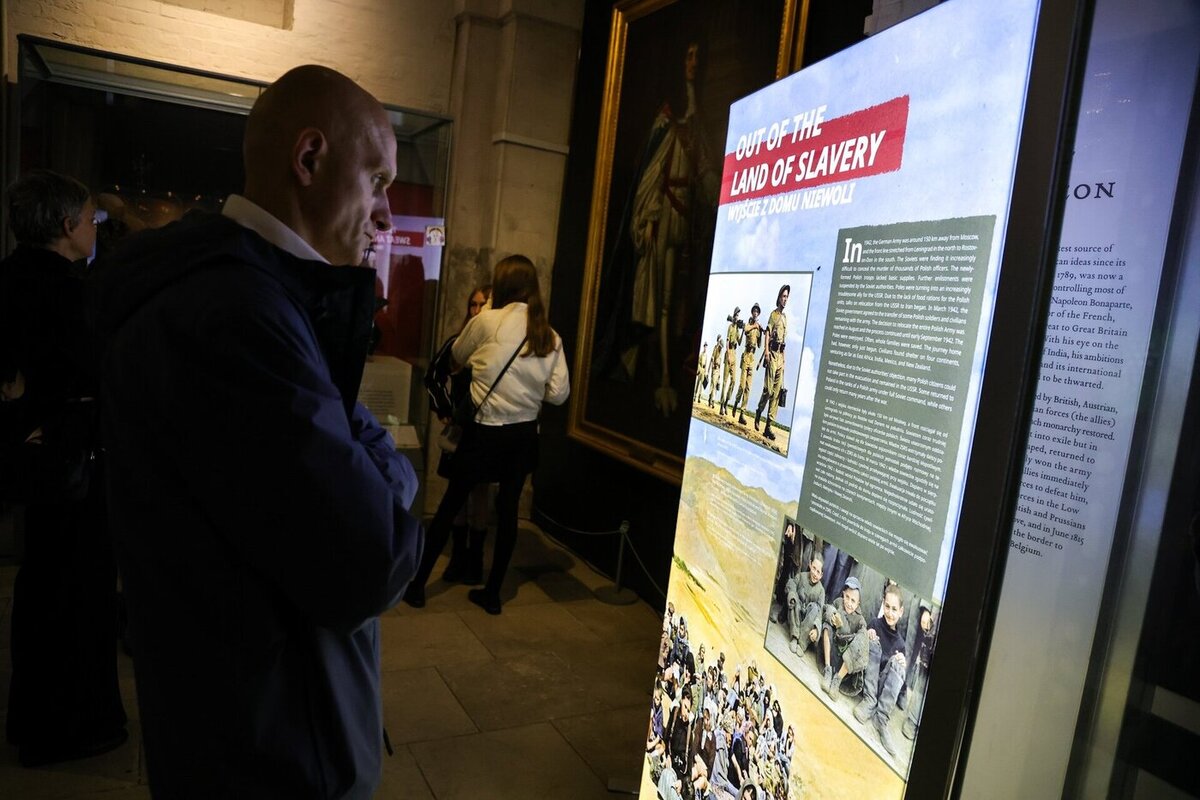
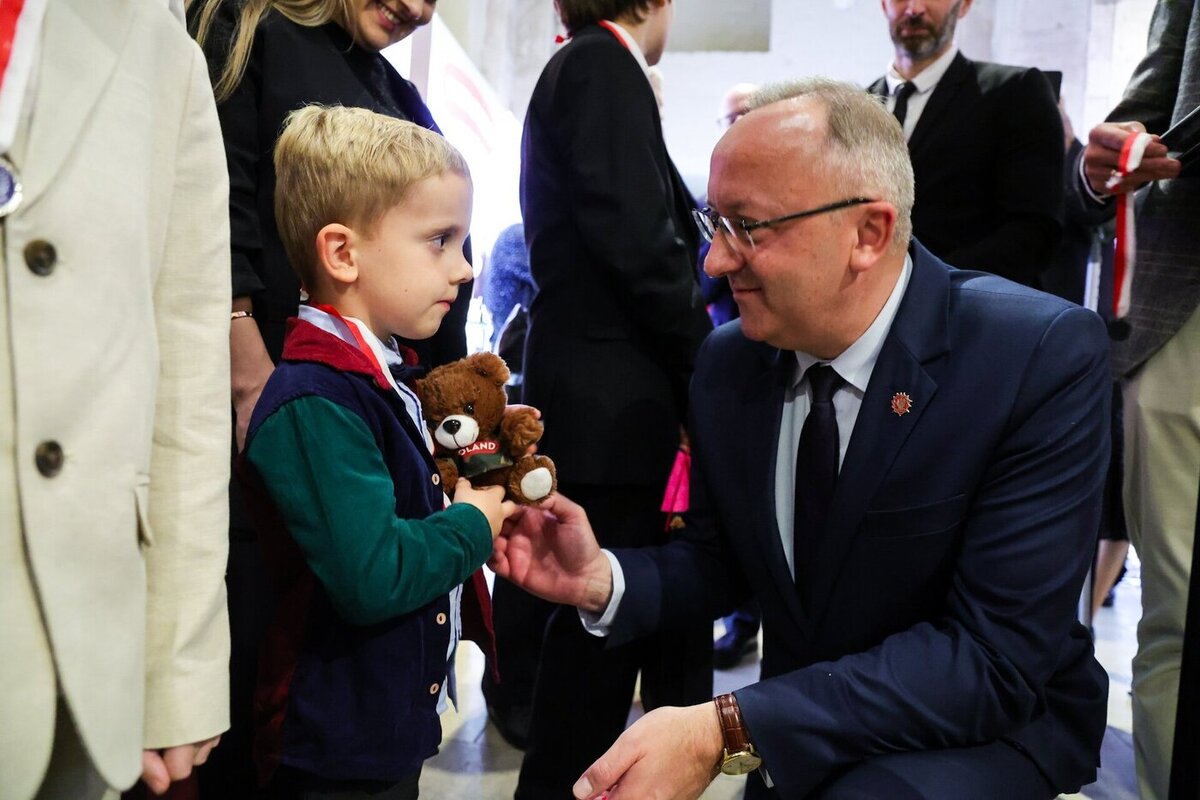
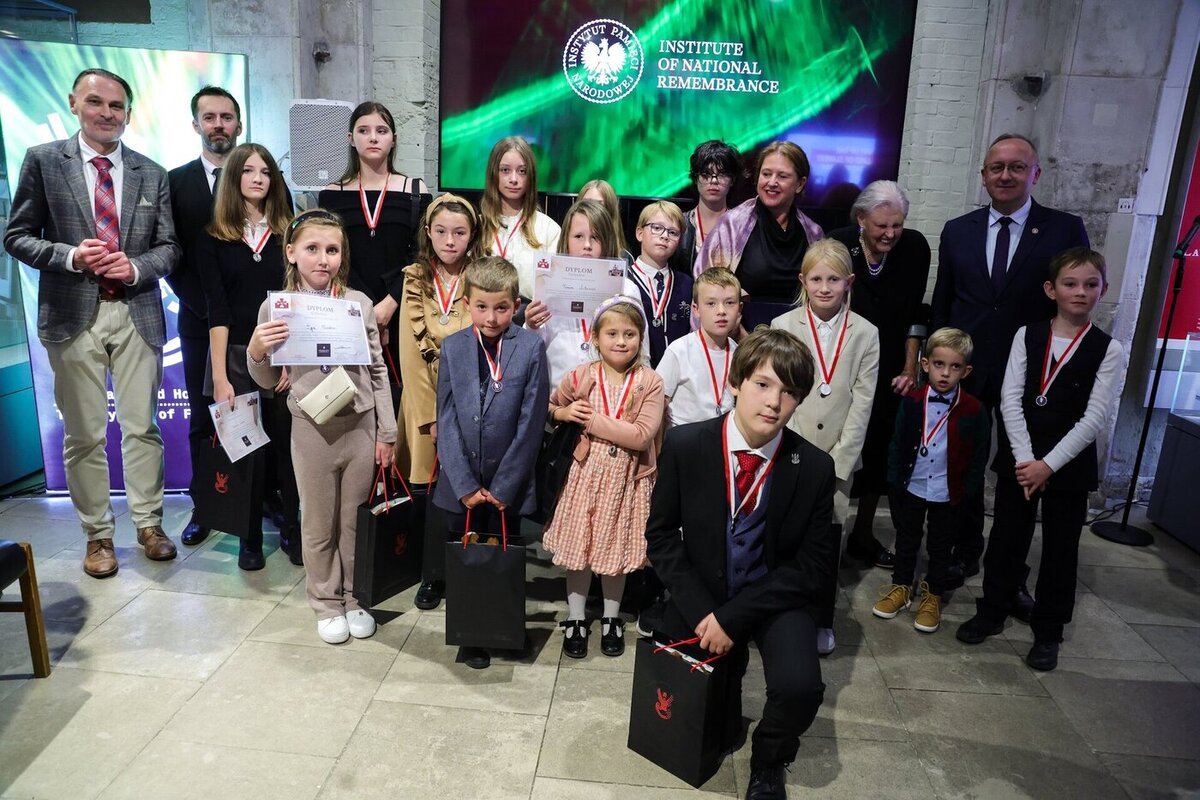
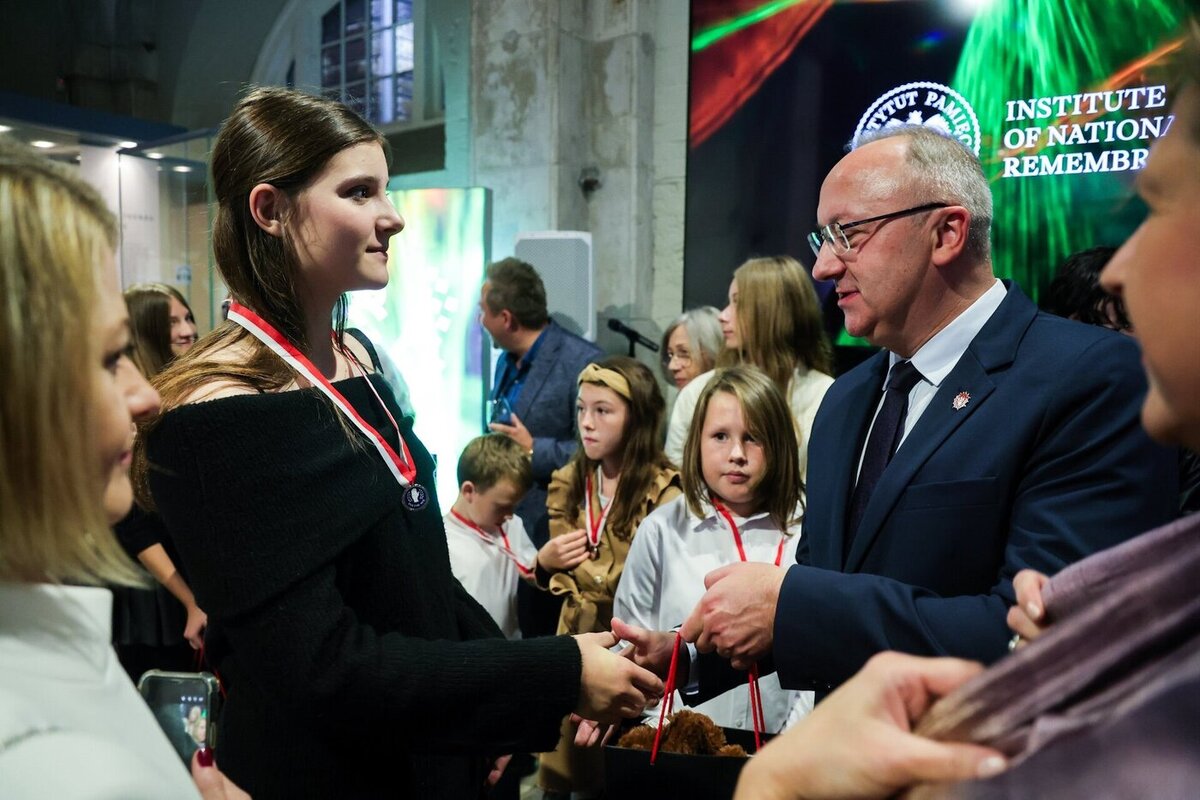
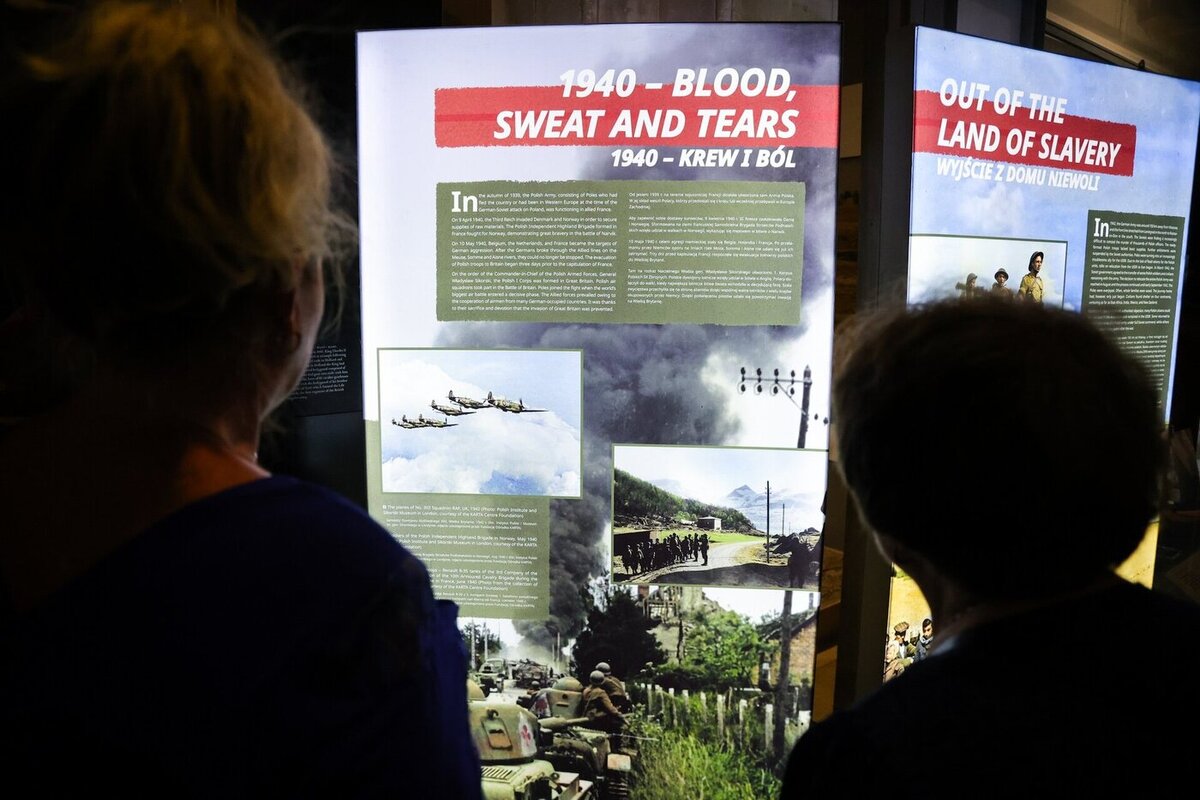
On 10 October 2026, the Deputy President of the IPN, Dr Karol Polejowski, took part in the fourth edition of the “ORP Błyskawica Days” at the Household Cavalry Museum in Whitehall, London. The event brought together representatives of the Polish community and historical institutions to celebrate Polish heritage and commemorate the legacy of one of the most distinguished ships in the history of the Polish Navy. The programme included addresses by invited guests, the opening of the IPN "Trails of Hope: The Odyssey of Freedom”exhibition, and an awards ceremony for the winners of the “Błyskawica - Hero of the Sea” drawing competition for children attending Polish community schools. The event was held in cooperation with the Polish Sue Association. Katarzyna Raczyńska, the youngest daughter of Cecylia and Edward Raczyński, attended the event as the Guest of Honour.
During the ceremony, Iwona Golińska read out a letter from Agnieszka Jędrzak, Undersecretary of State at the Chancellery, conveying greetings on behalf of President Karol Nawrocki.
“Today, ORP Błyskawica is a floating monument to Polish courage, glory and the unbroken pursuit of freedom, as well as a symbol of faithful service under the white-and-red flag.”
In his address, Karol Polejowski recalled the historical significance of ORP Błyskawica and its contribution to the Allied struggle against Germany.
“We have gathered here to commemorate the 90th anniversary of the launch of a vessel that became a symbol of the Polish Navy and one of the symbols of Poland's unbroken resistance against German aggression. The wartime odyssey of this ship is also part of the Polish experience during the Second World War. It is to these experiences that the exhibition ‘Trails of Hope. The Odyssey of Freedom’ is dedicated,” said the IPN Deputy President.
Karol Polejowski also emphasised the broader historical message of the exhibition:
“The exhibition commemorates the involvement of the Polish Armed Forces in the struggle against two totalitarian regimes, German and Soviet, as well as the ordeal of Polish civilians evacuated from the Soviet Union who found refuge in places as distant as India, Iran, Africa, New Zealand and the Americas.”
A central part of the event was the official opening of the IPN exhibition “Trails of Hope. The Odyssey of Freedom”, dedicated to the extraordinary wartime journeys of Polish soldiers and civilians across countries and continents. The exhibition highlights the contribution of Polish troops fighting alongside the Allies, as well as the experiences of civilians who suffered deportation, repression and forced displacement.
-
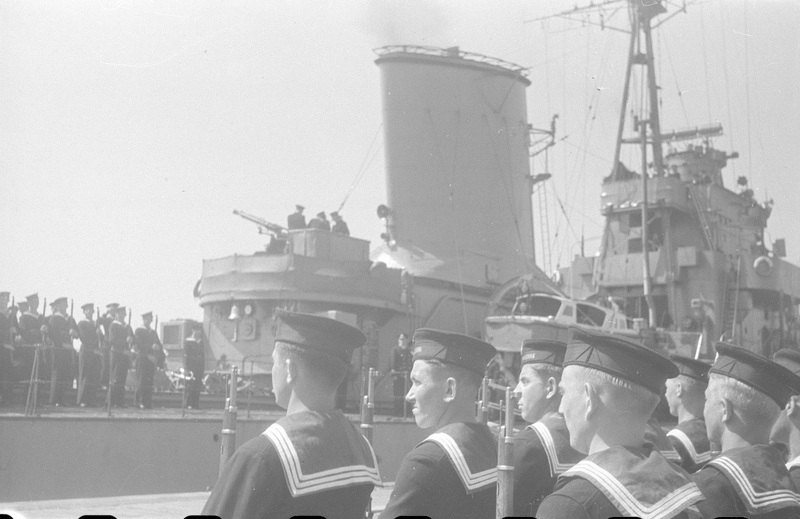
ORP Błyskawica in Gdynia harbour after her return from Great Britain, 1947–1955 (photo: National Digital Archives [NAC]), 3/39/0/-/6015 -
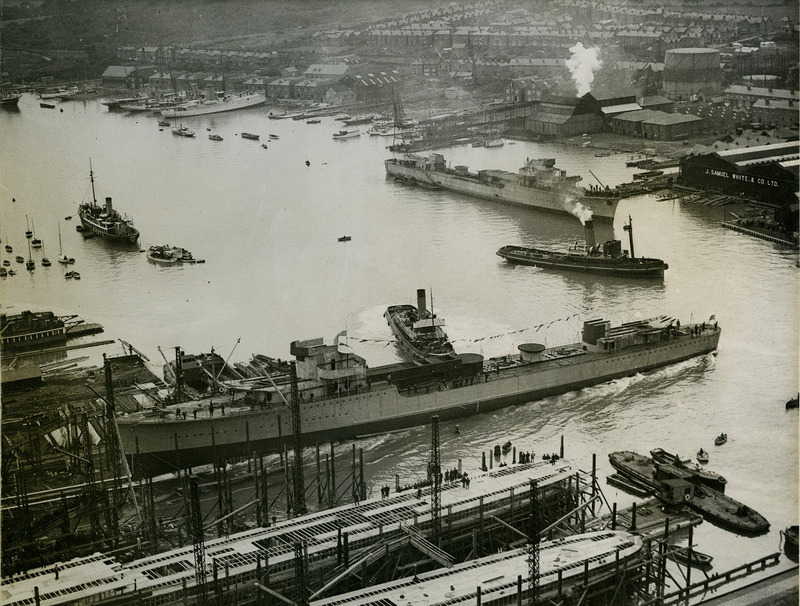
The launching of ORP Błyskawica, Cowes, 1 October 1936 (photo: Naval Museum in Gdynia). -
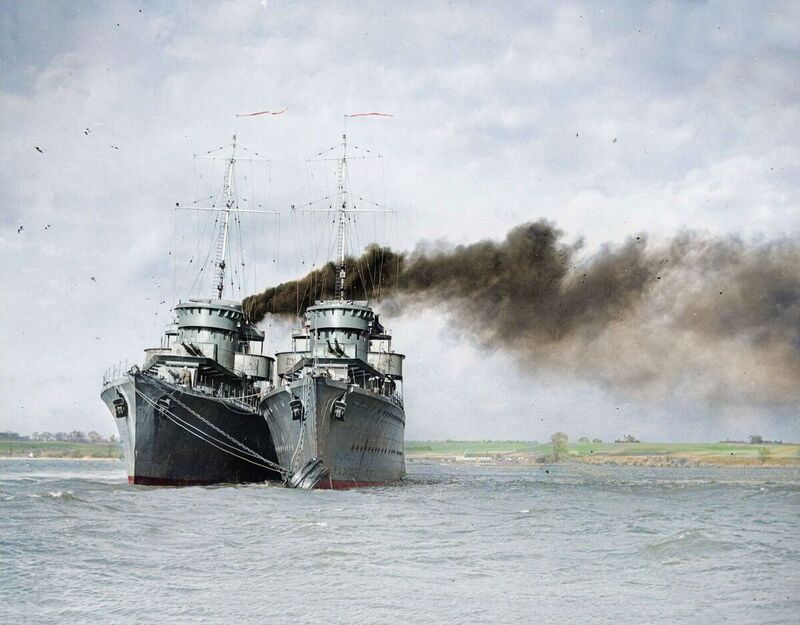
Polish destroyers ORP Grom and ORP Błyskawica after arriving in Great Britain, September 1939 (photo: Imperial War Museum), ref. HU_076126
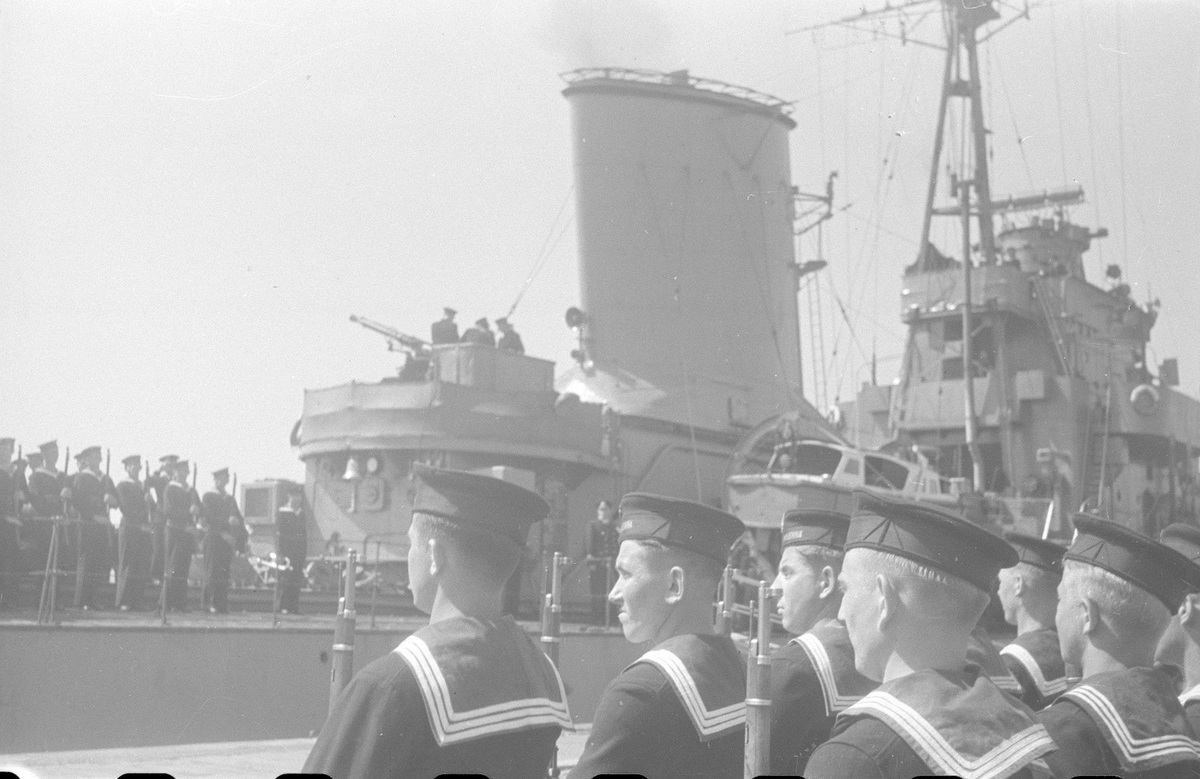
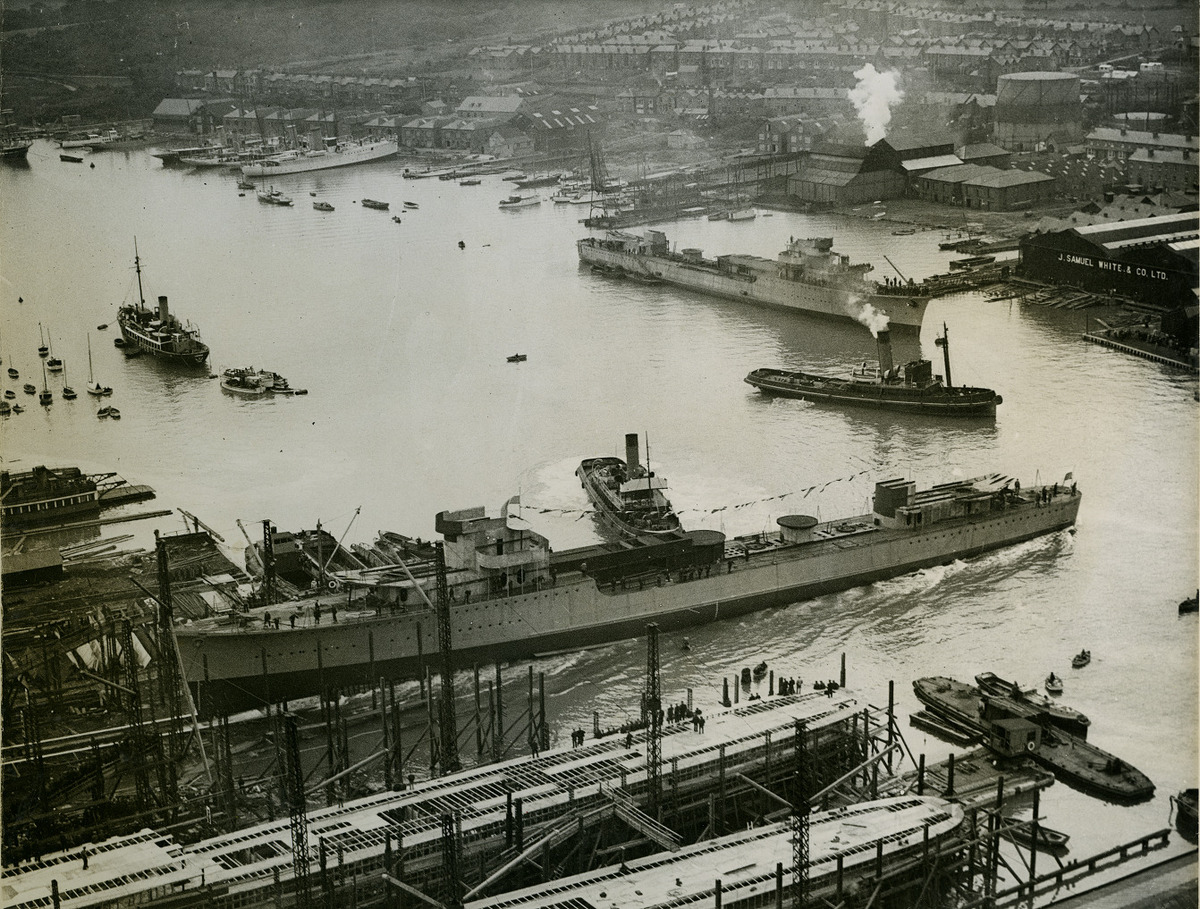
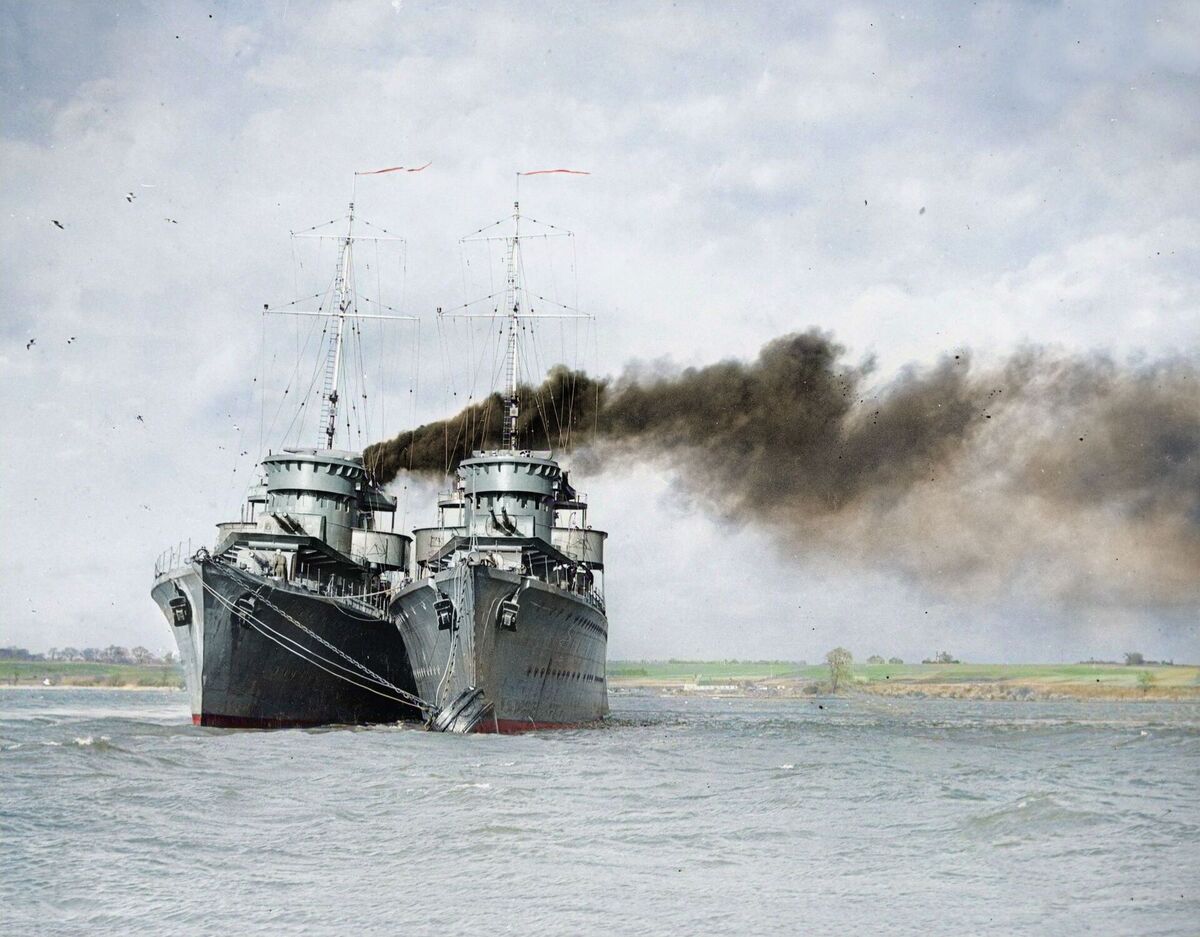
The commemorations marked the 90th anniversary of the christening and launch of ORP Błyskawica, which took place on 1 October 1936 at the J. Samuel White shipyard in Cowes, on the Isle of Wight. The ship's godmother, Countess Cecylia Raczyńska, wife of Poland’s Ambassador to Britain, Edward Raczyński, gave the destroyer the name that would become legendary in the history of the Polish Navy. During the Second World War, Błyskawica served alongside Allied forces in major operations, including the Norwegian Campaign, the evacuation of Dunkirk and the landings in Normandy. In May 1942, it also helped defend Cowes against a German air raid, forging a lasting bond with the British town where she had been built. Today, preserved as a museum ship in Gdynia, Błyskawica remains a symbol of Polish naval courage, sacrifice and the enduring friendship between Poland and Britain.
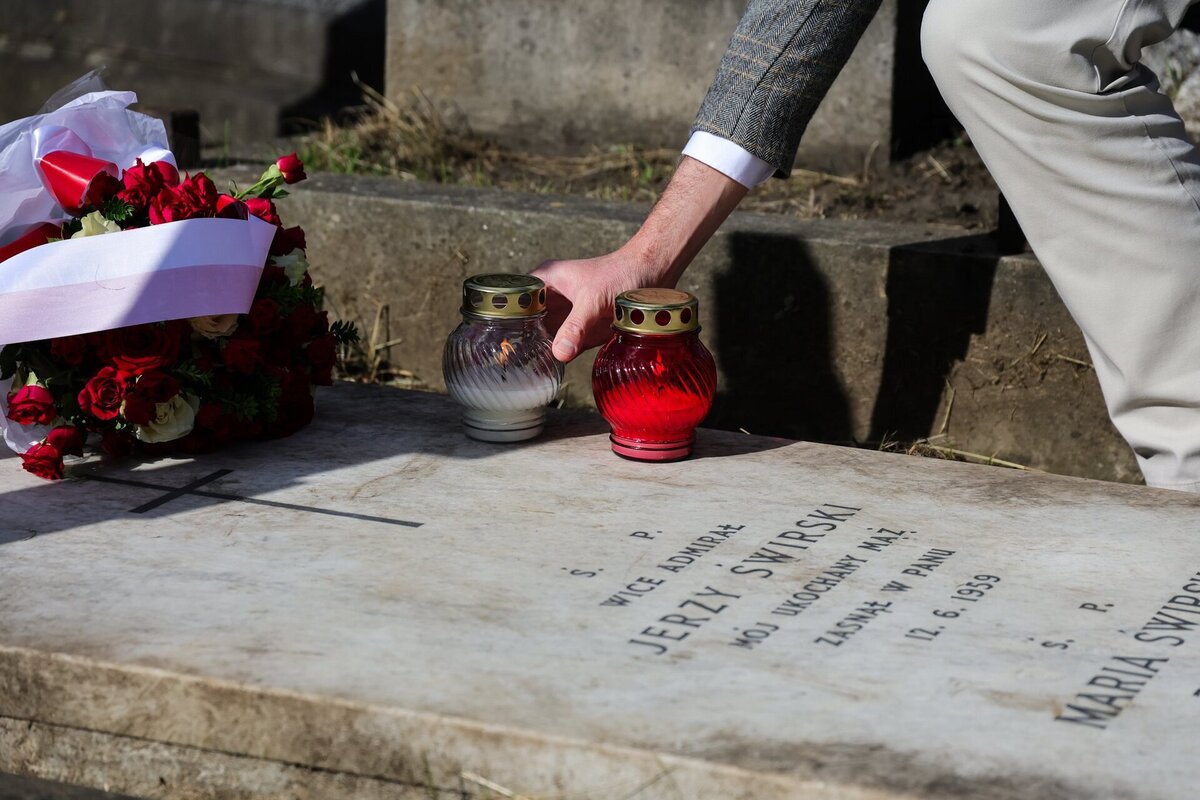
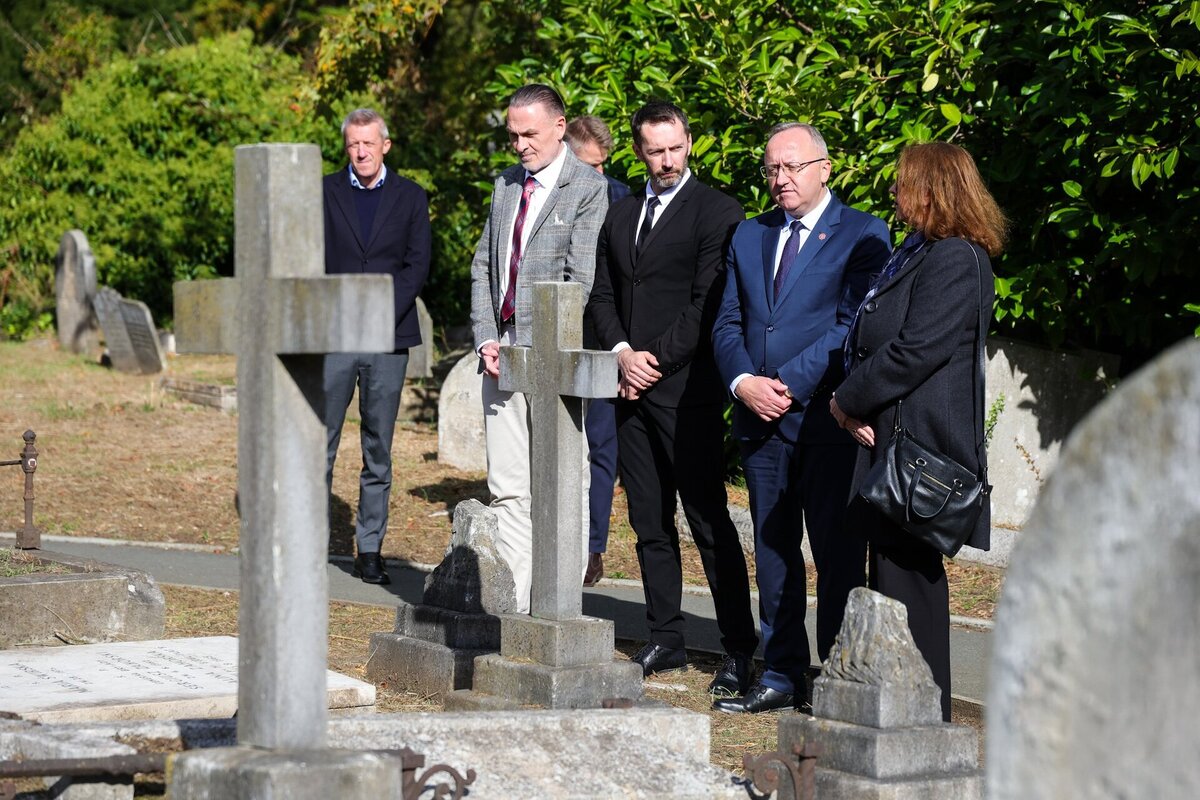
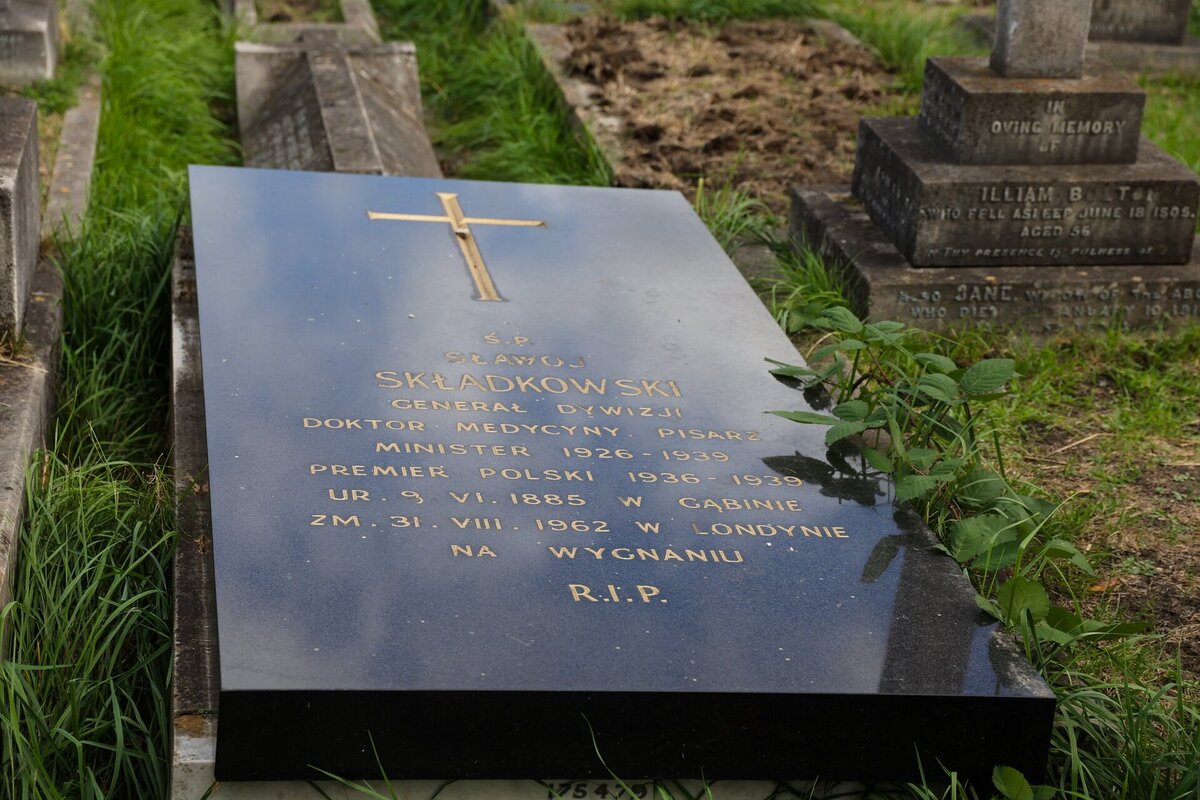
Earlier that day, the IPN delegation visited Brompton Cemetery to lay flowers at the graves of distinguished Poles, including Vice-Admiral Jerzy Świrski, Head of the Polish Navy Command from 1925 to 1947. The tribute honoured those who served Poland far from home and whose contributions remain an important part of the nation’s history. Together, the events provided an opportunity to preserve historical memory, celebrate Polish heritage in Britain and pass the legacy of previous generations on to the young.