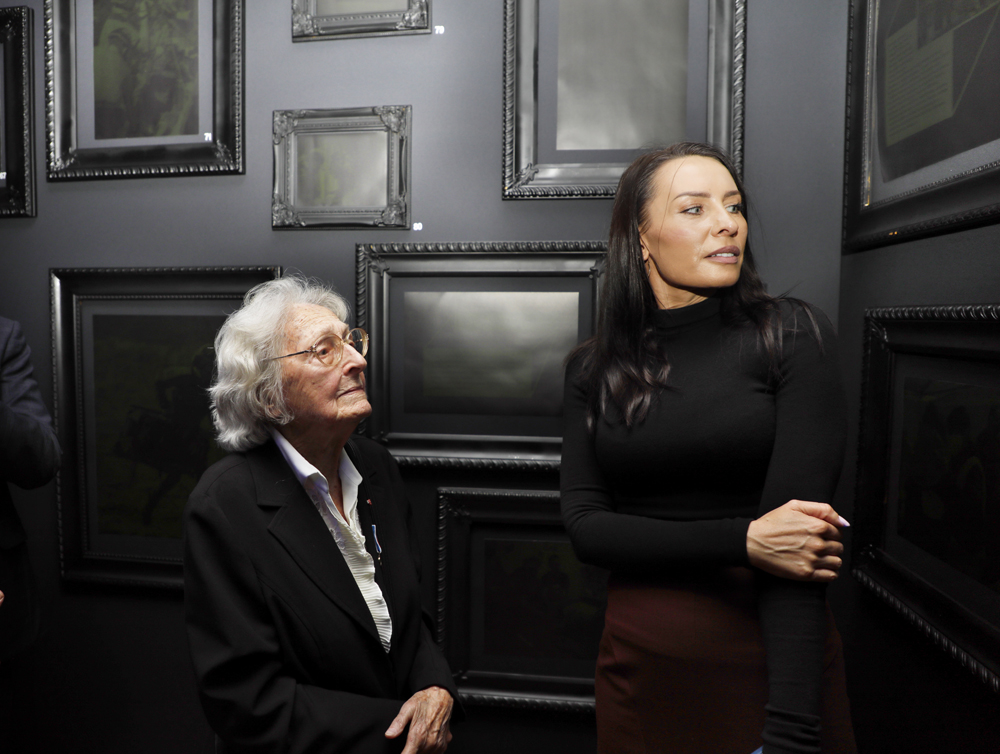
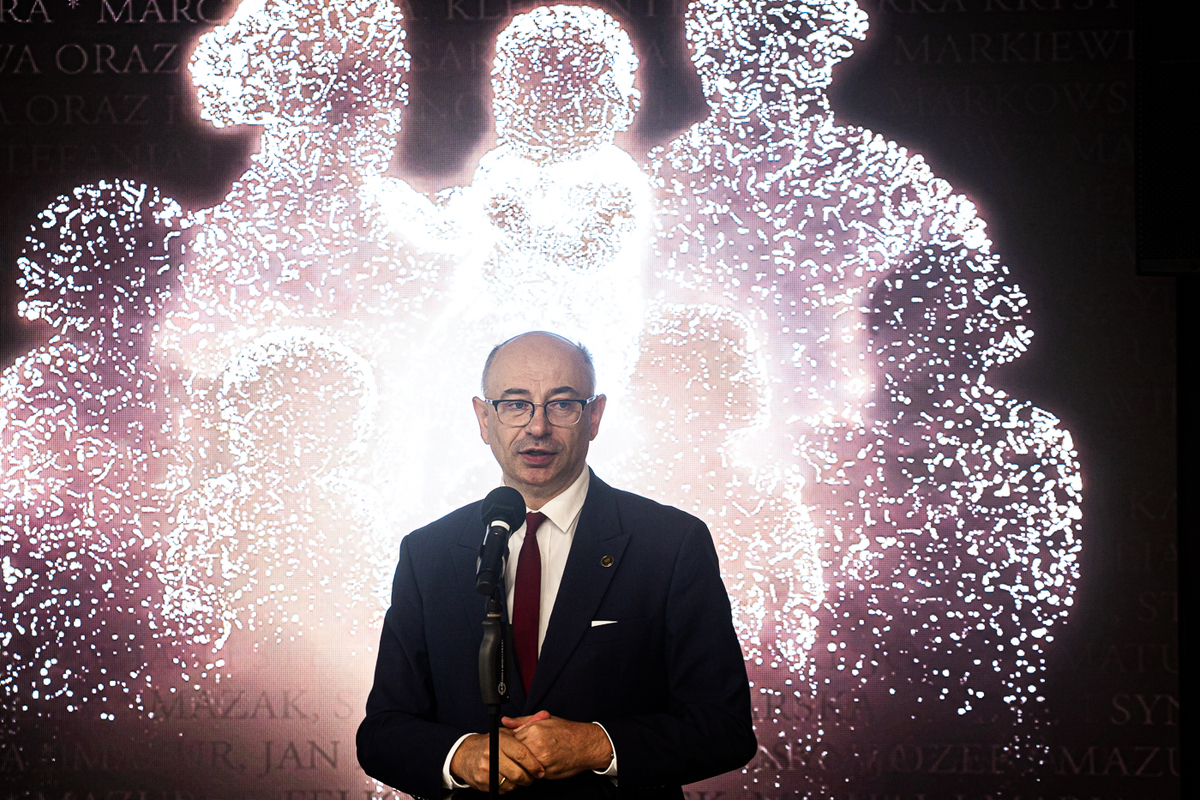
The opening ceremony was attended by the IPN Deputy President Dr Mateusz Szpytma, Director of the IPN’s New Technology Division Magdalena Hajduk, as well as President of the Polish Association of the Righteous Among the Nations, Anna Stupnicka-Bando, as well as other invited guests.
Speaking at the opening of the exhibition, Deputy President of the IPN, Dr Mateusz Szpytma said:
We are gathered here on a significant day – the anniversary of the introduction by the German Governor Hans Frank of a shameful occupation law. A law that prescribed the death penalty for any Jew who left the confines of the ghetto, but also for any Pole who came to the aid of Jews.
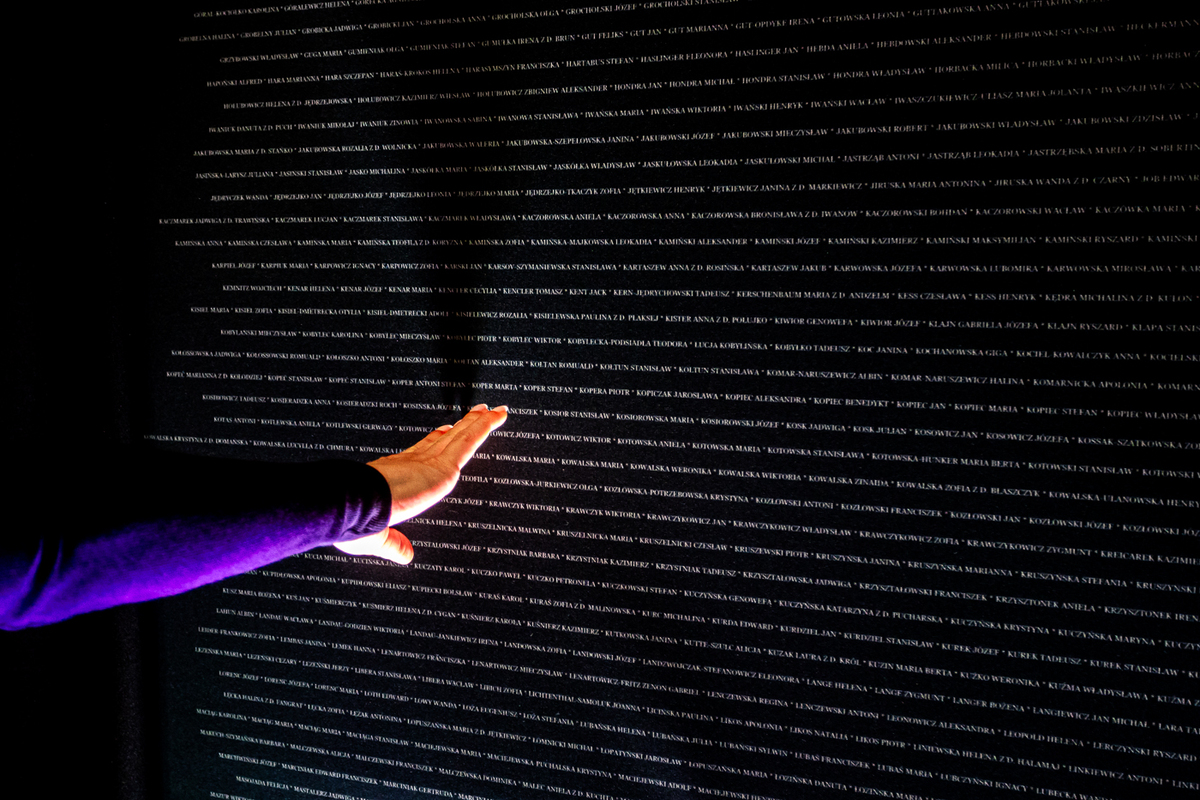
The exhibition shows us that in the clash between a world of good and sanctity and a world of evil, it would seem that evil prevails. For our heroes, the Ulma family, together with the Jews they were hiding, were murdered. Around a thousand Poles who rescued Jews met the same fate.
But the rest of the exhibition shows that the enormous risk taken by many families such as the Ulmas, and by thousands of people such as Anna Stupnicka-Bando, present at the opening, meant that tens of thousands of people of Jewish nationality were spared death. We must speak openly about the fact that the help they provided was fraught with enormous risk. The modern world is generally unaware of this.
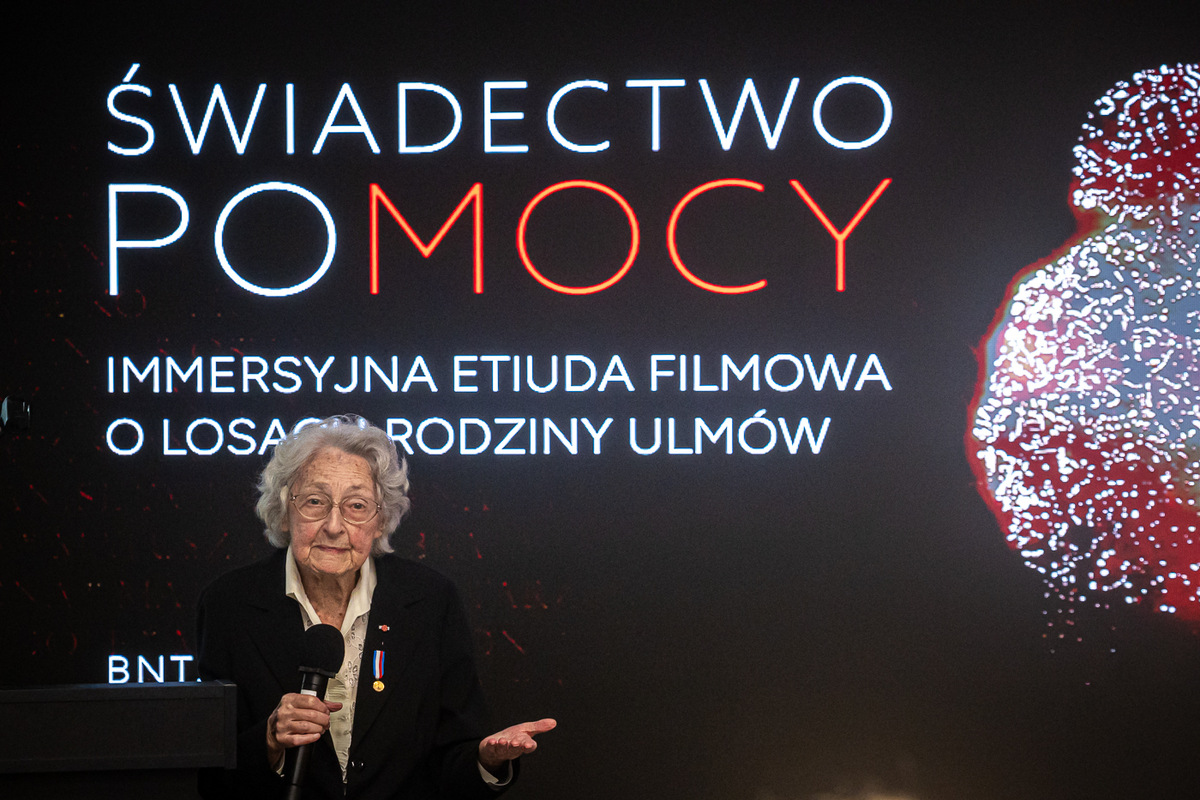
During the ceremony, Anna Stupnicka-Bando expressed her gratitude for efforts to preserve the memory of those who risked their lives to help others, while the IPN’s Deputy President highlighted the courage of Poles who provided assistance despite the terror of German occupation and emphasised the role of modern technologies in bringing historical stories closer to younger generations.
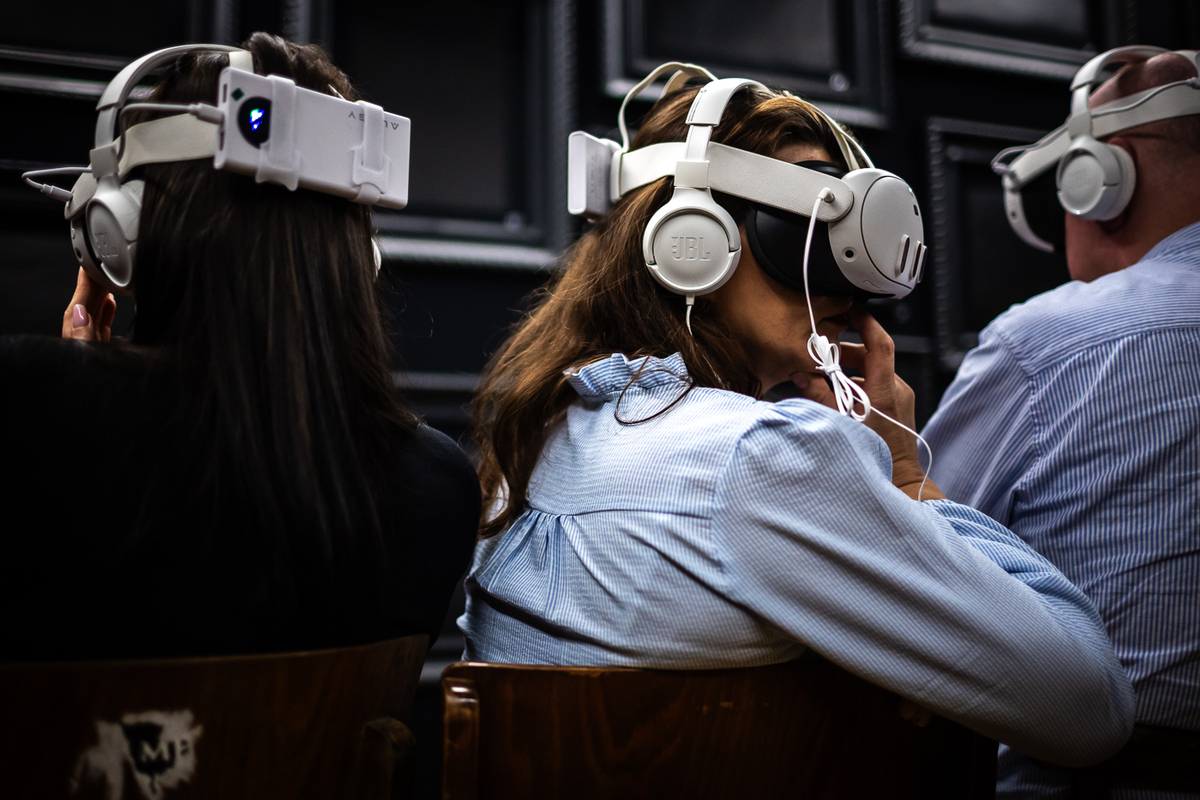
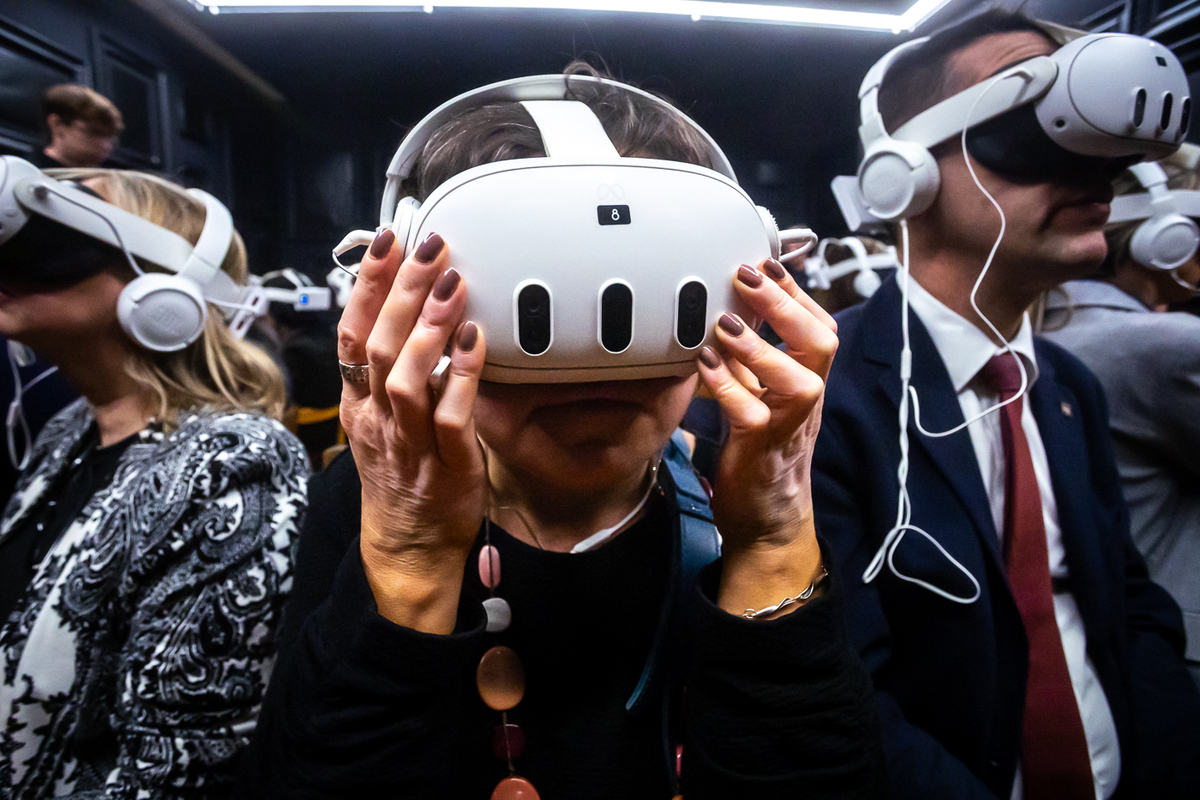
The centrepiece of the exhibition is an immersive film. VR technology allows the viewer to explore a series of spaces inspired by real interiors from the 1940s and to gain a deeper insight into the everyday life of the Ulma family and the realities of life in the Podkarpacie countryside.
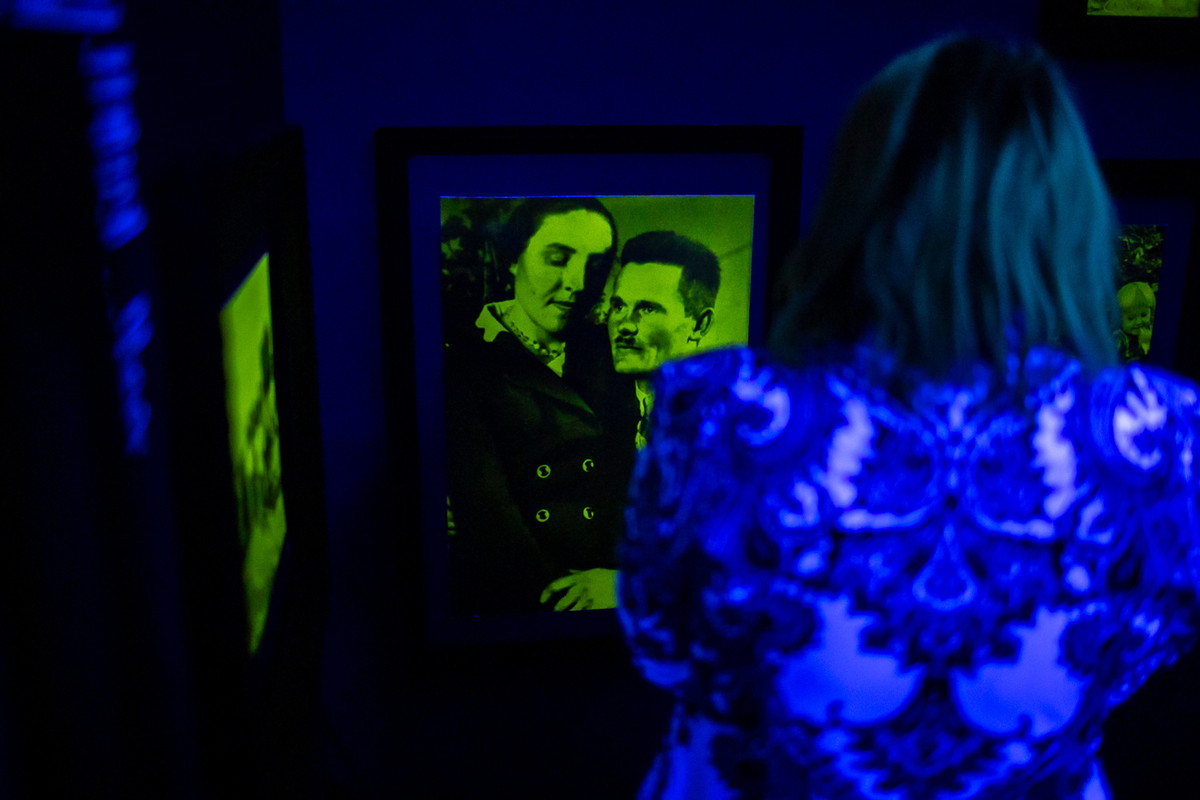
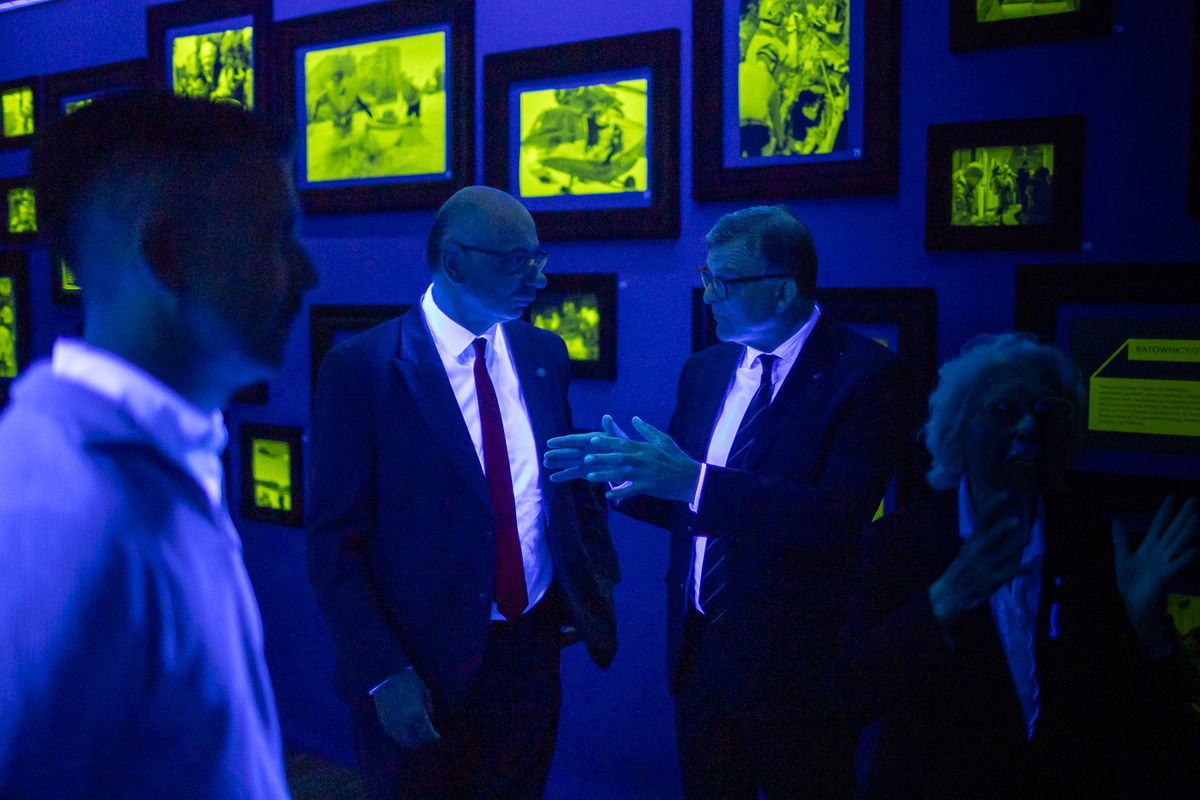
Once the film segment ends, the visitor returns to the physical space of the exhibition. It is then that elements previously hidden from view are revealed – an archival display illuminated by ultraviolet light. These further elements of the exhibition complement the story the visitor has just learnt, enabling them to understand it more fully.
The combination of archival material and film narration creates a multi-dimensional experience that helps us view history through the prism of genuine emotions, experiences and timeless values. An important part of the exhibition is also the story of Poles who, during the Holocaust, decided to help persecuted Jews.
The exhibition was created on the basis of sources held in the IPN Archives, and features photographs from the album by the IPN’s Deputy President, Dr Mateusz Szpytma, entitled The Righteous and Their World: Markowa in the Photographs of Józef Ulma.
The “Testimony of HELP” exhibition is open at the Lech Kaczyński Central History Point in Warsaw until 21 December 2026. More information on the Ulma family can be found at the IPN’s special website dedicated to their memory.
-
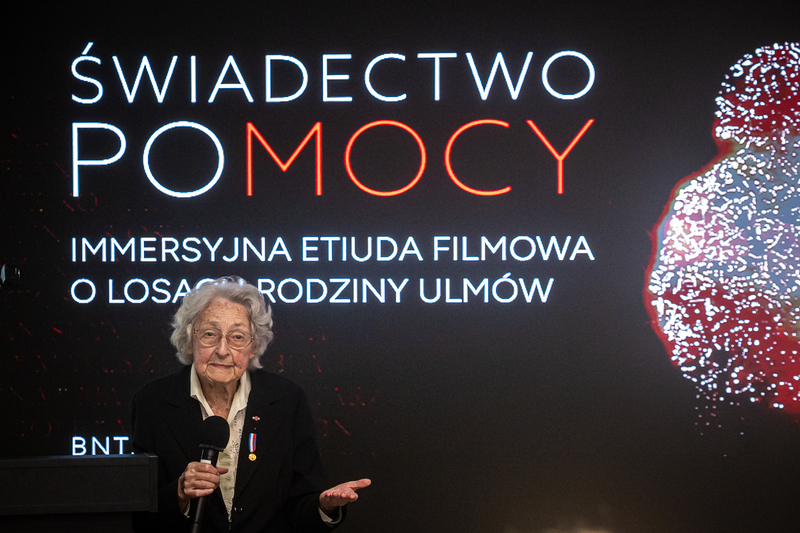
Anna Stupnicka-Bando at the opening of the “Testimony of HELP” immersive exhibition on 15 October 2026. Photo: Sławek Kasper (IPN) -
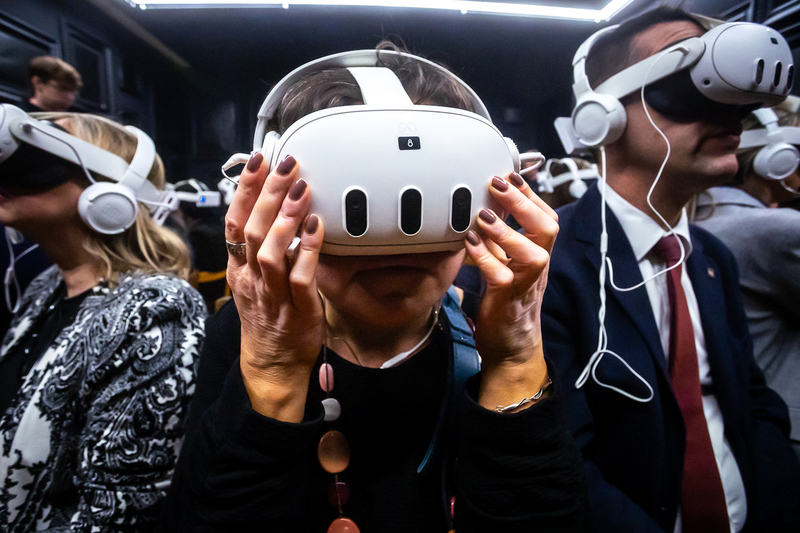
The opening of the “Testimony of HELP” immersive exhibition on 15 October 2026. Photo: Sławek Kasper (IPN) -
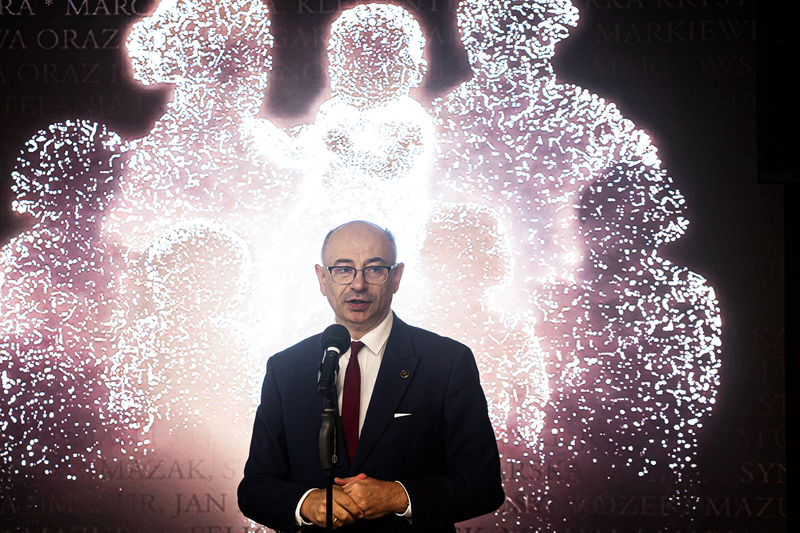
IPN Deputy President Dr Mateusz Szpytma speaks at the opening of the “Testimony of HELP” immersive exhibition on 15 October 2026. Photo: Sławek Kasper (IPN) -
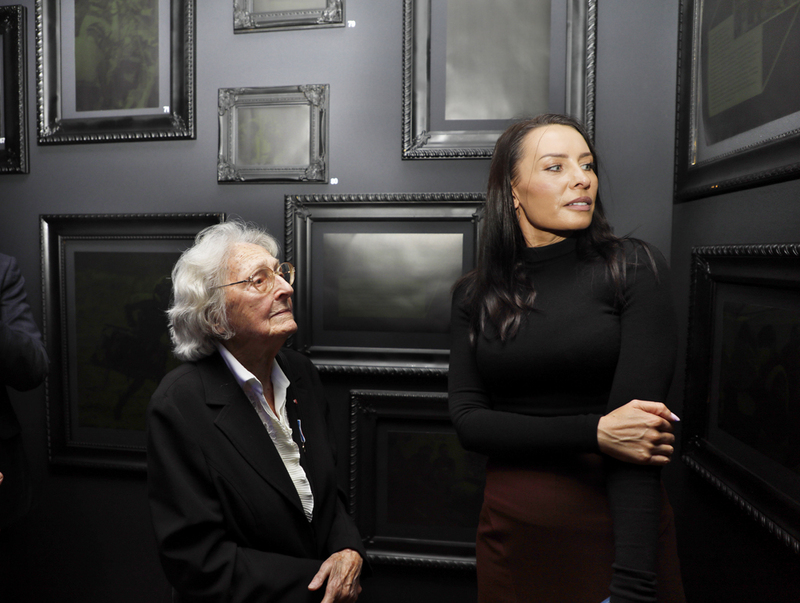
Anna Stupnicka-Bando is accompanied by the IPN New Technology Division Director, Magdalena Hajduk, at the opening of the “Testimony of HELP” immersive exhibition on 15 October 2026. Photo: Piotr Życieński (IPN) -
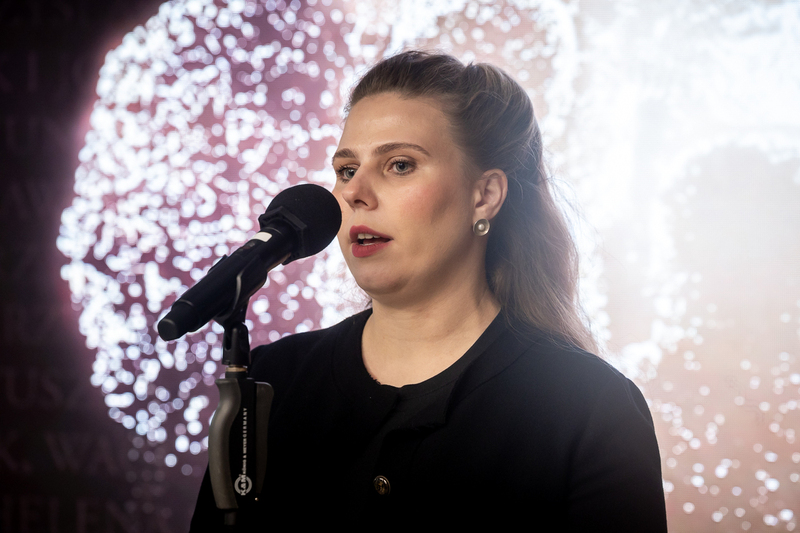
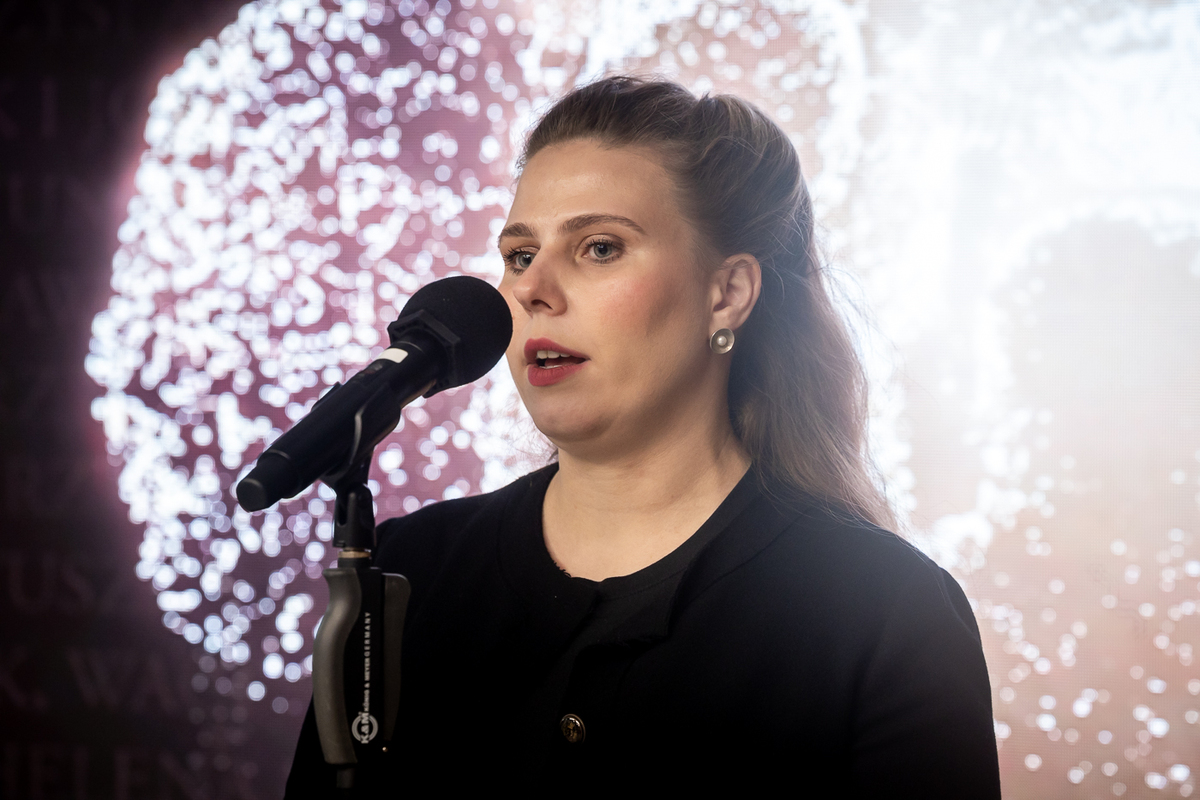
Adrianna Paradowska from the IPN New Technology Division at the opening of the “Testimony of HELP” immersive exhibition on 15 October 2026. Photo: Sławek Kasper (IPN) -
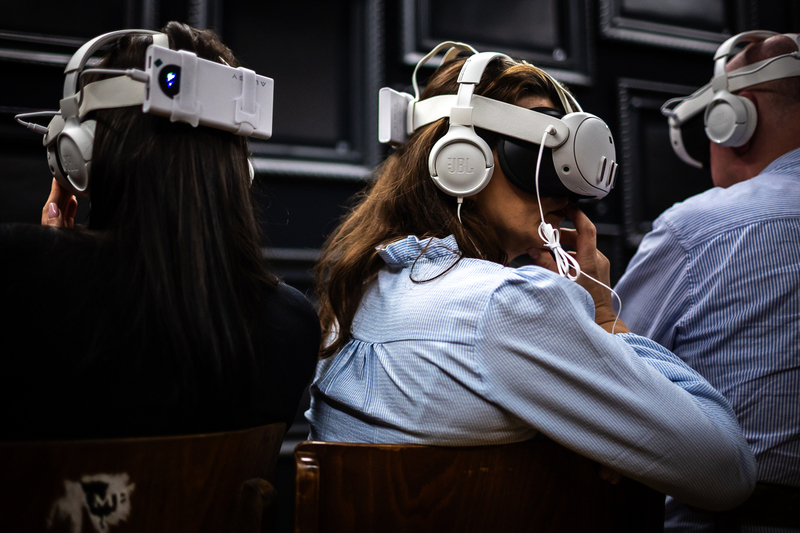
The opening of the “Testimony of HELP” immersive exhibition on 15 October 2026. Photo: Sławek Kasper (IPN) -
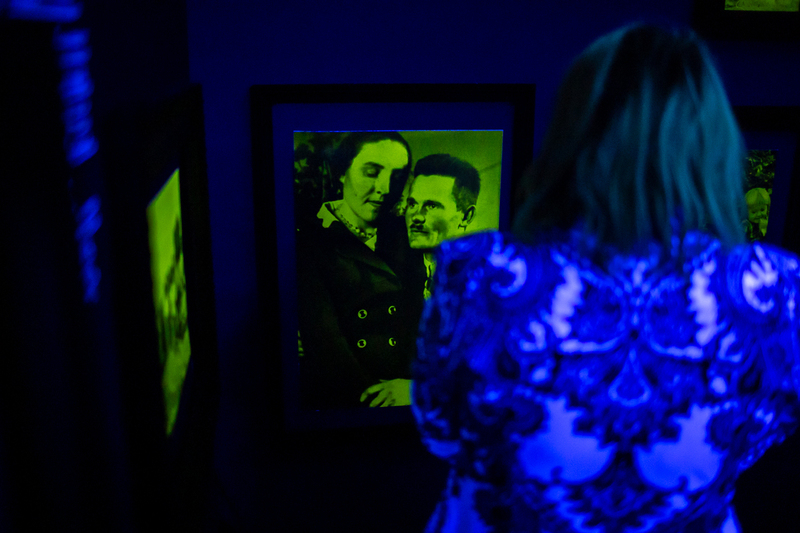
The opening of the “Testimony of HELP” immersive exhibition on 15 October 2026. Photo: Sławek Kasper (IPN) -
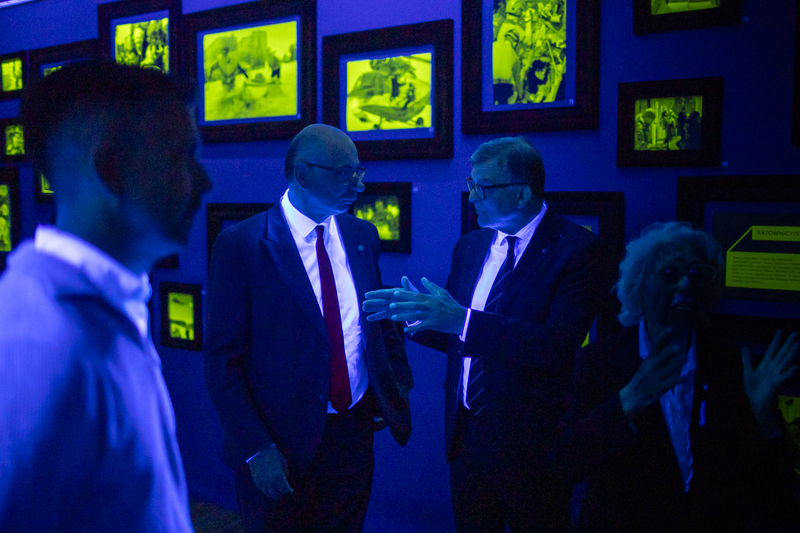
The opening of the “Testimony of HELP” immersive exhibition on 15 October 2026. Photo: Sławek Kasper (IPN) -
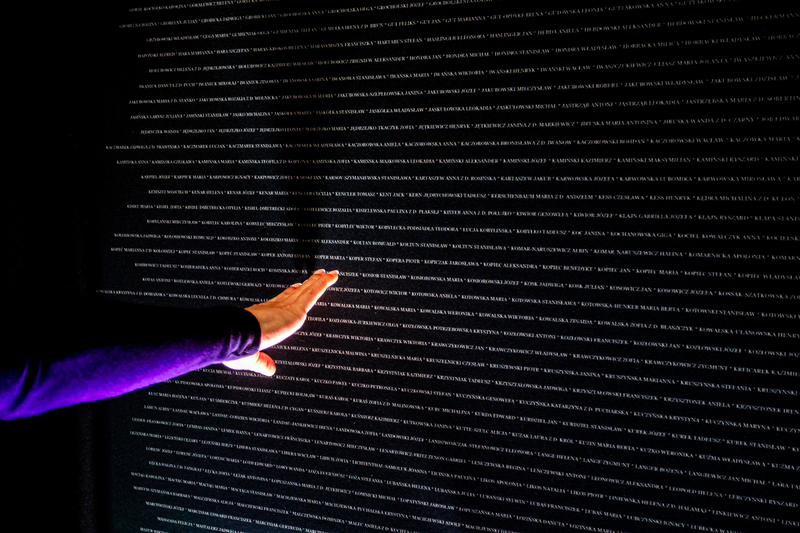
The opening of the “Testimony of HELP” immersive exhibition on 15 October 2026. Photo: Sławek Kasper (IPN)