
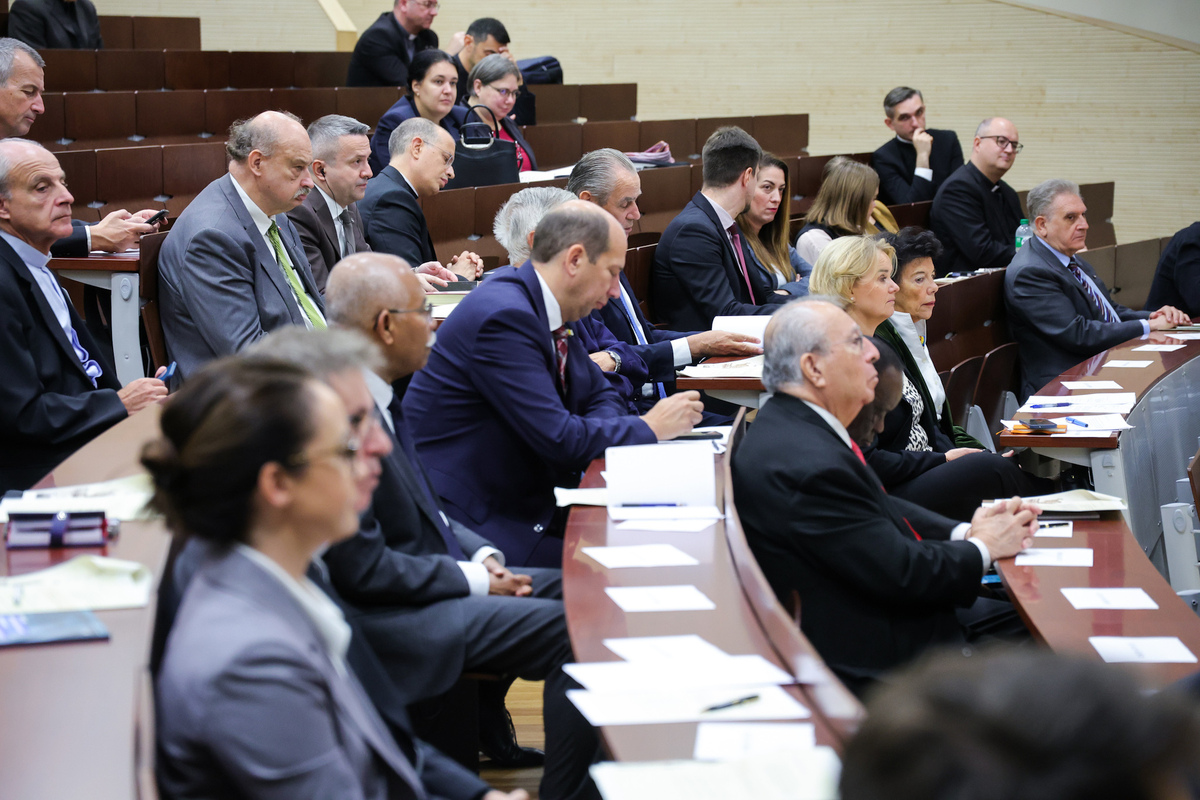
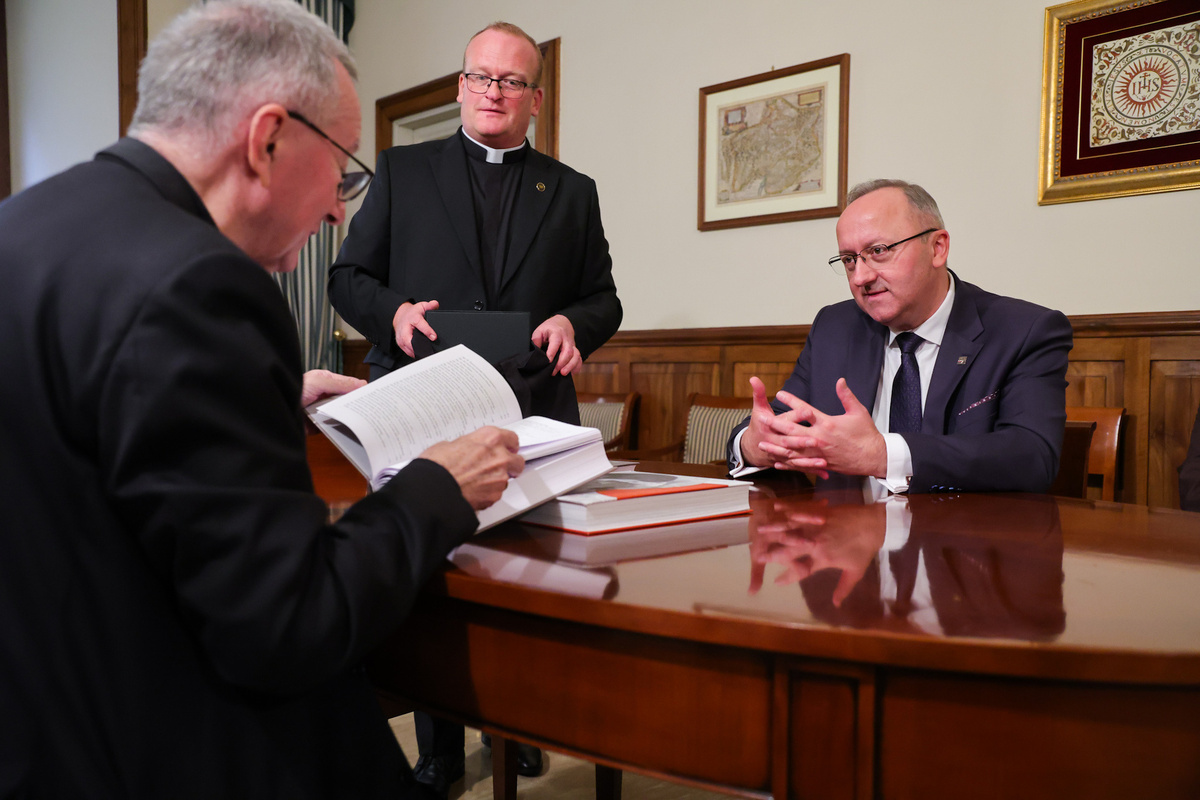
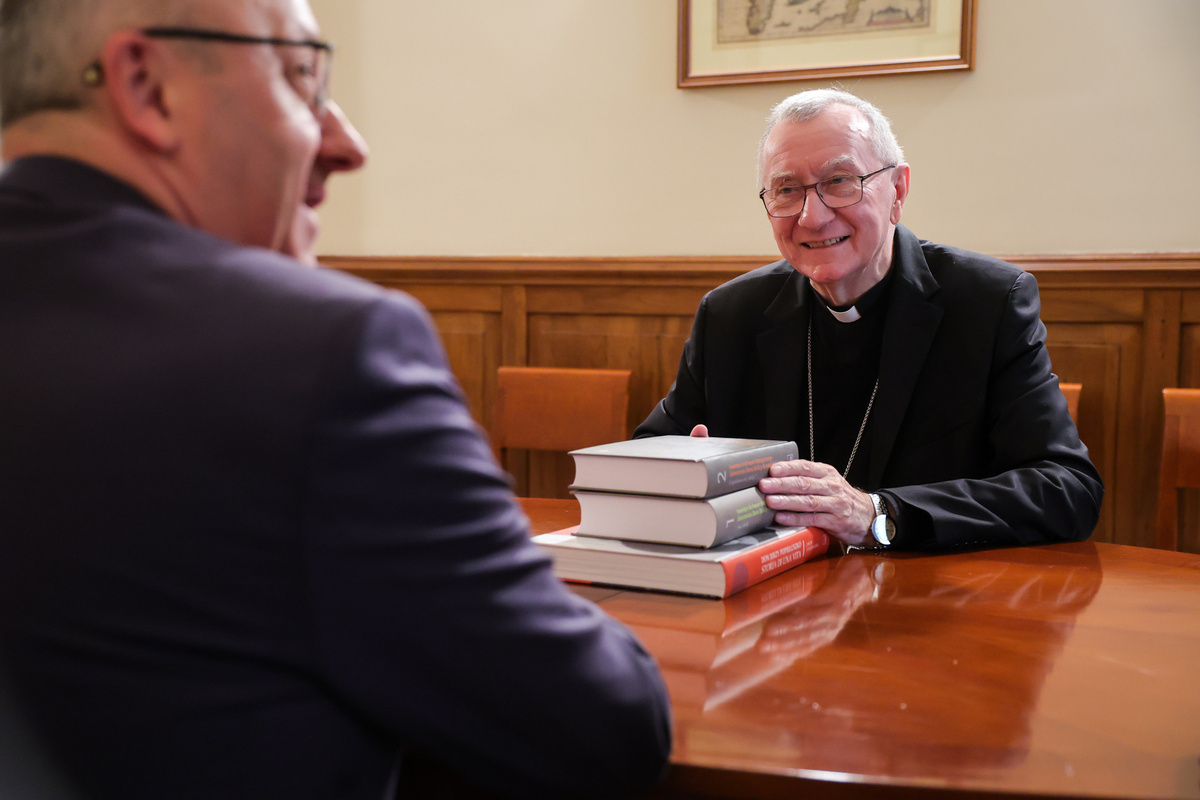
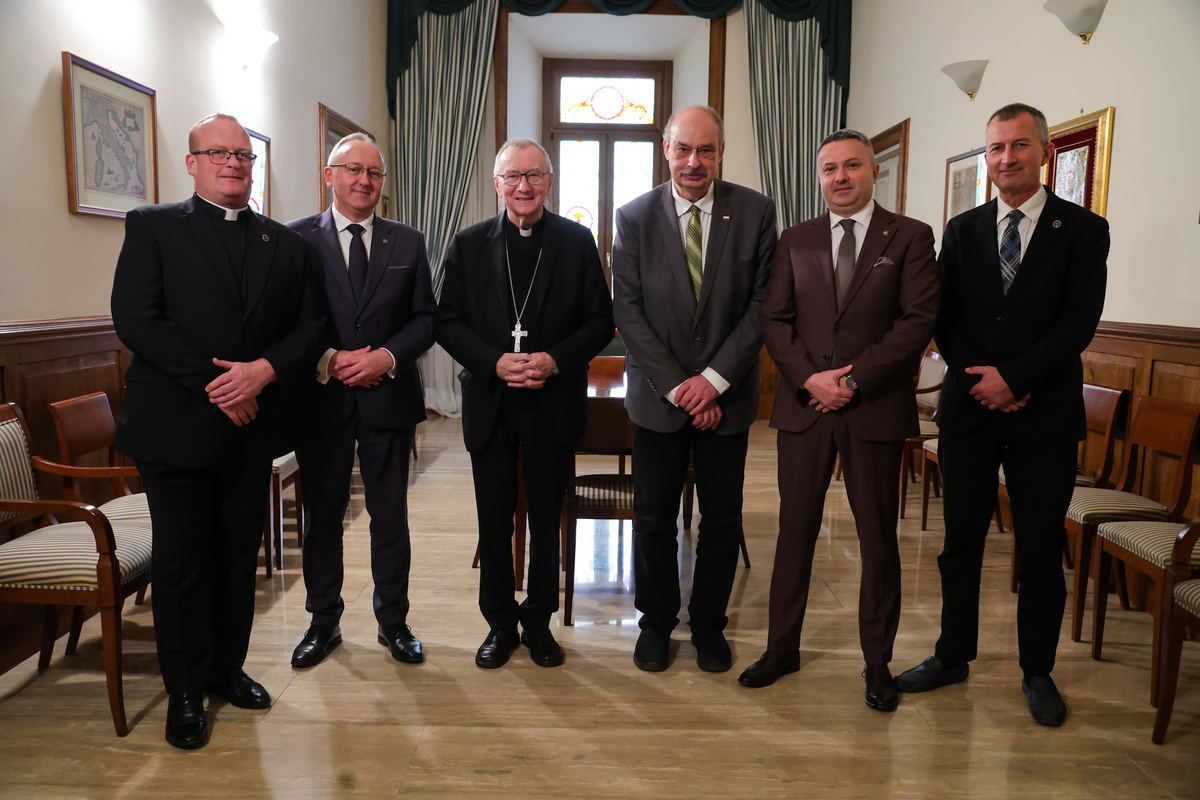
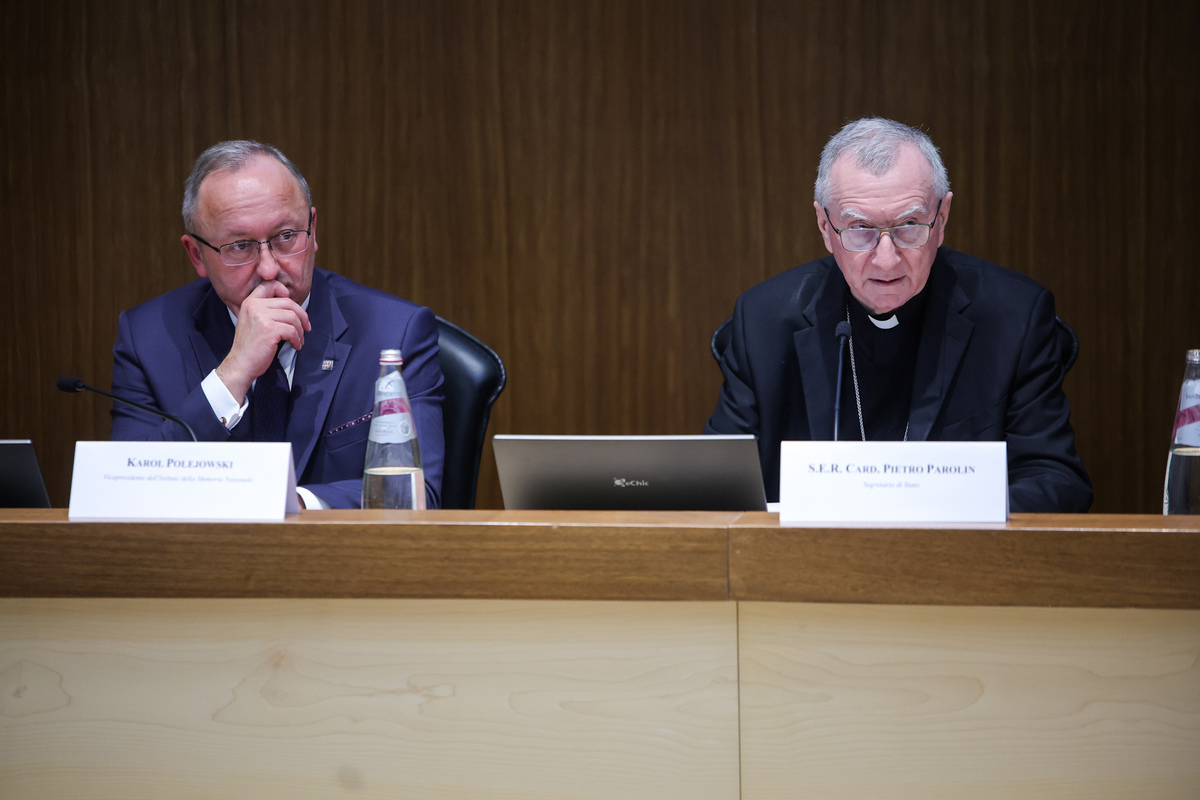
A meeting with Cardinal Pietro Parolin, discussions on the Holy See’s responses to totalitarian rule, and an exhibition marking the millennium of Poland’s Christian heritage feature prominently in the Institute of National Remembrance’s participation in an international conference opening today in Rome.
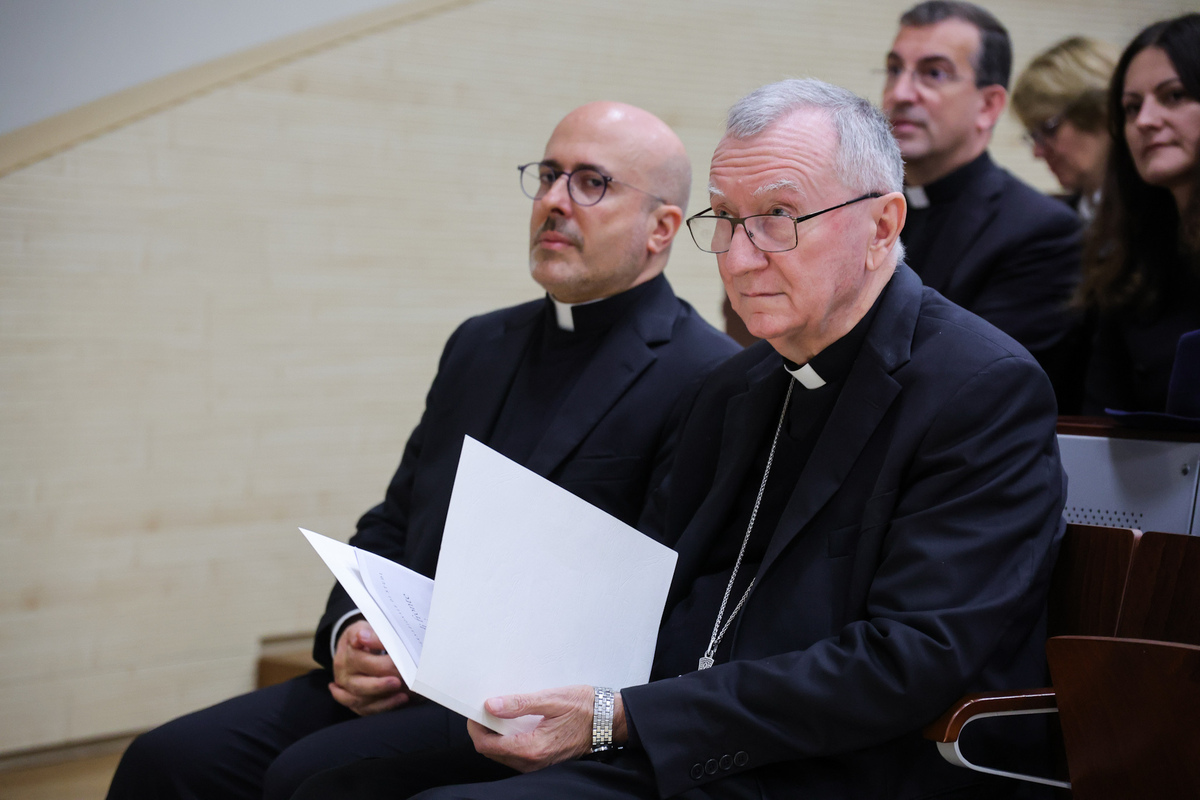
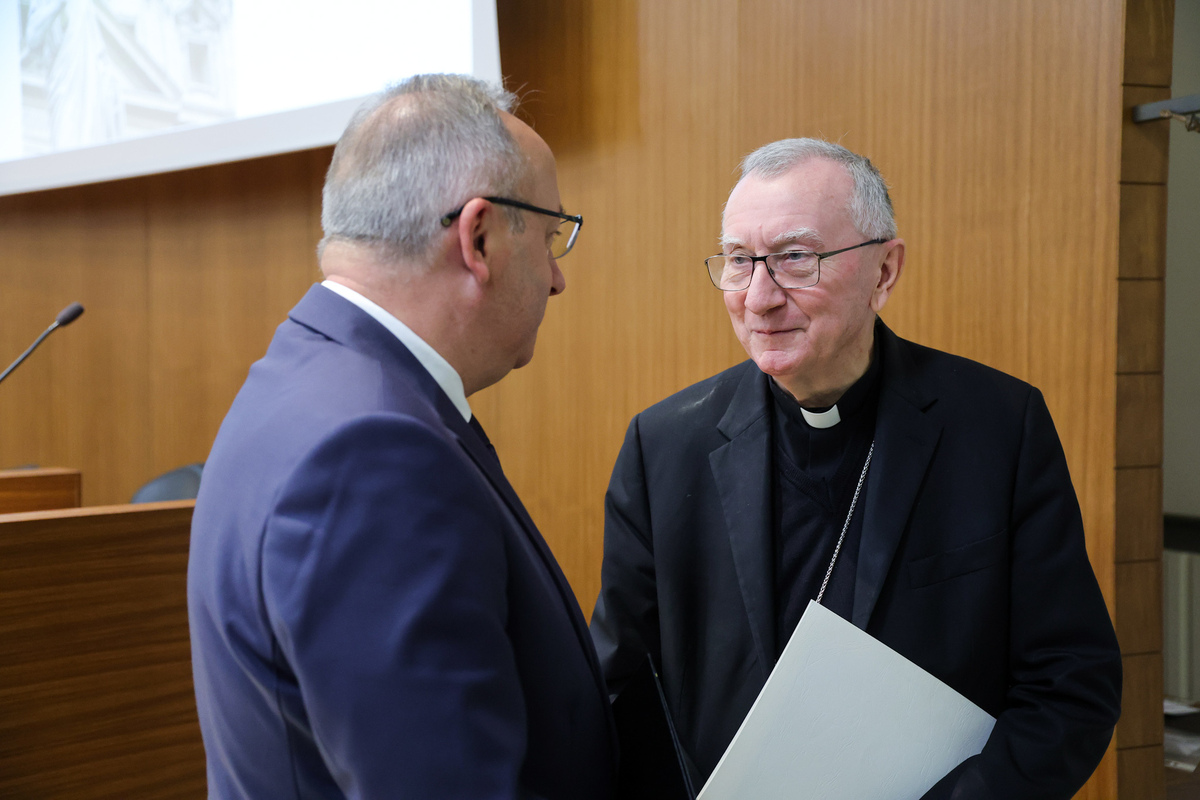
The IPN delegation, headed by Deputy President Karol Polejowski, met with Cardinal Pietro Parolin, Secretary of State of the Holy See, to present the Institute’s structure and activities, with particular emphasis on its research, publications and initiatives devoted to the history of the Church and Church–state relations.
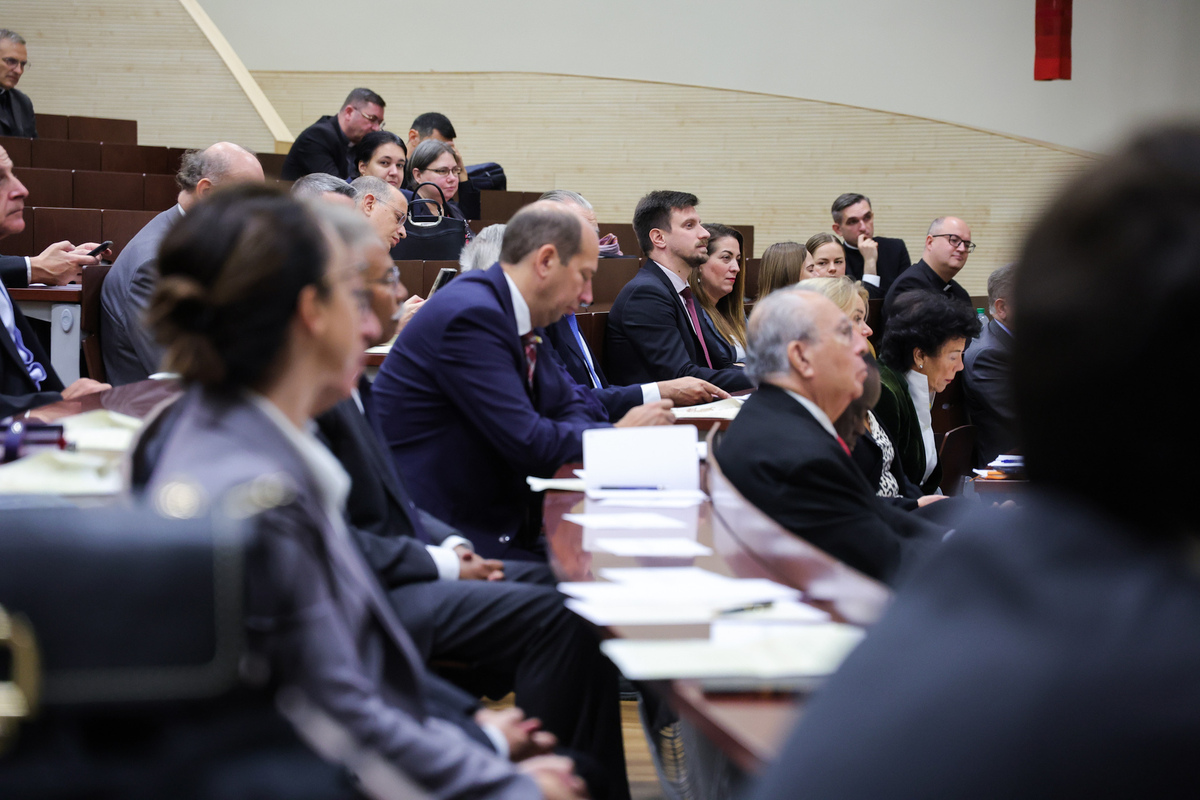
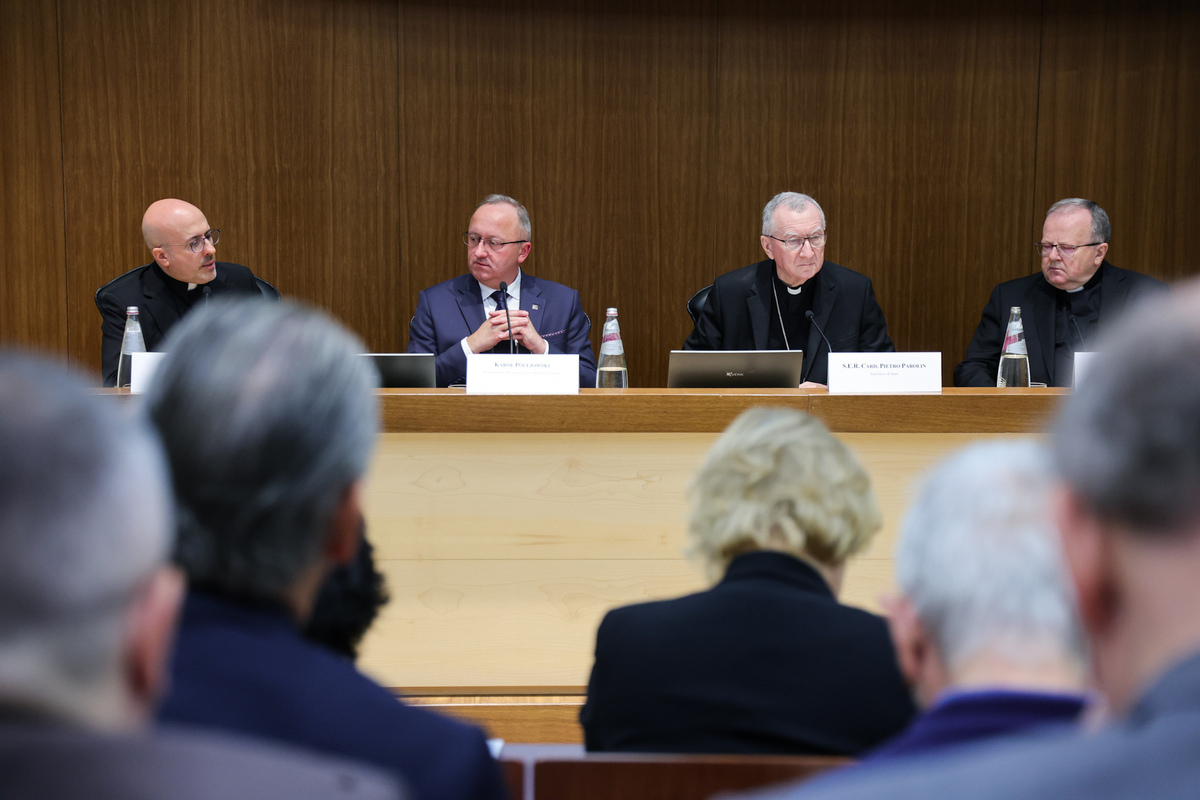
Held on 28–29 October, the conference, The Holy See and Totalitarian Systems in the 20th Century: New Views and Research Perspectives, is jointly organised by the IPN, the Pontifical Gregorian University and the Pontifical Committee for Historical Sciences.
The conference brings together scholars to examine the Holy See’s policies towards communist and fascist regimes, its wartime diplomacy, and the dilemmas confronting popes and Church representatives under conditions of persecution. The programme spans the early twentieth century through to the end of the Cold War, addressing such subjects as efforts to rescue Hungarian Jews during the Holocaust, the Holy See’s relations with Poland between 1958 and 1989, and John Paul II’s response to the communist regime in Poland. Drawing on newly available archival materials and advances in historical research, the participants are exploring fresh perspectives on these complex decisions and their implications for understanding the relationship between political power, religion and human freedom.
Following an inaugural address by Cardinal Parolin, the programme examines the Holy See’s encounters with Bolshevism and extreme nationalism, efforts at rescue and resistance during the Second World War, and relations with communist states. The topics include the role of Vatican diplomacy in the rescue of Hungarian Jews, the resistance of religious women in Italy, the Second Vatican Council, Polish–German reconciliation, and John Paul II’s response to communist rule in Poland.
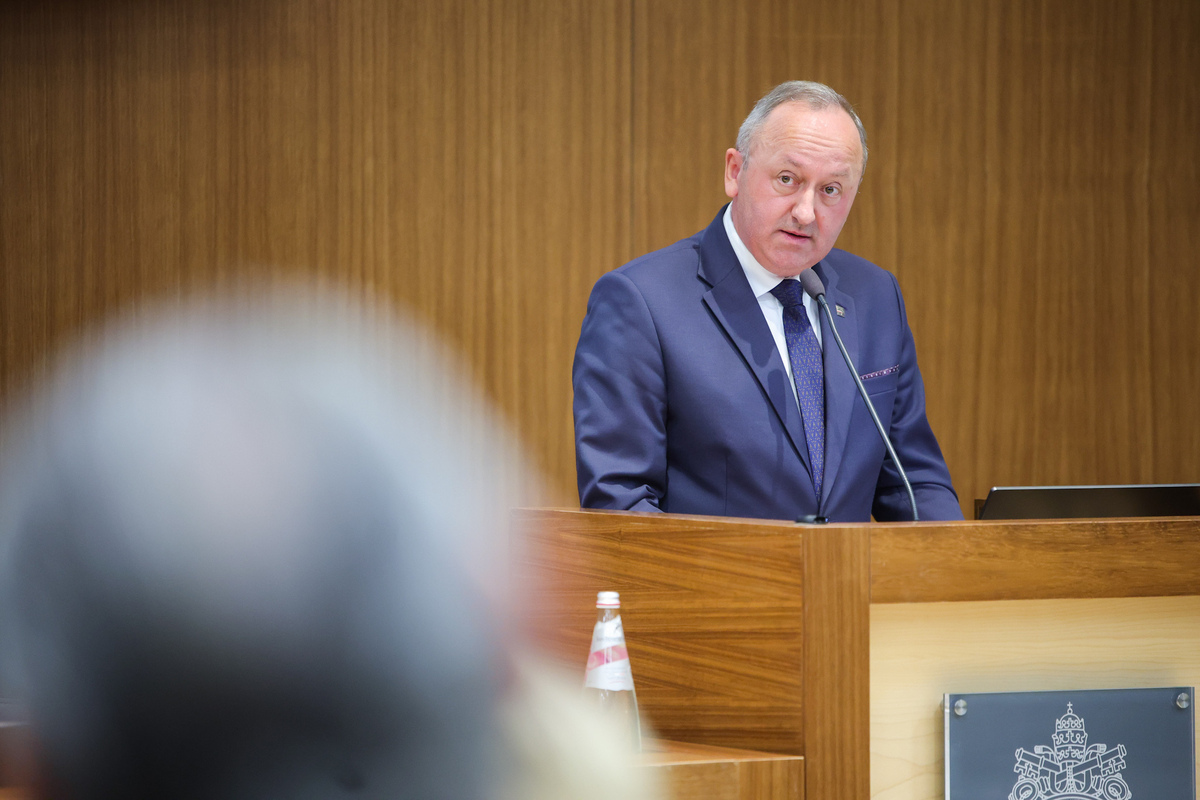
As part of the opening session, Karol Polejowski highlighted the IPN’s research into the persecution of the Church in Poland and its role in preserving national identity and defending freedom.
“Since its inception, the Institute of National Remembrance has conducted detailed research into the persecution and martyrdom of the Church in Poland, recognising its heroism and its invaluable role in shaping our identity and defending our freedom and yours. This work is reflected in the Institute’s many academic publications and publications aimed at a wider readership, as well as its extensive educational activities and exhibitions,” he said.
Deputy President Polejowski will also chair a session devoted to the years 1945–1958, examining the transition from fascism, Catholic life in East Germany, the communist takeover in Czechoslovakia and the country’s relations with the Holy See, the anti-communist Unitas group, and Catholic figures who confronted Romania’s communist regime. Other IPN representatives will contribute to the conference proceedings: Dr Sebastian Pilarski will chair the session on the Second World War, while Mariusz Krzysztofiński will present a paper on Archbishop Luigi Poggi and communist disinformation in Poland.
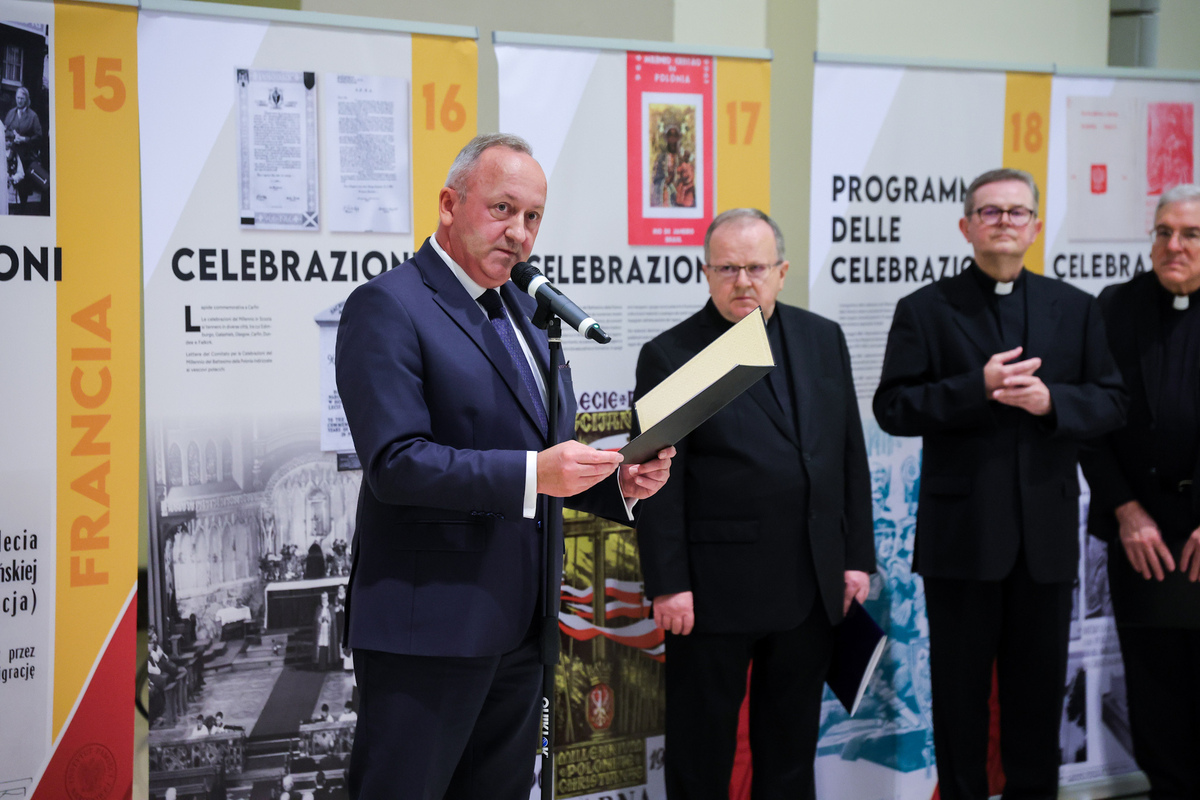
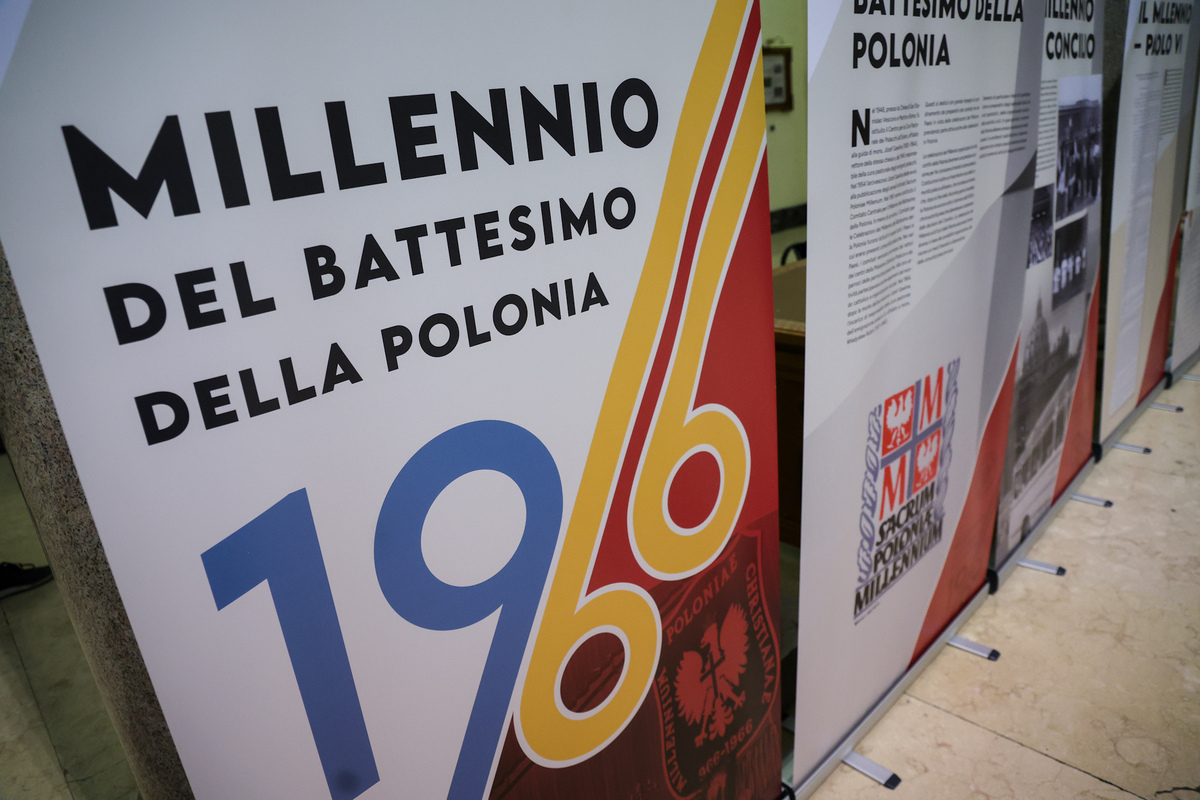
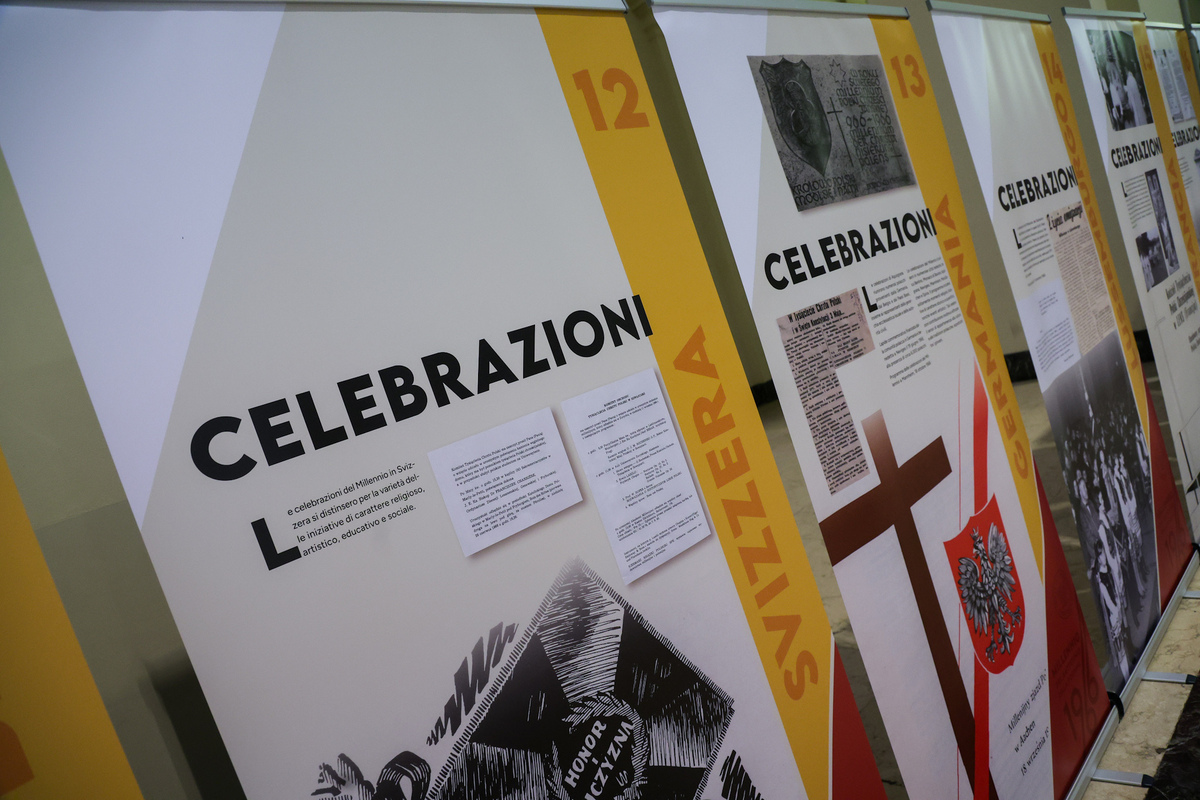
Alongside its academic contributions, the IPN has presented an exhibition documenting how Polish communities abroad commemorated the millennium of Poland’s baptism. The exhibition draws on materials held in the Archive of the Church and Hospice of St Stanislaus, Bishop and Martyr, in Rome.
“The exhibition recalls the momentous events experienced by Poles in 1966, when the Church gave thanks for Poland’s thousand years as part of the Christian family of nations. The communist authorities tried to diminish the celebrations of this important anniversary. Poles living abroad reminded the world that Poland was a Christian country attached to its history, identity and traditions,” stressed Karol Polejowski.