
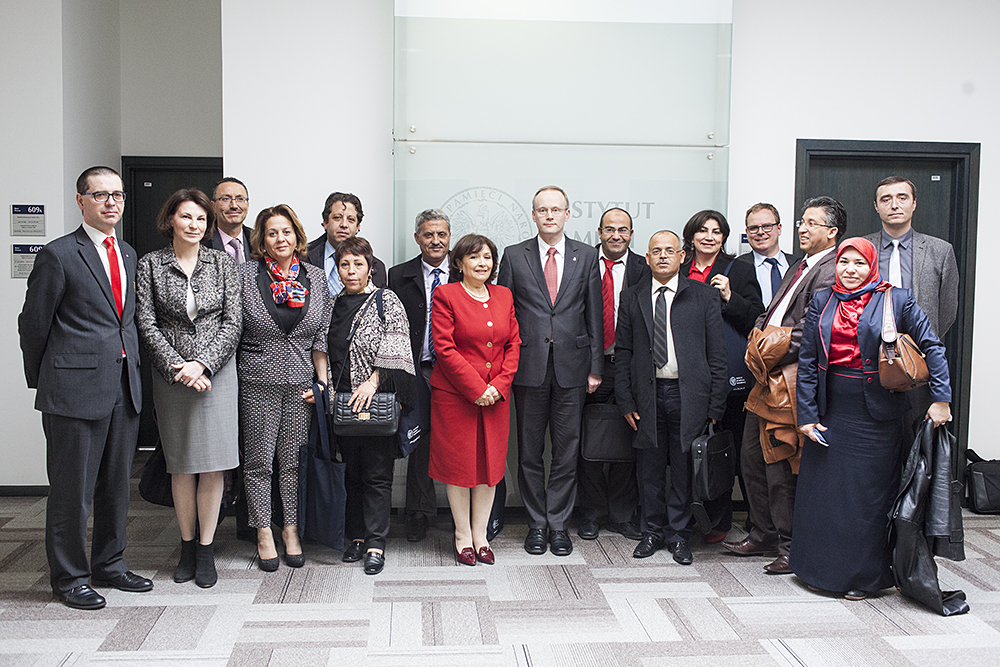
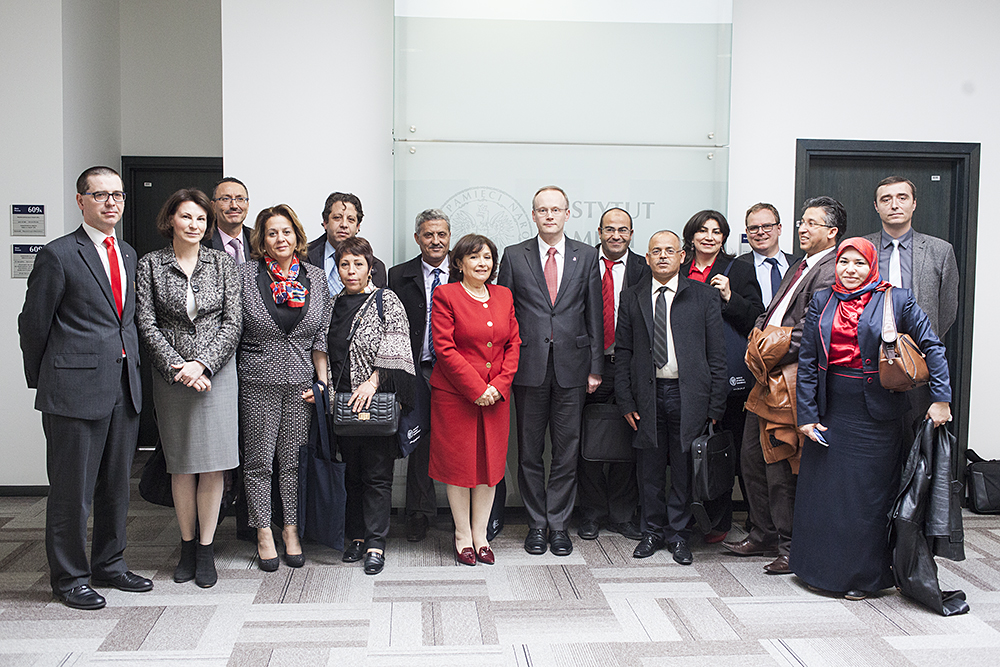
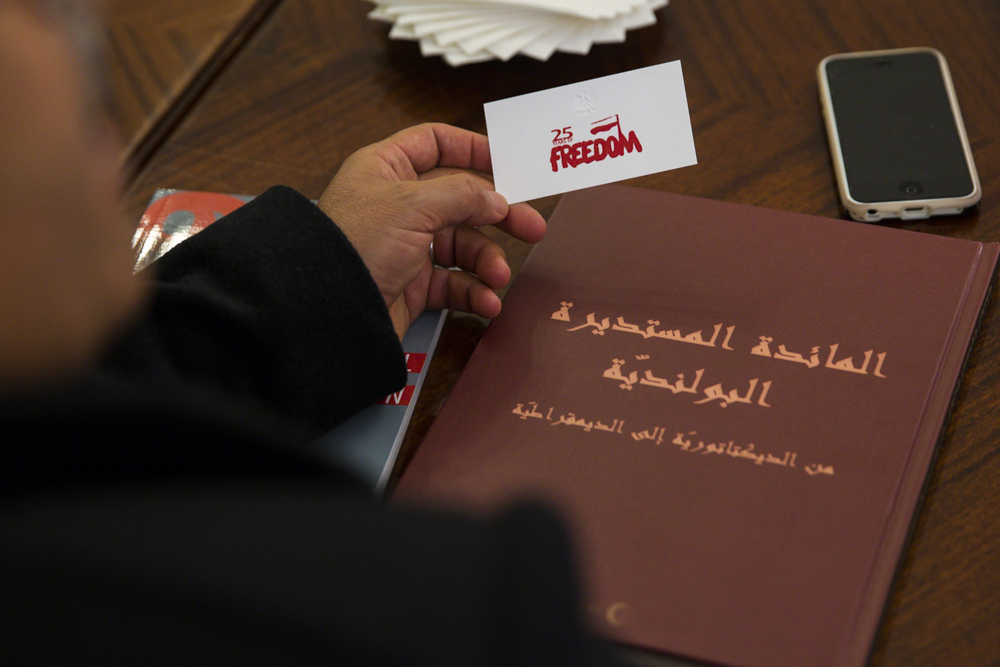

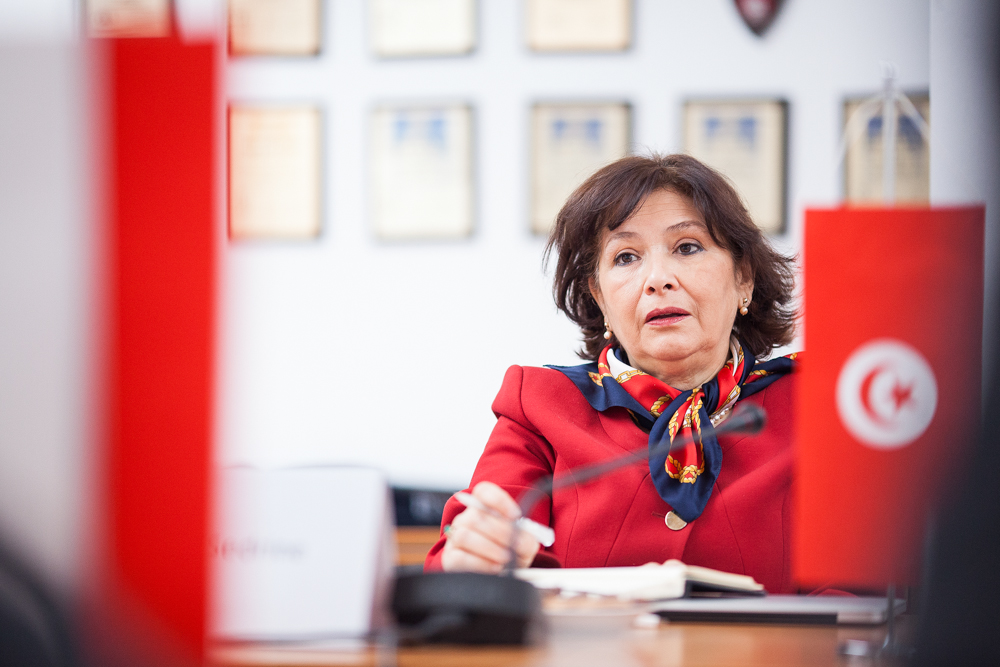

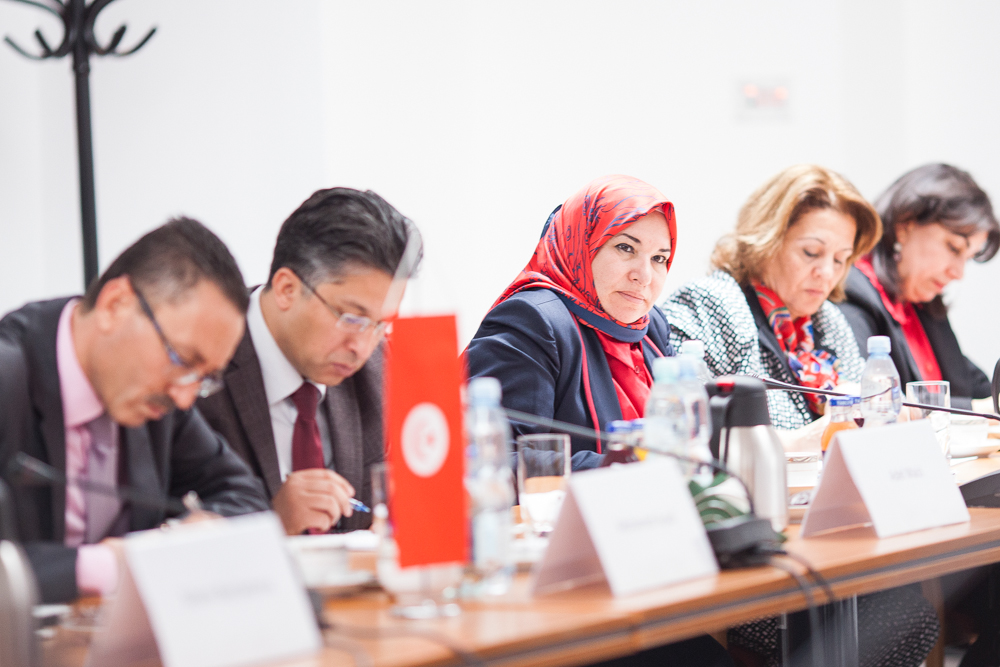
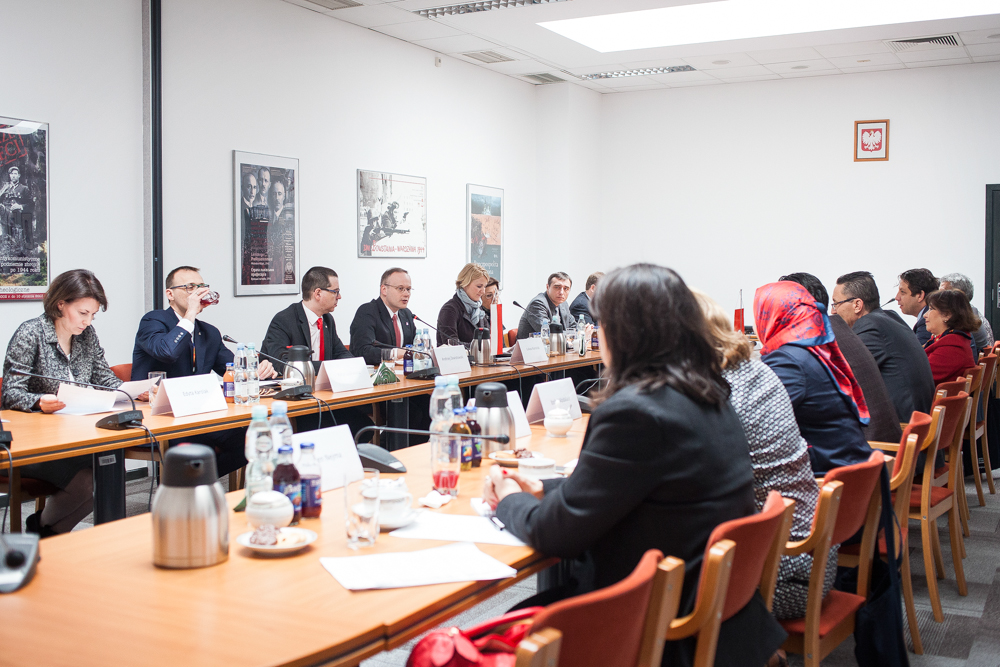

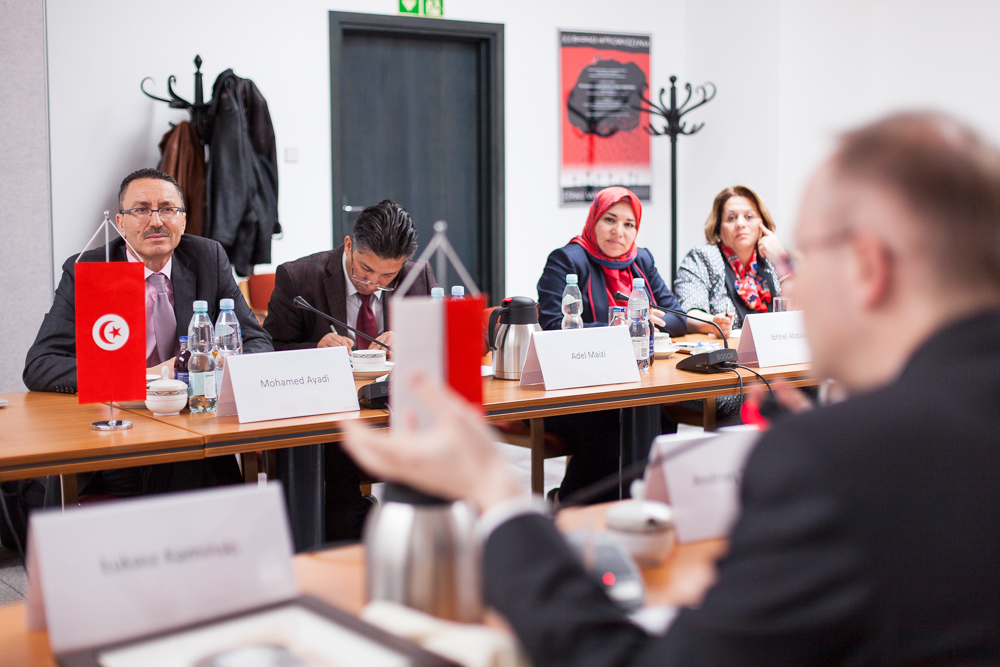

The personal file of President Ben Ali, overthrew in 2011, who in 1980-1984 was the Tunisian ambassador in Warsaw, stirred up most excitement among the members of the Truth and Dignity Commission. The 15 members of the Commission, who reappraise crimes and villainy of the regime ruling in Tunisia for decades, is visiting Warsaw at the invitation of the Institute of National Remembrance.
The experts from the Institute of National Remembrance worked on the so-called „Act on transitional justice”, which appointed the Commission. Also, through study visits in Poland the Tunisians had a chance to get acquainted with our experience.
According to Sihem Bensedrine, the president of the Tunisian Commission:
„Our aim is mainly to break the authoritarian system and facilitate the transition to the rule of law by showing the truth about the violations that have occurred in the past. This is to take place by determining the liability of the state for these violations, bringing the individuals behind the violations to justice, restoring rights and dignity to the victim, and promoting remembrance and national reconciliation”.
The self-immolation of 26-year-old unemployed Mohamed Bouazizi, on 17 December 2010 triggered a wave of protests that swept away the authoritarian regime of President Ben Ali who ruled for 23 years. The democratic change in Tunisia was the beginning of civil events throughout the Maghreb and the Middle East, commonly called the „Arab Spring”. Today, in the region, Tunisia is the leader in building democratic institutions of the state of law. It also attempts to account for its own past and build a civic society.
Tunisian Commission of Truth and Dignity is an important institution of the new system. Its aim is to reveal the truth about human rights violations in the years 1955-2013. It collects documents, conducts investigations into repression of the regime, creates a compensation program for the victims, but also takes care of the „national remembrance" about the victims of repression. Interestingly, it also has the right to investigate cases of financial corruption, misappropriation of public funds, and election fraud.
The Commission is meant to work for four years with the possibility of an extension for a year. Its power will be very broad. The Commission has unrestricted access to all documents held both by public institutions and private individuals. This applies even to court records of cases that are pending. It can also conduct a search. No immunity protects individuals called for questioning by the Commission.
The Commission is directed by a woman, Sihem Bensedrine, which is unusual in a Muslim country. Previously, Mrs. Bensedrine was an uncompromising journalist and human rights activist. For that, she was repressed and imprisoned. Tunisia devotes much attention to the role of women in the public life. The Act on the Commission of Truth and Dignity states clearly that at least its 1/3 must be women.
In Warsaw, members of the Commission met with Łukasz Kamiński, the president of IPN and got acquainted with the work of all divisions of the Institute. The program of their visit also includes meeting with representatives of the Chancellery of the President, the Office for War Veterans and Victims of Oppression, prof. Andrzej Rzepliński, the president of the Constitutional Court and lawyers involved in the protection of human rights of the Office of the Ombudsman, the Supreme Bar Council and the Helsinki Foundation for Human Rights.