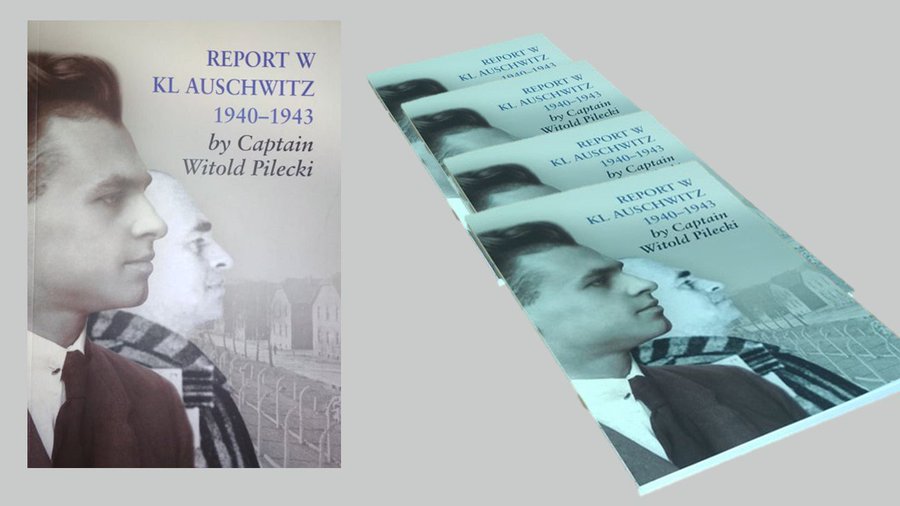
The Institute of National Remembrance participated in a project which in recent years has resulted in a large number of events popularizing the history of Poland in Australia. The project was initiated by Andrzej Nowak at the turn of 2011/2012, and in 2013 the Pilecki Projekt Committee, together with the Association of Political Prisoners in Australia, asked the Institute of National Remembrance for access to archival materials concerning Captain Witold Pilecki, which were later transformed into informational materials such as books and brochures by the Pilecki Project Committee.
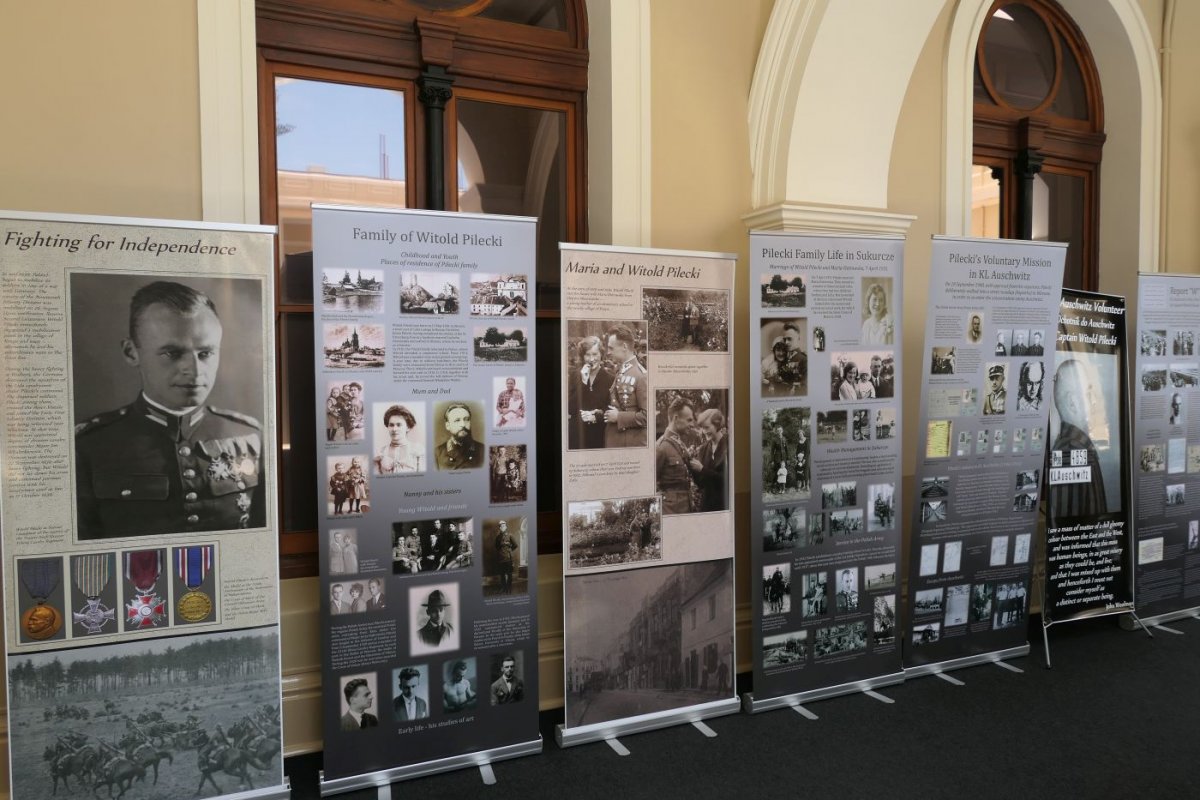
In 2014, the "Report X" exhibition was created based on the materials made available by the Archive of the IPN. The exhibition presents the figure of Captain Witold Pilecki, special attention being paid to the time he spent in the Auschwitz-Birkenau German concentration camp and the preparation of Report W. It also touches upon topics such as his arrest after the war by the Security Office, a violent investigation and murder by the communist authorities. Moreover, the exhibition is devoted to the Warsaw Uprising and the participation of Australian Edward Walter Smith in it.
The Board of the Pilecki Projekt Committee in Melbourne, which together with the Polish Home Army Ex-servicemen Association, created the exhibition, books (including the English version of the Report), posters and bulletins, managed to bring together several institutions, organizations and people who contributed to the display of the project in such places as the Jewish Holocaust Center in Melbourne, Monash University, Yad Vashem Institute in Jerusalem, Auschwitz Museum, Polin Museum or Atrium Federation Square.
On 5 November 2017, the exhibition was shown in the in the "Kadimah" Jewish cultural center in Melbourne. The opening ceremony also included the presentation of the second, expanded and improved English-language edition of Report W translated by Ewa Hussain.
The IPN delegation, present at the inauguration included Deputy President of the Institute Dr. Mateusz Szpytma, Dr. Rafał Leśkiewicz and Agnieszka Jędrzak, head of the IPN's Division of International Relations. The exhibition was opened by the speeches of Piotr Buszta - chargé d'affaire from the Embassy of the Republic of Poland in Canberra - and Dr Mateusz Szpytma. Dr Szpytma also read out a letter from the President of the IPN, Dr Jaroslaw Szarek addressed to the participants of the ceremony, which stressed the need to present the complex fate of Poland and Poles in the 20th century. In his letter, President Szarek stressed that Pilecki, "as a volunteer, undertook a risky game in order to collect the most reliable and accurate information about the Nazi extermination policy of the Jewish Nation." A symbolic speech was also given by Zbigniew Leman, a participant of the Warsaw Uprising, a soldier of the "Ruczaj"Battalion.
The undertaking was carried out as part of the celebration of the 99th anniversary of Poland regaining its independence. The IPN delegation laid flowers at a monument in the form of a cross commemorating the victims of the Katyń Massacre. In the same place, the IPN’s Deputy President, Dr Mateusz Szpytma delivered a speech during which he emphasized that without sacrifice, often the sacrifice of one’s life, there is no freedom or independence - because freedom can often be measured in crosses, said Dr Szpytma. These crosses are frequently present in the history of Poland: they often mark the burial places of soldiers, but there are still places where those crosses are missing: for example, on the grave of a great hero, Captain Witold Pilecki, because those who opposed the independence of Poland feared him even after death and threw his body into a nameless pit. The freedom of Australia can also be measured in crosses. Yes - this peaceful and beautiful country has experienced great bloodshed during World War I and II and, like the Poles, inspired by Tadeusz Kosciuszko, was ready to fight for our freedom and yours.
The Deputy President of the IPN, Dr Mateusz Szpytma decorated Ms Zofia Dublaszewska, an outstanding oppositionist from Tri-City with the Cross of Freedom and Solidarity, on behalf of the President of the Republic of Poland.
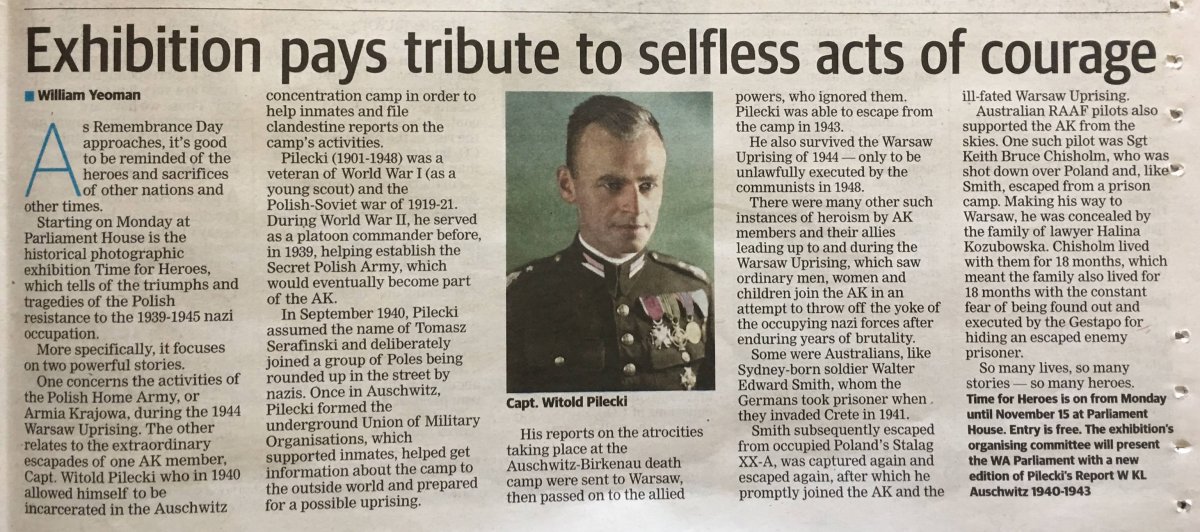
On 8-10 May 2018, the exhibition was opened in the state Parliament of Victoria in Melbourne. The exhibition devoted to Captain Witold Pilecki and the participation of Australian soldiers in the Warsaw Uprising, created on the basis of materials from the archival resources of the IPN, was accompanied for the first time by two thematic exhibitions of the IPN concerning the "Żegota" Council for Aid to Jews and the Ulma family from Markowa ("Good Samaritans from Markowa"). In connection with the event, the Institute of National Remembrance sent 1,700 copies of catalogs for thematic exhibitions to Australia.
The organization of the exhibition in such a dignified and distinguished place as the State Parliament allowed for its popularization not only among representatives of the Polish diaspora, but also of parliamentarians. Above all, it could be seen by students of educational institutions - young people, for whom the essential aspect of their identity is the knowledge of their roots and the history of their own nation.
On 20 June the Deputy President of the IPN, Prof. Krzysztof Szwagrzyk hosted representatives of the management of the Australian Society of Polish Jews and their Descendants: President Izydor Marmur and Deputy Presidents Eva Hussain, Ezra May and a representative of the Society in Sydney, Estelle Rozinski. President Szwagrzyk thanked the guests for the ongoing lively cooperation between the Institute of National Remembrance and Australian organizations, which resulted in exhibitions in Australia.The Association is also trying to organize a study visit to Poland for Australian parliamentarians. Willingness to continue cooperation was expressed by all of the participants of the meeting.
President Szwagrzyk pointed out that the Polish-Jewish difficult history is, nontheless, linked by such figures as Captain Witold Pilecki, a "volunteer to Auschwitz" who - as he emphasized - was an important figure not only for Poles but for the whole world. As the Director of the Office of Search and Identification, he discussed the activities of this department, with particular emphasis on the work carried out at lot “Ł” of the Powązki Cemetery in Warsaw. It is a bitter irony that in the place where there are nameless mass graves of Polish heroes who were murdered or tortured in Stalinist prisons, communist officials, judges and prosecutors were buried with honors in the eighties of the twentieth century, in essence - their executioners. Until now, 60 Stalinist prisoners have been identified on the basis of genetic material collected from families. Professor Szwagrzyk expressed deep hope that among the remains discovered in this area there are the remains of Captain Pilecki.
Both sides emphasized the need to conduct Polish-Jewish dialogue in an atmosphere of mutual respect and understanding of national sensitivity, pointing to the suffering of both nations during the Second World War. It was stressed that education is a key issue in improving mutual relations. There is a lot of hope in the younger generation which, thanks to in-depth knowledge and rejection of stereotypes, will be able to build bridges between nations.
On 14 September 2018 representatives of veterans' organizations from Australia visited the IPN. Bogdan Płatek, secretary of the Polish Ex-Servicemen Association Sub - Branch No. 3 in Victoria and a member of the Pilecki Committee and Zygmunt Świstak "Minoga", a representative of the Home Army Soldiers' Association in Melbourne, visited the IPN as part of the General Assembly of the World Veterans Federation organized by the Office for War Veterans and Victims of Oppression.
At the Institute they met with Prof Krzysztof Szwagrzyk, Deputy President of the Institute of National Remembrance, with whom they discussed further educational cooperation in Australia. The President presented the guests with commemorative gorgets from the funeral of the Commanders whose remains were found in the lot “Ł” in Powązki. Later, the veterans visited the IPN Archive, where they viewed archival materials about Australia. Zygmunt Świstak was touched as his identification card form KL Dachau was found in the Institute’s archival resources.
On 18-19 September 2018 Marian Pawlik, President of the Polish Community Council of Victoria, and his wife paid a visit to the Institute of National Remembrance and met with Dr Jarosław Szarek, President of the Institute, and Dr Mateusz Szpytma, Deputy President of the Institute The guests also visited the Archive, where they got to know the main tasks and activities of the Center for Information on the Victims of World War II, visited the warehouse with military documentation, got acquainted with the functionalities of the video-comparator and had the opportunity to look at the work carried out in the Conservation Workshop. Another point in the agenda was the Museum of Cursed Soldiers and Political Prisoners of the Polish People’s Republic, where the guests were presented a temporary exhibition entitled Evidence of Crime. Objects from Lot “Ł” in pavilion X of the Rakowiecka prison. In addition, at the Janusz Kurtyka Educational Center "History Point", representatives of Polish community institutions in Australia saw an exhibition entitled Institute of Józef Piłsudski in America - history and collections of the Polish institution in New York, prepared by the IPN’s National Education Office. On 19 September 2018 Prof. Krzysztof Szwagrzyk, Deputy President of the Institute of National Remembrance, invited President Pawlik and his wife to visit the lot "Ł" at the Powązki Military Cemetery.